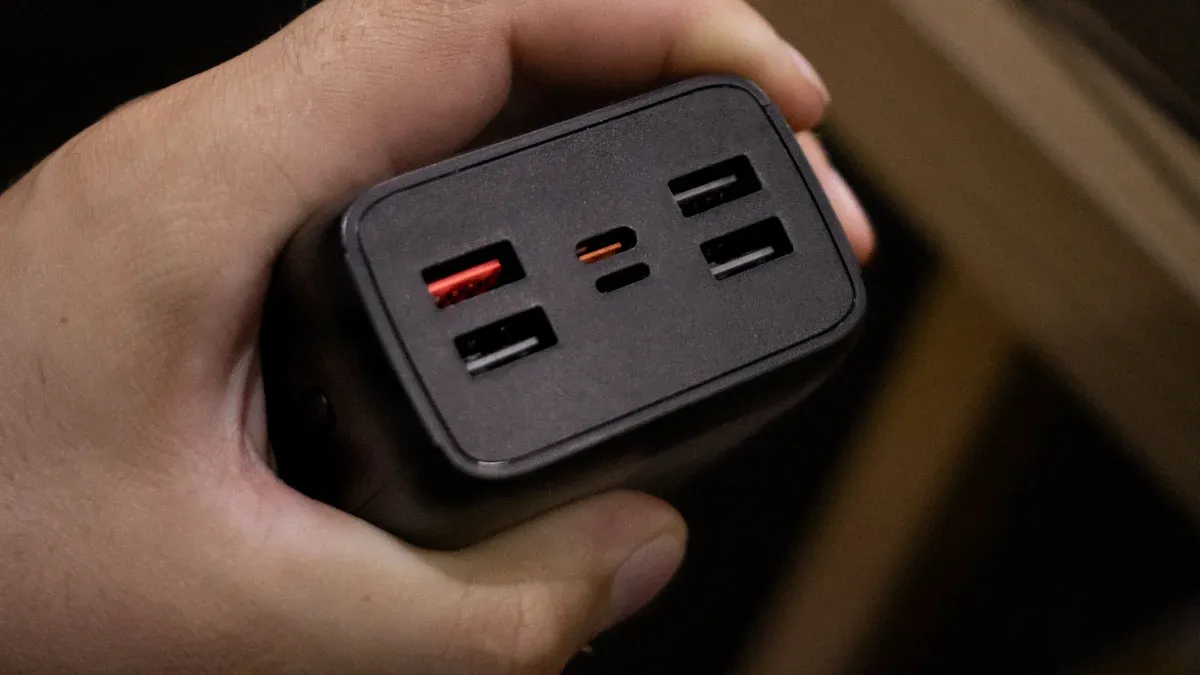
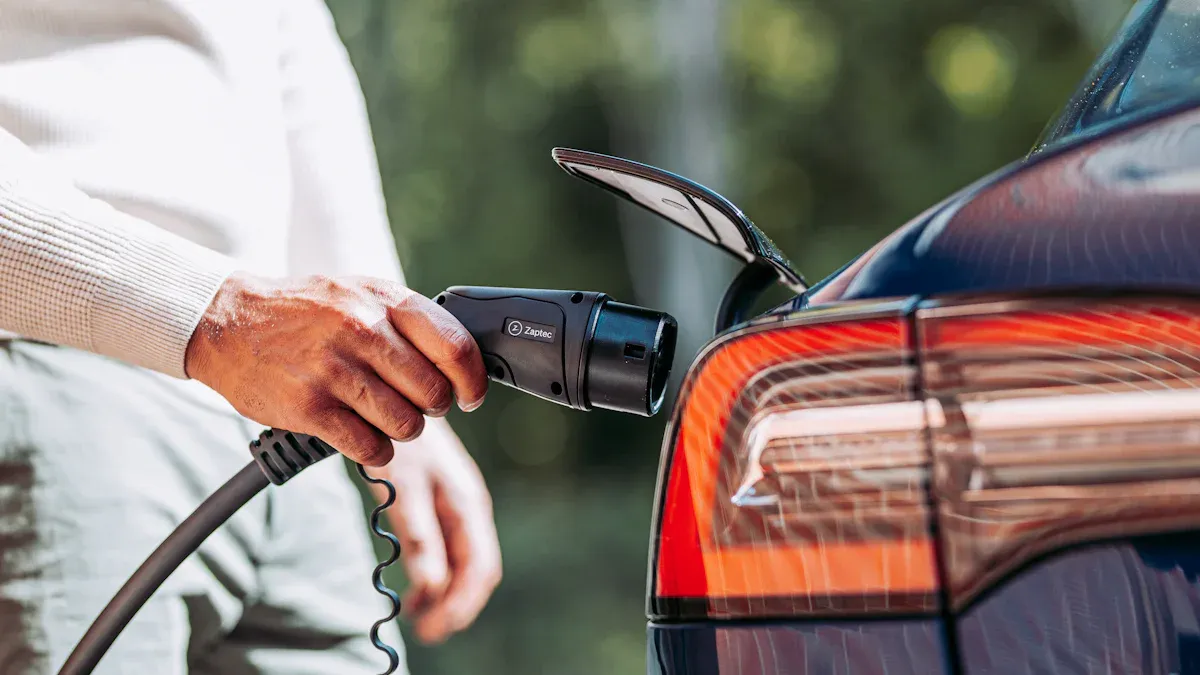
For most electric vehicle drivers, public DC fast chargers are an occasional indulgence- not the everyday solution. This reality is due to several factors. The higher cost per charge and potential long-term strain on the battery make slower charging more practical for routine needs. The true key to a successful and stress-free EV lifestyle lies in a different, more consistent fast charging habit, often facilitated by reliable EV-Ladelösungen von seriösen Hersteller von EV-Ladegeräten.
Note on Cost: A key reason for this approach is the price difference. Home charging can cost as little as 32p per kWh, while public DC fast chargers often exceed 74p per kWh, making them more than twice as expensive for the same amount of energy. For those on the go, tragbare EV-Ladegeräte can offer a convenient alternative, though they typically don’t match the speed of a dedicated EV-Ladegerät installation.
Understanding the Different Levels of Electric Vehicle Charging
To appreciate the role of DC fast chargers, one must first understand the broader landscape of electric vehicle charging. The industry categorizes charging into three primary levels, each defined by its power output, speed, and ideal application. This tiered system allows electric vehicle owners to choose the right charging method for their specific needs, whether it’s a slow overnight top-up or a rapid boost on a long journey.
Level 1: The Universal Standard
What is Level 1 Charging?
Level 1 charging is the most basic and accessible option. It uses a standard 120-volt household outlet, the same kind used to power a toaster or a laptop. This charging method requires no special installation; the cordset often comes standard with the purchase of an electric vehicle. Its power output is modest, typically delivering between 1.3 kW and 2.4 kW.
The Pros and Cons of Trickle Charging
The main advantage of Level 1 is its universal availability. An EV driver can plug in almost anywhere there is a standard wall socket. However, its convenience comes at the cost of speed. This “trickle charge” is extremely slow, adding only about two to five miles of range per hour. A full charge for a long-range battery could take several days, making it impractical for drivers with daily commutes exceeding 30-40 miles.
Best Use Cases for Level 1
Level 1 charging is best suited for plug-in hybrid electric vehicles (PHEVs) with smaller batteries or for EV owners who drive very little each day. It also serves as a reliable backup option when visiting friends or family where a faster charging station is not available.
Level 2: The Everyday Workhorse
Was ist Level-2-Laden?
Stufe 2 is the most common and practical charging solution for daily use. It operates on a 240-volt circuit, similar to an electric dryer or oven. These chargers deliver significantly more power than Level 1, with typical residential units providing 7 kW to 11 kW and commercial installations reaching up to 22 kW.
The Gold Standard for Home and Workplace
Most EV owners find that installing a Level 2 charger at home is the key to a seamless experience. It allows for a full charge overnight, ensuring the vehicle is ready each morning. This setup transforms the home into a personal fueling station. Many workplaces also offer Level 2 charging as an employee perk, further enhancing its convenience.
Balancing Speed, Cost, and Battery Health
Level 2 strikes an optimal balance. It is fast enough for daily needs without placing excessive strain on the vehicle’s battery. While there is an upfront installation cost, the long-term performance and battery preservation make it a worthwhile investment for most electric vehicle drivers.
Level 3 (DC Fast Charging): The Speed Demon
Was ist DC-Schnellaufladung?
Level 3 charging, widely known as DC fast charging, is the pinnacle of speed. Unlike Levels 1 and 2, which use Alternating Current (AC) that the car must convert to Direct Current (DC), these powerful chargers supply DC power directly to the battery. This direct-to-battery technology bypasses the car’s onboard converter, enabling dramatically faster charging speeds.
How It Achieves Super-Fast Speeds
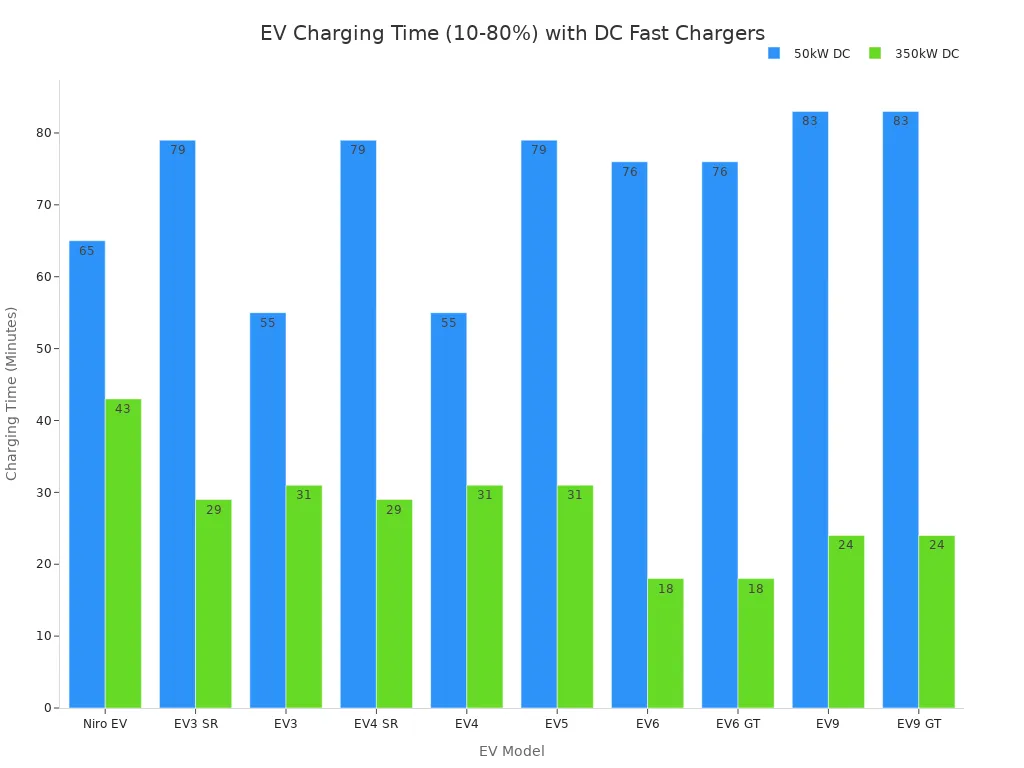
DC fast chargers achieve their remarkable speeds through high-voltage power delivery. Power outputs for this fast charge technology start at 50 kW and can soar to 350 kW or more on ultra-fast units. This immense power can add hundreds of miles of range in under an hour. For example, a 150 kW charger can add approximately 434 miles of range in 60 minutes, while a 350 kW charger can charge some vehicles from 10% to 80% in under 20 minutes.
The Key Differences from Level 1 and 2
The primary difference is the type of current. Levels 1 and 2 use AC, while DC fast chargers use DC. This fundamental distinction is why DC charging is exclusively found at public stations and cannot be installed in a typical residence. The required electrical infrastructure is substantial and costly, making these chargers ideal for commercial corridors and travel plazas where speed is the top priority for vehicles on the move.
Why DC Fast Chargers Are an Occasional Indulgence
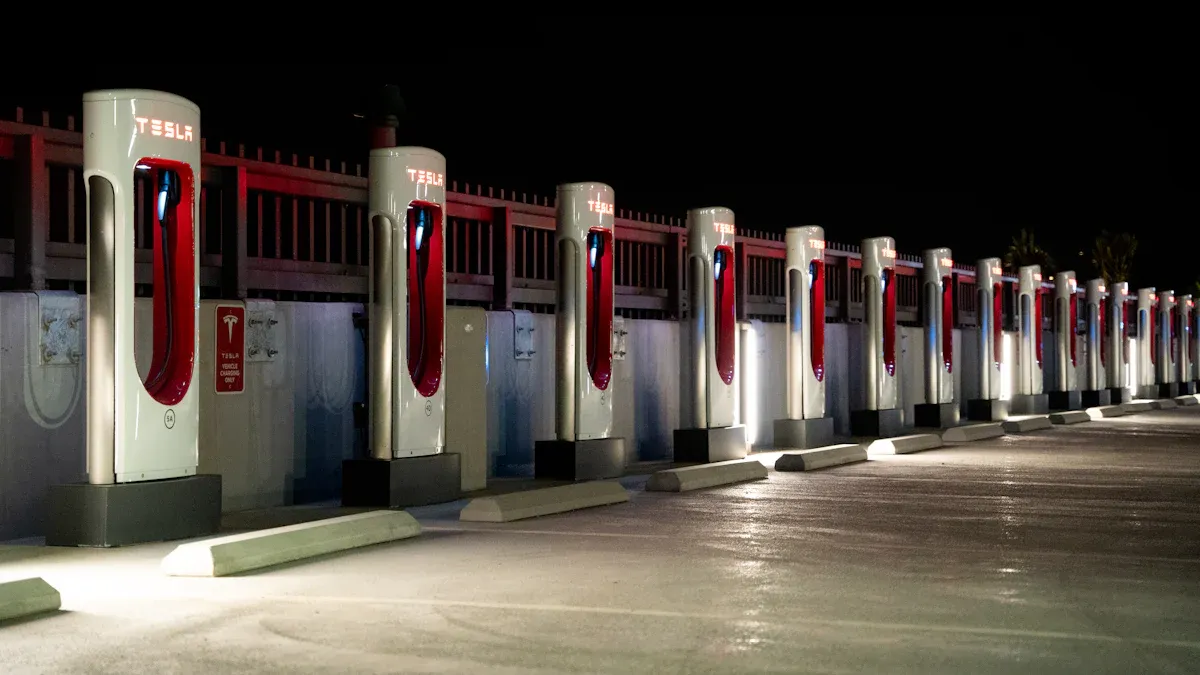
The allure of adding hundreds of miles of range in minutes is powerful. However, the problem is rooted in three key considerations: cost, battery health, and practical limitations. These factors shift the role of DC fast chargers from a daily necessity to a specialized tool for specific situations.
The High Price of Speed
Convenience on the road comes at a premium. The economic model for public fast charging is fundamentally different from charging at home, making it a far more expensive option for routine energy needs.
Understanding kWh Pricing Models
Public DC fast charging networks operate as for-profit businesses. They must cover the high costs of installation, grid upgrades, maintenance, and software. This results in a pay-per-use model where drivers are billed for the energy they consume. Pricing at common networks like Electrify America, EVgo, and Tesla Superchargers typically ranges from $0.30 to $0.60 per kilowatt-hour (kWh), a significant markup over residential electricity rates.
Cost Comparison: DC Fast vs. Home Charging
The price difference is stark. An EV owner charging at home might pay $0.15 per kWh, meaning a 60 kWh charge would cost approximately $9.00. That same 60 kWh charge at a public DC station charging $0.45 per kWh would cost $27.00.
Cost at a Glance 💰
- Home Level 2 Charging (60 kWh): ~$9.00
- Public DC Fast Charging (60 kWh): ~$27.00
This simple comparison shows that relying on fast chargers for daily needs can easily triple an EV driver’s monthly “fuel” budget.
The Hidden Costs of Session and Idle Fees
The per-kWh price is not the only expense. Many networks add other charges to manage station turnover and profitability.
- Gebühren für die Sitzung: Some providers charge a flat fee, often $1.00 or more, just to initiate a charging session.
- Idle Fees: To discourage drivers from leaving their vehicles plugged in after a charge is complete, networks implement idle or overstay fees. These fees can be substantial, ensuring chargers remain available for others.
| Fee Type | Typical Rate | Zweck |
|---|---|---|
| Session Fee | $1.00+ per session | Covers transaction costs |
| Idle/Overstay Fee | $0.40 – $1.00 per minute | Frees up the charger for the next user |
Your Battery’s Health Comes First
An electric vehicle’s most valuable component is its battery. While DC fast charging is an engineering marvel, its high-power nature introduces thermal stress that can impact long-term battery health and performance.
How High-Voltage Charging Generates Heat
DC fast charging works by pushing a massive amount of direct current (DC) into the battery pack. This rapid influx of energy generates significant heat within the battery cells. While a vehicle’s battery management system (BMS) works to cool the pack, repeated exposure to high temperatures is a primary cause of cell degradation over time.
The Science Behind Battery Degradation
Scientific studies confirm the long-term effects of frequent DC fast charging. A 2024 report from Geotab, analyzing data from over 10,000 electric vehicles, found a clear link between frequent DC fast charging and accelerated battery degradation, particularly in hot climates. An earlier study on Nissan Leafs showed that exclusive use of DC rapid charging led to a 16% faster rate of battery degradation compared to relying on AC charging. This data underscores that how a vehicle is charged is just as important as how it is driven.
What Automakers Recommend for Fast Charging
Given the evidence, both automakers and researchers advise a balanced approach. Fleet management experts at Geotab and automakers like MG recommend that drivers prioritize Level 2 AC charging for their daily needs. This slower, gentler charging method is ideal for preserving battery longevity. They position DC fast charging as a tool for occasional use, such as on long road trips, rather than a daily routine.
The Practical Limits of “Super-Fast”
The term “super-fast” can sometimes be misleading. The actual speed of a DC charging session is governed by a complex interplay between the charger, the vehicle, and external conditions.
The 80% Charging Cliff Explained
An EV does not charge at a constant maximum speed. The process follows a “Ladekurve” that is managed by the vehicle’s BMS to protect the battery.
- Charging is fastest when the battery is at a low state of charge (e.g., 10-50%).
- As the battery fills, its internal resistance increases.
- To prevent overheating and cell damage, the BMS deliberately slows the charging speed, often dramatically, after the battery reaches approximately 80%.
This tapering effect means charging from 80% to 100% can take as long as it took to charge from 10% to 80%. For this reason, savvy EV drivers on road trips often unplug around 80% and continue their journey.
The Alphabet Soup of Plugs: CCS, NACS, and CHAdeMO
Not all DC fast chargers work with all vehicles. The industry has several competing plug standards, which can create confusion for new owners. The technology behind each plug differs, and drivers must find stations compatible with their car.
| Standard | Primäre Region | Hauptmerkmal | Stecker Größe |
|---|---|---|---|
| NACS | Nord-Amerika | Combines AC/DC in one plug | Kompakt |
| CCS | N. America, Europe | Separate sections for AC/DC | Sperrige |
| CHAdeMO | Japan, ältere Modelle | Requires separate AC plug | Sperrige |
When a Charger Doesn’t Deliver Its Rated Speed
A driver might pull up to a 350 kW charger only to find their car is charging at 80 kW. This is not necessarily a fault of the charger. Several factors can limit DC charging speed:
- Temperatur der Batterie: A cold battery (below 5°C) or a very hot battery (above 35°C) will charge slowly as the BMS limits power to protect the cells.
- Grid Capacity and Load Balancing: If multiple cars are using chargers at the same station, the system may dynamically balance the load, delivering less than maximum power to each vehicle.
- Power Quality Issues: Factors like harmonic distortion on the grid can disrupt the flow of current and reduce overall charging efficiency.
When Indulging in a DC Fast Charge Is the Right Choice
While daily reliance on DC fast charging is not recommended, these powerful stations are an indispensable tool in specific, high-stakes situations. The discussion pivots here, from a question of daily habit to one of strategic advantage. For long-distance travel and unexpected emergencies, the speed of a DC charger is not just a luxury; it is a critical enabler of modern electric vehicle ownership.
The Road Trip Warrior’s Best Friend
For drivers looking to cover extensive distances, DC fast chargers are a game-changer. They effectively eliminate the long delays once associated with electric road trips, transforming the experience from a challenge into a pleasure.
Enabling True Long-Distance Travel
DC charging is the technology that unlocks true long-distance travel for electric vehicles. These chargers act as a lifesaver when a driver is out of town and needs a substantial charge to continue their journey without lengthy stops. The primary benefits include:
- Geschwindigkeit: Rapid chargers drastically cut down charging time, getting drivers back on the road quickly. A 30-minute stop can add 100-150 miles of range.
- Bequemlichkeit: Networks strategically place these stations along motorways, at shopping centers, and in other key locations, making it easy to integrate a fast charge into a travel break.
- Long-Distance Capability: Ultimately, these chargers are crucial for covering hundreds of miles in a single day by minimizing the duration of each stop.
How to Plan Your Route with Fast Chargers
Successful long-distance travel requires planning. Modern drivers have access to a suite of powerful applications that integrate charging stops directly into their routes, removing guesswork and anxiety. These tools help locate reliable dc fast chargers and optimize the journey.
| App/Tool | Wesentliche Merkmale | Am besten für |
|---|---|---|
| PlugShare | Crowdsourced data on over 600,000 stations; powerful filters for connector, speed, and amenities; intelligent trip planner considers elevation and vehicle details. | Finding the most reliable and reviewed chargers globally. |
| Google Maps | Built-in EV routing with live station availability, connector types, and speed; integrates with real-time traffic for accurate travel times. | Seamless, all-in-one navigation for everyday drivers. |
| Tesla App | Seamless integration with Tesla vehicles; automatically routes trips via the Supercharger network to optimize travel and charging time. | Tesla owners seeking a fully integrated experience. |
| Zapmap | Extensive UK network coverage; live availability updates; community reviews on pricing, parking, and reliability. | Drivers navigating the United Kingdom’s charging infrastructure. |
How Much Charge Do You Really Need to Add?
On a road trip, time is valuable. Charging a vehicle’s battery to 100% at a DC station is often inefficient due to the charging curve. The charging speed slows dramatically after 80%.
Pro Tip: The 80% Rule 🔋
For optimal time efficiency, drivers should plan to charge to approximately 80% and then continue their journey. This strategy leverages the fastest part of the DC charging curve, minimizing time spent at the station. The goal is to add just enough range to comfortably reach the next planned stop.
Your Get-Out-of-Jail-Free Card
Beyond road trips, DC charging serves as a crucial backup for unexpected situations. It provides a safety net that helps overcome range anxiety and makes EV ownership practical even for those with unpredictable schedules.
When You Need a Significant Charge, Fast
Life is full of surprises. An unexpected family emergency or a last-minute business trip can demand significant travel with little notice. In these moments, a DC fast charger is invaluable. The ability to add a substantial amount of range in under an hour provides the flexibility needed to handle urgent situations without worrying about charging performance.
Overcoming Low Battery Anxiety on Unexpected Trips
The fear of running out of power in an unfamiliar area is a common concern for new EV owners. The growing network of strategically placed rapid chargers directly addresses this anxiety. One driver’s experience on a long trip highlights this; even with a full car requiring extra stops, the fast charging speeds prevented significant delays. This transforms a potentially stressful journey into a smooth one. Government initiatives, like the UK’s Rapid Charging Fund, further bolster this confidence by ensuring more high-speed chargers are available on major routes.
Using Fast Chargers as a Strategic Backup
Ultimately, drivers should view the public DC fast charging network as a strategic resource. It is the powerful backup plan that makes EV ownership viable for a wider range of lifestyles. Knowing that a fast, reliable charge is available when needed provides peace of mind. This allows owners to rely on cost-effective Level 2 charging for daily life while having the confidence to take on any journey, planned or unplanned.
The True Secret to Everyday EV Charging

The conversation often overlooks the real key to a stress-free ownership experience. The true secret is not found in the blistering speed of a public station but in the consistent, gentle rhythm of home and workplace charging. This routine relies on Level 2 as the primary workhorse and Level 1 as a dependable backup, creating a sustainable and cost-effective ecosystem for any electric vehicle owner.
Level 2 Charging: The Daily Driver
Level 2 charging is the foundation of a successful daily EV routine. It provides the perfect blend of speed, convenience, and battery care that public DC chargers cannot match for everyday use.
The “Set It and Forget It” Solution
A professionally installed Level 2 charger transforms a driver’s garage into a personal refueling station. It offers a “set it and forget it” convenience. Drivers simply plug in their vehicle at the end of the day, and it is ready with a full charge the next morning.
Why Overnight Charging Is the Ideal Routine
Establishing a consistent overnight charging routine is the most efficient way to own an electric vehicle. This practice offers several key advantages for the modern driver.
The Overnight Advantage 🌙
An overnight Level 2 routine is ideal for households. It fully charges most EVs in just a few hours. Drivers can leverage cheaper off-peak electricity rates, significantly lowering “fuel” costs. Adhering to the 20-80% battery state of charge during this time also helps preserve long-term health.
The Perfect Balance of Speed and Battery Care
Level 2 chargers, which use a 240-volt outlet, add about 25-30 miles of range per hour. This speed is more than sufficient for replenishing daily driving range overnight. More importantly, this slower AC charging method generates far less heat than a DC fast charge, placing minimal stress on the vehicle’s battery pack and promoting longevity.
Workplace Charging as a Daily Bonus
Workplace charging serves as a powerful supplement to a home charging setup. It provides a valuable amenity that enhances the daily driving experience.
- It allows employees to top off their vehicles during the workday.
- It reduces reliance on a full charge at home, especially for those with long commutes.
- Es boosts employee satisfaction and productivity by removing the need to find public chargers.
Level 1 Charging: The Convenient Backup
While not a primary solution for most, Level 1 charging remains a practical and highly accessible option in specific scenarios.
Die “Trickle Charge” erklärt
Level 1 uses a standard 120-volt wall outlet. This “trickle charge” is slow, adding approximately 4 miles of range per hour. An overnight session of 8-10 hours will typically add about 32-40 miles of range, which is often enough to cover a short commute.
The Power of Any Standard Outlet
The greatest strength of Level 1 charging is its universal availability. An EV owner can plug in almost anywhere a standard electrical outlet is present, requiring no special equipment or installation. This makes it a reliable option when visiting friends or family.
When Level 1 Makes Perfect Sense
Level 1 is not for everyone, but it is the perfect solution in certain situations. It offers a low-cost and convenient option when speed is not a priority.
| Szenario | Why It Works |
|---|---|
| Short Daily Commutes | If daily driving is under 30 miles, an overnight trickle charge is sufficient. |
| Long-Duration Parking | Ideal for charging during a full workday or overnight at a destination. |
| Emergency/Occasional Use | Serves as a dependable backup when no other options are available. |
Building Your Perfect EV Charging Strategy
Developing a smart charging strategy is the final step to mastering electric vehicle ownership. It involves understanding when and where to charge to optimize cost, convenience, and battery health. A proactive plan removes any lingering range anxiety and makes the EV lifestyle seamless.
The 90/10 Rule of EV Charging
Experienced owners often follow a simple principle for charging their vehicles. This guideline, known as the 90/10 rule, provides a balanced framework for sustainable EV ownership.
90% Home and Workplace Charging
The vast majority of charging, around 90%, should occur at home or the workplace using Level-2-Ladegeräte. This approach is the most cost-effective and is gentlest on the battery. Companies like TPSON provide advanced charging solutions that make this routine simple. This method ensures the vehicle is always ready for daily use without placing unnecessary strain on its systems.
10% Public and Fast Charging
The remaining 10% of charging is reserved for public stations, primarily DC-Schnellladegeräte. Drivers should use these powerful chargers strategically for long-distance road trips or unexpected emergencies. This infrequent use preserves battery health while providing crucial on-the-go flexibility.
Thinking Like a Pro EV Owner
Adopting the mindset of a seasoned EV driver involves being proactive and informed. It means understanding personal driving habits and the vehicle’s capabilities to create an efficient routine.
Bewertung Ihrer täglichen Fahrbedürfnisse
The first step is to calculate daily energy consumption. This helps determine how much charge is needed each night. An owner can find this with a simple process:
- Determine the average daily driving distance.
- Find the car’s efficiency rating (e.g., kWh per 100 miles).
- Divide the daily distance by the efficiency to find the energy used.
- Multiply this figure by the desired charge level (e.g., 80%).
For example, a person driving 30 miles daily in a car that uses 20 kWh per 100 miles consumes 6 kWh of energy. This small amount is easily replenished overnight with a Level 2 charger.
Creating a Sustainable Weekly Charging Routine
A consistent weekly routine is key. Most drivers do not need to charge to 100% every night.
Smart Charging Tip 💡
A driver can set a charging limit of 80% for daily use. This practice helps maintain long-term battery performance. They can then charge to 100% only before a long trip, ensuring the battery is cared for while meeting all travel needs.
Knowing Your Car’s Maximum Charging Speed
Understanding a vehicle’s technical limits is crucial for managing expectations at public stations. Each car has a maximum charging speed it can accept, regardless of the charger’s output. This advanced technology protects the battery.
| EV-Modell | Max Charging Speed (kW) |
|---|---|
| Hyundai Ioniq 5 | 260 |
| Tesla Model 3 | 250 |
Knowing this number helps a driver understand why their car may not charge at a station’s advertised maximum rate. It empowers them to make informed decisions during road trip stops.
The debate concludes with a clear verdict. These powerful DC stations are the undisputed champion for road trips. The true secret to cost-effective electric vehicle ownership is a consistent routine using Level 2 charging. This method is gentler on the battery and can be over twice as cheap per mile as public DC fast charging. An EV driver should embrace fast electric charging as the powerful, occasional indulgence it is.
FAQ
Why is DC fast charging more expensive?
DC fast charging stations are businesses. They must cover high costs for powerful equipment, grid upgrades, and ongoing maintenance. These operational expenses result in higher per-kWh prices for drivers compared to charging at home, where owners only pay residential electricity rates.
Can frequent fast charging damage my EV’s battery?
Yes, frequent use can accelerate battery degradation. DC fast charging generates significant heat, which stresses the battery cells over time. Automakers recommend prioritizing slower Level 2 AC charging for daily needs to preserve long-term battery health and performance.
Why does my car stop charging fast after 80%?
Your vehicle’s Battery Management System (BMS) protects the battery. It slows the charging speed as the battery fills to prevent overheating and cell damage. This “charging curve” means the final 20% of a charge takes much longer than the initial charge.
Do I really need a Level 2 charger at home?
For most EV owners, a Level 2 charger is a wise investment. It provides the most convenient, cost-effective, and battery-friendly solution for daily charging. It ensures a driver starts each day with enough range without relying on expensive public stations.
What if I live in an apartment and cannot install a charger?
Apartment dwellers can create a successful charging strategy. Many use Level 2 chargers at their workplace. Others can rely on public Level 2 stations for regular top-ups. DC fast chargers should remain a backup for emergencies or long trips.
Why are there different plugs for DC fast charging?
Different automakers developed competing standards over time. The main plugs are NACS (used by Tesla and now others), CCS (common in North America and Europe), and CHAdeMO (found on older Japanese models). Drivers must find stations compatible with their vehicle’s port.
Is it bad to leave my car at a fast charger after it’s full?
Yes, it is inconsiderate and can be costly. Most networks charge expensive idle fees to discourage this behavior. Leaving a car plugged in prevents other drivers from using the station.
Profi-Tipp 💡
Always move your vehicle promptly after your charging session is complete.