The average cost for a home EV-Ladegerät installation in the UK typically ranges from £950 to £1,350. This price covers both the home charger unit and a standard installation service. The final installation cost depends on the charger’s features and the home’s electrical complexity. While many Hersteller von EV-Ladegeräten offer various EV-Ladelösungen, from advanced units to simple tragbare EV-Ladegeräte, the investment can be significant. A 2021 UK study found properties with an electric car charger sold for an average of 13% weiter, highlighting the value this installation adds to a home. Understanding the average home charger installation costs and typical EV charger installation prices helps homeowners budget for this electric vehicle upgrade. The EV Charger installation costs can vary, so assessing the total ev charger installation cost is crucial. These installation costs in the UK reflect the complete installation process.
The Total Cost Breakdown for a Home Electric Car Charger

Understanding the final price of a home EV charger installation requires breaking down the two main components: the charger unit itself and the installation service. The total cost is a combination of these two parts, with each influenced by different factors.
Teil 1: Die Kosten für ein Ladegerät
The charging unit itself typically accounts for a significant portion of the total expense. The charger hardware cost can range from £400 to over £800. This price depends on its power output, features, and brand. Technologically advanced providers like TPSON offer a variety of electric vehicle charging solutions to meet diverse needs and budgets.
Entry-Level Chargers (3.6kW)
Entry-level chargers operate at 3.6kW. They are the slowest and most affordable option for home charging. These units are suitable for plug-in hybrid vehicles (PHEVs) with smaller batteries or for electric car owners who drive short distances and can leave their car charging overnight. Their lower power demand means they are sometimes easier to install in homes with older electrical systems.
Standard Fast Chargers (7kW)
The most common choice for home charging in the UK is the 7kW fast charger. A 7kW unit can fully charge most electric cars overnight, making it a practical and efficient solution for the average driver. These chargers offer a perfect balance of charging speed and cost, representing the standard for most new home installations.
High-Power Three-Phase Chargers (22kW)
High-power 22kW chargers offer the fastest possible AC charging speeds for a home. However, they have a major requirement. A home must have a three-phase electrical supply to support this power level. Most homes in the UK have a single-phase supply, making 22kW chargers rare for residential properties. They are more common in commercial settings or for homes with specific, high-demand electrical setups.
Smart vs. Non-Smart Charger Costs
Smart chargers have become the standard in the UK due to government regulations. These chargers connect to the internet, allowing users to:
- Schedule charging for off-peak hours to save money.
- Track energy usage through a mobile app.
- Benefit from over-the-air software updates.
While slightly more expensive upfront, their ability to manage charging and reduce the cost to charge makes them a more economical choice over the long term.
Tethered vs. Untethered Charger Pricing
Another key decision is choosing between a tethered or untethered home charger.
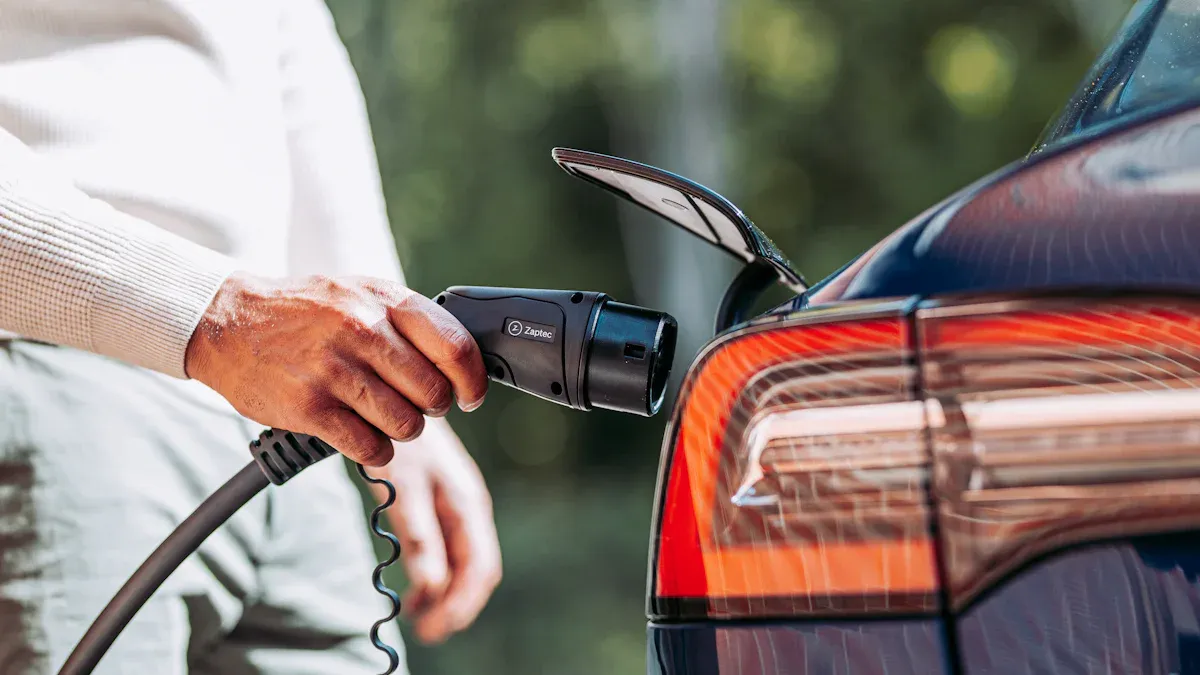
- Fesselnde Ladegeräte: These units have a permanently attached charging cable. They offer convenience, as the cable is always ready to use. Tethered chargers typically include the cost of the cable, with unit prices often starting upwards of £500 vor dem Einbau.
- Ungebundene Ladegeräte: These units have a socket, requiring the driver to use the separate cable that came with their car or purchase one. This offers flexibility for households with multiple EVs that use different connector types.
The following table breaks down the average equipment costs.
| Ladegerät Typ | Equipment Only Price (GBP) | Total Cost (with separate cable) (GBP) |
|---|---|---|
| Ungebundene | £400-£800 | £500-£1,000 |
| Gefesselt | £550-£1,000 | £550-£1,000 |
Anmerkung: A separate charging cable for an untethered charger typically adds £100-£200 to the overall cost.
Part 2: The Standard Installation Cost in the UK
The second major component of the price is the professionelle Installation. The average cost for installing a home EV charger in the UK, including both the hardware and a standard installation, is estimated zwischen £800 und £1.200. These installation costs cover the labor and materials needed to safely connect the charger to your home’s electrical system.
What a ‘Standard Installation’ Package Includes
When an installer quotes for a ‘standard installation’, it generally covers a straightforward setup. The package typically includes:
- Fitting the charger to a permanent structure.
- Up to 10 meters of cable, run neatly along a wall.
- Installation of a dedicated circuit from the breaker panel.
- All necessary safety devices, like a Circuit Breaker or RCBO.
- Full electrical testing and certification of the installation.
Any work required beyond these basics will lead to additional installation costs.
Typical Labor and Materials Fees for Installation
Labor makes up a large part of the installation cost. A qualified electrician will spend several hours ensuring the charger is installed safely and complies with all UK wiring regulations. The average labor and materials fee for a standard installation usually falls between £400 and £600. This fee covers the electrician’s time, the cabling, protective devices, and other essential components for the job. The final ev charger installation cost depends heavily on the complexity of the work.
Installer Certification and Compliance Costs (OZEV)
To ensure safety and quality, you must use a certified installer. For those eligible for government funding, using an OZEV (Office for Zero Emission Vehicles) approved installer is mandatory. These electricians have specific training for installing home charge points. Their certification ensures the installation meets the latest electrical and electric car charger safety standards. This compliance is built into the installation costs in the UK, guaranteeing a safe and reliable home charging system.
Key Factors That Increase Your Home Installation Cost
While a standard installation package covers the basics, many properties in the UK require additional work. These non-standard requirements are the primary reason for Installationskosten exceeding the average estimate. Understanding these potential factors helps homeowners anticipate the full financial scope of the project. The final cost often depends on the unique characteristics of a home.
Elektrische System-Upgrades
The condition of a home’s existing electrical system is the most common source of extra costs. A safe and compliant Elektroauto-Ladegerät installation demands a modern and robust electrical setup.
Consumer Unit (Fuse Box) Replacement Cost
Older homes may have outdated fuse boxes that lack the capacity or safety features for a new high-power circuit. If the breaker panel has no spare ways, uses old-style fuses, or lacks RCD protection, an installer will recommend a replacement.
Heads Up: A full breaker panel replacement is a significant job. Homeowners should budget between £450 and £800 for this upgrade, which includes the new unit and the electrician’s labor for the installation.
Cost of Upgrading Your Main Fuse
The main fuse protects the entire electrical supply to a property. A 7kW charger can draw significant power, so the main fuse may need an upgrade to 80A or 100A to handle the load. This work is performed by the local Distribution Network Operator (DNO), not the charger installer. Upgrading a main fuse through a DNO is often a free service in the UK. However, the specific type and size of a home’s current supply can influence whether charges will apply. Some fuse upgrades, particularly those up to 80 amps, can be free. Any costs for DNO upgrade work are separate from the EV charge point installation cost and must be paid directly to the DNO.
Installing a New Isolation Switch
For safety and maintenance, an isolation switch allows an electrician to safely turn off power to the charger without shutting down the entire house. While often included in a standard installation, if a new main switch is needed near the meter, it can add £100 to £200 to the total installation costs.
Earthing and Bonding Requirements
Proper earthing is critical for electrical safety. It prevents the car’s metal body from becoming live in the event of a fault. Homes built before 2010 are more likely to need earthing or bonding updates to meet current regulations. If the installer identifies inadequate earthing, they must rectify it.
- Material Costs: Earthing cable costs around £1.25-£1.40 per meter, with bonding straps and clips adding a few more pounds.
- Labor Charges: A local electrician may charge approximately £40-£50 for an hour’s work to install the necessary bonding.
Complex Cable Routing and Its Cost Impact
A standard installation includes up to 10 meters of cable clipped neatly to a wall. Any deviation from this simple route will increase labor and material costs.
Exceeding the Standard 10-Meter Cable Length
If the distance from the breaker panel to the charger location is more than 10 meters, the installer will charge for the extra cable and the additional time needed to run it. The average cost for extra high-specification cable is typically £15 to £25 per meter.
Running Cables Under Floors or Through Walls
Concealing cables for a cleaner look adds significant labor costs. Lifting floorboards, chasing cables into plaster walls, and then repairing the surfaces requires extra time and skill. This type of work can add £150 to £400 or more to the installation, depending on the complexity.
Trenching for Buried Cables to a Detached Garage
To install a home charger in a detached garage, the installer must run a steel-wire armored (SWA) cable underground. This involves digging a trench from the house to the garage. The costs for this can escalate quickly.
- SWA Cable Cost: £3 to £8 per meter.
- Trenching Cost: £20 to £50 per meter.
This means a 15-meter run to a garage could add £345 to £870 to the installation costs before even considering the reinstatement of the ground surface.
Groundwork and Structural Changes
Physical modifications to a property or its landscape can also increase the final price. These tasks often require specialist labor beyond what a typical electrician provides.
Digging and Reinstating Driveways or Patios
If the cable trench must cross a driveway or patio, the surface needs to be professionally dug up and reinstated. The cost varies significantly by surface type. Block paving offers advantages for future access, as existing blocks can be lifted and reused, which helps cut future costs and minimize material wastage.
| Driveway Surface | Repair Cost Range |
|---|---|
| Tarmac | £300 to £600 |
| Block Paving (lifting and relaying) | 500 bis 1.000 Pfund |
Cost to Install a Separate Mounting Post
If there is no suitable wall to mount the home charger, a dedicated mounting post is a great solution. The post itself can cost between £150 and £400. The installation requires digging a small foundation and concreting the post in place, adding another £100 to £200 in labor costs.
Drilling Through Reinforced Concrete or Thick Stone Walls
Standard installation quotes assume drilling through a standard brick cavity wall. Older properties in the UK often have very thick stone walls, or a charger location may require drilling through reinforced concrete. This requires specialist drill bits and significantly more time. An installer may add £50 to £150 to the charger installation cost for this difficult work.
Property Location and Accessibility
The specific location and type of a property significantly influence the final installation price. An installer must account for unique challenges presented by different home styles, from detached garages to city-center apartments, which can add to the overall costs.
Installation in Detached Garages and Outbuildings
Installing a charger in a detached garage or a separate outbuilding is a non-standard job that increases the total cost. The primary reason is the need to run a power supply from the main home to the outbuilding. This requires a trench to be dug for a steel-wire armored (SWA) cable, which is a labor-intensive process. Additional costs for this type of installation can include:
- The cost of the SWA cable itself.
- Labor for digging and back-filling the trench.
- Reinstatement of any surfaces like patios or driveways.
- Potentially installing a new, small breaker panel inside the garage to safely manage the charger’s circuit.
This work makes the installation more complex and expensive than a simple wall-mounted charger on the main house.
High-Rise Flats and Apartments
Residents of high-rise apartments and apartments in the UK face the most significant hurdles for a home charger installation. The shared nature of the building creates logistical and financial complexities. The final cost can be prohibitive without careful planning and access to available grants.
Key challenges that increase costs include:
- Complex Approvals: A tenant or flat owner must get permission from the freeholder or property management company. Landlords may be hesitant to approve an installation, citing the high initial cost and a perceived lack of return on investment.
- Shared Infrastructure: A single charger is often not enough. Landlords may need to invest in a larger infrastructure upgrade to support multiple charge points, including running cables to several parking bays.
- Connectivity Issues: Underground car parks often suffer from poor 4G or WiFi signals. A smart charger needs a stable connection, so additional investment in signal boosters may be necessary.
- Power Supply Limits: The building’s main power supply may not be sufficient for multiple chargers. The installer must consult with the Distribution Network Operator (DNO) to confirm capacity, which can lead to costly upgrades.
Good News for Renters and Flat Dwellers: The UK government offers an EV infrastructure grant for residential car parks. This grant helps landlords cover up to 75% of the costs for installing the necessary infrastructure, with a cap of £30,000 per building. This can be combined with other grants to reduce the financial burden, making a home charging installation more accessible.
Listed Buildings or Conservation Areas
Homeowners in historic buildings or designated historic districts must navigate extra regulations. The goal is to preserve the historical and aesthetic character of the property. While a standard home charger installation usually does not require Baugenehmigung, these properties are an exception.
An installation may require formal consent if the charger or its cabling impacts the building’s external appearance. While these properties may be exempt from some building regulations regarding EV chargers (Teil S), they must still comply with all electrical safety standards (Part P).
Profi-Tipp: Before proceeding with an installation on a listed building, it is wise to seek legal guidance or consult with the local planning authority. This ensures all permissions are secured, avoiding potential fines or orders to remove the charger. The average cost will increase if special mounting solutions are needed to minimize visual impact.
Installer Travel and Parking Surcharges
The final factor is the property’s accessibility for the installer. Most companies include a certain amount of travel in their standard installation package. However, properties in remote or hard-to-reach areas may incur a travel surcharge to cover the electrician’s extra time and fuel.
Similarly, an installation in a busy city center can lead to extra costs. If the installer must pay for parking or navigate congestion charges, they will likely pass this cost on to the customer. It is always best to confirm these potential charges when getting a quote.
How to Reduce Your Electric Car Charger Installation Cost
While the initial investment for an electric car charger can seem high, several strategies can significantly lower the upfront and long-term costs. Homeowners in the UK can leverage government incentives, make smart purchasing decisions, and explore bundled deals to reduce the financial impact of their home charging installation.
Government Grants and Schemes in the UK
The UK government offers financial support to make home charging more accessible, particularly for those in rented properties or apartments. These grants can substantially reduce the final installation cost.
The EV Chargepoint Grant Explained
The EV Chargepoint Grant is a key government scheme designed to help with the cost of installing a home charger. It provides funding of up to 75% towards the cost of a chargepoint and its installation, with a cap of £350. An OZEV-approved installer must handle the installation and claim the grant on the customer’s behalf.
Who is Eligible? (Renters and Flat Owners)
The EV Chargepoint Grant specifically targets people living in rental properties or apartments. To qualify for the grant, an applicant must meet several conditions.
- They must live in a rented property or own a flat.
- The property must have a dedicated, off-street parking space.
- They must own or have primary use of an eligible electric vehicle.
- The property must be in the UK.
The grant is not available for homeowners living in single-unit houses or for those who have previously claimed a similar grant.
How to Apply for the Grant
The application process for the EV Chargepoint Grant is straightforward. The customer chooses an OZEV-approved installer, who then checks if the customer and property are eligible. The installer applies for the grant on the customer’s behalf, and the grant value is deducted from the final installation quote.
Local Council Schemes and Incentives
Beyond the EV Chargepoint Grant, local authorities offer additional support. The On-Street Residential Chargepoint Scheme (ORCS) helps councils install public charging infrastructure for residents without private parking. Landlords can also access grants to install home charge points in residential car parks, making it easier for tenants to get a charger.
Die Wahl des richtigen Ladegeräts für Ihr Budget
Selecting the right charger is crucial for managing costs. A premium model is not always necessary, and smart features can lead to significant long-term savings.
Assessing if You Need a Premium Model
Homeowners should evaluate their driving habits and needs. A standard 7kW smart charger is sufficient for most drivers. Premium models with extra features like custom colors or advanced solar integration may not be worth the higher initial cost for the average user.
Comparing Long-Term Costs of Tethered vs. Untethered
A tethered charger offers convenience but may cost more upfront. An untethered charger provides flexibility, especially for households with different EV models. The long-term costs are similar, but an untethered unit avoids the need to replace the entire charger if the cable gets damaged.
How Smart Charging Features Reduce Running Costs
Smart charging is the most effective way to lower the cost to charge. These chargers allow users to schedule charging during off-peak hours when electricity rates are cheaper. Studies show that households can save hundreds of pounds annually by shifting their charging to these times, significantly reducing running costs.
Smart Shopping for Your Home Installation
Finding the right deal on an installation requires some research. Comparing offers and exploring different purchasing routes can lead to a lower overall price.
Why You Should Get Multiple Quotes from Installers
It is essential to get more than one installation quote. Prices can vary between installers based on their location, overheads, and the charger brands they offer. Obtaining at least three quotes gives a clear picture of the average market rate and helps identify the best value. A detailed installation quote will outline all potential costs.
Bundled Deals from Car Dealerships or Energy Suppliers
Many energy suppliers and car dealerships offer bundled packages. These deals often combine the charger, installation, and sometimes a special energy tariff into a single monthly payment. For example, some suppliers provide a home charger installation for a low monthly fee, which includes a full warranty.
Checking for Off-Peak Installation Discounts
Some installation companies may offer discounts for scheduling the work during their quieter periods. It is always worth asking an installer if they have any flexibility on pricing for an off-peak installation date. This can sometimes reduce labor costs.
Salary Sacrifice Schemes for EV Charger Installation
An increasingly popular option is an electric vehicle salary reduction arrangement. This allows an employee to lease an EV and bundle the home charger installation into a single monthly payment taken from their gross salary. This arrangement reduces their income tax and National Insurance contributions, leading to savings of 30-40% on the total costs.
The Home Electric Car Charger Installation Process

The journey to getting a home electric car charger involves several key stages. From the initial survey to the final handover, each step ensures a safe and compliant installation. This process is designed to be straightforward for the homeowner.
The Pre-Installation Survey
Before any work begins, the installer must assess the property. This pre-installation survey determines the scope of work and identifies any potential complexities. Most companies now start with a remote digital survey.
What is a Remote Digital Survey?
A remote digital survey allows an installer to evaluate a property without visiting in person. The homeowner provides specific photos and information through an online form or app. This method is efficient and speeds up the quoting process. Key information required includes:
- Photos of the electric meter, breaker panel, and the surrounding area.
- A picture of the main water stop tap to check for earth bonding.
- A view of the gas meter, if applicable.
- A short video or series of photos showing the proposed cable route from the meter to the desired charger location.
This information helps the installer understand the existing electrical setup and plan the installation.
When is an On-Site Survey Necessary?
While digital surveys are common, an on-site visit is sometimes necessary. An installer may need to visit the home to assess the power supply directly or identify the best location for the charger. This is often required for complex properties or to ensure the installation complies with all local regulations. For large-scale commercial charging projects, an on-site survey is essential to confirm the power grid can support the high demand.
Information You Need to Provide Your Installer
To ensure a smooth survey process, homeowners should have key details ready. This includes clear photos of the electrical meter, showing the main fuse and any isolation switches. Pictures of the gas and water bonding are also crucial. Providing a clear walkthrough of the proposed cable path helps the installer accurately estimate the work involved in the home charging installation.
The Day of the Installation
With the survey complete and a quote agreed upon, the installation day can be scheduled. The process is typically completed within a single day.
How Long Does the Installation Take?
Eine Norm 7kW home charger installation usually takes between two and six hours. The exact duration depends on the complexity of the job. A simple installation with a short cable run will be quicker than one requiring more extensive wiring or drilling.
What the Installer Will Do on the Day
On the day, the qualified electrician will:
- Confirm the final charger location with the homeowner.
- Temporarily turn off the power to safely work on the breaker panel.
- Install a new dedicated circuit for the charger.
- Run the armored cable from the breaker panel to the charger location.
- Mount the charging unit securely to the wall or post.
- Connect the charger to the power supply.
Final Testing, Commissioning, and Handover
After the physical installation, the installer performs a series of electrical tests. These checks ensure the charger is operating safely and correctly. The installer will then commission the charger, connect it to the home’s Wi-Fi, and help the homeowner set up the companion app. Finally, they provide a full handover, explaining how to use the new charging station.
Post-Installation Essentials
The relationship with the installer does not end after they leave. Understanding the warranties and required notifications is crucial for long-term peace of mind.
Understanding the Warranty on Your Charger Unit
Most EV chargers come with a manufacturer’s warranty. This typically covers the hardware against defects for a set period. Many chargers installed under government schemes, like those from EO Charging, include a comprehensive three-year warranty covering both parts and labor. This ensures any faults with the charger unit are repaired at no cost.
The Installer’s Workmanship Guarantee
In addition to the product warranty, the installer provides a guarantee on their workmanship. This usually lasts for one year from the installation date. It covers any issues arising from the installation itself, such as faulty wiring or connections. Some companies, like Green EV Chargers, offer a 1-year parts and labor warranty alongside a 3-year manufacturer’s warranty.
The DNO Notification Process Explained
After the install is complete, the installer must notify the local Distribution Network Operator (DNO). This is a legal requirement that informs the DNO a new high-power device has been connected to their network. This notification ensures the local grid remains stable and safe for everyone. The installer handles all the paperwork for this process.
A home electric car charger is a key investment for any electric vehicle owner in the UK. Standard installation costs in the UK for a Installation von Heimladegeräten typically range from £950 to £1,350. The final price of the charger installation is shaped by the property and the chosen charger. Homeowners should always secure more than one quote; a second quote and a third quote help establish fair costs. A detailed installation quote from a certified installer ensures a quality installation. The installer handles the work professionally.
People in the UK can investigate their eligibility for the EV Chargepoint Grant. The EV Chargepoint Grant significantly lowers home charger installation costs. The EV Chargepoint Grant is a valuable tool, and the EV Chargepoint Grant makes this upgrade more accessible.
FAQ
Do I need planning permission for a home charger?
Most home charger installations do not require planning permission. They fall under permitted development rights. However, homeowners in historic buildings or historic districts must consult their local planning authority before proceeding with an installation to ensure compliance with specific regulations.
Kann ich ein E-Ladegerät selbst installieren?
No, a homeowner cannot install an EV charger themselves. UK regulations require a qualified and certified electrician to perform the installation. This ensures the work meets all electrical safety standards and is legally compliant. Using a professional is mandatory for safety and warranty purposes.
Wie lange dauert eine Standardinstallation?
A standard home charger installation is an efficient process. An electrician typically completes the job in two to six hours. The exact time depends on the complexity of the cable run and the property’s existing electrical system.
Does an EV charger increase my home’s value?
Yes, installing an EV charger can increase a property’s value. Studies show that homes with a pre-installed charge point are more attractive to buyers. They often sell for a higher price compared to similar properties without this modern amenity.
How do smart chargers lower running costs?
Intelligente Ladegeräte connect to the internet, allowing users to schedule charging sessions. Homeowners can set their car to charge during off-peak hours when electricity is cheapest. This simple feature significantly reduces the overall cost to charge the vehicle over time.
What happens if my fuse box is old?
An installer will assess the breaker panel (fuse box) during the survey. If it is outdated or lacks capacity, they will recommend a replacement.
A modern breaker panel is essential for safety. This upgrade ensures the home’s electrical system can safely handle the new high-power circuit for the charger.
Is a tethered or untethered charger better?
The choice depends on user preference.
- Gebundene Ladegeräte offer convenience with an attached cable.
- Untethered chargers provide flexibility for households with multiple EV brands.
Both types perform the same function, so the decision often comes down to personal convenience versus flexibility.