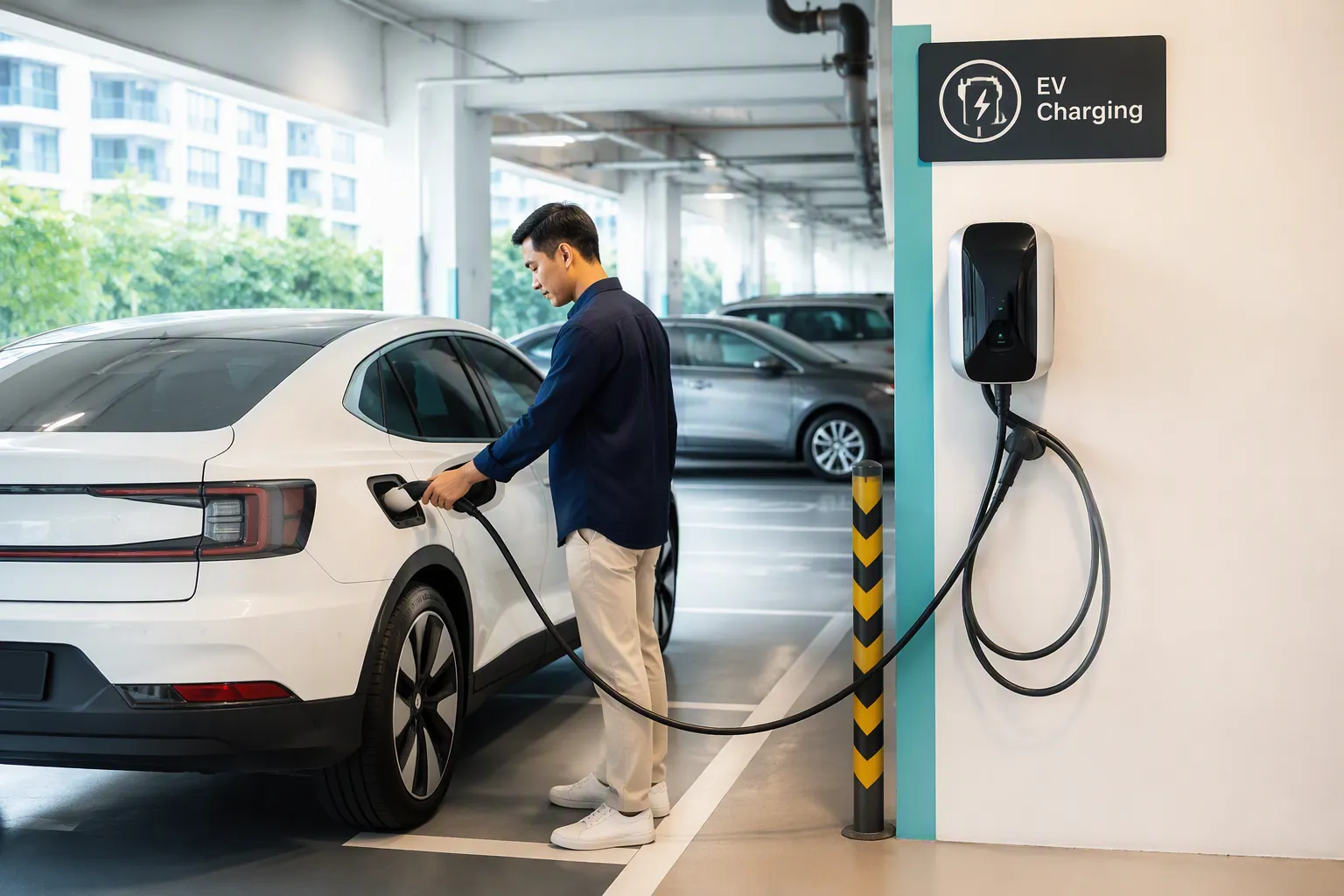
The average cost for a home Chargeur de VE installation in the UK typically ranges from £950 to £1,350. This price covers both the home charger unit and a standard installation service. The final installation cost depends on the charger’s features and the home’s electrical complexity. While many Fabricants de chargeurs de VE offer various Solutions de recharge pour véhicules électriques, from advanced units to simple chargeurs portables pour VE, the investment can be significant. A 2021 UK study found properties with an electric car charger sold for an average of 13% plus, highlighting the value this installation adds to a home. Understanding the average home charger installation costs and typical EV charger installation prices helps homeowners budget for this electric vehicle upgrade. The EV Charger installation costs can vary, so assessing the total ev charger installation cost is crucial. These installation costs in the UK reflect the complete installation process.
The Total Cost Breakdown for a Home Electric Car Charger

Understanding the final price of a installation réussie d'un chargeur domestique pour VE requires breaking down the two main components: the charger unit itself and the installation service. The total cost is a combination of these two parts, with each influenced by different factors.
Partie 1 : Le coût unitaire des chargeurs de VE
The charging unit itself typically accounts for a significant portion of the total expense. The charger hardware cost can range from £400 to over £800. This price depends on its power output, features, and brand. Technologically advanced providers like TPSON offer a variety of electric vehicle charging solutions to meet diverse needs and budgets.
Entry-Level Chargers (3.6kW)
Entry-level chargers operate at 3.6kW. They are the slowest and most affordable option for home charging. These units are suitable for plug-in hybrid vehicles (PHEVs) with smaller batteries or for electric car owners who drive short distances and can leave their car charging overnight. Their lower power demand means they are sometimes easier to install in homes with older electrical systems.
Standard Fast Chargers (7kW)
The most common choice for home charging in the UK is the 7kW fast charger. A 7kW unit can fully charge most electric cars overnight, making it a practical and efficient solution for the average driver. These chargers offer a perfect balance of charging speed and cost, representing the standard for most new home installations.
High-Power Three-Phase Chargers (22kW)
High-power 22kW chargers offer the fastest possible AC charging speeds for a home. However, they have a major requirement. A home must have a three-phase electrical supply to support this power level. Most homes in the UK have a single-phase supply, making 22kW chargers rare for residential properties. They are more common in commercial settings or for homes with specific, high-demand electrical setups.
Smart vs. Non-Smart Charger Costs
Smart chargers have become the standard in the UK due to government regulations. These chargers connect to the internet, allowing users to:
- Schedule charging for off-peak hours to save money.
- Track energy usage through a mobile app.
- Benefit from over-the-air software updates.
While slightly more expensive upfront, their ability to manage charging and reduce the cost to charge makes them a more economical choice over the long term.
Tethered vs. Untethered Charger Pricing
Another key decision is choosing between a tethered or untethered home charger.
- Chargeurs attachés: These units have a permanently attached charging cable. They offer convenience, as the cable is always ready to use. Tethered chargers typically include the cost of the cable, with unit prices often starting upwards of £500 avant l'installation.
- Les chargeurs non attachés: These units have a socket, requiring the driver to use the separate cable that came with their car or purchase one. This offers flexibility for households with multiple EVs that use different connector types.
The following table breaks down the average equipment costs.
| Type de chargeur | Equipment Only Price (GBP) | Total Cost (with separate cable) (GBP) |
|---|---|---|
| Détaché | £400-£800 | £500-£1,000 |
| L'attache | £550-£1,000 | £550-£1,000 |
Remarque : A separate charging cable for an untethered charger typically adds £100-£200 to the overall cost.
Part 2: The Standard Installation Cost in the UK
The second major component of the price is the installation professionnelle. The average cost for installing a home EV charger in the UK, including both the hardware and a standard installation, is estimated entre 800 et 1 200 livres sterling. These installation costs cover the labor and materials needed to safely connect the charger to your home’s electrical system.
What a ‘Standard Installation’ Package Includes
When an installer quotes for a ‘standard installation’, it generally covers a straightforward setup. The package typically includes:
- Fitting the charger to a permanent structure.
- Up to 10 meters of cable, run neatly along a wall.
- Installation of a dedicated circuit from the breaker panel.
- All necessary safety devices, like a Circuit Breaker or RCBO.
- Full electrical testing and certification of the installation.
Any work required beyond these basics will lead to additional installation costs.
Typical Labor and Materials Fees for Installation
Labor makes up a large part of the installation cost. A qualified electrician will spend several hours ensuring the charger is installed safely and complies with all UK wiring regulations. The average labor and materials fee for a standard installation usually falls between £400 and £600. This fee covers the electrician’s time, the cabling, protective devices, and other essential components for the job. The final ev charger installation cost depends heavily on the complexity of the work.
Installer Certification and Compliance Costs (OZEV)
To ensure safety and quality, you must use a certified installer. For those eligible for government funding, using an OZEV (Office for Zero Emission Vehicles) approved installer is mandatory. These electricians have specific training for installing home charge points. Their certification ensures the installation meets the latest electrical and electric car charger safety standards. This compliance is built into the installation costs in the UK, guaranteeing a safe and reliable home charging system.
Key Factors That Increase Your Home Installation Cost
While a standard installation package covers the basics, many properties in the UK require additional work. These non-standard requirements are the primary reason for coûts d'installation exceeding the average estimate. Understanding these potential factors helps homeowners anticipate the full financial scope of the project. The final cost often depends on the unique characteristics of a home.
Modernisation du système électrique
The condition of a home’s existing electrical system is the most common source of extra costs. A safe and compliant electric car charger installation demands a modern and robust electrical setup.
Consumer Unit (Fuse Box) Replacement Cost
Older homes may have outdated fuse boxes that lack the capacity or safety features for a new high-power circuit. If the breaker panel has no spare ways, uses old-style fuses, or lacks RCD protection, an installer will recommend a replacement.
Heads Up: A full breaker panel replacement is a significant job. Homeowners should budget between 450 £ et 800 £ pour cette mise à niveau, qui inclut la nouvelle unité et la main-d'œuvre de l'électricien pour l'installation.
Coût de la mise à niveau de votre fusible principal
Le fusible principal protège l'ensemble de l'alimentation électrique d'un bien immobilier. Un chargeur de 7 kW peut consommer une puissance importante, il peut donc être nécessaire de mettre à niveau le fusible principal à 80 A ou 100 A pour supporter la charge. Ces travaux sont réalisés par le gestionnaire de réseau de distribution (DNO) local, et non par l'installateur du chargeur. La mise à niveau d'un fusible principal par un DNO est souvent un service gratuit au Royaume-Uni. Cependant, le type spécifique et la taille de l'alimentation actuelle d'un logement peuvent influencer l'application éventuelle de frais. Certaines mises à niveau de fusible, notamment celles jusqu'à 80 ampères, peuvent être gratuites. Tout coût lié aux travaux de mise à niveau par le DNO est distinct du coût d'installation du point de charge pour véhicule électrique et doit être réglé directement au DNO.
Installation d'un nouvel interrupteur de sectionnement
Pour des raisons de sécurité et de maintenance, un interrupteur de sectionnement permet à un électricien de couper en toute sécurité l'alimentation du chargeur sans interrompre l'électricité de toute la maison. Bien qu'il soit souvent inclus dans une installation standard, si un nouvel interrupteur principal est nécessaire près du compteur, cela peut ajouter 100 £ à 200 £ au coût total de l'installation.
Exigences de mise à la terre et de liaison équipotentielle
Une mise à la terre correcte est essentielle pour la sécurité électrique. Elle empêche la carrosserie métallique de la voiture de devenir sous tension en cas de défaut. Les maisons construites avant 2010 sont plus susceptibles de nécessiter des mises à jour de la mise à la terre ou de la liaison équipotentielle pour se conformer à la réglementation actuelle. Si l'installateur identifie une mise à la terre inadéquate, il doit y remédier.
- Coût des matériaux: Le câble de terre coûte environ 1,25 £ à 1,40 £ par mètre, les barrettes et colliers de liaison ajoutant quelques livres supplémentaires.
- Frais de main-d'œuvre: Un électricien local peut facturer environ 40 £ à 50 £ pour une heure de travail afin d'installer la liaison nécessaire.
Cheminement complexe des câbles et son impact sur le coût
Une installation standard comprend jusqu'à 10 mètres de câble fixés proprement à un mur. Toute déviation de ce cheminement simple augmentera les coûts de main-d'œuvre et de matériaux.
Dépassement de la longueur de câble standard de 10 mètres
Si la distance entre le tableau électrique et l'emplacement du chargeur dépasse 10 mètres, l'installateur facturera le câble supplémentaire et le temps additionnel nécessaire pour le poser. Le coût moyen d'un câble supplémentaire haute spécification est généralement de 15 £ à 25 £ par mètre.
Passage de câbles sous les planchers ou à travers les murs
Dissimuler les câbles pour un aspect plus esthétique ajoute des coûts de main-d'œuvre significatifs. Soulever les planchers, encastrer les câbles dans les murs en plâtre, puis réparer les surfaces nécessite du temps et des compétences supplémentaires. Ce type de travaux peut ajouter 150 £ à 400 £ ou plus au coût de l'installation, selon la complexité.
Trancher pour enfouir des câbles vers un garage détaché
Pour installer un chargeur domestique dans un garage détaché, l'installateur doit poser un câble blindé à armure d'acier (SWA) sous terre. Cela implique de creuser une tranchée de la maison au garage. Les coûts peuvent rapidement augmenter.
- Coût du câble SWA: 3 £ à 8 £ par mètre.
- Coût du creusement de tranchée: 20 £ à 50 £ par mètre.
Cela signifie qu'une pose de 15 mètres vers un garage pourrait ajouter 345 £ à 870 £ aux coûts d'installation, sans même considérer la remise en état de la surface du sol.
Travaux de terrassement et modifications structurelles
Les modifications physiques d'un bien immobilier ou de son paysage peuvent également augmenter le prix final. Ces tâches nécessitent souvent une main-d'œuvre spécialisée au-delà de ce qu'un électricien standard fournit.
Creuser et remettre en état les allées ou terrasses
Si la tranchée pour le câble doit traverser une allée ou une terrasse, la surface doit être démontée et remise en état professionnellement. Le coût varie considérablement selon le type de revêtement. Les pavés autobloquants offrent des avantages pour un accès futur, car les pavés existants peuvent être soulevés et réutilisés, ce qui aide à réduire les coûts futurs et minimiser le gaspillage de matériaux.
| Revêtement d'allée | Fourchette de coût de réparation |
|---|---|
| Asphalte | 300 £ à 600 £ |
| Pavés autobloquants (soulèvement et repose) | De 500 à 1 000 livres sterling |
Coût d'installation d'un poteau de support séparé
S'il n'y a pas de mur adapté pour fixer le chargeur domestique, un poteau de support dédié est une excellente solution. Le poteau lui-même peut coûter entre 150 £ et 400 £. L'installation nécessite de creuser une petite fondation et de sceller le poteau dans du béton, ajoutant un autre 100 £ à 200 £ coût en main-d'œuvre.
Perçage de béton armé ou de murs épais en pierre
Les devis d'installation standard supposent un perçage à travers un mur creux en brique standard. Les propriétés plus anciennes au Royaume-Uni ont souvent des murs en pierre très épais, ou l'emplacement d'un chargeur peut nécessiter un perçage dans du béton armé. Cela nécessite des forets spéciaux et considérablement plus de temps. Un installateur peut ajouter 50 £ à 150 £ au coût d'installation du chargeur pour ce travail difficile.
Emplacement et accessibilité du bien immobilier
L'emplacement spécifique et le type de bien immobilier influencent considérablement le prix final de l'installation. Un installateur doit prendre en compte les défis uniques posés par différents styles d'habitation, des garages détachés aux appartements en centre-ville, ce qui peut augmenter les coûts globaux.
Installation dans des garages détachés et dépendances
Installer un chargeur dans un garage détaché ou une dépendance séparée est un travail non standard qui augmente le coût total. La raison principale est la nécessité d'amener une alimentation électrique depuis la maison principale jusqu'à la dépendance. Cela nécessite de creuser une tranchée pour un câble blindé à armure d'acier (SWA), ce qui est un processus à forte intensité de main-d'œuvre. Les coûts supplémentaires pour ce type d'installation peuvent inclure :
- Le coût du câble SWA lui-même.
- La main-d'œuvre pour creuser et remblayer la tranchée.
- Reinstatement of any surfaces like patios or driveways.
- Potentially installing a new, small breaker panel inside the garage to safely manage the charger’s circuit.
This work makes the installation more complex and expensive than a simple wall-mounted charger on the main house.
High-Rise Flats and Apartments
Residents of high-rise apartments and apartments in the UK face the most significant hurdles for a home charger installation. The shared nature of the building creates logistical and financial complexities. The final cost can be prohibitive without careful planning and access to available grants.
Key challenges that increase costs include:
- Complex Approvals: A tenant or flat owner must get permission from the freeholder or property management company. Landlords may be hesitant to approve an installation, citing the high initial cost and a perceived lack of return on investment.
- Shared Infrastructure: A single charger is often not enough. Landlords may need to invest in a larger infrastructure upgrade to support multiple charge points, including running cables to several parking bays.
- Connectivity Issues: Underground car parks often suffer from poor 4G or WiFi signals. A smart charger needs a stable connection, so additional investment in signal boosters may be necessary.
- Power Supply Limits: The building’s main power supply may not be sufficient for multiple chargers. The installer must consult with the Distribution Network Operator (DNO) to confirm capacity, which can lead to costly upgrades.
Good News for Renters and Flat Dwellers: The UK government offers an EV infrastructure grant for residential car parks. This grant helps landlords cover up to 75% of the costs for installing the necessary infrastructure, with a cap of £30,000 per building. This can be combined with other grants to reduce the financial burden, making a home charging installation more accessible.
Listed Buildings or Conservation Areas
Homeowners in historic buildings or designated historic districts must navigate extra regulations. The goal is to preserve the historical and aesthetic character of the property. While a standard home charger installation usually does not require permis de construire, these properties are an exception.
An installation may require formal consent if the charger or its cabling impacts the building’s external appearance. While these properties may be exempt from some building regulations regarding EV chargers (Partie S), they must still comply with all electrical safety standards (Part P).
Conseil de pro : Before proceeding with an installation on a listed building, it is wise to seek legal guidance or consult with the local planning authority. This ensures all permissions are secured, avoiding potential fines or orders to remove the charger. The average cost will increase if special mounting solutions are needed to minimize visual impact.
Installer Travel and Parking Surcharges
The final factor is the property’s accessibility for the installer. Most companies include a certain amount of travel in their standard installation package. However, properties in remote or hard-to-reach areas may incur a travel surcharge to cover the electrician’s extra time and fuel.
Similarly, an installation in a busy city center can lead to extra costs. If the installer must pay for parking or navigate congestion charges, they will likely pass this cost on to the customer. It is always best to confirm these potential charges when getting a quote.
How to Reduce Your Electric Car Charger Installation Cost
While the initial investment for an electric car charger can seem high, several strategies can significantly lower the upfront and long-term costs. Homeowners in the UK can leverage government incentives, make smart purchasing decisions, and explore bundled deals to reduce the financial impact of their home charging installation.
Government Grants and Schemes in the UK
The UK government offers financial support to make home charging more accessible, particularly for those in rented properties or apartments. These grants can substantially reduce the final installation cost.
The EV Chargepoint Grant Explained
The EV Chargepoint Grant is a key government scheme designed to help with the cost of installing a chargeur domestique. It provides funding of up to 75% towards the cost of a chargepoint and its installation, with a cap of £350. An OZEV-approved installer must handle the installation and claim the grant on the customer’s behalf.
Who is Eligible? (Renters and Flat Owners)
The EV Chargepoint Grant specifically targets people living in rental properties or apartments. To qualify for the grant, an applicant must meet several conditions.
- They must live in a rented property or own a flat.
- The property must have a dedicated, off-street parking space.
- They must own or have primary use of an eligible electric vehicle.
- The property must be in the UK.
The grant is not available for homeowners living in single-unit houses or for those who have previously claimed a similar grant.
Comment demander la subvention
The application process for the EV Chargepoint Grant is straightforward. The customer chooses an OZEV-approved installer, who then checks if the customer and property are eligible. The installer applies for the grant on the customer’s behalf, and the grant value is deducted from the final installation quote.
Local Council Schemes and Incentives
Beyond the EV Chargepoint Grant, local authorities offer additional support. The Système de points de charge résidentiels sur voirie (ORCS) helps councils install public charging infrastructure for residents without private parking. Landlords can also access grants to install home charge points in residential car parks, making it easier for tenants to get a charger.
Choisir le bon chargeur pour votre budget
Selecting the right charger is crucial for managing costs. A premium model is not always necessary, and smart features can lead to significant long-term savings.
Assessing if You Need a Premium Model
Homeowners should evaluate their driving habits and needs. A standard 7kW smart charger is sufficient for most drivers. Premium models with extra features like custom colors or advanced solar integration may not be worth the higher initial cost for the average user.
Comparing Long-Term Costs of Tethered vs. Untethered
A tethered charger offers convenience but may cost more upfront. An untethered charger provides flexibility, especially for households with different EV models. The long-term costs are similar, but an untethered unit avoids the need to replace the entire charger if the cable gets damaged.
How Smart Charging Features Reduce Running Costs
Smart charging is the most effective way to lower the cost to charge. These chargers allow users to schedule charging during off-peak hours when electricity rates are cheaper. Studies show that households can save hundreds of pounds annually by shifting their charging to these times, significantly reducing running costs.
Smart Shopping for Your Home Installation
Finding the right deal on an installation requires some research. Comparing offers and exploring different purchasing routes can lead to a lower overall price.
Why You Should Get Multiple Quotes from Installers
It is essential to get more than one installation quote. Prices can vary between installers based on their location, overheads, and the charger brands they offer. Obtaining at least three quotes gives a clear picture of the average market rate and helps identify the best value. A detailed installation quote will outline all potential costs.
Bundled Deals from Car Dealerships or Energy Suppliers
Many energy suppliers and car dealerships offer bundled packages. These deals often combine the charger, installation, and sometimes a special energy tariff into a single monthly payment. For example, some suppliers provide a home charger installation for a low monthly fee, which includes a full warranty.
Checking for Off-Peak Installation Discounts
Some installation companies may offer discounts for scheduling the work during their quieter periods. It is always worth asking an installer if they have any flexibility on pricing for an off-peak installation date. This can sometimes reduce labor costs.
Salary Sacrifice Schemes for EV Charger Installation
An increasingly popular option is an electric vehicle salary reduction arrangement. This allows an employee to lease an EV and bundle the home charger installation into a single monthly payment taken from their gross salary. This arrangement reduces their income tax and National Insurance contributions, leading to savings of 30-40% on the total costs.
The Home Electric Car Charger Installation Process

The journey to getting a home electric car charger involves several key stages. From the initial survey to the final handover, each step ensures a safe and compliant installation. This process is designed to be straightforward for the homeowner.
The Pre-Installation Survey
Before any work begins, the installer must assess the property. This pre-installation survey determines the scope of work and identifies any potential complexities. Most companies now start with a remote digital survey.
Qu'est-ce qu'une étude numérique à distance ?
A remote digital survey allows an installer to evaluate a property without visiting in person. The homeowner provides specific photos and information through an online form or app. This method is efficient and speeds up the quoting process. Key information required includes:
- Photos of the electric meter, breaker panel, and the surrounding area.
- A picture of the main water stop tap to check for earth bonding.
- A view of the gas meter, if applicable.
- A short video or series of photos showing the proposed cable route from the meter to the desired charger location.
This information helps the installer understand the existing electrical setup and plan the installation.
When is an On-Site Survey Necessary?
While digital surveys are common, an on-site visit is sometimes necessary. An installer may need to visit the home to assess the power supply directly or identify the best location for the charger. This is often required for complex properties or to ensure the installation complies with all local regulations. For large-scale commercial charging projects, an on-site survey is essential to confirm the power grid can support the high demand.
Information You Need to Provide Your Installer
To ensure a smooth survey process, homeowners should have key details ready. This includes clear photos of the electrical meter, showing the main fuse and any isolation switches. Pictures of the gas and water bonding are also crucial. Providing a clear walkthrough of the proposed cable path helps the installer accurately estimate the work involved in the home charging installation.
The Day of the Installation
With the survey complete and a quote agreed upon, the installation day can be scheduled. The process is typically completed within a single day.
Combien de temps dure l'installation ?
Une norme 7kW home charger installation usually takes between two and six hours. The exact duration depends on the complexity of the job. A simple installation with a short cable run will be quicker than one requiring more extensive wiring or drilling.
What the Installer Will Do on the Day
On the day, the qualified electrician will:
- Confirm the final charger location with the homeowner.
- Temporarily turn off the power to safely work on the breaker panel.
- Install a new dedicated circuit for the charger.
- Run the armored cable from the breaker panel to the charger location.
- Mount the charging unit securely to the wall or post.
- Connect the charger to the power supply.
Final Testing, Commissioning, and Handover
After the physical installation, the installer performs a series of electrical tests. These checks ensure the charger is operating safely and correctly. The installer will then commission the charger, connect it to the home’s Wi-Fi, and help the homeowner set up the companion app. Finally, they provide a full handover, explaining how to use the new charging station.
Post-Installation Essentials
The relationship with the installer does not end after they leave. Understanding the warranties and required notifications is crucial for long-term peace of mind.
Understanding the Warranty on Your Charger Unit
Most EV chargers come with a manufacturer’s warranty. This typically covers the hardware against defects for a set period. Many chargers installed under government schemes, like those from EO Charging, include a comprehensive three-year warranty covering both parts and labor. This ensures any faults with the charger unit are repaired at no cost.
The Installer’s Workmanship Guarantee
In addition to the product warranty, the installer provides a guarantee on their workmanship. This usually lasts for one year from the installation date. It covers any issues arising from the installation itself, such as faulty wiring or connections. Some companies, like Green EV Chargers, offer a 1-year parts and labor warranty alongside a 3-year manufacturer’s warranty.
The DNO Notification Process Explained
After the install is complete, the installer must notify the local Distribution Network Operator (DNO). This is a legal requirement that informs the DNO a new high-power device has been connected to their network. This notification ensures the local grid remains stable and safe for everyone. The installer handles all the paperwork for this process.
Une borne de recharge domestique electric car charger est un investissement clé pour tout propriétaire de véhicule électrique au Royaume-Uni. Les coûts d'installation standard au Royaume-Uni pour une borne installation d'un chargeur domestique se situent généralement entre 950 et 1 350 livres sterling. Le prix final de l'installation de la borne est déterminé par la propriété et le modèle de borne choisi. Les propriétaires doivent toujours obtenir plusieurs devis ; un deuxième et un troisième devis aident à établir des coûts équitables. Un devis d'installation détaillé d'un installateur certifié garantit une installation de qualité. L'installateur réalise les travaux de manière professionnelle.
Les résidents du Royaume-Uni peuvent vérifier leur éligibilité à la subvention pour borne de recharge (EV Chargepoint Grant). Cette subvention réduit considérablement les coûts d'installation d'une borne domestique. La subvention pour borne de recharge est un outil précieux qui rend cette amélioration plus accessible.
FAQ
Ai-je besoin d'un permis de construire pour une borne de recharge domestique ?
La plupart des installations de bornes domestiques ne nécessitent pas de permis de construire. Elles relèvent des droits de développement autorisés. Cependant, les propriétaires de bâtiments historiques ou situés en secteur protégé doivent consulter leur autorité locale d'urbanisme avant de procéder à l'installation pour s'assurer du respect des réglementations spécifiques.
Puis-je installer moi-même un chargeur de VE ?
Non, un propriétaire ne peut pas installer lui-même une borne de recharge pour VE. La réglementation britannique exige qu'un électricien qualifié et certifié effectue l'installation. Cela garantit que les travaux respectent toutes les normes de sécurité électrique et sont conformes à la loi. Le recours à un professionnel est obligatoire pour des raisons de sécurité et de garantie.
Combien de temps dure une installation standard ?
L'installation standard d'une borne de recharge domestique est un processus efficace. Un électricien termine généralement le travail en deux à six heures. Le temps exact dépend de la complexité du tracé du câble et de l'installation électrique existante du logement.
Une borne de recharge pour VE augmente-t-elle la valeur de ma maison ?
Oui, l'installation d'une borne de recharge peut augmenter la valeur d'un bien. Des études montrent que les maisons équipées d'un point de recharge pré-installé sont plus attractives pour les acheteurs. Elles se vendent souvent à un prix plus élevé que des propriétés similaires sans cet équipement moderne.
Comment les bornes intelligentes réduisent-elles les coûts d'exploitation ?
Chargeurs intelligents se connectent à Internet, permettant aux utilisateurs de programmer les sessions de recharge. Les propriétaires peuvent régler leur voiture pour qu'elle se recharge pendant les heures creuses, lorsque l'électricité est la moins chère. Cette simple fonctionnalité réduit significativement le coût global de recharge du véhicule sur le long terme.
Que se passe-t-il si mon tableau électrique est ancien ?
L'installateur évaluera le tableau de disjoncteurs (tableau électrique) lors de l'étude préalable. S'il est obsolète ou manque de capacité, il recommandera son remplacement.
Un tableau de disjoncteurs moderne est essentiel pour la sécurité. Cette mise à niveau garantit que l'installation électrique de la maison peut supporter en toute sécurité le nouveau circuit haute puissance de la borne.
Une borne avec câble fixe ou démontable est-elle préférable ?
Le choix dépend des préférences de l'utilisateur.
- Les bornes avec câble fixe offrent la commodité d'un câble attaché.
- Les bornes avec câble démontable offrent une flexibilité pour les foyers possédant plusieurs marques de VE.
Les deux types remplissent la même fonction, la décision se résume donc souvent à un choix entre commodité personnelle et flexibilité.