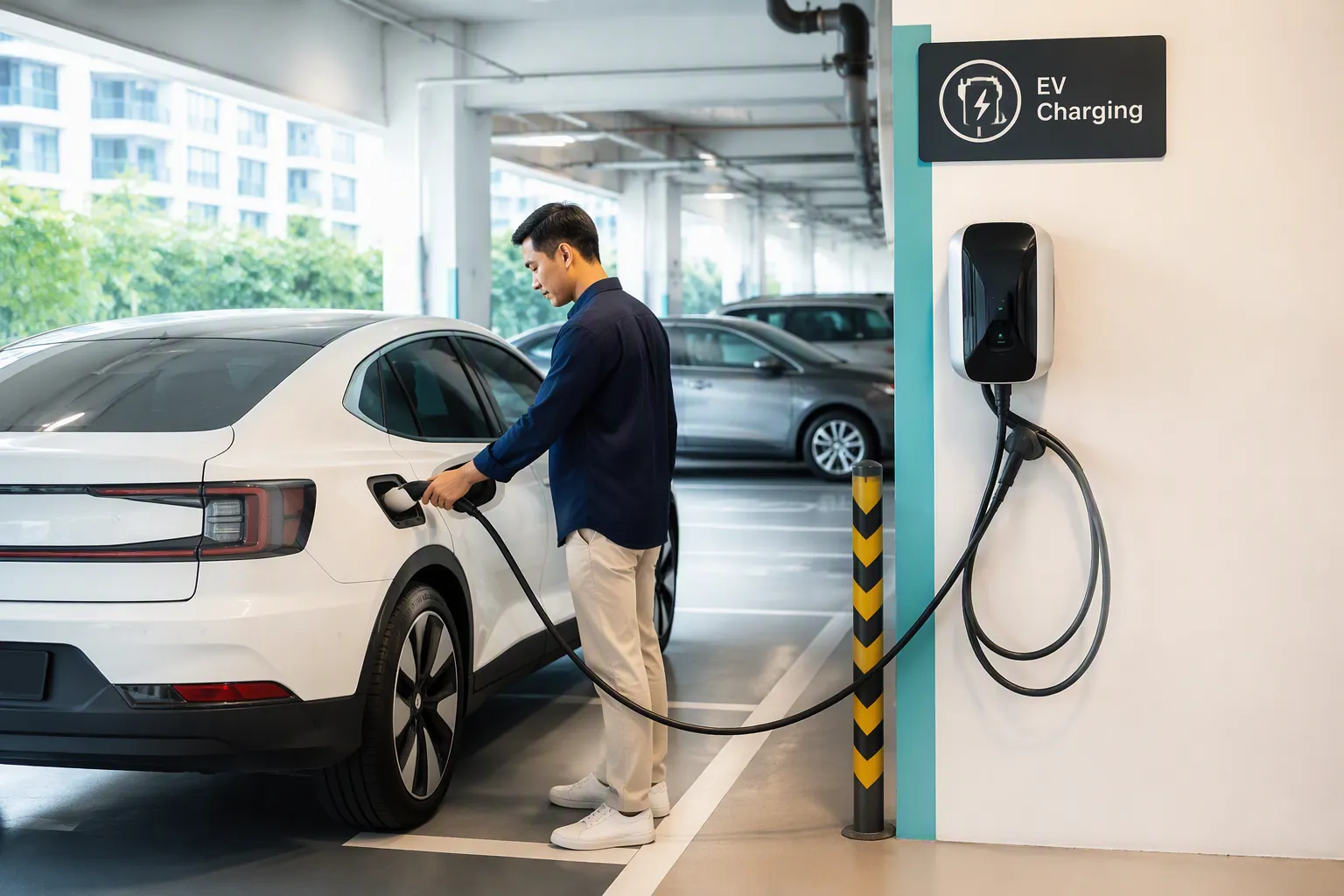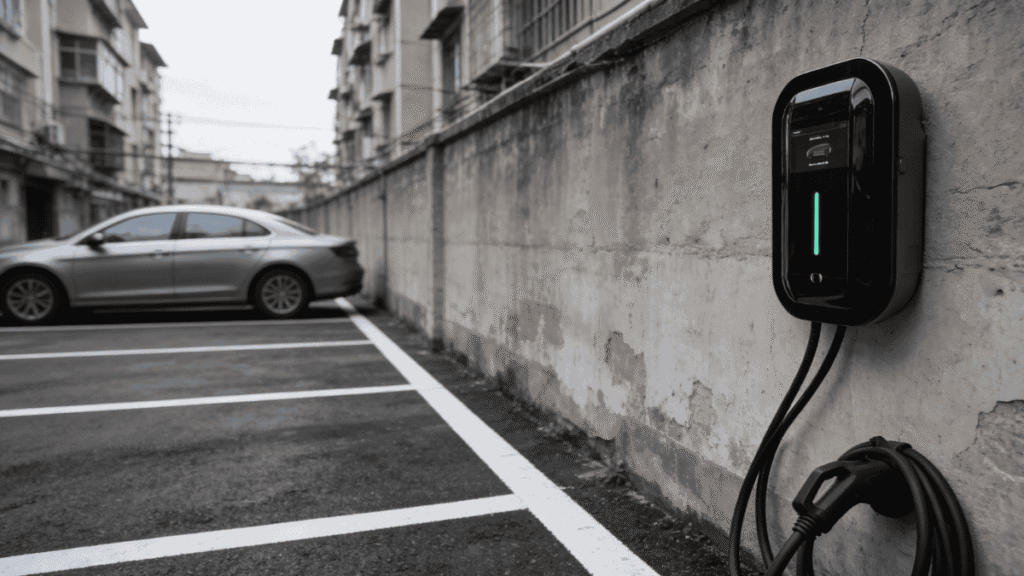
A 12-gauge (12 AWG) extension cord can be acceptable for EV charging only in limited, controlled situations—typically Stufe 1 (120V), short-distance, and at a reduced charging current. It is not a universal “safe” solution, and it becomes a poor choice as current, distance, heat exposure, or outdoor moisture risk increases. For routine home charging, a properly installed outlet or a wall-mounted EVSE is the safer and more reliable approach.
Das ist wichtig: EV charging is a long-duration load. If an extension cord runs warm/hot, has a loose plug fit, is coiled, is undersized, or is exposed to water, it should not be used. When in doubt, stop and consult a licensed electrician.
- Is 12 gauge safe for EV charging? (clear answer)
- Why extension cords are risky for EV charging
- A safety framework: current, distance, heat, and environment
- Data charts: charging levels and real-world charger currents
- Better options than an extension cord (home & commercial)
- If it must be used: step-by-step checklist
- FAQ (5 Fragen)
- Sources and external references
Is 12 gauge safe for EV charging? (clear answer)
A 12 AWG cord can be safe enough for temporary, lower-current charging when it is: short, fully uncoiled, undamaged, properly rated, and used on a circuit that is in good condition. It is most commonly considered for Level 1 charging where the EVSE draws roughly 1 kW class power.
It is generally not appropriate for Level 2 “plug-in” home EVSE use (e.g., 240V charging through a 14-50 outlet), because currents can be far higher and continuous. For example, the Emporia Classic Level 2 EV Charger lists up to 48A (hardwired) and 40A (NEMA 14-50 plug), which is beyond what typical consumer extension cords are designed to carry continuously. (Emporia Classic specs: 11.5 kW at 48A; 9.6 kW at 40A)
In EV charging terms, most “home chargers” are actually EVSE. They supply power, while the vehicle’s onboard charger determines the maximum AC charge rate. Car and Driver emphasizes Level 1 uses 120V and is very slow, while Level 2 uses 240V and is suitable for overnight charging. (Car and Driver EV charging levels overview)
Why extension cords are risky for EV charging
Extension cords are not inherently unsafe—but EV charging stresses them differently than a vacuum cleaner or power tool. The main risks come from continuous current, Spannungsfall, und heat buildup at plug contacts. Over time, extra resistance at a connection (loose fit, oxidation, worn receptacle) becomes heat, and heat accelerates failure.
Common failure points seen in the field
- Loose plug-to-outlet fit (worn receptacles or thin plug blades) creating localized heating.
- Coiled cords acting like insulation and trapping heat.
- Long runs increasing resistance and voltage drop (the EVSE may run hotter or reduce charging, depending on design).
- Outdoor moisture entering the connection point—especially when the connection sits on the ground.
- Mismatched safety devices (e.g., nuisance tripping scenarios with certain GFCI configurations).
A real-world clue: nuisance trips and protective devices
Emporia notes that EV chargers contain built-in GFCI protection and that a circuit protected by a panel GFCI breaker (common for certain outlets) can cause nuisance tripping in some installations—creating “stop-start” charging and homeowner frustration. This is not “caused by the extension cord” directly, but it illustrates how EV charging pushes safety and protection systems harder than casual loads.
A safety framework: current, distance, heat, and environment
Most important variable
Current (amps)
Higher amps = exponentially more risk from small resistance errors.
Second most important
Distance (length)
Longer cord = more voltage drop and heat in the cable.
Non-negotiable
Connection quality
Loose plug fit and worn outlets are frequent overheating triggers.
Often overlooked
Umwelt
Sun, rain, snow, and puddles change the risk profile quickly.
Practical thresholds (conservative guidance)
| Szenario | 12 AWG extension cord suitability | Begründung | Safer alternative |
|---|---|---|---|
| Level 1 charging (120V), reduced current, short run | Sometimes acceptable | Lower power level; manageable heat if cord is short and connections are tight | Install a weather-rated outlet closer to the vehicle |
| Level 1 charging outdoors in rain/snow | High caution | Moisture at plug interface is a major failure risk | Dedicated outdoor-rated circuit + in-use cover; wallbox if possible |
| Level 2 charging (240V) using plug-in EVSE | Generally not recommended | Level 2 EVSE can draw 32A–48A+ continuously; extension cords are the weak link | Hardwire EVSE or install proper receptacle at parking location |
| High-output home charging (40A/48A) | Nein | Emporia Classic lists 40A plug / 48A hardwire—beyond typical cord design intent | Hardwired installation by licensed electrician |
Data charts: charging levels and real-world charger currents
Chart 1 — EV charging levels and typical power (context for cord risk)
Interpretation: extension cords are most commonly discussed for Level 1. Once charging moves into Level 2 power, permanent wiring solutions become the expected safety baseline.
Chart 2 — Example home charger currents (why Level 2 is different)
Why it matters: 12 AWG cords are often discussed around Level 1. At 40A–48A continuous (typical of high-output Level 2 setups), the weakest link becomes plug connections and cord design.
Better options than an extension cord (home & commercial)
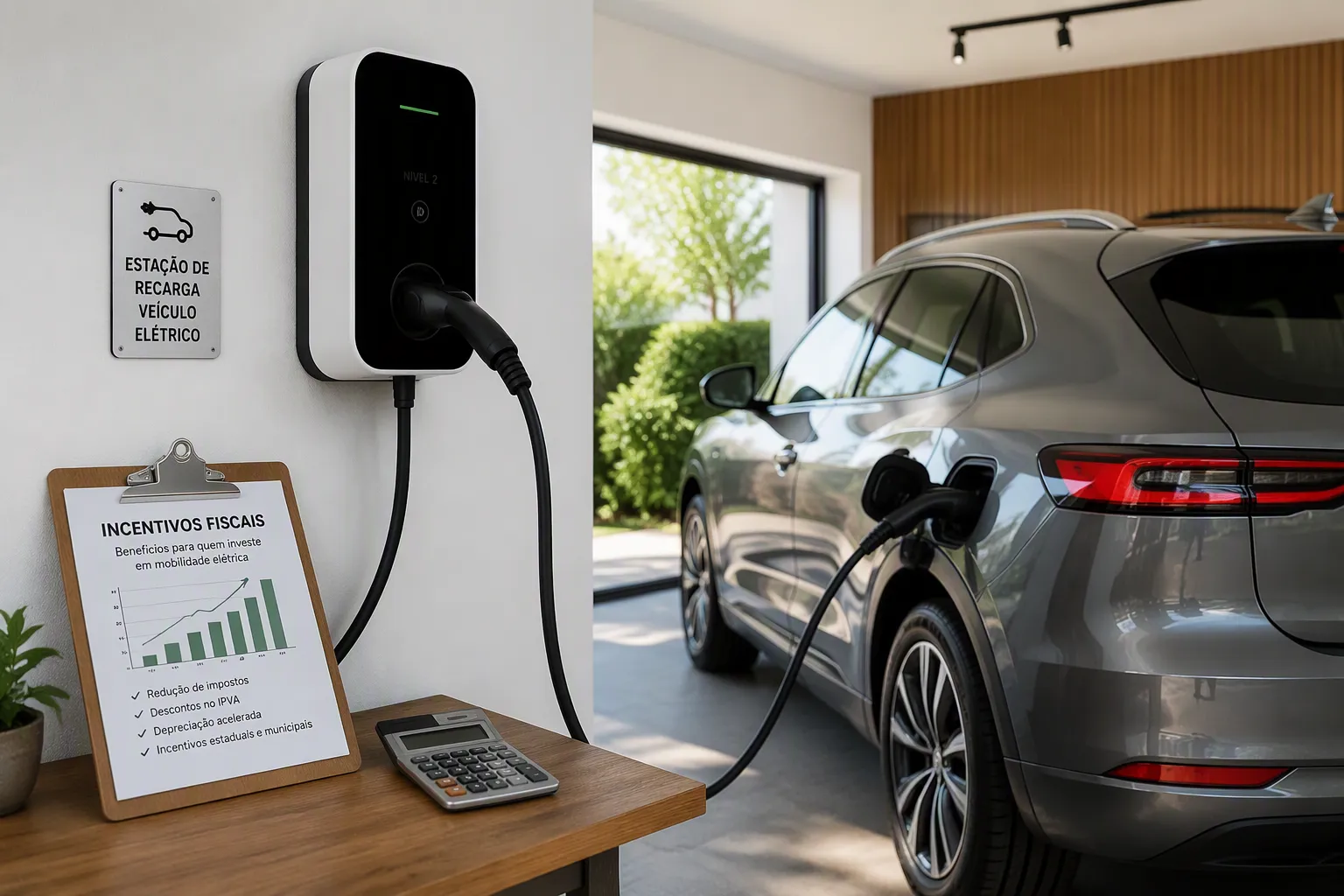
Home charging: prioritize a dedicated EVSE installation
Car and Driver’s testing highlights that most drivers want to charge at home as much as possible and that Level 2 is the practical standard for overnight charging. In that context, a permanent setup is not just safer—it is also the least frustrating day-to-day.
The Emporia Classic positions itself as a high-output, app-scheduled Level 2 charger with NACS/Tesla and J1772 options, plus built-in GFCI protection and installation guidance (NEMA plug vs hardwire). Those details matter because they define what “normal” home charging loads look like—loads an extension cord was never intended to be part of. Emporia Classic Level 2 EV Charger
When electrical capacity is limited: load management is safer than improvising wiring
Rather than stretching a cord to reach an existing outlet, many sites benefit from Lastausgleich and smarter energy management. TPSON’s EV charging line describes AC chargers with Dynamischer Lastausgleich to help protect a home’s electrical system, supported by its broader safety-first positioning. Learn more under EV-Ladegeräte und AC EV-Ladegeräte.
Commercial and roadside scenarios: use purpose-built equipment
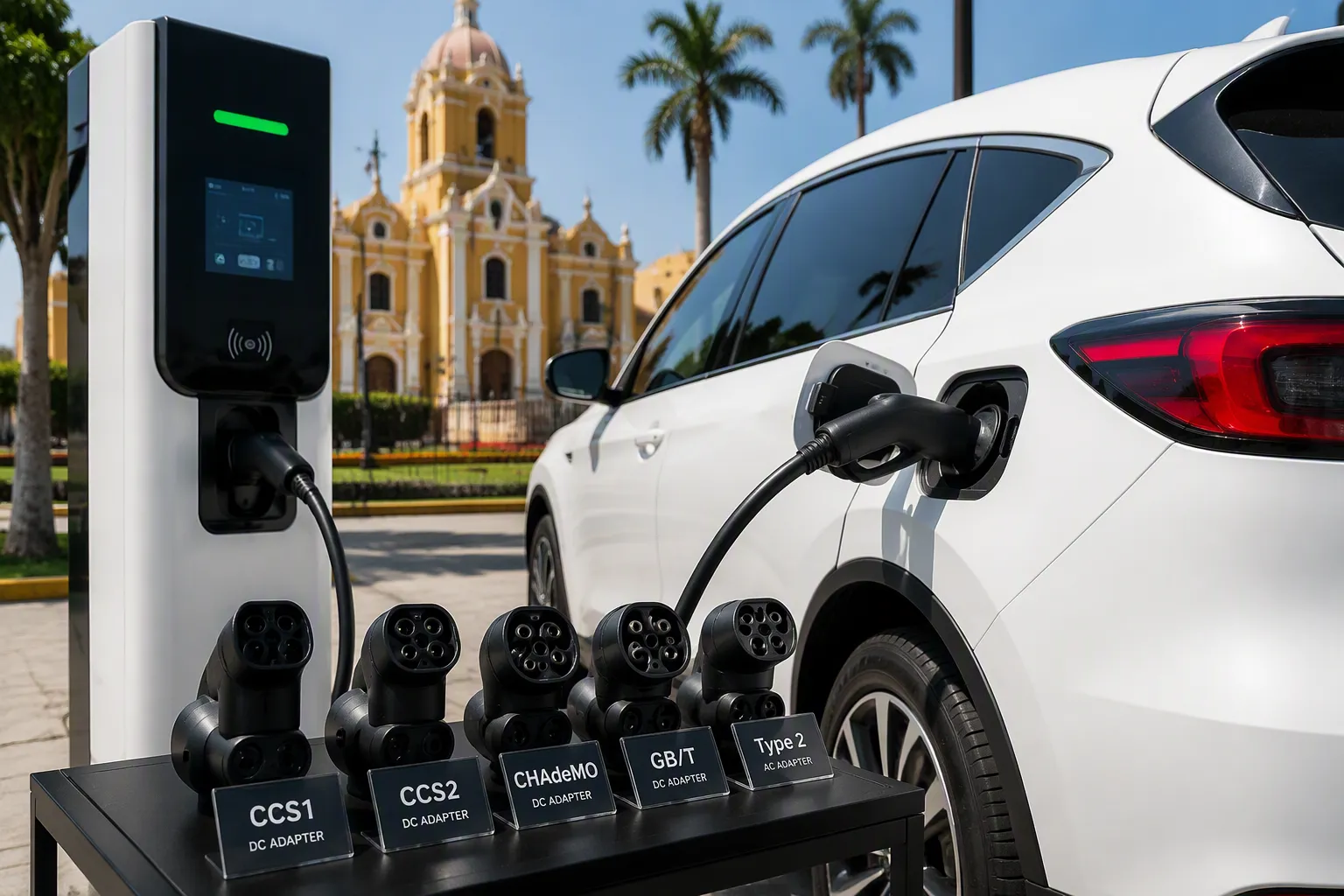
Extension cords are the opposite of “future-proof infrastructure” for fleets, depots, or emergency response. TPSON’s portable DC solution (20/30/40 kW modules, DC 50–1000V output range, Ethernet/optional 4G, and multiple interface support such as CCS1/CCS2/CHAdeMO/GB/T) is described as a compact, mobile option for Notfall-Pannenhilfe, events, und dealership/service centers. DC-EV-Ladegeräte
For drivers on the road, networks matter. Love’s describes an EV charging network with 100+ chargers across 36 locations in 14 states, and notes it is adding more DC fast chargers through 2026—paired with 24/7 staffed travel stops and amenities. That is the correct model for road trips, not cord workarounds. Love’s EV-Laden
ChargePoint frames EV charging as a platform—software, services, driver experience, and hardware options—emphasizing ease of use and scalability for businesses and fleets. That approach exists because charging reliability is operationally important, and improvised wiring undermines uptime. ChargePoint
If it must be used: step-by-step checklist
This checklist assumes a temporary situation, not a permanent home-charging plan. If repeated use is expected, proceed to a dedicated outlet or EVSE installation.
Step 1: Confirm the actual charging current
- Identify whether the EVSE is running Stufe 1 (120V) oder Stufe 2 (240V).
- Set the EVSE to a lower amperage if it allows adjustment.
- If the EVSE is a high-output Level 2 unit (e.g., 40A/48A class), do not use an extension cord.
Step 2: Choose the correct cord construction
- 12 AWG minimum; prefer shorter length to reduce voltage drop.
- Outdoor-rated jacket if outdoors; avoid “light-duty” indoor cords.
- Use a single cord only—never daisy-chain.
Step 3: Eliminate heat traps and weak connections
- Fully uncoil the cord (no reels, no tight loops).
- Ensure plug blades fit tightly in the receptacle.
- Keep the connection off the ground and away from puddles.
Step 4: Monitor temperature early and often
- After 10–15 minutes, feel the outlet faceplate and both plug ends.
- Any hot sensation, discoloration, smell, or intermittent charging is a stop condition.
Step 5: Move to a permanent fix
If the cord solved a distance problem once, it will tempt repeat use. The safe answer is to relocate the outlet, hardwire the EVSE, or select a charging system designed for the site’s electrical capacity (for example, using load balancing strategies instead of stretching wiring).
FAQ (5 Fragen)
1) Is a 12 gauge extension cord safe for charging an EV overnight?
It may be acceptable only for low-current Level 1 charging, with a short, fully uncoiled, undamaged cord and tight plug connections. For routine overnight charging, Level 2 EVSE is the norm (Car and Driver describes Level 2 as the overnight solution), and that should be installed properly rather than routed through an extension cord.
2) What is the biggest danger when using an extension cord for EV charging?
The most common practical danger is heat at connection points (plug-to-outlet or plug-to-EVSE), especially under continuous load. Loose receptacles and cheap cord ends are frequent culprits.
3) Can a 12 gauge cord be used with a Level 2 (240V) EV charger?
Generally, no. Level 2 currents can be high and continuous. As an example, Emporia Classic lists up to 40A (plug) or 48A (hardwire). This is beyond what typical extension cord use is intended to support safely, especially over long sessions. Emporia Classic specs
4) Why does a plug-in EV charger sometimes trip GFCI breakers?
Emporia explains that EV chargers include built-in GFCI protection, and when the circuit is also protected by a GFCI breaker, it can cause nuisance tripping in some scenarios. A licensed electrician should advise based on local code requirements and the specific installation.
5) What should be done instead of using an extension cord long-term?
Install a dedicated outlet where the vehicle parks or hardwire the EVSE. If electrical capacity is a concern, consider solutions that integrate load management rather than increasing risk with improvised cabling. TPSON highlights EV charging solutions with features such as Dynamic Load Balancing, and ChargePoint emphasizes scalable charging platforms for different use cases. For a manufacturer background, see EV-Ladegerätehersteller,.
Sources and external references
The following pages were referenced for factual statements and product/network descriptions. Links open in a new tab.
- TPSON About (company background, founding year, positioning around Current Fingerprint Algorithm): https://tpsonpower.com/about/
- TPSON EV Chargers overview (AC/DC portfolio, Dynamic Load Balancing positioning): https://tpsonpower.com/ev-chargers/
- TPSON AC EV Chargers listing (product family context): https://tpsonpower.com/ac-ev-chargers/
- TPSON Portable DC EV Charger (20/30/40 kW modules, DC 50–1000V, scenes and protections): https://tpsonpower.com/portable-dc-ev-charger/
- Emporia Classic Level 2 EV Charger (40A plug vs 48A hardwire; GFCI notes; specs): https://shop.emporiaenergy.com/products/emporia-ev-charger
- Car and Driver “Tested: Best Home EV Chargers for 2026” (charging level definitions; home charging context): https://www.caranddriver.com/shopping-advice/a39917614/best-home-ev-chargers-tested/
- Love’s EV Charging (network footprint and expansion through 2026): https://www.loves.com/ev-charging
- ChargePoint (platform overview, driver app, fleet/business positioning): https://www.chargepoint.com/
- Smart Charge America product catalog page (examples of home/commercial EVSE offerings and typical currents): https://smartchargeamerica.com/electric-car-chargers/
Internal links placed as required: EV-Ladegeräte, EV-Ladegerätehersteller,, AC EV-Ladegeräte, DC-EV-Ladegeräte.