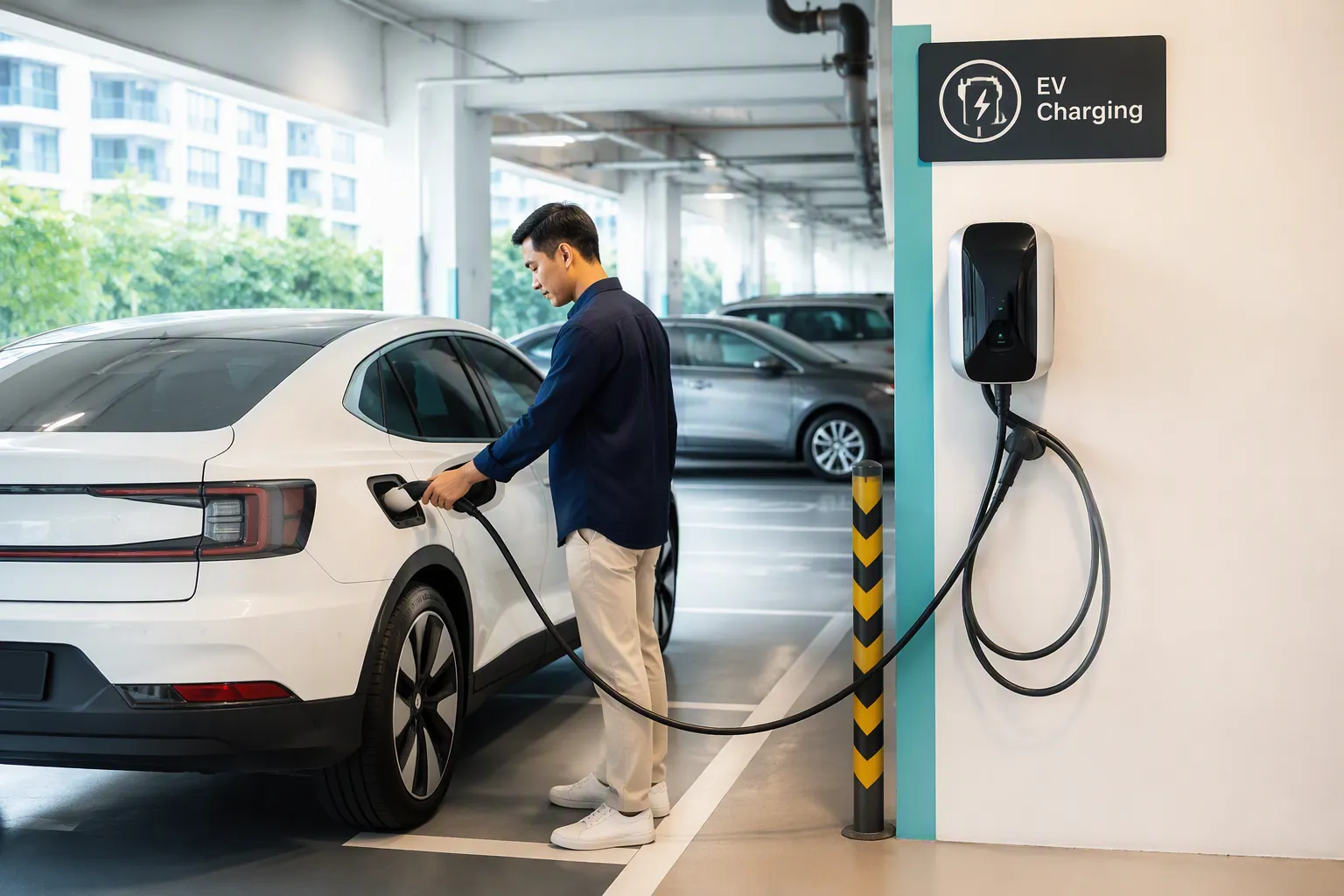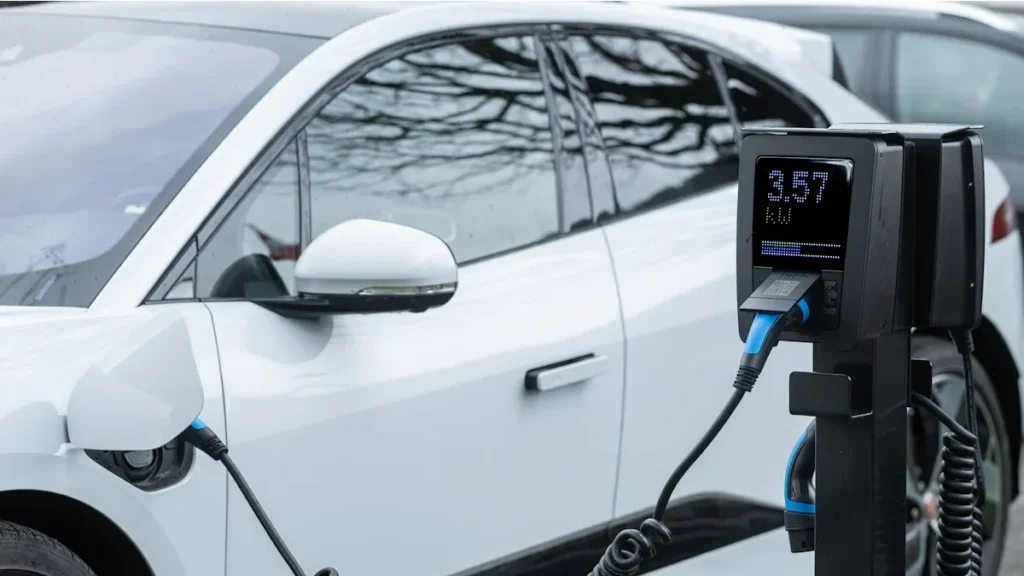

The US network of public charging stations now exceeds 160,000 units, making the cost of charging a crucial factor for every EV driver. The final cost at a public charge point varies significantly.
Anmerkung: While many stations bill for energy used (per kWh), some bill for time connected (per minute). Always check the rate before you plug in.
A Level 2 EV-Ladegerät typically bills between $0.20 and $0.50 per kilowatt-hour (kWh). Faster DC charging represents a higher cost, ranging from $0.40 to $0.75 per kWh. Unlike home charging with tragbare ev-ladegeräte, public ev charging stations may bill per minute to charge. Hersteller von EV-Ladegeräten continue to build out various EV-Ladelösungen for the growing public network.
How the Cost to Charge an EV Is Calculated
Für die Budgetplanung ist es unerlässlich, die Kosten für das Aufladen eines E-Fahrzeugs requires knowing how providers calculate their prices. The final cost of charging is not always straightforward. Networks use several billing methods, and drivers should recognize each one before plugging in their EV.
Cost Per Kilowatt-Hour (kWh)
Paying for the Energy You Use
The most common billing method is cost per kilowatt-hour (kWh). This model is similar to a gas station, where you pay for the amount of fuel you receive. An EV owner pays for the exact amount of electrical energy transferred to the vehicle’s battery. This method is transparent and fair, as the price directly reflects the energy consumed during the charging session.
Example Cost Calculation
Calculating the total cost is simple with per-kWh pricing. A driver can multiply the energy added to their battery by the network’s rate.
For example, if a station charges $0.50 per kWh and a driver adds 40 kWh to their EV battery, the total cost for the session would be $20.00 (40 kWh x $0.50/kWh).
Cost Per Minute
Paying for the Time You’re Connected
Some charging stations bill customers per minute. In this model, the cost depends on the total time the vehicle is connected to the charger, not the amount of energy delivered. This pricing structure is common in states where reselling electricity by non-utilities is restricted. The final charge can vary significantly based on how quickly a vehicle accepts power.
How Charging Speed Affects Per-Minute Costs
A vehicle’s charging speed is a critical factor with per-minute billing. An EV that can accept a fast charge will get more energy for its money compared to a slower-charging vehicle. If two different EV models are plugged in for 30 minutes, the one with the faster onboard charger will receive more energy for the same price.
Gebühren für die Sitzung
Flat Fees for Starting a Charge
In addition to energy or time costs, some networks apply session fees. These are small, one-time fees for initiating a charging session. This fee is added to the total bill regardless of how long you charge or how much energy you use. It essentially functions as a connection fee.
When to Expect Session Fees
Session fees are not universal but are a common practice for certain networks. Often, these fees are accompanied by a pre-authorization hold placed on a user’s credit card to ensure funds are available. This is not the final cost but a temporary hold.
- Evolt Network, for instance, applies a pre-authorization hold of up to around $44 for AC charging. The user is only billed for the actual energy used after the session.
- Smart Charge takes a around $51 pre-authorization for its ultra-rapid charging. The final amount is debited after the session is complete, and the hold is released.
Idle Fees
The Penalty for Overstaying
Idle fees are penalties charged to drivers who leave their vehicle connected to a charger after the battery is full. Charging networks implement these fees to discourage drivers from occupying a charging spot unnecessarily. This practice ensures that stations remain available for other users, improving charger turnover and reducing wait times for everyone. Think of it as a parking fine for overstaying at a valuable resource.
The fee structure typically involves a per-minute rate that begins after a short grace period. This grace period gives the driver a few minutes to return to their vehicle and unplug it.
For example, a network might offer a 10-minute grace period once charging completes. After that, an idle fee of $0.40 per minute could apply. If a vehicle remains plugged in for 20 minutes past the grace period, the driver incurs an additional $8.00 charge on top of their energy cost.
These extra charging fees are entirely separate from the cost of the electricity consumed. They are designed purely as a deterrent to improve station etiquette and accessibility. Most networks clearly state their idle fee policies within their mobile apps, so drivers can review the terms before starting a session.
How to Avoid Idle Fees
Avoiding idle fees is straightforward with a little planning and attentiveness. EV drivers can take several simple steps to prevent these unwanted charges and be considerate to others needing a charge.
Here are the most effective strategies:
- Monitor the Session Remotely: Nearly all charging network apps allow users to track their vehicle’s charging status in real-time. Drivers should check the app to see the estimated completion time.
- Enable App Notifications: Most apps can send a push notification to a driver’s smartphone when the charging session is nearing completion or has finished. Activating this feature is the easiest way to stay informed. 📲
- Set a Personal Timer: As a backup, drivers can set an alarm on their phone based on the car’s estimated time to finish charging. This provides a reliable reminder to return to the vehicle.
- Move the Vehicle Promptly: The most important step is to unplug and move the vehicle as soon as possible after the grace period begins. This frees up the charger for the next person in line.
By following these simple practices, EV owners can easily avoid idle fees and contribute to a more efficient and courteous public charging experience for the entire community.
What Factors Influence the Cost of Charging an Electric Car?
Several key variables determine the final cost of charging an electric car at public stations. An EV driver’s total expense depends on more than just the battery size. The charging speed, network provider, and even the station’s physical location all play a significant role in the final bill. Understanding these factors helps drivers manage their charging costs effectively.
Charging Level and Speed
The speed at which a vehicle can charge is one of the most direct influences on cost. Networks price their services based on the power they deliver.
Level 2 Charging Costs
Level 2 charging is the most common type found at destinations like shopping centers, hotels, and workplaces. It provides a slower, steady charge over several hours. Because it uses less intensive hardware and draws less power from the grid at any given moment, the cost for Level 2 charging is generally lower. This option is ideal for drivers who can leave their EV parked for an extended period.
DC Fast Charging Costs
DC Fast Charging delivers a massive amount of power in a short time, often adding hundreds of miles of range in under an hour. This convenience comes at a higher price. The advanced equipment and high-demand grid connections required for these speeds result in a premium cost per kWh or per minute. For drivers on long road trips, the time saved often justifies the extra expense.
Charging Network Provider
Different companies operate ev charging stations, and each one sets its own unique pricing structure.
Price Differences Between Major Networks
Competition among charging networks leads to a variety of pricing models. Some providers may offer lower rates to attract more users, while others might focus on providing ultra-fast charging speeds at premium locations. This means the same EV could experience different charging costs at two stations across the street from each other if they belong to different networks.
How Networks Set Their Rates
Networks calculate their price by considering several operational factors. These include:
- The cost of purchasing and installing hardware from providers like TPSON, a technologically advanced electric vehicle charging solution provider.
- Software development and maintenance fees.
- Lease agreements for the station’s location.
- The wholesale cost of electricity.
Geographic Location
Where a driver chooses to charge can have a surprising impact on the total bill. The cost to charge an EV is not uniform across all regions.
State and City Price Variations
Charging prices often vary between different states, provinces, and even neighboring cities. Densely populated urban areas may have higher charging rates due to greater demand and higher real estate costs. Conversely, some regions may offer more competitive pricing to encourage EV adoption.
The Role of Local Electricity Rates
The fundamental cost of electricity in a specific area is a primary driver of the final public charging price. Utility rates differ from one region to another. Charging networks must purchase electricity from local utilities, and they pass that underlying cost on to the consumer. An area with high local electricity rates will almost always have more expensive public charging.
Zeit des Tages
The time of day a driver plugs in their electric vehicle can significantly impact the final cost of a charging session. Many charging networks have adopted a pricing model similar to home utility plans. This model, known as time-of-use pricing, adjusts rates based on the overall demand for electricity on the local power grid. Charging during periods of high demand costs more, while charging during low-demand periods is cheaper. This dynamic pricing structure encourages drivers to charge at times that help balance the load on the electrical grid.
Peak vs. Off-Peak Pricing
Charging networks often pass their own electricity costs on to consumers. In regions like California, utility companies implement Time-of-Use (TOU) rates for commercial customers, including public charging stations. These rates are highest during peak hours, which are typically from 4 p.m. to 9 p.m. when residential energy use is at its maximum. A charging station operator faces substantial TOU surcharges and demand charges for electricity consumed during this window. Consequently, the network raises its prices for drivers charging in the late afternoon and early evening.
Conversely, off-peak hours offer much lower electricity costs. These periods usually include late-night hours after 9 p.m. and midday hours before 3 p.m. Charging stations can purchase power more cheaply during these times. They pass the savings to EV drivers in the form of lower per-kWh or per-minute rates.
For example, a DC fast charging session at 6 p.m. might cost $0.65/kWh. The same session at 11 p.m. could drop to $0.45/kWh, offering significant savings for drivers with flexible schedules.
Finding Off-Peak Charging Deals
EV drivers can strategically plan their charging sessions to take advantage of lower off-peak rates. Finding these deals requires a little bit of research, but the savings can add up quickly. Most charging networks display their current pricing directly within their mobile apps, making it easy to see if variable rates are in effect. 💰
Here are some effective strategies for securing lower prices:
- Check the App Before Charging: Always open the network’s app to view the current rate at a specific station. Some apps show a price graph or list different rates for different times of the day.
- Charge Late at Night or Overnight: If possible, drivers can schedule their charging for after 9 p.m. This is often the cheapest time to charge, as grid demand is at its lowest.
- Utilize Midday Charging: For those with flexible work schedules, charging between late morning and early afternoon can also provide access to off-peak rates.
- Plan Ahead on Road Trips: When planning a long-distance trip, drivers can use apps to identify charging stops where they can arrive during off-peak hours, turning a meal break into a cost-saving opportunity.
By paying attention to the clock, EV owners can exert more control over their charging expenses and make public charging more affordable.
Cost Breakdown: How Much Major EV Charging Stations Charge

The price an EV driver pays for electricity depends heavily on the Gebührennetz they use. Each major provider has a distinct pricing strategy, with different rates, membership plans, and billing methods. Understanding these differences helps drivers make informed decisions about where to charge their vehicle.
Electrify America Cost
Electrify America operates one of the largest networks of DC fast chargers in the United States. Its pricing is generally straightforward, with two main tiers for customers.
Guest Pricing
Guest pricing is the standard rate for any driver using the network without a membership. Electrify America primarily bills per kilowatt-hour (kWh). This cost can vary based on location and time-of-use policies. In states where per-kWh billing is not permitted, the company bills per minute. Drivers can expect guest rates to be the highest offered by the network.
Pass+ Membership Pricing
For frequent users, Electrify America offers a subscription plan called Pass+. This plan provides a significant discount on charging rates in exchange for a monthly fee.
For a small monthly fee (typically around $4.00), Pass+ members receive a discount of approximately 25% on energy costs. Drivers who use more than 30-40 kWh of public charging per month often find that the savings outweigh the subscription fee.
EVgo Cost
EVgo is another prominent network known for its fast-charging infrastructure, often located in convenient retail and urban areas. The company provides several pricing options to accommodate different driver needs.
Pay As You Go Rates
The Pay As You Go option is the default for all EVgo users. There is no monthly fee, but drivers pay the highest rates for energy. EVgo utilizes both per-kWh and per-minute billing, depending on state regulations. The network also implements time-of-use pricing in many regions, meaning the Kosten zu berechnen can change depending on the time of day.
EVgo Plus and EVgo Max Plans
EVgo offers subscription plans that lower the overall cost for regular customers. These plans are designed for drivers who rely on public ev charging stations more frequently.
- EVgo Plus: This plan requires a monthly fee and provides a discount on standard charging rates. It is a good middle ground for drivers who use the network consistently.
- EVgo Max: Aimed at high-mileage drivers, this plan has a higher monthly fee but offers the lowest possible charging rates on the network. It often includes other benefits, like charging credits.
ChargePoint Cost
ChargePoint operates differently from other networks. It functions more like a technology platform, providing hardware and software to independent business owners.
Station Owner Pricing Model
ChargePoint does not set the price for using its stations. Instead, the owner of each individual station—be it a retailer, a municipality, or an office park—sets their own pricing. This model leads to a wide variety of costs across the network. Some station owners may offer charging for free as an amenity, while others might set premium rates. This decentralized approach means there is no standard network-wide price.
How to Check Prices in the App
Given the variable pricing, it is essential for drivers to check the cost before plugging in. The ChargePoint mobile app is the most reliable tool for this. 📱
Within the app, a user can select a station on the map to view its specific details. The app clearly displays the current price, whether it is billed per kWh, per hour, or as a flat session fee. Always confirm the rate in the app to avoid unexpected expenses.
Tesla Supercharger Cost
Tesla’s Supercharger network was once exclusive to its own vehicles, but the company has since opened many locations to all compatible EVs. This expansion introduced a tiered pricing structure that distinguishes between Tesla owners and drivers of other electric vehicle brands. The cost depends heavily on vehicle ownership, membership status, location, and time of day.
Pricing for Tesla Vehicles
Tesla owners benefit from a streamlined and cost-effective charging experience. They automatically receive member pricing without needing to pay a separate subscription fee. The cost for a Tesla driver to use a Supercharger is generally one of the more competitive options for DC fast charging.
The price per kilowatt-hour (kWh) varies significantly based on the station’s location and local electricity rates.
- Supercharger rates for Tesla owners typically range from $0.25 to $0.50 per kWh.
- In some high-demand areas or during peak hours, this cost can approach 0,60 £ pro kWh.
Anmerkung: Drivers can always view the exact price for a specific Supercharger station directly on their vehicle’s touchscreen or within the Tesla mobile app before they begin a session.
Preisgestaltung für Nicht-Tesla-Fahrzeuge
Drivers of non-Tesla EVs can now access a growing number of Supercharger stations. However, they pay a premium rate compared to Tesla owners. This higher price helps cover the costs of opening the network and encourages frequent users to subscribe to a membership.
Non-Tesla drivers have two pricing options: pay-per-use at a higher guest rate or subscribe to a membership for lower rates.
- Guest Pricing: A non-Tesla driver pays a higher price per kWh. These rates are often highest during peak hours, which are typically between 4 p.m. and 8 p.m.
- Supercharger Membership: For a monthly fee (around $12.99 in the US), non-Tesla drivers can subscribe to a membership. This plan grants them access to the same lower per-kWh rates that Tesla owners pay.
The price difference between members and non-members can be substantial, as illustrated below.

The following table provides an example of how pricing can vary by time of day for both Tesla owners (or non-Tesla members) and non-Tesla guests.
| Zeitfenster | Tesla Owner/Member Price (Example) | Non-Tesla Guest Price (Example) |
|---|---|---|
| 12:00 AM – 4:00 AM | $0.36 / kWh | $0.49 / kWh |
| 4:00 AM – 8:00 AM | $0.30 / kWh | $0.40 / kWh |
| 8:00 AM – 12:00 PM | $0.59 / kWh | $0.79 / kWh |
Finally, all users, regardless of vehicle brand or membership, are subject to idle fees. Tesla may charge a fee of up to $1.00 per minute if a vehicle remains plugged in after its charging session is complete and the station is busy. This policy ensures chargers remain available for others. 🚗
Do Memberships Lower the Cost of Charging?
Many charging networks offer subscription plans that promise a lower cost of charging in exchange for a recurring fee. For drivers who frequently use public stations, these memberships can provide significant savings. However, the value of a subscription depends entirely on an individual’s charging habits.
Für Fahrer, die das öffentliche Ladenetz häufig nutzen, ist eine weitere Möglichkeit zur Bezahlung von Elektrofahrzeug-Ladungen ein Abonnement. Diese Methode kombiniert eine monatliche Gebühr mit der Bequemlichkeit einer physischen Radio-Frequency Identification (RFID)-Karte.
Subscriptions typically involve a fee that unlocks access to discounted energy rates. This model benefits both the driver and the network, creating customer loyalty while making frequent public charging more affordable.
Monthly vs. Annual Fees
Most networks structure their subscriptions around a monthly fee, offering flexibility for drivers to opt in or out as their needs change. Annual plans are less common but may provide a greater overall discount for long-term, committed users. For example, Polestar Charge offers subscriptions that can be canceled at any time, providing savings after just one full charge.
Is a Subscription Worth It for You?
A subscription becomes worthwhile when the savings on charging exceed the membership fee. Drivers can calculate their “break-even point” to make this decision. This is the amount of energy (in kWh) a driver must consume each month for the membership to pay for itself.
The break-even point varies by network. For some, it might be as low as 25 kWh per month, while for others, it could be over 45 kWh.

The table below shows a hypothetical example of how the break-even point can differ across various US providers.
| Anbieter | Membership Cost (Monthly) | Discount on Standard Rate | Standard Rate (per kWh) | Discounted Rate (per kWh) | Break-even Point (kWh/month) |
|---|---|---|---|---|---|
| Network A (e.g., Electrify America Pass+) | $4.00 | 25% | $0.48 | $0.36 | 33.3 |
| Network B (e.g., EVgo Plus) | $6.99 | 20% | $0.50 | $0.40 | 70 |
| Netz C | $9.99 | 30% | $0.55 | $0.385 | 60.5 |
Network-Specific Membership Benefits
Beyond discounted rates, memberships often include extra perks that enhance the EV ownership experience.
Electrify America Pass+
The Pass+ plan offers a consistent 25% discount on energy cost for a small monthly fee, making it ideal for regular users of the Electrify America network.
EVgo Plus and Max
EVgo provides tiered plans like Plus and Max. These subscriptions reduce the per-kWh or per-minute cost and sometimes include other benefits, such as waived reservation fees or charging credits.
Finding Free Charging Perks
It is sometimes possible to charge your ev for free. These opportunities often come from promotions, partnerships, or amenities offered by businesses.
New Vehicle Promotions
Many automakers offer complimentary charging packages with the purchase of a new electric vehicle.
- Ford provides new EV buyers with a home charger and thousands of miles of free charging credit through partners like Octopus Energy.
- Vauxhall gives customers a choice between £500 toward a home charger or £500 in public charging credit.
Workplace and Retailer Perks
Some employers offer free workplace charging as an employee benefit. 🏢 Additionally, retailers, hotels, and restaurants often provide complimentary charging to attract customers. Drivers can also find perks through aggregator apps wie Octopus Electroverse, which offers referral bonuses and partner discounts.
Public Charging vs. Home Charging: A Detailed Cost Comparison

For most EV owners, the decision between public and home charging comes down to cost and convenience. While public charging stations are essential for modern EV life, charging at home remains the most economical choice. Understanding the financial differences between these charging options for electric cars is key to managing the overall cost of running an electric vehicle.
The Cost of Home Charging
Home charging offers the lowest electricity rates an EV driver can access. This method provides significant savings over time and is a major benefit of EV ownership.
Calculating Your Home Electricity Rate
The cost of home charging is tied directly to a household’s utility bill. An owner can find their specific rate on their monthly electricity statement. This figure is the foundation for calculating charging expenses.
According to recent data, the average residential electricity rate in the United States for 2023–2024 is between $0.15 and $0.17 per kilowatt-hour (kWh). This makes charging at home significantly cheaper than using any public charge point.
Level 1 vs. Level 2 Home Charger Costs
EVs typically come with a Level 1 home charger that plugs into a standard wall outlet. This method is slow but requires no extra Installationskosten. Many owners upgrade to a Level 2 home charger, which offers much faster charging speeds. While the initial installation of a Level 2 home charger has a cost, the convenience and faster turnaround make it a popular investment. A dedicated home charger ensures a full charge overnight.
When Public Charging Makes Sense
Despite the higher costs of public charging, public stations are an indispensable part of the EV ecosystem. Certain situations make them a necessity.
Autoreisen und Fernreisen
For travel beyond a vehicle’s single-charge range, public DC fast chargers are essential. They provide a quick way to add hundreds of miles, making long-distance EV travel practical. The convenience of a fast charge on the road often outweighs the higher price.
For Renters and Apartment Dwellers
Drivers who live in apartments or rental properties may not have the option to install a personal home charger. These individuals rely on the public charging network for all their charging needs, including workplace charging, which is sometimes free, or paid public stations.
A Direct Cost Comparison
The price difference between charging an EV at home and at a public station is substantial. A direct comparison highlights how drivers can reduce the cost of running an EV by maximizing their use of a home charger.
Cost to “Fill Up” at Home
Using a home charger is akin to filling up a gas tank for a fraction of the price. The low residential electricity rate results in a minimal cost to add significant range.
Cost to “Fill Up” at a Public Station
The convenience of public fast charging comes at a premium. The following table illustrates the dramatic cost difference for adding 100 miles of range.
| Charging Situation | Cost per kWh (Avg.) | Estimated Cost for 100 Miles |
|---|---|---|
| Aufladen zu Hause | ~$0.16 | ~$4.00 – $5.00 |
| Public DC Fast Charging | ~$0.60 | ~$18.00 – $22.00 |
This comparison shows that consistent use of a home charger is the most effective strategy for keeping EV charging expenses low.
How to Find the Best Prices at EV Charging Stations
EV drivers can significantly reduce their public charging expenses with strategic planning. Locating the best price involves more than just driving to the nearest station. It requires using digital tools and understanding how to verify costs before initiating a charge.
Using Charging Apps to Compare Costs
Third-party mobile applications are powerful tools for comparing charging costs across different networks. These apps aggregate data from thousands of stations, giving drivers a comprehensive market view.
PlugShare
PlugShare is a vital resource for EV drivers worldwide. The app monitors expenses at over 300,000 global stations. Its community-driven platform provides real-time pricing updates from other users. Drivers can filter searches by plug type and charging speed to find compatible and affordable options.
Ein besserer Routenplaner (ABRP)
A Better Routeplanner (ABRP) excels at long-distance trip planning. The app calculates an optimal route based on the vehicle’s battery level, consumption, and elevation changes. It can also factor in charging costs, allowing drivers to prioritize routes with more economical stations.
Checking Prices Before You Plug In
Drivers should always confirm the final price before they start a charging session. Rates can vary, and verification prevents unexpected charges.
On the Station Screen
Many regions have regulations that mandate transparent upfront pricing. Operators must display the full price per kWh clearly on the station’s screen before a session begins. This screen is the final point of confirmation for the cost of a session.
Within the Network App
The network’s own app provides the most accurate pricing information. It reflects any dynamic time-of-use rates, subscription discounts, or session fees.
Es ist entscheidend, dass compare the in-app tariff with the on-terminal price before paying. Some operators offer better rates through their dedicated app, making it the cheaper option.
Planning Your Route for Cheaper Charging
Proactive route planning helps drivers exert greater control over their charging budget. A little foresight can lead to substantial savings, especially on long journeys.
Identifizierung kostengünstiger Korridore
Fahrer können Apps nutzen, um Reisekorridore mit einer höheren Dichte an kostengünstigen Elektroladestationen zu identifizieren. Die Routenplanung durch diese Gebiete – selbst bei leicht längeren Strecken – kann die Gesamtreisekosten senken.
Abwägung von Ladezeit versus Kosten
Die Wahl zwischen Geschwindigkeit und Kosten ist ein typischer Zielkonflikt. Ein DC-Schnelllader bietet Geschwindigkeit zu einem Aufpreis, während ein Level-2-Lader langsamer, aber kostengünstiger ist. Fahrer müssen für jede Fahrt entscheiden, ob die eingesparte Zeit die höheren Ausgaben rechtfertigt.
Die Kosten für das Laden eines Elektrofahrzeugs an öffentlichen Ladestationen variieren stark. Der endgültige Preis hängt von Geschwindigkeit, Anbieternetz und Tageszeit ab. Zwar können Mitgliedschaften die Kosten senken, doch das Laden zu Hause bleibt die preiswerteste Option. Zur Kostenkontrolle sollten Fahrer stets die Preise an Ladestationen vor Ladebeginn prüfen. Dieser einfache Schritt hilft, die öffentlichen Ladekosten zu steuern.
FAQ
Ist das Laden eines Elektroautos günstiger als der Kauf von Benzin?
Ja, das Laden eines Elektrofahrzeugs ist fast immer kostengünstiger als der Kauf von Benzin. Das Laden zu Hause bietet die größten Einsparungen. Öffentliches Laden ist zwar teurer als das Laden daheim, kostet aber in der Regel immer noch weniger als die entsprechende Benzinmenge für die gleiche Strecke.
Warum berechnen manche Stationen pro Minute?
In einigen Bundesstaaten gibt es Gesetze, die Nicht-Energieversorgungsunternehmen den Wiederverkauf von Strom pro Kilowattstunde (kWh) untersagen. An diesen Standorten berechnen Ladeanbieter Kunden pro Minute für die Dauer der Fahrzeugverbindung mit der Station. Diese Methode entspricht lokalen Vorschriften.
Wie finde ich kostenlose Ladestationen?
Fahrer können Apps wie PlugShare nutzen, um Ladestationen zu lokalisieren.. Diese Apps verfügen oft über einen Filter, der kostenlos nutzbare Stationen anzeigt. Viele Einzelhändler, Arbeitsstätten und Hotels bieten kostenloses Laden als Service an, um Kunden und Mitarbeiter zu gewinnen. 🏢
Was ist eine Leerlaufgebühr?
Eine Standgebühr ist eine Strafzahlung, die anfällt, wenn ein Fahrzeug nach vollständiger Ladung weiter angeschlossen bleibt. Anbieter erheben diese Gebühren, um Fahrer zu einem zügigen Abstellen zu motivieren. Diese Praxis stellt die Verfügbarkeit der Station für den nächsten Nutzer sicher.
Brauche ich für jedes Ladenetz eine eigene App?
Die meisten Ladeanbieter erfordern eine eigene App für Zahlung und Ladevorgang-Überwachung. Einige Aggregator-Apps ermöglichen jedoch den Zugriff auf mehrere Netze über eine einzige Plattform. Für Zuverlässigkeit ist es ratsam, die Hauptanbieter-Apps herunterzuladen. 📲
Wie lange dauert das Aufladen eines E-Fahrzeugs an einer öffentlichen Tankstelle?
Die Ladezeit variiert erheblich.
- Level-2-Stationen können mehrere Stunden benötigen, um eine nennenswerte Reichweite zu ergänzen.
- DC-Schnellladegeräte können eine Batterie oft in nur 20–40 Minuten von 20 % auf 80 % laden, abhängig von Fahrzeug und Stationsgeschwindigkeit.
Kann jedes Elektroauto einen Tesla-Supercharger nutzen?
Viele Tesla-Supercharger-Standorte sind nun für Nicht-Tesla-Elektrofahrzeuge geöffnet. Fahrer anderer Marken benötigen einen speziellen Adapter und zahlen einen höheren Tarif, sofern sie kein Tesla-Mitgliedschaftsabonnement besitzen. Fahrer sollten die Tesla-App auf kompatible Standorte prüfen.