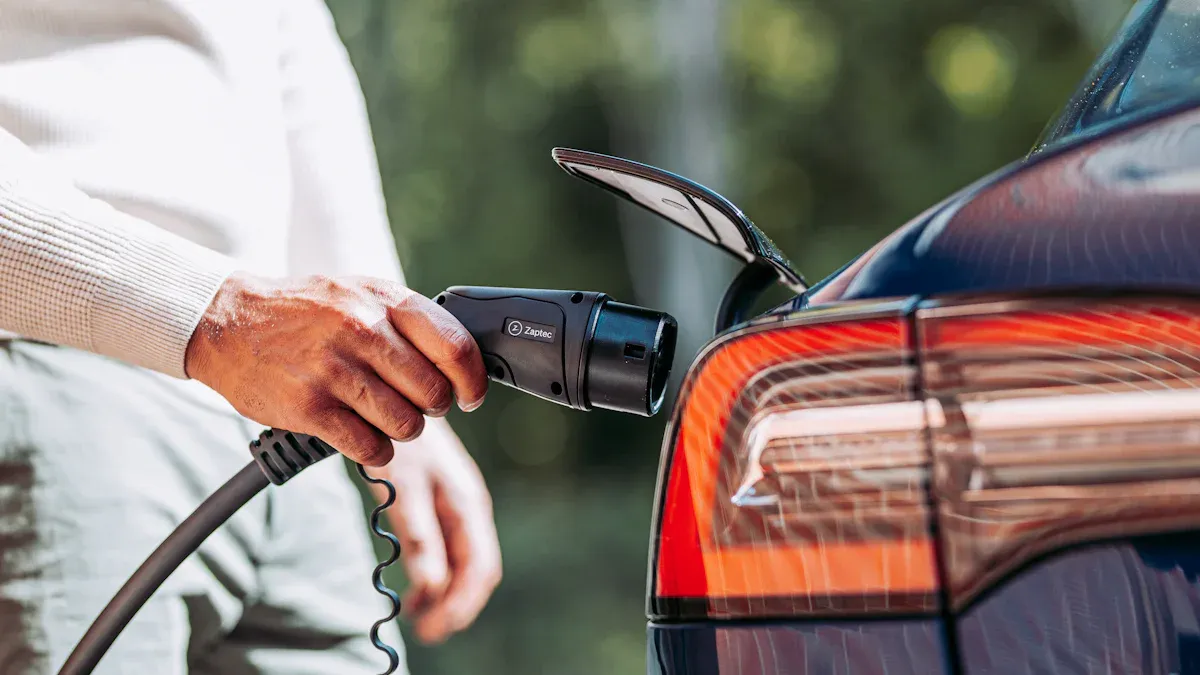
Installing a home Car Charging Point in 2025 is no longer a luxury; it is a strategic financial and lifestyle decision. A confluence of factors makes this the pivotal year for installing an EV Charger. These include expiring incentives, rising public charging costs, and maturing technology from EV charger manufacturers like TPSON. The benefits of installing a home EV charger are clear. Acting now secures immediate savings. It also prepares households for the inevitable all-electric future.
The Financial Tipping Point: Why a Home EV Charger Saves You Money in 2025
The decision to install a home EV charger in 2025 transcends convenience; it marks a significant financial tipping point for electric vehicle owners. A combination of expiring government incentives, escalating public charging fees, and sophisticated home energy management tools creates a compelling economic case. Homeowners who act this year can secure substantial savings and achieve long-term financial benefits. This makes installing an EV charger a smart and timely investment.
Capitalize on Time-Sensitive Incentives
Governments and utility companies offer powerful financial incentives to encourage the adoption of electric vehicle home charging infrastructure. These programs reduce the initial cost of installing an EV charger, but many are time-sensitive. Waiting past 2025 could mean missing out on thousands of dollars in support.
Federal Tax Credits and Rebates
The federal government provides a significant tax credit that directly lowers the cost of a home charger. Individuals can claim the Alternative Fuel Vehicle Refueling Property Credit, which covers 30% of the total cost for equipment and installation labor, up to a maximum of $1,000. Eligibility depends on the property being a principal residence located within a qualifying census tract. However, this crucial incentive is set to expire. Current legislation phases out the credit for property placed in service after June 30, 2026, making 2025 a critical year to complete the installation and claim this financial benefit.
State and Local Government Programs
Beyond federal support, many states, cities, and local utilities offer their own generous rebates that can be stacked for even greater savings. These programs vary widely, highlighting the importance of local research. For instance, some California utilities offer rebates reaching into the thousands, demonstrating the immense financial benefits of installing an EV charger in certain regions.

The table below illustrates the diversity of available programs across the country.
| State | City/Utility | Rebate Amount |
|---|---|---|
| California | Liberty Utilities | $1,500 |
| California | Los Angeles Department of Water and Power (LADWP) | Up to $1,000+ |
| Texas | Austin Energy | Up to $1,200 |
| Michigan | Lansing Board of Water & Light (BWL) | $1,000 |
| Florida | Duke Energy | Up to $819 |
| Washington | Tacoma Public Utility (TPU) | Up to $600 |
| Minnesota | Connexus Energy | Up to $500 |
| Georgia | Carroll Electric Member Corporation (EMC) | $250 |
Note: These programs often have funding limits and can change without notice. Homeowners should verify eligibility and application deadlines in their area promptly to secure these funds.
Utility Company Rebate Deadlines
Utility companies are key players in the transition to electric vehicles and often provide the most accessible rebates for EV home chargers. These incentives are designed to manage grid load and encourage off-peak charging. However, as EV adoption rates climb, these programs will inevitably be scaled back. Many rebates operate on a first-come, first-served basis until annual funds are depleted. Acting in 2025 ensures a homeowner is at the front of the line, not at the back when the programs are oversubscribed or discontinued.
Dodge the Rising Cost of Public Charging
Relying on public charging networks is becoming an increasingly expensive strategy. As the EV market matures, the era of subsidized and low-cost public charging is ending. A home EV charger provides insulation from these volatile and rising costs.
The End of “Free” Charging Perks
Many early EV adopters enjoyed complimentary charging included with their vehicle purchase or offered as a promotion by businesses. These perks are rapidly disappearing. Automakers are reducing or eliminating free charging packages for new models, and retailers are beginning to monetize their stations. What was once a free convenience is now becoming a metered utility, making charging at home the most reliable and cost-effective way to power an EV.
Demand-Based Price Hikes at Public Stations
Public charging networks like EVgo and Electrify America are implementing dynamic pricing models. This practice, known as peak demand pricing, means the cost per kilowatt-hour (kWh) surges during periods of high electricity use, such as weekday afternoons. An EV driver relying on public stations may pay a premium for charging during these times. A home charging station empowers the owner to avoid these price hikes entirely.
Avoiding Premium Fast-Charging Fees
DC fast-charging stations offer speed but at a significant cost. In 2025, rates at these stations can range from $0.40 to over $0.70 per kWh. In contrast, the national average for residential electricity is far lower. Consistently using public fast chargers can lead to a monthly “fuel” bill that rivals the cost of gasoline. A home charger eliminates the need for frequent and expensive fast-charging sessions, reserving them for long-distance travel only.
Unlock Deep Savings with Your Utility Bill
A home EV charger does more than just avoid public charging costs; it unlocks opportunities to significantly reduce an EV owner’s overall energy expenses. Modern chargers, especially those from technologically advanced providers like TPSON, offer smart features that turn an electric vehicle into an integrated part of a home’s energy ecosystem.
Accessing Off-Peak Electricity Rates
The single greatest financial advantage of home charging is access to off-peak electricity rates. Many utility companies offer Time-of-Use (TOU) plans that provide deeply discounted electricity rates overnight when grid demand is low. By scheduling charging sessions during these hours, EV owners can reduce their charging costs by 20% to 50% compared to standard rates. This simple change in routine can lead to hundreds of dollars in annual savings.

Smart Charging and Energy Management
Modern EV home chargers are equipped with Wi-Fi connectivity and companion apps that automate cost-saving strategies. An owner can simply plug in their vehicle, and the smart charger will automatically initiate the charging session when electricity rates are lowest. These systems provide detailed reports on energy consumption, allowing for precise tracking of an EV’s running costs and maximizing the financial benefits of installing an EV charger. This level of control is impossible when relying on public infrastructure.
Selling Power Back with Vehicle-to-Grid Technology
The future of home energy is bidirectional. Emerging Vehicle-to-Grid (V2G) technology allows an EV to not only draw power from the grid but also send it back. During peak demand, a utility could pay an EV owner to use the energy stored in their car’s battery to help stabilize the grid.
- Pacific Gas and Electric (PG&E) has launched pilot programs enabling EV owners to earn money by discharging power during high-demand periods.
- Duke Energy is running a program with Ford F-150 Lightning owners to test V2G capabilities, offering financial incentives in return.
Installing a V2G-capable home charger in 2025 positions a homeowner to participate in these future revenue-generating programs, turning their vehicle into a financial asset.
Unmatched Convenience: The Daily Benefits of Home Charging

Beyond the financial savings, the daily convenience of a home EV charger fundamentally transforms the electric vehicle ownership experience. It shifts charging from a recurring chore into a seamless background activity. Installing a home charging point eliminates the primary anxieties and logistical hurdles associated with relying on public infrastructure. This provides EV owners with unparalleled freedom, time savings, and peace of mind. The benefits of installing a home charger extend deep into an owner’s daily routine.
Your Personal, Guaranteed Fueling Station
A home EV charger acts as a private, reserved fueling station. This simple fact eradicates the uncertainty and frustration that can accompany public charging. Owners gain complete control over their vehicle’s energy needs.
Say Goodbye to Charger Hunting
The stress of finding an available and functional public charger, often called “range anxiety,” is a significant concern for many drivers. Research highlights this widespread issue.
- Over 30% of prospective EV buyers list the lack of charging infrastructure as a top worry.
- Surveys show 57% of some commercial drivers are anxious about going electric, mainly due to the difficulty of finding a charging point.
A home charger completely removes this burden. The charging station is always waiting in the owner’s garage or driveway, ready for use at any moment.
Eliminate Waiting in Line
Public charging stations, especially in densely populated areas or during peak travel times, often have queues. EV drivers can spend valuable time waiting for another vehicle to finish before they can even begin their own charging session. A private car charging point means no more lines. The owner simply pulls in, plugs in, and walks away. This convenience is especially valuable for individuals with busy schedules.
The “Full Tank” Every Morning Guarantee
The most profound lifestyle benefit is the ability to start every day with a fully charged vehicle. This “full tank” guarantee provides ultimate freedom for both planned trips and spontaneous journeys. This level of convenience is a key driver of owner satisfaction.
This daily reliability makes the EV experience effortless. The simple act of plugging in overnight ensures the vehicle is always prepared for the day ahead, making home charging an indispensable part of EV ownership.
Reclaim Your Time and Reduce Stress
A home EV charger gives back one of the most valuable commodities: time. By integrating the charging process into the home environment, it eliminates time-consuming detours and reduces the mental load of managing an EV’s battery level.
Integrating Charging into Your Daily Routine
With a home charger, the process of charging an electric vehicle becomes as simple and thoughtless as charging a smartphone. The driver arrives home, plugs in the vehicle, and the charger takes care of the rest. Advanced chargers from manufacturers like TPSON can even be programmed to start charging during off-peak hours to maximize savings. This makes charging a passive, overnight activity rather than an active task.
No More Detours for a Quick Charge
Relying on public infrastructure often requires building extra stops into a trip. An owner might need to drive out of their way to find a station and then wait 30-60 minutes for a sufficient charge. A home EV charger eliminates these inefficient detours. All charging happens while the owner is already at home, sleeping, or spending time with family.
Peace of Mind on Low Battery Days
Unexpected trips or a busy day of driving can leave an EV with a low battery. Without a home charger, this situation can cause significant stress, forcing a late-night trip to a public station. With a convenient home charging solution, a low battery is a minor inconvenience. A quick top-up provides more than enough range for the next day’s commute, offering invaluable peace of mind.
Enhanced Safety and Security with a Home EV Charging Point
Installing an EV charger at home provides a secure and controlled environment for both the driver and the vehicle. It mitigates the risks associated with public charging stations, from personal safety concerns to equipment damage.
Avoiding Poorly Lit Public Stations
Public charging stations are sometimes located in poorly lit or isolated areas of parking lots. This can create personal safety concerns, especially when charging late at night. A home electric vehicle charging point is located on private, familiar property. This allows the owner to charge their EV in a safe and secure setting at any hour.
Reducing Risk of Vandalism or Damage
Public charging infrastructure is increasingly a target for theft and vandalism, which can leave a charger out of service when a driver needs it most. Industry data reveals a growing problem.
| Company/Police Force | Incident Type | Quantity | Timeframe/Context |
|---|---|---|---|
| InstaVolt | Cable thefts | 990 | Since 2023 |
| Osprey | Chargers out of action | 1 in 10 | Peak this summer |
| Evyve | Chargers hit | ~100 (out of 300) | Last 12 months |
James Moat, CEO of charging provider Evyve, has called this a “growing problem for the industry.” Installing a charger on private property drastically reduces the risk of encountering a damaged station or having the vehicle or charger itself become a target.
Certified Installations for Electrical Safety
Properly installing a home charger is critical for electrical safety. Reputable chargers are certified by Nationally Recognized Testing Laboratories (NRTLs) to meet strict safety standards.
- UL 2594 is the standard for the EV charger itself.
- The National Electric Code (NEC) requires that all charging equipment be certified and installed correctly.
A professional installation by a qualified electrician ensures the charger, wiring, and circuit breaker are all correctly sized and configured. This process guarantees the system operates safely, protecting the home, the vehicle, and its occupants from electrical hazards.
Boost Your Property Value with a Home Electric Vehicle Charging Point
Installing a home EV charger in 2025 is more than a personal convenience; it is a strategic upgrade that can significantly boost your property’s value. As the market for electric vehicles expands, a home equipped with charging infrastructure becomes a premium asset. This forward-thinking feature adds tangible financial worth and powerful marketing appeal, making it a wise investment for any homeowner.
A Home Charger as a Key Selling Point
In today’s real estate market, a pre-installed home electric vehicle charging point acts as a powerful differentiator. It signals that a property is modern, energy-efficient, and ready for the future of transportation.
Making Your Home More Attractive to Buyers
A home EV charger is an amenity that adds immediate, practical value for a growing segment of the population. It provides a turnkey solution for current and future EV owners, eliminating the hassle and expense they would otherwise face after moving in. This convenience factor adds significant increased appeal to your home, making it stand out to discerning buyers who prioritize modern features.
Quantifying the Increase in Home Value
The financial benefits are not just theoretical. Real estate studies confirm that homes with a Level 2 EV charger sell for a premium.
Research indicates that installing a charger can raise a home’s sale price by an estimated $3,000 to $5,000. Some analyses even show a potential value increase between 1.5% and 3.5%, a substantial return on a relatively minor upgrade.
Attracting a Growing Pool of EV Buyers
The demographic of EV owners represents a highly desirable group of potential homebuyers. Installing an EV charger makes a property directly appeal to this affluent and motivated market segment.
Catering to the Modern Homebuyer
The demand for EV-ready homes is on the rise. A major survey of homebuyers found that 38% consider an EV car charging point an essential or desirable feature. This demand is concentrated among key home-buying demographics, which often include:
- High-income individuals
- Current homeowners
- Multi-vehicle households
By installing a home EV charging point, sellers directly cater to the needs of these prime buyers.
Standing Out in a Competitive Housing Market
Despite growing demand, homes with dedicated EV charging are still a rarity. Major property portals show that fewer than 2% of listings typically mention this feature. This scarcity creates a unique opportunity. A home with an installed electric charger immediately distinguishes itself from the competition, capturing the attention of the quarter of new car buyers now choosing an EV.
A Smart Investment for Future Returns
The financial case for installing a charger is compelling. The upfront cost is modest compared to the value it adds, making it one of the highest-return home improvement projects available in 2025.
Low Upfront Cost for High Value-Add
The cost of installing a quality Level 2 charger is surprisingly affordable. Depending on a home’s existing electrical setup, the average cost ranges from $500 to $2,500. When compared to the potential $5,000 increase in property value, the return on investment is clear. The benefits of installing this feature far outweigh the initial expense.
A Feature That Pays for Itself
A home EV charger is an upgrade that effectively pays for itself, often delivering a positive financial return upon sale. The combination of a higher selling price and a faster sale to a motivated EV owner makes it a savvy decision. The long-term benefits and immediate market advantage confirm that 2025 is the ideal year to make this value-adding improvement.
Future-Proofing Your Home and Lifestyle

Installing an EV charger in 2025 is a forward-thinking move that prepares a home for the inevitable all-electric future. It goes beyond immediate needs, establishing a foundation for evolving technology, household growth, and changing regulations. This strategic upgrade ensures a property remains relevant, efficient, and compliant for years to come.
Prepare for the All-Electric Household
The concept of a single-EV family is quickly becoming outdated. A home EV charger installed today is an investment in a household’s future energy independence and convenience.
Supporting Multi-EV Families
As electric vehicles become mainstream, households will increasingly own more than one EV. Supporting simultaneous charging requires adequate electrical capacity. A standard single-phase power supply may struggle, but a three-phase system provides robust power for faster, concurrent charging. Installing a powerful charger now prepares a home for this multi-EV reality.
| Power Supply Type | Typical Charging Capacity (per charger) | Suitability for Two EVs |
|---|---|---|
| Single-Phase | Up to 7.4 kW | Limited – results in slower charging if both are in use |
| Three-Phase | Up to 22 kW | Excellent – supports faster, simultaneous charging |
Integrating with Home Energy Systems
Modern EV home chargers are central components of a home energy ecosystem. They integrate seamlessly with solar panels and battery storage.
- Smart Scheduling: The charger can be set to use solar power when generation is highest.
- Battery Integration: It can draw from a home battery to charge the EV with stored solar energy overnight.
- Dynamic Load Balancing: This feature prevents circuit overloads by automatically adjusting charging power when other large appliances are in use.
The Foundation for a Smart Home Ecosystem
Advanced EV chargers from providers like TPSON are more than just power outlets; they are smart devices. They connect to a home’s Wi-Fi, allowing owners to control charging, monitor energy use, and integrate the EV into a broader smart home network. This creates a cohesive system for managing all home energy consumption efficiently.
Stay Ahead of Evolving Regulations
Governments worldwide are accelerating the transition to electric transportation. Installing an EV charger now places homeowners ahead of upcoming legislative changes.
Anticipating Internal Combustion Engine Phase-Outs
The end of the internal combustion engine (ICE) is no longer a distant concept. Numerous countries have announced official dates to ban the sale of new fossil-fuel vehicles. These aggressive timelines signal a rapid shift that will make EV charging infrastructure a necessity, not an option.

Meeting Future Home Energy Mandates
Building codes are evolving to mandate EV-readiness. The UK, for example, already requires charging points in new homes. The International Code Council (ICC) is also pushing for similar standards globally.
The ICC states that “New construction shall facilitate future installation and use of Electric Vehicle Supply Equipment (EVSE).” Installing a charger in 2025 ensures a property meets these emerging requirements ahead of time, avoiding costly retrofits later. The benefits of proactive installation are clear.
Adapting to a Changing Energy Grid
As more people adopt electric vehicles, energy grids will face new demands. Smart chargers help manage this by enabling off-peak charging, which stabilizes the grid. They also pave the way for Vehicle-to-Grid (V2G) technology, allowing an EV to supply power back to the home or grid, turning the vehicle into a mobile energy asset.
Understanding Your Car Charging Point Options in 2025
Selecting the right car charging point involves understanding the available technology and how it fits a homeowner’s lifestyle. In 2025, the market offers a range of chargers with distinct features and installation requirements. Making an informed choice ensures an EV owner gets the performance, convenience, and cost-savings they expect from home charging.
Choosing the Right Charger Level
The “level” of a charger refers to its power output, which directly impacts charging speed. Homeowners have a few options, but one stands out as the clear standard.
Level 1: The Basic Overnight Option
A Level 1 charger uses a standard 120V household outlet. It requires no special installation. However, its convenience comes at the cost of speed. This type of charging typically adds only 2 to 5 miles of range per hour. It is a workable solution for plug-in hybrids with small batteries or for EV drivers with very short daily commutes.
Level 2: The Home Charging Standard
Level 2 is the recommended solution for a home EV charger. It uses a 240V circuit, similar to an electric dryer, and dramatically increases charging speed. A Level 2 charger provides approximately 10 to 30 miles of range per hour, ensuring a full charge overnight for most electric vehicles. This makes it the practical and efficient choice for the vast majority of EV owners.
| Feature | Level 1 Charger | Level 2 Charger |
|---|---|---|
| Voltage | 120V | 240V |
| Installation | None (plugs into standard outlet) | Professional installation required |
| Power Output | ~1.4 kW | 7 kW to 19 kW |
| Best For | Occasional use, short commutes | Daily EV charging |
Is DC Fast Charging (Level 3) for Home?
DC Fast Charging, or Level 3, can add hundreds of miles of range in under an hour. However, it is not a viable option for a home charge point. The equipment and installation costs are prohibitively expensive, and residential electrical systems cannot support its immense power demands. This technology remains exclusive to public charging stations.
Smart Features That Matter Now
Modern home charging point models from providers like TPSON are equipped with “smart” technology. These features optimize the charging experience for cost and convenience.
Wi-Fi Connectivity and App Control
Smart chargers connect to a home’s Wi-Fi, allowing owners to manage their EV charging through a smartphone app. Top-rated chargers like the Tesla Wall Connector and JuiceBox Pro 40 offer this functionality. Apps allow users to start or stop a session remotely, view charging status, and receive notifications.
Scheduled Charging for Cost Savings
This is arguably the most valuable smart feature. Owners can program their charger to begin charging only during off-peak hours when electricity rates are lowest. The EV owner simply plugs in their vehicle upon arriving home, and the charger waits to begin the session until the cheaper rate kicks in, automating savings.
Energy Monitoring and Reporting
Smart apps provide detailed reports on energy consumption. This data helps owners track exactly how much electricity their EV uses and calculate their precise “fuel” costs. This level of insight is impossible with public chargers.
Navigating the Installation Process
Properly installing a home EV charger is crucial for safety and performance.
Finding a Qualified Electrician
Homeowners should seek a licensed and insured electrician with specific experience in EV charger installations.
- Check for manufacturer-recommended installers on their websites.
- Ask local utility companies for lists of approved professionals.
- Verify their license and ask for proof of experience with EV charger projects.
- Request a written quote that details all costs, including permits.
The Permitting and Inspection Process
A professional installation often requires a local electrical permit. The electrician typically handles this paperwork. After the work is complete, a local inspector may need to approve the installation to ensure it meets all safety codes.
Hardwired vs. Plug-In Installations
A Level 2 charger can be hardwired directly into the electrical panel or plugged into a 240V outlet. A hardwired installation is often considered safer and more durable, while a plug-in version offers some portability. An electrician can recommend the best option for a specific home.
The Hidden Costs of Waiting Past 2025
Delaying the installation of a home EV charger past 2025 introduces significant financial risks. While the immediate benefits are clear, the hidden costs of waiting are mounting. A combination of expiring financial support, rising material costs, and missed savings creates a compelling case for acting now. Homeowners who procrastinate may find the process more expensive and less rewarding in the years to come.
The Inevitable Decline of Incentives
Financial incentives are designed to stimulate market adoption, not to last forever. As EV ownership becomes mainstream, these programs will naturally wind down.
Why Governments Phase Out Rebates
Government bodies and utilities offer rebates to encourage early adoption of new technologies like EV charging. Once a technology reaches a critical mass of users, these subsidies are no longer necessary and are redirected to other priorities. The window to capitalize on these programs is closing as the EV market matures.
The “Early Adopter” Advantage Is Fading
The most generous financial support is reserved for early adopters. Waiting until 2026 or beyond means competing for a smaller pool of funds, if any remain. Installing an EV charger in 2025 secures a homeowner’s place among those who can still maximize these valuable, but temporary, financial benefits.
Rising Installation and Equipment Costs
Market forces are driving up the total cost of installing a car charging point. Both labor and materials are projected to become more expensive.
Increased Demand for Electricians
The surge in EV sales is creating unprecedented demand for qualified electricians who can perform a charger installation. This skilled labor shortage will inevitably lead to higher service costs. Securing an appointment for installing a charger will likely become more difficult and costly in the near future.
Supply Chain Pressures on Chargers
The cost of the charger hardware itself is subject to global supply chain pressures. Copper, a critical component in all electrical wiring and charging equipment, is experiencing a bullish market. Forecasts show a steady price increase.
| Year | Estimated Avg. Copper Price (USD/ton) |
|---|---|
| 2025 | $8,200 |
| 2026 | $8,700 |
| 2027 | $9,400 |
| 2028 | $9,850 |

Analysts predict that material costs could rise by another 8–12% by mid-2025. This directly impacts the price of every home EV charger, including those from advanced providers like TPSON.
The Opportunity Cost of Overpaying for Public Charging
Every month a homeowner waits is a month they overpay for energy. This represents a significant opportunity cost.
Calculating Your Monthly Public Charging Bill
An EV owner who relies solely on public networks often pays a premium for each charging session. These costs, which can rival the price of gasoline, add up quickly. A simple calculation of monthly public charging expenses reveals the substantial amount of money that could be saved with a home charger.
The Compounding Effect of Lost Savings
The savings from home charging are not a one-time event. They compound month after month. Delaying the switch means forfeiting hundreds, or even thousands, of dollars in potential savings annually. This lost money can never be recovered, making the decision to wait a costly one.
The year 2025 presents a unique window for every EV owner. Market conditions, technology, and incentives align perfectly, making the benefits of installing an EV charger clear. EV drivers should not wait for rising costs; taking control of their EV charging experience is vital. The question for the modern EV owner is no longer if they should get a home charger, but how quickly they can complete the process of installing one this year. This decision secures convenience for any EV.
FAQ
### How long does a home EV charger installation take?
A standard installation by a qualified electrician typically takes a few hours. The process involves mounting the unit, running wiring to the electrical panel, and installing a new dedicated circuit. More complex jobs may require a full day.
### Can a homeowner install an EV charger themselves?
Warning: Self-installation is strongly discouraged. A licensed electrician should always perform the installation. This ensures the charger operates safely, meets all local electrical codes, and protects the home’s electrical system and the vehicle from damage.
### What is the main difference between a Level 1 and Level 2 charger?
The primary difference is charging speed. A Level 1 charger uses a standard wall outlet and adds minimal range per hour. A Level 2 charger requires a 240V circuit and can fully charge most EVs overnight, making it the standard for home use.
### Will a home charger work with any electric car?
Most modern home chargers use a universal connector (like the J1772) that is compatible with all electric vehicles sold today. Some vehicles may require a small adapter, which is usually included with the car purchase.
### How do smart chargers save homeowners money?
Technologically advanced chargers, like those from providers such as TPSON, connect to Wi-Fi. An app allows owners to schedule charging for off-peak hours when electricity rates are lowest. This simple automation maximizes savings on every charge.
### Is my home’s electrical system ready for an EV charger?
An electrician will assess a home’s electrical panel during the consultation. Many modern homes have sufficient capacity. Older homes might need a panel upgrade to safely support the new, dedicated circuit required for a Level 2 charger.
### What is the average lifespan of a home EV charger?
A quality home EV charger is a durable piece of equipment. Homeowners can expect a well-maintained unit from a reputable manufacturer to last for 10 years or more, providing reliable charging for the entire ownership period of multiple vehicles.