محمول شاحن السيارة الكهربائية can be powerful enough for a Singaporean driver’s daily needs. Its effectiveness depends on the electric vehicle’s efficiency and the user’s daily mileage. This type of charger is a practical solution for drivers with lower daily mileage, allowing them to replenish their EV’s battery with 8-10 hours of overnight charging. However, this is not a one-size-fits-all solution for electric car charging. The limited power makes شواحن السيارات الكهربائية المحمولة impractical for high-mileage drivers. Access to a legal socket is another key challenge, as over 80% of Singaporeans live in HDBs. متقدمة تكنولوجياً الشركات المصنعة لشاحن السيارة الكهربائية like TPSON provide a range of electric حلول شحن السيارات الكهربائية for every type of EV and vehicle owner.
Understanding the Power of a Portable EV Charger
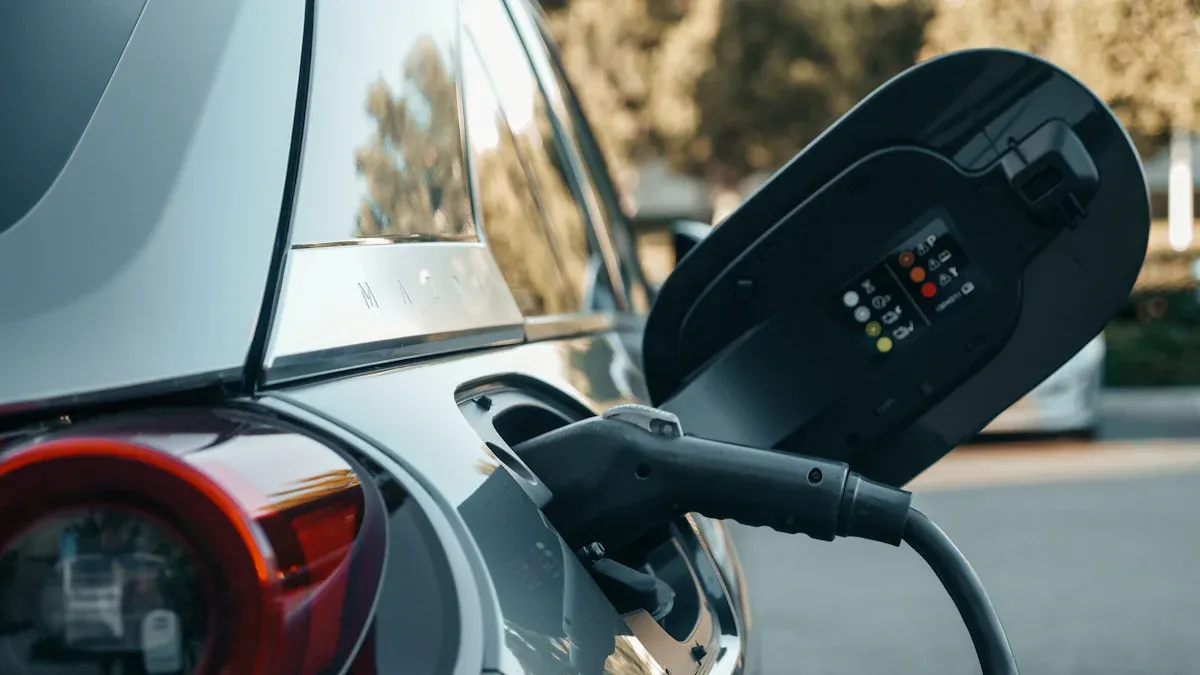
To determine if a portable charger is sufficient, a driver must first understand its capabilities and limitations. The term “power” involves more than just plugging in a cable; it relates to charging speed, energy capacity, and the electrical infrastructure available.
What Exactly is a Portable EV Charger?
Defining the Device and Its Purpose
A شاحن السيارة الكهربائية المحمول is essentially a heavy-duty cable with built-in control and safety electronics. Its primary purpose is to allow an electric vehicle to draw power from a standard electrical outlet, such as the common 3-pin socket found in Singaporean homes. This device offers flexibility, enabling an EV owner to charge their vehicle wherever a compatible socket is accessible.
Differentiating from Dedicated Wallboxes
A شاحن محمول differs significantly from a dedicated wallbox.
- الصندوق الحائطي: A wallbox is a stationary charging station professionally installed and hardwired into a property’s electrical system. It offers higher charging speeds (typically 7.4 kW to 22 kW) and often includes smart features like scheduling and remote monitoring.
- Portable Charger: This device is mobile and plugs into an existing socket. Its power is limited by the socket’s electrical capacity, making it a slower but more versatile charging solution.
Decoding Power: kW vs. kWh
Understanding the difference between kilowatts (kW) and kilowatt-hours (kWh) is crucial for any EV driver.
Kilowatts (kW): The Speed of Charging
A kilowatt (kW) is a unit of power. It measures the rate at which energy is transferred to the EV’s battery. Think of it as the speed of the “flow” of electricity. A higher kW rating means a faster charging speed.
Kilowatt-hours (kWh): The Amount of Energy
A kilowatt-hour (kWh) is a unit of energy. It measures the total amount of electric energy stored in the EV’s battery. This is comparable to the size of a fuel tank in a gasoline vehicle. A 60 kWh battery requires 60 kWh of energy for a full charge.
The Power Output You Can Expect in Singapore
The charging power you can achieve is dictated by the power source.
The Standard 3-Pin Socket Limitation (2.3 kW)
Singapore’s electrical system uses a standard 230V supply. A typical 3-pin wall socket is rated for a maximum current of 10A for continuous use, not the peak 13A. This limits the practical power output for a portable charger to approximately 2.3 kW.
ملاحظة: This slow and steady rate is designed to protect the home’s wiring from overheating during long charging sessions, which can last 8-10 hours overnight.
Advanced Chargers and Industrial Sockets
While most consumer-grade portable chargers are limited to 2.3 kW, more powerful mobile solutions exist. Technologically advanced providers like TPSON offer portable DC chargers that deliver significantly higher power, ranging from 20kW to 40kW.
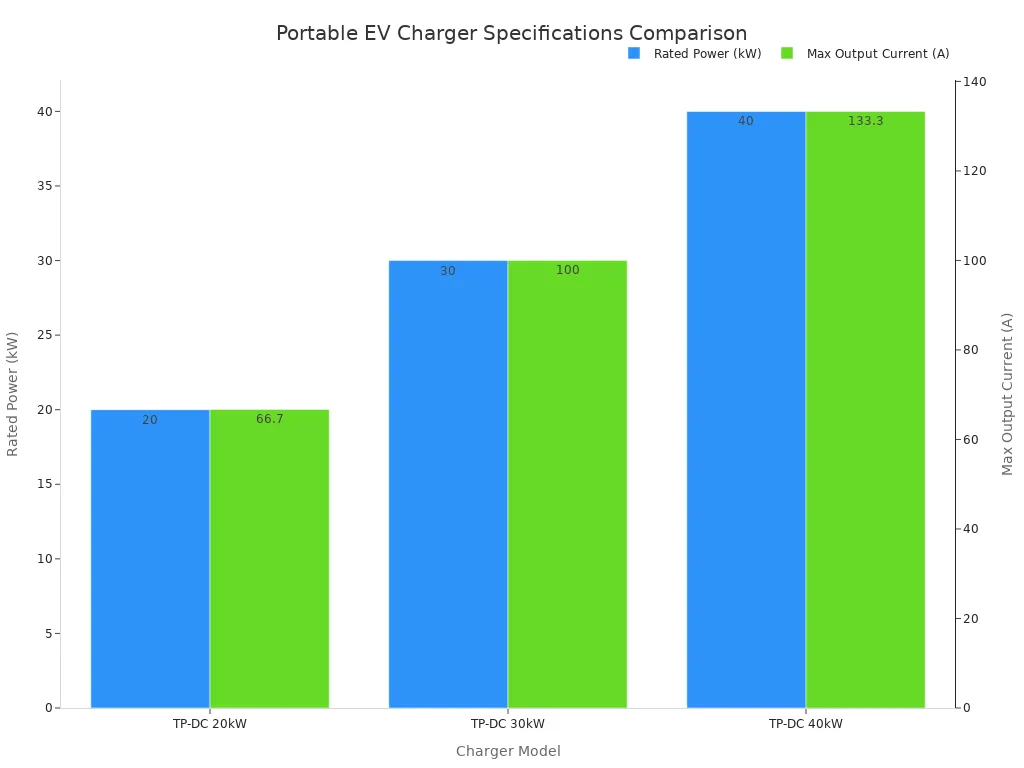
However, these advanced units cannot use a standard 3-pin socket. They require access to industrial-grade AC380V sockets, which are not found in typical residential car parks. These are specialized tools for workshops or commercial use rather than daily home charging.
Is It Powerful Enough for Your Electric Car? A 3-Step Calculation
Determining if a portable charger meets a driver’s daily needs is not guesswork. It requires a straightforward calculation based on personal driving habits and the vehicle’s specifications. This three-step process empowers any electric car owner to find a definitive answer.
Step 1: Calculate Your Daily Energy Need
First, an owner must quantify how much electric energy their car consumes on an average day. This figure is the foundation for all subsequent calculations.
Tracking Your Average Daily Mileage
The most accurate way to find daily mileage is to use the car’s trip meter.
- Reset the trip meter at the beginning of a typical week.
- Drive normally for seven days, covering usual routes like commuting, school runs, and errands.
- At the end of the week, divide the total distance by seven to find the daily average.
Alternatively, a driver can use a navigation app like Google Maps to estimate the distance of their daily round-trip commute.
Finding Your EV’s Efficiency (kWh/100km)
Every electric vehicle has an official energy efficiency rating, measured in kilowatt-hours per 100 kilometers (kWh/100km). This number indicates how much energy the car uses to travel that distance. Owners can find this information in their vehicle’s manual, on the manufacturer’s website, or on their car’s dashboard display.
For example, the BYD ATTO 3 has become a best-selling New Energy Vehicle (NEV) in Singapore. Its official energy consumption is 18.0 kWh/100 km.
With these two figures, one can calculate the daily energy need:
الصيغة: (Average Daily Mileage / 100) x EV Efficiency = Daily Energy Need (kWh)
مثال على ذلك: A driver travels 50 km daily in a BYD ATTO 3. (50 km / 100) x 18.0 kWh/100km = 9.0 kWh This driver needs to replenish 9.0 kWh of energy each day.
Step 2: Calculate Overnight Charging Power
Next, calculate the total energy a standard شاحن محمول can deliver during a typical overnight charging session.
The Formula: Power (kW) x Hours = Energy (kWh)
This simple formula connects the charger’s power (speed) to the total energy delivered over time.
- كيلووات (kW) measures the power, or the rate at which the charger delivers energy.
- Kilowatt-hour (kWh) measures the total amount of energy transferred to the EV battery.
A 2.3 kW charger operating for one hour delivers 2.3 kWh of energy to the vehicle. Extending the charging duration increases the total energy supplied.
A Real-World Example (8 Hours at 2.3 kW)
Most EV owners charge their cars overnight. A typical session lasts around 8 hours. Using the standard 2.3 kW output from a 3-pin socket, the calculation is:
2.3 kW (Charger Power) x 8 Hours (Charging Time) = 18.4 kWh
An 8-hour overnight session can theoretically add up to 18.4 kWh of energy to the battery.
Step 3: Compare Your Need vs. The Charger’s Supply
The final step is to compare the daily energy requirement with the energy supplied by the portable charger. This reveals whether the setup creates an energy surplus or a deficit.
Will You Have a Surplus or Deficit?
Let’s use the previous examples:
- Daily Energy Need: 9.0 kWh
- Overnight Energy Supply: 18.4 kWh
In this scenario, the charger supplies more than double the energy the driver consumes daily. This creates a significant energy surplus, making a portable charger a perfectly powerful solution for this user.
Factoring in Charging Inefficiency (~10% Loss)
The charging process is not 100% efficient. Some energy is lost as heat in the battery and electronics. A conservative estimate for this energy loss is around 10%. It is crucial to account for this to get a realistic picture.
Let’s adjust the overnight supply figure:
Actual Energy Supplied: 18.4 kWh x 0.90 (90% Efficiency) = 16.56 kWh
Even after accounting for efficiency losses, the 16.56 kWh supplied is still far more than the 9.0 kWh needed. The driver maintains a healthy surplus, confirming that a portable charger is more than powerful enough for their daily use. If a driver’s daily energy need was higher, for instance 17 kWh, this “charging deficit” would mean their battery level would slowly decrease each day.
The Ideal User: When a Portable Charger is Powerful Enough
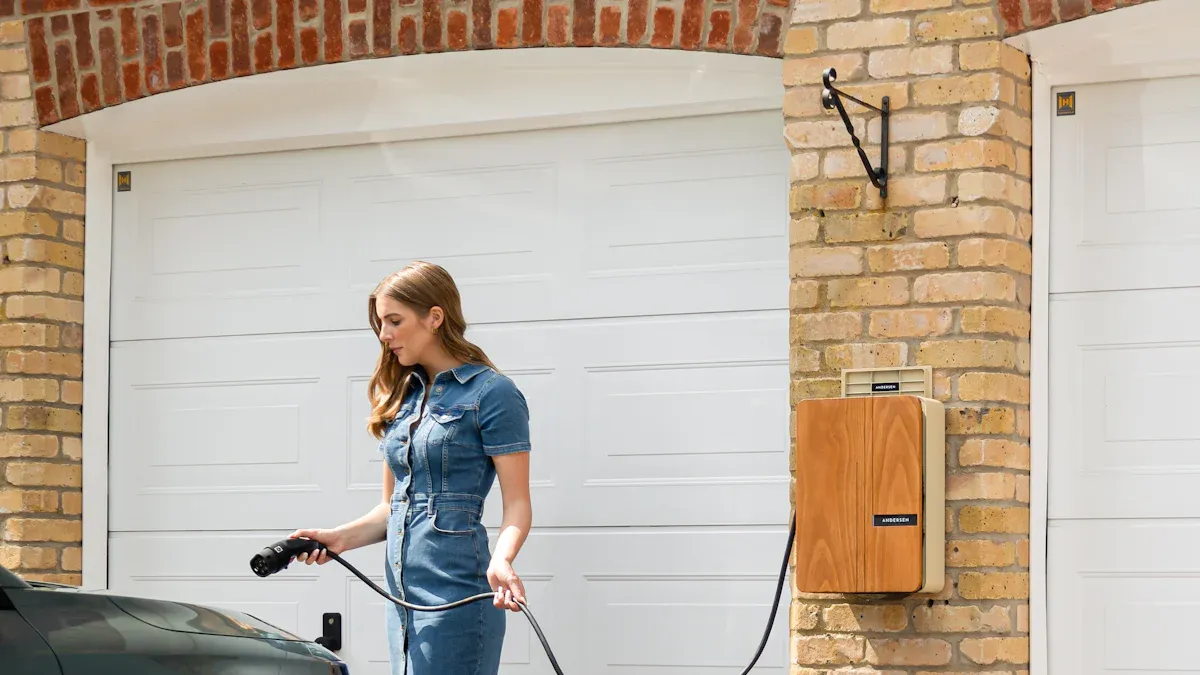
A شاحن السيارة الكهربائية المحمول is an ideal solution for specific driver profiles in Singapore. Its effectiveness hinges on a combination of driving habits, housing type, and charging strategy. For these users, the device offers a powerful blend of convenience and cost savings.
For the Low-Mileage Daily Commuter
The most suitable user is a driver with a short and consistent daily commute. This routine aligns perfectly with the capabilities of a standard portable charger.
Driving Less Than 50km Per Day
An individual driving less than 50 kilometers daily typically consumes under 10 kWh of energy. An overnight charging session easily replenishes this amount, often providing a significant energy surplus. This driver’s electric car will start each day with more than enough range for their needs.
Predictable Routes and Schedules
A predictable schedule is a key advantage. The driver can reliably plug in their vehicle every evening. The slow, steady 8-10 hour charging duration becomes irrelevant because it occurs during the car’s downtime. This consistency eliminates any range anxiety for daily travel.
For Landed Property and Certain Condo Owners
Access to a power source is the most critical factor. The power of a charger is useless without a legal and safe place to plug it in.
Guaranteed Access to a Power Socket
Landed property owners have a distinct advantage. They typically have private carports or garages equipped with standard 3-pin sockets. This provides them with guaranteed, hassle-free access for overnight charging. Some residents in newer condominiums may also have lots with dedicated power outlets.
The Ultimate Home Charging Convenience
For these owners, a portable EV charger offers ultimate convenience. They can simply come home and plug in their electric vehicle. This transforms their residence into a personal refueling station, eliminating trips to public charging points for daily needs.
As a Smart Supplementary Charging Method
Even for drivers with occasional long trips, the device serves as an intelligent part of a broader charging strategy. It complements the public charging network effectively.
Reducing Reliance on Public Fast Chargers
Drivers can use their portable charger for daily top-ups. This strategy maintains the battery at a healthy state of charge for routine travel. It significantly reduces their dependence on public DC fast chargers, which are better reserved for long-distance journeys or urgent power needs.
Cost-Effective Daily Top-Ups at Home or Work
Using a home socket leverages Singapore’s residential electric tariff. This rate is almost always cheaper than commercial public charging rates.
التوفير الذكي: Daily top-ups at home can lead to substantial long-term savings. The lower cost per kWh makes running an EV extremely economical for daily commutes.
This approach makes the portable charger a financially savvy tool for any EV owner with regular access to a socket.
For the Plug-in Hybrid (PHEV) EV Owner
Owners of a plug-in hybrid electric vehicle (PHEV) represent another ideal user group for portable chargers. The unique design of a PHEV, which combines a smaller battery with a traditional combustion engine, makes it perfectly suited for the slow and steady power delivery of a standard portable charger. This charging method allows PHEV drivers to maximize the benefits of their dual-power system.
Perfectly Sized for Smaller Batteries
A key feature of a PHEV is its relatively small battery pack. These batteries typically range from 15 kWh to 25 kWh, a fraction of the size of those found in fully electric cars. This smaller capacity is a significant advantage when using a portable charger.
A standard 2.3 kW portable charger can fully replenish a 20 kWh PHEV battery in under nine hours (20 kWh / 2.3 kW ≈ 8.7 hours). This timeframe fits perfectly within a typical overnight charging window.
This compatibility means a portable charger is not just a top-up tool for a PHEV; it is a fully capable primary charging solution. It can consistently provide a 0-100% charge overnight. Owners can rely on a simple 3-pin socket to prepare their vehicle for the next day’s electric-powered journeys. Using a quality device from a trusted provider like TPSON ensures this daily charging routine is both safe and efficient for the battery.
Maximizing Your Electric-Only Range
The primary goal for most PHEV owners is to drive on electric power as much as possible. A portable charger is the most effective tool to achieve this objective. By charging the battery every night, drivers can ensure they start each day with the maximum possible electric-only range, which is often between 40 to 80 kilometers.
This strategy offers several compelling benefits:
- Significant Fuel Savings: Completing daily commutes and errands using only electricity drastically reduces gasoline consumption and associated costs.
- Reduced Emissions: Driving in electric mode produces zero tailpipe emissions, contributing to a cleaner urban environment.
- Quiet and Smooth Operation: The electric powertrain provides a silent and responsive driving experience, enhancing comfort during city travel.
Ultimately, a portable charger empowers a PHEV owner to use their vehicle as a full-time electric car for daily routines. The gasoline engine then becomes a backup system, reserved only for occasional long-distance trips.
The Limitations: When a Portable EV Charger is NOT Powerful Enough
While a شاحن السيارة الكهربائية المحمول is a practical tool for many, it is not a universal solution. Its inherent limitations make it unsuitable for certain drivers and situations. Understanding these constraints is crucial before relying on it for daily charging.
For the High-Mileage Driver
A driver’s daily distance is the most significant factor determining a portable charger’s adequacy.
Journeys Exceeding 80-100km Daily
Drivers who regularly travel more than 80-100 kilometers per day will find a standard 2.3 kW charger insufficient. This group includes sales professionals, delivery drivers, or commuters with long cross-island journeys. Their high energy consumption outpaces what a slow charger can replenish overnight.
Why You’ll Face a “Charging Deficit”
A “charging deficit” occurs when a driver uses more energy in a day than the charger can restore overnight. An 8-hour session adds about 16.6 kWh after efficiency losses. If an EV consumes 20 kWh for a 100km trip, the driver faces a daily deficit of over 3 kWh. This shortfall accumulates, causing the battery’s state of charge to decrease day after day. The long charging times for large-battery electric vehicles highlight this issue.
| الطراز | 2.3kW AC Charging (Approx. time for 10-100%) | 50kW DC Charging (Approx. time for 10-80%) |
|---|---|---|
| كيا EV6 | 34 hours 40 minutes | 1 hour 16 minutes |
| كيا EV9 | 40 hours 35 minutes | 1 hour 23 minutes |
This table shows that a full charge is impractical, and even replenishing a large daily consumption can be a challenge.
For Drivers Without Legal Charging Access
The charger’s power is a secondary concern if a driver cannot legally access an outlet.
The HDB and Condo Parking Challenge
The vast majority of Singaporeans live in HDB flats or condominiums. Most of these shared car parks do not have approved power sockets at each lot. Running cables from a residential unit to the car park is both a safety hazard and a violation of bylaws.
Why Power is Irrelevant Without Access
Ultimately, the debate over charging speed is moot without a place to plug in. The most advanced portable charger from a provider like TPSON is useless if the vehicle owner has no sanctioned access to an electric socket. Access, not power, is the primary barrier for most residents in multi-story housing.
For Situations Needing a Quick Top-Up
A portable charger is designed for slow, overnight replenishment, not for speed.
Slow Overnight vs. Rapid DC Charging
The difference in charging speed is immense. Adding 50 km of range to a typical electric vehicle with a 2.3 kW portable unit can take over four hours. In contrast, a 50 kW public DC fast charger can add the same range in as little as 10-15 minutes.
Why It Can’t Replace Public Fast Chargers
A portable charger cannot substitute for the public DC network. Drivers needing a substantial energy boost between appointments or before an unplanned long trip must rely on fast chargers. The portable device is a tool for convenience at home, not for urgent power needs on the go.
For Large Battery EVs Needing a Full Charge
The growing popularity of long-range electric vehicles introduces a new dimension to the charging debate. While extended range is a significant advantage for drivers, the large battery packs in these cars present a formidable challenge for a standard 2.3 kW portable charger. The sheer volume of energy required makes this slow charging method impractical for anything more than a daily top-up.
The Impracticality of a 0-100% Charge
Modern electric cars often feature substantial battery capacities to deliver impressive driving ranges. These are not small power packs; they are significant energy reservoirs. For instance, popular models in the market come with various battery sizes:
- Hyundai Ioniq 5 Standard Range: 58 kWh
- Hyundai Ioniq 5 Long Range (2WD/AWD): 77 kWh
Attempting to charge one of these large batteries from empty to full with a standard portable charger is an exercise in extreme patience. The mathematics clearly illustrates the impracticality.
Charging Time Calculation: A 77 kWh battery pack charging at a rate of 2.3 kW would require over 33 hours for a complete 0-100% charge (77 kWh / 2.3 kW ≈ 33.5 hours).
This timeframe extends well beyond a single night, stretching into a day and a half of continuous charging. Such a duration is simply not feasible for any driver who needs their vehicle for daily use. It highlights that a portable charger lacks the power to perform a full “refill” on a large-capacity EV in a practical amount of time.
Best for Topping Up, Not Filling Up
Owners of large-battery electric models must shift their perspective on home charging. The portable charger is not a tool for filling the battery from empty; it is a device for maintaining a healthy state of charge. Its role is to replenish the energy consumed during a typical day’s commute, not to prepare the vehicle for a cross-country road trip.
For a driver with a 40 km daily commute, their vehicle might consume around 8 kWh of energy. An 8-hour overnight session can easily restore this amount, ensuring the car is ready for the next day’s routine. This approach keeps the battery within an optimal range (e.g., 20-80%) without needing a full, time-consuming charge. The strategy is about consistent, small top-ups rather than infrequent, large fills. Using a high-quality, certified device from a technologically advanced provider like TPSON ensures this daily top-up routine is both safe and efficient for the battery’s long-term health. Ultimately, the portable charger serves as a convenient maintenance tool, not a high-power refueling station.
Safety and Regulations for Portable EV Charger Use in Singapore
Using a portable charger for an electric vehicle involves important safety considerations and regulatory standards. A driver must understand these rules to ensure safe and legal operation. The power of a charger is secondary to its safety and compliance.
Is Daily Use Safe for Your Home?
Daily charging can be safe if the user follows proper precautions. The primary risks involve the home’s electrical infrastructure and the quality of the charging equipment.
The Risk of Overheating Sockets
A standard 3-pin socket is not always designed for the heavy, continuous load of EV charging. A portable charger can draw up to 10A for 8-10 hours straight. This sustained demand can cause older or poorly installed sockets to overheat, creating a serious fire hazard.
The Importance of a Quality, Certified Charger
A high-quality charger is the first line of defense. Reputable manufacturers, such as the technologically advanced provider TPSON, build devices with internal temperature monitoring and automatic shut-off features. In Singapore, all electrical equipment must have a Singapore Productivity and Standards Board (PSB) certificate. For household goods, suppliers must register them under the Consumer Protection (Safety Requirements) Registration Scheme (CPS Scheme).
السلامة أولاً: Always look for the SAFETY Mark on the device. This mark, administered by Enterprise Singapore, confirms the product meets local safety standards and is registered as a ‘Controlled Good’ for sale.
The Dangers of Using Extension Cords
Using an extension cord to connect a portable charger to a vehicle is extremely dangerous and should be avoided.
Fire Hazards and Safety Warnings
Standard indoor or outdoor extension cords are not rated for the high power and long duration of electric car charging. They can easily overheat, melt, and ignite. This poses a significant risk to property and personal safety.
Official Guidelines from EMA and SCDF
Government bodies in Singapore, including the Energy Market Authority (EMA) and the Singapore Civil Defence Force (SCDF), strongly advise against this practice. Their official guidelines prohibit the use of extension cords for charging an EV due to the high risk of fire.
Ensuring Your Charger is TR 25 Compliant
Compliance with local technical standards is non-negotiable for any charging equipment used in Singapore.
What is the TR 25:2022 Standard?
Technical Reference 25 (TR 25) is Singapore’s national standard for electric vehicle charging systems. It outlines the technical requirements for safety, performance, and interoperability. The standard ensures that all charging equipment works safely with the local power grid and different EV models.
How to Verify Charger Compliance
A user can verify compliance by checking the product’s documentation or manufacturer’s website for a declaration of conformity with TR 25:2022. The most reliable indicator for a consumer is the mandatory SAFETY Mark, which confirms the product has been tested and certified for use in Singapore.
The Legality of Charging in Shared Car Parks
The legality of using a portable charger in shared car parks presents a significant hurdle for most electric vehicle owners in Singapore. While the device itself is legal to own, its practical use is heavily restricted by regulations governing common property. These rules are in place to ensure the safety and well-being of all residents.
Understanding HDB and MCST By-Laws
The Housing & Development Board (HDB) and Management Corporation Strata Title (MCST) for condominiums create and enforce bylaws for their respective properties. These regulations govern the use of common areas, including car parks, corridors, and open spaces. A key principle in these bylaws is the prohibition of unauthorized use or modification of common property.
Drawing power from a private residential unit to a car park lot falls under this restriction. The act of running a cable across a common area is not permitted. The car park is a shared space, and individual residents cannot claim exclusive rights to use it in a way that was not intended.
ملاحظة مهمة: HDB and MCST bylaws are designed to prevent actions that could create hazards or inconvenience for other residents. Illegally charging a vehicle in a common car park is a direct violation of these community-focused rules.
The Problem with “Hanging Wires”
The term “hanging wires” refers to the unsafe practice of running a charging cable from a high-rise apartment window down to a vehicle in the car park. This method is explicitly forbidden and poses numerous dangers. The authorities and building management take this issue very seriously due to the associated risks.
These risks include:
- Trip Hazards: A cable running across a walkway or parking area creates a serious trip hazard for pedestrians, especially children and the elderly.
- Cable Damage: The wire is exposed to weather, foot traffic, and other vehicles. Damage to the cable’s insulation can lead to electrical shock or fire.
- مخاطر الحريق: An uncertified or damaged cable connected to an overloaded socket is a significant fire hazard, endangering the entire building.
- Visual Disamenity: Hanging wires are an eyesore and detract from the organized appearance of the residential estate.
Ultimately, the legal and safety barriers in shared car parks make portable charging an unviable option for the majority of Singaporeans. The charger’s power level becomes irrelevant when there is no legal or safe way to connect it to the car.
Cost Analysis: Is a Portable Charger the Most Economical Choice?
An owner’s decision to use a شاحن محمول often comes down to economics. A thorough cost analysis reveals that while it presents a low initial investment, its overall value depends on the user’s specific needs and long-term plans.
Upfront Investment Costs
The initial purchase is the first financial consideration for any EV owner.
Price Range for a Quality Portable Charger
A quality, TR 25 compliant portable charger typically costs between S$300 and S$700 in Singapore. The price reflects the device’s build quality, safety certifications, and included features. Cheaper, uncertified options pose significant safety risks and should be avoided.
Comparing Brands and Features
Premium models from technologically advanced providers like TPSON often include features like adjustable current settings, temperature monitoring, and detailed display screens. These additions enhance safety and user experience, justifying a higher price point for the discerning electric vehicle owner.
Calculating Your Cost Per Charge
The primary economic benefit of a portable charger is leveraging low residential electricity rates.
Using Singapore’s Residential Electricity Tariff
Home charging is significantly cheaper than public charging. The Energy Market Authority (EMA) sets the residential electric tariff, which is currently 27.74 cents per kWh (excluding GST). This rate forms the basis for calculating running costs.
Cost per 100km for Your Electric Car
An owner can easily calculate their running costs. The formula connects vehicle efficiency with the local tariff.
الصيغة: (EV Efficiency in kWh/100km) x (Tariff in $/kWh) = Cost per 100km
مثال على ذلك: For a BYD ATTO 3 (18.0 kWh/100km):
18.0 kWh/100km x $0.2774/kWh = $4.99 per 100km
This low running cost makes daily commuting extremely affordable.
Portable Charger vs. Dedicated Wallbox
A portable charger offers a lower entry cost, but a dedicated wallbox provides greater long-term value for some users.
Factoring in Wallbox Hardware and Installation
A dedicated wallbox is a more substantial investment. The hardware and professional installation can easily exceed S$2,000. This high upfront cost is a major barrier for many drivers.
Long-Term Value and Charging Speed
The primary advantage of a wallbox is its superior charging speed, typically 7.4 kW or higher. This speed offers more flexibility and is better suited for large-battery EVs.
| الميزة | شاحن محمول | Dedicated Wallbox |
|---|---|---|
| Upfront Cost | Low (S$300 – S$700) | High (S$2,000+) |
| سرعة الشحن | Slow (~2.3 kW) | Fast (7.4 kW+) |
| التركيب | None (Plug-and-Play) | Professional Required |
| الأفضل لـ | Low-mileage drivers, PHEVs | High-mileage, large-battery EVs |
Ultimately, the most economical choice depends on the driver. A portable unit is ideal for budget-conscious owners with low daily mileage, while a wallbox is a long-term investment for those needing faster, more powerful home charging.
Portable Charger vs. Public Charging Network
The final economic puzzle for an electric vehicle owner is comparing the cost of home charging with the expense of using the public network. While public charge points offer speed and convenience, a portable charger provides significant long-term savings for the right user.
Comparing AC and DC Public Charging Rates
Singapore’s public EV charging network consists of two main types of chargers: Alternating Current (AC) and Direct Current (DC). Each comes with a different price point.
- Home Charging (Portable): This is the cheapest option, using the residential tariff of approximately S$0.28 per kWh.
- Public AC Charging: These chargers, often found in malls and office buildings, are faster than a portable unit but more expensive than home electricity. Rates typically range from S$0.45 to S$0.55 per kWh.
- Public DC Fast Charging: These are the fastest and most expensive options, designed for quick top-ups.
Shell offers DC fast charging in Singapore at a rate of S$0.55 per kWh.
This price difference is substantial. The cost to add energy to a vehicle using a public DC charger can be nearly double the cost of charging at home.
| طريقة الشحن | Typical Cost per kWh (S$) |
|---|---|
| Home (Portable Charger) | ~ $0.28 |
| Public AC Charger | ~ $0.50 |
| شاحن التيار المستمر السريع العام | ~ $0.55+ |
Break-Even Point and Potential Savings
The upfront cost of a portable charger is an investment that pays for itself over time. The “break-even point” is the point at which the accumulated savings from home charging equal the initial purchase price of the charger.
Consider the cost difference per 100km for a BYD ATTO 3:
- Home Charging Cost: ~$4.99
- Public DC Charging Cost: ~$9.90 (at $0.55/kWh)
The saving is approximately S$4.91 for every 100km driven. If a quality portable charger from a provider like TPSON costs S$600, the break-even calculation is:
$600 (Charger Cost) / $4.91 (Savings per 100km) ≈ 122 x 100km
An owner would need to drive approximately 12,200 kilometers before the charger pays for itself. For a typical daily commuter, this distance is covered in less than a year. After this point, every home charge represents pure savings, significantly lowering the overall running cost of the electric car.
A portable EV charger is powerful enough for a specific Singaporean driver. This user has low daily mileage and legal access to a power socket for overnight charging. For this electric vehicle owner, the charger represents a practical and cost-effective solution. However, its slow speed makes it insufficient for a high-mileage EV. The lack of legal access also makes it a non-starter for most HDB residents. The final verdict for an electric car owner depends on a personal assessment of their driving habits, housing situation, and budget to decide if this “slow and steady” method is right for their vehicle.
الأسئلة الشائعة
Is it legal to use a portable charger in an HDB car park?
No. Running a cable from a residential unit to the car park is a violation of HDB and MCST bylaws. This practice, known as “hanging wires,” is prohibited due to safety hazards and is not a legal charging method for residents.
Can I use an extension cord with my portable charger?
An owner must never use a standard extension cord for EV charging. These cords are not rated for the sustained high power draw. They can overheat and create a serious fire risk. Official SCDF and EMA guidelines strongly advise against this practice.
How much does it cost to charge my EV at home?
The cost depends on the vehicle’s efficiency and the residential electricity tariff. An owner can calculate it using this formula:
(EV Efficiency kWh/100km) x (Tariff $/kWh) = Cost per 100km Typically, it costs around S$5.00 per 100km, which is much cheaper than public charging.
Is a portable charger safe for my home’s wiring?
Daily use can be safe with precautions. An owner should use a high-quality, certified charger and have their wall socket inspected by an electrician. A quality device from a technologically advanced provider like TPSON includes safety features to prevent overheating.
What is the TR 25 standard in Singapore?
TR 25:2022 is Singapore’s national technical standard for EV charging systems. It ensures that charging equipment is safe, reliable, and compatible with the local power grid and vehicles. A compliant charger will carry the mandatory SAFETY Mark.
How much range can I add overnight with a portable charger? 🚗
A standard 2.3 kW portable charger adds approximately 16.6 kWh of energy in an 8-hour session. For a typical EV, this translates to about 90-110 km of added range, which is more than enough for most daily commutes in Singapore.