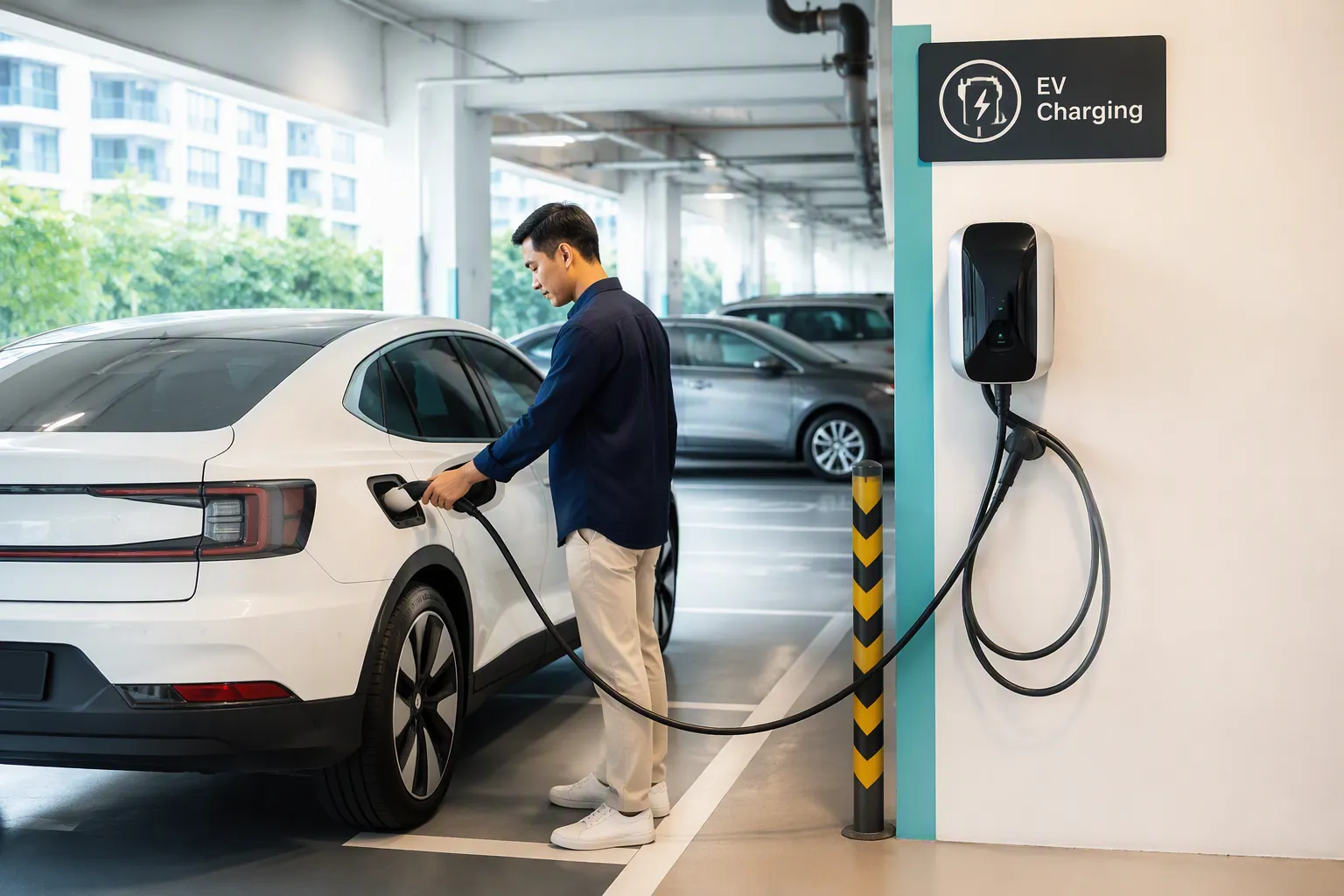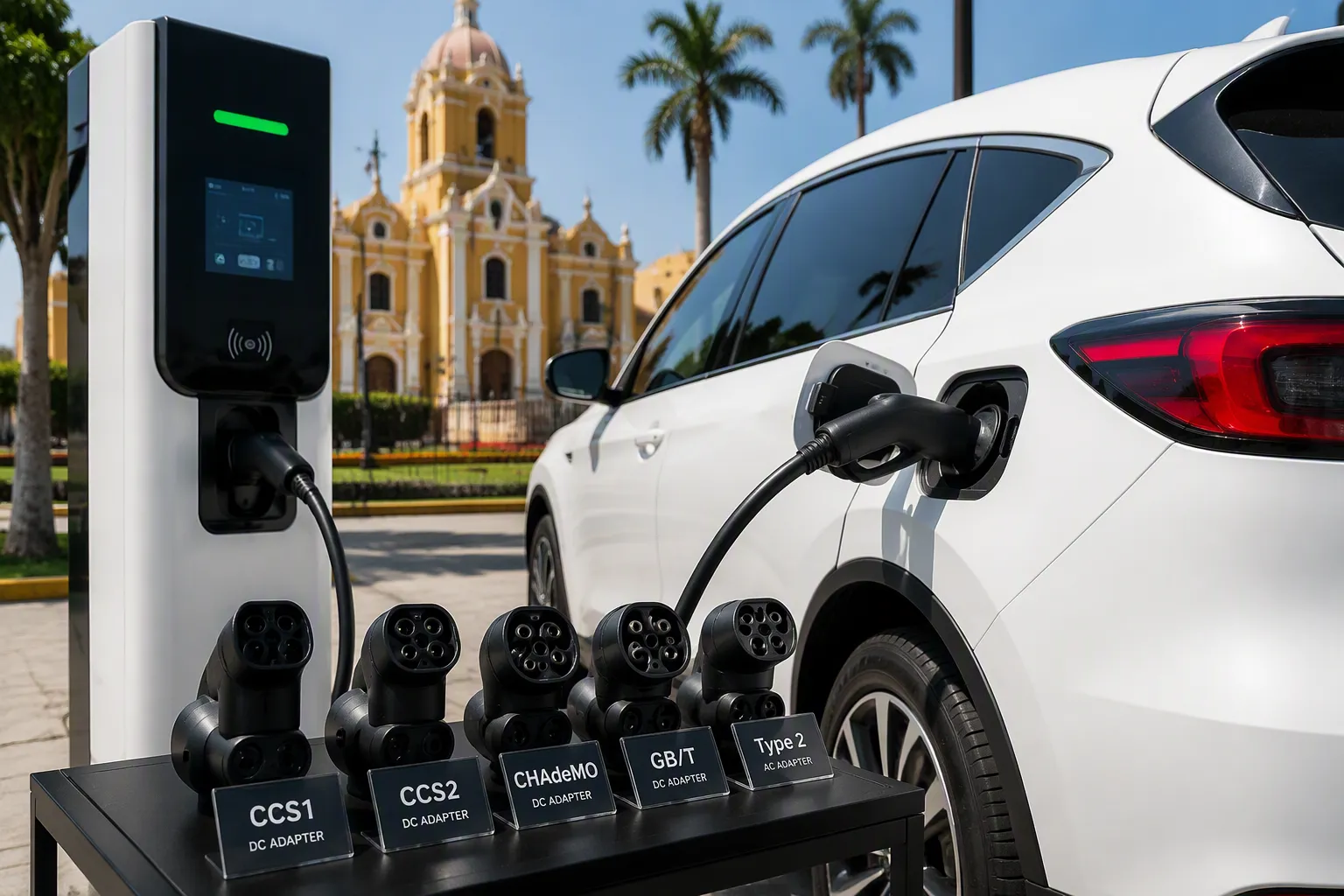
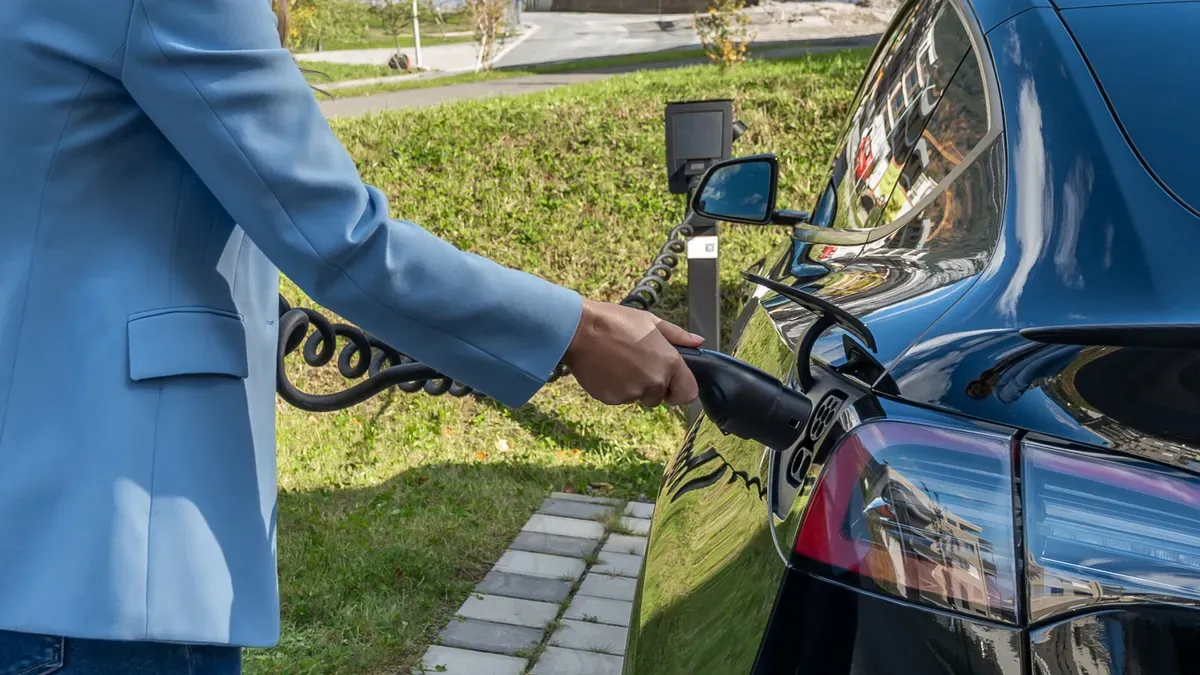
The choice between an EV and a hybrid depends on driving patterns, financial considerations, and access to an شاحن السيارة الكهربائية. EVs deliver zero emissions, reduce operating costs, and support future mobility trends. Battery electric vehicles now represent nearly a quarter of new car registrations, with projections showing a strong shift toward EVs globally. Hybrids remain popular for their flexibility, especially where حلول شحن السيارات الكهربائية أو شواحن السيارات الكهربائية المحمولة are less accessible. الشركات المصنعة لشاحن السيارة الكهربائية continue to expand infrastructure, but hybrids still offer reliable convenience for long journeys.
Consumers observe rapid growth in EV adoption compared to hybrids, reflecting changing market dynamics.
EV vs Hybrid: Cost Comparison
سعر الشراء
EV
Electric vehicles often carry a higher upfront price than their hybrid counterparts. The average cost for a new EV in the UK stands at approximately £50,000. Government incentives play a crucial role in making these vehicles more affordable. For example, the UK government has allocated £2 billion in grants, allowing households to save up to £3,750 on eligible models. California’s ‘Replace Your Ride’ program also demonstrates that substantial rebates can significantly boost EV sales. These financial supports help offset the initial investment, making EVs more accessible to a broader range of buyers.
Hybrid
Hybrid vehicles typically cost less than EVs at the point of purchase. Many hybrid models fall within a more affordable price range, appealing to buyers who seek a balance between technology and budget. Although hybrids do not benefit from as many incentives as EVs, their lower purchase price and widespread availability make them attractive for those who prioritize cost and convenience.
Running Costs
Electricity vs Gas
- Electricity generally costs less than petrol or diesel.
- Both hybrid and electric vehicles offer economical running costs.
- Hybrids use a combination of gasoline and electricity, resulting in excellent fuel efficiency.
EV owners often enjoy reduced energy expenses compared to traditional gasoline vehicles. Charging at home or at public stations can lower monthly costs. Hybrid drivers benefit from improved fuel economy, especially in city driving, but still incur gasoline expenses.
Tax Incentives and Rebates
- Financial incentives significantly impact affordability for EV buyers.
- Rebates and grants can reduce the purchase price by thousands.
- Programs like California’s ‘Replace Your Ride’ encourage EV adoption.
Tax incentives and rebates remain essential for buyers considering an EV. These programs help bridge the gap between the higher purchase price and long-term savings. Hybrid buyers may find fewer incentives, but some states and regions offer benefits for low-emission vehicles.
Insurance and Fees
EV
| Car Type | Average Annual Premium | أمثلة على النماذج |
|---|---|---|
| Electric Vehicle (EV) | £654 | Tesla Model 3, Nissan Leaf |
Insurance premiums for EVs tend to be higher than those for hybrids. Factors such as advanced technology, battery replacement costs, and specialized repair services contribute to increased rates.
Hybrid
| Car Type | Average Annual Premium | أمثلة على النماذج |
|---|---|---|
| Hybrid Car | £545 | Toyota Prius, Hyundai Ioniq |
Hybrid vehicles usually carry lower insurance premiums. Their conventional engine components and widespread repair options help keep costs manageable.
Tip: Buyers should compare insurance quotes for both EV and hybrid models before making a decision.
EV vs Hybrid: Maintenance and Reliability
الصيانة الروتينية
EV
Electric vehicles require less routine maintenance than traditional cars. They do not need oil changes, which simplifies upkeep. The absence of a combustion engine reduces the number of moving parts, lowering the risk of mechanical failure. Owners still need to rotate tires and replace brake pads, but these tasks occur less frequently due to regenerative braking systems. The following table highlights the main differences in maintenance requirements between electric and hybrid vehicles:
| Maintenance Requirement | السيارات الكهربائية (EVs) | Hybrid Vehicles |
|---|---|---|
| Oil Changes | Not Required | مطلوب |
| Battery Replacement Frequency | Every 8-10 years | غير متاح |
| Tire Rotations | مطلوب | مطلوب |
| Brake Pad Replacements | مطلوب | مطلوب |
| Engine Wear | Lower due to less use | Higher due to more use |
Note: Regenerative braking in electric vehicles extends brake life, reducing the frequency of replacements.
Hybrid
Hybrid vehicles combine a gasoline engine with an electric motor. This setup means hybrids still need regular oil changes and engine maintenance. Tire rotations and brake pad replacements remain necessary, similar to electric vehicles. However, the gasoline engine in hybrids experiences more wear than the electric motor, leading to higher long-term maintenance needs. Owners may also face additional costs if the hybrid system requires servicing.
الموثوقية على المدى الطويل
عمر البطارية
Battery longevity plays a crucial role in the reliability of both electric and hybrid vehicles. Most electric vehicle batteries last between 10 and 15 years, while hybrid batteries typically last 8 to 10 years. The table below summarizes the expected lifespan for each type:
| نوع المركبة | Expected Lifespan |
|---|---|
| مركبة كهربائية | من 10 إلى 15 سنة |
| Hybrid Vehicle | 8 to 10 years |
Manufacturers often provide warranties for batteries, which can ease concerns about replacement costs. Battery technology continues to improve, increasing reliability and reducing the risk of early failure.
Engine and Transmission
Electric vehicles use a simple drivetrain with fewer moving parts. This design reduces the likelihood of engine and transmission problems over time. Hybrids, on the other hand, rely on both a gasoline engine and an electric motor. The presence of a traditional engine means more components can wear out or require repairs. As a result, hybrids may face higher long-term maintenance costs compared to electric vehicles.
Tip: Regular maintenance and timely battery checks help maximize the lifespan and reliability of both electric and hybrid vehicles.
EV vs Hybrid: Range and Driving Experience
Driving Range
EV
Electric vehicles have made significant progress in driving range over the past decade. Most modern models now offer an average range of about 300 miles per charge. This range suits daily commutes and city driving, but longer trips may require planning for توقف الشحن. The actual range can vary based on driving style, weather, and battery age. Drivers who rely on predictable daily routes often find this range sufficient.
Hybrid
Hybrid vehicles excel in total driving range. They combine a gasoline engine with an electric motor, allowing them to travel between 500 and 700 miles or more on a full tank and battery. Unlike EVs, hybrids do not require charging stops, making them ideal for long-distance travel or areas with limited charging infrastructure.
| نوع المركبة | Average Driving Range |
|---|---|
| مركبة كهربائية | ~300 miles per charge |
| Hybrid Vehicle | 500–700+ miles total (no charging needed) |
Note: Hybrids offer unmatched flexibility for drivers who frequently travel long distances.
Performance and Comfort
Acceleration and Handling
Electric vehicles deliver immediate power through a single-gear design. This setup provides smooth and rapid acceleration, making city driving responsive and enjoyable. Drivers experience consistent performance without gear shifts. In contrast, hybrid vehicles use an electric motor for low-speed acceleration and switch to the gasoline engine at higher speeds or when extra power is needed. This dual system balances efficiency and performance, but acceleration may feel less seamless compared to EVs.
Noise and Ride Quality
Ride quality and cabin noise differ between these vehicle types. Electric vehicles operate quietly, producing only high-frequency motor sounds and minimal vibrations. Many models, such as the Lexus RZ, receive praise for their silent, smooth ride and advanced noise suppression. Hybrid vehicles, while quieter than traditional cars, still generate some engine noise and vibrations when the gasoline engine runs.
| أسبكت | السيارات الكهربائية (EVs) | Hybrid Vehicles (HEVs) |
|---|---|---|
| Noise Levels | High-frequency electric motor noise, power control unit noise | Some ICE noise and vibrations present |
| Ride Quality | Generally quieter and smoother due to absence of ICE noise | May experience some ICE-related noise and vibrations |
| NVH Challenges | New NVH issues arise from electric drivetrain | Traditional NVH issues still relevant |
Tip: Drivers who value a quiet, comfortable ride often prefer electric vehicles.
Regenerative Braking and One-Pedal Driving
EV
- Regenerative braking in electric vehicles captures energy lost during braking and returns it to the battery, improving efficiency.
- Many EVs feature one-pedal driving, allowing drivers to slow down or stop using only the accelerator pedal. This feature simplifies driving and enhances control.
- The regenerative braking effect in EVs is more noticeable, providing a unique driving experience.
Hybrid
- Hybrid vehicles also use regenerative braking, but the effect is less pronounced in daily driving.
- Most hybrids do not support full one-pedal driving. Drivers still rely on the brake pedal for stopping.
- Mild hybrids use smaller electric motors to assist the gasoline engine, while full hybrids can operate on electric power alone for short distances.
Note: Regenerative braking extends brake life in both vehicle types, but the experience feels more significant in electric vehicles.
EV vs Hybrid: Charging and Refueling
البنية التحتية للشحن
الشحن المنزلي
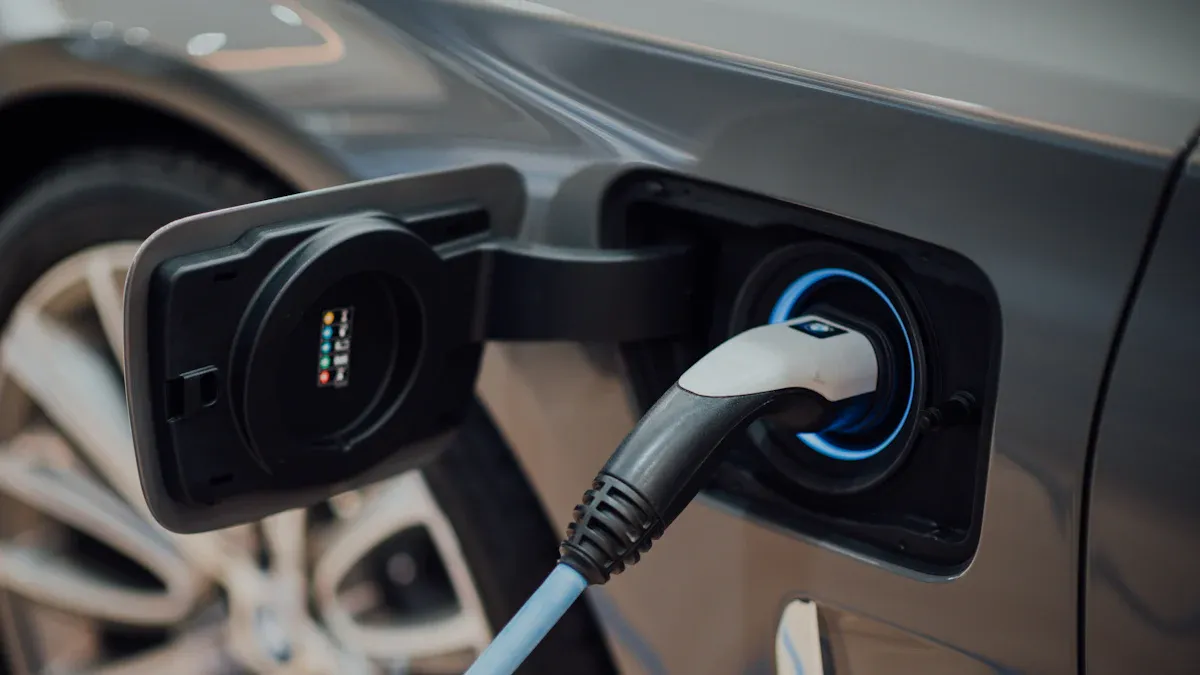
Home charging remains a major advantage for electric vehicle owners. Most drivers install a dedicated wall box at home, which allows overnight charging. The سرعة الشحن depends on the type of charger used. A basic three-pin domestic socket can take over 32 hours to fully charge a vehicle. Upgrading to a 3.6 kW wall box reduces the time to about 20 hours, while a 7 kW wall box can complete the task in 10 hours. For those seeking faster solutions, a 22 kW wall box can charge a vehicle in just 3 hours and 30 minutes. Companies like TPSON provide advanced home charging solutions that improve convenience and safety for users.
الشحن العام
Public charging infrastructure continues to expand, especially in Europe. However, the distribution of charging points remains uneven.
- The Netherlands, France, and Germany host 61% of all charging points in the EU.
- The Netherlands alone has 144,453 charging points, while Romania, a much larger country, has only 2,754.
- The remaining 24 EU countries share just 39% of the total charging points.
This uneven distribution means that drivers in some regions enjoy easy access to public chargers, while others may face challenges. The number of public charging ports has grown rapidly in recent years, with the total more than doubling between 2018 and 2022. In 2021, the number of charging ports increased by over 60%. This growth reflects strong investment in infrastructure, but the availability still lags behind the widespread presence of gas stations.
Refueling Convenience
Hybrid
Hybrid vehicles offer unmatched refueling convenience. Drivers can stop at any gas station and refill the tank in just a few minutes. This process remains familiar and quick, making hybrids ideal for long journeys or areas with limited charging infrastructure.
EV
Charging an EV takes longer than refueling a hybrid at a gas station. The time required depends on the charging method:
| طريقة الشحن | الوقت المطلوب |
|---|---|
| Three-pin domestic socket | Over 32 hours |
| 3.6 kW wall box | 20 hours |
| 7 kW wall box | 10 hours |
| 22 kW wall box | 3 hours 30 minutes |
| Refueling a hybrid | A few minutes |
Public fast chargers can reduce أوقات الشحن, but drivers still need to plan for longer stops compared to traditional refueling. The growing network of public chargers, supported by providers like TPSON, helps address this challenge, but convenience varies by location.
Tip: Drivers who value quick refueling and flexibility may prefer hybrids, while those with reliable home charging can enjoy the benefits of electric vehicles.
EV vs Hybrid: Environmental Impact

Emissions and Pollution
EV
Electric vehicles produce zero tailpipe emissions during operation. This feature makes them attractive for reducing urban air pollution. However, the environmental impact extends beyond driving. The source of electricity used for شحن plays a significant role in total emissions. In regions with clean energy grids, electric vehicles achieve lower lifetime greenhouse gas emissions compared to hybrids. The following table compares the average CO2 emissions for different vehicle types, including electricity generation and fuel production:
| نوع المركبة | CO2 Emissions (grams per mile) | Annual CO2 Emissions (lbs) |
|---|---|---|
| المركبات البنزينية | >350 | 11,435 |
| Hybrid Vehicles | ~260 | 6,258 |
| Plug-in Hybrids | ~260 | 5,772 |
| المركبات الكهربائية | ~200 | 3,932 |
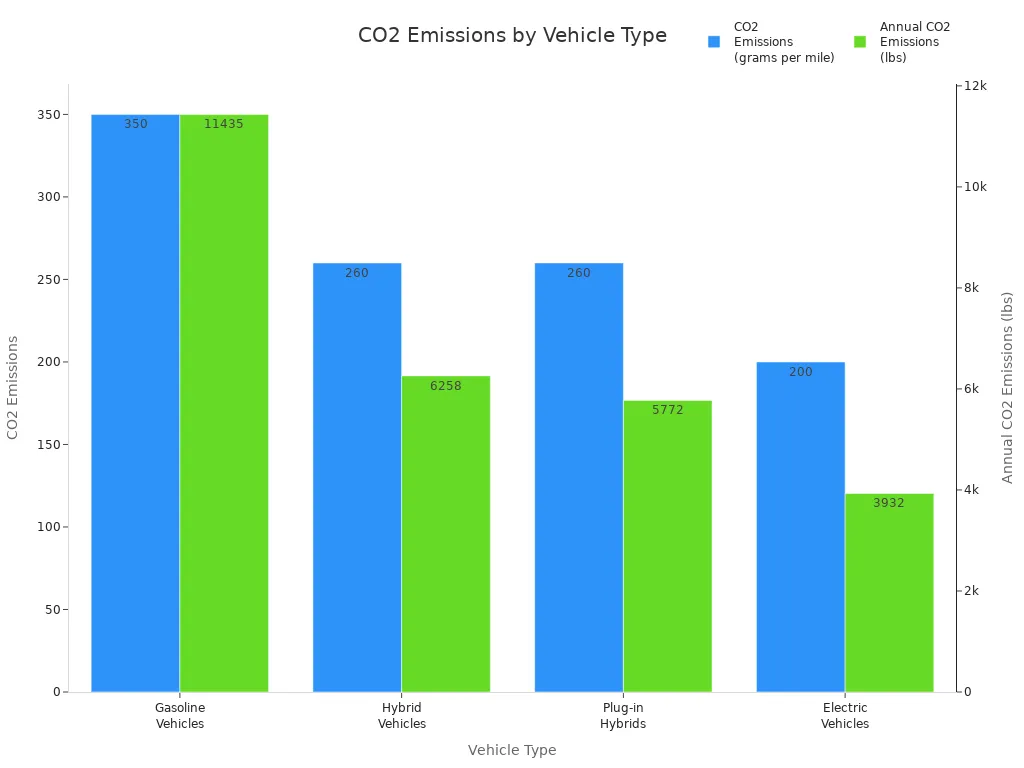
Electric vehicles consistently outperform hybrids and gasoline cars in terms of emissions, especially as renewable energy sources become more common.
Hybrid
Hybrid vehicles combine a gasoline engine with an electric motor. This design reduces emissions compared to traditional cars but does not eliminate them. Hybrids emit fewer pollutants during city driving, where the electric motor operates more frequently. However, they still rely on fossil fuels for longer journeys. Over a vehicle’s lifetime, hybrids generate more CO2 than electric vehicles but less than conventional gasoline models.
Note: Both electric and hybrid vehicles help reduce air pollution, but electric vehicles offer greater potential for emissions reduction as energy grids become greener.
Battery Production and Recycling
Environmental Costs
Battery production for electric vehicles requires significant energy and raw materials. Manufacturing lithium-ion batteries generates higher emissions than producing traditional engines. Mining for lithium and cobalt can cause pollution and social challenges, especially in regions like the Democratic Republic of Congo. These activities may result in poor working conditions and environmental degradation. Hybrid vehicles use smaller batteries, which reduces their environmental footprint during production, but they still contribute to resource extraction.
- Battery manufacturing for electric vehicles creates more emissions than for hybrids.
- Mining for battery materials can harm local environments and communities.
- Hybrid vehicles require fewer raw materials due to smaller battery size.
Recycling Options
Recycling electric vehicle batteries presents technical and environmental challenges. Complex battery designs and low recovery rates for harmful materials make recycling difficult. Many batteries end up in landfills or require specialized facilities for safe disposal. The recycling process for hybrid batteries is less demanding because of their smaller size and simpler construction. Companies like TPSON support sustainable practices by promoting advanced charging solutions and encouraging responsible battery management.
Tip: Choosing vehicles from manufacturers that invest in battery recycling and ethical sourcing can help reduce environmental impact.
EV vs Hybrid: Resale Value
Depreciation Trends
EV
Depreciation rates play a significant role in determining the long-term value of any vehicle. Electric vehicles have experienced rapid changes in resale value as technology and market demand evolve. On average, electric vehicles depreciate at a rate of about 20% per year during the first five years of ownership. Some premium models, such as those from Tesla and BMW, perform even better. These vehicles often see annual depreciation rates between 12% and 14%, which rivals the best petrol cars. The market rewards electric vehicles that offer advanced features, strong brand recognition, and longer battery warranties.
- Average annual depreciation for electric vehicles is around 20%.
- Top models like Tesla and BMW iX achieve 12–14% annual depreciation.
- Strong resale values reflect growing consumer confidence in electric technology.
Note: Battery health and warranty coverage can influence resale prices for electric vehicles.
Hybrid
Hybrid vehicles have established a reputation for steady resale values. Over a three-year period, hybrids typically depreciate by about 40%. This rate reflects their broad appeal and practical benefits. Many buyers appreciate hybrids for their lower emissions and the convenience of not relying solely on البنية التحتية للشحن. Hybrids remain attractive in markets where charging stations are limited or where buyers seek a familiar driving experience.
- Hybrid vehicles depreciate at a rate of approximately 40% over three years.
- Lower emissions and flexible fueling options support strong resale values.
- Hybrids appeal to buyers who want efficiency without range anxiety.
Market Demand
Current Trends
Market demand for both electric and hybrid vehicles continues to grow. Consumers show increasing interest in vehicles that offer lower emissions and reduced running costs. Electric vehicles attract buyers who want cutting-edge technology and zero tailpipe emissions. Hybrids remain popular among those who value flexibility and convenience. The used car market reflects these preferences, with both types maintaining solid resale values.
Future Outlook
Projections indicate a dramatic increase in global adoption of electric and plug-in hybrid vehicles. The following table highlights expected growth and market share:
| السنة | Projected Global EV/PHEV Stock | Market Share of EVs | Battery Cost (per kWh) |
|---|---|---|---|
| 2020 | 10 million | غير متاح | غير متاح |
| 2030 | 200 million | >66% | $60 – $90 |
| 2050 | 1 billion | غير متاح | غير متاح |
As battery costs decline and infrastructure expands, electric vehicles will likely dominate the market. By 2030, more than two-thirds of new vehicles sold worldwide are expected to be electric or plug-in hybrid models. This shift will further strengthen resale values for electric vehicles, while hybrids will continue to serve as a practical choice in regions with slower infrastructure development.
Tip: Buyers who consider long-term value should monitor market trends and battery technology improvements.
EV vs Hybrid: Model Availability and Features
Variety of Models
EV
Major automakers have expanded their electric vehicle offerings in 2024. They now provide a diverse selection of models to meet different driving needs. The market includes compact city cars, family SUVs, and commercial vans. For example, the following electric models are available:
- Proace Max Electric
- Proace Electric
- Proace City Electric
- bZ4X Electric
- Proace Verso Electric
- Proace City Verso Electric
- Toyota C-HR+ Electric
Manufacturers continue to introduce new electric vehicles each year. This trend reflects strong consumer demand and ongoing investment in electric mobility.
Hybrid
Hybrid vehicles remain popular for their flexibility and wide range of options. Automakers offer hybrids in many body styles, including hatchbacks, sedans, and SUVs. Some of the most recognized hybrid models include:
- Corolla Commercial Hybrid
- Aygo X Hybrid
- Yaris Hybrid
- Yaris Cross Hybrid
- Corolla Hybrid
- Prius Plug-in
- Toyota C-HR Hybrid / Plug-in
- All-new RAV4 Plug-in Hybrid
Hybrid models appeal to drivers who want improved fuel efficiency without relying solely on charging البنية التحتية.
Features and Technology
Advanced Tech
Electric vehicles lead in advanced technology features. They operate solely on electric motors and rechargeable batteries, which creates a cleaner and quieter driving experience. Drivers notice instant torque, resulting in smooth and responsive acceleration. Electric vehicles also produce no tailpipe emissions, making them more environmentally friendly than hybrids.
- Electric vehicles typically use larger electric motors and batteries.
- These vehicles focus on maximizing battery efficiency and performance.
- Hybrid systems are more complex, combining gasoline engines with electric motors for balanced efficiency.
Automakers equip both electric and hybrid vehicles with modern safety systems, connectivity options, and driver-assist technologies. However, electric vehicles often introduce the latest innovations first.
Body Styles and Options
Consumers can choose from a variety of body styles and configurations. The table below highlights common options for electric and hybrid vehicles:
| نوع المركبة | Body Style | Options |
|---|---|---|
| Electric Vehicle (EV) | SUV | 14.4 kWh battery, 35 miles electric range |
| Plug-In Hybrid (PHEV) | Compact SUV | Petrol/electric hybrid option |
| Plug-In Hybrid (PHEV) | Sedan | GTE variant with hybrid capabilities |
Manufacturers design electric vehicles and hybrids to suit different lifestyles. Buyers can select from compact models for city driving or larger SUVs for family use. Plug-in hybrids offer additional flexibility, allowing short electric trips and longer journeys using gasoline.
Tip: Shoppers should consider their daily driving patterns and preferred body style when choosing between electric and hybrid vehicles.
Which Is Better for Your Lifestyle?
City Drivers
City drivers often face heavy traffic, short trips, and frequent stops. Electric vehicles (EVs) suit urban environments well. They deliver instant torque, which helps with stop-and-go driving. Their quiet operation reduces noise pollution in crowded neighborhoods. EVs also offer وفورات كبيرة في التكاليف. Owners spend less on maintenance because electric motors have fewer moving parts than gasoline engines. Charging at home or at public stations is convenient for most city dwellers.
The table below summarizes the main advantages of electric vehicles for city drivers:
| الميزة | الوصف |
|---|---|
| الوفورات في التكاليف | Lower operating costs and reduced maintenance due to fewer moving parts, leading to less wear and tear. |
| الملاءمة | Higher energy efficiency allows for longer travel on a single charge, reducing the frequency of refueling. |
| Emissions | Zero tailpipe emissions contribute to improved urban air quality and reduced air pollution. |
Hybrid vehicles also perform well in cities. They switch to electric mode at low speeds, which reduces fuel consumption and emissions. However, they still require regular refueling and engine maintenance. For drivers who want to minimize their environmental impact and operating costs, EVs provide the best fit for city life.
Tip: City drivers who have access to home or workplace charging will benefit most from an electric vehicle.
Long-Distance Commuters
Long-distance commuters need vehicles that offer reliability, comfort, and flexibility. Both electric and hybrid vehicles can meet these needs, but each has unique strengths.
- Electric vehicles now exceed 200 miles on a single charge. This range reduces anxiety for many commuters.
- EVs provide a smooth and quiet ride, which enhances comfort during long trips.
- Charging an EV takes longer than refueling a gasoline vehicle. Commuters must plan charging stops, especially for journeys beyond the vehicle’s range.
- Online tools and mobile apps help drivers locate charging stations and estimate charging times.
Hybrid vehicles excel in flexibility. They use gasoline for longer trips, which eliminates concerns about finding a charging station. Refueling takes only a few minutes at any gas station. Hybrids also offer lower emissions and better fuel economy than traditional cars.
Note: Long-distance commuters who value seamless travel and minimal downtime may prefer hybrids, while those with access to fast charging and predictable routes can enjoy the benefits of an EV.
السائقون المتقطعون
Occasional drivers use their vehicles less frequently, often for short errands or weekend trips. Cost and convenience become key factors in choosing between an EV and a hybrid.
The table below compares important considerations for occasional drivers:
| العامل | Hybrid Car | Battery Electric Vehicle (BEV) |
|---|---|---|
| Fuel / energy cost | Lower than petrol-only; uses both petrol and battery | Lowest running costs — electricity only |
| Driving range | 500–700+ miles total (no charging needed) | ~300 miles average per charge (improving rapidly) |
| Refueling / recharging | 5 minutes at any petrol station | 30–60 mins at a rapid charger; overnight at home |
| Home charging needed? | No — works without a charger | Strongly recommended for day-to-day convenience |
| Range anxiety | None — petrol engine as backup | Manageable if you have home charging and plan ahead |
| Upfront price | Moderate premium over petrol | Higher upfront cost, but lower running costs offset this |
| Maintenance costs | Lower than petrol (reduced braking wear) | Lowest — no oil changes, simpler drivetrain |
| Tailpipe emissions | Reduced — typically 30–40% lower CO₂ than petrol | Zero tailpipe emissions while driving |
| Best suited to | Long-distance drivers, rural areas, frequent trips | Daily commuters with home charging access |
Hybrid cars suit occasional drivers who want flexibility and do not want to install a home charger. They offer long range and quick refueling. Electric vehicles provide the lowest running costs and zero emissions, but home charging is strongly recommended for convenience. Occasional drivers who can charge at home and want to minimize maintenance may find EVs appealing.
Tip: Those who drive infrequently and lack home charging may find hybrids more practical, while EVs reward those who prioritize low running costs and environmental benefits.
Eco-Conscious Buyers
Eco-conscious buyers prioritize reducing their carbon footprint and minimizing environmental harm. They often seek vehicles that align with their values on sustainability and resource conservation. Electric vehicles (EVs) stand out as the top choice for these individuals. EVs produce zero tailpipe emissions during operation, which helps improve urban air quality and reduce greenhouse gases. As more regions shift to renewable energy sources, the environmental benefits of EVs continue to grow.
Hybrid vehicles also appeal to eco-conscious drivers. They emit fewer pollutants than traditional gasoline cars, especially in city driving where the electric motor operates more frequently. However, hybrids still rely on fossil fuels for longer trips, which limits their potential for emissions reduction.
The table below compares the environmental impact of EVs and hybrids:
| العامل | Electric Vehicle (EV) | Hybrid Vehicle |
|---|---|---|
| Tailpipe Emissions | Zero | Low, but not zero |
| Energy Source | Electricity (increasingly renewable) | Gasoline + electricity |
| حجم البطارية | كبير | Small |
| Resource Use | Higher (battery production) | Lower (smaller battery) |
| End-of-Life Recycling | Complex, but improving | Easier due to smaller battery |
Eco-conscious buyers should consider the source of electricity in their region. Clean energy grids maximize the environmental benefits of EVs.
Manufacturers continue to improve battery recycling and ethical sourcing of materials. Buyers who value sustainability can research brands that invest in responsible practices. For those who want to make the lowest possible impact, an EV charged with renewable energy offers the best solution.
Budget-Conscious Buyers
Budget-conscious buyers focus on minimizing expenses throughout the vehicle’s life. They evaluate not only the purchase price but also ongoing costs such as fuel, maintenance, and insurance. Electric vehicles often have a higher upfront cost than hybrids, but they deliver significant savings over time.
Charging an EV costs less than refueling a gasoline or hybrid vehicle. Maintenance expenses remain lower for EVs because they have fewer moving parts and do not require oil changes. These factors contribute to a lower total cost of ownership. Government incentives and rebates can further reduce the initial investment, making EVs more accessible for buyers who plan for long-term savings.
Hybrid vehicles attract buyers with their lower purchase price and familiar refueling process. They offer excellent fuel efficiency, especially for drivers who cover long distances or lack access to home charging. However, hybrids still require regular engine maintenance and fuel expenses, which can add up over the years.
The following list highlights key considerations for budget-conscious buyers:
- Upfront Cost: Hybrids usually cost less to buy, but EVs may qualify for more incentives.
- Fuel/Energy Cost: EVs offer the lowest energy costs, especially with home charging.
- الصيانة: EVs require less maintenance, reducing long-term expenses.
- قيمة إعادة البيع: Both EVs and hybrids hold value well, but market trends favor EVs as adoption grows.
Buyers who look beyond the sticker price often find that EVs provide greater value over the vehicle’s lifetime.
Budget-conscious individuals should calculate total ownership costs, including incentives, energy, and maintenance. For those who drive regularly and plan to keep their vehicle for several years, an EV can offer the most economical solution.
The best choice between an electric vehicle and a hybrid depends on driving habits, budget, and charging access. City drivers and those seeking zero emissions may prefer EVs for their low maintenance and quiet operation. Hybrids suit long-distance travelers and areas with limited charging. The table below outlines essential factors to consider:
| العامل | EVs: Best For | Hybrids: Best For |
|---|---|---|
| Driving Habits | City, daily commutes | Long trips, flexible refueling |
| Upfront Cost | Higher, lower running costs | More affordable, familiar fueling |
Each buyer should weigh these priorities to make an informed decision.
الأسئلة الشائعة
What is the main difference between an EV and a hybrid?
Electric vehicles use only electric motors and batteries. Hybrid vehicles combine a gasoline engine with an electric motor. Hybrids switch between power sources to optimize efficiency.
كم من الوقت يستغرق شحن السيارة الكهربائية؟
Charging times depend on the charger type. Home chargers usually require 8–12 hours. Fast public chargers can deliver a full charge in 30–60 minutes.
Are hybrids cheaper to maintain than EVs?
Hybrids need regular engine maintenance, including oil changes. Electric vehicles require less maintenance because they have fewer moving parts. EVs often cost less to maintain over time.
Do EVs perform well in cold weather?
Battery performance drops in cold temperatures. Range decreases, and charging takes longer. Manufacturers design modern EVs to handle winter conditions, but drivers should expect reduced efficiency.
Can hybrids drive using only electricity?
Full hybrids can operate on electric power for short distances. Plug-in hybrids offer longer electric-only range. Mild hybrids use electric motors only to assist the gasoline engine.
Is it possible to install a home charger for an EV?
Most homeowners can install a dedicated wall box charger. Installation requires professional assessment. Home charging provides convenience and lowers energy costs.
Which vehicle type holds its value better?
Depreciation rates vary by model and market trends. Electric vehicles with strong brand recognition and battery warranties retain value well. Hybrids appeal to buyers seeking flexibility and steady resale value.