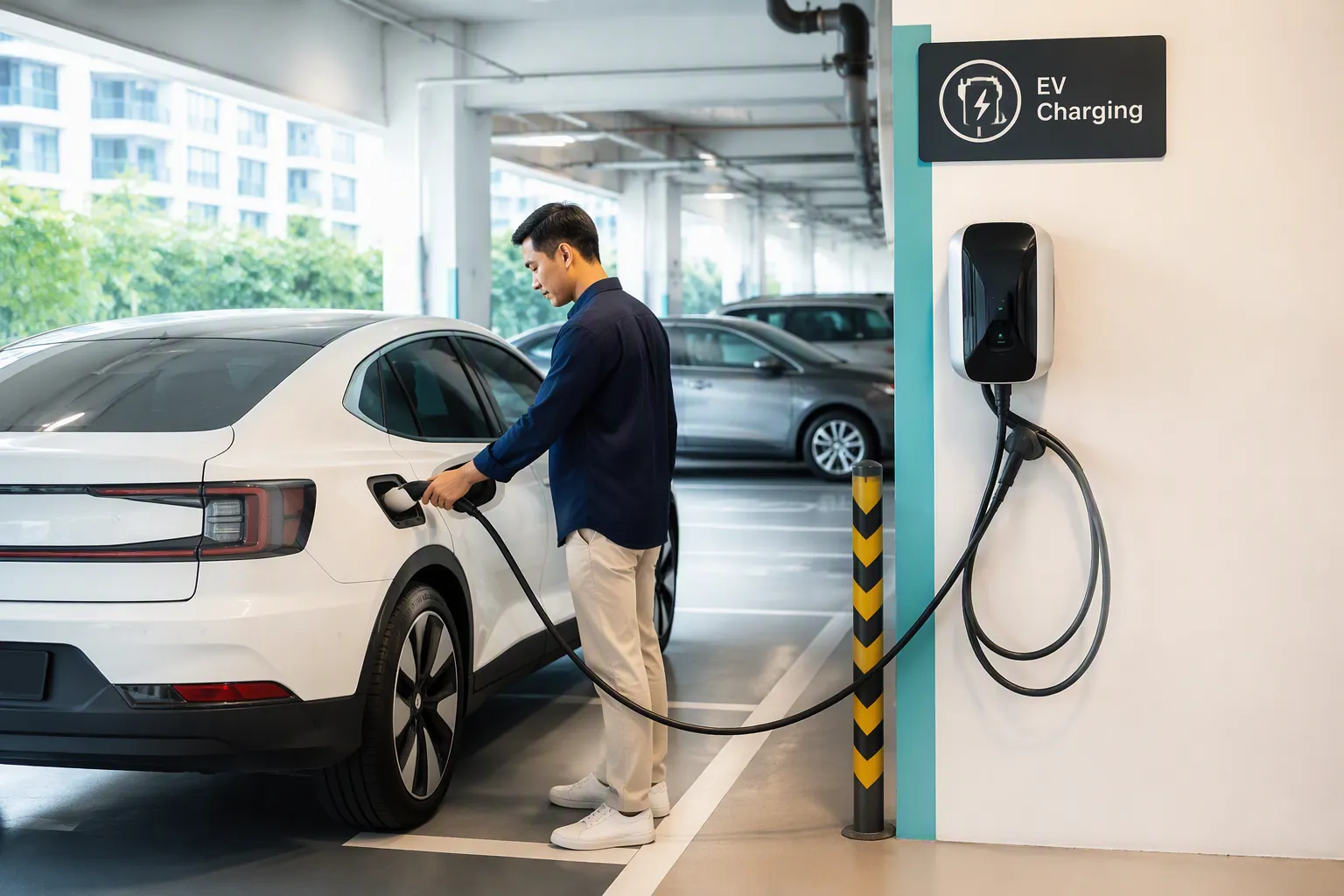
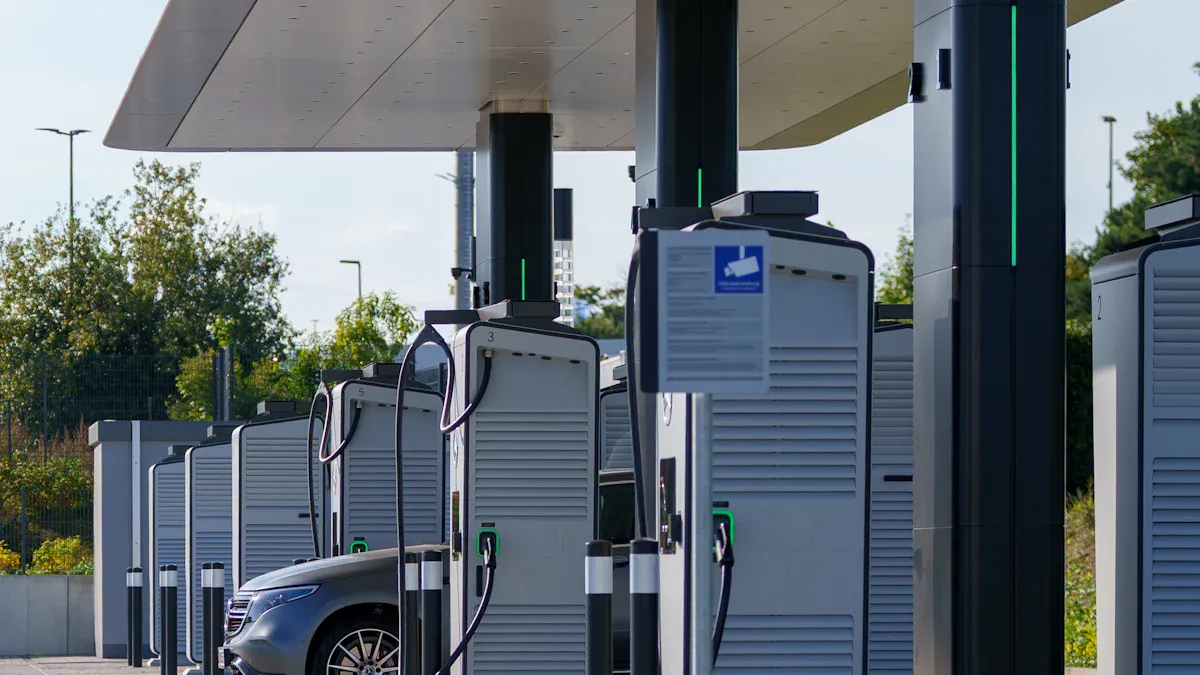
The true cost for a Chilean apartment dweller without a home شاحن السيارة الكهربائية ranges from Chilean Peso $50,000 to over $150,000 monthly. This figure includes more than just electricity payments. It combines direct public charging fees with indirect expenses. These expenses cover time, travel, and general inconvenience. While some الشركات المصنعة لشاحن السيارة الكهربائية like TPSON offer advanced حلول شحن السيارات الكهربائية, بما في ذلك شواحن السيارات الكهربائية المحمولة, the reliance on public networks creates a financial burden. This true cost calculation reveals the complete financial impact.
Unpacking the ‘True Cost’ Components
The total expense of public charging extends beyond the price per kilowatt-hour. A comprehensive analysis reveals three core elements that constitute the complete financial picture for an apartment dweller. These elements are direct costs, time value, and hidden expenses. Understanding each one is essential to calculating the full impact.
Component 1: Direct Financial Costs
Direct costs are the most straightforward part of the equation. They represent the money an EV owner pays directly to charging network operators.
Public Charging Rates in Chile
Public charging stations in Chile have electricity rates that are often two to four times higher than residential electricity tariffs. This premium covers the operator’s infrastructure, maintenance, and profit margins.
نماذج الاشتراك مقابل نماذج الدفع أولاً بأول
Drivers typically encounter two payment structures. Pay-as-you-go models allow anyone to charge for a standard per-kilowatt-hour fee. Subscription models may offer slightly lower rates in exchange for a monthly fee, benefiting high-mileage drivers.
The Home Charging Cost Benchmark
The ideal cost benchmark is home charging. Advanced solutions from مزودو الخدمات مثل TPSON allow for overnight charging using low residential electricity rates. This benchmark highlights the significant premium paid for relying exclusively on public networks.
Component 2: The Value of Your Time
Time is a finite resource with a quantifiable value. The hours spent managing an EV’s battery without home access represent a significant, non-monetary cost.
Calculating Your Personal “Time Tax”
Every trip to a public charger imposes a “time tax.” This includes travel to the station, the charging session itself, and the return trip. Summing these hours reveals a substantial time commitment each month.
The Opportunity Cost of Waiting
Waiting for a car to charge is time that could be spent on other activities. This opportunity cost includes lost work hours, missed family time, or forfeited leisure. Each hour at a charger has an associated value.
Component 3: Ancillary and Hidden Expenses
Several other expenses contribute to the total True Cost. These factors are often overlooked but have real financial consequences.
Transportation to and from Chargers
An EV owner must drive to a charging station. This “charging commute” consumes battery power and adds wear and tear to the vehicle, creating a small but recurring expense.
The Cost of “Charge Anxiety”
“Charge anxiety” is the mental stress associated with finding an available and functional charger. This constant planning and worry carry a psychological cost that detracts from the EV ownership experience.
Long-Term Battery Health Impact
Exclusive reliance on public DC fast chargers can negatively affect a battery’s lifespan. DC charging generates more heat than slower AC charging. This excess heat can accelerate battery degradation over time. Research from institutions like the Idaho National Laboratory confirms that frequent DC fast charging leads to faster capacity loss. To mitigate this, manufacturers like أودي suggest charging only to 80% on DC units. This practice, while protective, reduces the usable range per session and may necessitate more frequent charging stops, further increasing costs and time spent.
Step-by-Step: Calculating Your Monthly Public Charging Bill

Calculating the direct monthly cost of public charging requires a methodical approach. An EV owner must first understand the pricing structures of major Chilean networks. Then, they can apply a simple formula to their driving habits to project a realistic monthly expense. This process transforms abstract costs into a concrete budget item.
Understanding Public Charger Pricing
Chile’s public charging landscape is dominated by a few key players, each with its own pricing model. Drivers must know these rates to accurately estimate their expenses.
Copec Voltex Rate Structure
Copec Voltex is one of the most extensive networks in Chile. It primarily uses a pay-as-you-go model. The price is set per kilowatt-hour (kilowatt-hour) and varies depending on the charger’s speed (AC vs. DC). DC fast chargers, which deliver power more quickly, command a higher price per kilowatt-hour than slower AC units.
Enel X Way Rate Structure
Enel X Way offers both pay-as-you-go and subscription-based plans. The standard rate is a straightforward per-kilowatt-hour charge. However, subscribers pay a monthly fee to access lower per-kilowatt-hour rates, a model that benefits drivers who cover long distances and charge frequently.
Other Network Rates (AC vs. DC)
Beyond the major players, other networks and independent stations exist. A universal rule applies: DC fast charging is always more expensive than AC charging. Technologically advanced providers like TPSON offer portable chargers that can utilize AC power, but public AC stations provide a slower, more affordable alternative to DC for drivers who can wait longer.
The Core Calculation Formula
A simple formula provides the foundation for estimating monthly charging costs. It connects driving distance, vehicle efficiency, and electricity price.
Formula: (miles/month ÷ miles per kilowatt-hour) * Chilean Peso/kilowatt-hour
This formula is the key to an accurate cost projection.
(Total Kilometers Driven per Month ÷ Vehicle Efficiency in miles per kilowatt-hour) * Cost per kilowatt-hour in Chilean Peso
- Total Kilometers Driven per Month: The total distance the vehicle travels.
- Vehicle Efficiency: How many kilometers the EV can travel on one kilowatt-hour of energy.
- Cost per kilowatt-hour: The rate charged by the public charging station.
Example: Charging a 50 kilowatt-hour Battery
Consider an EV with a 50 kilowatt-hour battery and an efficiency of 6 miles per kilowatt-hour. A full charge provides approximately 300 miles of range. If the public DC fast charger costs Chilean Peso $300 per kilowatt-hour, the cost for a full charge is:
50 kilowatt-hour * Chilean Peso $300/kilowatt-hour = Chilean Peso $15,000
Projecting Your Monthly Total
Applying the formula to different driving patterns reveals a range of potential monthly costs.
Low-Usage Scenario (City Commuter)
A city commuter drives approximately 800 miles per month. Using a vehicle with 6 miles per kilowatt-hour efficiency, they need about 133 kilowatt-hour of energy.
- الحساب: (800 miles ÷ 6 miles per kilowatt-hour) * Chilean Peso $300/kilowatt-hour = Chilean Peso $39,900 per month
High-Usage Scenario (Frequent Traveler)
A frequent traveler might cover 2,000 miles per month. This driver requires around 333 kilowatt-hour of energy.
- الحساب: (2,000 miles ÷ 6 miles per kilowatt-hour) * Chilean Peso $300/kilowatt-hour = Chilean Peso $99,900 per month
These scenarios demonstrate how driving habits directly influence the monthly charging bill, establishing a clear financial baseline.
Monetizing Your Time: The “Time Tax” Calculation
The financial impact of public charging includes more than just electricity fees. A significant, often ignored, component is the “time tax”—the value of the hours an EV owner spends managing their vehicle’s energy needs. Calculating this cost transforms an abstract inconvenience into a concrete number, revealing a major part of the True Cost.
How to Assign a Value to Your Hour
An EV owner must first assign a monetary value to their time. This personal rate helps quantify the opportunity cost of waiting at a charger instead of doing something else.
Using Your Hourly Wage
For professionals, freelancers, or gig economy workers, the most direct method is using their hourly wage. Every hour spent at a charging station is an hour they could have been earning income. An individual can calculate this by dividing their monthly salary by the number of hours they work.
Assigning a Personal Value
Time outside of work also has value. An owner might value an hour of family time, personal development, or leisure at a specific amount, such as Chilean Peso $10,000 or more. This personal figure represents what they would be willing to pay for an extra hour of free time.
Mapping Your Weekly Charging Routine
Next, an owner needs to track the total time dedicated to charging each week. This routine involves more than just the time the car is plugged in.
Travel Time to the Charger
This includes the round-trip drive from home or work to the nearest reliable public charger. A 15-minute drive each way adds 30 minutes to every charging session.
Active Charging Wait Time
This is the period spent waiting for the vehicle to reach a sufficient state of charge, typically 80%. A DC fast charging session can take anywhere from 30 to 60 minutes.
Total Weekly Time Commitment
An owner can sum these components to find their weekly total.
- Travel: 30 دقيقة
- Waiting: 45 minutes
- Total per session: 75 minutes If a driver charges twice a week, their total commitment is 2.5 hours.
Calculating the Final Time Cost
With a value assigned to their hour and the total time commitment calculated, an owner can determine the final monthly time cost.
Formula: Total Hours/Month * Value of Your Hour
The calculation provides a clear monetary value for the time tax.
(Total Weekly Hours Spent Charging * 4.33) * Personal Hourly Value = Monthly Time Cost
Case Study: A Santiago Professional’s Time Tax
A Santiago-based consultant values her time at Chilean Peso $15,000 per hour. Her weekly charging routine consumes 2.5 hours.
| متري | القيمة |
|---|---|
| Weekly Time Commitment | 2.5 hours |
| Monthly Time Commitment | 10.8 hours (2.5 * 4.33) |
| Personal Hourly Value | Chilean Peso $15,000 |
| Monthly Time Tax | Chilean Peso $162,000 |
This case study shows how the time tax can easily surpass the direct cost of electricity, becoming the largest hidden expense of relying on public charging.
Factoring in Hidden Costs and Inconveniences

Beyond direct payments and time, a series of ancillary expenses and non-financial burdens add to the true cost of public charging. These hidden factors include the cost of travel to chargers, long-term vehicle wear, and the significant mental effort required to manage an EV without home charging. Acknowledging these elements provides a complete view of the ownership experience.
The “Charging Commute” Expense
Every trip to a public charger is a small journey in itself, and this “charging commute” has a direct financial cost. An owner must account for the energy and potential transport fees associated with each charging session.
Cost of Kilometers Driven to Charge
An EV owner uses the car’s own energy to travel to a charging station. This consumption directly adds to the amount of energy they need to purchase. For example, a 10 miles round trip to a charger in a vehicle with 6 miles per kilowatt-hour efficiency consumes approximately 1.67 kilowatt-hour. At a rate of Chilean Peso $300/kilowatt-hour, this adds nearly Chilean Peso $500 to the cost of every single charge.
Using Alternative Transport
In some situations, an owner might leave the vehicle to charge and return later. This scenario introduces new costs.
| Transport Method | Estimated Round-Trip Cost |
|---|---|
| Public Transit (Metro/Bus) | Chilean Peso $1,500 – $2,000 |
| Ride-Sharing Service | Chilean Peso $5,000 – $10,000+ |
These small but frequent expenses accumulate over a month, adding another layer to the total cost.
The Financial Impact of Battery Degradation
The type of charging used has a direct impact on the battery’s long-term health and, consequently, the vehicle’s value. A reliance on public fast chargers can accelerate battery degradation.
Why Relying on DC Fast Charging Matters
DC fast chargers deliver high power, which generates significant heat. Over time, this heat can cause the battery’s internal components to degrade, reducing its ability to hold a charge. Technologically advanced providers like TPSON offer solutions that utilize slower, gentler الشحن بالتيار المتردد, which is widely recognized as better for daily battery health.
Estimating Potential Long-Term Costs
While not a monthly bill, accelerated degradation represents a future financial loss.
A battery that degrades faster may lead to a lower resale value when the owner decides to sell the vehicle. In a worst-case scenario, it could necessitate a premature and expensive battery replacement years down the line, a cost that can run into millions of pesos.
The Mental Load Premium
The constant need to plan and manage charging creates a significant psychological burden, or “mental load.” This stress is a real, albeit non-monetary, cost of not having a charger at home.
The Stress of Finding Available Chargers
An apartment dweller constantly faces uncertainty when seeking a charge. Common stressors include:
- Arriving to find all chargers occupied.
- Discovering a charger is out of service or broken.
- Dealing with payment apps that fail to connect.
- Worrying about finding another available station before the battery runs too low.
Planning Life Around Charging Sessions
🗓️ EV ownership without home charging requires meticulous planning. An owner must build their weekly schedule around charging stops. A simple trip to the grocery store can become a complex logistical task, involving a detour and a 45-minute wait. This lack of spontaneity detracts from the convenience that EV ownership is meant to offer.
Building Your Personal Cost Analysis
An EV owner can move from general estimates to a precise financial figure by creating a personal cost analysis. This structured approach requires gathering individual driving data, organizing it logically, and calculating a final monthly total. This process reveals the complete financial picture for an apartment dweller who depends on public charging.
Step 1: Gather Your Personal Data
Accurate calculation begins with accurate data. An owner must collect three key pieces of information specific to their vehicle and lifestyle.
Determine Your Monthly Driving Distance
An owner should track their total kilometers driven over a typical month. This can be done by checking the vehicle’s trip meter at the beginning and end of the month. Alternatively, they can estimate the distance by adding up daily commutes, weekly errands, and any regular weekend trips. This number is the foundation of the entire cost analysis.
Find Your EV’s Real-World Efficiency
The manufacturer’s stated efficiency (miles per kilowatt-hour) is often optimistic. An owner needs to find their car’s real-world efficiency, which is influenced by driving style, terrain, and climate.
A simple method is to note the battery percentage before and after a known distance drive. For example, if a 100 miles trip uses 25% of a 60 kilowatt-hour battery (15 kilowatt-hour), the efficiency is approximately 6.7 miles per kilowatt-hour (100 miles ÷ 15 kilowatt-hour). Tracking this over several trips provides a reliable average.
Identify Your Most-Used Public Chargers
Different charging networks have different prices. An owner should identify the specific chargers they use most often—whether Copec Voltex, Enel X Way, or another provider. They must note the exact cost per kilowatt-hour for those stations, distinguishing between more expensive DC fast chargers and slower AC options.
Step 2: Create Your Cost Spreadsheet
A spreadsheet is the best tool for organizing the data and calculating the costs. It allows an owner to see how each component contributes to the total monthly expense. For those looking for a starting point, several templates are available online that can be adapted for personal use.
- XLSX Spreadsheet Template: A downloadable template compatible with Microsoft Excel.
- Numbers Spreadsheet Template: A version designed for Apple Numbers users.
Column for Direct Charging Costs
This column calculates the monthly electricity expense. The owner will use the core formula: (Total Monthly miles ÷ Real-World Efficiency) * Average Chilean Peso/kilowatt-hour. This calculation provides the baseline cost for the energy consumed.
Column for Your Calculated Time Tax
Here, the owner quantifies the value of their time. They will multiply their total monthly hours spent charging (including travel and waiting) by their personal hourly value. This figure often reveals a surprisingly high hidden cost.
Column for Ancillary Travel Costs
This column tracks the smaller expenses associated with the “charging commute.” It should include the cost of energy used to drive to the charger and any fees for alternative transport like ride-sharing or public transit used while the car charges.
Step 3: Tally Your Grand Total
The final step is to consolidate all the calculated costs into a single, comprehensive figure. This number represents the True Cost of public charging for the individual.
Summing All Costs for Your Monthly Figure
The owner adds the totals from each column: Direct Charging Costs + Time Tax + Ancillary Travel Costs. The result is a comprehensive monthly figure that reflects the full financial and time commitment required.
Comparing Your Total to the Home Charging Benchmark
Finally, the owner should compare their grand total to the cost of charging at home. A home charging setup, like those from advanced providers such as TPSON, uses residential electricity rates, which are significantly lower.
| مكون التكلفة | Public Charging (Example) | Home Charging Benchmark |
|---|---|---|
| Direct Electricity Cost | Chilean Peso $75,000 | Chilean Peso $25,000 |
| Time Tax | Chilean Peso $90,000 | Chilean Peso $0 |
| التكاليف الإضافية | البيزو التشيلي $10,000 | Chilean Peso $0 |
| الإجمالي الشهري | البيزو التشيلي $175,000 | Chilean Peso $25,000 |
يُظهر هذا المقارنة النهائية بشكل صارخ العلاوة المدفوعة لعدم إتاحة شحن المنزل. فهو يوفر نقطة البيانات الحاسمة اللازمة لتقييم الجدوى المالية طويلة الأجل لامتلاك مركبة كهربائية لساكن الشقة في تشيلي.
يمكن للمالك استخدام هذا الإطار لحساب تكلفته الحقيقية الشخصية من خلال إدخال بيانات قيادته وقيمة وقتهم. من المرجح أن يصل الرقم النهائي أو يتجاوز النطاق الشهري المقدر للبيزو التشيلي $50,000 إلى $150,000+. بينما التكلفة مرتفعة، فإن القرار شخصي ويعتمد على الميزانية، ونمط الحياة، والاستعداد لـ تخطيط جلسات الشحن حول الروتين اليومي.
في النهاية، هذه "التكلفة الحقيقية" المحسوبة هي الرقم الأكثر أهمية لأي ساكن شقة تشيلي يُقيّم ما إذا كانت المركبة الكهربائية هي الخيار المناسب له اليوم.
الأسئلة الشائعة
هل الشحن العام دائماً أغلى من شحن المنزل؟
نعم. تشمل شبكات الشحن العام في تشيلي تكاليف البنية التحتية والصيانة والربح. أسعار الكهرباء السكنية أقل بكثير، مما يجعل شحن المنزل الخيار الأكثر توفيراً. وينتج عن هذا علاوة سعرية كبيرة للسائقين الذين يعتمدون على المحطات العامة.
كيف يمكن لمالك المركبة الكهربائية تقليل تكاليف الشحن العام؟
يمكن للمالك تقليل التكاليف باستخدام شواحن التيار المتردد الأبطأ عندما يكون ذلك ممكناً، لأنها أرخص من شواحن التيار المستمر السريعة. تقدم بعض الشبكات، مثل Enel X Way، خطط اشتراك بأسعار أقل لكل كيلوواط/ساعة للمستخدمين المتكررين، مما يوفر مدخرات محتملة.
ما هي “ضريبة الوقت” في شحن المركبات الكهربائية؟
“ضريبة الوقت” هي القيمة النقدية للساعات التي يقضيها المالك في أنشطة الشحن. وهي تشمل السفر إلى المحطة، وانتظار اكتمال الشحن، ورحلة العودة. تمثل هذه التكلفة وقتاً ضائعاً للعمل أو الترفيه.
هل الشحن السريع بالتيار المستمر المتكرر يضر ببطارية المركبة الكهربائية؟
نعم، يمكن للاستخدام المتسق لشواحن التيار المستمر السريعة أن يُسرّع تدهور البطارية. الحرارة العالية المتولدة أثناء الشحن السريع يمكن أن تقلل من السعة طويلة الأجل للبطارية وعمرها الافتراضي الإجمالي. الشحن البطيء بالتيار المتردد هو عموماً أفضل لصحة البطارية اليومية.
هل توجد خيارات شحن محمولة لساكني الشقق؟
نعم، تقدم شواحن المركبات الكهربائية المحمولة حلاً مرناً. تقوم مزودون متطورون تكنولوجياً مثل TPSON بتطوير وحدات محمولة تسمح للسائقين بالشحن من المقابس الكهربائية القياسية حيثما يُسمح بذلك. يمكن أن يوفر هذا بديلاً مريحاً للمحطات العامة للشحن الليلي أو شحن الفرصة.
لماذا كفاءتي الفعلية أقل من تصنيف الشركة المصنعة؟
تتأثر الكفاءة الفعلية للمركبة الكهربائية بالعديد من العوامل.
- أسلوب القيادة (العدواني مقابل السلس)
- التضاريس التشيلية (التلال والجبال)
- المناخ (الطقس البارد يقلل المدى)
- استخدام التدفئة أو تكييف الهواء
تستهلك هذه المتغيرات طاقة إضافية، مما يقلل من الكيلومترات لكل كيلوواط/ساعة.
ما هي أكبر تكلفة خفية لعدم وجود شحن منزلي؟
أكبر تكلفة خفية هي غالباً “ضريبة الوقت”. يمكن أن تتجاوز قيمة وقت المالك الذي يقضيه في السفر إلى الشواحن والانتظار فيها بسهولة التكلفة المباشرة للكهرباء كل شهر، مما يجعلها عبئاً مالياً كبيراً.