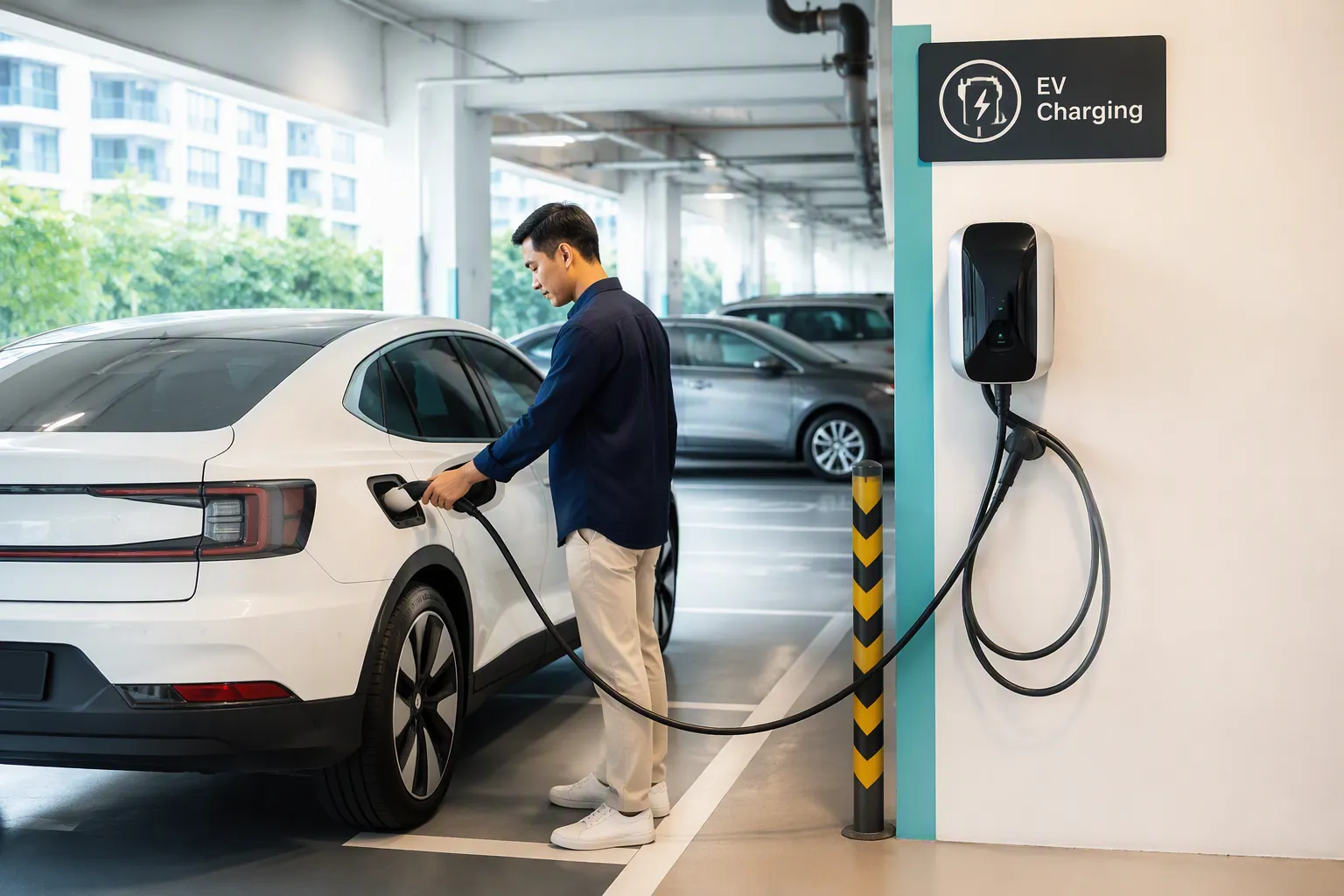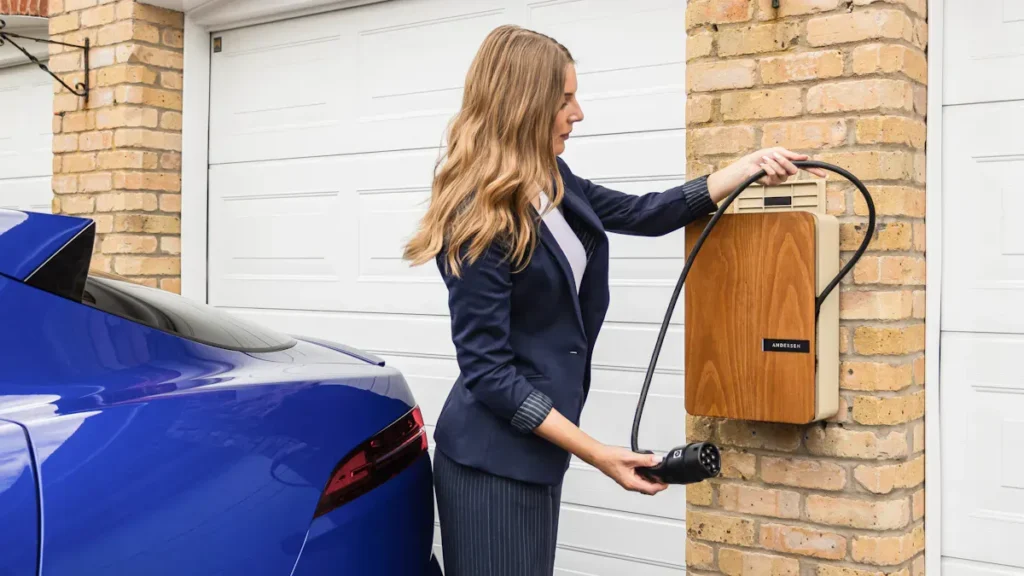
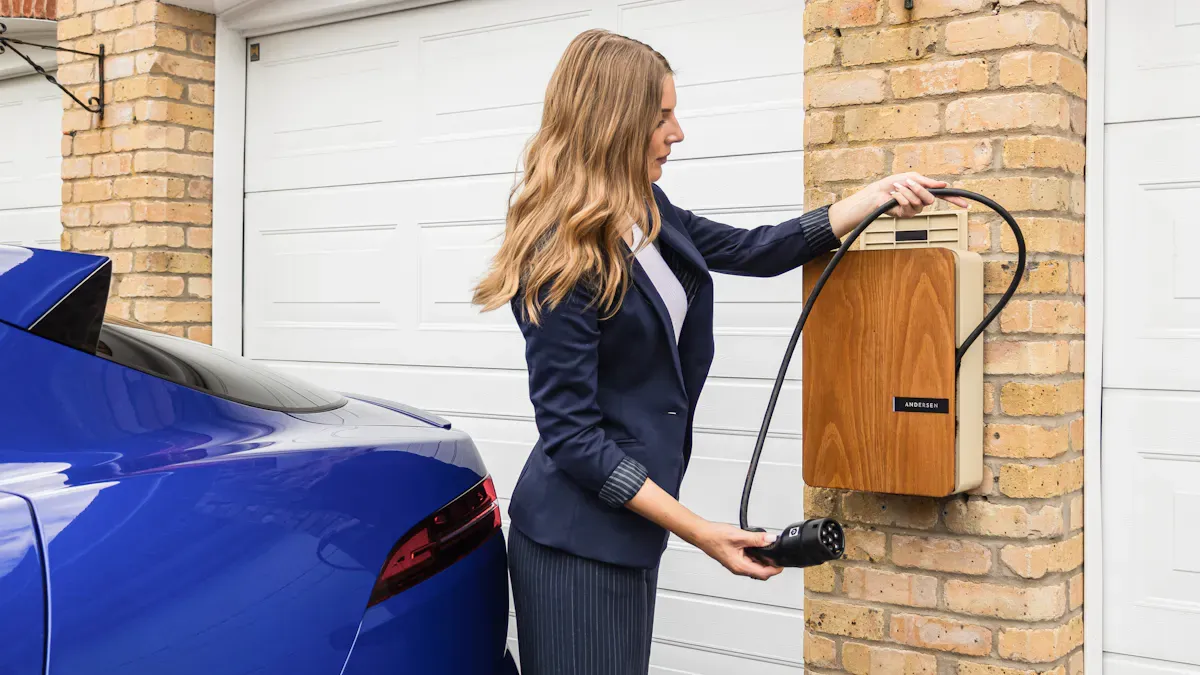
Wall-mounted chargers often represent the best EV charger for most Dutch drivers because they deliver greater charging speed and convenience. Portable EV chargers suit those who need flexibility or live in apartments. EV charger manufacturers offer a range of EV charging solutions to match different needs. Key factors influencing the choice include:
- Charging speed: Wall-mounted chargers provide faster charging than portable EV chargers.
- Installation: Wall-mounted chargers require professional setup, while portable chargers need no installation.
- Cost: Wall-mounted chargers cost more upfront but may save money through energy efficiency.
- Flexibility: Portable chargers allow use at multiple locations.
- Safety: Wall-mounted chargers integrate advanced safety features.
Portable EV Charger Overview
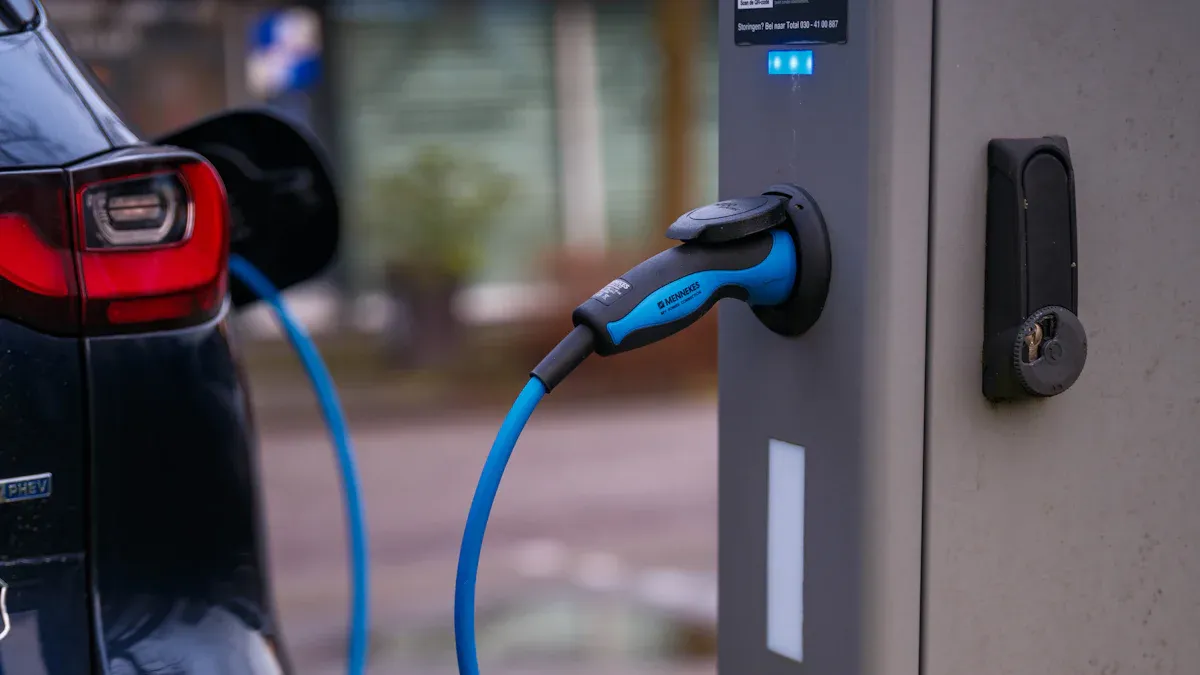
Portable EV Charger Technical Specs
Power Output
Portable EV chargers in the Netherlands offer a range of power outputs to suit different charging needs. Most models provide between 2.3 kW and 11 kW, allowing drivers to select a charger that matches their vehicle and home electrical system. Lower power options, such as the Type 2 – Schuko charger, connect to standard household sockets and deliver 2.3 kW. Higher power models, like the Type 2 – CEE 16A charger, support up to 11 kW for faster charging.
| Specification Aspect | Type 2 – Schuko Charger | Type 2 – CEE 16A Charger |
|---|---|---|
| Power Rating | 2.3 kW | 11 kW |
| Cable Length | 8 meters | 8 meters |
| Connector Type | Schuko (household socket) | CEE 16A (industrial plug) |
| Charging Mode | Mode 2 (household socket) | Mode 2 (three-phase charging) |
| Safety Features | ICCB, over-/undervoltage, residual current, overheating, wiring fault protection | ICCB, over-/undervoltage, residual current, overheating, wiring fault protection |
| Display | Charging time, temperature, voltage, power, energy consumption, charging current | Charging time, temperature, voltage, power, energy consumption, charging current |
| Certification | IEC 62752, IEC 61851-1, IEC 62196-2 | IEC 62752, IEC 61851-1, IEC 62196-2 |
| Weather Protection | IP44 (Schuko), up to IP55 | IP44 (Schuko), up to IP55 |
| Usage | Emergency or everyday use | Compact powerhouse for home or travel |
| Additional Features | Carrying bag, plug & play, no installation needed | Carrying bag, plug & play, no installation needed |
Connector Types
Most portable EV chargers use Type 2 connectors, which are standard for Dutch electric vehicles. Some models include adapters for Schuko or CEE 16A plugs, increasing compatibility with various sockets. This versatility allows drivers to use their portable charging cord at home, at work, or while traveling.
Compatibility
Portable EV chargers support a wide range of electric vehicles. They comply with European standards such as IEC 62752 and IEC 61851-1. This ensures compatibility with most EVs on Dutch roads. TPSON, a technologically advanced electric vehicle charging solution provider, offers models that work with both single-phase and three-phase systems.
Portable EV Charger Advantages
Flexibility and Mobility
Portable EV chargers provide unmatched flexibility. Drivers can charge their vehicles at home, at work, or on holiday. Portability means users are not tied to a single charging station. The portable ev charging cord fits easily in a car trunk, making it ideal for those who value mobility.
No Permanent Installation
A portable ev charger requires no installation needed. Users simply plug the charger into a compatible socket and start charging. This feature saves time and money, especially for renters or those who move frequently.
Use at Multiple Locations
Drivers can use portable ev chargers at any location with a suitable power outlet. This makes them perfect for people who travel often or lack a fixed parking spot. The table below highlights the differences in flexibility and convenience:
| Feature | Portable Chargers | Wall-Mounted Chargers |
|---|---|---|
| Portability | Can be used anywhere with a power outlet | Fixed location only |
| Flexibility | Versatile for home, work, travel | Limited to installation site |
| Cost | Generally less expensive | Higher installation costs |
| Installation | No professional setup required | Requires professional installation |
Portable EV Charger Limitations
Slower Charging Speeds
Portable ev chargers usually deliver lower charging speeds compared to wall-mounted models. Most portable units provide up to 11 kW, while some wall-mounted chargers can offer even higher rates. This means longer charging times, especially for vehicles with large batteries.
Limited Smart Features
Many portable ev chargers lack advanced smart features. Users may not find app integration, remote monitoring, or scheduling options. These features are more common in fixed charging solutions.
Safety Considerations
While portable ev chargers include essential safety features such as overvoltage and overheating protection, users must ensure proper use. Charging from household sockets can pose risks if the electrical system is outdated or overloaded. Always check compatibility and follow manufacturer guidelines for safe operation.
Portable EV Charger Ideal Use Cases
Apartment Living
Many Dutch drivers live in apartments where installing a wall-mounted charger is not possible. A portable ev charger offers a practical solution for these residents. They can charge their EV using a standard household socket without needing permission from a landlord or homeowners association. This option provides flexibility for renters who may move frequently. Apartment dwellers often lack dedicated parking spaces, so a portable charger allows them to charge wherever they find a suitable outlet. The compact design fits easily in small storage spaces, making it convenient for urban living.
Tip: Apartment residents should always check the electrical capacity of their building before using a portable charger to avoid overloading circuits.
Frequent Travelers
Drivers who travel often benefit from the flexibility of a portable charger. They can charge their EV at hotels, campsites, or friends’ homes. The portable ev charger fits in the trunk and works with various socket types, making it ideal for those who need to charge in different locations. Travelers do not need to rely on public charging stations, which may be busy or unavailable. This independence ensures that they can keep their EV charged during long trips. For people who drive short distances and charge overnight, a portable charger meets their needs efficiently.
Temporary Charging Needs
Some EV owners require charging solutions for temporary situations. For example, they may need emergency charging when no dedicated charger is available. A portable charger serves as a backup during power outages or when visiting places without wall-mounted chargers. It is also useful for those who are testing EV ownership before investing in a permanent charging station. The best use cases for portable chargers include emergency charging, overnight charging for short-distance drivers, and charging in various locations. This versatility makes portable chargers a valuable tool for many Dutch EV drivers.
| Scenario | Portable Charger Benefit |
|---|---|
| Apartment Living | No installation, flexible use |
| Frequent Travelers | Charge anywhere, easy transport |
| Temporary Charging Needs | Emergency backup, trial option |
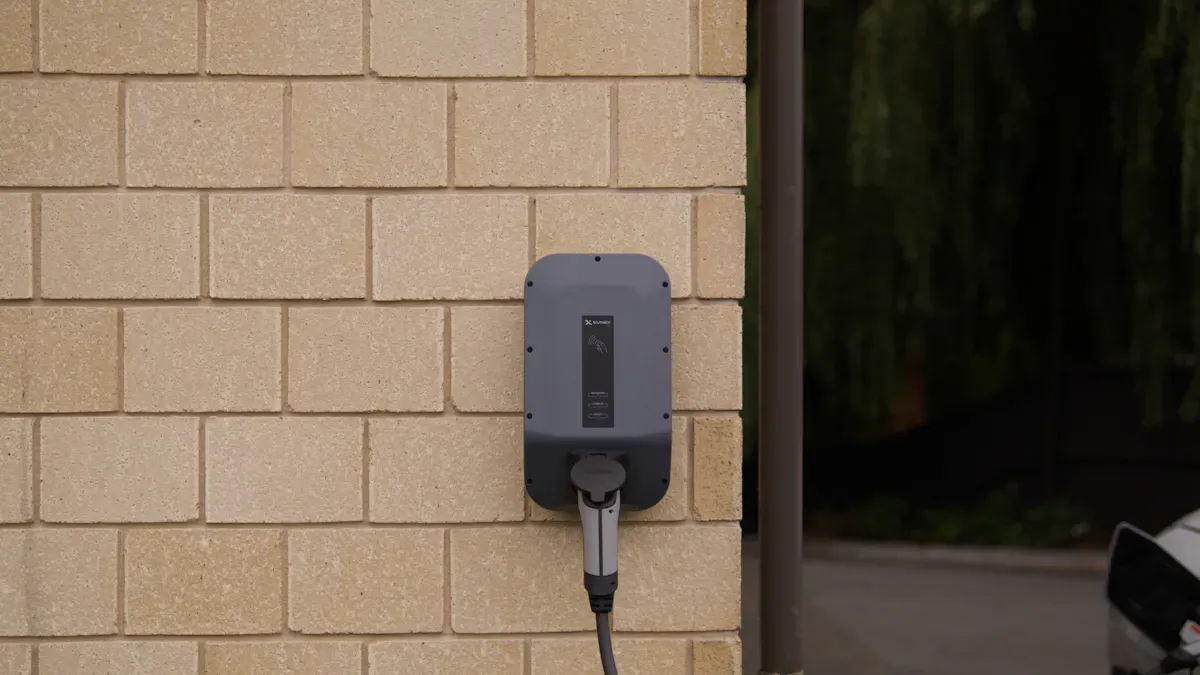
Wall-Mounted EV Charger Overview
Wall-Mounted EV Charger Technical Specs
Power Output
Wall-mounted EV chargers deliver robust power output for Dutch homes. Most wallbox chargers support 7.4 kW for single-phase connections and up to 22 kW for three-phase systems. This range allows homeowners to select a charger that matches their home’s electrical capacity and their vehicle’s charging needs. A wallbox charger with higher power output reduces charging time, making it ideal for daily use.
Connector Types
The majority of wallbox chargers in the Netherlands use Type 2 connectors. This connector type has become the standard for European electric vehicles. Some wallbox charger models offer tethered cables, while others provide socket-only designs for greater flexibility. Homeowners can choose the option that best fits their charging habits and vehicle compatibility.
Compatibility
Wall-mounted charging stations offer broad compatibility with most electric vehicles on Dutch roads. Manufacturers design these chargers to meet European standards, ensuring seamless integration with both older and newer EV models. Homeowners benefit from a wallbox charger that supports both single-phase and three-phase home electrical systems, maximizing compatibility and future-proofing their investment.
Wall-Mounted EV Charger Advantages
Faster Charging
Wall-mounted chargers provide faster charging compared to portable options. They deliver more power, which means drivers spend less time waiting for their EV to charge. This speed makes a wallbox charger the preferred choice for those who rely on their vehicle daily.
Integrated Smart Features
Many wallbox chargers include advanced smart features. Homeowners can monitor charging sessions, schedule charging during off-peak hours, and track energy consumption through dedicated apps. These features help optimize energy use and reduce costs over time.
Enhanced Safety
Wall-mounted charging stations offer enhanced safety for home use. Manufacturers equip these chargers with built-in protections against overcurrent, overheating, and electrical faults. The fixed installation ensures stable connections, reducing risks associated with loose plugs or overloaded sockets.
Wall-mounted chargers also improve home aesthetics. They mount neatly on the wall, reduce cable clutter, and can be customized to match the home’s exterior. Homeowners appreciate the convenience of a charger that is always ready for use, eliminating the need to set up equipment each time.
Wall-Mounted EV Charger Limitations
Installation Requirements
A wallbox charger requires professional installation. Electricians must assess the home’s electrical system and ensure safe integration. This process may involve upgrades to the home’s wiring or circuit breakers, especially for higher power wallbox chargers.
Higher Upfront Cost
Wall-mounted chargers cost more upfront than portable options. The price includes both the charger and the installation service. However, many homeowners view this as a long-term investment that adds value to their home and provides reliable charging.
Fixed Location
A wall-mounted charging station remains fixed in one spot. Homeowners cannot move the charger easily if they change residences. This limitation makes a wallbox charger best suited for those with permanent parking spaces at home.
| Feature | Wall-Mounted Charger Benefit |
|---|---|
| Power Output | Up to 22 kW for fast charging |
| Smart Features | App integration, scheduling, monitoring |
| Safety | Built-in protections, stable wiring |
| Aesthetics | Neat installation, reduced clutter |
| Convenience | Always ready for use |
Wall-Mounted EV Charger Ideal Use Cases
Homeowners with Private Parking
Homeowners with private parking benefit most from a wall-mounted EV charger. They can install a dedicated charging point in their garage or driveway. This setup ensures that the charger remains secure and always available. A wall-mounted charger supports both 7.4kW single-phase and 22kW three-phase power options, which matches the electrical infrastructure found in many Dutch homes. The fixed installation allows for stable connections and reliable charging every day. Homeowners can also choose between wall or post mounting, depending on the layout of their property. This flexibility makes it easy to integrate the charger into the home environment.
Tip: A wall-mounted charger with WiFi, Ethernet, Bluetooth, or 4G connectivity allows homeowners to monitor charging sessions and manage energy use efficiently.
Regular Daily Charging
Drivers who use their electric vehicle for daily commutes or frequent trips require a dependable charging solution. A wall-mounted charger provides fast and consistent charging, reducing downtime and ensuring the vehicle is ready each morning. Scheduling features in the charger’s app let users set charging times to take advantage of off-peak electricity rates. Load management options help balance energy demand within the home, preventing overloads and optimizing power distribution. These features support a seamless charging experience for busy households.
The following table highlights the main features that make wall-mounted chargers ideal for regular daily charging:
| Feature | Description |
|---|---|
| Power Options | 7.4kW single-phase or 22kW three-phase |
| Connectivity | WiFi, Ethernet, Bluetooth, 4G, RS485 |
| Load Management | Configurable to suit supply and demand |
| Scheduling | Charging times and off-peak charging via the app |
| Warranty | 3-year warranty |
Long-Term Investment
A wall-mounted EV charger represents a smart long-term investment for homeowners. The robust design and three-year warranty ensure reliable performance over time. Many Dutch families plan to own electric vehicles for years, so a permanent charging solution adds value to the home. The charger’s compatibility with new EV models and advanced connectivity features future-proof the installation. Homeowners can upgrade their system as technology evolves, maintaining efficiency and convenience. A home charging station also increases property appeal for future buyers who prioritize sustainable living.
The best use cases for wall-mounted chargers include homes with private parking, families who need daily charging, and those seeking a reliable, future-ready solution. These chargers deliver speed, safety, and smart features that support modern electric vehicle ownership.
Best EV Charger Head-to-Head Comparison
Charging Speed
Portable vs. Wall-Mounted
Charging speed plays a crucial role when selecting the best ev charger for Dutch drivers. Portable chargers typically offer lower power output compared to wallbox models. Most portable units deliver between 3.5 kW and 7 kW, which translates to longer charging times for electric vehicles. In contrast, a wallbox charger can provide up to 22 kW, significantly reducing the time needed to recharge an EV battery.
The following table compares the charging speed and estimated charging time for a 50-60 kWh battery:
| Charger Type | Charging Speed (50-60 kWh battery) | Charging Time |
|---|---|---|
| Portable 7kW | 7 kW | 8-10 hours |
| Portable 3.5kW | 3.5 kW | 16-20 hours |
| Wallbox 11kW | 11 kW | 4-6 hours |
| Wallbox 22kW | 22 kW | 2-3 hours |
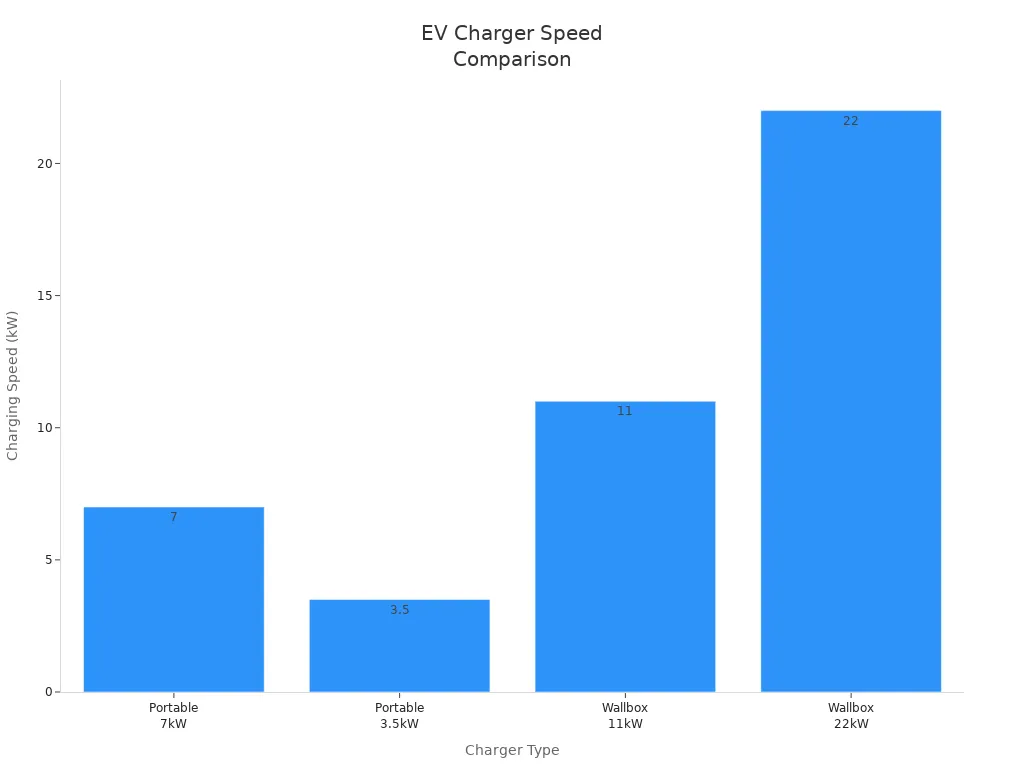
A typical Dutch driver who returns home with 20% battery after a day’s driving would need about 6-8 hours to fully charge with a 7kW portable charger. With an 11kW wallbox, the same vehicle would reach full charge in just 2-4 hours. Wallbox chargers clearly provide superior charging speed, making them the best ev charger for those who value efficiency and quick turnaround.
Installation Process
Portable vs. Wall-Mounted
The installation process differs greatly between portable and wall-mounted charging solutions. Portable chargers require no permanent installation. Drivers simply plug the unit into a compatible socket and begin charging. This approach suits renters, frequent movers, or anyone seeking a flexible solution.
Wall-mounted chargers, on the other hand, involve a more complex home ev charger installation. The process typically includes several steps:
| Step | Description |
|---|---|
| 1 | Consult with a certified electrician to assess electrical capacity. |
| 2 | Apply for necessary permits from local authorities. |
| 3 | Purchase a home EV charger that fits the vehicle’s inlet. |
| 4 | Complete the installation, including mounting and wiring by the electrician. |
A wallbox charger requires professional installation to ensure safety and compliance with Dutch regulations. Electricians may need to upgrade the home’s electrical system, especially for high-power wallbox models. This process adds time and complexity but results in a permanent, reliable charging point.
Note: Portable chargers offer immediate use and flexibility, while wallbox chargers demand upfront planning but deliver long-term convenience and safety.
Cost Analysis
Purchase Price
Cost considerations often influence the choice between portable and wall-mounted chargers. Portable charging cords generally cost less, with prices ranging from $200 to $400. Wallbox chargers, including installation, typically range from $800 to $1,800. The higher price reflects the advanced features, greater charging speed, and professional installation required for wallbox units.
| Feature | Portable EV Charging Cord | Wall Box Charger |
|---|---|---|
| Cost Range | $200–$400 | $800–$1,800 (incl. installation) |
Installation Costs
Portable chargers do not require installation, which eliminates extra expenses. Wall-mounted chargers, however, involve additional costs for professional installation and possible electrical upgrades. These costs can vary depending on the home’s existing infrastructure and the charger’s power rating.
Maintenance
Both portable and wallbox chargers require minimal maintenance. Portable units may need occasional inspection for cable wear or plug damage. Wallbox chargers, being fixed installations, benefit from robust construction and weatherproofing. Some wallbox models offer remote diagnostics and firmware updates, reducing the need for manual checks.
Tip: Investing in a wallbox charger may increase property value and provide long-term savings through energy-efficient charging and smart scheduling.
Safety Features
Portable vs. Wall-Mounted
Safety remains a top priority for Dutch drivers when selecting an EV charger. Both portable and wall-mounted chargers include essential safety mechanisms to protect users and vehicles. Manufacturers equip these devices with advanced features to ensure reliable operation in various environments.
Portable chargers often include built-in protections such as overcurrent, residual current, and overheating detection. Users must verify the supply type before connecting any EV charger. This step helps prevent electrical faults. Portable units also feature replaceable surge protection modules, which reduce the risk of damage from power surges. Many models include a PEN detection function. Drivers should test this function after installation by following the manufacturer’s guidance.
Wall-mounted chargers offer enhanced safety for home use. Installers mount these units in dry, accessible locations. Indoor models require at least IP 40 protection, while outdoor units need IP 65 or higher. Wall-mounted chargers also feature labeled surge protection modules. These chargers provide stable connections, reducing the risk of loose plugs or overloaded sockets. The fixed installation ensures that all safety features remain active during every charging session.
Note: Regular inspection and proper installation help maintain the effectiveness of safety features in both portable and wall-mounted chargers.
Energy Efficiency
Portable vs. Wall-Mounted
Energy efficiency plays a significant role in the overall cost and environmental impact of EV charging. Wall-mounted chargers typically deliver higher efficiency due to their direct connection to the home’s electrical system. These chargers minimize energy loss during transmission and support smart features such as load management and scheduled charging. Drivers can optimize charging sessions to take advantage of off-peak electricity rates, which reduces costs and supports grid stability.
Portable chargers offer convenience but may not match the energy efficiency of wall-mounted units. Charging through standard household sockets can result in higher energy loss, especially if the home’s wiring is outdated. Portable chargers often lack advanced scheduling or load management features. As a result, users may experience higher energy consumption over time.
Wall-mounted chargers support energy-saving practices. Many models allow users to monitor energy use through dedicated apps. This transparency helps drivers adjust their charging habits for maximum efficiency. Portable chargers provide flexibility but may not offer the same level of control or energy savings.
Compatibility
Vehicle Types
Both portable and wall-mounted EV chargers in the Netherlands support a wide range of electric vehicles. Manufacturers design these chargers to meet European standards, ensuring broad compatibility. Most chargers use a Type 2 connector, which fits the majority of EVs on Dutch roads. The following table highlights key features related to compatibility:
| Feature | Description |
|---|---|
| Charger Type | Tethered EV Charger |
| Charging Cable | 5-meter Type 2 charging cable |
| Charging Power | 7kW to 11kW |
| Power Supply Compatibility | Single-phase and three-phase power supplies available |
| Safety Features | PEN fault protection, overcurrent, and surge protection |
| Setup | Quick and simple setup with included wall mount for residential use |
Portable chargers often include adapters for different socket types, increasing their compatibility with various vehicles and locations. Wall-mounted chargers provide stable, high-power connections that suit both older and newer EV models.
Home Electrical Systems
Compatibility with home electrical systems determines the effectiveness of any EV charger. Wall-mounted chargers connect directly to the home’s wiring and support both single-phase and three-phase power supplies. This flexibility allows homeowners to select a charger that matches their electrical capacity.
Portable chargers plug into standard household sockets or industrial outlets. Users must check the electrical system’s capacity before charging. Overloading circuits can cause safety risks and reduce charging efficiency. Wall-mounted chargers often require professional installation to ensure safe integration with the home’s electrical system.
Tip: Drivers should consult a certified electrician before installing any EV charger to confirm compatibility with their home’s wiring and power supply.
Smart Features
Smart features have become a key differentiator between portable and wall-mounted EV chargers. These features enhance user experience, improve charging efficiency, and provide greater control over the charging process. Dutch drivers increasingly expect their EV chargers to offer digital connectivity and intelligent management tools.
App Integration
Wall-mounted EV chargers often include robust app integration. Manufacturers design these apps to connect seamlessly with the charger, allowing users to control and monitor charging sessions from their smartphones or computers. The apps typically provide real-time data, such as charging status, energy consumption, and session history. Users can start or stop charging remotely, adjust power levels, and receive notifications about charging progress.
Portable EV chargers rarely offer advanced app integration. Most models focus on plug-and-play simplicity and lack built-in connectivity modules. Some high-end portable chargers may include basic Bluetooth or WiFi features, but these remain exceptions rather than the norm.
| Feature | Portable Charger | Wall-Mounted Charger |
|---|---|---|
| App Control | Rare | Standard |
| Remote Start/Stop | Uncommon | Common |
| Real-Time Monitoring | Limited | Comprehensive |
| Notifications | Not available | Available |
Note: App integration allows Dutch drivers to manage their EV charging from anywhere. This convenience supports busy lifestyles and helps optimize energy use.
Scheduling and Monitoring
Scheduling and monitoring capabilities set wall-mounted chargers apart from portable options. Wall-mounted units often feature programmable schedules. Users can set charging times to coincide with off-peak electricity rates, reducing costs and supporting grid stability. The scheduling function also helps drivers ensure their vehicle is always ready when needed.
Monitoring tools in wall-mounted chargers provide detailed insights into energy consumption, charging duration, and historical usage patterns. These analytics help users track costs, identify trends, and make informed decisions about their charging habits.
Portable chargers, by contrast, usually lack advanced scheduling and monitoring. Most models offer only basic indicators, such as charging status lights or simple displays showing current and voltage. Users must rely on manual checks or the vehicle’s dashboard for information.
Key benefits of scheduling and monitoring in wall-mounted chargers:
- Lower electricity bills through off-peak charging
- Improved energy management for households with multiple EVs
- Enhanced transparency with detailed usage reports
- Greater convenience and peace of mind
Tip: Dutch drivers who want to maximize savings and efficiency should consider a wall-mounted charger with smart scheduling and monitoring features.
Best EV Charger Decision Guide
Scenarios for Choosing a Portable EV Charger
Renting or Apartment Living
Many Dutch drivers rent apartments or live in multi-unit buildings. They often cannot install permanent charging solutions. Portable EV chargers provide a practical option for these situations. Residents can charge their vehicles using standard outlets without altering the property. This approach avoids the need for landlord approval or complex installation. Apartment dwellers benefit from a solution that fits their lifestyle and offers reliable charging at home.
No Dedicated Parking
Some drivers lack a private parking space. They park on the street or in shared lots. In these cases, a portable charger offers unmatched flexibility. Owners can carry the charger in their vehicle and use any available outlet. This method ensures they always have access to charging, even when a fixed station is not possible.
Need for Flexibility
Frequent travelers or those who move often require adaptable charging options. A portable charger meets this need. It allows users to charge at different locations, such as work, friends’ homes, or vacation spots. The ability to use the same device in multiple settings makes it a valuable tool for those who prioritize flexibility.
Scenarios for Choosing a Wall-Mounted EV Charger
Homeowners with Driveways
Homeowners with private driveways or garages gain the most from a wall-mounted EV charger. They can install a dedicated charging point at home, ensuring fast and safe charging every day. This setup provides convenience and adds value to the property.
Regular, High-Speed Charging
Drivers who use their electric vehicle daily need reliable and efficient charging. Wall-mounted chargers deliver higher power output, reducing charging time. This feature supports busy routines and ensures the vehicle is ready each morning.
Interest in Smart Home Integration
Some homeowners want advanced features such as app control, energy monitoring, and scheduling. Wall-mounted chargers often include these smart capabilities. Integration with other home systems enhances convenience and helps manage energy use more effectively.
Best EV Charger Checklist
Assessing Your Home Setup
- Does the home have a private parking space or garage?
- Is the electrical system compatible with higher power chargers?
- Can permanent installation be completed without restrictions?
Evaluating Your Driving Habits
- How often does the vehicle need charging?
- Are long trips or frequent travel common?
- Is overnight charging at home important?
Budget Considerations
- What is the total cost, including purchase and installation?
- Will energy savings offset the initial investment?
- Does the chosen solution offer long-term value?
Tip: Drivers should compare options based on their living situation, driving patterns, and budget. The best ev charger matches both current needs and future plans.
| Decision Factor | Portable Charger | Wall-Mounted Charger |
|---|---|---|
| Installation Needed | No | Yes |
| Charging Speed | Moderate | High |
| Flexibility | High | Low |
| Upfront Cost | Low | Higher |
| Smart Features | Limited | Advanced |
Practical Tips for Dutch EV Drivers
Navigating Local Regulations for EV Chargers
Permits and Permissions
Dutch drivers must understand local regulations before installing an EV charger. Municipalities often require permits for home charging stations, especially when modifying electrical systems or parking spaces. Drivers should consult their local government to confirm requirements. Some cities provide streamlined processes for EV charger installation, while others demand detailed plans and inspections. Homeowners must ensure compliance with safety standards and electrical codes. Failure to obtain proper permissions can result in fines or removal of the charging station.
Tip: Always check with the municipality before starting any installation project. This step prevents delays and ensures legal operation.
Apartment and HOA Rules
Residents in apartments or properties managed by homeowners associations (HOAs) face additional challenges. Many HOAs set rules regarding modifications to shared spaces and electrical infrastructure. Drivers should review their lease agreements and HOA guidelines. Some associations allow EV charger installation with written approval, while others restrict changes to common areas. Renters may need to negotiate with landlords for access to power outlets or parking spaces. Clear communication with property managers helps avoid misunderstandings and supports a smooth installation process.
Maximizing EV Charging Efficiency
Off-Peak Charging
Charging during off-peak hours reduces electricity costs and supports grid stability. Dutch drivers can schedule charging sessions at night or early morning when demand is lower. Many wall-mounted chargers offer programmable features that automate this process. Off-peak charging also minimizes strain on the electrical system, extending the lifespan of both the charger and the vehicle battery.
Energy Tariffs
Selecting the right energy tariff impacts long-term savings. Some Dutch energy providers offer special rates for EV owners, including discounts for nighttime charging. Drivers should compare available tariffs and choose plans that match their charging habits. Monitoring energy consumption through smart charger apps helps identify opportunities for further savings.
- Integrate EV route planning with charging infrastructure to avoid range anxiety and delays.
- Optimize routes to reduce driving distances, lowering energy and charging costs.
- Consider vehicle range, charging station availability, and traffic patterns when planning routes.
- Utilize advanced route-planning software to account for real-time data and improve efficiency.
Note: Efficient charging strategies not only save money but also reduce environmental impact.
Future-Proofing Your EV Charger Choice
Upgrading Options
The EV market continues to evolve, and charging infrastructures adapt to new demands. Dutch drivers should select chargers that support upgrades, such as balancing and distributing power among multiple vehicles. This adaptability ensures the charging network meets future requirements, including increased vehicle range and faster charging speeds. Investing in a charger with modular components or software updates allows for easy enhancements as technology advances.
Compatibility with New EV Models
Choosing a charger compatible with upcoming EV models protects against obsolescence. Fast charging capabilities and support from charge point operators play a crucial role in maintaining a robust infrastructure. A strong public charging network meets the demands of rising EV adoption and technological advancements.
| Key Consideration | Description |
|---|---|
| Fast Charging | Essential for accommodating future vehicle models and ensuring convenience for EV drivers. |
| Role of Charge Point Operators (CPOs) | Important for the development of a robust charging infrastructure that supports new technologies. |
| Public Charging Network | Necessary to meet the demands of increasing EV adoption and technological advancements. |
- Ultra-fast chargers address the lack of home charging options.
- They enable EV owners to recharge quickly, similar to traditional vehicles.
- Meeting the 2035 deadline for banning carbon-emitting vehicles requires convenient charging solutions.
Tip: Drivers should prioritize chargers with upgrade paths and broad compatibility to stay ahead of market changes.
- Wall-mounted EV chargers deliver speed, safety, and convenience for Dutch homeowners.
- Portable chargers offer the best solution for renters, apartment residents, and drivers who need flexibility.
Drivers should review the decision guide before choosing an EV charger. The right choice depends on home setup, driving habits, and budget. Selecting the best charger ensures reliable and efficient charging for every Dutch EV owner.
FAQ
What is the main difference between portable and wall-mounted EV chargers?
Portable chargers offer flexibility and mobility. Wall-mounted chargers provide faster charging and advanced features. Drivers choose based on their living situation and charging needs.
Can renters install a wall-mounted EV charger?
Most renters cannot install a wall-mounted charger without landlord approval. Portable chargers suit renters because they require no permanent installation.
Are portable EV chargers safe for daily use?
Manufacturers design portable chargers with safety features. Users must check the electrical system and follow instructions. Proper use ensures safe daily charging.
How long does it take to charge an EV at home?
Charging time depends on the charger’s power output. Wall-mounted chargers can fully charge most EVs in 2–6 hours. Portable chargers may take 8–20 hours.
Do wall-mounted chargers work with all electric vehicles?
Most wall-mounted chargers in the Netherlands use Type 2 connectors. They support nearly all European EVs. Always check vehicle compatibility before purchase.
Is professional installation required for all wall-mounted chargers?
Professional installation is necessary for wall-mounted chargers. Certified electricians ensure safe wiring and compliance with Dutch regulations.
Can drivers use a portable charger at public charging stations?
Public charging stations usually require dedicated cables and connectors. Portable chargers work best with standard outlets, not public charging points.