A J1772 EV charger extension cord is best treated as a short-term, risk-managed solution—useful when the charging cable cannot reach, but rarely the best long-term answer. The safest buyer’s decision comes down to five factors: connector compatibility, amperage and continuous load, cord length and voltage drop, outdoor/weather protection, and verification practices (heat checks and inspection). When daily charging is expected, a properly located Level 2 EVSE (or a professionally installed outlet/hardwired unit) is usually a better investment than relying on extensions.
Safety note: EV charging is a multi-hour, continuous load. Any extension cord or adapter becomes a potential hot spot at the plug interface. If a connection feels warm-to-hot, looks discolored, or fits loosely, charging should stop immediately and the installation should be reviewed by a licensed electrician.
- What a J1772 extension cord is (and what it is not)
- When an extension cord makes sense vs. when to avoid it
- Buyer’s checklist: specs that actually matter
- Cord length, amps, and voltage drop: how to choose rationally
- Better alternatives: install right, or use load management
- Market reality: what major testers and networks emphasize
- How to use one more safely (field checklist)
- FAQ (7 questions)
- Sources and external references
What a J1772 extension cord is (and what it is not)
A J1772 extension cord is a cable assembly intended to extend the reach between an EVSE connector and a vehicle’s J1772 inlet. It is not the same as a household “power extension cord,” and it does not turn Level 1 into Level 2. It also does not increase charging speed; charging rate is limited by the circuit, the EVSE, and the vehicle’s onboard charger.
In practical terms, buyers usually want an extension because a wall-mounted unit is installed too far from the parking position, or because the EV has to be charged in a different spot (driveway vs. garage). That convenience problem is real—but it should be solved without creating a new heat-and-connection problem.
EV charging language can be confusing: many people say “charger,” but home units are typically EVSE. Car and Driver explicitly explains that the vehicle’s onboard charger converts AC to DC and ultimately limits the fastest Level 2 rate the car can accept. (Car and Driver EV charger testing guide)
When an extension cord makes sense vs. when to avoid it
Situations where an extension can be justified
- Temporary reach issue during a move, remodel, or short-term parking arrangement.
- Occasional charging where installing a new circuit is not immediately possible.
- Fleet or dealership staging where vehicles rotate and a fixed reach is not always predictable (still better handled with purpose-built infrastructure).
Situations where it is usually the wrong tool
- Daily home charging that will run for years.
- High current, long sessions where small resistance errors become meaningful heat.
- Outdoor exposure where standing water, snow, or physical abrasion is likely.
- Loose outlets or worn connectors—extension cords amplify weakness at the interfaces.
Most common reason buyers shop extensions
Reach
The EVSE is installed in the “right” electrical spot, but not the right parking spot.
Most common failure mode
Heat at connections
Loose fit + continuous current becomes a localized hot spot over hours.
Best long-term fix
Correct installation
A properly placed outlet or hardwired EVSE reduces interfaces and risk.
Best “capacity-limited panel” fix
Load management
Dynamic load balancing can prevent costly upgrades while charging reliably.
Buyer’s checklist: specs that actually matter
Many product listings overemphasize marketing claims and underemphasize the core engineering constraints. A buyer’s guide should focus on what can be verified. The most important checks are below; key LSI terms are highlighted for search intent alignment.
1) Connector correctness and latch quality
The extension must match SAE J1772 mechanically and electrically, with a secure latch that does not wiggle under cable weight. If an EV household includes mixed ports, remember that adapters exist between J1772 and NACS; Car and Driver notes adapters are widely available and compatibility is not locked to a single purchase.
Related terms: J1772 connector, NACS/J3400, charging handle, adapter compatibility.
2) Continuous amperage rating (not just peak)
EV charging is not a short burst. The correct question is whether the extension is rated for continuous current at the amperage the EVSE will deliver. Car and Driver’s test methodology emphasizes multi-month daily use and typical home charging behavior; that same “long-duration” reality should govern extension selection.
3) Cable build: conductor size, jacket, strain relief
- Conductor gauge (thicker is generally better for heat and voltage drop).
- Strain relief at both ends (prevents internal conductor fatigue).
- Outdoor resilience (UV resistance, abrasion resistance).
Related terms: EV charging cable gauge, voltage drop, heat buildup.
4) Weather and ingress protection where the cord meets the connector
Home EVSE units often list NEMA/IP ratings (e.g., NEMA 3R or NEMA 4). Buyers should apply the same mindset to extension use: the weak point is the connection seam, not just the enclosure. In practice, keeping connections off the ground matters as much as any stated rating.
5) Policy and support (returns, warranty, documentation)
For charging hardware, the buyer should value documentation and support because installation and compatibility questions are common. For example, Emporia’s product documentation includes clear distinctions between NEMA plug vs. hardwire, and the company provides guidance on GFCI nuisance tripping scenarios with NEMA outlets. That kind of clarity is a good benchmark when evaluating any charging accessory ecosystem.
Cord length, amps, and voltage drop: how to choose rationally
A longer cable increases resistance and makes voltage drop more likely. Even when the EV still charges, wasted energy becomes heat in the cable and at connection points. The goal is to buy the shortest length that solves the parking problem.
Car and Driver defines Level 1 as ~1 kW, Level 2 as generally 6–19 kW, and Level 3/DC fast as roughly 50–350 kW. As charging power rises, extension-cord tolerance drops sharply. (Source)
Rule-of-thumb decision table (buyer-friendly)
| Use case | Recommended approach | Why it’s safer |
|---|---|---|
| Regular Level 2 home charging (overnight routine) | Install a properly located EVSE or dedicated outlet | Reduces interfaces; supports correct breaker sizing; improves daily reliability |
| Panel capacity concerns (avoid service upgrade) | Choose EVSE with dynamic load management | Automatically adjusts output to stay within household limits (reduces nuisance trips and overload risk) |
| Temporary reach problem (weeks, not years) | Use a short, heavy-duty J1772 extension with strict inspection and heat checks | Limits voltage drop and heat accumulation; makes monitoring feasible |
| Roadside / emergency / events | Use purpose-built portable charging equipment | Designed for deployment, protections, and operational controls—not improvised cabling |
Better alternatives: install right, or use load management
Option A: A properly chosen Level 2 EVSE, installed where the car parks
Car and Driver’s test program reflects how most owners actually live with EVs: they want to charge at home as often as possible because it’s cheaper than DC fast charging and can happen while parked. Their guide estimates typical EV charging equipment costs at roughly $400–$700, which is often comparable to (or less than) the combined cost of accessories and workarounds over time. (Car and Driver)
Option B: Load balancing instead of “making it reach”
Where electrical capacity is limited, load balancing is often the higher-integrity solution than running longer cables. In Car and Driver’s roundup, the Emporia Pro is highlighted for included load balancing capability via an energy monitor that adjusts charging output in real time. (Emporia Pro coverage)
TPSON positions its own charging portfolio around real-time safety monitoring and integrated energy intelligence, referencing its Current Fingerprint Algorithm, Dynamic Load Balancing, and real-time diagnostics & alerts. That strategic direction aligns with what makes home charging safer at scale: reducing overload conditions rather than extending cables. Explore TPSON’s lineup under EV Chargers and AC EV Chargers.
Option C: Purpose-built portable fast charging for operations and emergencies
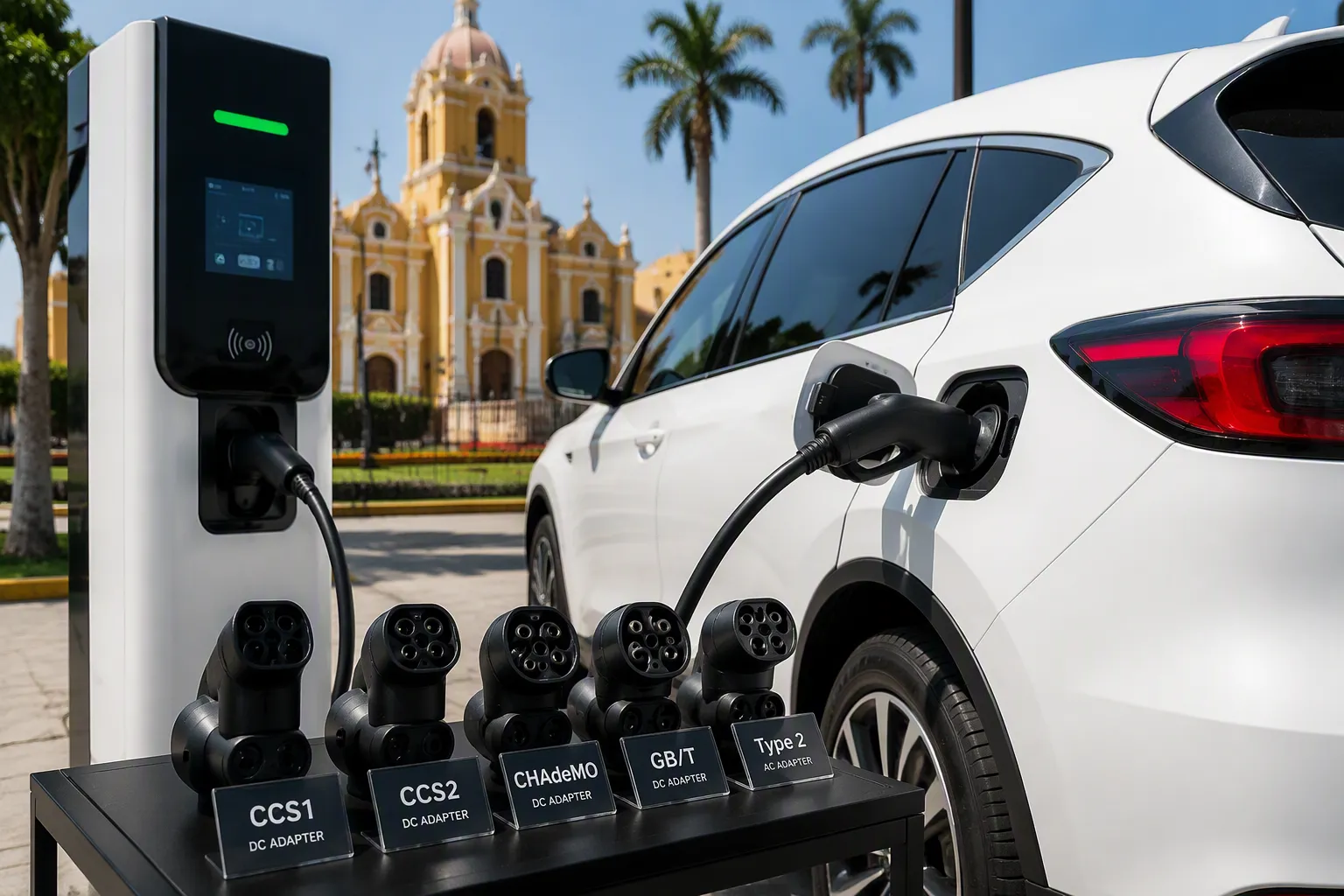
For non-residential scenarios (dealership lots, fleet depots, events, roadside assistance), “portable” should mean engineered equipment, not improvised extensions. TPSON’s portable DC solution describes a compact unit with 20/30/40 kW modules, DC 50–1000V output range, optional 4G, and multiple interface support (CCS1/CCS2/CHAdeMO/GB/T), designed for emergency roadside assistance and temporary deployments. (DC EV Chargers)
Market reality: what major testers and networks emphasize
Home charging: tested picks focus on installation and electrical capacity
Car and Driver’s testing emphasizes dedicated 240V setups and months of daily use across multiple EVs. They also explain the 80% continuous-load rule in plain language: a 50A circuit supports up to 40A continuous, and a 40A circuit supports up to 32A continuous—directly shaping what “safe” looks like for home charging. Buyers shopping extensions should treat that as a reminder: the entire system is governed by continuous-load constraints, not best-case bursts.
Public charging: convenience networks build amenities, not workarounds
Love’s describes an established EV charging network with 100+ chargers across 36 locations in 14 states and notes new fast-charging locations are being added through 2026, alongside amenities and 24/7 staffing. That is the opposite of the extension-cord mindset: reliable charging comes from infrastructure and operations. (Love’s EV Charging)
Platform approach: fleets and businesses need management, uptime, and scalability
ChargePoint presents EV charging as a unified platform—software, services, driver experience, and hardware choices—built to support organizations and fleets. That matters because extension cords do not scale operationally: they add failure points and variability. (ChargePoint)
How to use one more safely (field checklist)
The safest extension is the one that is not needed. If one is used, monitoring and discipline are essential—especially during the first week of use.
Pre-use inspection (every time for the first week, then weekly)
- Check for cracked insulation, flattened sections, or exposed conductor.
- Verify the J1772 latch clicks positively and does not slip under light pull.
- Confirm connectors are clean and dry; no grit that could prevent full seating.
Setup rules that reduce risk
- Use the shortest length that solves the reach issue.
- Route the cable to avoid pinch points (garage doors, tires) and trip hazards.
- Keep the connection seam off the ground; avoid puddles, snowbanks, and sprinkler zones.
Heat check protocol (simple but effective)
- After 10–15 minutes of charging, feel the connection points (carefully). They should be near ambient temperature.
- Repeat after 60 minutes. Heat that increases over time is a warning sign.
- If any part is hot, stop charging and address the root cause (loose fit, underspec’d cable, worn receptacle/handle).
FAQ (7 questions)
1) Will a J1772 extension cord make charging slower?
It should not “slow” charging in the way a software limit would, but it can introduce voltage drop and heat. More importantly, it adds two additional connection interfaces, which can become the limiting safety factor under continuous load.
2) Is it safer to buy a longer extension so it never feels tight?
Not usually. Longer cable generally means more resistance and more opportunity for heat and voltage drop. A better approach is the shortest length that avoids tension and allows clean routing.
3) How much power do typical home chargers use?
Car and Driver states Level 2 outputs are generally in the 6–19 kW range, with Level 1 around ~1 kW. They also provide the simple relationship that volts × amps = watts (then divide by 1000 for kW). This is why buyers should treat extensions as serious electrical components, not simple accessories. (Car and Driver)
4) Do plug-in EVSE units create special breaker issues?
They can. Emporia notes that its chargers have built-in GFCI protection and that using a GFCI breaker on the circuit (commonly required for certain outlets) can lead to nuisance tripping in some installations, halting charging until reset. (Emporia Classic documentation)
5) What is a “future-proof” connector choice: J1772 or NACS?
Many automakers are transitioning toward NACS/J3400, but Car and Driver emphasizes adapters are widely available, so buyers are not permanently locked in. The better long-term decision is usually a quality EVSE installation in the right location, not a dependency on extensions.
6) What should commercial sites do instead of relying on extensions or splitters?
Commercial sites typically need managed charging—hardware plus software and support. ChargePoint describes an EV charging platform that combines software, services, driver experience, and station options to support businesses and fleets. (ChargePoint)
7) Is a portable DC charger the same thing as a J1772 extension?
No. A portable DC charger is charging equipment with built-in controls and protections. TPSON’s TP-DC Compact Series is described as a movable integrated charger with 20/30/40 kW modules and DC 50–1000V output, intended for scenarios like roadside assistance and temporary deployments. (TPSON portable DC EV charger)
Sources and external references
The following sources were used for factual statements about charging levels, testing context, product specifications, network footprints, and company capabilities.
- Car and Driver — “Tested: Best Home EV Chargers for 2026” (charging levels, cost context, continuous-load explanation, test methodology): https://www.caranddriver.com/shopping-advice/a39917614/best-home-ev-chargers-tested/
- Emporia Energy — Emporia Classic Level 2 EV Charger (48A hardwire / 40A NEMA 14-50; GFCI notes; certifications): https://shop.emporiaenergy.com/products/emporia-ev-charger
- TPSON — EV Chargers overview (portfolio positioning: AC with Dynamic Load Balancing; DC solutions): https://tpsonpower.com/ev-chargers/
- TPSON — About (founded 2015; Current Fingerprint Algorithm; R&D and milestones): https://tpsonpower.com/about/
- TPSON — AC EV Chargers category page: https://tpsonpower.com/ac-ev-chargers/
- TPSON — Portable DC EV Charger (TP-DC 20/30/40 kW; DC 50–1000V; scenarios and protections): https://tpsonpower.com/portable-dc-ev-charger/
- Love’s — EV Charging (network footprint and expansion notes; amenities): https://www.loves.com/ev-charging
- ChargePoint — EV charging platform overview (software, services, driver experience, business/fleet positioning): https://www.chargepoint.com/
- Smart Charge America — Electric car chargers catalog (market examples and common charger outputs): https://smartchargeamerica.com/electric-car-chargers/
Required internal anchors were integrated naturally in the article: EV Chargers, EV Chargers manufacturer, AC EV Chargers, DC EV Chargers.