
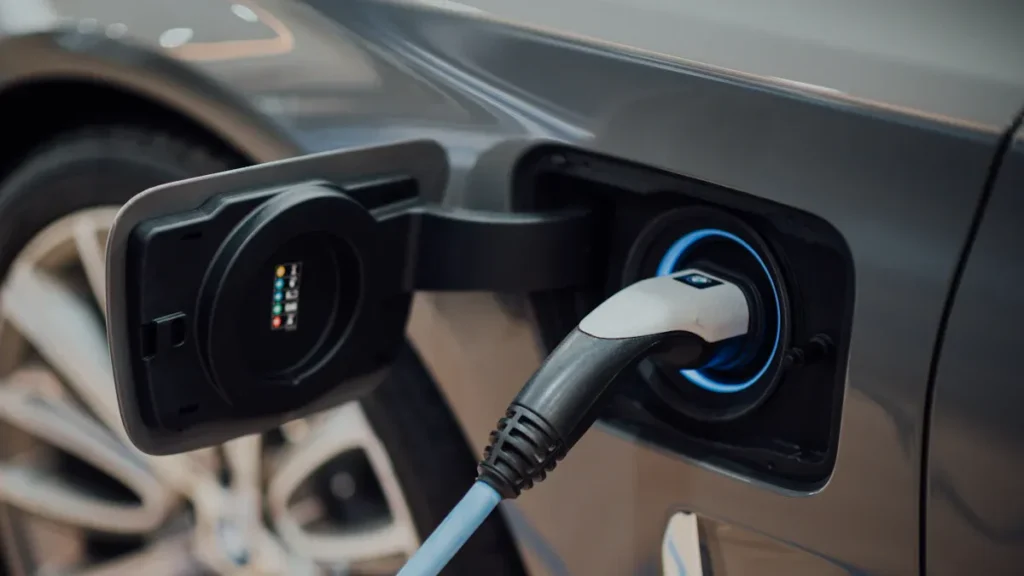

A level 2 charger provides a significant speed increase for home charging, adding 12 to 80 miles of range per hour. This capability allows owners to fully charge an electric car in just 4 to 10 hours. EV charger manufacturers now provide diverse EV charging solutions, from stationary units to portable ev chargers. The right EV Charger determines the ultimate speed to charge an electric car. This ensures every electric car is ready for the day ahead.
TPSON is a technologically advanced electric vehicle charging solution provider, designing options for every electric car.
Understanding Level 2 Charger Power and Charging Speed
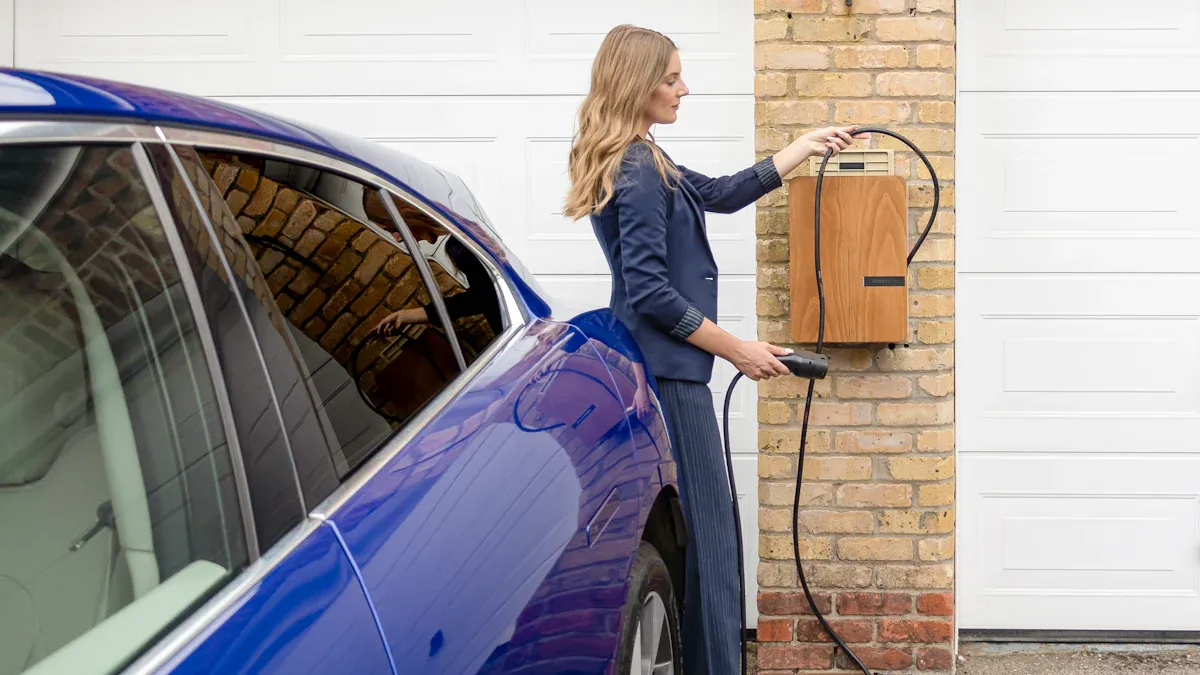
The speed of a level 2 charger is not a single number. It depends directly on its power output, measured in kilowatts (kW), and the electrical current it can handle, measured in amperes (A). An electric car owner must understand these two factors to select the right equipment. Technologically advanced providers like TPSON design charging solutions across this power spectrum to meet diverse driver needs.
How Charger Power (kW) Translates to Speed
Power is the ultimate measure of charging potential. A higher kilowatt rating means more energy is delivered to an electric car battery in the same amount of time. This directly translates to a faster charging speed and more miles of range added per hour.
The Core Principle: More Kilowatts (kW) = Faster Charging Speed
Different chargers operate at different power levels, resulting in a wide range of potential charging outcomes.
Low-Power Level 2 Chargers (3.3 kW – 6.6 kW)
Chargers in this range represent the entry point for Level 2 charging. A 3.3 kW unit offers a noticeable improvement over a standard wall outlet, typically adding 12-15 miles of range per hour. A 6.6 kW charger doubles that potential. These chargers are often sufficient for plug-in hybrid electric vehicles (PHEVs) with smaller batteries or for drivers with short daily commutes.
Standard-Power Level 2 Chargers (7.2 kW – 11.5 kW)
This is the most common and practical category for modern electric car owners.
- 7.2 kW / 7.4 kW Chargers: These are a popular choice, capable of adding about 25-30 miles of range per hour. They can fully charge most electric car models overnight.
- 11.5 kW Chargers: These high-end residential units can deliver up to 44 miles of range per hour, depending on the vehicle.
The table below shows how power output affects the miles of range added.
| Charger Power (kW) | Approximate Miles of Range Added Per Hour |
|---|---|
| 3.3 kW | 12-15 miles |
| 7.4 kW | 25-30 miles |
| 11.5 kW | Up to 44 miles |
High-Power Level 2 Chargers (19.2 kW)
These chargers offer the fastest AC charging speed available. A 19.2 kW unit can add 60-70 miles of range per hour. However, they require a robust electrical setup (a 100-amp circuit) that is uncommon in most homes. These are typically found in commercial settings or workplaces. Some high-power AC chargers can even reach 22kW, but this requires a three-phase electrical supply, which is rare for residential properties.
Amperage: The Other Side of the Power Coin
While kilowatts define the final power output, amperage defines the flow of electrical current to the charger. The relationship is simple: Power (Watts) = Voltage (Volts) x Current (Amps). Since Level 2 chargers in many regions operate at a standard 230V-240V, a higher amperage allows for higher power delivery.
What is Amperage in Charging?
Amperage (A) can be thought of as the volume of electricity flowing through the circuit. A higher amperage means more electrical current is moving from the circuit to the charger and then to the vehicle. This increased flow enables a faster rate of energy transfer.
Common Amperage Settings (16A, 32A, 40A, 48A)
Level 2 chargers are available in several common amperage configurations. Each corresponds to a different power level and charging speed.
- 16A: Delivers approximately 3.7 kW.
- 32A: Delivers approximately 7.4 kW.
- 40A: Delivers approximately 9.6 kW.
- 48A: Delivers approximately 11.5 kW.
The following table illustrates how amperage and voltage combine to determine the maximum power and impact the overall charging time.
| System Type | Voltage | Amperage | Max Power (kW) |
|---|---|---|---|
| Single-phase | 230V | 32 amps | 7.4 kW |
| Three-phase | 400V | 16 amps (per phase) | 11 kW |
An 11kW three-phase charger demonstrates this well. It draws only 16 amps per phase, distributing the load efficiently. Achieving similar power on a single-phase system would require a much higher amperage draw of nearly 48 amps.
Matching Amperage to Your Home’s Circuit
Safety and performance demand that a charger’s amperage is matched to the home’s electrical circuit. Electrical codes require a circuit to be rated for 125% of a charger’s continuous load.
⚠️ Important Safety Note: A charger’s amperage setting must not exceed 80% of the circuit breaker’s rating. For example, a 40-amp charger requires a dedicated 50-amp circuit. Installing a charger with an amperage too high for its circuit will cause the breaker to trip constantly and creates a significant fire hazard.
How Your Vehicle Dictates Your Electric Car Charging Time
A powerful charger is only one part of the equation. The electric car itself plays a crucial role in determining the final charging speed. An owner must consider the vehicle’s onboard charger, battery size, and current state of charge to understand the true charging time.
Your Car’s Onboard Charger Limit
The most common bottleneck in electric car charging is the vehicle’s own hardware. A fast charger cannot force an electric car to accept power faster than it was designed to handle.
What is an Onboard Charger?
Every electric car has an onboard charger. This component is built into the vehicle. Its job is to convert the Alternating Current (AC) from a Level 2 charger into Direct Current (DC) that the battery can store. The power rating of this onboard charger sets the maximum AC charging speed for the electric car.
Why a Powerful Station Won’t Always Charge Faster
The charging speed is always limited by the weakest link in the chain: either the charging station’s output or the car’s onboard charger capacity.
The final charging speed will be the lower of the two values. A powerful station cannot make an electric car with a slow onboard charger charge any faster.
This principle works in two ways:
- An electric car with a 6.6 kW onboard charger connected to a 7.4 kW station will only charge at a 6.6 kW speed.
- An electric car with an 11 kW onboard charger connected to a 7.4 kW station will charge at a 7.4 kW speed.
EV Model Examples and Their Max AC Speeds
Different models have different capabilities. Knowing your car’s limit is key to managing expectations and selecting the right equipment from providers like TPSON.
| Vehicle Model Example | Battery Size (Approx.) | Max AC Charge Speed |
|---|---|---|
| Nissan Leaf | 40 kWh | 6.6 kW |
| Tesla Model 3 | 60 kWh | 11 kW |
| Porsche Taycan | 93 kWh | 11 kW (22 kW optional) |
Battery Size and State of Charge
The battery’s capacity and its current energy level also directly influence how long it takes to charge an electric car.
How Battery Size Affects Total Charge Time
A larger battery holds more energy and offers a longer range. However, it also requires a longer charging time. The relationship is simple math: a bigger battery takes more time to fill at the same power level. You can estimate the time it takes to charge an electric car with this formula: Charging Time (Hours) = Battery Size (kWh) ÷ Charger Power (kW).
The Charging Curve: Why Speed Slows Down
Electric car charging does not happen at a constant speed. The process follows a “charging curve.” The vehicle accepts maximum power when the battery is low. As it fills up, the car’s battery management system gradually reduces the charging speed to protect the battery cells from damage. This is like filling a glass of water; you pour quickly at first but slow down near the top to avoid spilling.
The 80% Rule for Battery Health and Speed
The most significant drop in speed typically occurs after the battery reaches an 80% state of charge. The time it takes to charge an electric car from 80% to 100% can be nearly as long as it took to charge from 20% to 80%. For this reason, many drivers unplug and continue their journey after reaching 80%, especially at public stations. This practice optimizes both battery health and total travel time.
Real-World Charging Speed: Level 2 vs. Other Chargers
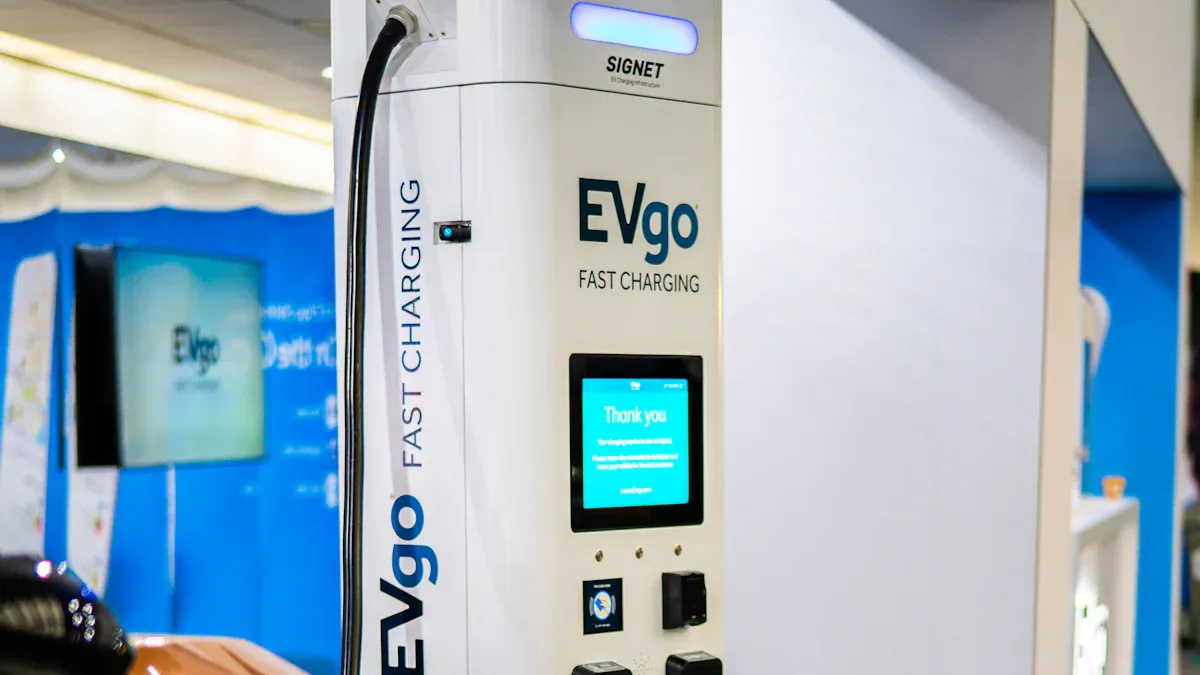
Understanding the speed of a level 2 charger requires context. Its performance is best understood when compared to the other available charging levels. An electric car owner has different options, each suited for specific situations.
Level 2 vs. Level 1 (120V Wall Outlet)
The most basic comparison for home charging is between Level 1 and Level 2. The difference in charging speed is substantial.
Level 1 Speed: 3 to 5 Miles Per Hour
Level 1 charging uses a standard household outlet. This method is extremely slow, providing only about 8 miles of range for every hour of charging. It represents the absolute baseline for charging an electric car.
When to Use Level 1 Charging
Level 1 charging is best reserved for emergencies or for plug-in hybrid vehicles with small batteries. It can also serve as a temporary solution for an electric car owner who has not yet installed a dedicated home charger.
A Direct Time-to-Charge Comparison
The practical difference in speed becomes clear when looking at total charging time. To charge an electric car from 20% to 80%, a Level 1 charger can take 15 to 20 hours. In stark contrast, a 7kW Level 2 unit can accomplish the same task in just a few hours, making it the superior choice for daily use.
Level 2 vs. DC Fast Chargers (Level 3)
DC fast chargers, sometimes called Level 3, offer the highest charging speed available but operate very differently from AC chargers.
DC Fast Charger Speed: Hundreds of Miles in Minutes
DC fast chargers, including ultra rapid ev chargers, operate at power levels from 50 kW to over 350 kW. This immense power allows an electric car to gain 50 to 90 miles of range in just 20 minutes. This speed is essential for making long-distance travel practical.
When to Use DC Fast Charging
Drivers use DC fast charging primarily during long road trips. These stations are located along major highways and transport routes for quick top-ups. They are not intended for regular, overnight charging.
Why You Don’t Have DC Fast Charging at Home
The technology and infrastructure for DC charging are fundamentally different from AC charging. A DC station bypasses the electric car’s onboard converter, delivering power directly to the battery. This requires a massive external converter and a high-power electrical connection unavailable in residential settings. The cost and complexity are prohibitive for home installation. Technologically advanced providers like TPSON focus on creating efficient AC solutions for this reason.
| Feature | Level 2 AC Charging | DC Fast Charging |
|---|---|---|
| Current Type | Alternating Current (AC) | Direct Current (DC) |
| Power Conversion | Vehicle’s onboard charger | External converter in station |
| Typical Power | 3.7 kW – 19.2 kW | 50 kW – 350+ kW |
| Charging Speed | Full charge in 4-10 hours | 80% charge in 20-40 mins |
Factors That Can Slow Down Your Level 2 Charger
An electric car owner might invest in a powerful level 2 charger, only to find the charging speed is slower than expected. Several external factors can influence performance, from the weather outside to the electrical activity inside the home. Understanding these variables helps set realistic expectations for charging an electric car.
Extreme Temperatures
An electric car battery operates best within a specific temperature window. Extreme heat or cold forces the vehicle’s systems to work harder, often reducing the charging speed to protect the battery.
How Cold Weather Reduces Charging Speed
Cold temperatures significantly impact battery chemistry, increasing internal resistance and slowing down the chemical reactions needed for charging. In very cold conditions, such as 0°F (-18°C), the speed of a Level 2 charger can decrease by approximately 30%. The electric car’s Battery Thermal Management System (BTMS) will activate, using energy to warm the battery pack before and during the charging session. This preconditioning diverts power that would otherwise go into charging the battery, resulting in a slower overall speed.
How Hot Weather Affects Battery Management
High ambient temperatures can also hinder charging performance. A battery’s health degrades faster when it gets too hot. To prevent this, the BTMS actively cools the battery pack during charging. This cooling process consumes energy and requires the system to reduce the charging rate to keep temperatures within a safe range, ideally between 15°C and 45°C. The primary goal shifts from maximum speed to battery preservation.
Power Sharing at Public Stations
At public or commercial charging locations, the advertised speed is not always guaranteed, especially when multiple vehicles are plugged in.
What is Power Sharing?
Power sharing is a feature where two or more charging ports are connected to a single electrical circuit. The station intelligently distributes the total available power between the connected vehicles. This allows property owners to install more charging ports without needing extensive and costly electrical upgrades.
How Your Speed Can Be Halved
When a single electric car plugs into a power-sharing station, it typically receives the full power of the circuit. However, if a second electric car plugs into the adjacent port, the station will split the power between them. For example, a station on a circuit that can deliver 7.4 kW will provide each vehicle with only 3.7 kW. This effectively cuts the charging speed in half for both drivers.
Your Home’s Electrical Load
The electrical system in a home is a shared resource. Running other major appliances can sometimes compete with an electric car charger for power.
Competing with Other Major Appliances
A Level 2 charger is a high-draw appliance, similar to an electric oven or dryer. Most homes have a 100-amp or 200-amp main service. If an electric car is charging while other high-power appliances are running, the total load could exceed the panel’s capacity, causing the main breaker to trip. An electric oven, for instance, can draw 30-35 amps, creating a significant additional load on the system.
Smart Chargers that Manage Electrical Load
Technologically advanced providers like TPSON offer smart chargers to solve this problem. These units use dynamic load balancing to monitor the home’s total electricity consumption in real-time.
- Dynamic Load Balancing: The charger automatically reduces its power output if it detects high usage from other appliances, preventing an overload.
- Solar Integration: These chargers can prioritize using energy from a home’s solar panels, reducing grid dependency.
- Tariff Integration: Smart features can schedule charging for off-peak hours when electricity rates are lowest, optimizing cost and grid stability.
These features ensure the electric car gets the fastest possible charge without compromising the home’s electrical safety.
Choosing the Right Fast EV Chargers for Your Needs
Selecting the right charger involves more than just picking the fastest model. An owner should evaluate their driving habits, vehicle capabilities, and installation preferences to find the most cost-effective and practical solution. Making an informed choice ensures an owner gets the performance they need without overspending.
Assessing Your Daily Driving Habits
The first step is to understand personal energy needs. Most drivers overestimate the charging speed they require for daily use.
Calculating Your Daily Range Needs
An owner should analyze their typical daily travel distance. For many, this is simply the round-trip commute to work. While driving distances vary, data on active commutes shows that many daily journeys are quite modest.
| City | Average Ride Commute (km) |
|---|---|
| London | 15.0 |
| Los Angeles | 19.6 |
| New York | 14.1 |
Note: This data reflects cycling commutes and does not represent total vehicle mileage, but it illustrates that many daily trips are well within the range provided by a few hours of Level 2 charging.
Do You Really Need the Fastest Charger?
A driver who travels 40 miles a day only needs to replenish that amount overnight. A standard 7.4 kW charger adds about 25-30 miles of range per hour. This means it can easily replace the daily usage in less than two hours. For this type of electric car owner, investing in the most powerful rapid ev chargers is often unnecessary.
Matching a Charger to Your Vehicle
The specifications of an electric car directly limit the charging speed it can achieve. This is a critical factor in choosing from the available fast ev chargers.
Don’t Pay for Speed You Can’t Use
A charger’s power is only useful if the vehicle can accept it. Every electric car has a maximum AC charge rate determined by its onboard charger.
An EV with a 7.4 kW maximum charge rate will not charge any faster when connected to an 11.5 kW station. The vehicle itself limits the power intake to 7.4 kW. An owner should always check their vehicle’s handbook to avoid paying for charging capacity they cannot use.
Future-Proofing Your Charger Choice
An owner might consider their next electric car when buying a charger today. Opting for a charger with higher power capacity and smart features can be a wise long-term investment.
- Smart Features: Technologically advanced providers like TPSON offer fast ev chargers with dynamic load balancing and solar integration. These features optimize energy use and prepare the home for future grid technologies.
- Higher Capacity: Installing a charger capable of 11 kW or more, even if the current car cannot use it, prepares the installation for a future vehicle with faster capabilities.
Hardwired vs. Plug-In Chargers
Level 2 chargers come in two main installation types: hardwired directly to the circuit or plugged into a high-power outlet (like a NEMA 14-50).
Speed and Installation Differences
Hardwired chargers often provide a more reliable and slightly faster speed. They create a direct, permanent connection to the power supply, ensuring a consistent flow of electricity. Plug-in models, while convenient, can introduce another point of potential failure or power fluctuation.
| Feature | Hardwired Level 2 Charger | Plug-in NEMA 14-50 Model |
|---|---|---|
| Installation | Wires feed directly into the unit. | Plugs into a pre-installed outlet. |
| Charging Speed | Typically offers maximum consistent speed. | Can be limited by outlet or plug quality. |
| Flexibility | Dedicated to charging one electric car. | Outlet can be used for other appliances. |
Portability and Convenience
The primary advantage of a plug-in unit is portability. An owner who rents their home or plans to move can easily unplug the charger and take it with them. This convenience is a major deciding factor for many who need to charge an electric car without a permanent installation. These rapid ev chargers offer flexibility, while hardwired units provide maximum performance to charge an electric car.
For most electric car drivers, a level 2 charger is the perfect solution. The vast majority of owners rely on overnight electric car charging to ensure their vehicle is ready each morning. The actual charging speed an electric car achieves typically falls between 25 and 40 miles of range per hour. This speed reduces the total charging time significantly. An owner’s final electric car charging speed depends on several key factors:
- The electric car battery’s capacity and state of charge.
- The battery’s temperature and thermal management system.
Understanding these variables helps an electric car owner manage their charging time expectations when using advanced solutions from providers like TPSON.
FAQ
Can I use a Level 2 charger for my plug-in hybrid?
Yes. A Level 2 charger is an excellent choice for a plug-in hybrid (PHEV). It charges the smaller battery much faster than a standard outlet, allowing an owner to maximize their vehicle’s electric-only driving range each day.
Is it bad to leave my electric car plugged in overnight?
No, it is perfectly safe. Modern chargers and any modern electric car have built-in safety systems that stop the flow of electricity once the battery reaches a full charge. This prevents overcharging and protects the battery’s health.
How much does it cost to charge an electric car with a Level 2 charger?
The cost depends entirely on local electricity rates. An owner can calculate the total by multiplying their utility’s price per kilowatt-hour (kWh) by the amount of energy added to the battery during the charging session.
Do I need an electrician to install a Level 2 charger?
Yes, a qualified electrician is essential for a safe installation. Both hardwired chargers and high-power plug-in outlets require professional wiring to meet safety codes and ensure your home’s electrical system can handle the charger’s power demands.
What is the main benefit of a smart charger?
A smart charger from a technologically advanced provider like TPSON offers dynamic load balancing. It automatically adjusts its charging speed to prevent overloading a home’s electrical panel, ensuring safe and efficient charging for an electric car.
Will any Level 2 charger work with my electric car?
Most Level 2 chargers use a universal connector (like the Type 2 in Europe) that is compatible with nearly every electric car. Owners should confirm their vehicle’s specific port, but interoperability is a standard feature of modern charging equipment.




