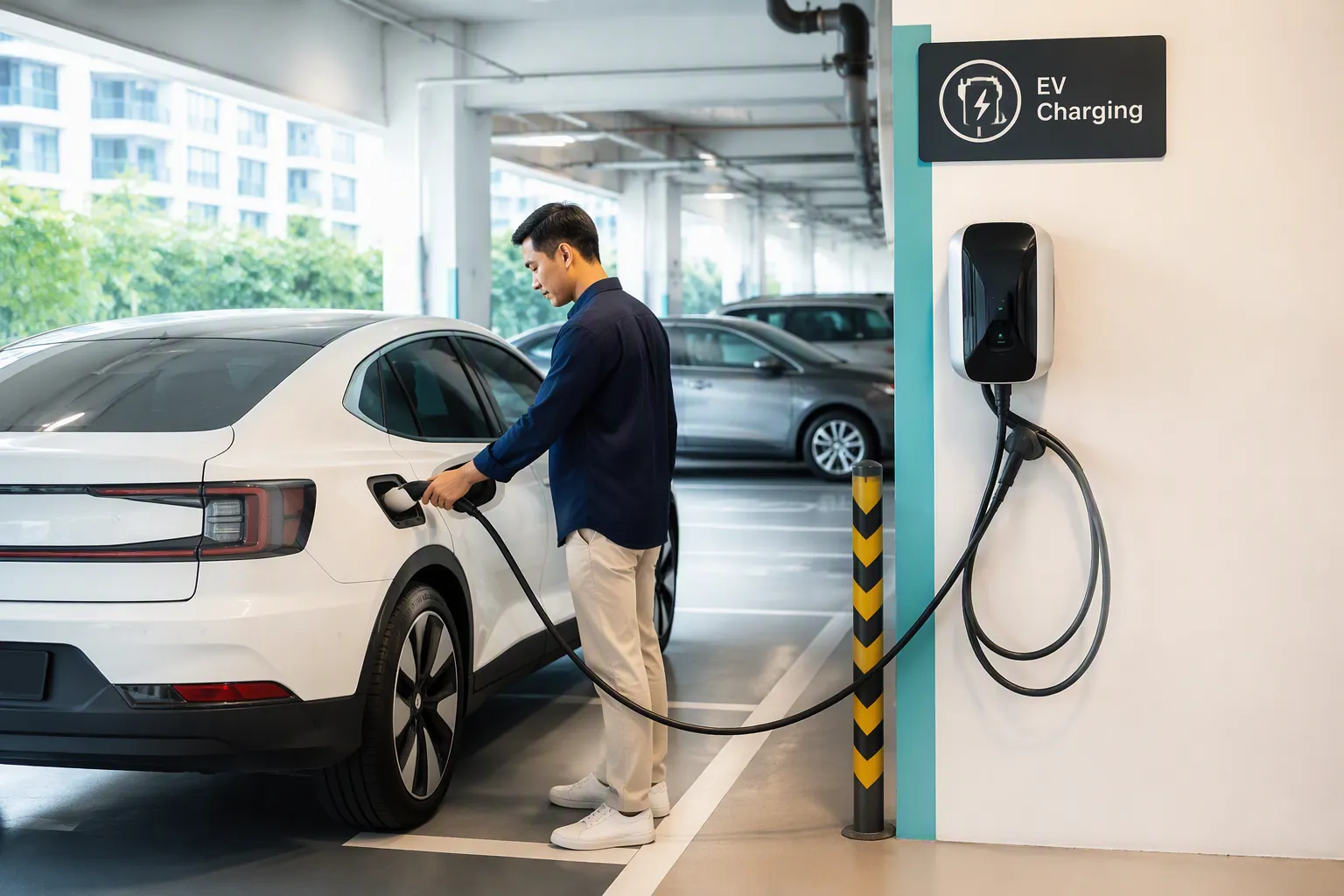
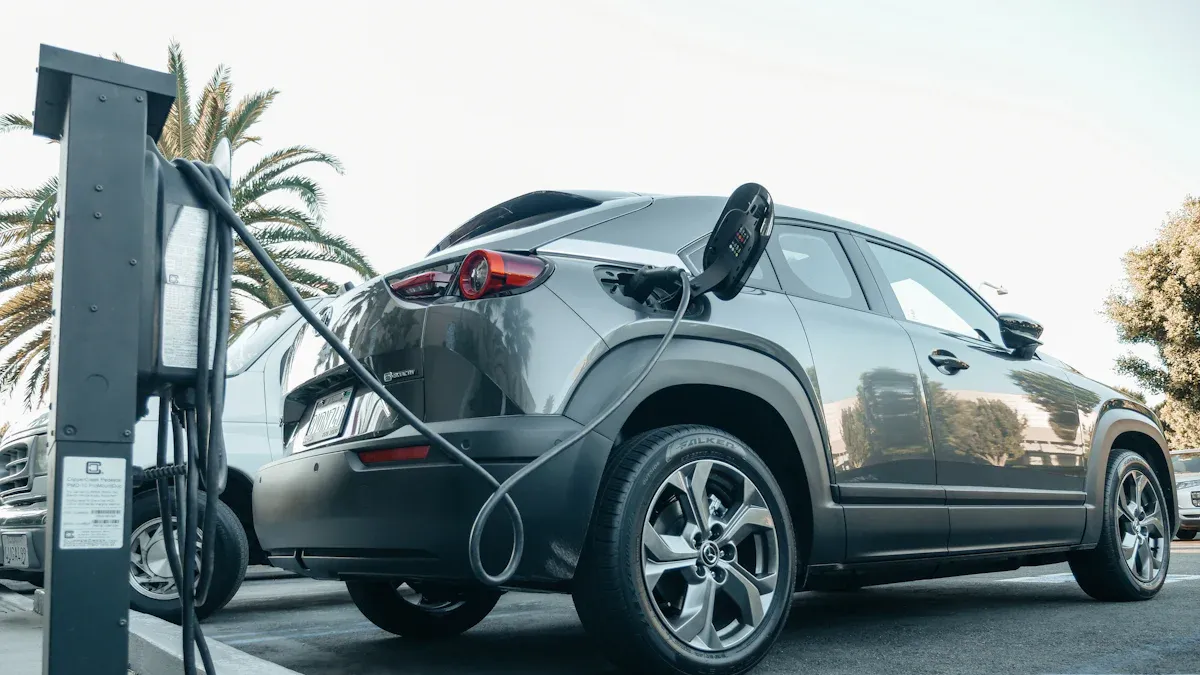
A bidirectional EV charger allows an electric vehicle to both receive and send electricity. Families recognize that bidirectional charging can turn their car into a backup power source during outages. Many see benefits in using stored energy at home, reducing electricity costs, or even supporting local grids. EV charger manufacturers now design systems that help households maximize energy efficiency and reliability.
- Homeowners choose bidirectional technology for energy savings, emergency power, and environmental responsibility.
How Bidirectional EV Chargers Work
Understanding Bidirectional Charging
Charging Your EV
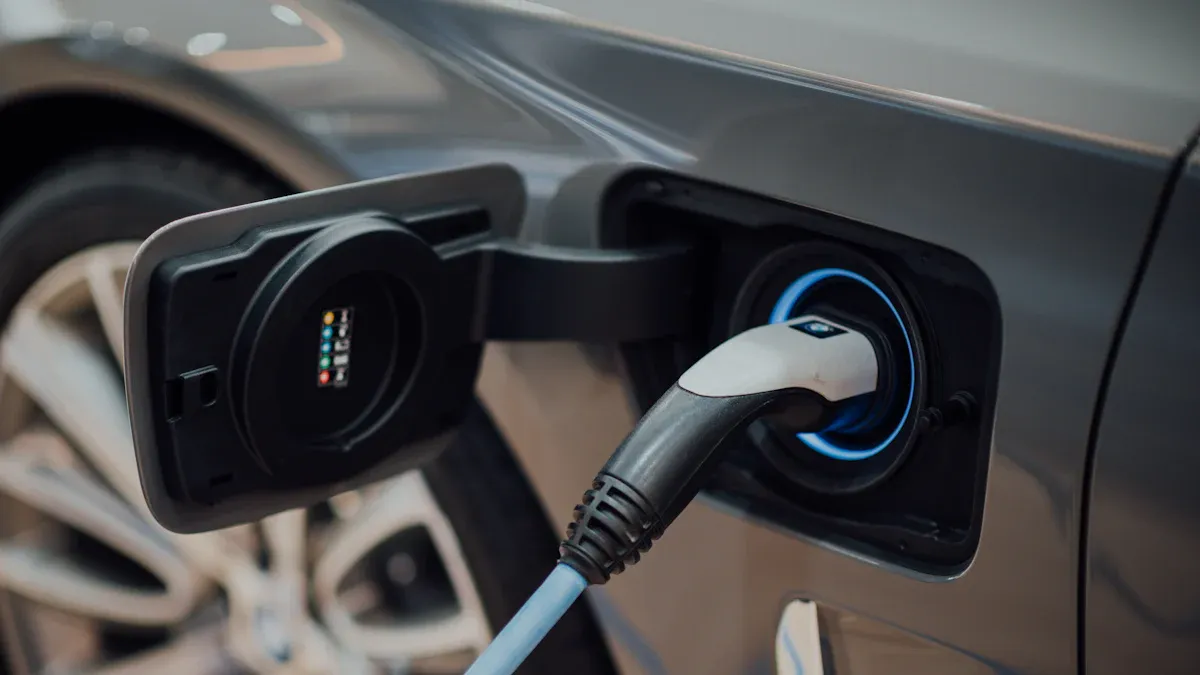
A bidirectional EV charger manages the flow of electricity into the vehicle’s battery. When a user plugs in the EV, the charger draws power from the home’s electrical system or the grid. The charger uses inverter technology to convert alternating current (AC) from the grid into direct current (DC) for the battery. The vehicle’s battery management system monitors charging to protect battery health and optimize performance.
- Main components involved in this process include:
- Bidirectional charger: Manages power flow into and out of the vehicle.
- Inverter technology: Converts AC to DC for charging and DC to AC for discharging.
- Communication protocols: Coordinate energy flow and ensure safety between the car, charger, and energy system.
Traditional charging only allows electricity to flow from the grid to the EV. In contrast, bidirectional charging enables the EV to act as both a receiver and a supplier of energy.
Sending Power Back to Your Home or Grid
Bidirectional charging reverses the typical flow of electricity. The charger draws stored energy from the EV’s battery and sends it back to the home or the grid. The inverter converts DC power from the battery into AC power, which homes and grids use. The control unit oversees the flow of electricity, ensuring safe operation.
Note: Communication protocols play a critical role in coordinating energy flow and maintaining safety during this process.
How Energy Flows Both Ways
Vehicle to Grid (V2G) Explained
Vehicle to grid (V2G) technology allows an EV to send electricity back to the utility grid. The process involves several technical steps:
- Enable two-way power transfer from the car to its charging point.
- Check for available charging services and exchange charging limits between the EV and charging station.
- The inverter converts DC power from the vehicle’s battery to AC power for the grid.
- The control unit monitors and manages the flow to prevent overloads.
The table below highlights the differences between bidirectional and traditional charging:
| Aspect | Bidirectional Charging | Unidirectional Charging |
|---|---|---|
| Definition | Allows energy to flow both ways (to and from the grid) | Energy flows only from the grid to the vehicle |
| Working Principle | Uses a converter with semiconductor switches | Uses diodes that block reverse current |
| Application Scenarios | Vehicle-to-Grid (V2G), Vehicle-to-Home (V2H) | Standard EV charging |
V2G helps balance the grid by supplying stored energy during peak demand times.
Vehicle to Home (V2H) and Vehicle to Load (V2L)
Vehicle to home (V2H) and vehicle to load (V2L) functions allow the EV to power a house or specific appliances. The process involves:
- Verify that the EV supports V2L or V2H capability.
- Assess the power requirements of essential appliances or the home.
- Use appropriate connections to link the EV to the home’s electrical system or directly to devices.
- Activate V2L or V2H mode through the EV’s interface.
- Monitor battery levels to avoid complete depletion.
V2H can keep a home running during outages, while V2L can power individual devices or tools.
Everyday Uses of Bidirectional EV Charging
Powering Your Home During an Outage
Many families use bidirectional charging as a backup power source. When a power outage occurs, the EV’s battery supplies electricity to the home. This setup keeps lights on and essential appliances running until grid power returns.
- Common uses include:
- Running refrigerators and freezers
- Powering medical devices
- Keeping communication devices charged
Supporting the Community Grid
Bidirectional EV charging also supports the broader community. Homeowners can share excess energy with the grid during peak demand. This action helps stabilize the energy supply and reduces the risk of blackouts.
- Everyday applications include:
- Energy management: Using the EV as a power bank to manage household electricity consumption.
- Eco-friendliness: Storing renewable energy and reducing waste.
- Grid stability: Contributing stored energy to the grid when needed.
Tip: Using bidirectional charging to support the grid can sometimes result in financial incentives from utility companies.
Key Benefits of Bidirectional EV Charging for Families
Saving Money and Reducing Energy Bills
Using Stored Power During Peak Hours
Families often face high electricity costs during peak hours. Bidirectional charging allows them to charge their EV when electricity rates are low, usually at night. Later, they can use the stored energy from the vehicle’s battery to power their home during expensive peak periods. This strategy helps reduce overall utility bills.
- Charging during off-peak hours when electricity is cheaper
- Using stored energy during peak times when utility prices are higher
- Dynamic pricing can further optimize energy costs
Recent studies show that managed charging can lead to an average reduction of 10% on home utility bills, which translates to about $200 in savings per household each year. Some families have reported annual savings ranging from 4% to 52%, with potential savings up to €780.
Selling Power Back to the Grid
Bidirectional EV chargers enable families to sell excess power back to the grid, especially during periods of high demand. This process, known as vehicle-to-grid, creates a new revenue stream for households.
| Benefit | Description |
|---|---|
| Reduced Costs | Families can lower their electricity expenses by drawing less power from the grid. |
| Extra Revenue | Selling energy stored in the EV back to the grid during peak demand can generate additional income. |
Vehicle-to-grid technology not only reduces costs but also rewards families for supporting grid stability.
Backup Power and Emergency Preparedness
Keeping Lights On During Outages
Bidirectional EV charging provides a reliable backup power source during emergencies. In a vehicle to home scenario, the EV’s battery supplies electricity to the house when the grid goes down. This feature ensures that families maintain access to essential services.
- In Vehicle-to-Home (V2H) scenarios, EVs act as backup power sources for homes during emergencies.
- The stored DC energy in vehicles converts to AC energy for home use.
- This technology allows families to use their EV for more than just transportation.
A fully-charged Kia EV9, for example, can power a standard suburban home for up to three days during an outage.
Running Essential Appliances
During a blackout, families can use their EV’s battery to run critical appliances. These may include refrigerators, medical devices, and communication equipment. Bidirectional charging ensures that daily life continues smoothly, even when the main power supply fails.
Environmental Impact and Sustainability
Reducing Carbon Footprint
Bidirectional EV charging helps families lower their carbon footprint. By using the EV’s battery for home energy, households reduce their reliance on fossil fuels. Electric vehicles eliminate CO2 emissions during operation, and coordinating charging with periods of low grid emissions further enhances environmental benefits.
- Utilizing an EV’s battery for home energy can significantly lower dependence on fossil fuels.
- This shift contributes to a reduction in the overall carbon footprint of households.
Supporting Renewable Energy
Bidirectional charging supports the integration of renewable energy sources into the grid. EVs act as mobile energy storage units, storing excess solar or wind power and releasing it when needed. This process helps balance supply and demand, making renewable energy more practical for everyday use.
| Evidence Description | Key Points |
|---|---|
| Bidirectional Charging | Transforms EVs into mobile energy units, enhancing grid stability and facilitating renewable energy integration. |
| Vehicle to Grid Charging | Stores excess renewable energy and releases it back to the grid, aiding in balancing supply and demand. |
| Utility Group Recommendations | States develop energy export approaches from EVs to balance renewable generation, similar to stationary battery storage. |
Tip: Home EV charging with bidirectional capabilities can maximize the use of clean energy and support a sustainable future.
Potential Drawbacks and Limitations of Bidirectional EV Chargers
Compatibility and Technical Requirements
Not All EVs Support Bidirectional Charging
Not every EV on the market supports bidirectional charging. Only select models, such as the Nissan Leaf and Ford F-150 Lightning, currently offer this feature. Many vehicles lack the necessary hardware or software to enable energy to flow both ways. Families interested in using a bidirectional EV charger must confirm that their vehicle supports this advanced charging method. Manufacturers continue to expand compatibility, but the market remains limited.
Charger and Home System Requirements
Installing a bidirectional charger at home involves several technical requirements. Homeowners need to ensure their electrical system can handle the demands of bidirectional charging. The following table outlines the most common requirements for residential installations:
| Requirement | Description |
|---|---|
| Compatible Bidirectional Charger | Essential for enabling bidirectional charging functionality. |
| CT Meter | A Current Transformer must be installed at the main grid connection point to support loads over 100 Amps. |
| EV Compatibility | The electric vehicle must support bidirectional charging capabilities. |
A home may also require upgrades to the electrical panel or additional equipment to meet these standards.
Upfront Costs and Financial Considerations
Price of the Bidirectional EV Charger
The cost of a bidirectional EV charger exceeds that of standard chargers. For example, a bidirectional charger such as the Quasar 2 can cost around $6,440 before taxes and installation. Standard Level 2 home chargers range from $300 to $1,200, while WiFi-enabled options add $100 to $300. This price difference reflects the advanced technology and additional features required for bidirectional charging.
Installation Expenses
Installation costs can add significantly to the total investment. Homeowners may need to pay for a new circuit ($200–$800), an electrical panel upgrade ($500–$2,000), and labor ($400–$1,500). The table below summarizes these expenses:
| Cost Component | Estimated Cost Range |
|---|---|
| Level 2 home charger | $300 – $1,200 |
| WiFi-enabled charger (additional) | $100 – $300 |
| Bidirectional charger (e.g., Quasar 2) | $6,440 (excl. taxes/install) |
| New circuit installation | $200 – $800 |
| Electrical panel upgrade | $500 – $2,000 |
| Labor costs for installation | $400 – $1,500 |
Despite the high upfront costs, long-term savings can offset the investment. When 30% to 50% of a fleet uses vehicle-to-grid charging, system costs decrease compared to smart charging alone. In contrast, smart charging without bidirectional features can increase costs per EV each year.
Technical Challenges and Learning Curve
Understanding New Technology
Families often encounter technical challenges when adopting bidirectional charging. Compatibility issues arise because not all DC charging ports follow the same standards across manufacturers. Regulatory requirements demand that chargers operate at a near unity power factor and stop working during power loss. Operational constraints require galvanic isolation from the AC mains, and bidirectional chargers cannot function as uninterruptible power supplies.
| Challenge Type | Description |
|---|---|
| Compatibility Issues | Bidirectional chargers require compatible DC charging ports, which are not standardized across OEMs. |
| Regulatory Requirements | Chargers must operate at near unity power factor and cease operation upon power loss (anti-islanding). |
| Operational Constraints | Bidirectional chargers must be galvanically isolated from the AC mains and cannot function as UPS. |
Maintenance and Upkeep
Learning to use a bidirectional EV charger does not require extensive technical knowledge. Manufacturers design user-friendly interfaces and provide clear metrics for energy usage and costs. Most users adapt quickly, often becoming comfortable with the system within weeks. However, regular maintenance and occasional inspections remain necessary to ensure safe and efficient operation.
Note: Families should follow manufacturer guidelines for maintenance and seek professional help for complex issues.
Safety and Reliability of Bidirectional EV Charging
Built-in Safety Features
Overload Protection
Manufacturers design bidirectional EV chargers with advanced overload protection. This feature monitors the flow of electricity during charging and discharging. When the system detects excessive current, it automatically limits power transfer to prevent damage. Overload protection helps safeguard both the EV and the home’s electrical system.
The following table highlights standard safety features found in most bidirectional EV chargers:
| Safety Feature | Description |
|---|---|
| UL Certified | Ensures compliance with safety standards. |
| NEMA 3R Rated | Indicates suitability for outdoor use. |
| UV Resistant | Protects against damage from sunlight. |
| Temperature Tested | Operates safely in extreme temperatures (-22°F to 131°F). |
In addition, built-in safety features help prevent electrocution, electric fires, and other hazards.
Automatic Shutoff
Automatic shutoff acts as a critical safety mechanism in bidirectional charging systems. If the charger detects a fault, such as overheating or a short circuit, it immediately stops the flow of electricity. This function protects the EV, the charger, and the home from potential damage. Automatic shutoff also ensures that the system remains safe during unexpected power fluctuations.
Tip: Automatic shutoff provides peace of mind for families using bidirectional EV chargers in daily life.
Maintenance and Care
Regular Inspections
Routine inspections play a vital role in maintaining the reliability of bidirectional EV chargers. Technicians check power connections and cable integrity to ensure stable charging performance. Regular cleaning of connection points helps prevent dust buildup and corrosion, which can affect the charger’s function.
| Maintenance Practice | Description |
|---|---|
| Inspecting Power Connections | Ensure stable power connections and secure cable connections to avoid performance issues. |
| Regular Cleaning | Clean connection points to ensure proper function and extend equipment lifespan. |
Families should schedule inspections at least once a year to keep their EV charging system in optimal condition.
Following Manufacturer Guidelines
Manufacturers provide detailed instructions for operating and maintaining bidirectional EV chargers. Following these guidelines helps users avoid common problems and extends the lifespan of the equipment. Recommendations often include protecting the charger from extreme temperatures and high humidity.
- High temperatures may cause overheating and component failure.
- Low temperatures can slow charging speed and create condensation issues.
- High humidity increases the risk of corrosion and electrical short circuits.
Note: Adhering to manufacturer guidelines ensures safe and efficient bidirectional charging for every EV owner.
Manufacturer Recommendations and Support
Choosing Certified Products
Selecting certified products guarantees safety and reliability in bidirectional EV charging. Families should look for chargers with UL certification and NEMA 3R ratings. These certifications confirm that the charger meets industry safety standards and can withstand outdoor conditions.
Warranty and Customer Service
Manufacturers offer warranties and customer support for bidirectional EV chargers. A warranty provides coverage for defects and malfunctions, while customer service assists with troubleshooting and maintenance. Reliable support helps families resolve issues quickly and maintain continuous charging operations.
Callout: Always choose products with strong warranty coverage and responsive customer service to ensure long-term reliability.
Installation and Home Requirements for Bidirectional EV Chargers

Preparing Your Home for Bidirectional Charging
Electrical Panel Capacity
A family must evaluate the electrical panel before installing an EV charger. The panel should support the additional load from bidirectional charging. Electricians often recommend panels with at least 200 amps for homes planning to use EVs for energy storage. If the panel cannot handle the increased demand, an upgrade becomes necessary. This step ensures safe operation and prevents overloads during home EV charging.
Space and Location for the Charger
Selecting the right location for the charger improves convenience and safety. The charger should sit close to where the EV parks, with enough space for cables and ventilation. Outdoor installations require weatherproof equipment. Indoor setups need proper airflow to prevent overheating. Families should avoid placing chargers near water sources or flammable materials.
Tip: Choose a spot that allows easy access to the EV and keeps cables away from walkways to reduce tripping hazards.
Installation Process and Professional Help
Site Assessment and Planning
Professional installation begins with a thorough site assessment. An expert electrician examines the home’s electrical infrastructure and property layout. They identify the best location for the charger and check if the panel meets the requirements for bidirectional energy storage. The electrician discusses the installation plan with the homeowner, ensuring all needs are addressed.
Professional Installation Steps
The installation process follows a series of steps to guarantee safety and compliance:
- Survey the home and assess the electrical system.
- Review and finalize the design for the V2G charger.
- Obtain all necessary city permits and complete paperwork.
- Install the charger according to the approved plan.
- Schedule a city inspection to verify code compliance.
- Begin using the charger while waiting for utility connection.
- Complete the utility connection to the grid.
Each step ensures the EV charger operates safely and meets local regulations.
Permits, Codes, and Finding Qualified Installers
Local Permits and Regulations
Residential EV charger projects require several permits. Electricians must submit site plans and load calculations before starting work. Compliance with the National Electrical Code (NEC), especially Article 625, is essential for overcurrent protection and proper labeling. Federal guidelines set basic standards, but states may add extra requirements for home EV charging installations.
- Permits must be obtained before any work begins.
- All installations must follow NEC Article 625.
- Local authorities may require additional documentation.
Choosing the Right Installer
Families should select a qualified installer by evaluating several criteria. The table below outlines important factors to consider:
| Evaluation Criteria | What to Look For | Red Flags |
|---|---|---|
| Total Cost | Detailed breakdown of all costs | Unusually low bids, hidden fees |
| Scope of Work | Clear description of all work included | Vague descriptions, missing details |
| Timeline | Realistic schedule with milestones | Unrealistic promises, no timeline |
| Equipment | Specific models and specifications | Generic descriptions, unknown brands |
| Permits | Clear responsibility for permitting | Unclear permit responsibility |
| Warranty | Specific warranty terms and duration | No warranty or unclear terms |
A reliable installer provides transparent pricing, clear timelines, and takes responsibility for permits. They specify the EV charger model and offer a warranty for their work.
Note: Families should avoid installers who offer vague details or lack experience with bidirectional EV systems.
Is Bidirectional EV Charging Right for Your Family?
Decision Checklist for Families
Families should evaluate several factors before investing in a bidirectional EV system. The following checklist helps guide the decision-making process:
Do You Own a Compatible EV?
Not every EV supports two-way energy flow. Owners should confirm that their vehicle model allows both charging and discharging. Manufacturers often list compatibility on their websites or in user manuals. Without this feature, families cannot access the benefits of bidirectional technology.
Is Your Home Ready for Bidirectional Charging?
A home must meet certain requirements to support advanced EV systems. The electrical panel should have enough capacity to handle increased loads. Space for installation and proper ventilation are also necessary. Professional assessment ensures the home infrastructure can safely support bidirectional energy transfer.
Are You Interested in Backup Power or Energy Savings?
Bidirectional EV charging offers unique advantages. Families who value backup power during outages or want to reduce energy bills may find this technology appealing. The ability to use stored energy during peak hours or sell excess power back to the grid can provide both security and savings.
Local economic factors play a significant role. While bidirectional systems offer technical benefits, unidirectional systems often have lower operational costs. Families should weigh the net present value and consider their specific needs.
| Factor | Description |
|---|---|
| Power Outage Self-Sustainment | Bidirectional EV charging can sustain power during outages, with up to 99.7% of outages being fully self-sustained when the EV is plugged in. |
| Economic Value | The yearly value of self-sustained outages can reach up to 330€, particularly beneficial for electric-heated households. |
Common Family Scenarios
Families with Frequent Power Outages
Households in areas prone to storms or unreliable grids benefit most from bidirectional EV systems. During an outage, an EV can quietly power essential devices, unlike traditional gas generators. This feature provides a reliable energy source during emergencies and natural disasters.
Households Looking to Lower Energy Bills
Families seeking to reduce monthly expenses may find value in using their EV for energy management. By storing electricity when rates are low and using it during peak times, households can lower utility bills. Some families also generate income by sending excess power to the grid.
| Scenario | Description |
|---|---|
| Emergency Backup Power | Provides access to backup power during outages, similar to a backup battery. |
| Energy Independence & Savings | Reduces reliance on grid electricity and allows families to save money by sending excess power to the grid. |
| Sustainability | Reduces strain on fossil-fuel-based energy generation, especially during peak demand periods. |
Environmentally Conscious Families
Families who prioritize sustainability often choose bidirectional EV charging. Using the vehicle-to-home feature, they reduce dependence on fossil fuels and support renewable energy integration. This approach helps lower the household’s carbon footprint and contributes to a cleaner grid.
Tip: Each family should assess their unique situation, including local energy prices, outage frequency, and environmental goals, before making a decision.
Bidirectional EV chargers offer families energy savings, backup power, and environmental benefits. They transform electric vehicles into versatile energy resources. Families should assess their home’s electrical capacity, vehicle compatibility, and lifestyle needs before investing.
- Evaluate technical requirements and financial considerations.
- Seek advice from certified installers or energy professionals.
Expert consultation ensures safe installation and maximizes long-term value for every household.
FAQ
What is the main difference between bidirectional and standard EV chargers?
A bidirectional charger allows energy to flow both into and out of the vehicle’s battery. A standard charger only charges the vehicle. Bidirectional chargers can power homes or send electricity back to the grid.
Can any electric vehicle use a bidirectional charger?
Not every electric vehicle supports bidirectional charging. Only specific models, such as the Nissan Leaf and Ford F-150 Lightning, offer this feature. Owners should check their vehicle’s specifications before purchasing a bidirectional charger.
How long can an EV power a typical home during an outage?
A fully charged electric vehicle can power a standard home for one to three days, depending on battery size and household energy use. Larger batteries provide longer backup times.
Does bidirectional charging affect the EV battery’s lifespan?
Bidirectional charging may increase battery cycles, which can impact long-term battery health. Manufacturers design modern batteries to handle these cycles. Regular maintenance and following manufacturer guidelines help preserve battery life.
Are there incentives for installing bidirectional EV chargers?
Some utility companies and local governments offer rebates or incentives for installing bidirectional chargers. Availability varies by region. Homeowners should check with their utility provider or local authorities for current programs.
What safety features do bidirectional EV chargers include?
Most bidirectional chargers feature overload protection, automatic shutoff, and temperature monitoring. These systems help prevent electrical hazards and ensure safe operation for both the vehicle and the home.
Who should install a bidirectional EV charger?
A licensed electrician with experience in EV charging systems should handle installation. Professional installation ensures compliance with local codes and safe operation.
Can bidirectional charging work with solar panels?
Yes, bidirectional chargers can integrate with home solar systems. This setup allows families to store excess solar energy in the EV battery and use it later, increasing energy independence.