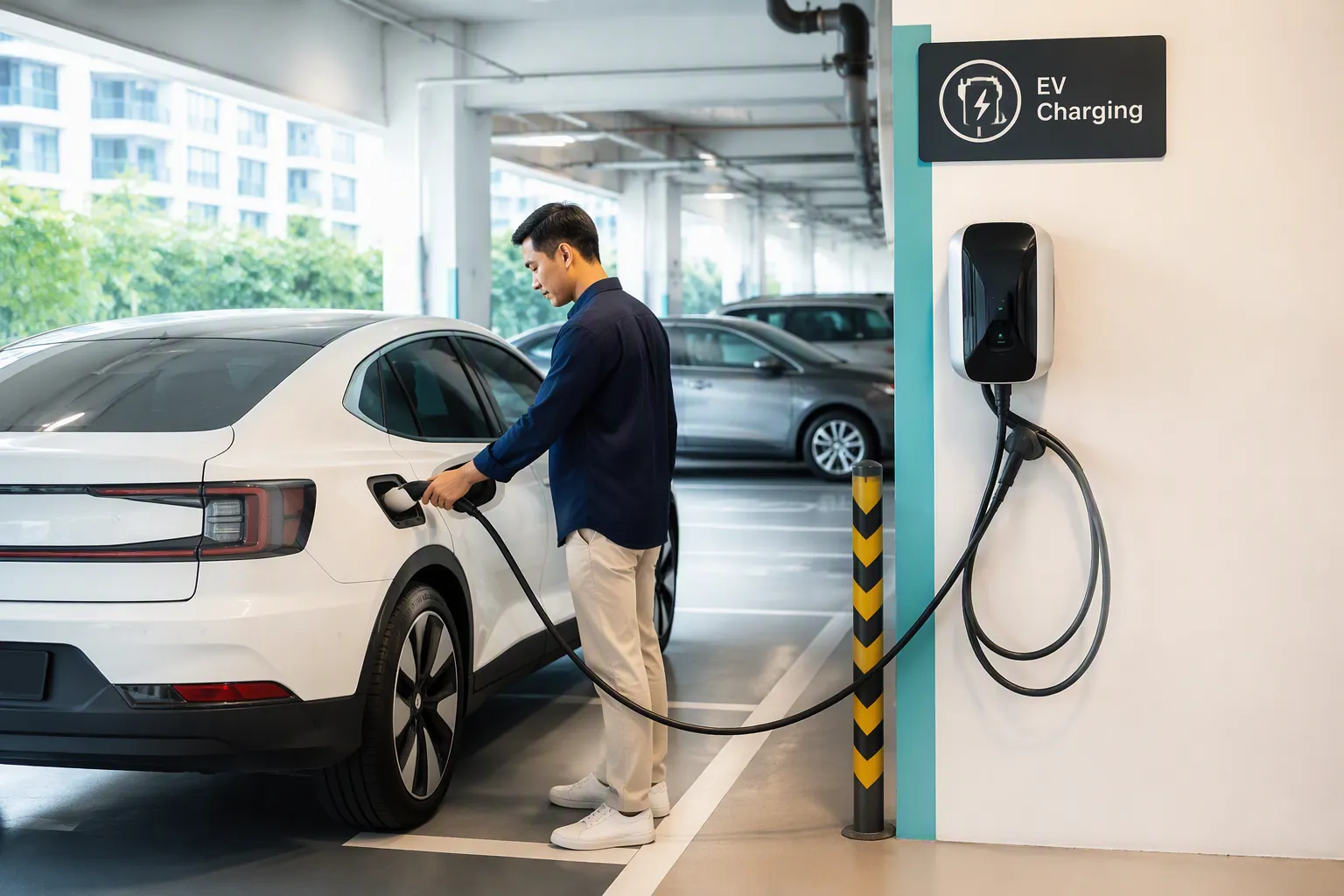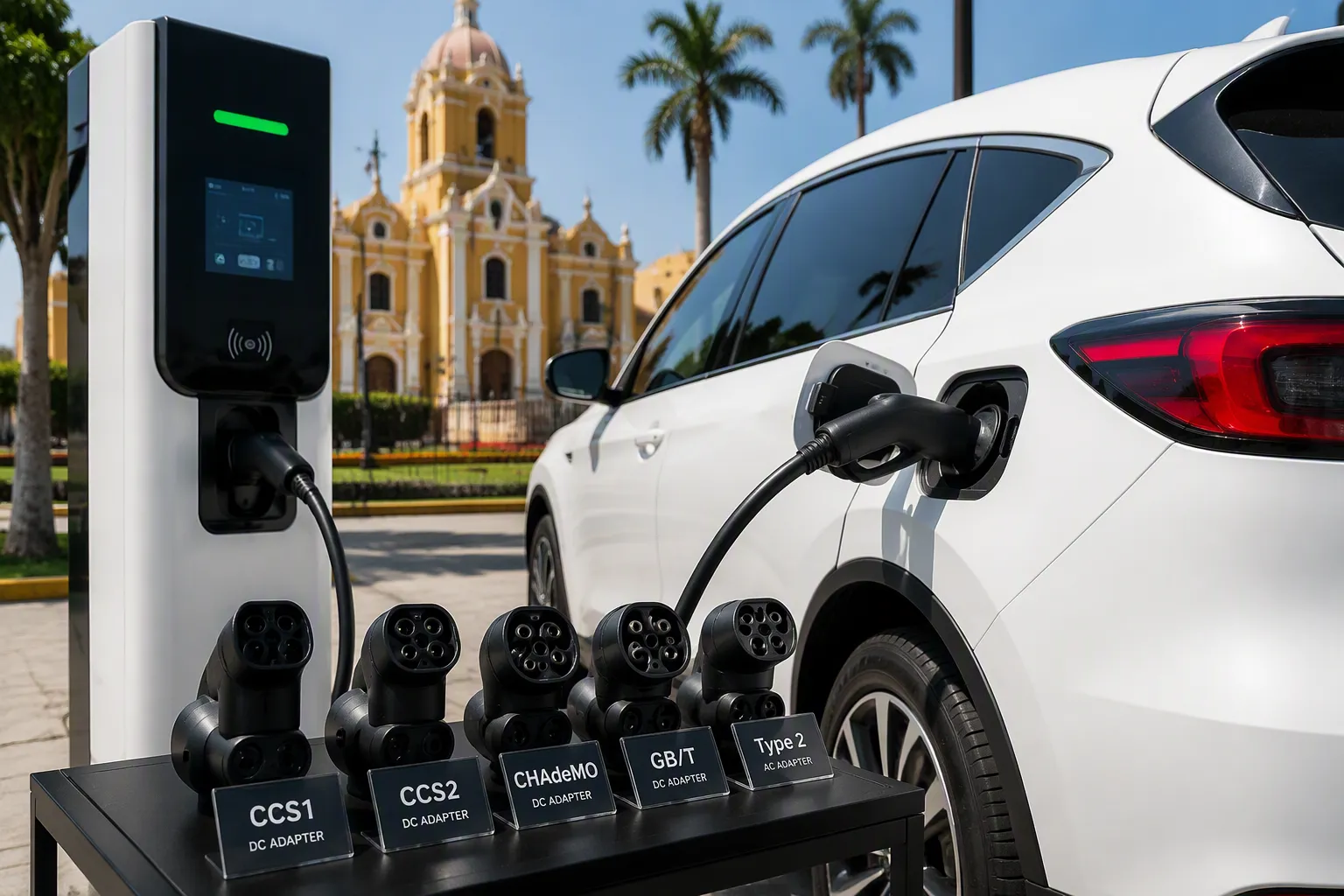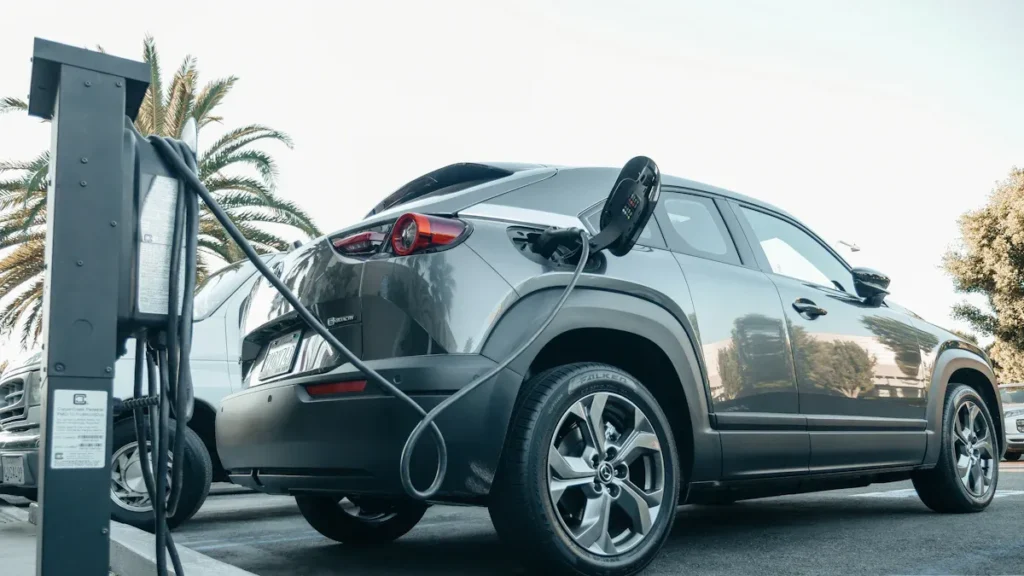

Malaysia continues to see rapid growth in EV adoption, with over 21,000 EVs projected in 2024 and ambitious targets for 200,000 units annually before 2030. As demand rises, leading EV charger manufacturers offer advanced ev charger types, including AC Level 2 and dc fast charging options from brands such as Wallbox, Tesla, Schneider, ABB, and Kempower. These chargers deliver charging speeds from 7.4kW to 22kW, feature smart connectivity like Wi-Fi and mobile apps, and meet local safety certifications from Suruhanjaya Tenaga. Reliable home charging station access ensures Malaysian EV owners enjoy convenience, safety, and strong value.
Why Home EV Charger Types Matter in Malaysia
Limitations of Public Charging Infrastructure
Malaysia continues to expand its network of public EV charging stations and ev charging hubs, but many EV owners still face significant challenges. The country’s infrastructure growth has not kept pace with rising demand for EVs. Many drivers encounter difficulties when searching for available chargers, especially during peak hours or in high-traffic urban areas.
Many potential EV buyers hesitate to make the switch because of concerns about charging access. Surveys show that 27% of buyers cite insufficient charging points as a major reason for delaying their purchase.
The following challenges highlight why reliance on public ev charging stations and ev charging hubs remains problematic for Malaysian EV owners:
- 61% of consumers report difficulty finding a charger when needed.
- 53% experience long wait times at charging stations, leading to frustration and wasted time.
- 38% express concern about the cost of using public charging infrastructure, which can vary depending on location and provider.
- 68% of EV owners prefer to charge at home to avoid these issues.
These limitations underscore the importance of considering home-based ev charger types for daily convenience and peace of mind.
Benefits of Installing a Home Charger
Installing a home EV charger in Malaysia offers clear advantages for both new and experienced EV owners. Home charging provides a reliable solution that eliminates many of the hassles associated with public ev charging stations.
Malaysian EV owners benefit from:
- Lower operating costs. EVs are cheaper to run, with fuel costs around 33% lower than petrol vehicles. The cost per kilometer for petrol cars averages RM0.15, while EVs cost only about RM0.10 per kilometer.
- Improved environmental impact. EVs generate no tailpipe emissions, helping reduce air pollution in Malaysia. Lifecycle emissions are 23% lower compared to internal combustion engine cars, even when using fossil-fuelled electricity. As Malaysia’s electricity grid becomes greener, emissions from EVs will decrease further.
- Enhanced driving experience. Owners report better driving performance due to the instant torque and smooth acceleration provided by electric motors.
Home charging delivers unmatched convenience. Owners can plug in their vehicles overnight and wake up to a fully charged battery, ready for daily commutes or longer journeys.
Choosing the right ev charger types for home installation ensures compatibility with local safety standards and maximizes the value of EV ownership in Malaysia. Home chargers also help drivers avoid long queues and unpredictable costs at public stations, making them a smart investment for the future.
Overview of EV Charger Types in Malaysia
AC vs DC EV Charger Types
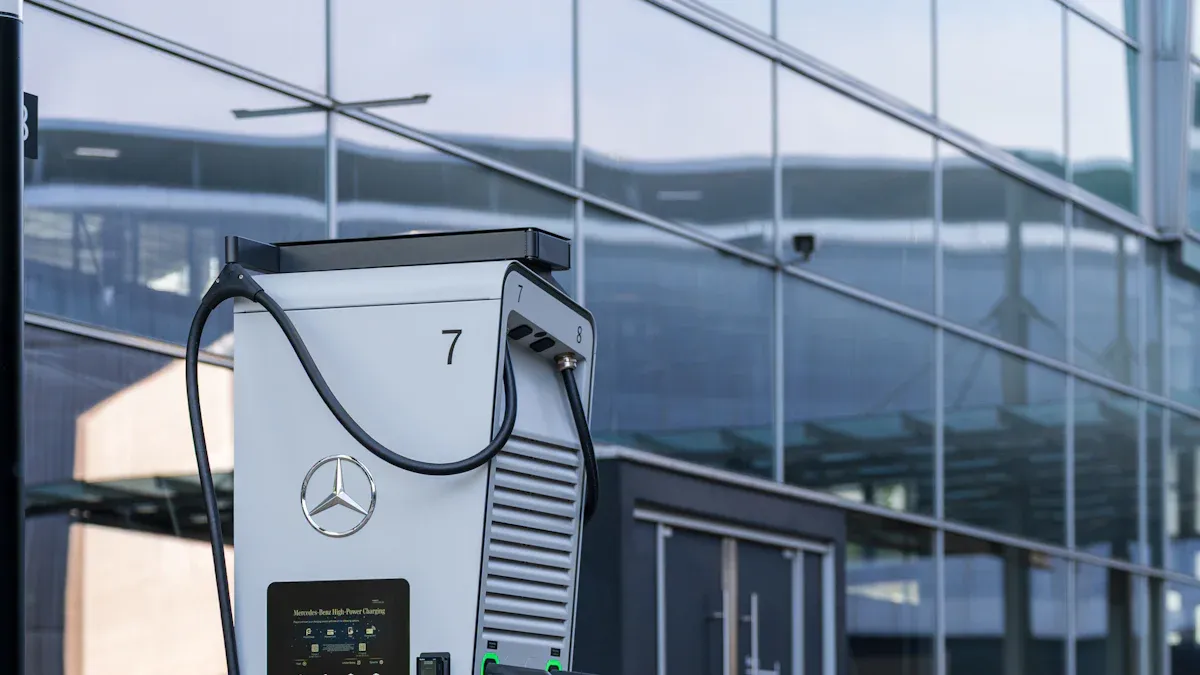
Malaysia offers two main ev charger types for electric vehicles: AC chargers and DC fast charging stations. These options serve different needs for EV owners across the country.
AC Chargers Explained
AC chargers remain the most common choice for residential and commercial charging in Malaysia. They use alternating current from the grid and convert it to direct current inside the vehicle. This process takes more time but proves gentle on the battery, making it ideal for daily use.
- AC Level 2 chargers dominate homes and workplaces.
- Charging typically occurs overnight or during long parking periods.
- These chargers are more cost-effective for regular use.
AC charging is battery-friendly and helps extend the lifespan of EV batteries.
DC Fast Chargers Explained
DC fast charging stations appear along highways and in urban centers throughout Malaysia. These chargers deliver direct current straight to the battery, bypassing the vehicle’s onboard converter. This method enables much faster charging, which suits drivers who need a quick top-up during travel.
- DC fast chargers can charge an EV up to 80% in 20–30 minutes.
- They offer higher efficiency and convenience for long-distance journeys.
- The initial installation and usage costs are higher compared to AC chargers.
| Charger Type | Efficiency | Charging Speed | Cost Implications |
|---|---|---|---|
| AC | Slower due to conversion process | Ideal for overnight home charging | More cost-effective for regular use |
| DC | Higher efficiency as it bypasses conversion | Rapid charging, 80% in 20-30 minutes | Higher initial cost but convenient for quick charges |
DC charging can stress the battery over time, which may reduce its lifespan.
Single-Phase vs Three-Phase EV Charger Types
Malaysia’s power supply infrastructure supports both single-phase and three-phase charging solutions. The choice between these options affects charging speed and installation requirements.
Single-Phase Chargers
Single-phase chargers connect to the standard residential power supply found in most Malaysian homes. They provide a practical solution for daily charging needs.
- Suitable for most households in Malaysia.
- Installation is straightforward and cost-effective.
- Charging speed meets the needs of typical daily commutes.
Three-Phase Chargers
Three-phase chargers use a more robust electrical connection, often available in commercial buildings or upgraded homes. These chargers deliver significantly faster charging speeds.
- Three-phase chargers can charge vehicles up to three times faster than single-phase models.
- Homes with three-phase power benefit from reduced charging times.
- Upgrading from single-phase to three-phase is possible and enhances charging performance, though it involves a slight additional cost.
For Malaysian EV owners seeking the fastest home charging, three-phase chargers offer a future-proof solution.
Top EV Charger Models in Malaysia for 2025
Comparison Table of Leading EV Charger Types and Models
Malaysia’s EV market continues to expand, and the demand for reliable home and commercial charging solutions grows each year. The following table compares the most popular EV charger models available in Malaysia for 2025. Each model offers unique features that cater to different user needs, from daily home charging to rapid dc fast charging at commercial locations.
| Model | Charger Type | Power Output | Connectivity | Safety Certification | Warranty | Price Range (RM) |
|---|---|---|---|---|---|---|
| Wallbox Pulsar Plus | AC Level 2 | 7.4kW/22kW | Wi-Fi, App | Suruhanjaya Tenaga | 3 years | 3,800–5,500 |
| Tesla Wall Connector | AC Level 2 | 11kW | Wi-Fi, App | Suruhanjaya Tenaga | 4 years | 4,200–6,000 |
| Schneider EVlink Home | AC Level 2 | 7.4kW/22kW | App, RFID | Suruhanjaya Tenaga | 2 years | 3,500–5,000 |
| ABB Terra DC Fast Charger | DC Fast Charging | 24kW–50kW | Ethernet, App | Suruhanjaya Tenaga | 2 years | 60,000–120,000 |
| Kempower DC Fast Charger | DC Fast Charging | 50kW–150kW | Cloud, App | Suruhanjaya Tenaga | 2 years | 90,000–180,000 |
Tip: Users should consider both power output and connectivity features when selecting an EV charger for their home or business in Malaysia.
Detailed Review: Wallbox Pulsar Plus
Wallbox Pulsar Plus stands out as a versatile AC Level 2 charger for residential use in Malaysia. The compact design fits easily into most home garages or parking spaces. Wallbox Pulsar Plus supports both single-phase and three-phase installations, offering charging speeds up to 22kW for homes with upgraded electrical systems.
The charger features built-in Wi-Fi connectivity, allowing users to monitor charging sessions and schedule charging times through a mobile app. Wallbox Pulsar Plus meets Suruhanjaya Tenaga safety standards, ensuring safe operation in Malaysian homes. The model includes a three-year warranty, providing peace of mind for new EV owners.
Key features:
- Power output: 7.4kW (single-phase) or 22kW (three-phase)
- Smart connectivity: Wi-Fi, mobile app control
- Safety: Certified for Malaysia’s electrical standards
- Warranty: Three years
- Price range: RM3,800–RM5,500
Wallbox Pulsar Plus suits daily charging needs for most EV owners in Malaysia. The charger’s smart features and robust safety certifications make it a top choice for those seeking reliability and convenience.
Detailed Review: Tesla Wall Connector
Tesla Wall Connector remains a popular option among EV owners in Malaysia, especially those who drive Tesla vehicles. The charger delivers up to 11kW of power, supporting efficient overnight charging for most EV models compatible with Type 2 connectors.
Tesla Wall Connector integrates Wi-Fi connectivity, enabling remote monitoring and firmware updates through the Tesla app. The charger’s sleek design complements modern homes and parking areas. Tesla Wall Connector complies with Suruhanjaya Tenaga safety requirements, ensuring safe installation and operation in Malaysia.
Key features:
- Power output: 11kW (AC Level 2)
- Connectivity: Wi-Fi, Tesla app integration
- Safety: Certified for Malaysia’s standards
- Warranty: Four years
- Price range: RM4,200–RM6,000
Tesla Wall Connector offers a reliable solution for EV owners who prioritize smart features and seamless integration with their vehicles. The charger’s extended warranty and proven safety record make it a strong contender in Malaysia’s growing EV market.
Detailed Review: Schneider EVlink Home
Schneider EVlink Home offers a practical solution for residential charging in Malaysia. The charger supports both single-phase and three-phase power, making it suitable for a wide range of homes. Schneider designed this model with simplicity and safety in mind. The compact unit fits easily in most garages or carports.
The charger delivers up to 22kW of power, which allows for efficient overnight charging. Users can control charging sessions through a dedicated mobile app or RFID cards. This flexibility helps homeowners manage their energy usage and schedule charging during off-peak hours. The charger meets Suruhanjaya Tenaga safety standards, ensuring reliable operation in Malaysia’s climate.
Schneider EVlink Home includes several safety features. The unit offers built-in protection against overcurrent, overvoltage, and earth faults. The enclosure has an IP54 rating, which protects the charger from dust and water splashes. These features make the charger a dependable choice for Malaysian households.
Key highlights:
- Power output: 7.4kW (single-phase) or 22kW (three-phase)
- Connectivity: Mobile app, RFID card support
- Safety: Overcurrent, overvoltage, and earth fault protection; IP54 enclosure
- Warranty: Two years
- Price range: RM3,500–RM5,000
Schneider EVlink Home suits homeowners who want a straightforward, safe, and efficient charging solution for their EVs in Malaysia.
Detailed Review: ABB Terra DC Fast Charger
ABB Terra DC Fast Charger stands out as a robust commercial charging solution in Malaysia. This model supports a wide range of EV charger types and delivers rapid charging for busy locations such as shopping malls, office complexes, and highway rest stops.
The charger’s power output scales from 90 kW up to a maximum of 360 kW, depending on the vehicle’s requirements. This flexibility allows the charger to serve different EV models efficiently. ABB Terra can charge up to four vehicles at the same time, which increases convenience for drivers and maximizes station throughput.
The following table summarizes the key features of the ABB Terra DC Fast Charger:
| Feature | Description |
|---|---|
| Maximum Power Output | 360 kW |
| Charging Speed | Full charge in under 15 minutes; scales from 90 kW to 360 kW |
| Simultaneous Charging | Can charge up to four vehicles at once |
| User Guidance | High-resolution display shows State of Charge (SoC) and remaining time |
| Accessibility | Wheelchair accessible with smooth cable retraction system |
| Cable Cooling | Charging cable cooled by air or liquid for safe and continuous charging |
ABB Terra DC Fast Charger includes advanced safety features. The charging cables use air or liquid cooling to prevent overheating during high-power sessions. The unit’s display provides clear guidance, showing the state of charge and estimated time remaining. The charger’s design ensures accessibility for all users, including those in wheelchairs.
ABB Terra DC Fast Charger addresses the need for fast, reliable, and accessible charging infrastructure in Malaysia’s growing EV market.
Detailed Review: Kempower DC Fast Charger
Kempower DC Fast Charger delivers high-performance charging for commercial and public spaces in Malaysia. The charger supports power outputs from 50kW up to 150kW, making it suitable for a variety of EV models. Kempower’s modular design allows operators to scale charging capacity as demand increases.
The charger features cloud connectivity, enabling remote monitoring and management. Operators can track usage, perform diagnostics, and update firmware without visiting the site. The mobile app provides real-time data for both operators and drivers, improving the overall charging experience.
Kempower DC Fast Charger prioritizes safety and reliability. The unit includes multiple layers of protection, such as temperature monitoring, short-circuit prevention, and surge protection. The robust construction withstands Malaysia’s tropical weather, ensuring consistent performance year-round.
Key features:
- Power output: 50kW–150kW
- Connectivity: Cloud platform, mobile app
- Safety: Temperature monitoring, short-circuit and surge protection
- Warranty: Two years
- Price range: RM90,000–RM180,000
Kempower DC Fast Charger provides a future-ready solution for Malaysia’s expanding network of public and commercial EV charging stations.
Other Notable EV Charger Types and Models
Malaysia’s expanding electric vehicle market has encouraged a diverse range of charger brands to introduce innovative solutions. These chargers address the unique needs of residential, commercial, and public charging environments. The following table highlights several notable EV charger types and models available in malaysia, along with their key advantages:
| Charger Brand | Key Advantages |
|---|---|
| ChargeEV | Extensive network coverage, smart charging features, affordability. |
| Siemens Malaysia | Versatile solutions, smart grid integration, customization options. |
| EV Connection | Wide product range, custom solutions, excellent customer support. |
| Evcnice FE-AM3-32 | Offers multiple output ratings, communication options, and user access control. |
| Evcnice Level 3 | Compact DC fast charger with support for CCS and CHAdeMO protocols. |
ChargeEV has established a strong presence throughout malaysia. The brand’s chargers offer smart charging features that enable users to monitor energy consumption and schedule charging sessions. ChargeEV’s affordability makes it accessible for a wide range of EV owners, supporting the country’s goal to increase adoption.
Siemens Malaysia delivers versatile charging solutions for homes and businesses. Their chargers integrate with smart grid systems, allowing for efficient energy management. Siemens also provides customization options, which help property owners tailor installations to specific requirements.
EV Connection stands out in malaysia for its wide product range and custom solutions. The company supports various EV charger types, including AC and DC models. EV Connection’s commitment to customer support ensures that users receive guidance during installation and maintenance.
Evcnice FE-AM3-32 offers flexibility with multiple output ratings. The charger includes advanced communication options and user access control, making it suitable for commercial settings in malaysia. These features help operators manage charging stations efficiently.
Evcnice Level 3 provides a compact DC fast charger that supports both CCS and CHAdeMO protocols. This model enables rapid charging for different EV models, which is essential for public charging stations in malaysia. The charger’s small footprint allows for easy installation in urban environments.
Tip: When selecting an EV charger in malaysia, users should consider compatibility with their vehicle, available features, and installation requirements. A charger that supports multiple protocols and offers smart connectivity can enhance the overall charging experience.
Malaysia’s commitment to expanding its EV infrastructure has led to the introduction of these notable charger models. Each brand brings unique strengths, helping to meet the diverse needs of EV owners across the country.
Key Features to Consider for EV Charger Types in Malaysia
Charging Speed and Power Output
Charging speed and power output play a crucial role in selecting the right EV charger for users in Malaysia. The power output determines how quickly an EV battery can recharge, which directly impacts daily convenience. Most residential chargers in Malaysia offer AC charging, with power outputs ranging from 3.7kW to 22kW. Commercial locations and highway rest stops often feature DC fast chargers, which deliver much higher power for rapid charging.
The following table illustrates typical charging times for a 30 kWh battery using different charger types:
| Charger Type | Power Output (kW) | Charging Time for 30 kWh Battery |
|---|---|---|
| AC Charger | 3.7 | Over 7 hours |
| AC Charger | 22 | Roughly 1.5 hours |
| DC Charger | 50 | Around 30 minutes |
| DC Charger | 350 | Just 10 minutes |
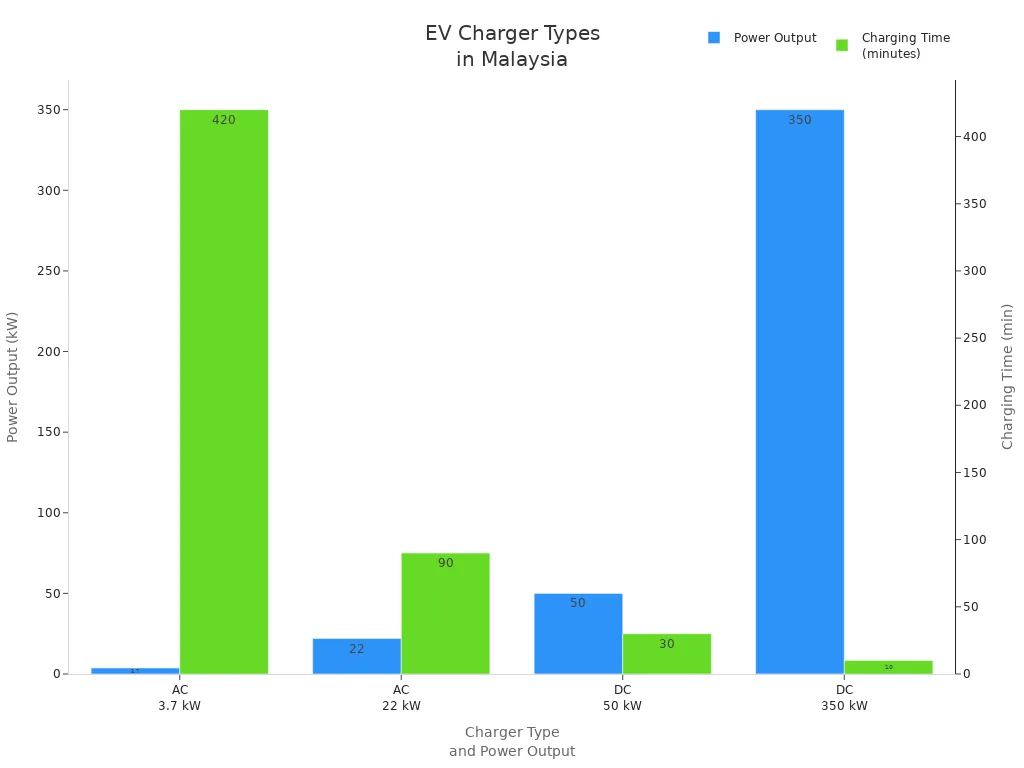
EV owners in Malaysia should match charger power output to their driving habits. Those with longer commutes or frequent travel may benefit from higher-output chargers, while daily city drivers often find AC chargers sufficient.
Smart Features and Connectivity
Modern EV chargers in Malaysia increasingly offer smart features that enhance user experience and support sustainable charging practices. IoT connectivity allows users to monitor charging sessions, schedule charging times, and receive notifications through mobile apps. Integration with renewable energy sources, such as solar panels, enables environmentally friendly charging and reduces electricity costs.
Technological innovations drive demand for advanced charging solutions. Fast-charging stations and renewable energy integration have become essential in the EV charger market. These features help users optimize energy consumption and contribute to Malaysia’s sustainability goals.
Tip: Smart chargers with app control and energy management features provide greater flexibility and convenience for EV owners.
Safety and Certification Standards
Safety and certification standards remain vital when choosing EV chargers in Malaysia. All chargers must comply with local regulations, including Suruhanjaya Tenaga certification, to ensure safe operation. Certified chargers protect users from electrical hazards, such as overcurrent, short circuits, and overheating.
Manufacturers design chargers with multiple safety layers, including temperature monitoring and surge protection. These features safeguard both the vehicle and the home’s electrical system. EV owners in Malaysia should always verify that their chosen charger meets national safety requirements before installation.
Note: Certified chargers offer peace of mind and help prevent costly damage to vehicles and property.
Warranty and After-Sales Support
Warranty and after-sales support play a critical role when selecting an EV charger in Malaysia. Buyers should understand the coverage terms and the level of service provided by manufacturers or installers. A strong warranty can protect users from unexpected costs and ensure reliable operation of their charging equipment.
Manufacturers in Malaysia offer a range of warranty periods for EV chargers. The following table summarizes typical warranty durations and the corresponding after-sales support options:
| Case | Warranty Period | After-Sales Support |
|---|---|---|
| A | 2 years | Free labor for charger replacement during warranty |
| B | 2 years | Free replacement for manufacturing defects |
| C | 3 months | Installation warranty only, charger issues not included |
Most reputable brands in Malaysia provide at least a two-year warranty for their EV chargers. This coverage often includes free labor for charger replacement and free replacement for manufacturing defects. Some providers, however, may only offer a short installation warranty, which does not cover charger malfunctions after the initial setup. Buyers should always review the warranty terms before making a purchase.
After-sales support ensures that EV owners in Malaysia receive timely assistance if technical issues arise. Many suppliers offer professional after-sales service, which includes troubleshooting within two working days for technical problems. This rapid response helps minimize downtime and keeps vehicles ready for daily use.
- Free labor for charger replacement during the warranty period
- Free replacement for manufacturing defects
- Professional troubleshooting within two working days for technical issues
Some companies, such as KINETA, provide both product and installation warranties. This dual coverage gives customers peace of mind, knowing that both the charger and the installation process are protected. Comprehensive after-sales support can make a significant difference in the overall ownership experience.
Tip: Always check the warranty period and after-sales support details before purchasing an EV charger in Malaysia. Reliable support can save time and money in the long run.
A robust warranty and responsive after-sales service reflect a manufacturer’s confidence in their product. These factors should rank high on the checklist for anyone considering an EV charger in Malaysia. By choosing a charger with strong support, EV owners can enjoy greater reliability and long-term satisfaction.
Price Guide for EV Charger Types in Malaysia
Price Ranges by EV Charger Type
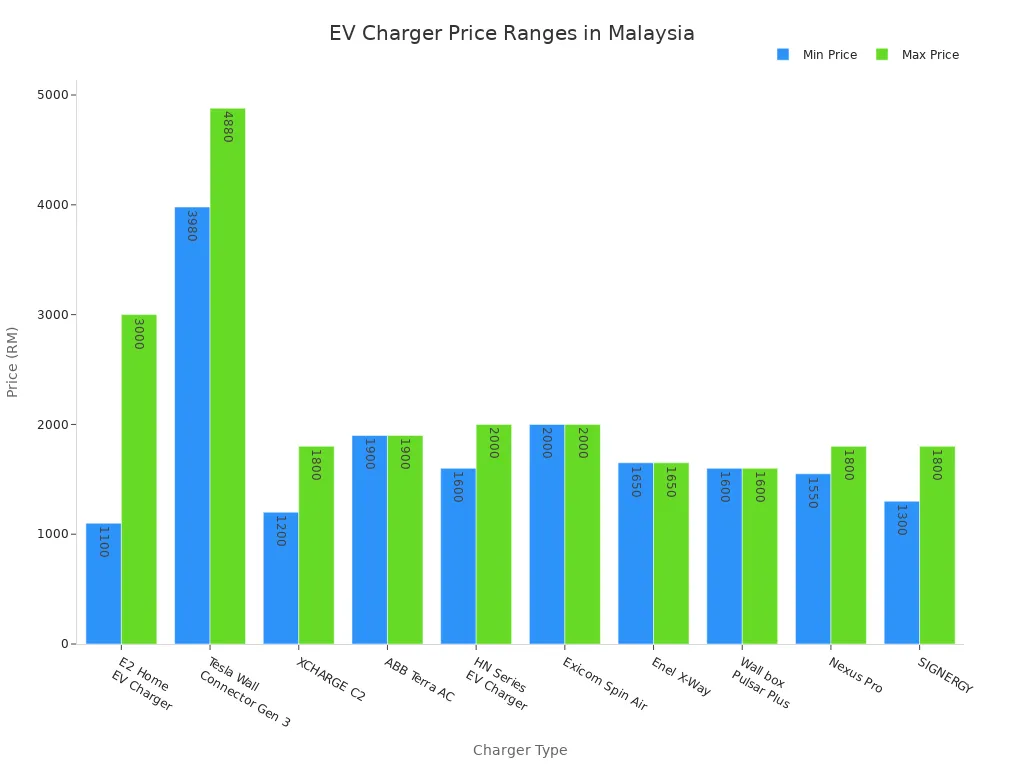
Buyers in malaysia encounter a wide spectrum of prices when selecting an ev charger. The cost depends on the charger’s type, power output, and brand reputation. Entry-level home chargers start from RM 1100+, while premium models and commercial-grade units command higher prices. The following table summarizes the current price ranges for popular ev charger types in malaysia:
| Charger Type | Price Range (RM) |
|---|---|
| E2 Home EV Charger (7kW, 11kW, 22kW) | From RM 1100+ to RM 3000+ |
| Tesla Wall Connector Gen 3 (22kW) | RM 3980 – RM 4880 |
| XCHARGE C2 (7kW & 22kW) | From RM 1200 – 1800 |
| ABB Terra AC (22kW) | From RM 1900 |
| HN Series EV Charger (7kW/22kW) | From RM 1600 – 2000 |
| Exicom Spin Air (22kW) | From RM 2000 |
| Enel X-Way (7.4kW – 22kW) | From RM 1650 |
| Wall box Pulsar Plus (7.4kW, 22kW) | From RM 1600 |
| Nexus Pro (7kW/22kW) | From RM 1550 – 1800 |
| SIGNERGY (7kW & 22kW) | From RM 1300 – 1800 |
Cost Comparison of Top EV Charger Models
The price gap between entry-level and premium ev chargers in malaysia reflects differences in features and build quality. Basic AC chargers, such as the E2 Home EV Charger or SIGNERGY, offer reliable charging at a lower cost. Premium models, including the Tesla Wall Connector Gen 3 and ABB Terra AC, provide advanced connectivity and higher power output. Buyers should compare not only the upfront price but also the long-term value.
- Entry-level chargers: RM 1100+ to RM 1800
- Mid-range chargers: RM 1600 to RM 3000+
- Premium chargers: RM 3980 to RM 4880
Buyers in malaysia often choose mid-range chargers for a balance of price and features. Premium chargers suit those who prioritize smart connectivity and faster charging speeds.
Factors Affecting Price
Several factors influence the price of ev chargers in malaysia. Power output remains a primary driver, with higher kW ratings commanding higher prices. Brand reputation and warranty coverage also impact cost. Chargers with smart features, such as app control or RFID access, tend to cost more. Installation complexity and compatibility with local electrical systems add to the total expense.
Key factors include:
- Power output (7kW, 11kW, 22kW)
- Smart features (Wi-Fi, app integration, RFID)
- Safety certifications and warranty length
- Brand reputation and after-sales support
- Installation requirements and site conditions
Buyers should assess their charging needs and budget before selecting an ev charger. Investing in a certified and reliable model ensures safety and long-term satisfaction.
EV Charger Connector Types in Malaysia
Electric vehicle charging in Malaysia relies on several connector types, each designed for specific charging speeds and compatibility with different EV models. Understanding these connectors helps drivers select the right charging solution for their needs.
Type 2 (Mennekes)
Type 2, also known as Mennekes, has become the standard connector for AC charging across much of Malaysia. This connector features a 7-pin design and supports charging speeds from 3kW up to 50kW. The popularity of Type 2 continues to rise as more European EVs enter the Malaysian market. Major cities such as Kuala Lumpur, Selangor, and Penang lead in adoption due to their advanced infrastructure and economic activity.
- Type 2 connectors offer broad compatibility with European and many Asian EV models.
- Charging stations in urban areas increasingly feature Type 2 sockets.
- Investments in charging infrastructure support the expansion of Type 2 usage.
Type 2 connectors provide reliable AC charging for daily use, making them a practical choice for residential and commercial installations in Malaysia.
CCS Combo
CCS Combo, or Combined Charging System, builds on the Type 2 connector by adding two extra pins for DC fast charging. This design enables rapid charging at speeds up to 400kW, making CCS Combo suitable for drivers who need quick top-ups during long journeys. Many new EV models in Malaysia support CCS Combo, reflecting global trends toward faster charging solutions.
| Connector | Charging Type | Max Power Output | Typical Use Case |
|---|---|---|---|
| CCS Combo | DC Fast | Up to 400kW | Highway, commercial hubs |
- CCS Combo connectors allow both AC and DC charging through a single port.
- The system supports a wide range of EVs, including European, American, and some Asian models.
- Fast charging stations along highways and in commercial centers often use CCS Combo.
CCS Combo connectors deliver flexibility and speed, helping Malaysia meet the demands of a growing EV market.
CHAdeMO
CHAdeMO originated in Japan and remains a key connector for DC quick charging in Malaysia. This protocol supports charging speeds up to 400kW, with future versions aiming for 900kW. CHAdeMO connectors appear at public charging stations and serve several Japanese and Korean EV models.
- CHAdeMO connectors enable fast charging for compatible EVs.
- Public charging stations in Malaysia offer CHAdeMO alongside other connector types.
- The latest CHAdeMO 3.0 standard will support even higher power output.
CHAdeMO provides a robust solution for rapid charging, especially for Japanese EVs operating in Malaysia.
Drivers in Malaysia benefit from a diverse selection of EV charger connector types. Type 2 suits daily AC charging, CCS Combo offers fast DC charging for modern EVs, and CHAdeMO supports quick charging for Japanese models. Choosing the right connector ensures efficient and safe charging, supporting the continued growth of EV adoption in Malaysia.
Compatibility with Popular EVs in Malaysia
Selecting the right EV charger type depends on the compatibility between the charger connector and the electric vehicle model. In Malaysia, the market features a diverse range of EVs from global manufacturers. Each model supports specific charging standards, which influence the choice of home or public charging solutions.
The following table highlights the compatibility of popular EV models in Malaysia with the main charger connector types:
| EV Model | Type 2 (AC) | CCS Combo (DC) | CHAdeMO (DC) |
|---|---|---|---|
| Tesla Model 3/Y | ✅ | ✅ | ❌ |
| BYD Atto 3 | ✅ | ✅ | ❌ |
| Hyundai IONIQ 5 | ✅ | ✅ | ❌ |
| Nissan Leaf | ✅ | ❌ | ✅ |
| BMW iX3 | ✅ | ✅ | ❌ |
| Kia EV6 | ✅ | ✅ | ❌ |
| Mercedes-Benz EQB | ✅ | ✅ | ❌ |
| ORA Good Cat | ✅ | ✅ | ❌ |
| Porsche Taycan | ✅ | ✅ | ❌ |
| Mitsubishi Outlander PHEV | ✅ | ❌ | ✅ |
Most new EVs in Malaysia support Type 2 connectors for AC charging. This standard ensures that owners can use the majority of home and workplace chargers. CCS Combo has become the preferred option for DC fast charging among European, American, and many Asian brands. Nissan and Mitsubishi models, such as the Leaf and Outlander PHEV, continue to use CHAdeMO for DC charging.
Note: Drivers should always check their vehicle’s charging port before purchasing a charger or using a public station.
Some EVs offer dual compatibility, supporting both AC and DC charging. For example, Tesla, BYD, and Hyundai models in Malaysia can use Type 2 for regular charging and CCS Combo for rapid charging. This flexibility allows owners to charge at home overnight and access fast charging on highways or at commercial hubs.
Charging compatibility also affects future-proofing. As Malaysia expands its charging infrastructure, more stations will feature both Type 2 and CCS Combo connectors. Owners who choose EVs with these ports will benefit from greater convenience and access.
- Type 2: Best for daily home charging across most EVs.
- CCS Combo: Ideal for fast charging on long trips.
- CHAdeMO: Necessary for certain Japanese models.
Understanding compatibility helps EV owners in Malaysia maximize charging efficiency and avoid inconvenience. Careful selection of both vehicle and charger ensures a seamless ownership experience.
Installation Options and Considerations for EV Charger Types in Malaysia
Professional Installation vs DIY
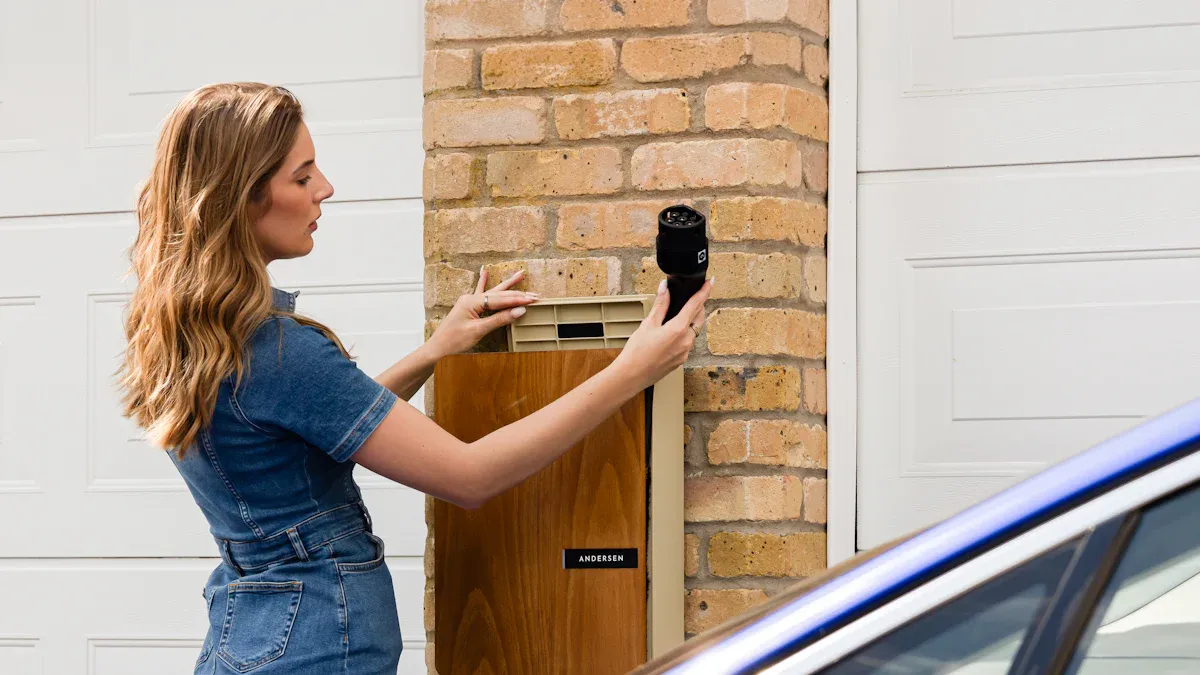
Homeowners in Malaysia often face a choice between professional installation and DIY approaches when setting up EV chargers. Professional installation offers expertise and ensures compliance with local regulations. Electricians assess the household’s electrical capacity, minimizing risks of overload or fire. They also handle permits and verify that the installation meets safety standards.
Key considerations for both professional and DIY installation include:
- Electrical capacity: The home’s system must support the additional load from the EV charger.
- Location selection: Installers recommend placing the charger close to the parking space for easy access.
- Permits and regulations: Local building codes require permits for new electrical work, ensuring safety and legal compliance.
Professional installation remains the preferred option for most Malaysian EV owners. It guarantees proper setup and reduces the risk of costly mistakes.
Electrical Requirements
EV charger installation in Malaysia demands careful attention to electrical specifications. The following table outlines typical requirements for residential setups:
| Charger Type | Voltage Requirement | Charging Speed | Additional Notes |
|---|---|---|---|
| Level 1 Charger | 240V AC | Slow (overnight charging) | Minimal installation costs, budget-friendly option. |
| Level 2 Charger | 240V AC | Faster than Level 1 | Requires professional installation for dedicated circuit. |
| Electrical Capacity | N/A | N/A | Ensure home’s system supports charger requirements. |
| Dedicated Circuits | N/A | N/A | NEC mandates dedicated circuit to prevent overheating. |
| Wire Gauge | N/A | N/A | 6 AWG copper for 50A circuits. |
| Breaker Size | N/A | N/A | 40A for 32A continuous load or 50A for 40A load. |
Installers in Malaysia check the home’s voltage and amperage before recommending a charger type. Dedicated circuits and proper wire gauge prevent overheating and electrical hazards. These steps ensure safe and efficient EV charging.
Space and Placement Tips
Selecting the right location for an EV charger in Malaysia improves convenience and safety. Installers advise placing the charger near the vehicle’s parking spot, reducing cable clutter and trip hazards. Wall-mounted units save space and protect the charger from weather exposure.
Consider these tips for optimal placement:
- Choose a spot with easy access to the vehicle.
- Avoid areas exposed to direct sunlight or heavy rain.
- Ensure enough clearance for ventilation and maintenance.
- Keep the charger away from flammable materials.
Proper placement enhances the user experience and extends the lifespan of the EV charger. Malaysian homeowners benefit from planning the installation with future needs in mind, such as upgrading to higher-capacity chargers or accommodating multiple vehicles.
Permits and Local Regulations
Installing an EV charger in Malaysia involves more than just technical setup. Homeowners and businesses must comply with local permits and regulations to ensure safety and legal operation. Authorities in Malaysia enforce strict guidelines for electrical installations, especially those involving high-powered devices like EV chargers.
Local councils and Suruhanjaya Tenaga, the national energy commission, oversee the approval process. Applicants must submit detailed plans that include the charger’s specifications, location, and electrical load calculations. These documents help officials assess whether the installation meets Malaysia’s safety standards and does not overload the existing infrastructure.
The approval process typically follows these steps:
- Site Assessment: Licensed electricians inspect the property to determine if the electrical system can support the EV charger.
- Documentation Preparation: The installer prepares technical drawings and load calculations for submission.
- Permit Application: Homeowners or businesses submit the application to the local council and Suruhanjaya Tenaga.
- Inspection: Officials may conduct on-site inspections before granting approval.
- Final Approval: Once the installation passes inspection, authorities issue the permit.
Note: Skipping the permit process can result in fines or forced removal of the EV charger. Compliance protects both property and occupants.
Malaysia’s regulations also require that all EV chargers carry certification from Suruhanjaya Tenaga. Certified chargers meet national safety standards and reduce the risk of electrical hazards. Installers must use approved components and follow best practices during setup.
The following table summarizes key regulatory requirements for EV charger installation in Malaysia:
| Requirement | Description |
|---|---|
| Suruhanjaya Tenaga Approval | Mandatory for all EV charger installations |
| Local Council Permit | Required for residential and commercial properties |
| Certified Equipment | Only approved chargers allowed |
| Licensed Installer | Installation by certified professionals only |
Homeowners and businesses should consult with licensed installers who understand Malaysia’s regulatory landscape. These professionals guide clients through the permit process and ensure full compliance. Proper documentation and adherence to local rules help avoid delays and legal issues.
Tip: Early engagement with authorities and certified installers streamlines the approval process for EV charger installation in Malaysia.
Using Existing Sockets for EV Charger Types in Malaysia
Can You Use a Standard 3-Pin Socket?
Many homeowners in Malaysia wonder if they can charge their EV using a standard 3-pin socket. This approach seems convenient because most homes already have these outlets. Technically, most EVs support charging through a portable cable that plugs into a regular socket. Manufacturers design these cables to work with household electricity supplies. However, this method has significant limitations.
Standard 3-pin sockets in Malaysia typically deliver a maximum of 13 amps at 240 volts. This setup provides a charging power of about 2.5 to 3 kW. Charging an EV with a medium-sized battery using this method can take more than 12 hours. Drivers who rely on daily charging may find this speed insufficient for their needs.
Some EV manufacturers include portable charging cables for emergency use. These cables allow drivers to top up their batteries when no dedicated charger is available. However, regular use of a 3-pin socket for EV charging is not recommended for long-term solutions.
Note: Using a standard socket for EV charging should be reserved for emergencies or occasional use. Dedicated EV chargers offer better safety and efficiency.
Safety and Speed Considerations
Safety remains a primary concern when charging an EV in Malaysia using a standard socket. Household wiring may not be designed to handle continuous high loads for extended periods. Overheating, electrical faults, and fire risks increase when sockets operate near their maximum capacity for many hours.
Professional installers in Malaysia advise against using standard sockets for daily EV charging. Dedicated EV chargers include built-in safety features such as overcurrent protection, temperature monitoring, and ground fault detection. These features help prevent accidents and protect both the vehicle and the property.
Charging speed also affects convenience. Standard sockets deliver slow charging rates, which may not meet the needs of drivers with busy schedules. Dedicated EV chargers provide faster charging, reducing downtime and ensuring the vehicle is ready for use each morning.
The following table compares charging options for EV owners in Malaysia:
| Charging Method | Power Output | Typical Charging Time | Safety Features |
|---|---|---|---|
| Standard 3-Pin Socket | 2.5–3 kW | 12+ hours | Basic fuse protection |
| Dedicated EV Charger | 7–22 kW | 1.5–8 hours | Advanced safety system |
Tip: Investing in a certified EV charger improves safety and charging speed for Malaysian drivers.
Homeowners in Malaysia should consult licensed electricians before attempting to charge an EV with a standard socket. Upgrading to a dedicated charger ensures compliance with local regulations and provides peace of mind.
Tethered vs Non-Tethered EV Charger Types in Malaysia
Choosing between tethered and non-tethered EV charger types presents a key decision for EV owners in Malaysia. Each option offers unique benefits and drawbacks that impact daily charging routines, installation, and long-term flexibility.
Pros and Cons of Tethered Chargers
Tethered chargers come with a fixed charging cable attached to the unit. This design simplifies the charging process for many users in Malaysia. Drivers can simply park, uncoil the cable, and plug it into their EV. The convenience factor stands out, especially for those who charge their vehicles at home every night.
Advantages of tethered chargers:
- Ease of use: The cable remains attached, so users do not need to search for a separate charging cable.
- Faster setup: Drivers can start charging immediately after parking.
- Reduced wear: The cable is designed for frequent use and matches the charger’s specifications.
Disadvantages of tethered chargers:
- Limited compatibility: The fixed cable may not fit all EV models, especially if a household owns multiple brands.
- Aesthetics and storage: The cable can look untidy if not stored properly after use.
- Replacement cost: If the cable gets damaged, replacing it may require professional service or a full unit replacement.
Tip: Tethered chargers suit users who own a single EV model and value quick, hassle-free charging at home in Malaysia.
Pros and Cons of Non-Tethered Chargers
Non-tethered chargers, also known as socketed or untethered chargers, do not include a fixed cable. Instead, users must provide their own charging cable, which plugs into both the charger and the EV. This approach offers greater flexibility for Malaysian households with multiple EVs or those who expect to change vehicles in the future.
Advantages of non-tethered chargers:
- Universal compatibility: Users can charge different EV models by switching cables.
- Neater appearance: No permanent cable means less clutter when the charger is not in use.
- Easier maintenance: Damaged cables can be replaced without servicing the entire charger.
Disadvantages of non-tethered chargers:
- Extra step required: Users must connect their own cable each time, which may be less convenient.
- Risk of forgetting: Drivers may forget to bring the cable, especially when traveling.
- Potential for loss: Removable cables can be misplaced or stolen if left unattended.
| Feature | Tethered Charger | Non-Tethered Charger |
|---|---|---|
| Cable Included | Yes | No |
| Compatibility | Limited to cable type | Universal (with right cable) |
| Convenience | High | Moderate |
| Maintenance | Cable fixed | Cable replaceable |
Note: Non-tethered chargers provide flexibility for Malaysia’s growing EV market, especially for families with more than one vehicle or those who plan to upgrade their EV in the future.
How to Choose the Right EV Charger Types in Malaysia
Assessing Your Daily Driving Needs
Selecting the right EV charger in Malaysia begins with understanding daily driving habits. Drivers who commute short distances or use their vehicles primarily for city travel often find AC chargers sufficient. These chargers offer reliable performance for overnight charging and routine use. Individuals who travel long distances or require frequent top-ups may benefit from DC fast chargers. DC chargers deliver rapid charging but remain less common in residential areas. The choice depends on how often the vehicle needs charging and the typical journey length.
Tip: Drivers should evaluate weekly mileage and charging frequency before making a decision.
Matching Charger Power to Your Vehicle
Matching the charger’s power output to the vehicle’s specifications ensures efficient charging. Most EVs in Malaysia support AC charging, with power outputs ranging from 7kW to 22kW. Vehicles with larger batteries or higher energy demands may require chargers with greater output. DC fast chargers provide higher power, suitable for commercial settings or highway stops. However, not all vehicles support DC charging. Owners must check their vehicle’s compatibility with available charger types.
The following table summarizes charger power recommendations for common EV categories in Malaysia:
| Vehicle Type | Recommended Charger Type | Typical Power Output |
|---|---|---|
| City EV (small battery) | AC Level 2 | 7kW |
| Family EV (medium battery) | AC Level 2 or DC Fast | 11kW–22kW |
| Long-range EV (large battery) | DC Fast Charger | 50kW+ |
Drivers in Malaysia should consult their vehicle manual or manufacturer to confirm the optimal charger type and power rating.
Balancing Quality and Cost
Balancing quality and cost remains essential for Malaysian EV owners. AC chargers offer greater accessibility and lower installation costs compared to DC fast chargers. While DC chargers provide faster charging, they often require higher investment and specialized installation. The decision should reflect both budget constraints and long-term value. High-quality chargers with safety certifications and warranty coverage deliver peace of mind and reduce maintenance expenses.
- Types of Chargers: AC and DC options available in Malaysia.
- Accessibility: AC chargers are more convenient for home use.
- Cost: AC charging is generally less expensive.
- User Needs: Charger selection should align with individual driving patterns.
Note: Investing in certified chargers with robust after-sales support ensures safety and reliability for EV owners in Malaysia.
Careful consideration of driving needs, vehicle compatibility, and budget helps drivers in Malaysia select the most suitable EV charger type. This approach maximizes convenience and supports the transition to sustainable transportation.
Future-Proofing Your Charger Choice
Selecting an EV charger involves more than meeting current needs. Drivers in Malaysia should consider how their choice will serve them as technology and vehicle options evolve. The rapid pace of innovation in the EV sector means that a charger purchased today may need to support new standards or higher power requirements in the near future.
A future-proof charger offers flexibility and adaptability. Owners should look for models that support firmware updates. This feature allows the charger to receive new functions or compatibility improvements through software, rather than requiring hardware replacement. Many leading chargers now offer Wi-Fi or cloud connectivity, making remote updates possible.
Tip: Chargers with upgradable software can adapt to changes in charging protocols or energy management systems.
Compatibility remains a key factor. The Malaysian EV market features a growing variety of vehicles, each with different charging needs. A charger that supports both single-phase and three-phase power can accommodate a wider range of vehicles. Models with universal sockets or interchangeable cables provide additional flexibility, especially for households with more than one EV or for those planning to switch brands in the future.
The following checklist helps drivers in Malaysia evaluate if a charger is future-ready:
- Supports both single-phase and three-phase connections
- Offers firmware or software updates
- Includes universal or replaceable charging cables
- Meets the latest safety and certification standards
- Provides smart features such as load balancing or integration with solar panels
| Feature | Why It Matters for the Future |
|---|---|
| Firmware Updates | Keeps charger compatible with new EV models |
| Universal Socket | Supports multiple vehicle brands |
| Smart Energy Features | Integrates with home energy systems |
| High Power Output | Prepares for larger battery capacities |
Malaysia’s commitment to expanding its EV infrastructure suggests that charging standards will continue to advance. Owners who invest in scalable and adaptable chargers position themselves to benefit from these improvements. They avoid costly upgrades and ensure their charging setup remains efficient and safe as new EV models enter the market.
Note: Planning for future needs protects the investment and ensures long-term convenience for EV owners in Malaysia.
Malaysia’s EV market offers a range of charger types to suit every driver. Leading models like Wallbox Pulsar Plus and ABB Terra DC Fast Charger provide reliable solutions for homes and businesses. Buyers should consider charging speed, safety, and smart features when choosing an EV charger in Malaysia. Budget-friendly options meet daily needs, while advanced chargers deliver fast charging and connectivity. Investing in a certified EV charger ensures convenience and safety for every EV owner in Malaysia.
FAQ
What is the most common EV charger type used in Malaysia?
Most drivers in Malaysia use AC Level 2 chargers for home and workplace charging. These chargers offer reliable performance and suit daily EV charging needs. They also meet local safety standards and support most electric vehicles available in the country.
Can any EV charger be installed at home in Malaysia?
Not every EV charger fits every home in Malaysia. Homeowners must check electrical capacity and ensure the charger meets Suruhanjaya Tenaga certification. Professional installation helps guarantee safety and compliance with local regulations.
How long does it take to fully charge an EV in Malaysia?
Charging time depends on the charger type and vehicle battery size. AC chargers usually take between 4 to 8 hours for a full charge. DC fast chargers can charge an EV up to 80% in about 30 minutes.
Are public EV charging stations widely available in Malaysia?
Malaysia continues to expand its public EV charging network. Major cities and highways offer more stations each year. However, some areas still have limited access, making home charging a preferred option for many drivers.
Do all EVs in Malaysia use the same connector type?
No, not all EVs use the same connector. Most new models in Malaysia support Type 2 for AC charging and CCS Combo for DC fast charging. Some Japanese models use CHAdeMO connectors. Drivers should check their vehicle’s compatibility before choosing a charger.
Is it safe to use a standard 3-pin socket for EV charging in Malaysia?
A standard 3-pin socket can charge an EV in emergencies, but it charges slowly and may overheat with regular use. Dedicated EV chargers provide better safety features and faster charging, making them a safer choice for daily use in Malaysia.
What maintenance does an EV charger require in Malaysia?
EV chargers in Malaysia need minimal maintenance. Owners should inspect cables for wear, keep the unit clean, and schedule periodic checks by a qualified technician. Regular maintenance ensures safe and efficient operation.