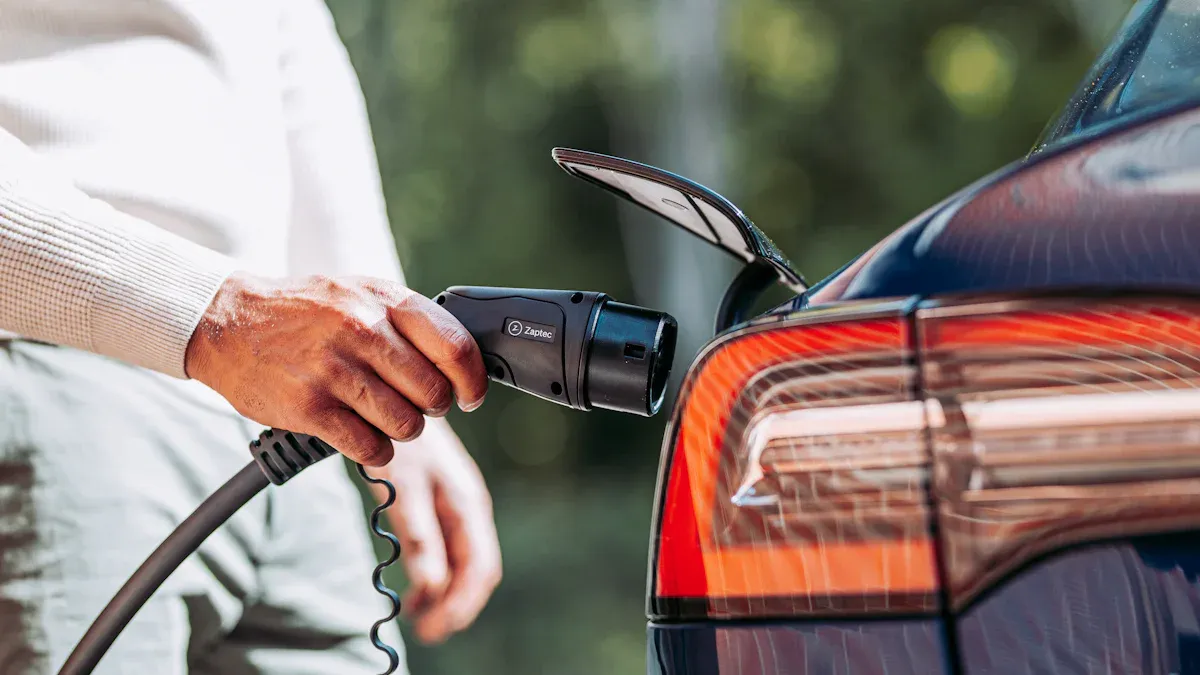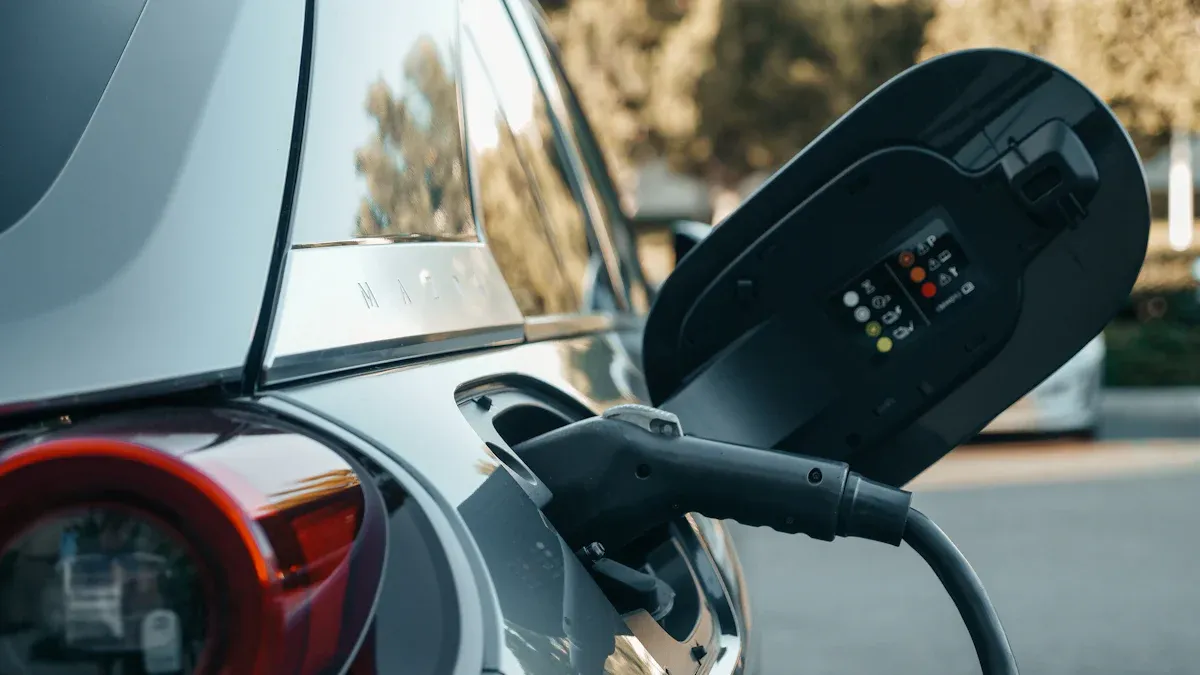
A type 2 electric vehicle charger provides a reliable method for charging most modern electric cars across Europe and other regions. EV charger manufacturers design these chargers with a distinctive plug shape that ensures secure connections and efficient power delivery. Drivers and businesses choose this charger because it supports faster charging and offers broad compatibility with many vehicle models.
Choosing the correct charger type helps owners maximize charging speed and safety.
How a Type 2 Electric Vehicle Charger Works

Connector Design and Features
The Type 2 Plug Shape
The type 2 electric vehicle charger uses a distinctive plug design that sets it apart from other connectors. The plug features seven pins, which handle both power transmission and data communication. This design supports single-phase and three-phase AC charging, making it suitable for home and public use. The connector can deliver up to 43 kW of power and operates at a maximum voltage of 500 V. The table below summarizes the main technical features:
| Feature | Description |
|---|---|
| Number of Pins | 7 pins for data transmission and power supply |
| Power Transmission Capability | Can transmit up to 43 kW of power |
| Charging Types | Supports both three-phase and single-phase charging |
| Maximum Voltage | 500 V |
The Combo 2 connector, a variant of the type 2 plug, adds extra pins for direct current (DC) fast charging. This allows some EV models to charge at speeds up to 350 kW, reducing charging time significantly compared to standard AC charging.
Safety Features of Type 2 Chargers
Manufacturers design type 2 electric vehicle chargers with several safety features to protect users and vehicles. These chargers include temperature sensors that monitor for overheating. If the temperature exceeds 85°C, the system shuts down automatically. The plug housing meets IP54 standards, which means it resists dust and water, making it reliable for outdoor installations. Pilot signal verification ensures that charging only starts after confirming proper grounding and circuit integrity. The table below highlights these safety features:
| Safety Feature | Description |
|---|---|
| Temperature monitoring | Sensors detect overheating (>85°C) and trigger automatic shutdown |
| IP54 ingress protection | Sealed housing resists dust and water, suitable for outdoor use |
| Pilot signal verification | Charging begins only after confirming proper grounding and circuit integrity |
Compatibility with Electric Vehicles
Which Cars Use Type 2 Electric Vehicle Chargers
The type 2 electric vehicle charger offers broad compatibility with many EV brands and models. Most European and international manufacturers use this connector as the standard for their electric car charger ports. The following table lists some popular brands and models that support type 2 charging:
| Car Brand | EV Model | Compatible |
|---|---|---|
| AUDI | A3 E-TRON (POST 2018) | TYPE 2 |
| BMW | I3 | TYPE 2 |
| FORD | MUSTANG MACH-E | TYPE 2 |
| FIAT | 500E | TYPE 2 |
Many other brands also use the type 2 connector, including:
- Audi
- BMW
- Chevrolet
- Chrysler
- Citroën
- DS
- Fiat
- Fisker
- Ford
- Hyundai
- Jaguar
- KIA
- Land Rover
- Mercedes-Benz
- Mini
- Mitsubishi
- Nissan
- Opel
- Peugeot
- Porsche
- Renault
- Smart
- Tesla
- Toyota
- Volkswagen
- Volvo
Drivers can rely on the type 2 electric vehicle charger for most modern EVs sold in Europe and many other regions.
Adapters and Cross-Compatibility
Some EV owners may need adapters to connect vehicles with different charging port standards. Adapters allow cars with type 1 or proprietary connectors to use type 2 charging stations. This flexibility helps drivers access a wider network of chargers, especially when traveling or using public charging infrastructure. However, not all adapters support fast charging, so users should check compatibility before purchasing.
Charging Process Explained
Power Delivery Basics
The charging process with a type 2 electric vehicle charger begins when the driver plugs the cable into the vehicle. The charger supports both slow charging at home and fast charging at public stations. The system can deliver power using single-phase or three-phase AC, depending on the installation and the vehicle’s capabilities. The Combo 2 variant enables DC fast charging for compatible EVs, further reducing charging time.
Communication Between Car and Charger
Communication protocols play a crucial role in safe and efficient charging. The charger and vehicle exchange information to manage the flow of electricity and prevent overheating. Protocols such as ISO 15118 and IEC 61851 ensure that both the charger and the EV agree on a safe charging rate. These systems perform safety checks before charging begins. If the system detects any issues, it can stop the session immediately to protect the vehicle and user.
The typical charging session follows these steps:
- Connect vehicle: The driver plugs the cable into the EV, starting the session.
- Remote start: The driver may use an app to initiate charging.
- Authorize user: The system verifies payment information.
- Start charge: The charger receives a request to begin charging.
- Charging: The vehicle receives power until the battery reaches the desired level.
Tip: Always check that the cable is securely connected and the charger displays a green light before leaving your vehicle to charge.
Type 2 Electric Vehicle Charger vs. Other Charger Types
Type 2 vs. Type 1 Chargers
Key Differences
Type 1 and type 2 chargers serve as the main connectors for EV charging in different regions. Type 1 connectors feature a circular five-pin design, while type 2 connectors use a seven-pin layout. Type 2 chargers include a locking mechanism that secures the connection during charging. Type 1 chargers do not have this feature. Charging rates also differ. Type 1 supports slower rates, typically between 3kW and 7.4kW. Type 2 electric vehicle chargers deliver up to 22kW AC at home and up to 43kW at public stations. Type 1 chargers only support single-phase electricity supply. Type 2 chargers handle both single-phase and three-phase power, which increases charging speed and flexibility.
| Feature | Type 1 | Type 2 |
|---|---|---|
| Connector Design | Circular five-pin | Seven-pin layout |
| Locking Mechanism | No | Yes |
| Charging Rates | 3kW to 7.4kW | Up to 22kW AC at home, 43kW at public stations |
| Electricity Supply | Single-phase | Single-phase and three-phase |
| Regional Adoption | Common in North America and Asia | European standard, mandated in 2017 |
Type 2 chargers provide faster charging and improved safety features compared to Type 1.
Regional Usage
Regional standards determine which charger type dominates the market. North America and parts of Asia prefer Type 1 chargers because local power grids use single-phase electricity. Vehicles such as the Nissan Leaf and Chevrolet Volt rely on Type 1 connectors. Europe and many Asian countries have adopted Type 2 chargers as the standard. Type 2 supports triple-phase charging, which benefits EV models from Tesla, BMW, and Hyundai.
| Region | Charger Type | Reason for Prevalence |
|---|---|---|
| North America | Type 1 | Predominantly single-phase power grids, compatible with vehicles like Nissan Leaf and Chevrolet Volt. |
| Europe and Asia | Type 2 | Supports faster, triple-phase charging, standard for most new EVs including Tesla, BMW, and Hyundai. |
Type 2 vs. CCS (Combined Charging System)
What is CCS?
The Combined Charging System (CCS) builds on the type 2 connector design. CCS adds two extra pins to the standard seven-pin type 2 plug, enabling both AC and DC charging. CCS chargers deliver much higher charging speeds than type 2 electric vehicle chargers. CCS2 supports up to 350kW DC charging, while type 2 chargers reach up to 22kW AC. CCS chargers work with most European EVs and have become the preferred choice for fast-charging networks.
| Feature | Type 2 | CCS2 |
|---|---|---|
| Charging Type | AC only | AC + DC |
| Plug Design | 7-pin | Type 2 + 2 extra DC pins |
| Charging Speed | Up to ~22 kW (AC) | Up to 350 kW (DC) |
| Compatibility | Europe standard AC | Europe standard for DC |
| Backward Compatible with AC | Yes | Yes |
CCS chargers allow EV drivers to recharge batteries quickly during long trips, making them ideal for highway charging stations.
When to Use Each
Drivers select CCS chargers when they need rapid charging, especially on long journeys or when time is limited. CCS chargers deliver up to 350kW, supporting high voltage and current levels. Type 2 chargers suit daily charging needs at home or work, where lower power levels suffice. CCS chargers integrate both AC and DC charging in one module, while type 2 chargers focus on AC charging only. CCS chargers facilitate cross-border travel and support a growing network of fast-charging stations across Europe.
| Feature | CCS Charger | Type 2 Charger |
|---|---|---|
| Charging Power | Up to 350 kW | Limited to lower power levels |
| Voltage and Current | Up to 1,000 V and >350 A | Lower voltage and current limits |
| Compatibility | Supports both AC and DC charging | Primarily AC charging |
| Global Adoption | Preferred in Europe and many regions | Less universal acceptance |
| Integrated Communication | One module for AC and DC | Separate modules for AC and DC |
| Market Uptake | Facilitates cross-border travel | Limited by regional standards |
Type 2 vs. CHAdeMO Chargers
What is CHAdeMO?
CHAdeMO stands for “CHArge de MOve,” a fast-charging standard developed in Japan. CHAdeMO chargers use a unique connector designed for rapid DC charging. Many Japanese EVs, such as the Nissan Leaf, support CHAdeMO. The connector enables high-speed charging at public stations.
Pros and Cons
Type 2 connectors focus on AC charging and reach speeds up to 22kWh. CHAdeMO chargers deliver 50kW or more using DC power, which shortens charging time for compatible EVs. Type 2 connectors appear more frequently in Europe, while CHAdeMO dominates in Japan and some other regions. CHAdeMO supports rapid charging but requires a dedicated port on the EV, which limits compatibility with some models. Type 2 chargers offer broader compatibility and easier integration with home charging setups.
| Charger Type | Charging Speed |
|---|---|
| Type 2 | Up to 22 kWh |
| CHAdeMO | 50 kW or more |
- Type 2 connectors are primarily used for AC charging.
- CHAdeMO connectors are designed for rapid DC charging.
EV owners should consider their vehicle’s compatibility and local charging infrastructure before choosing between Type 2, CCS, or CHAdeMO.
Charging Speeds and Power Levels with Type 2 Electric Vehicle Charger
AC Charging Explained
Single-Phase vs. Three-Phase Charging
Type 2 electric vehicle chargers support both single-phase and three-phase charging. Single-phase charging typically delivers up to 7 kW, which suits most residential settings. Three-phase charging, on the other hand, allows an EV to receive power from three currents at once. This method significantly increases charging speed and works well for commercial locations or situations where quick charging is necessary.
- Three-phase systems can deliver between 11 kW and 22 kW, making them ideal for larger battery capacities and reducing overall charging time.
- Single-phase charging remains adequate for home use but operates at a slower pace compared to three-phase systems.
Typical Charging Times
Charging times depend on the power supply and the EV’s battery size. For example, a 60 kWh battery may take about 8-9 hours to fully charge with a 7.2 kW Level 2 charger. A smaller 20 kWh battery could reach full charge in 2-3 hours under the same conditions. Three-phase charging can cut these times significantly, especially for larger batteries.
Maximum Power Output of Type 2 Chargers
Home Charging Speeds
Residential charging stations usually deliver between 3.7 kW and 22 kW. These stations are classified as Level 2 chargers. Most homes use single-phase power, so charging speeds often fall on the lower end of this range. Level 2 chargers can reach a maximum output of 22 kW, which enables some EVs, such as a Tesla Model 3, to fully charge in about three hours and 45 minutes.
| Charger Type | Power Output (kW) |
|---|---|
| L2 Chargers | ~6.2 – 19.2 |
| Residential | 3.7 – 22 |
| Maximum | 22 |
Level 2 chargers have a maximum power output of 22 kW.
Public Charging Speeds
Public charging stations often provide higher power outputs than home setups. Type 2 chargers in public spaces can deliver speeds up to 43 kW, making them suitable for quick top-ups during travel or errands. Fast chargers (7-22 kW) are common for moderate needs, while rapid chargers (23-99 kW) and ultra-rapid chargers (100 kW+) offer even faster options, though these may use different connector types.
- Home charging typically uses Level 1 chargers, which are slower and may take several hours.
- Public Level 2 chargers are faster and ideal for quick charging sessions.
- DC fast chargers can charge an EV to 80% in about 20-30 minutes, which is useful for long trips.
Factors Affecting Charging Speed
Car Battery Capacity
Battery size plays a major role in charging time. Larger battery capacities require more time to reach full charge, even when using the same charger. For instance, a 60 kWh battery takes much longer to charge than a 20 kWh battery at the same power level.
- A 60 kWh battery may need 8-9 hours with a 7.2 kW charger.
- A 20 kWh battery may only need 2-3 hours under similar conditions.
Charger Power Rating
The maximum power output of the charging station directly influences charging speed. Differences in power output can significantly affect how long it takes to charge an EV. The initial state of charge also matters, as charging is faster at lower battery levels and slows down as the battery approaches full capacity to protect battery health.
| Factor | Description |
|---|---|
| Power Output | The maximum power output of the charging station is crucial as it directly influences charging speed. Differences in power output can significantly affect charging time. |
| Battery Capacity | A larger battery capacity will take longer to charge compared to a smaller one, affecting overall charging speed. |
| State of Charge | Charging is faster at lower charge levels and slows down as the battery approaches full capacity to protect battery health. |
| Environmental Conditions | Extreme temperatures can affect battery performance and charging efficiency, impacting charging speed. |
Extreme temperatures can reduce battery capacity and slow down charging rates. Cold weather impacts battery performance, while high temperatures can lead to thermal throttling.
Where to Find Type 2 Electric Vehicle Chargers

Home Charging Stations
Installing a Type 2 Charger at Home
Many EV owners choose to install a Type 2 charger at home for convenience and reliability. A home electric car charger allows drivers to start each day with a full battery. Electricians typically mount the charger on a garage wall or an exterior wall near a driveway. The installation process involves connecting the charger to the home’s electrical panel and ensuring proper safety checks. Home charging provides flexibility, as drivers can plug in their EV overnight or during off-peak hours.
Costs and Considerations
Home installation costs for a Type 2 charger usually range from $1,000 to $3,000, not including the price of the charger itself. Several factors influence the final cost:
- Distance from the electrical panel can increase expenses, especially if longer cable runs are necessary.
- Each additional meter of cable may add £10-£20 to the total.
- Upgrading the consumer unit may require an extra investment of £300-£600.
Homeowners should also consider the available electrical capacity and potential upgrades before installation. Proper planning ensures safe and efficient charging for any EV.
Public Charging Networks
Locations and Accessibility
Public charging networks have expanded rapidly, making it easier for EV drivers to find a Type 2 charger away from home. The most common locations include:
- Attractions: Many attractions offer free charging to encourage visitors, providing destination charging options.
- Hotels and accommodations: Numerous hotels and B&Bs supply free charging, often exceeding the number officially registered.
- Car parks: Public, retail, and workplace car parks collectively host a large number of free EV charging devices.
These locations help drivers maintain battery levels during daily activities or travel.
How to Find a Type 2 Charger Near You
Drivers can locate nearby Type 2 chargers using smartphone apps, online maps, or in-car navigation systems. Many charging networks display real-time availability and pricing. Some apps allow users to filter by connector type, ensuring compatibility with their EV. Planning routes with charging stops helps prevent range anxiety and supports longer journeys.
Tip: Always check the charger’s status before arrival to avoid waiting or unexpected downtime.
Workplace and Destination Charging
Office and Retail Locations
Businesses increasingly install Type 2 chargers at office buildings and retail centers. These chargers serve as premium amenities, increasing property value and attracting new tenants. Companies view charging stations as valuable features, similar to gyms or free parking. Employees and customers benefit from convenient access to charging while on-site.
Charging While You Shop or Work
Level 2 chargers work well in locations where people spend extended periods, such as offices or shopping centers. Customers can charge their EV while shopping, dining, or working, without interrupting their activities. Businesses with longer customer dwell times, typically over two hours, see the most benefit. Charging stations support sustainability goals and enhance the overall experience for EV drivers.
How to Use a Type 2 Electric Vehicle Charger
Step-by-Step Charging Guide
Plugging In and Starting a Charge
Drivers can begin charging by following a straightforward process. First, park the vehicle so the charging port aligns with the charger. Open the vehicle’s charging port cover. If using a public station, select the correct connector. Insert the plug firmly into the port. Many chargers display a light or sound to confirm a secure connection. Some public stations require user authentication through a card or mobile app before charging starts. Once authorized, the charger will begin delivering power to the vehicle.
Ending the Charging Session
To stop charging, check the vehicle’s dashboard or the charger’s display for charging status. Most vehicles allow users to end the session by pressing a button near the charging port or on the dashboard. At public stations, users may need to stop the session through an app or RFID card. Remove the plug carefully and close the port cover. Always return the cable to its holder if using a public charger.
Tethered vs. Untethered Cables
What is a Tethered Charger?
Tethered chargers have a cable permanently attached to the unit. This design offers several advantages:
- Users do not need to carry a separate cable.
- The cable remains ready for immediate use.
- The fixed cable provides better theft protection, as it cannot be easily removed.
- Tethered chargers often prove more convenient, especially in poor weather.
What is an Untethered Charger?
Untethered chargers use a detachable cable. This option brings its own benefits and considerations:
- Users can choose the cable length and replace it if needed.
- The charger works with different connector types, increasing flexibility.
- Connecting and disconnecting the cable requires extra effort, which can be inconvenient during rain or snow.
- Untethered chargers may be more susceptible to cable theft, though many models include security features like pin protection.
Tips for Safe and Easy Charging
Handling the Cable
Proper cable handling ensures both safety and longevity. Always inspect the cable for damage before each use. Avoid twisting or sharply bending the cable. Store the cable neatly after charging to prevent tripping hazards and wear.
Troubleshooting Common Issues
If charging does not start, check that the plug is fully inserted and the vehicle is in park. Inspect the charger’s display for error messages. For home installations, a licensed EV charger installer should perform the setup. This includes verifying that the electrical panel can handle the extra load and that the charger uses a dedicated 240V circuit. Regular maintenance and inspections help prevent overheating and ensure reliable charging.
Tip: Schedule periodic checks of your charging equipment to maintain safety and performance.
Choosing the Right Type 2 Electric Vehicle Charger
Home vs. Public Chargers
Pros and Cons
Home chargers offer convenience and control. Owners can plug in their vehicles overnight and start each day with a full battery. Home charging reduces reliance on public infrastructure and often costs less per kilowatt-hour. However, installation requires an upfront investment and may need electrical upgrades.
Public chargers provide flexibility for drivers who travel or lack private parking. These stations support higher power levels and faster charging. Public networks may require payment or membership. Availability can vary, and users sometimes face wait times during peak hours.
| Charger Location | Pros | Cons |
|---|---|---|
| Home | Convenient, cost-effective, reliable | Installation cost, electrical limits |
| Public | Fast, accessible, no installation | Possible wait times, usage fees |
What to Consider
Drivers should assess their daily routines and parking options. Those with off-street parking benefit most from home charging. Apartment dwellers or frequent travelers may rely on public stations. Local regulations and utility rates also influence the best choice.
Tip: Evaluate your driving habits and parking situation before selecting a charger location.
Power Ratings and Features
Smart Charging Options
Smart chargers offer advanced features that enhance efficiency. These devices connect to Wi-Fi or mobile apps, allowing users to schedule charging sessions and monitor energy use. Some models adjust charging speed based on grid demand or electricity prices. Smart charging helps reduce costs and supports grid stability.
Future-Proofing Your Setup
Technology evolves quickly in the electric vehicle market. Choosing a charger with higher power ratings ensures compatibility with future vehicles. Look for models that support software updates and new standards. Investing in a flexible system protects against obsolescence.
Installation and Maintenance
Finding a Qualified Installer
A certified electrician should handle charger installation. Professionals ensure compliance with safety codes and manufacturer guidelines. They assess the electrical panel and recommend upgrades if needed. Proper installation reduces risks and extends equipment life.
Keeping Your Charger in Good Shape
Routine maintenance keeps charging equipment reliable. Owners should inspect cables and connectors for wear. Cleaning the unit and checking for software updates help maintain performance. Promptly addressing any issues prevents downtime and ensures safe operation.
Type 2 electric vehicle chargers deliver faster charging speeds and broad compatibility, making them essential for modern EV owners. Key benefits include:
- Charges vehicles up to five times faster than Level 1 chargers
- Provides unmatched convenience for daily use
- Reduces reliance on fossil fuels
- Compatible with most electric vehicles
| Benefit | Type 2 Charger | Type 1 Charger |
|---|---|---|
| Charging Speed | Faster charging times | Slower charging speeds |
| Compatibility | Most new electric cars | Older electric vehicles |
Selecting the right charger supports efficient charging and prepares drivers for future advancements in EV technology.
FAQ
What is a Type 2 electric vehicle charger?
A Type 2 charger uses a seven-pin connector for AC charging. Most European and international electric vehicles support this standard. The charger provides faster charging speeds and broad compatibility.
Can a Type 2 charger work with any electric car?
Most modern electric vehicles in Europe and many other regions use Type 2 connectors. Some older models or vehicles from North America may require an adapter for compatibility.
How fast can a Type 2 charger charge an EV?
Charging speed depends on the power output and the vehicle’s battery capacity. Home chargers typically deliver up to 22 kW, while public stations can reach 43 kW. Charging times vary by model.
Is it safe to install a Type 2 charger at home?
Certified electricians install Type 2 chargers following safety standards. Built-in features such as temperature monitoring and pilot signal verification protect users and vehicles during charging.
What is the difference between tethered and untethered Type 2 chargers?
Tethered chargers have a fixed cable attached to the unit. Untethered chargers require users to connect their own cable. Each option offers different levels of convenience and flexibility.
Do Type 2 chargers support smart charging features?
Many Type 2 chargers offer smart features. Users can schedule charging sessions, monitor energy usage, and receive updates through mobile apps or Wi-Fi connectivity.
Where can drivers find public Type 2 charging stations?
Drivers locate public Type 2 chargers using smartphone apps, online maps, or in-car navigation systems. Charging networks provide real-time availability and pricing information.
Can Type 2 chargers be used in extreme weather conditions?
Manufacturers design Type 2 chargers with IP54-rated housings. These chargers resist dust and water, making them suitable for outdoor use in various weather conditions.