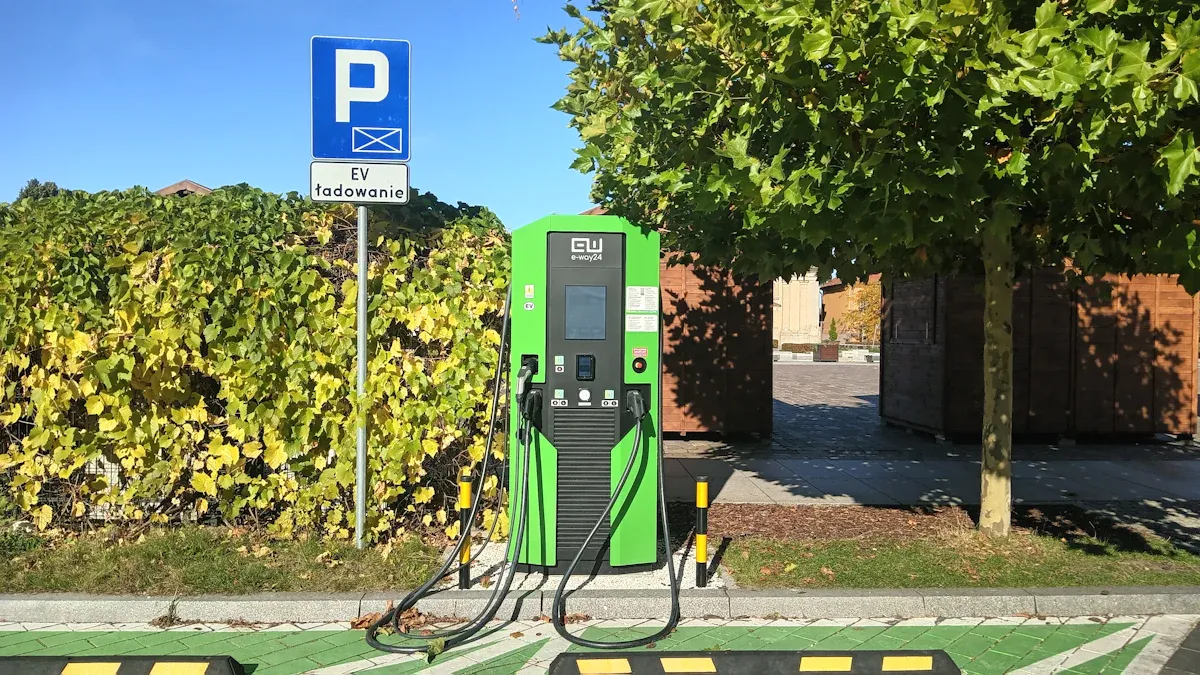
A tenant can successfully install an EV charger in UK apartment buildings. The success of an EV charger installation depends on a professional proposal to the landlord. This UK guide helps tenants prepare a well-researched case for EV charging.
A tenant strengthens their request by exploring various EV charging solutions. Researching options from advanced EV charger manufacturers like TPSON, from a dedicated EV Charger to portable ev chargers, shows initiative. This approach to securing charging for an EV makes a landlord more receptive to the charger installation.
Step 1: Understand Your Position as a UK Tenant
Before a tenant approaches their landlord, they must complete essential homework. A successful request for an EV charger installation begins with a clear understanding of the tenant’s contractual and legal standing. This initial research builds a strong foundation for negotiation.
Review Your Tenancy Agreement
The lease agreement is the first document to examine. It outlines the rules of the rented property and the tenant’s rights and limitations.
Clauses on Alterations and Improvements
A tenant should look for clauses related to making changes to the apartment. Most agreements require landlord consent for any alterations. The installation of an EV charger is considered an alteration. These clauses will state the process for requesting permission. Understanding this process is the first step toward getting the necessary permission for the charger.
Parking Space Designations
The agreement should specify if a parking space is included with the apartment. It will clarify whether the space is allocated, deeded, or part of a communal area. A designated space simplifies the request, as the installation directly benefits the specific tenant. For communal parking in multi-unit buildings, the proposal must consider broader tenant needs.
Know Your Legal Rights
A tenant in the UK has specific rights regarding property modifications. These rights provide a framework for requesting an EV charging point.
The Right to Request Modifications
Tenants have the legal right to request energy efficiency improvements. While EV charging is not explicitly listed in all legislation, the principle supports a tenant’s request. A tenant has rights to ask for reasonable changes. These rights strengthen their position when seeking permission for an installation.
Landlord’s Obligation to Consider
A landlord has an obligation to consider a tenant’s request and cannot unreasonably withhold permission. If a tenant presents a well-researched proposal that addresses safety, costs, and logistics, the landlord must provide a valid reason for refusal. Documenting all communication helps protect a tenant’s rights. Securing landlord approval often depends on a professional approach that respects these rights.
Assess Your Building’s Practicalities
A tenant must also assess the physical realities of their building. A practical plan shows the landlord that the tenant has thought through the installation.
Identifying Your Parking Situation
The tenant needs to confirm their parking arrangement. Is it a dedicated bay in an underground garage or an outdoor space assigned to the apartment? The location affects the complexity and cost of the charging installation.
Pro Tip: Take photos of the parking space, the nearest electrical meter room, and potential cable routes. Visual aids make the proposal much clearer for the landlord.
Checking the Building’s Electrical Capacity
An EV charger adds a significant electrical load. The tenant should investigate if the building’s supply can handle another charger. While a qualified installer like those certified by TPSON will confirm this during a survey, a preliminary check shows foresight.
Finding the Right Contact Person
Finally, the tenant must identify the correct person to contact.
- Is it the private landlord?
- A property management company?
- The building’s freeholder?
Sending the proposal to the right person is crucial. A request for permission sent to the wrong entity causes delays. This initial step ensures the conversation about EV charging starts correctly. A tenant’s rights are best exercised with the correct party.
Step 2: Build a Compelling Proposal to Install an EV Charger
With the initial research complete, a tenant can now construct a persuasive proposal. A strong case does more than just ask for permission; it presents the installation of an EV charger as a logical, beneficial, and well-planned upgrade for the property. This step is about turning a personal need into a shared opportunity for the tenant and the landlord.
Gather Quotes from Certified Installers
A professional proposal requires concrete numbers and expert validation. Obtaining quotes from qualified installers demonstrates seriousness and provides the landlord with a clear understanding of the project’s scope and cost.
Finding OZEV-Authorized Installers
The UK government’s Office for Zero Emission Vehicles (OZEV) maintains a list of authorized installers. Using an OZEV-approved company is non-negotiable. It ensures the installation meets stringent safety standards and makes the project eligible for government grants. A tenant can find these professionals through the official government database. Top-rated companies often have extensive experience with multi-unit dwellings.
- Evigo is an OZEV-authorised installer with a five-star Google rating, specializing in commercial services suitable for apartment buildings.
- Pro EV is another OZEV-approved provider known for creating scalable charging solutions for landlords and larger commercial networks.
What to Ask for in a Quote
A comprehensive quote is more than just a final price. The tenant should request a detailed breakdown to present to the landlord. This should include:
- The cost of the charger hardware (e.g., a smart charger from a provider like TPSON).
- All installation fees, including labor and materials like cabling.
- Any costs for necessary electrical upgrades to the building’s infrastructure.
- Details on the warranty for both the charger and the workmanship.
- Information on software, management platforms, and any ongoing subscription fees for smart features.
Requesting a Site Survey
Before providing a final quote, a reputable installer will conduct a site survey. The tenant should facilitate this. A survey confirms the feasibility of the installation, identifies the best cable routes, and assesses the building’s electrical capacity. The resulting report is a critical document for the proposal, as it provides a professional, third-party assessment of the project, adding significant credibility to the request to install an EV charger.
Highlight Landlord Benefits for EV Charging
A successful proposal frames the EV charger installation as a strategic investment for the landlord, not just an amenity for one tenant. Highlighting the return on investment is key to securing landlord consent.
Increasing Property Value and Appeal
Properties with EV charging facilities are in high demand. A study by a leading property consultancy firm revealed that a rented property with EV charging can command up to a 10% increase in rental income. This powerful statistic shows the landlord a direct financial benefit, making the apartment more attractive and valuable in a competitive market.
Future-Proofing the Building
The UK is rapidly moving toward an electric future. Government mandates are accelerating the transition away from fossil-fuel vehicles. Installing charging infrastructure now is a proactive step that prepares the building for inevitable future demand.
| Vehicle Type | Sales Ban Date |
|---|---|
| New petrol and diesel cars | 2030 |
| Hybrid vehicles (plug-in and full) | 2035 |
By acting now, the landlord avoids more expensive, reactive installations later and positions the building as a modern, forward-thinking residence. The government’s ambitious targets for public charging infrastructure underscore this national shift.
Attracting High-Quality Tenants
The demographic of EV drivers often includes professionals with stable, higher incomes. By offering EV charging, a landlord can attract and retain these desirable tenants. This amenity enhances tenant satisfaction and can lead to longer tenancies and reduced vacancy periods, contributing to a more stable rental income. Improved tenant satisfaction is a significant, if less tangible, return on investment.
Draft Your Formal Written Request
The final step is to compile all the research into a formal, written request. This document should be professional, clear, and comprehensive. Some property management firms, like Pembroke Property Management, even provide a specific “Permission to Install an EV Charger” form, which simplifies the process. If no form exists, the tenant must create a formal letter.
Key Information to Include
A formal request for permission must be thorough. It should act as a complete package, giving the landlord all the information needed to make a decision. Key elements include:
- Your Details: Your name, apartment number, and contact information.
- Clear Request: A direct statement asking for permission to install an EV charger.
- Proposed Plan: Details on the charger model, proposed location, and the certified installer’s information.
- Supporting Documents: Attach the installer’s quote, site survey report, and the installer’s insurance and accreditation certificates.
- Benefits Summary: A brief section reiterating the benefits to the landlord (property value, future-proofing, tenant satisfaction).
- Cost and Funding: A clear proposal on who will cover the cost, mentioning any available OZEV grants for the landlord.
- End-of-Lease Terms: A suggestion for what happens to the charger when you move out (e.g., leaving it in place or removing it).
Presenting Your Research Clearly
Organize the information logically. Use headings, bullet points, and simple language to make the proposal easy to read and digest. The goal is to make it as easy as possible for the landlord to say “yes.” A well-organized document shows professionalism and respect for the landlord’s time. Presenting a single, comprehensive package avoids back-and-forth communication and demonstrates that the tenant has done their due diligence for the home charger installation.
Adopting a Collaborative Tone
The tone of the request is crucial. A tenant should frame the proposal as a collaborative effort to improve the property. Use phrases like “I would like to propose an upgrade that will benefit the building” or “I have researched a solution that I believe you will find valuable.” This approach positions the tenant as a proactive partner rather than a demanding occupant, making the landlord more receptive to the request to install an EV charger. This collaborative spirit is often the final ingredient needed to get the permission for the EV charging project over the line.
Step 3: Navigating Costs and Funding for Your EV Charger Installation

A clear financial plan is the cornerstone of a successful proposal. Understanding the full cost of an EV charger installation, identifying available government funding, and proposing a fair payment structure will significantly increase the chances of getting a landlord’s approval. This step transforms the request from an idea into a tangible, financially viable project.
Breaking Down the Installation Costs
The total cost of a home charger installation involves more than just the price of the charger itself. A tenant must present a complete picture of all potential expenses to the landlord.
Hardware and Installation Fees
The primary expense is the charger unit and its professional installation. Costs can vary depending on the charger’s features (e.g., smart vs. basic, tethered vs. untethered) and the complexity of the installation in the apartment’s designated parking area. A basic 7kW charger installation is the most common for residential buildings in the UK.
The typical installed cost for a 7kW EV charger ranges from £800 to £1,500. This price depends on the model and the specific requirements of the site.
A detailed quote from a certified installer will break down these figures, providing clarity for both the tenant and the landlord.
Ongoing Electricity and Maintenance Costs
Beyond the initial setup, there are ongoing costs to consider. The main recurring expense is the electricity used for charging the EV. A smart charger, like those from advanced providers such as TPSON, can track usage accurately, ensuring the correct person is billed. Additionally, while modern EV chargers require minimal maintenance, it is wise to account for potential service fees or software subscriptions for managed charging solutions.
Wayleave Agreement Costs
If the installation requires cabling to cross land not owned by the landlord of the flat (e.g., a communal garden or a pathway owned by a separate freeholder), a “wayleave agreement” may be necessary. This is a legal document granting the right to install and maintain the cables. Obtaining a wayleave can involve legal fees, and this potential cost should be identified during the site survey.
Government Grants for Landlords in the UK
The UK government offers financial incentives to encourage the rollout of EV charging infrastructure. These grants can significantly reduce the financial burden on the landlord, making the proposal much more attractive.
The OZEV EV Chargepoint Grant for Landlords
The Office for Zero Emission Vehicles (OZEV) provides the EV Chargepoint Grant for landlords. This grant is designed specifically to help property owners install charging points at residential and commercial properties. For a landlord of an apartment building, this grant can cover a substantial portion of the installation cost.
Eligibility Snapshot: To qualify, a landlord must own or manage a property in the UK with designated off-street parking. The grant applies to existing properties, not new constructions, and the applicant can be an individual landlord, a management company, or a freeholder.
How Your Landlord Can Apply
The application process is straightforward and is typically handled by the OZEV-authorized installer. The landlord needs to provide proof of ownership or management of the apartment and its parking. The installer will then claim the grant on the landlord’s behalf and deduct the amount from the final invoice. This simplifies the process, requiring minimal administrative effort from the landlord.
Grant Impact on Total Cost
The OZEV grant provides significant savings. As of 2025, the grant can cover 75% of the cost of buying and installing a charger, up to a maximum of £350 per socket. For a project involving multiple chargers for an apartment building, these savings can be substantial, making the investment far more palatable for the property owner. This government contribution is a powerful incentive to include in the proposal.
Who Pays for What?
With a clear understanding of the total cost and available grants, the final piece of the financial puzzle is deciding who pays. Presenting flexible options shows a collaborative spirit.
Scenario 1: Landlord Covers Costs
In this ideal scenario, the landlord agrees to fund the entire installation. The tenant’s proposal should emphasize how the landlord can leverage the OZEV grant and how the investment increases property value and attracts premium tenants. This option is most likely when the landlord sees the clear long-term financial benefit of future-proofing the building.
Scenario 2: Tenant Offers to Pay
If the landlord is hesitant, a tenant can offer to cover the full cost of the installation for their specific parking space. This removes the financial barrier for the landlord, making it much harder to refuse permission on financial grounds. The tenant benefits from the convenience of home charging, and the landlord’s property is still improved at no cost.
Scenario 3: A Shared Cost Agreement
A compromise is often the most effective solution. A shared cost agreement can take many forms:
- The landlord pays for the infrastructure upgrades, and the tenant pays for their individual charger.
- The tenant and landlord split the post-grant cost of the installation 50/50.
- The tenant pays upfront, and the landlord agrees to a small, temporary rent reduction to offset the cost.
Proposing a shared agreement demonstrates flexibility and a commitment to finding a solution that works for everyone involved in the EV charging project.
Step 4: Choosing the Right EV Charging Solution for the Building

Once a landlord agrees in principle, the next step is selecting the right type of charging infrastructure. A tenant strengthens their proposal by presenting well-researched options. The choice between a private charger and a shared system depends on the building’s layout, budget, and long-term goals.
Option A: A Dedicated, Private Charger
A dedicated home charger is a unit installed in a tenant’s designated parking space, exclusively for their use. This is a common request for a single flat.
Pros: Guaranteed Access and Simple Billing
The main advantage is guaranteed access. A tenant never has to wait for another resident to finish charging. Billing is also straightforward, as the home charger can be linked directly to the electricity supply for that specific flat. This setup gives the EV owner complete control over their charging schedule.
Cons: Higher Upfront Cost and Scalability Issues
A dedicated installation can have a higher initial cost per unit. More importantly, it presents challenges in communal car parks. Adding one charger is simple, but adding several can strain the building’s electrical capacity. This often requires expensive upgrades. There are also safety considerations, as improperly managed cables can create trip hazards. If every tenant installs a different home charger model, like an Ohme Home Pro or a Hypervolt Home 3 Pro, it creates a complex and difficult-to-manage system for the property owner.
Option B: Shared Communal Chargers
This solution involves installing one or more chargers in a communal area for all EV-driving residents to share.
Pros: Lower Cost Per User and Scalable
The initial cost is spread across multiple users, making it a more affordable first step for the building. A shared system is a practical way to introduce EV charging. Installers can implement load balancing technology. This technology intelligently distributes power, allowing more vehicles to receive charging without overloading the system.
Cons: Requires Management and Fair Usage Policy
Shared chargers can become a point of conflict as more tenants switch to an EV. This creates competition for access. The system requires a clear fair usage policy and a management platform to handle scheduling and billing. Without proper oversight, it is not a viable long-term solution for an apartment.
The Role of Third-Party Management Companies
For multi-unit buildings, a professionally managed solution is often the best path forward. A tenant can propose this to a landlord as a hassle-free way to upgrade the property.
What is a Charge Point Operator (CPO)?
A Charge Point Operator (CPO) is a company that installs, manages, and maintains EV charging infrastructure. They handle the entire process, from the initial site survey and installation to ongoing operations.
How CPOs Simplify Billing and Maintenance
CPOs remove the administrative burden from the landlord. They provide a user-friendly app for tenants to start a charging session and pay for the electricity they use. The CPO handles all billing, customer service, and maintenance of the charger hardware. This ensures the system remains safe and operational. Advanced providers like TPSON offer smart chargers that integrate seamlessly with these management platforms.
Making the Case for a Managed Solution
A managed solution from a specialized CPO is the smartest long-term investment. It makes it easy to charge your EV. Companies like Pod Point, Boost EV, and EV Park specialize in residential apartment blocks. They offer fully funded models where they cover the installation cost in exchange for operating the charger network. This provides a professional, scalable, and zero-cost option for the property owner, making it an extremely compelling proposal for any apartment.
What to Do If Installation Isn’t an Option
Sometimes, a home charger installation is not feasible. A landlord may refuse permission, or the building’s infrastructure might not support it. In these cases, a tenant has several excellent alternatives for keeping their EV powered. These options ensure that driving an electric vehicle remains convenient without a dedicated home charger.
Exploring Public EV Charging Networks
The public charging infrastructure is a lifeline for drivers without a home charger. The network is expanding rapidly, although availability varies by region.
Finding Nearby Rapid Chargers
Rapid chargers are the fastest way to power an EV, often adding significant range in under an hour. They are commonly found at motorway service stations and retail parks. However, the distribution of public charging points is uneven. London and the South East have the highest concentration, while other areas have fewer options. A tenant should identify their local rapid charger locations.
| Network | Number of Charge Points | Focus/Type |
|---|---|---|
| Shell Recharge ubitricity | Largest count of public charge points | Lamp-post-based on-street chargers in urban areas |
| BP Pulse | Over 8,000 charge points | Mix of slow, fast, and rapid chargers |
| InstaVolt | Specializes in rapid charging | Rapid charging units at key locations |
| Pod Point | Strong in supermarket car parks | Destination charging at retail parks and hotels |
Using Apps like Zap-Map or PlugShare
Mobile apps are essential tools for navigating the public charging landscape. Applications like Zap-Map and PlugShare provide real-time maps of charger locations. They show the charger type, network provider, and operational status. These apps help drivers plan journeys and find available charging stations nearby.
Subscription vs. Pay-As-You-Go Models
The cost of public charging depends on the network and payment model. Pay-as-you-go (PAYG) is simple but often more expensive per kWh. Regular users can save money with a monthly subscription, which offers a lower rate.
| Network | Pay-as-you-go (p/kWh) | Subscription (p/kWh) | Subscription Cost (per month) |
|---|---|---|---|
| BP Pulse | 89 | 69 | £7.85 |
| IONITY | 79 | 53 or 43 | £5.49 or £10.50 |
| Fastned | 74 | 52 | £9.98 |
Leveraging Workplace Charging Schemes
Charging an EV at work is another practical solution. Many employers in the UK are installing charge points to support their staff.
Asking Your Employer About EV Charging
Employees can ask their company about installing EV charging facilities. They can mention the government’s Workplace Charging Scheme (WCS). This grant provides businesses up to £350 per socket, making the installation more affordable. Presenting this information can encourage an employer to invest in charging infrastructure.
Benefits of Charging at Work
Workplace charging offers significant advantages. It eliminates range anxiety, as the car charges during the workday. Employers may offer this service for free or at a low cost, reducing an employee’s overall motoring expenses. This reliable access to charging makes EV ownership much more practical.
Using Community and Peer-to-Peer Charging
Community charging networks allow individuals to share their private home chargers with others.
How Charger-Sharing Apps Work
Apps like Co Charger, Zap-Home, and JustCharge connect EV drivers with local charger hosts. A host lists their charger on the app, sets their price, and defines availability. Drivers can then book and pay for a charging session through the platform. This model utilizes existing infrastructure to expand public charging access.
Finding a Neighbor with a Charger
This peer-to-peer model makes it possible to find a charger on a nearby street. It is a convenient option for those living in apartments without off-street parking. While the app handles payments, it is wise to have a clear understanding with the host regarding access and usage to ensure a smooth experience.
A tenant can secure an EV charging solution with a strategic approach. A professional proposal is the most effective tool for a successful installation. It shows a landlord the benefits of a new EV charger from advanced providers like TPSON. This clear communication transforms a personal request into a shared property upgrade. A well-researched case creates a negotiation that benefits everyone involved.
FAQ
Can a landlord legally refuse the request?
A landlord in the UK must provide a valid reason for refusal. They cannot unreasonably withhold consent for a well-researched proposal. A tenant should document all communication to protect their rights during the process to install an EV charger.
What happens to the charger when a tenant moves out?
The tenant and landlord should agree on this beforehand.
- The tenant can leave the charger as a property fixture.
- The tenant can sell the charger to the landlord.
- The tenant can remove the charger and restore the space.
Is a smart charger necessary?
A smart charger is highly recommended. It allows for accurate electricity tracking, which simplifies billing. Advanced providers like TPSON offer smart chargers that integrate with management systems for easy EV charging. This technology is essential for a shared charging setup.
How long does the installation process take?
A standard charger installation typically takes a few hours. The entire process, from proposal to completion, can take several weeks. This timeline depends on landlord approval and the installer’s schedule.
What if the building’s electricity supply is insufficient?
A site survey will determine this. The installer may propose load-balancing solutions or necessary infrastructure upgrades. The cost for these upgrades would be part of the overall project negotiation.
Can a tenant get a charger in a communal car park?
Yes, but it requires more planning. A tenant can propose a dedicated charger for their space or a shared solution for all residents. A professionally managed system is often the best approach for communal areas.