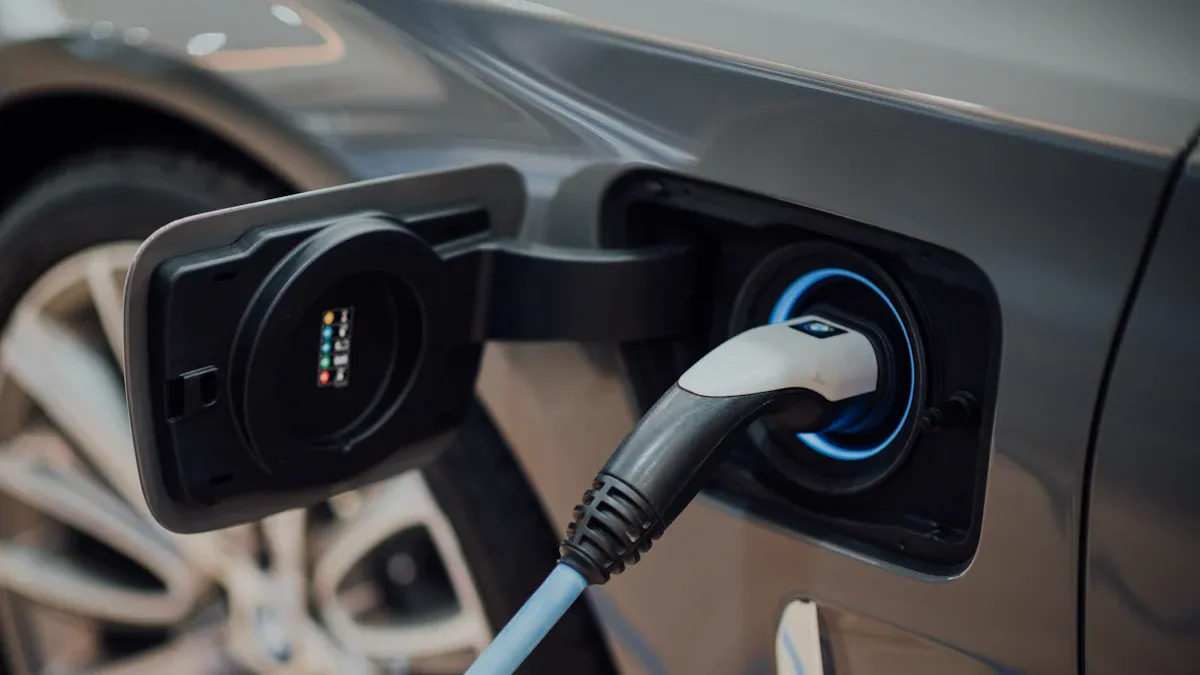
Dynamic load management is a smart technology for electric vehicles. This electric management system adjusts the charging power delivered to an EV.
This smart process optimizes EV charging for electric vehicles. It allows EV chargers to work safely. The charger adjusts charging for the EV. Производители зарядных устройств для электромобилей, like TPSON, provide these advanced Решения для зарядки электромобилей. Their EV chargers, including портативные зарядные устройства, offer better home charging for electric vehicles. This Зарядное устройство для электромобилей ensures the charger provides optimal charging for the vehicle, protecting your electric system.
What Is Dynamic Load Management and Why Does Your Home Need It?
Many homeowners embrace electric vehicles for their efficiency and environmental benefits. However, the process of charging an EV introduces a significant new electrical load. This is where EV charging load management becomes a critical consideration. It ensures the home’s electrical system can handle the demand safely and efficiently.
The Core Problem: Limited Home Electrical Capacity
Every home has a finite amount of electrical power it can use at one time. This limit is the central challenge that dynamic load management solves, especially when introducing a high-power device like an Зарядное устройство для электромобилей.
Understanding Your Home’s Main Breaker
Think of your home’s main electrical panel as the heart of its power system. The main breaker is the guardian of this system. It has a specific capacity, measured in amps (e.g., 100A, 200A), which represents the maximum amount of electricity your entire home can draw simultaneously. If the total demand from all your appliances, lights, and devices exceeds this limit, the breaker trips, cutting off power to prevent dangerous overloads and potential fires.
The Risk of Overload from High-Power EV Charging
A standard wall outlet provides slow charging for an EV. For faster charging, most owners install a Level 2 charger. These powerful EV chargers can draw a substantial amount of energy.
| Уровень зарядки | Выходная мощность (кВт) |
|---|---|
| Уровень 1 | 2,3-3 кВт |
| Уровень 2 | 7-22 кВт |
| Уровень 3 | 50-350 кВт |
A common Level 2 charger might use 7 kW to 11 kW of power. This single device can consume as much electricity as an electric oven, a water heater, and a clothes dryer running all at once. Adding this high-demand EV charging to a home’s existing load, especially during peak hours, creates a high risk of tripping the main breaker.
Defining Dynamic Load Management
Dynamic load management offers a smart solution to this power puzzle. It moves beyond simple on/off charging to provide intelligent, responsive power delivery. Technologically advanced EV charging solution providers, like TPSON, integrate this capability into their EV chargers for a seamless user experience.
Fixed-Rate Charging vs. Dynamic Power Adjustment
Without an intelligent management system, an electrician must set an EV charger to a fixed, conservative power level to avoid overloads. This is a form of static management. The charger will always draw that same amount of power, even when the rest of the home is using very little energy.
Dynamic power allocation works differently. It is a key feature of advanced EV charging load management. The system continuously adjusts the power sent to the EV based on the home’s total consumption. This smart management ensures the vehicle receives the fastest possible charging without ever endangering the electrical panel.
How Real-Time Data Prevents Tripped Breakers
The system’s effectiveness comes from its use of real-time monitoring. A sensor installed in the main electrical panel constantly measures the total power being used by the household. This data is sent to the smart EV charger.
Как это работает: The charger’s control logic uses this real-time monitoring to calculate how much spare capacity is available. If you turn on a large appliance, the system detects the spike in energy use and instantly reduces the charging rate for the EV. This proactive adjustment keeps the total load safely below the main breaker’s limit, preventing outages.
An Analogy: The Air Traffic Controller for Your Electricity
Understanding EV charging load management is easier with a simple analogy. Imagine your home’s electrical capacity is a small airport with a single runway.
Managing Your Home’s Electrical “Traffic”
In this scenario, every appliance wanting power is an airplane wanting to land. The EV is a large cargo plane requiring a lot of runway space. A dynamic load management system acts as the air traffic controller. Its job is to manage all incoming and outgoing “traffic” (energy flow) to prevent a crash (an electrical overload). This smart monitoring ensures smooth operations at all times.
Prioritizing Appliances Over EV Charging
The air traffic controller has clear priorities. “Essential flights,” like your refrigerator, oven, and HVAC system, always get landing priority. The EV “cargo plane” is instructed to circle in a holding pattern—or in this case, receive a lower charging rate—when the runway is busy. As soon as other appliances turn off and the “runway” is clear, the controller gives the EV full clearance to land, ramping the charging speed back to maximum. This management ensures the vehicle gets the energy it needs without disrupting the household. The real-time monitoring and dynamic power allocation make this entire process automatic and safe for the electric system.
How EV Charging Load Management Works in a Real-World Setting

The theory behind dynamic load management is impressive, but its practical application is what makes it a game-changer for EV owners. The system operates seamlessly in the background through the coordinated action of three key pieces of hardware and software.
The Three Essential Components
An effective EV charging load management system relies on a trio of components working in perfect harmony. Each part has a distinct and critical role in the process.
The Smart EV Charger (EVSE)
The foundation of the system is the EV charger itself. It must be a “smart” device, capable of adjusting its power output in real-time. Basic EV chargers lack this capability. Technologically advanced providers like TPSON offer intelligent EV charging solutions with this feature built-in. Other examples of smart EV chargers with integrated management include:
- Solax Smart EV Charger
- Project EV models
- Sigenergy SigenStor
These smart EV chargers can receive data and change their charging rate accordingly, making them the active component in the energy management system.
The Current Transformer (CT) Sensor
The Current Transformer (CT) sensor is the system’s vigilant watchdog. A qualified electrician installs this small device inside the home’s main electrical panel. Its sole job is to measure the total amount of electricity the entire household is consuming at any given moment. It then communicates this vital information to the smart EV charger.
The Control Logic or “Brain”
The control logic is the software or firmware inside the smart charger. This “brain” receives the constant stream of energy usage data from the CT sensor. It continuously calculates the home’s available electrical capacity and makes the final decision, telling the charger precisely how much power it can safely deliver to the EV without causing an overload. This management is the core of the smart charging process.
A Step-by-Step Scenario: Your Home in Action
To understand EV charging load management, let’s walk through a typical evening and morning.
Baseline: Maximum Speed Overnight Charging
At 11 PM, the house is quiet. The lights are off, and major appliances are dormant. The system detects very low energy consumption. The smart charger uses this opportunity to deliver the maximum possible power to the EV, ensuring the fastest charging speed for the vehicle.
High-Demand Event: Morning Routine Begins
At 7 AM, the household wakes up. Someone turns on the electric stove for breakfast, the coffee maker starts brewing, and the water heater kicks in. The CT sensor immediately detects this significant spike in energy demand.
Automatic Response: Charging Power Ramps Down
The charger’s control logic instantly processes the new data. To keep the total load safely below the main breaker’s limit, it automatically reduces the power flowing to the EV. The vehicle continues charging, but at a much slower rate.
Return to Normal: Charging Power Ramps Back Up
By 8 AM, the morning rush is over. Appliances are off, and people have left for the day. The system sees the household energy demand drop back to a low level. The charger’s logic responds by ramping the EV charging power back up to its maximum safe speed.
Built-in Safety and Prioritization Protocols
Safety is the primary objective of any EV charging installation. This smart management system adds multiple layers of automated protection.
Ensuring Household Loads Always Come First
The system is programmed with a clear hierarchy: the home’s needs are always the top priority. The EV only receives the surplus energy that is not being used by other appliances. This ensures that running your oven will never be interrupted by your EV charging.
Fail-Safes and Default Power Settings
Professional EV chargers are designed with safety standards in mind. If the communication between the CT sensor and the charger is ever lost, the charger will revert to a pre-set, low-power default setting to guarantee safety.
Безопасность превыше всего: These systems operate within strict electrical codes. For instance, standards like NEC 625.42 treat EV charging as a continuous load. This requires the circuit to operate at no more than 80% of its maximum rating, a rule the management system automatically respects to prevent overheating and ensure long-term safety.
Major Benefits of Dynamic Load Management for Homeowners
Adopting dynamic load management offers homeowners significant advantages that extend beyond simple convenience. This technology provides tangible financial, safety, and performance benefits. It transforms a standard EV charging setup into an intelligent, optimized system. These benefits make it a wise investment for any EV owner.
Benefit 1: Avoid Costly Electrical Panel Upgrades
One of the most compelling benefits of EV charging load management is its potential to save homeowners a substantial amount of money. Many older homes have electrical panels that cannot support a high-power EV charger alongside normal household loads.
The High Cost of a Main Service Upgrade
Without an intelligent management system, the only solution for an under-capacity panel is a full service upgrade. This process is both expensive and disruptive. Costs can vary widely based on several factors:
- Labor rates
- Panel type
- The need for additional wiring
- Плата за разрешение
- The overall complexity of the job
Большинство homeowners spend a significant amount on a circuit breaker panel replacement. The total expense for a main service upgrade can easily run into the thousands of dollars.
| Категория | Типичный диапазон стоимости |
|---|---|
| Overall Replacement | $800 – $2,900+ |
| Труд | $50 – $100 per hour |
| Permit | $100 – $300 |
| New Wiring | $600 – $2,300 |

How DLM Safely Maximizes Your Existing Panel
EV charging load management provides a smart, cost-effective alternative. The system allows a high-power EV charger to be installed safely on an existing panel, even one with limited capacity. It works by intelligently managing the power flow. The charger only uses the available spare capacity. This approach maximizes the utility of the current electric infrastructure. Homeowners can enjoy fast EV charging without the massive expense and hassle of a panel upgrade.
Benefit 2: Enhance Home Electrical Safety
Safety is a paramount concern with any high-power electric appliance. EV charging load management acts as a crucial safety layer, actively protecting the home’s electrical system from dangerous conditions.
An Automated Safety Net Against Overloads
The system functions as an automated safety net. It constantly monitors the total electrical load on the home. This continuous oversight prevents the combined demand of the EV charger and other appliances from exceeding the main breaker’s limit. This proactive management eliminates the primary cause of electrical overloads. The EV gets the power it needs, but never at the expense of the system’s integrity.
Reducing the Risk of Tripped Breakers and Fire
An overloaded circuit is a common issue that can lead to electrical fires. There are documented cases where an improper EV charger installation on an older system led to extremely hot wiring that was close to ignition.
A dynamic load management system directly mitigates this risk. By automatically reducing the charging power during periods of high household demand, it prevents the wires from overheating. This intelligent control significantly reduces the chance of tripped breakers and, more importantly, the risk of a devastating electrical fire. It ensures the EV charging process is always safe.
Benefit 3: Maximize Your EV Charging Speed
Many people assume that if their panel has limited capacity, they must settle for slow EV charging forever. This is a common misconception that dynamic management solves, delivering superior charging efficiency.
The Problem with a Permanently Low Power Setting
A conventional solution for a limited panel is to have an electrician permanently set the EV charger to a very low power level (e.g., 16 amps instead of 40 amps). This “static” setting avoids overloads but severely cripples the charger’s performance. The EV will charge at this slow rate even when the rest of the home is using almost no power, wasting a significant opportunity for faster charging. This results in poor charging efficiency.
Capitalizing on Every Amp of Available Power
A smart charger with dynamic management unlocks the full potential of your connection. The system allows the charger to use every available amp of power when the home’s load is low.
- During the day: When the oven and dryer are running, the charger might deliver a lower power level to the EV.
- Ночь: When the house is asleep, the charger ramps up to its maximum possible speed.
This intelligent power modulation ensures the vehicle receives the fastest possible charge at any given moment. Technologically advanced EV chargers from providers like TPSON excel at this, giving the EV owner the best of both worlds: safety and speed. This management maximizes the charging rate for the vehicle.
Benefit 4: Future-Proof Your All-Electric Home
Investing in dynamic load management is a strategic decision that prepares a household for the future. The global shift towards electrification is not limited to transportation. As homes adopt more high-power electric devices, managing total energy consumption becomes essential. DLM provides the flexible infrastructure needed to support this transition seamlessly.
Preparing for a Second EV
Many households will eventually own more than one electric vehicle. Adding a second EV charger presents a significant electrical challenge. Without an intelligent management system, a family might need to install a second dedicated high-power circuit, a process that could trigger a costly main panel upgrade.
Dynamic load management, particularly systems with multi-charger balancing, offers an elegant solution. This technology allows two or more EV chargers to share a single circuit’s capacity. The system intelligently distributes the available power between each connected EV. If only one vehicle is charging, it receives the full power. When a second EV plugs in, the system splits the power between them. This ensures both vehicles charge efficiently without overloading the circuit. This capability makes adding a second EV simple and cost-effective.
Supporting Future Electric Appliances
The modern home is steadily moving away from fossil fuels. Homeowners are replacing gas furnaces with electric heat pumps and swapping gas stoves for powerful induction cooktops. Each new electric appliance increases the overall demand on the electrical panel. An EV owner must account for these future additions.
Even appliances in standby mode contribute to the baseline load. While some regulations aim for very low standby power, real-world consumption can be higher.
- A regulation introduced in October 2010 suggests an appliance should use less than half a watt in standby.
- However, one induction hob was measured showing 150 W on a power meter in standby.
- Another study found an induction hob’s average standby use was around 25 Watts over ten hours.
A dynamic load management system makes a home ready for this all-electric future. It automatically accounts for the power used by a new heat pump or induction stove. The system will simply reduce the charging rate for the EV when these appliances are active. This adaptability ensures an owner can add new electric devices without worrying about electrical capacity. The EV continues to charge, and the home operates safely. Technologically advanced EV charging solutions from providers like TPSON build this foresight into their products, preparing users for the next generation of home energy needs. This makes DLM a cornerstone for any forward-thinking EV owner.
Exploring Types of Dynamic Load Management Setups
Dynamic load management is not a one-size-fits-all technology. Different types of EV chargers and household needs require distinct setups. Understanding these variations helps an EV owner select the right system for their specific situation. The main categories involve single-charger balancing, multi-charger coordination, and how the management logic is integrated.
Single-Charger Dynamic Load Management
This configuration is the most straightforward and widely used form of EV charging load management in residential settings. It focuses on balancing the power needs of one EV with the rest of the home.
The Most Common Residential Setup
Most homes with a single electric vehicle use this setup. The system’s goal is simple: prevent the EV charger from overloading the main electrical panel. It is an ideal solution for homeowners who want to install a powerful Level 2 charger without upgrading their electrical service. Many modern EV chargers offer this capability.
- io7 Load management
- io6 Load management
- io5 Load management
Balancing One Charger Against the Entire Home
In this model, a sensor monitors the total energy consumption of the house. The smart charger receives this data and adjusts its charging rate. If the home’s energy use is high, the charger reduces power to the EV. When household demand drops, the charger increases power. This constant balancing ensures the EV gets the fastest possible charging without compromising the home’s electrical stability.
Multi-Charger EV Charging Load Balancing
As households adopt a second EV, managing the charging for both vehicles becomes a new challenge. EV charging load balancing is a specialized form of management designed for this exact scenario.
For Households with Two or More EVs
A home with two EV chargers on a single circuit requires intelligent coordination. Simply running both EV chargers at full power would almost certainly trip a breaker. EV charging load balancing allows multiple EV chargers to operate harmoniously on one shared circuit, making it a cost-effective solution for multi-EV families.
How Chargers Intelligently Share a Single Circuit
This smart system sets a maximum power limit for the circuit the EV chargers share. The chargers then communicate with each other to manage the available energy.
Example Scenario: If one vehicle is plugged in, it receives the full available power for the fastest charging. When a second EV plugs in, the system intelligently splits the power between both chargers. This dynamic balancing ensures both vehicles receive a charge without overloading the circuit.
Integrated vs. External DLM Systems
The control logic for EV charging load management can either be built into the charger or managed by a separate device. The choice between these types of EV chargers depends on system complexity and user preference.
Chargers with Built-In DLM Capabilities
Many modern EV chargers come with integrated energy management features. Technologically advanced providers like TPSON offer smart EV chargers with this functionality built-in. The Garo Entity 7.4kW Socket Charger is another example that includes load management for optimal energy balancing. This all-in-one approach simplifies installation and configuration, as the charger is designed from the ground up for this purpose.
Using an External Energy Management Device
For more complex or commercial installations, an external device may control the management. This setup is common for properties with multiple types of EV chargers or when integrating with other building energy systems. A commercial station like the GARO 2x22kW Outlets Metered & Ethernet might use an external load management system to coordinate charging across several bays. This approach offers greater flexibility for large-scale EV charging operations.
How to Choose and Install a Home EV Charging Load Management System
Selecting and implementing an EV charging load management system involves a few critical steps. A homeowner must assess their current electric setup, choose the right hardware, and ensure a safe, professional installation. This process guarantees an efficient and secure EV charging experience.
Step 1: Assess Your Home’s Electrical System
The first step is understanding the home’s electrical capacity. This information is located on the main electrical panel and is crucial for determining the need for EV charging load management. A proper assessment prevents future issues with the EV charging installation.
How to Read Your Electrical Panel Label
The main breaker in an electrical panel has a large number on its switch, typically 100, 150, or 200. This number represents the total amperage capacity for the entire house.
💡 Совет профессионала: A homeowner can find this main breaker at the top or bottom of the panel. The amperage rating printed on it is the most important piece of information for planning an EV charger installation.
When is DLM a “Must-Have” vs. a “Nice-to-Have”?
EV charging load management is a “must-have” for homes with 100A service or less, especially if they use other large electric appliances. For homes with 200A service and minimal electric appliance usage, it is a “nice-to-have” feature that provides safety and future-proofing for a second EV. The installation of any powerful EV charger benefits from this management.
Step 2: Select the Right DLM-Capable Charger
Choosing the right charger is essential for a successful installation. Not all EV chargers offer dynamic management. A homeowner should look for specific features that enable smart EV charging.
Checklist of Key Features to Look For
When selecting a charger, a buyer should compare several key aspects. Technologically advanced providers like TPSON design their EV chargers with these capabilities. Key considerations include:
- Adjustable Amperage: The charger must be able to vary its power output based on external signals.
- Протокол связи: The charger should support protocols like OCPP 1.6 or higher to communicate with sensors and other devices.
- DLM Type: Decide between local management (for 2-10 chargers, no internet needed) or cloud-based systems for remote monitoring.
- Сертификаты безопасности: The charger must have proper safety credentials.
The difference between a dynamic and a static management system is significant. A dynamic system optimizes the charging for the EV.
| Характеристика | Динамическое управление нагрузкой | Static Load Management |
|---|---|---|
| Power Utilisation | 85-95% of available capacity | 40-60% of available capacity |
| Overload Risk | Near zero with monitoring | 15-20% during peak demand |
| Гибкость | Responds instantly to demand | Maintains fixed power allocations |

Verifying CT Sensor Compatibility
The chosen charger must be compatible with a Current Transformer (CT) sensor. This sensor is the eyes and ears of the management system. The charger’s technical specifications will list compatible CT sensor models. This compatibility is vital for the installation to function correctly.
Importance of UL/ETL Safety Certifications
Safety is non-negotiable. A homeowner must only purchase EV chargers that are certified by a recognized safety organization like UL or ETL. These certifications confirm the charger has undergone rigorous testing for electric safety. This is a critical part of the installation process for any EV. The certification ensures the EV charger is safe for charging the vehicle.
Step 3: The Professional Installation Process
A proper installation is the final piece of the puzzle. This is not a DIY project. A qualified professional ensures the system is safe, compliant, and effective for EV charging.
Why a Qualified Electrician is Essential
A qualified electrician is essential for the installation of an EV charger. They understand local electric codes, can safely work inside a live electrical panel, and know how to correctly configure the system. A professional installation protects the EV, the home, and its occupants. The charging installation for an EV must be perfect.
Installing the CT Sensor at the Main Panel
The electrician will perform the critical step of the installation: placing the CT sensor. This device clamps around the main service wires coming into the panel. This part of the installation allows it to measure the total power the household is using. The correct installation of this sensor is key for the entire system.
Connecting and Configuring the System
Finally, the electrician connects the charger to its dedicated circuit and links it to the CT sensor. They will then configure the charger’s software, setting the main breaker’s maximum amperage. This configuration tells the charger the safety limit it must not exceed. This final step in the installation activates the smart charging for the EV.
Advanced Integrations: DLM with Solar and Smart Home Tech

Dynamic load management evolves beyond simple overload protection. It unlocks advanced energy strategies when paired with other smart technologies. This integration transforms an Зарядное устройство для электромобилей into a central component of an intelligent home energy ecosystem, enhancing both savings and efficiency.
Pairing DLM with a Home Solar Installation
For homeowners with solar panels, ev charging load management creates a powerful synergy. The system intelligently bridges the gap between energy generation and consumption, ensuring every solar watt is used effectively for EV charging.
Prioritizing Self-Generated Solar Power for Charging
A smart management system can monitor a home’s solar production in real-time. When the solar panels generate more energy than the house is using, the system identifies this surplus. It then automatically directs that clean, free power to the EV.
This process, often called “solar charging” or “eco-charging,” ensures the EV is charging using self-generated electricity. The EV owner can prioritize green energy for their vehicle, reducing their carbon footprint. This smart charging method is a key feature for any eco-conscious EV driver.
Maximizing Your Return on Solar Investment
Using solar power for EV charging directly improves a homeowner’s return on investment. Every kilowatt-hour of solar energy sent to the EV is one less kilowatt-hour purchased from the grid. This leads to significant reductions in electric bills.
- The system maximizes self-consumption of solar energy.
- It reduces reliance on grid power for EV charging.
- This enhances the overall financial efficiency of the solar and EV combination. This intelligent energy management makes owning an EV and solar panels more economical.
Optimizing for Time-of-Use (TOU) Utility Rates
Many utility companies offer Time-of-Use (TOU) rates, where electricity costs vary throughout the day. EV charging load management works with these rate structures to minimize charging costs.
How DLM and Scheduled Charging Work Together
Most smart EV chargers allow users to schedule charging sessions. An EV owner can set their vehicle to begin charging when off-peak rates start, typically late at night. The management system adds a layer of safety to this schedule. If an appliance like a heater unexpectedly turns on during the scheduled charging time, the system will still throttle the EV charging power to prevent an overload. This combination delivers both cost savings and peace of mind.
Aligning Max-Power Charging with Off-Peak Rates
The ultimate goal is to get the fastest charging at the lowest price. A DLM system achieves this by allowing the EV to draw maximum power during the cheapest off-peak hours. The system ensures this high-power charging session remains safely within the panel’s limits. Technologically advanced providers like TPSON build their chargers to excel at this, giving the EV owner a fully optimized charging experience. This smart approach to energy use ensures the EV is ready to go each morning at the lowest possible cost.
Dynamic load management is a critical technology for the modern EV. It transforms home EV charging into a smart, integrated system. EV charging load management provides a safe, cost-effective method for charging an EV. This smart management delivers efficiency. The system’s efficient load management maximizes charging speed for the EV. This avoids expensive panel upgrades. Technologically advanced EV chargers offer this feature. Choosing a charger with efficient load management is the smartest path forward. This EV charging load management ensures a seamless experience for every EV owner and their electric vehicle. The smart management prepares the EV for the future. The EV gets optimal charging. The EV is always ready.
ЧАСТО ЗАДАВАЕМЫЕ ВОПРОСЫ
Is dynamic load management necessary for every home?
DLM is essential for homes with limited electrical capacity. For homes with larger panels, it is a valuable feature for enhancing safety and future-proofing. It ensures the electrical system always operates within safe limits, preventing overloads.
Can a homeowner install a DLM system?
No. A qualified electrician must perform the installation. This process involves working inside the main electrical panel and requires professional expertise.
⚠️ Предупреждение о безопасности: Attempting a DIY installation is extremely dangerous and can void product warranties. Always hire a professional.
Does DLM work with any EV charger?
DLM requires a “smart” EV charger capable of adjusting its power output. Basic chargers lack this function. Technologically advanced providers like TPSON design their EV chargers with this essential integrated capability for seamless energy management.
Will DLM slow down my EV charging all the time?
No. The system only reduces charging speed when household energy demand is high. It automatically returns to maximum charging speed when power becomes available. This process typically happens overnight, ensuring an optimal charge.
What happens if the DLM sensor fails?
Smart chargers have built-in safety protocols. If communication with the sensor is lost, the charger automatically reverts to a pre-set, low-power default setting. This fail-safe ensures the home’s electrical system remains protected from potential overloads.
How does DLM handle two electric vehicles?
Systems with multi-charger balancing intelligently share power from a single circuit. The system gives full power to one EV. When a second EV plugs in, it splits the available power between both vehicles, ensuring both charge efficiently.