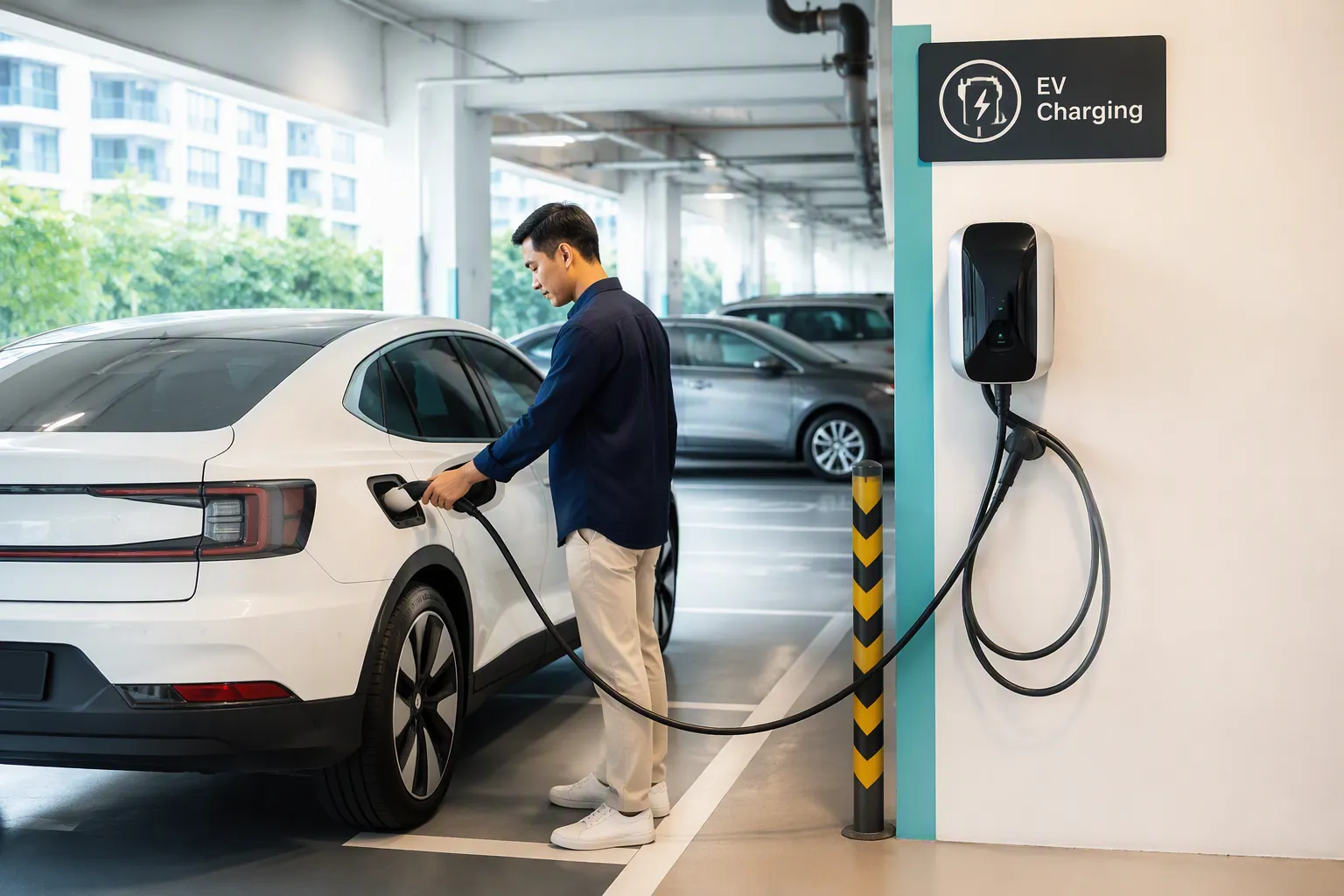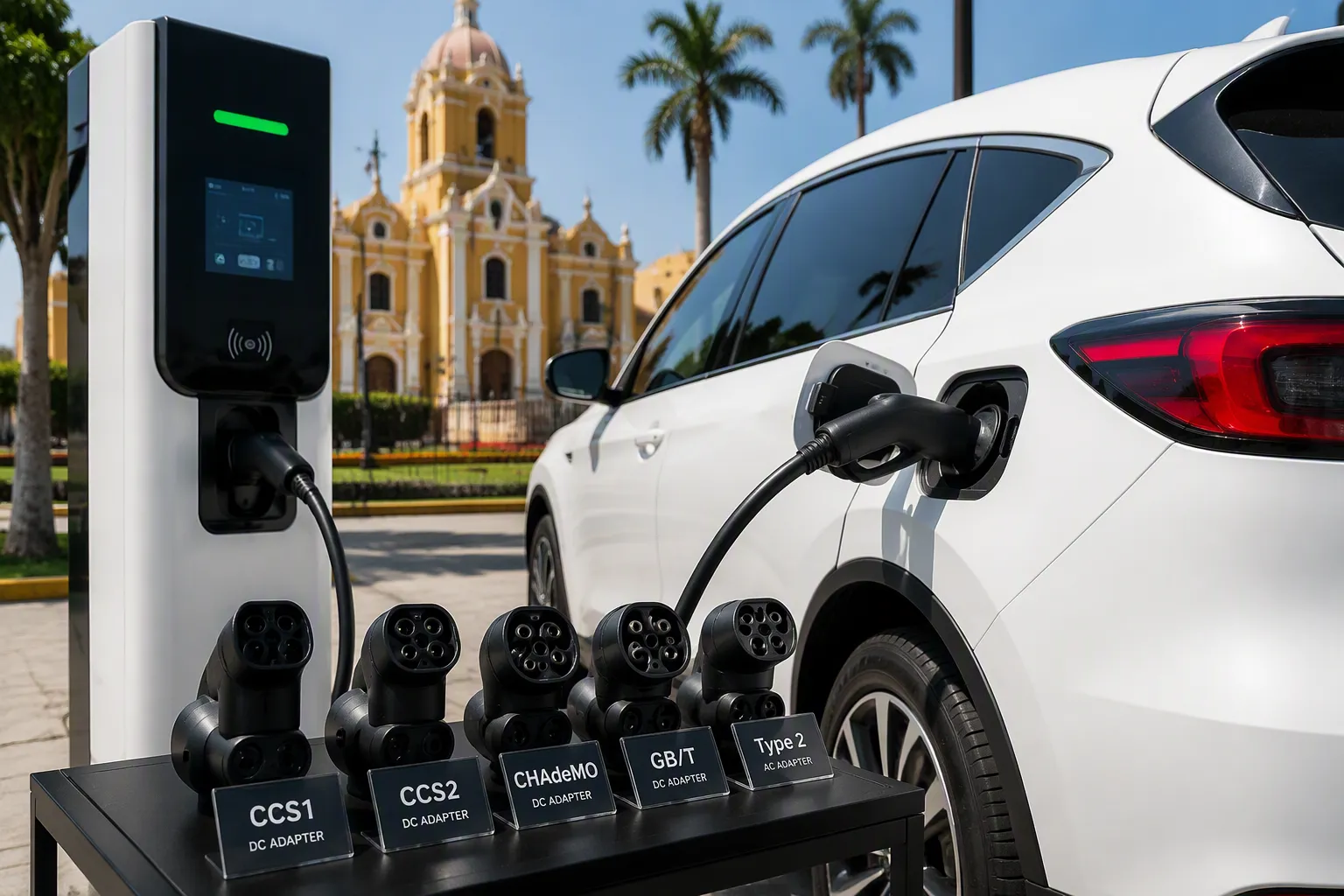
An EV charger cable retractor is a practical way to keep charging areas safe, organized, and consistently usable—especially where cables are long, heavy, and used multiple times per day. The right choice depends on whether the site is residential (single user, predictable parking position) or commercial (many users, high turnover, stronger abuse and uptime requirements). The most effective setups pair a retractor (or guided overhead support) with a secure holster, a route that avoids pinch points, and a maintenance routine that catches wear early.
Safety boundary: Cable retractors should not force tight bends or constant spring tension at the connector end. If a retractor causes the cable to kink, twist, or scrape, it is solving aesthetics while increasing failure risk. In high-use environments, mechanical wear becomes a reliability and safety issue.
- What an EV cable retractor does (and what it doesn’t)
- Residential vs commercial: different jobs, different risks
- Retraction options: reels, overhead guides, and hybrid systems
- Buyer checklist: specs and features that matter
- Data charts: power levels, cable lengths, and why handling differs
- Deployment templates for garages, workplaces, and travel centers
- Maintenance & inspection plan (to protect uptime)
- FAQ (8)
- Referensi dan tautan eksternal
What an EV cable retractor does (and what it doesn’t)
A cable retractor’s job is to keep the EVSE cable off the ground, reduce trip hazards, and create a consistent “grab–plug–return” workflow. It also protects the connector by encouraging holstered storage. A retractor does tidak increase charging speed, improve power delivery, or replace proper installation. If a station’s cable is too short, too stiff, or routed through a pinch point, retraction hardware cannot fix the underlying layout problem.
The business case is simple: cables are expensive and downtime is costly. ChargePoint emphasizes station uptime, driver experience, and operational scale as core goals for charging programs—cable management is one of the few “low-tech” elements that directly influences all three. (ChargePoint)
Residential vs commercial: different jobs, different risks
Residential (home garage, driveway)
- Fewer charging sessions per day
- Predictable vehicle position
- Primary goal: prevent cable clutter and door/tire damage
- Secondary goal: make daily charging effortless so it actually happens
Commercial (workplace, retail, fleets, public sites)
- Many users, inconsistent behavior
- Higher cable abuse: drops, yanks, dragging, run-overs
- Primary goal: reduce failures and keep bays clear
- Secondary goal: standardize the driver experience across users
Residential success metric
Consistency
A tidy setup makes “charge at home” a default habit, which Car and Driver highlights as a key benefit of EV ownership.
Commercial success metric
Waktu operasional
Lower trip hazards and fewer damaged cables reduce out-of-service events and improve throughput.
Most common physical failure
Connector impacts
Dropped handles and dragged ends lead to cracked housings and intermittent connection problems over time.
Most overlooked risk
Tight bend radius
Retractors that force small coils can create long-term fatigue in thick Level 2 cables.
Retraction options: reels, overhead guides, and hybrid systems
Option 1: Spring retractable reel (wall or ceiling)
This is the familiar “shop reel” concept. It can work in a garage when the cable is lightweight enough and the reel has a large drum diameter. The major risk is excessive tension or tight winding that encourages kinks—especially with thicker Level 2 cords.
Paling cocok
- Residential garages with consistent parking position
- Dedicated bay where cable pull path is straight
Option 2: Overhead support (track, pulley, or guided drop)
Overhead guidance is often more cable-friendly than tight spooling because it supports the weight and keeps the cable off the floor without forcing it into a coil. It also works well when charge ports vary across vehicles.
Paling cocok
- Two-car garages with one EVSE shared between vehicles
- Commercial bays where users have different charge-port locations
Option 3: Hybrid system (partial retraction + fixed holster)
Hybrid systems keep the connector in a holster and manage only the slack. This protects the handle end and reduces the “snap-back” tendency. It is often the best compromise for heavy cables.
Many “cable retractor” problems are actually “handle storage” problems. Even when a reel is used, a fixed, visible holster prevents the connector from becoming the impact point.
Buyer checklist: specs and features that matter
A retractor is a mechanical device in a high-wear environment. For search intent alignment, the most relevant **LSI** concepts are highlighted below.
1) Cable compatibility and bend radius
- Minimum bend radius: prioritize a large-diameter spool or a non-spooling overhead support.
- Weight handling: thick Level 2 cables can be heavy; choose hardware rated for that mass.
- Twist control: avoid systems that induce corkscrew twist during retraction.
2) Mounting and site constraints
- Ceiling height, beam access, and clearance above garage doors
- Anchor method (studs, concrete, steel)
- Pedestrian routes and ADA-style access paths for commercial sites
3) Duty cycle: home vs public use
Home use might see one or two cycles per day. A busy site can see dozens. Commercial retractors should be evaluated like industrial hardware: cycles, serviceability, and replaceable wear parts matter more than appearance.
4) Weather and contamination
Even indoor garages see moisture and dust. Outdoor or semi-outdoor installs (carports, travel centers) need protection from spray and grit. In those settings, a simple overhead guide can outperform an exposed reel.
5) Workflow: does the device make charging easier?
If the retractor fights the user, users will stop using it—then the cable ends up on the floor again. The best retractors reduce steps and friction. Car and Driver’s real-world home charger testing reflects a simple truth: charging becomes “normal” only when it is easy and repeatable. (Car and Driver)
Data charts: power levels, cable lengths, and why handling differs
Chart 1 — Charging levels and typical power (why cable thickness and stiffness vary)
Cable implication: Level 2 cords are often thicker than Level 1 cords and benefit from wide-bend storage. Retractors must be chosen with bend radius in mind.
Chart 2 — Typical home cable lengths (planning before buying a retractor)
Planning tip: retractors work best when the cable has a clean, direct path. If the last 6–8 feet must cross a walkway, overhead guidance is often safer than floor routing.
Chart 3 — Portable DC: mobility changes the “best” cable management
Portable DC equipment is managed for transport and rapid deployment. A “retractor” may be less valuable than secure stowage and strain relief during movement.
Deployment templates for garages, workplaces, and travel centers
Residential garage (one EV, one bay)
- Best default: hybrid slack retraction + fixed holster
- Pemasangan: ceiling near the centerline of the vehicle, so the drop lands near the charge port
- Avoid: retracting across the garage door track or sharp corners
Two-car garage (shared EVSE)
- Best default: overhead guide/track so cable can reach either vehicle without dragging
- Workflow: connector always returns to one central holster
- Manfaat: reduces the “where did the handle go?” problem for households with multiple drivers
Workplace and fleet depots
Fleet sites tend to benefit from standardization and proactive maintenance. ChargePoint’s positioning around software, services, and uptime is relevant here: retractors can reduce cable damage rates, but only if they are rugged enough for repeated use and if inspections are routine.
Travel centers and public charging
Love’s positions its EV charging as “road trip ready,” describing 100+ chargers across 36 locations in 14 states, with expansion through 2026 and sites located less than a mile off highways. High-turnover environments benefit from cable systems that keep the ground clear and are intuitive for first-time users. (Love's EV Charging)
Emergency and temporary charging
For mobile operations, TPSON describes a portable DC system with wheel mobility and a default 5-meter cable, designed for roadside assistance, depots, events, and dealerships. In these scenarios, “retraction” often takes a back seat to durable storage, quick setup, and protecting the cable during movement. (Pengisi Daya Mobil Listrik DC)
Maintenance & inspection plan (to protect uptime)
Weekly (commercial) / monthly (residential)
- Inspect the last 1–2 meters near the connector for scuffs, flattening, or cracking.
- Confirm the retractor returns smoothly—no jerking or uneven tension.
- Check mounting fasteners and anchor points for movement.
- Verify the connector holster still holds securely; no wobble.
Replace or service if any of the following occur
- Persistent twisting or corkscrew “memory” in the cable
- Any visible insulation damage or exposed conductor
- Hot plug/handle or intermittent charging that correlates with cable movement
- A retractor that slams the connector into the housing/holster
For long-term infrastructure planning, TPSON positions its broader ecosystem around safety monitoring and smart energy management. Explore options under Pengisi Daya Mobil Listrik and learn about the company’s founding (2015), team, and milestones at Bagi seorang.
FAQ (8)
1) Are EV charger cable retractors safe for Level 2 charging cables?
They can be, but only if the device supports the cable’s weight and bend radius without forcing tight coils or excessive tension. A large drum or an overhead support approach is typically more cable-friendly than a tight reel.
2) What is the best cable retractor option for a home garage?
A hybrid system—slack management plus a fixed connector holster—usually provides the best balance of tidy storage and reduced connector impact risk.
3) What is the best option for a workplace or public charging site?
Overhead guidance or ruggedized commercial reels (where appropriate) paired with clear stowage rules. Commercial environments are less forgiving, so duty cycle and serviceability matter more than aesthetics.
4) Do retractors help reduce charging downtime?
Yes, when they prevent dragging and impacts that damage connectors and cable jackets. ChargePoint’s emphasis on uptime and consistent driver experience reflects why physical workflow design matters in charging operations. (ChargePoint)
5) What cable lengths are typical for home EV chargers?
Many common home EVSE configurations use cables in the 23–25 foot range. Examples from cited sources include ChargePoint Home Flex at 23 feet (Smart Charge America listing), Tesla Universal Wall Connector at 24 feet (Car and Driver), and Emporia Classic at 25 feet (Emporia).
6) Does the EVSE choice affect the need for a retractor?
Yes. Some EVSEs include built-in cord management. Car and Driver explicitly lists cord management as a feature category in its tested roundup, and certain units include mounts or built-in wrap designs. If the EVSE already stores the cable cleanly, an external retractor may be redundant. (Car and Driver)
7) Is a portable DC charger a better fit than retractors for temporary sites?
Often, yes. TPSON’s portable DC TP-DC Compact Series is designed to move to the vehicle, with 20/30/40 kW modules and a default 5-meter cable, serving scenarios like events and roadside assistance. In these cases, secure storage and fast deployment matter more than wall-mounted retraction. (Pengisi Daya EV DC Portabel TPSON)
8) Where can buyers compare home and commercial charging equipment options?
Smart Charge America maintains a large catalog across home and commercial categories, including Level 2 and Level 3 equipment and varied cable lengths and ratings. It can be useful for market comparison, even if the final purchasing decision is made elsewhere. (Smart Charge America)
Referensi dan tautan eksternal
The following sources were used for factual statements about charging levels, cable lengths, platform positioning, and product specifications.
- TPSON About (founded 2015; Current Fingerprint Algorithm; team and milestones): https://tpsonpower.com/about/
- TPSON EV Chargers overview (portfolio positioning including Dynamic Load Balancing and DC solutions): https://tpsonpower.com/ev-chargers/
- TPSON AC EV Chargers category page: https://tpsonpower.com/ac-ev-chargers/
- TPSON Portable DC EV Charger specs (20/30/40 kW modules; default 5 m cable; DC 50–1000V; scenes): https://tpsonpower.com/portable-dc-ev-charger/
- Car and Driver tested roundup (charging levels; typical home cable lengths; cord management features; home-charging context): https://www.caranddriver.com/shopping-advice/a39917614/best-home-ev-chargers-tested/
- Emporia Classic Level 2 EV Charger (up to 48A hardwired, 40A plug; 25′ cable; GFCI notes and certifications): https://shop.emporiaenergy.com/products/emporia-ev-charger
- Smart Charge America catalog (ChargePoint Home Flex 23-foot cable listing; broad market examples): https://smartchargeamerica.com/electric-car-chargers/
- ChargePoint platform overview (software, services, driver experience network; adoption by brands): https://www.chargepoint.com/
- Love’s EV Charging network footprint and expansion through 2026: https://www.loves.com/ev-charging
Required internal anchor placements included naturally: Pengisi Daya Mobil Listrik, Bagi seorang, Pengisi Daya Mobil Listrik AC, Pengisi Daya Mobil Listrik DC.