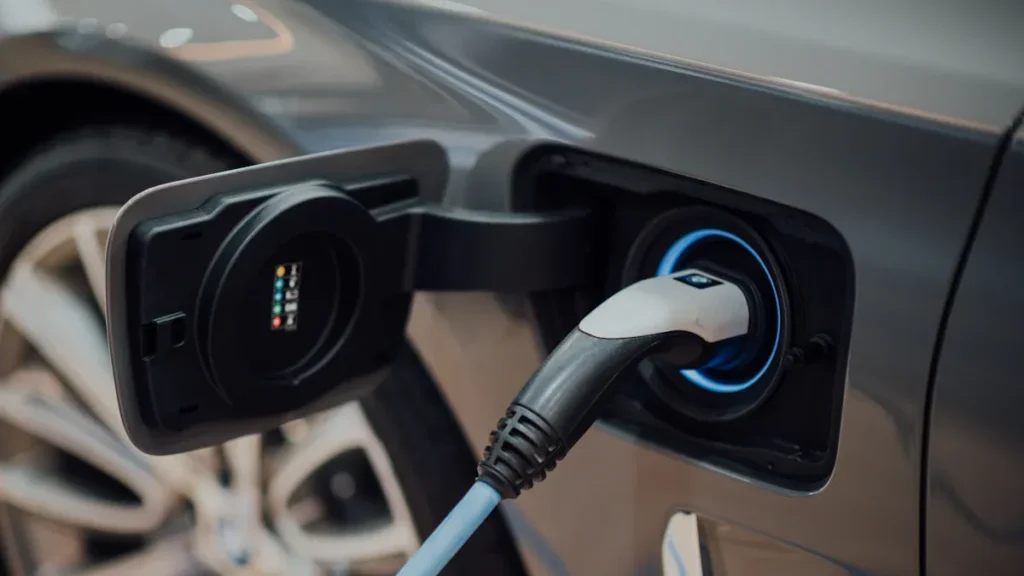

Most electric vehicle owners can install a charging station at home, provided they have dedicated off-street parking. This convenience explains why lebih dari 90% of charging occurs via home charging in the UK. A professional assessment is crucial to prepare a home’s electrical system for a new home charger. Leading Produsen pengisi daya EV seperti TPSON menyediakan tingkat lanjut Solusi pengisian daya kendaraan listrik for homeowners.
Catatan: A permanently installed Pengisi Daya Listrik offers faster and safer performance compared to relying on basic pengisi daya ev portabel untuk penggunaan harian.
What Are the Key Requirements to Install a Charging Station?
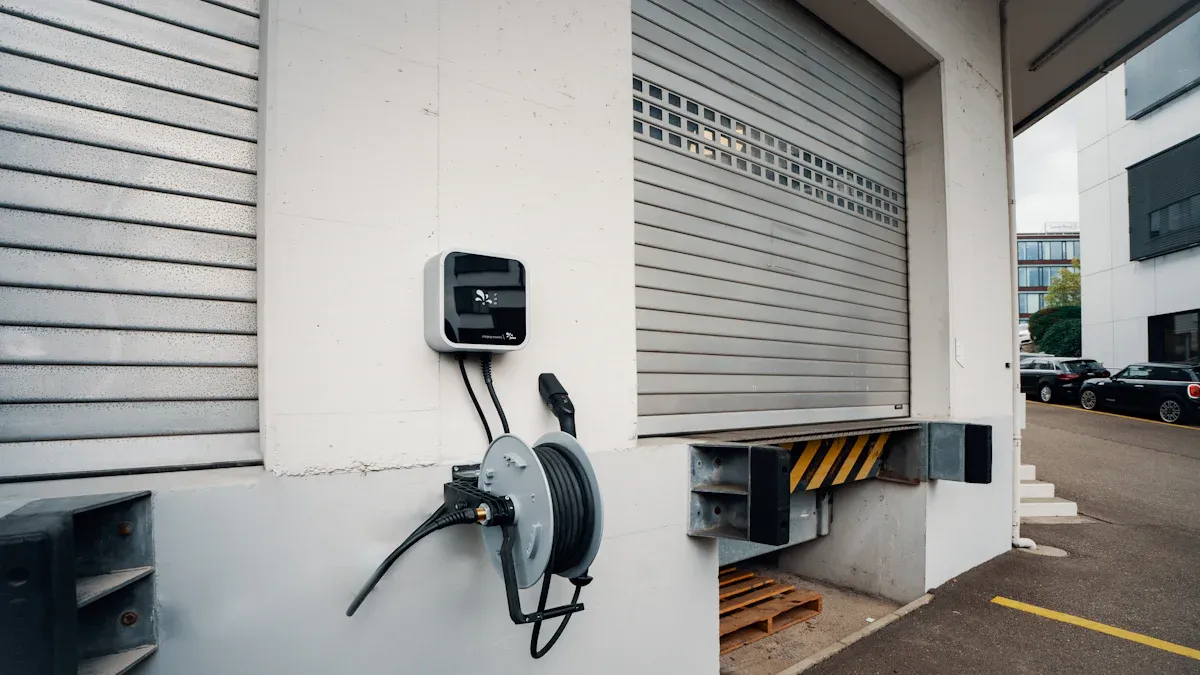
Before homeowners can enjoy the convenience of home charging, they must meet a few key requirements. These steps ensure the installation is safe, compliant, and practical for daily use. The process involves confirming suitable parking, assessing the home’s electrical infrastructure, and handling any necessary permits.
Do You Have Off-Street Parking?
A dedicated parking space is the most fundamental requirement to install a charging station. The charger needs a permanent, safe location where the vehicle can park for several hours.
Why a Driveway or Garage is Necessary
A private driveway or garage is the ideal spot for a home charger. These locations offer several advantages:
- Keamanan: They keep charging cables off public sidewalks, preventing trip hazards and potential liability issues.
- Keamanan: Parking on private property reduces the risk of vandalism or unauthorized use of the charger.
- Aksesibilitas: The vehicle is always within reach of the charging cable without needing long, cumbersome extensions.
Catatan Penting: Running a charging cable across a public pavement or walkway is generally not permitted and poses a significant safety risk. It can also lead to fines in many areas.
Solutions for Shared or Rented Parking
Homeowners living in properties with shared or rented parking spaces face unique challenges. They should first consult their homeowner’s association (HOA) or property manager. Some buildings are pre-wired for EV chargers, while others may have specific policies. Open communication is the first step toward finding a workable solution.
Is Your Home’s Electrical System Ready?
An electric vehicle is a significant electrical load, similar to a central air conditioner or an electric oven. A professional electrician must verify that the home’s electrical system can handle this additional demand safely.
How to Check Your Electrical Panel Capacity
The electrical panel, or breaker box, is the heart of a home’s electrical system. A qualified electrician will perform a load calculation to determine if it has enough capacity.
Modern homes often have 200-amp service panels, which typically have sufficient capacity for an electric car charger. Older homes with 100-amp panels may require an upgrade. The National Electrical Code (NEC) provides a clear safety standard: a circuit must be rated for 125% of a charger’s continuous load. For example, a 40-amp charger requires a 50-amp breaker.
Here is a general guide for matching charger amperage to your electrical components:
| Charger Amp Rating | Ukuran Pemutus | Pengukur Kawat | Tegangan |
|---|---|---|---|
| 30 amp | 40 amp | 8 AWG | 240V |
| 40 amp | 50 amp | 6 AWG | 240V |
| 50 amp | 60 amps | 6 AWG | 240V |
An electrician will check for available space in the panel for a new dedicated 240-volt, dual-pole breaker.
When Electrical Upgrades Are Required
An electrical upgrade is necessary if the panel lacks the capacity or physical space for a new circuit. A qualified electrician must evaluate the system to determine the scope of work. The charger needs its own dedicated circuit to prevent overloading the system. This ensures the charger operates safely without tripping breakers or creating a fire hazard. In some cases, this might involve a simple panel reorganization, but for older homes, it could mean a full panel upgrade to a higher amperage.
Do You Need a Permit?
Most municipalities require an electrical permit to install a charging station. This process ensures the work is performed to code by a qualified professional, protecting the homeowner and the electrical grid.
Understanding Local Permit Rules
Permit requirements vary by city and county. The permit process typically involves submitting an application that details the scope of work, the type of charger being installed, and information about the licensed electrician performing the job. The local building or electrical department reviews the plan for compliance with safety codes.
How Your Installer Handles Permitting
A reputable installer handles the entire permitting process for the homeowner. This service is a key part of a professional installation.
- Aplikasi: The electrician files the necessary paperwork with the local authority before work begins.
- Inspeksi: After the work is complete, a city inspector may visit the site to verify the installation meets all electrical and safety codes.
- Approval: Once the inspection passes, the permit is closed, and the system is officially approved for use.
This process gives homeowners peace of mind, knowing their new charger from a provider like TPSON is safe, compliant, and professionally installed.
How Much Does It Cost to Install a Home Charger?
Understanding the full financial picture is essential for homeowners planning an EV charger installation. The total expense is a combination of the charger unit itself, the cost of professional labor, and any available financial incentives that can lower the final price.
Charger Unit Costs
The first major expense is the charging hardware. The market offers a wide variety of options, with prices that reflect their features and capabilities.
Kisaran Harga Pengisi Daya Level 2
Level 2 chargers are the standard for home use, offering a balance of speed and affordability. The price for the unit alone can vary significantly based on brand, power output, and features.
- Entry-Level Chargers: Basic, non-smart chargers can start as low as $400.
- Mid-Range & Smart Chargers: Most popular models from reputable brands fall between $500 dan $1.000.
- Premium Chargers: High-end units with advanced features or premium materials can exceed $1,000.
Smart vs. Standard Charger Pricing
A key price differentiator is whether a charger is “smart” or “standard.” Standard chargers simply deliver power to the electric vehicle. Pengisi daya pintar, like those from technologically advanced providers such as TPSON, connect to Wi-Fi. This connectivity allows for features like remote monitoring, scheduled charging to take advantage of off-peak electricity rates, and energy usage tracking, offering long-term savings that can offset the higher initial cost.
Professional Installation Costs
A safe and compliant installation requires a licensed electrician. This cost is separate from the charger unit and depends heavily on the specifics of the home’s electrical system and layout.
Standard Installation Price Range
A standard installation assumes the electrical panel has sufficient capacity and is located near the desired charger location, such as inside an attached garage. For this type of straightforward job, homeowners can expect the professional installation to cost between $500 dan $1.500. ... total cost for both the charger and a standard installation often lands between $1,200 and $2,000.
Faktor-faktor yang Meningkatkan Biaya Instalasi
The final biaya pemasangan can rise if the project is more complex. Homeowners should anticipate higher quotes if their property requires additional work.
Perhatian: Always get a detailed, itemized quote from your electrician to understand exactly what is contributing to the cost.
Common factors that increase the price include:
- Long Cable Runs: The price increases with distance. Most standard quotes include up to 30-50 feet of cable; longer runs require more materials and labor.
- Trenching and Groundworks: If the charger is for a detached garage or an outdoor parking spot far from the house, running armored cable underground is necessary. Trenching can add $300 to $500 or more to the project.
- Complex Cable Routing: Drilling through concrete or brick, fishing wires through finished walls, or navigating other obstacles adds significant labor time.
- Peningkatan Panel Listrik: If the home’s main panel is too old, full, or lacks the capacity for a new 240V circuit, it will need to be upgraded. This is a major electrical job that can add over $1,000 to the total cost.
Hibah dan Insentif yang Tersedia
Government and utility programs can significantly reduce the expense to install a charging station. Homeowners should research all available incentives in their area.
Kredit Pajak Federal untuk Pengisi Daya EV
The U.S. federal government offers a tax credit for residential charging equipment. Under the Alternative Fuel Vehicle Refueling Property Credit, homeowners may be eligible for a credit of 30% dari biaya, up to a maximum of $1,000.
This applies to both the home charger unit and its installation fees. To claim it, a homeowner must file IRS Form 8911 with their annual tax return. It is a nonrefundable credit, meaning it can reduce or eliminate a tax liability but is not paid out as a cash refund. Eligibility is often restricted to homes located in designated low-income or non-urban (rural) census tracts.
State and Utility Company Rebates
Beyond the federal level, many states, local governments, and utility companies offer their own incentives. These can include direct rebates on the purchase of an electric car charger, discounted electricity rates for EV charging during off-peak hours, or grants to cover a portion of the installation. Researching local programs is a crucial step for every prospective EV owner.
What Type of Home Charger Should You Get?
Choosing the right charger is a critical decision for any new electric vehicle owner. The market offers several types, but they primarily fall into two categories: faster Level 2 chargers and slower Level 1 chargers that use a standard wall outlet. Understanding the differences in speed, cost, and features helps homeowners make an informed choice.
Level 2 Chargers: The Standard for Home Use
Pengisi daya level 2 are the recommended and most common solution for residential charging. They operate on a 240-volt circuit, similar to an electric stove or dryer, providing a much faster and more reliable charging experience.
Why a 7kW Charger is the Sweet Spot
For most homeowners, a 7kW charger offers the perfect balance of charging speed and electrical demand. A standard 7kW Level 2 home charger can fully replenish a typical 60kWh EV battery from empty in approximately 8 hours. This timing is ideal for overnight charging, ensuring the car is ready with a full battery every morning.
Understanding Amperage (32-amp vs. 40-amp)
Level 2 chargers come in various amperage ratings, most commonly 32-amp and 40-amp. A 40-amp charger delivers power slightly faster than a 32-amp model, but it also requires a more robust circuit (a 50-amp breaker instead of a 40-amp). An electrician can help determine which option is best suited for a home’s electrical capacity and the owner’s driving needs.
Can You Use a Regular Wall Outlet (Level 1)?
Level 1 charging uses a standard 120-volt household outlet. While it requires no special installation, its performance is extremely limited.
The Reality of Level 1 Charging Speeds
A Level 1 charger adds only about Jarak tempuh 2 hingga 5 mil per jam. In contrast, a Level 2 charger provides 10 to 30 miles of range in the same amount of time. This means a full charge on a Level 1 charger could take several days, not hours.
Catatan: This slow rate makes Level 1 charging impractical for daily use, especially for drivers with longer commutes.
Why It’s Best for Emergencies Only
Due to its slow speed, Level 1 charging is best reserved for emergencies or as a temporary solution when visiting friends or family who do not have a dedicated electric car charger. It is not a viable long-term strategy for a primary residence.
What is a “Smart” Home Charger?
A “smart” charger connects to a home’s Wi-Fi network, unlocking a host of advanced features that provide convenience and cost savings. Technologically advanced providers like TPSON specialize in these intelligent charging solutions.
Key Features of Smart Chargers
Smart chargers offer capabilities far beyond simply delivering power. Key features often include:
- Charging Schedules: Set specific times to charge, such as during late-night hours when electricity rates are lowest.
- Pemantauan Energi: Track electricity consumption and costs directly from a smartphone app.
- Kontrol Jarak Jauh: Start, stop, or pause charging sessions from anywhere.
- Solar Integration: Prioritaskan pengisian daya menggunakan energi surplus yang dihasilkan dari panel surya rumah.
Bagaimana Pengisian Daya Pintar Menghemat Uang Anda
Manfaat utama pengisian daya pintar adalah finansial. Dengan menjadwalkan sesi pengisian agar selaras dengan rencana tarif waktu-penggunaan (time-of-use/TOU) dari perusahaan utilitas, pemilik dapat menghindari tarif mahal pada jam puncak. Tindakan sederhana menggeser konsumsi energi ini dapat menghasilkan penghematan tahunan yang signifikan pada tagihan listrik, seringkali mencapai ratusan dolar per tahun..
Proses Instalasi Langkah demi Langkah
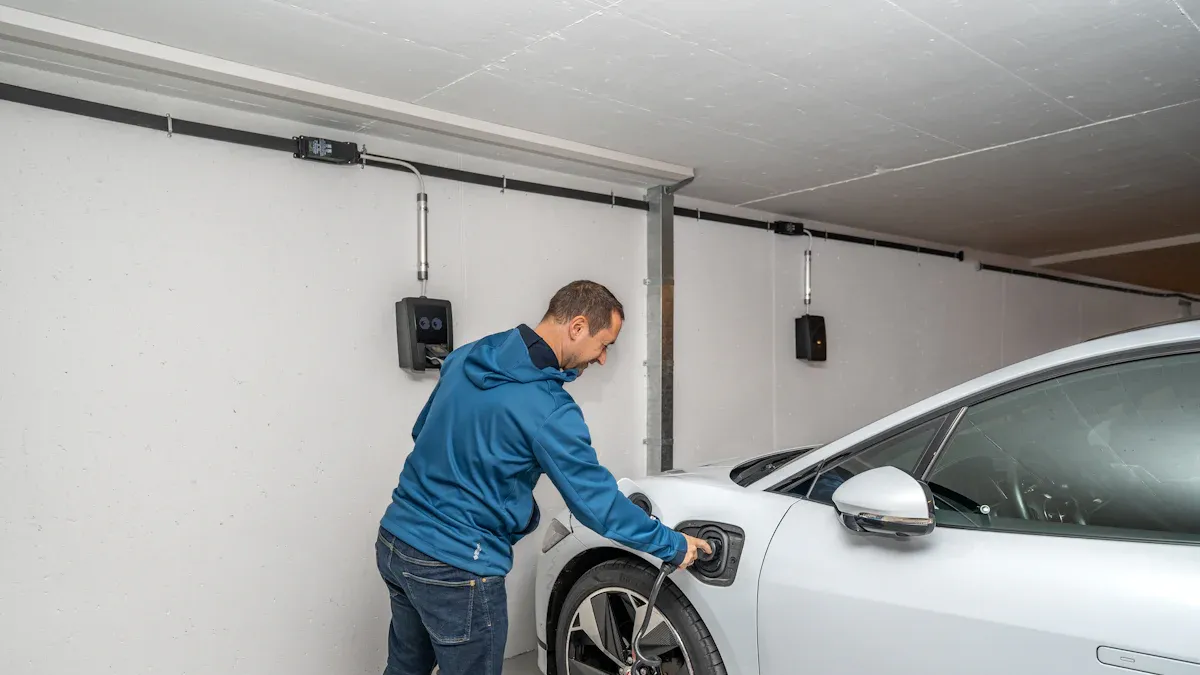
Setelah pemilik rumah memastikan properti mereka memenuhi syarat, perjalanan menuju pengisian daya rumah yang nyaman dimulai. Prosesnya melibatkan pemilihan perangkat keras yang tepat, menyewa profesional, dan mengawasi instalasi akhir. Mengikuti langkah-langkah ini memastikan hasil yang lancar dan sukses.
Langkah 1: Pilih Pengisi Daya yang Tepat untuk Anda
Keputusan pertama adalah memilih perangkat keras. Pasar menawarkan banyak pilihan, sehingga pemilik rumah harus mempertimbangkan kebutuhan harian, anggaran, dan fitur yang diinginkan.
Kabel yang Ditambatkan vs Kabel yang Tidak Ditambatkan
A Pilihan utama adalah antara pengisi daya tertambat (dengan kabel terpasang permanen) dan yang tidak tertambat (dengan soket universal). Masing-masing memiliki keunggulan tersendiri.
| Fitur | Pengisi Daya yang Ditambatkan | Pengisi Daya Tidak Terikat |
|---|---|---|
| Kenyamanan | Tinggi; cukup buka gulungan dan colokkan. | Lebih Rendah; memerlukan penanganan kabel setiap kali penggunaan. |
| Keamanan | Tinggi; kabel yang terpasang sulit dicuri. | Lebih Rendah; kabel terpisah dapat dicuri jika ditinggalkan. |
| Fleksibilitas | Rendah; panjang kabel dan jenis konektor tetap. | Tinggi; pengguna dapat menukar kabel untuk panjang yang berbeda. |
| Estetika | Dapat terlihat berantakan jika kabel tidak digulung rapi. | Menawarkan tampilan yang lebih rapi dan minimalis di dinding. |
Unit tertambat menawarkan kenyamanan maksimal untuk penggunaan sehari-hari. Unit tidak tertambat memberikan fleksibilitas lebih besar dan penampilan yang lebih bersih.
Fitur Utama yang Harus Diperhatikan
Pengisi daya modern menawarkan lebih dari sekadar daya. Pemilik rumah harus mencari fitur yang sesuai dengan gaya hidup mereka. Penyedia canggih secara teknologi seperti TPSON menawarkan solusi pintar dengan banyak kemampuan ini. Fitur utama yang perlu dipertimbangkan meliputi:
- Penjadwalan Cerdas: Memungkinkan pengisian daya selama jam di luar puncak untuk menghemat uang.
- Solar Integration: Memprioritaskan penggunaan energi gratis dari panel surya rumah.
- Kontrol Aplikasi: Menyediakan pemantauan dan kontrol jarak jauh dari smartphone.
- Desain Stylish: Beberapa unit dirancang untuk melengkapi estetika rumah.
Langkah 2: Temukan dan Sewa Instaler yang Berkualifikasi
Instalasi pengisi daya mobil listrik yang aman dan mematuhi peraturan memerlukan profesional bersertifikat. Pemilik rumah tidak boleh mencoba instalasi DIY.
Di Mana Menemukan Teknisi Listrik Bersertifikat
Pemilik rumah harus mencari teknisi listrik dengan pengalaman spesifik pengisian daya EV. Kredensial utama yang perlu diverifikasi meliputi:
- Terdaftar dalam skema orang kompeten seperti NICEIC atau NAPIT.
- Asuransi tanggung jawab publik dan asuransi ganti rugi profesional yang memadai.
- Riwayat yang jelas atas instalasi pengisi daya EV yang berhasil.
Mendapatkan dan Membandingkan Penawaran
Bijaksana untuk mendapatkan setidaknya tiga penawaran terperinci dari instalator yang berbeda. Penawaran terperinci harus memecah biaya untuk tenaga kerja, material (seperti kabel), dan pekerjaan listrik yang diperlukan. Transparansi ini membantu pemilik rumah membandingkan penawaran secara akurat dan menghindari biaya tersembunyi.
Langkah 3: Hari Instalasi
Langkah terakhir adalah instalasi fisik pengisi daya rumah. Proses profesional mencakup survei dan hari instalasi yang dikelola dengan baik.
Survei Pra-Instalasi
Sebelum hari instalasi, teknisi listrik akan melakukan survei. Ini dapat dilakukan melalui foto, panggilan video, atau kunjungan langsung. Survei mengonfirmasi kapasitas panel listrik, rencana jalur kabel, dan lokasi akhir pengisi daya.
Apa yang Terjadi Selama Instalasi dan Penyiapan
Pada hari itu, teknisi listrik akan:
- Mematikan daya ke rumah untuk keamanan.
- Memasang pemutus sirkuit khusus baru di panel listrik.
- Menjalankan kabel berpelindung dari panel ke lokasi pengisi daya.
- Memasang unit pengisian dengan aman ke dinding.
- Menghubungkan unit, menguji sistem, dan mengembalikan daya.
Instaler kemudian akan mendemonstrasikan cara menggunakan pengisi daya dan menyiapkan fitur pintarnya.
Apa Biaya Berkelanjutan dari Pengisi Daya Rumah?
Di luar pembelian dan instalasi awal, biaya berkelanjutan dari pengisi daya rumah terutama terkait dengan konsumsi listrik dan perawatan jangka panjang. Untungnya, pengeluaran ini biasanya rendah dan dapat diprediksi, menjadikan pengisian daya di rumah solusi yang sangat hemat biaya bagi pemilik kendaraan listrik.
Bagaimana Pengisian Daya Mempengaruhi Tagihan Listrik Anda
Pengeluaran berkelanjutan yang paling signifikan adalah listrik yang digunakan untuk mengisi daya kendaraan. Namun, biaya ini hampir selalu jauh lebih rendah daripada yang akan dihabiskan pengemudi untuk bensin.
Menghitung Biaya Anda Per Pengisian Daya
Pemilik rumah dapat dengan mudah memperkirakan biaya pengisian daya mereka. Perhitungannya tergantung pada efisiensi kendaraan (mil per kilowatt-jam) dan tarif listrik lokal. Untuk pemilik EV yang berkendara 1.000 mil per bulan, EV ukuran menengah mungkin mengonsumsi sekitar 250 kWh. Pada tarif listrik rata-rata, ini menambah jumlah yang dapat dikelola ke tagihan utilitas bulanan, yang merupakan sebagian kecil dari biaya bensin untuk jarak yang sama.
Penghematan biaya-per-mil sangat besar saat mengisi daya di rumah.
| Jenis Kendaraan | Biaya Rata-Rata Per Mil |
|---|---|
| Mobil Listrik (Diisi Daya di Rumah) | 7 cents |
| Gasoline Cars | 12 – 21 cents |
This difference means that over a year of driving 10,000 miles, an EV owner could save over $800 compared to a gasoline car driver.
Using Time-of-Use Plans to Save
Many utility companies offer Time-of-Use (TOU) plans that provide cheaper electricity during off-peak hours, typically overnight. By scheduling charging sessions during these low-demand periods, owners can cut their charging costs by 50% or more. Pengisi daya pintar, like those from technologically advanced providers such as TPSON, automate this process, ensuring the vehicle charges at the cheapest possible rate without any manual effort.
Maintenance and Long-Term Care
Modern EV chargers are robust devices built for durability and require minimal upkeep from the homeowner.
Are Home Chargers Maintenance-Free?
While not entirely maintenance-free, residential Level 2 chargers are designed for a lifespan that can exceed two decades. Routine care is simple and involves:
- Keeping the charging unit clean and free of debris.
- Visually inspecting the cable and connector for any signs of wear or damage.
- Ensuring the cable is stored neatly to prevent trip hazards and strain.
These simple checks help ensure the unit operates safely and efficiently for years.
Understanding Your Charger’s Warranty
A quality charger comes with a manufacturer’s warranty that protects the owner’s investment. Most brands offer a standard warranty of around 3 years from the date of installation. Some manufacturers provide extended warranties of 5 years or more, offering additional peace of mind. Homeowners should review the specific warranty terms for their chosen model to understand what is covered.
Special Considerations for Apartments and Renters
Not everyone owns a single-family home with a private garage. Renters and residents of multi-unit buildings like apartments or condos face unique challenges. However, with clear communication and the right technology, installing a charger is often achievable.
Installing a Charger in a Rented Property
Renters must navigate an extra layer of approval. A successful installation requires collaboration with the property owner.
Getting Permission From Your Landlord
The first and most critical step for a renter is to get written permission from their landlord. A renter should present a clear proposal outlining the plan. This proposal can highlight how an EV charger installation is a valuable, modern upgrade that can increase the property’s appeal to future tenants. Open dialogue and a professional approach are key to gaining approval.
Grants Available for Renters
Financial assistance can make the conversation with a landlord much easier. Several grants are available specifically for renters and flat owners.
- The Electric Vehicle Chargepoint Grant offers a significant discount, covering up to 75% of the cost of a charger and its installation, capped at £350.
- To be eligible, a person must live in rental accommodation or own a flat with a dedicated, off-street parking space.
- The process is simple. An approved installer confirms eligibility and applies for the grant on the renter’s behalf, deducting the grant amount directly from the final bill.
Solusi untuk Bangunan Apartemen
Residents in apartment buildings or complexes must work with property management to find a building-wide solution.
Working with Your HOA or Building Management
An individual should approach their Homeowner’s Association (HOA) or building management with a well-researched plan. It is often more effective to propose a scalable solution for the entire building rather than a single installation. This shows foresight and considers the needs of all residents as EV adoption grows.
Options for Multi-Unit Dwellings
Modern technology makes it possible to install many chargers without overloading a building’s electrical system. Technologically advanced providers like TPSON offer smart charging systems designed for these environments.
Kiat Pro: Manajemen beban dinamis is the gold standard for apartment buildings. It constantly monitors the building’s total energy use and intelligently adjusts the power sent to the EV chargers, ensuring maximum charging speed without risking a power outage.
These systems use two main approaches:
- Static Load Management: A fixed amount of power is dedicated to a group of chargers. The system divides this power evenly among the cars that are plugged in.
- Dynamic Load Management: This smarter system adjusts the power available to chargers in real-time based on the building’s overall electricity consumption.
These solutions also include features like built-in energy metering and RFID card or app access. This allows building management to track each resident’s electricity usage accurately and bill them fairly.
To install a charging station is a valuable and straightforward upgrade for any electric vehicle owner. A successful installation hinges on two key factors: confirming dedicated off-street parking and hiring a qualified professional for the home charger. This one-time project unlocks significant benefits, with advanced providers like TPSON offering the technology to make this a seamless reality.
Enjoy the daily convenience and cost savings of waking up to a fully charged car every morning. 🚗💨
PERTANYAAN YANG SERING DIAJUKAN
Berapa lama waktu yang dibutuhkan untuk pemasangan pengisi daya EV standar?
A standard installation typically takes between two to four hours. The process involves mounting the unit, running the cable, and making the final electrical connections. More complex jobs requiring trenching or panel upgrades will take longer.
Can a home charger be installed outdoors?
Yes, most home chargers are designed with weatherproof ratings (like IP65) for safe outdoor installation. An electrician will use armored cabling and ensure all connections are properly sealed to withstand the elements, making it a durable solution.
Do all electric vehicles use the same charging plug?
Most modern EVs use a Type 2 connector for home charging, which has become the standard. Homeowners should confirm their vehicle’s connector type before purchasing a charger. Untethered chargers offer flexibility by allowing the use of different cables.
What is the main benefit of a “smart” charger?
Smart chargers connect to Wi-Fi, allowing for advanced control. Technologically advanced providers like TPSON offer units that enable scheduled charging to use cheaper electricity, remote operation via an app, and energy monitoring for significant long-term savings.
Dapatkah pemilik rumah memasang sendiri pengisi daya EV?
No, a homeowner should never attempt a DIY installation. A licensed and certified electrician must perform the work. This ensures the installation is safe, compliant with electrical codes, and does not void the charger’s warranty.
How much faster is a Level 2 charger than a regular outlet?
A Level 2 charger is significantly faster, adding 10 to 30 miles of range per hour. A standard wall outlet (Level 1) only adds 2 to 5 miles per hour. This makes Level 2 charging essential for daily use.
What is dynamic load management for apartments?
Dynamic load management is a smart system for buildings with multiple chargers. It monitors the building’s total electricity use and automatically adjusts power to the chargers. This prevents overloads while maximizing charging speed for all connected vehicles. 🚗