Memahami bagaimana-ampere-stasiun-dan-kw-mempengaruhi-waktu-pengisian-ev sangat penting untuk mengoptimalkan waktu pengisian daya kendaraan listrik. Peringkat kilowatt (kW) yang lebih tinggi di stasiun pengisian umumnya berarti kecepatan pengisian yang lebih cepat. Namun, kecepatan pengisian EV yang sebenarnya selalu dibatasi oleh nilai yang lebih rendah dari dua hal: output stasiun atau tingkat penerimaan maksimum mobil. Realitas pengisian EV ini secara langsung memengaruhi waktu mobil terhubung ke stasiun. Pengisi Daya Listrik‘Ampere dan voltase adalah komponen dasar daya.
Catatan: Penyedia teknologi canggih seperti TPSON merekayasa solusi pengisian mereka berdasarkan hubungan mendasar ini. Produsen pengisi daya EV Kilowatt (kW): Ukuran Langsung Kecepatan Pengisian EV Solusi pengisian daya kendaraan listrik, termasuk pengisi daya ev portabel, bagaimana-ampere-stasiun-dan-kw-mempengaruhi-waktu-pengisian-ev 6.
Kilowatt (kW) adalah metrik paling langsung untuk memahami potensi kecepatan pengisian EV suatu stasiun. Angka kW yang lebih tinggi menunjukkan keluaran daya yang lebih besar. Ini berarti tingkat penyaluran energi ke baterai kendaraan listrik yang lebih cepat. Memahami satuan ini adalah langkah pertama bagi setiap pengemudi yang bertanya-tanya seberapa cepat mobil listrik terisi.
Analogi "Mil Per Jam" dalam Pengisian Daya Analogi yang efektif adalah menganggap kilowatt sebagai "mil per jam" dari pengisian EV. Pengisi daya dengan peringkat kW yang lebih tinggi dapat "menuangkan" energi ke baterai lebih cepat. Ini secara langsung memengaruhi kecepatan pengisian keseluruhan. Misalnya, pengisi daya 150 kW memiliki potensi yang jauh lebih tinggi untuk mengurangi waktu pengisian dibandingkan pengisi daya 7 kW. Rumus Daya Sederhana: Volt × Ampere = Watt.
Apa yang dimaksud dengan Kilowatt (kW)?
Daya adalah hasil kali dari tekanan listrik (Volt) dan arus listrik (Ampere). Rumus dasarnya adalah:. Volt (V) × Ampere (A) = Watt (W).
Satu kilowatt (kW) sama dengan 1.000 watt. Satuan ini mewakili laju transfer energi yang setara dengan 1.000 joule per detik. Penyedia teknologi canggih seperti TPSON merekayasa solusi pengisian mereka berdasarkan prinsip inti ini untuk memberikan daya pengisian yang andal dan efisien.
Bagaimana kW Mempengaruhi Waktu Pengisian EV Anda Peringkat kW pengisi daya adalah faktor utama dalam bagaimana kilowatt memengaruhi kecepatan pengisian. Output kW yang lebih tinggi dari stasiun memungkinkan sesi pengisian yang lebih cepat, asalkan kendaraan dapat menerima tingkat daya tersebut. Waktu yang diperlukan untuk pengisian dapat diperkirakan. Gunakan rumus:.
Waktu Pengisian (jam) = Energi Ditambahkan (kWh) ÷ Daya Pengisian (kW)
Sebagian besar produsen merekomendasikan pengisian antara 20% dan 80% untuk kesehatan baterai yang optimal.
Contoh Waktu Pengisian Level 2 AC
Pengisian Level 2 umum digunakan di rumah dan tempat kerja. Perbedaan kW memiliki dampak yang nyata pada waktu pengisian untuk mobil biasa. Pertimbangkan baterai 60 kWh yang diisi dari 20% hingga 80%, yang membutuhkan penambahan energi 36 kWh.. Energi Ditambahkan Perkiraan Waktu Pengisian. ~5,1 jam.
~3,3 jam
Peningkatan dari pengisi daya 7 kW ke 11 kW secara signifikan mempersingkat sesi pengisian level 2.
Contoh Waktu Pengisian Cepat DC Pengisian cepat DC menawarkan kecepatan pengisian yang jauh lebih tinggi bagi pengemudi dalam perjalanan jauh. Menggunakan contoh yang sama dengan baterai mobil 60 kWh (menambahkan 36 kWh), dampak pengisi daya cepat DC berdaya tinggi menjadi jelas.. Pada 50 kW: Sesi membutuhkan waktu sekitar 43 menit. Pada 150 kW:.
Sesi yang sama hanya membutuhkan waktu sekitar 14 menit.
Ini menunjukkan bagaimana peringkat kW yang lebih tinggi secara dramatis mengurangi waktu pengisian EV, membuat perjalanan jarak jauh lebih nyaman.
| Daya Pengisi Daya | Peran Ampere (Amps) dalam Menentukan Daya | Sementara kilowatt memberikan ukuran langsung kecepatan pengisian, ampere (amps) adalah komponen dasar yang menentukan daya tersebut. Memahami bagaimana ampere memengaruhi kecepatan pengisian sangat penting untuk pengisian AC Level 2, di mana batasan rangkaian listrik memainkan peran penting. Ampere yang lebih tinggi secara langsung berkontribusi pada laju pengisian yang lebih cepat. |
|---|---|---|
| 7 kW | 36 kWh | Memahami Ampere sebagai Arus Listrik |
| 11 kW | 36 kWh | Ampere adalah satuan ukur untuk arus listrik. Satuan ini mewakili laju aliran elektron melalui konduktor. Penyedia solusi pengisian kendaraan listrik teknologi canggih seperti TPSON merancang sistem mereka berdasarkan pengelolaan arus yang presisi. |
Ampere sebagai "Volume" Listrik.
Analogi yang membantu adalah menganggap ampere sebagai "volume" listrik yang mengalir melalui selang. Voltase adalah tekanan yang mendorong air, sedangkan ampere adalah diameter selang. Selang yang lebih lebar (ampere lebih tinggi) memungkinkan lebih banyak air (listrik) mengalir per detik, bahkan pada tekanan yang sama. Definisi ilmiah modern Ampere didasarkan pada nilai numerik tetap dari muatan elementer, sebuah konstanta fundamental alam. Ampere yang lebih tinggi berarti lebih banyak muatan listrik yang dikirimkan ke baterai setiap detiknya.
Bagaimana Ampere dan Volt Bergabung Menciptakan kW.
- Daya (Watt) adalah hasil kali voltase dan ampere. Rumus Volt × Ampere = Watt menunjukkan bahwa peningkatan salah satu nilai akan meningkatkan keluaran daya. Misalnya, pengisi daya yang beroperasi pada 240 volt dengan arus 40 ampere memberikan 9.600 watt, atau 9,6 kW. Ampere yang lebih tinggi pada voltase yang sama menghasilkan peringkat kW yang lebih tinggi dan pengisian yang lebih cepat. Mengapa Ampere Kunci untuk Pengisian Level 2.
- Untuk pengisian level 2, ampere sering kali merupakan variabel paling kritis yang dapat dikendalikan oleh pemilik EV. Pilihan pengisi daya dan infrastruktur listrik bangunan secara langsung menentukan ampere maksimum yang tersedia. Daya Perumahan 240V vs. Komersial 208V.
Sebagian besar rumah di Amerika Utara menggunakan pasokan listrik split-phase 240V. Namun, banyak bangunan komersial menggunakan pasokan tiga fase 208V. Perbedaan ini penting. Pengisi daya 40 ampere akan memberikan 9,6 kW di tempat tinggal 240V tetapi hanya 8,3 kW di gedung perkantoran 208V. Inilah sebabnya mengapa mobil yang sama mungkin terisi sedikit lebih lambat di tempat kerja daripada di rumah, bahkan dengan peringkat ampere pengisi daya yang identik. Ampere yang lebih tinggi diperlukan dalam pengaturan 208V untuk menyamai daya sistem 240V.
Menyesuaikan dengan Ampere Rangkaian Rumah Anda
Saat Anda mengisi mobil listrik di rumah, ampere pengisi daya harus sesuai dengan apa yang dapat disediakan oleh rangkaian rumah Anda dengan aman. National Electrical Code (NEC) mensyaratkan pemutus sirkuit diberi peringkat untuk 125% dari beban kontinu pengisi daya. Aturan keselamatan ini mencegah panas berlebih. Oleh karena itu, pengisi daya dengan ampere yang lebih tinggi memerlukan rangkaian khusus yang lebih kuat.
Understanding Amps as Electrical Current
Amperage is the unit of measure for electrical current. It represents the flow rate of electrons through a conductor. Technologically advanced electric vehicle charging solution providers like TPSON design their systems around the precise management of this current.
Amps as the “Volume” of Electricity
A helpful analogy is to think of amperage as the “volume” of electricity flowing through a hose. Voltage is the pressure pushing the water, while amperage is the hose’s diameter. A wider hose (higher amperage) allows more water (electricity) to flow per second, even at the same pressure. The modern scientific definition of the Ampere is based on the fixed numerical value of the elementary charge, a fundamental constant of nature. A higher amperage means more electrical charge is delivered to the battery each second.
How Amps and Volts Combine to Create kW
Power (Watts) is the product of voltage and amperage. The formula Volts × Amps = Watts shows that increasing either value increases the power output. For example, a charger operating at 240 volts with a 40-amp current delivers 9,600 watts, or 9.6 kW. A higher amperage at the same voltage results in a higher kW rating and faster charging.
Why Amps Are Key for Level 2 Charging
For level 2 charging, amperage is often the most critical variable an EV owner can control. The choice of charger and the building’s electrical infrastructure directly dictate the maximum available amperage.
240V Residential vs. 208V Commercial Power
Most homes in North America use a 240V split-phase electrical supply. Many commercial buildings, however, use a 208V three-phase supply. This difference matters. A 40-amp charger will deliver 9.6 kW at a 240V residence but only 8.3 kW at a 208V office building. This is why the same car may charge slightly slower at a workplace than at home, even with an identical charger amperage rating. A higher amperage is needed in a 208V setting to match the power of a 240V system.
Matching Your Home Circuit’s Amperage
When you charge an electric car at home, the charger’s amperage must match what your home’s circuit can safely provide. The National Electrical Code (NEC) requires a circuit breaker to be rated for 125% of a charger’s continuous load. This safety rule prevents overheating. Therefore, a higher amperage charger requires a more robust dedicated circuit.
Tip: To safely charge an electric car at home, always have a qualified electrician install the dedicated circuit for your Level 2 charger.
The relationship between charger amperage and the required breaker is clear:
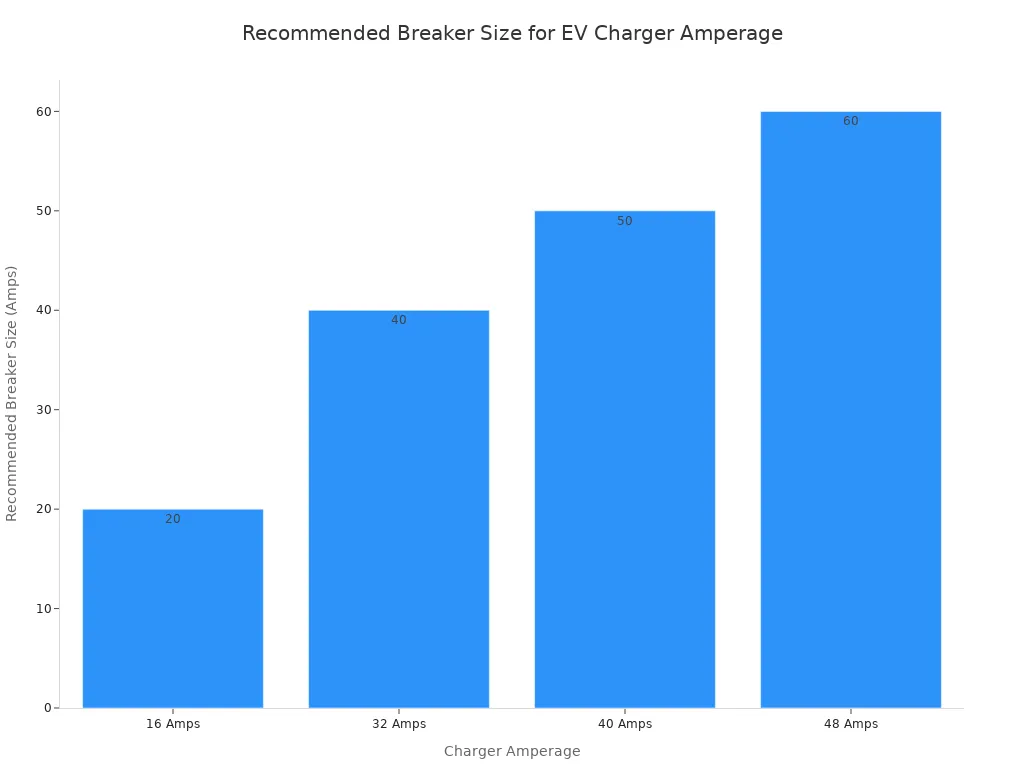
Choosing a charger with a higher amperage, such as 40A or 48A, significantly reduces charging time for a car that can accept it. A higher amperage is the key to unlocking faster level 2 charging speeds, making a powerful impact on the daily convenience for an EV driver.
Your Vehicle’s Limits: The Most Important Factor for Charging Time
While a station’s kW rating indicates its potential power, the electric vehicle itself often determines the actual charging speed. A car’s internal hardware sets a firm ceiling on how much power it can safely accept. This makes the vehicle’s own specifications the most important factor influencing the final charging time. No matter how powerful the station, a car will only charge as fast as its own systems allow.
Your Car’s Onboard Charger for AC Charging
For Level 1 and Level 2 AC charging, every electric vehicle relies on a critical component: the onboard charger (OBC). This piece of hardware is built into the car and is responsible for a crucial conversion process.
The most common method for AC EV charging involves the car’s onboard charger converting AC power from the grid to DC power before it reaches the battery. The OBC takes the alternating current (AC) from a home outlet or public Level 2 station and transforms it into the direct current (DC) that the car’s battery can store. This conversion happens through several stages:
- A power-factor correction (PFC) stage converts the incoming AC voltage to an intermediate DC voltage.
- An isolated DC-DC stage then adjusts this voltage to the specific level required by the battery pack.
Technologically advanced providers like TPSON design their charging solutions to work seamlessly with these onboard systems. The OBC’s power rating, measured in kW, sets the absolute maximum speed for any AC charging session.
Finding Your Car’s Max AC Rate
An EV owner can find their car’s maximum AC charging rate in the vehicle’s manual, on the manufacturer’s official website, or on the specification sheet provided at purchase. This rating is typically listed in kilowatts (kW). Common AC charging rates for modern EVs range from 7.4 kW to 11 kW, with some premium models supporting up to 19.2 kW or even 22 kW.
Contoh: A car with an 11 kW onboard charger will never charge faster than 11 kW on an AC station, even if the station is rated for 19.2 kW. The car’s OBC is the bottleneck.
The “Slowest Link” Rule in Action
The “slowest link” principle is always in effect during EV charging. The final charging speed will be the lower of two values: the station’s maximum output and the car’s maximum intake rate.
Consider a car with a 7.4 kW onboard charger.
- Plugging into a 3,7 kW charger results in a 3,7 kW charging speed.
- Plugging into a 7,4 kW charger results in a 7,4 kW charging speed.
- Plugging into an 11 kW charger still results in only a 7,4 kW charging speed, as the car’s onboard charger cannot accept more power.
This demonstrates why matching the charger to the car’s capability is key for optimizing charging times without paying for unused power capacity.
Your Car’s Battery Management System (BMS) for DC Charging
During DC fast charging, the process is different. The large, external DC fast charger bypasses the car’s smaller onboard charger and delivers DC power directly to the battery. In this scenario, the vehicle’s Battery Management System (BMS) takes control.
The BMS is the sophisticated “brain” of the battery pack. It constantly monitors factors like cell voltage, temperature, and state of charge. During DC fast charging, the BMS communicates directly with the station, providing limits to the charger to enable the fastest possible charging. The accuracy and responsiveness of the BMS directly influence how quickly a vehicle can charge.
Finding Your Car’s Max DC Rate
Similar to the AC rate, a car’s maximum DC fast charging rate is a key specification provided by the manufacturer. This number, also in kW, represents the peak power the battery can handle under ideal conditions. These rates vary widely, from around 50 kW for older models to over 350 kW for the latest high-performance EVs. Knowing this figure helps a driver select the right public charger for a quick top-up on a long journey.
Why a 350 kW Charger Won’t Always Charge at 350 kW
Plugging a car into a 350 kW ultra-fast charger does not guarantee a 350 kW charging speed. Several factors, all managed by the BMS, will limit the power.
- Vehicle’s Max Rate: A car with a maximum DC rate of 150 kW will never exceed 150 kW, regardless of the station’s power.
- Status Pengisian Daya Baterai (SoC): Charging is fastest when the battery is nearly empty. The BMS automatically slows the rate as the battery fills up (especially above 80%) to protect its health.
- Suhu Baterai: The BMS will limit charging speed if the battery is too cold or too hot to prevent damage.
The BMS constantly calculates the maximum safe charging rate and instructs the charger to adjust its output accordingly. This dynamic control ensures both safety and optimal battery longevity.
How Real-World Factors Reduce Your Charging Speed
The advertised kW rating of a charger represents its maximum potential output under ideal conditions. However, several real-world factors that affect charging speed often reduce the actual power delivered to a vehicle. An EV driver’s experience at a charging station is influenced by more than just the station’s power rating and the car’s specifications. Understanding these variables is essential for setting realistic expectations and planning efficient charging stops.
The 80% Rule: Battery State of Charge (SoC)
One of the most noticeable factors is the battery’s Status Pengisian Daya (SoC). A battery charges much faster when it is at a lower SoC and slows down considerably as it approaches full capacity. This is a universal characteristic of charging an EV battery.
Why Charging Slows Dramatically
The primary reason for this slowdown is physics. As a battery fills up, its internal resistance increases. Pushing a high electrical current into a battery with high resistance generates significant heat. The car’s Battery Management System (BMS) detects this and deliberately reduces the charging power to prevent the cells from overheating, which could cause permanent damage. This protective measure is why the last 20% of a charge takes much longer than the first 20%.
Protecting Your Battery’s Long-Term Health
This tapering of charging speed is a critical safety feature that protects the long-term health of the battery. Routinely pushing a battery to 100% at maximum speed would accelerate degradation. For this reason, many EV manufacturers and charging experts recommend stopping a DC fast charging session at around 80%. This practice not only saves time but also helps preserve the battery’s capacity and lifespan. It is a key strategy for those looking to fully charge an electric car while being mindful of its longevity.
How Battery Temperature Affects Charging an EV Battery
Battery temperature is another critical variable. Lithium-ion batteries have an optimal temperature range for efficient operation. Extreme temperatures, both hot and cold, will cause the BMS to limit the charging speed to protect the battery pack.
Slower Speeds in Cold Weather
In cold weather, the chemical reactions inside a battery slow down. Attempting to charge a cold battery at high speeds can cause damage. To prevent this, the BMS will severely restrict the charging power until the battery warms up. Some modern EVs have a preconditioning feature yang actively heats the battery as the car navigates to a DC fast charger, significantly improving cold-weather charging performance.
Protective Throttling in Hot Weather
Conversely, excessive heat is also detrimental to battery health. During a fast-charging session, especially in hot ambient temperatures, the battery can heat up quickly. If the temperature exceeds a safe threshold, the BMS will again throttle the charging power to allow the battery’s cooling system to catch up. This protective throttling prevents thermal damage and ensures the battery operates safely.
Shared Power at Public Stations
Not all charging stalls at a public charging station are created equal. Many sites use a shared power architecture, where multiple chargers split a finite amount of available power from the grid. This is a common practice that can lead to a slower-than-expected charging session.
What is Power Splitting?
Power splitting, or load balancing, is a system where a charging site’s total electrical capacity is distributed among the active chargers. For example, two 150 kW chargers might share a single 300 kW power cabinet. If only one car is charging, it can potentially receive the full 150 kW. However, if a second car plugs into the adjacent charger, the system may split the power, giving each vehicle only 75 kW.
Advanced networks are evolving this technology. For instance, some systems now feature dynamic power sharing that can distribute power across as many as six stalls, optimizing energy delivery based on real-time demand.
How to Identify a Shared Power Station
Identifying a shared power setup can be tricky. Some stations have labels on the chargers indicating they share power with an adjacent unit (e.g., “Charger 1A” and “Charger 1B”). Another clue is seeing multiple charging stalls connected to a single, large power cabinet. When arriving at a busy site, choosing a stall connected to an unoccupied power cabinet can help ensure the car receives the maximum possible charging power. This knowledge helps drivers avoid unexpectedly slow sessions when trying to fully charge an electric car on a tight schedule.
A Practical Guide to Choosing the Right Charger
Knowing how to select the appropriate charger is a practical skill for every EV driver. The choice depends on the trip’s purpose, the time available, and the car’s capabilities. Making an informed decision ensures an efficient and convenient experience.
How to Read a Charger’s Label
The labels on a charging station provide essential information about its performance. An EV driver can quickly assess a charger’s suitability by understanding these details.
Identifying kW and Amperage Ratings
A charger label prominently displays its maximum power output, shown as a kW rating. This kW rating is the most direct indicator of potential charging speed. For Level 2 AC units, the amperage may also be listed. A higher kW rating generally promises a faster session, assuming the vehicle can accept that power level. The kW rating is a critical piece of data for planning a stop.
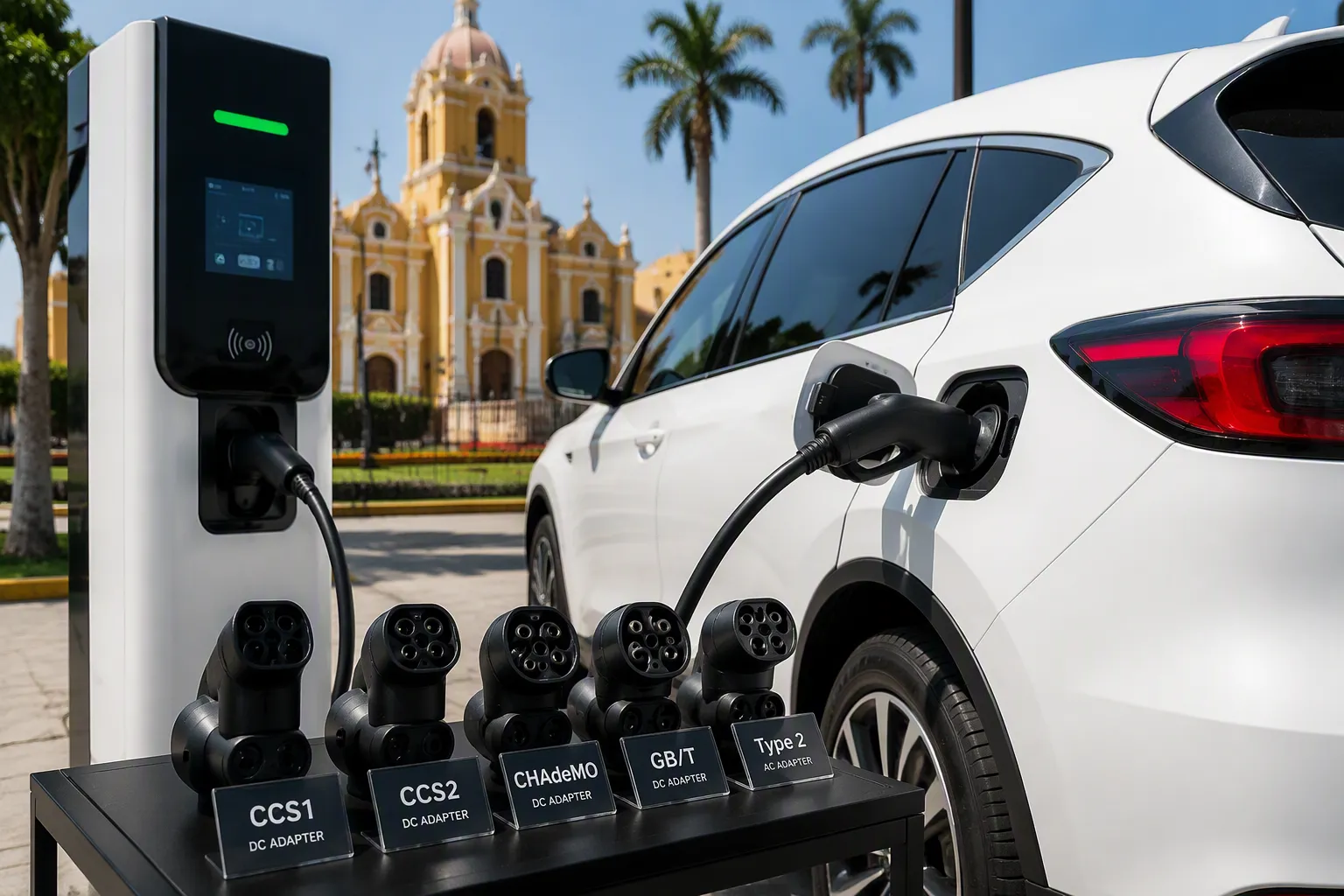
Understanding Connector Types: CCS, NACS, and CHAdeMO
A driver must also verify that the charger’s connector is compatible with their car. The three main DC connector standards are:
- CCS (Sistem Pengisian Daya Gabungan): Widely adopted by many manufacturers.
- NACS (Standar Pengisian Daya Amerika Utara): Developed by Tesla and being adopted by other brands.
- CHAdeMO: Primarily used by a smaller number of vehicle models.
Most public stations offer CCS, while NACS is rapidly expanding. Ensuring the connector matches the vehicle’s port is the first step before plugging in.
Matching the Charger to Your Trip
Selecting the right charger type is one of the best practices for faster charging. The needs for daily commuting are very different from the needs of a long-distance road trip.
When to Use Level 2 AC Chargers
Level 2 charging is the ‘daily driver of EV infrastructure‘ and covers most routine charging needs. A Level 2 charger is ideal for situations where the vehicle will be parked for several hours. Technologically advanced providers like TPSON engineer these solutions for reliability. Common locations include:
- Homes
- Tempat kerja
- Hotels and destinations
- Commercial parking lots
A typical Level 2 charger with a 7 kW to 11 kW rating can fully charge most EVs overnight or during a standard workday. This makes level 2 charging a convenient and cost-effective option for daily use. The lower kW rating is gentle on the battery.
When to Use DC Fast Chargers
A driver should use a DC fast charger for long journeys where minimizing downtime is the priority. These powerful stations are designed to add significant range in under an hour. When a driver needs to charge an electric car at a charging station quickly, DC fast charging is the solution. The high kW rating of a DC fast charger, often 50 kW to 350 kW, bypasses the car’s onboard charger for direct power delivery. The charger’s kW rating directly impacts the stop time, so choosing a station with a kW rating that aligns with the vehicle’s maximum DC rate is crucial.
How Station Amperage and kW Affect EV Charging Times in Practice
An EV driver can apply theoretical knowledge about how-station-amperage-and-kw-affect-ev-charging-times to make practical decisions. Modern tools and simple calculations help drivers optimize their charging sessions. This practical application turns understanding into shorter charging times and a more convenient ownership experience.
Using Apps to Find the Best Charger
Mobile applications are indispensable tools for locating and evaluating a charging station. Apps like PlugShare and Google Maps provide a wealth of data that helps a driver find the best charger for their needs.
Filtering by Power Level (kW)
Leading apps allow users to filter search results by power level (kW). This is a crucial feature for matching a charger to a car’s capabilities and the trip’s requirements. A driver can filter for high-power Pengisi daya cepat DC on a road trip or for Level 2 chargers at a destination. PlugShare, with its global coverage across North America and Europe, offers powerful filter options. Users can specify connector types and charging speed to find a charger perfectly suited for their specific EV model.
Top EV Charging Apps 🗺️
- PlugShare: Features extensive global coverage and relies on a large community for real-time updates. Its intelligent trip planner and powerful filters make it a top choice.
- Google Maps: Integrates charging station search directly into its navigation, showing live availability and smart route planning that can factor in a car’s battery level.
Checking Real-Time Station Status
Knowing a charger’s status before arrival prevents wasted time. Many apps provide data waktu nyata on charger availability. This information is often crowdsourced from a community of fellow EV drivers. Apps like PlugShare are community-based tools where driver participation is key. Users contribute reviews, photos, and comments on charging speed and usability. This shared experience makes the app a reliable source, indicating if a charging station is currently in use, out of order, or available. This feature is vital for planning a successful stop to mengisi penuh mobil listrik at a charging station.
Calculating Your Estimated Charging Time
A driver can perform a quick calculation to estimate the charging time. This helps set realistic expectations for a charging session.
Rumus Sederhana untuk Estimasi Cepat
Sebuah rumus sederhana memberikan estimasi dasar untuk durasi sesi pengisian. Perhitungannya membagi jumlah energi yang dibutuhkan dengan daya pengisian.
Waktu Pengisian (jam) = Energi yang Dibutuhkan (kWh) ÷ Daya Pengisi Daya (kW)
Sebagai contoh, menambahkan 40 kWh ke baterai dengan pengisi daya 50 kW secara teoritis membutuhkan 0,8 jam, atau sekitar 48 menit. Rumus ini merupakan titik awal yang berguna untuk memahami bagaimana-amperase-stasiun-dan-kw-mempengaruhi-waktu-pengisian-ev.
Mempertimbangkan Kurva Pengisian
Rumus sederhana mengasumsikan kecepatan pengisian yang konstan, yang tidak akurat dalam kenyataannya. Proses pengisian EV bersifat non-linear karena kurva pengisian. Mobil menerima daya maksimum pada tingkat pengisian rendah, tetapi laju tersebut secara bertahap menurun, terutama setelah baterai mencapai 80%. tindakan perlindungan untuk kesehatan baterai. Rumus sederhana akan tidak akurat karena tidak memperhitungkan penurunan ini. Waktu yang dibutuhkan untuk mengisi dari 80% hingga 100% dapat serupa dengan waktu yang dibutuhkan untuk naik dari 20% hingga 80%. Realitas bagaimana-amperase-stasiun-dan-kw-mempengaruhi-waktu-pengisian-ev ini berarti bahwa untuk perjalanan tercepat, pengemudi sebaiknya merencanakan untuk mencabut sekitar 80% dan melanjutkan perjalanan.
Kilowatt (kW) adalah ukuran kecepatan pengisian yang paling langsung, tetapi tidak menggambarkan keseluruhan cerita bagaimana-amperase-stasiun-dan-kw-mempengaruhi-waktu-pengisian-ev. Kecepatan pengisian sebenarnya selalu ditentukan oleh mata rantai terlemah: output stasiun, tingkat penerimaan maksimum mobil, atau kondisi real-time. Untuk mengoptimalkan pengisian EV, pengemudi harus mengetahui batasan mobil mereka dan memilih stasiun yang sesuai dengan kebutuhan perjalanan mereka. Pengetahuan ini mengubah pengalaman pengisian EV, menghasilkan waktu pengisian yang lebih singkat dan waktu pengisian keseluruhan yang lebih baik.
PERTANYAAN YANG SERING DIAJUKAN
Apa cara tercepat untuk mengisi mobil listrik?
Metode tercepat untuk mengisi mobil listrik adalah dengan menggunakan pengisi daya DC cepat. Stasiun berdaya tinggi ini melewati pengisi daya onboard kendaraan, memberikan jarak tempuh signifikan dalam waktu kurang dari satu jam. Pengemudi harus memilih stasiun dengan peringkat kW yang sesuai dengan penerimaan DC maksimum kendaraan mereka.
Bisakah pengemudi menggunakan pengisi daya apa saja untuk mengisi mobil listrik?
Tidak, pengemudi harus menggunakan pengisi daya dengan konektor yang kompatibel. Meskipun banyak merek mengadopsi standar CCS atau NACS, sangat penting untuk memverifikasi kompatibilitas. Menggunakan jenis konektor yang salah akan menghalangi pengemudi untuk dapat mengisi mobil listrik.
Mengapa butuh waktu lama untuk mengisi mobil listrik dari 80% hingga 100%?
Pengisian melambat secara signifikan setelah 80% untuk melindungi baterai. Sistem Manajemen Baterai mobil mengurangi asupan daya untuk mencegah panas berlebih dan degradasi sel. Efek penurunan ini adalah fungsi normal dan diperlukan saat Anda mengisi mobil listrik.
Bagaimana cuaca dingin mempengaruhi kemampuan mengisi mobil listrik?
Suhu dingin memperlambat reaksi kimia di dalam baterai. Sistem manajemen kendaraan akan membatasi kecepatan pengisian untuk mencegah kerusakan sampai baterai menghangat. Tindakan pengamanan ini berarti akan lebih lama untuk mengisi mobil listrik di iklim yang lebih dingin.
Apakah lebih baik mengisi mobil listrik di rumah atau di stasiun umum?
Untuk kebutuhan sehari-hari, yang terbaik adalah Standar untuk Pengisian Daya di Rumah mengisi semalaman menggunakan pengisi daya Level 2. Untuk perjalanan jarak jauh, pengisi daya DC cepat publik diperlukan untuk pengisian ulang cepat. Setiap metode melayani tujuan yang berbeda bagi pemilik EV.
Apa faktor terpenting saat Anda mengisi mobil listrik?
Faktor terpenting adalah aturan “mata rantai terlemah”. Kecepatan pengisian sebenarnya ditentukan oleh nilai terendah di antara output stasiun, tingkat penerimaan maksimum kendaraan, dan kondisi real-time seperti suhu baterai.
Bagaimana pengemudi dapat mengisi mobil listrik dengan lebih efisien?
Pengemudi dapat mengisi mobil listrik dengan lebih efisien dengan mengikuti tips berikut:
- Lakukan pra-kondisi baterai sebelum pengisian cepat.
- Isi daya saat baterai dalam tingkat pengisian rendah.
- Hentikan sesi pengisian cepat DC sekitar 80%.
- Pilih pengisi daya yang andal dari penyedia seperti TPSON untuk mobil.