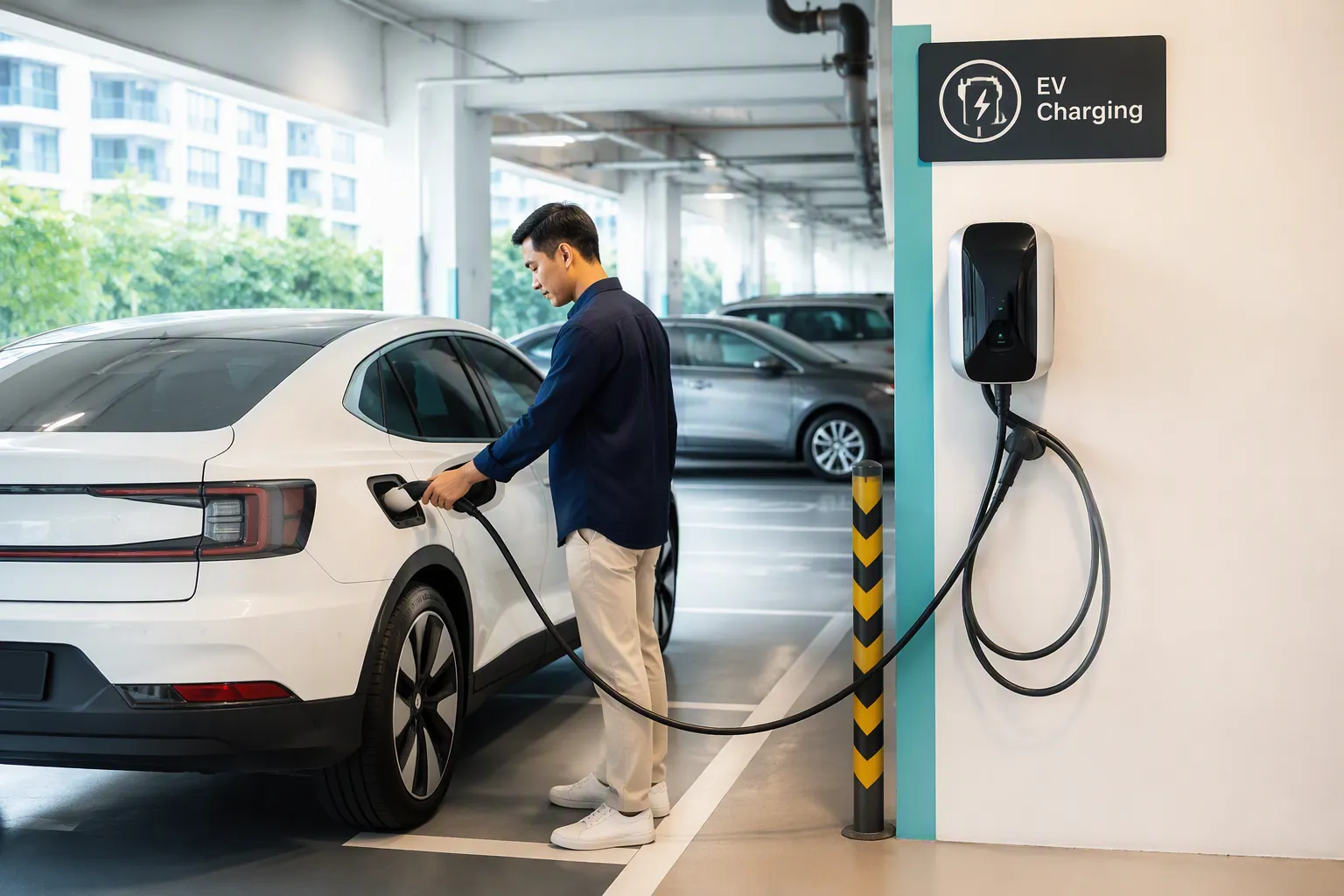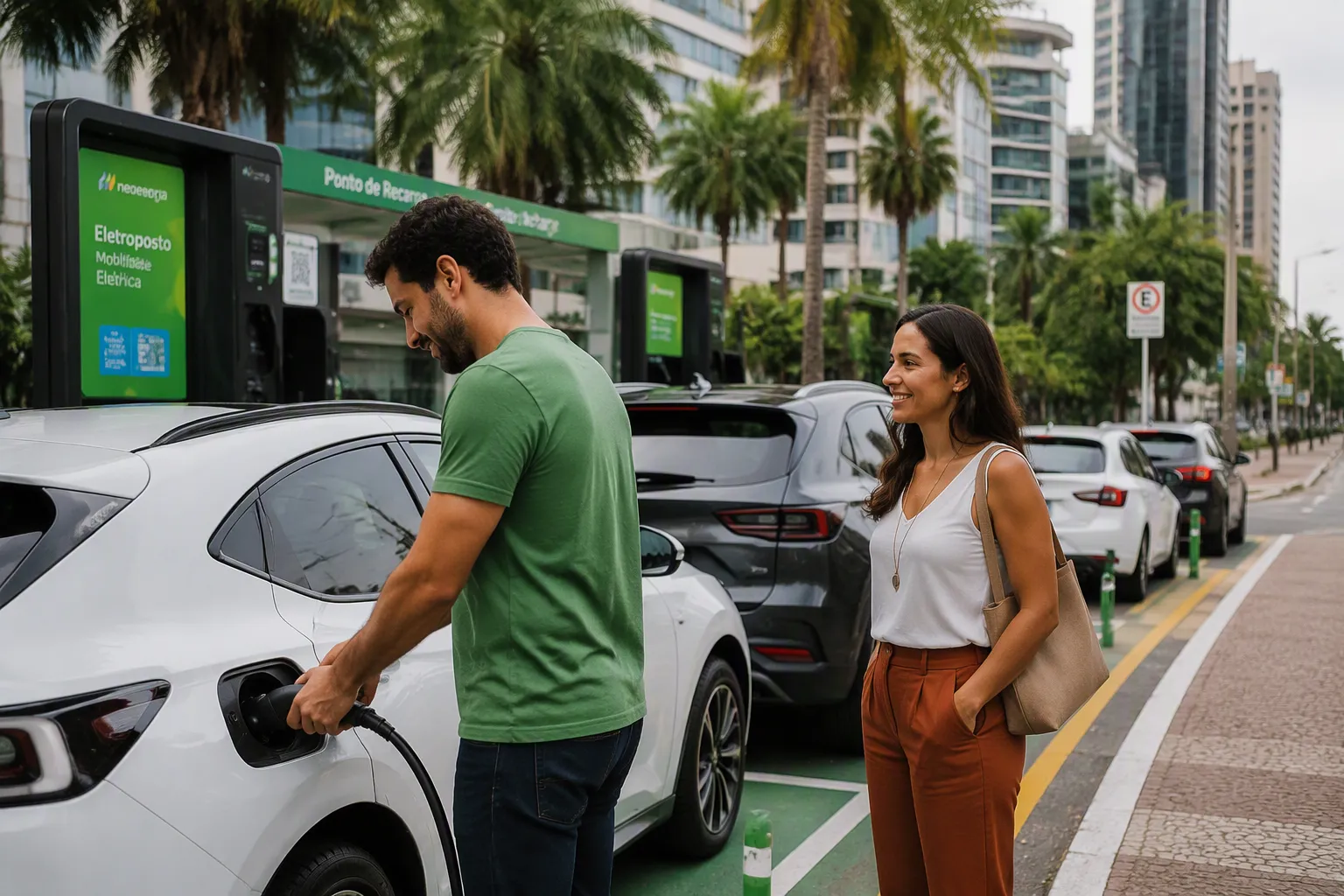

How long does it take to mengisi penuh mobil listrik? The answer can range from just 20 minutes to over 8 hours. With the global electric vehicle market share in new car sales exceeding 20% in 2024, understanding this is essential for every EV driver. The exact time to mengisi penuh mobil listrik at a public charging station depends on three key variables: the charger’s power output (kW), the car’s battery size (kWh), and the vehicle’s maximum charging rate.
A DC fast charger can provide a substantial boost in 20-60 menit, while a standard Level 2 Pengisi Daya Listrik typically requires several hours for a full charge. Technologically advanced Produsen pengisi daya EV like TPSON provide a variety of Solusi pengisian daya kendaraan listrik to meet different needs. Their offerings range from powerful station units to convenient pengisi daya EV portabel, each influencing the final charging speed.
How Long Does It Take to Charge an Electric Car by Charger Type?
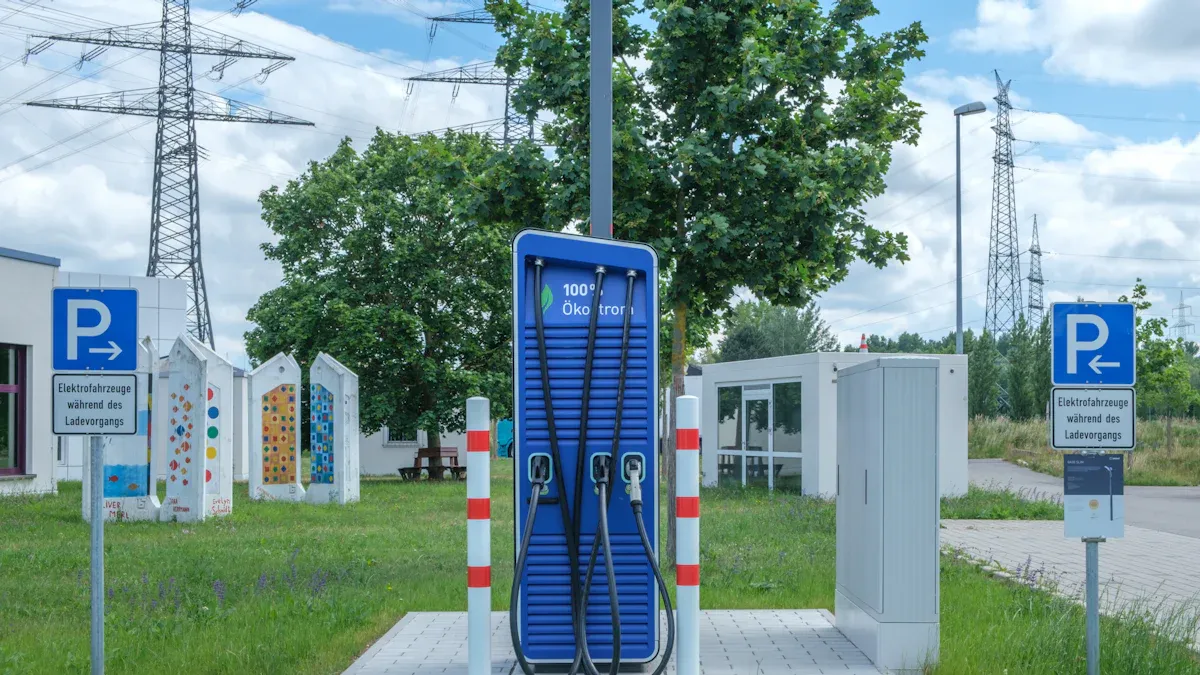
The type of public charging station an EV driver uses is the single biggest factor influencing charging speed. Public chargers are broadly categorized into two main types: Level 3 DC Fast Chargers and Level 2 AC Public Chargers. Each serves a distinct purpose and offers vastly different charging times.
Level 3: DC Fast Chargers (Rapid & Ultra-Rapid)
DC (Direct Current) fast chargers provide the quickest way to mengisi penuh mobil listrik. They bypass the vehicle’s onboard AC-to-DC converter and deliver high-power DC electricity directly to the battery. This process significantly reduces the time needed for a substantial charge.
Time to Charge (80%): 20-60 Minutes
These powerful units can typically charge an EV battery from 20% to 80% in under an hour. The final 20% of the battery takes much longer to fill for battery health reasons, so most drivers unplug after reaching 80%.
Power Output: 50kW to 350kW
DC chargers are classified by their power output.
- Pengisi Daya Cepat: These offer power from 50kW.
- Pengisi Daya Ultra Cepat: These deliver 100kW, 150kW, or even up to 350kW.
Networks are continuously expanding their high-power capabilities. Leading providers offer some of the most powerful chargers available.
| Jaringan | Daya Maksimum |
|---|---|
| IONITY | 350kW |
| Gridserve Electric Highway | 350kW |
Best For: Highway travel and quick top-ups
The incredible speed of DC fast chargers makes them ideal for long-distance journeys. Drivers can add hundreds of miles of range during a short break. This answers the question of how fast do electric cars charge on the motorway. However, this convenience comes at a premium.
Cost Consideration: The speed of rapid chargers corresponds with a higher price.
- Pengisi Daya Cepat DC: Harga sering berkisar dari £0.45 to £0.85 per kWh.
- Level 2 Public Chargers: Costs are lower, typically between £0.30 and £0.40 per kWh.
Level 2: AC Public Chargers
Level 2 chargers are the most common type of public charging point. They supply AC (Alternating Current) power, which the electric vehicle’s onboard charger then converts to DC to fill the battery. This conversion process limits the charging speed compared to DC chargers.
Time to Charge (Full): 3-8 Hours
A Pengisi daya level 2 is not designed for a quick top-up. Instead, it is meant to fully charge an electric car over several hours. The exact empty to full charging time depends heavily on the car’s battery size and the charger’s specific output. A 7kW charger, for example, adds about 25-30 mil jarak tempuh per jam.
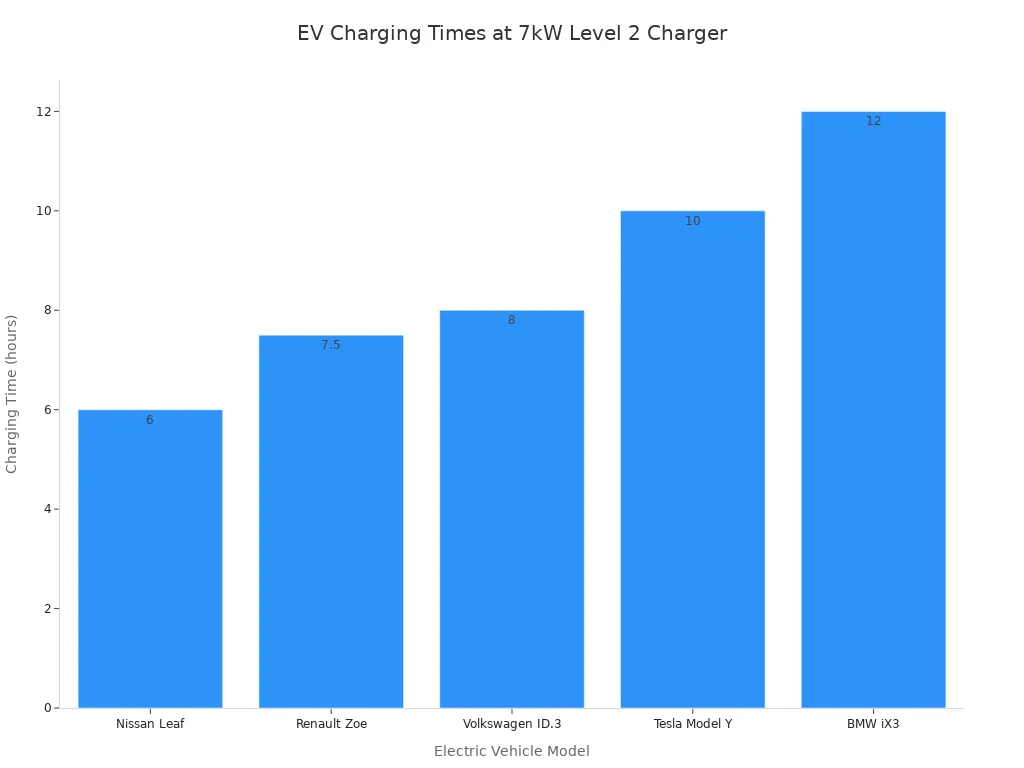
The chart above illustrates how long does it take to charge different models. Here are a few more specific examples for a standard 7kW charging point:
| Model Mobil Listrik | Battery Size (approx.) | 0-100% Charging Time |
|---|---|---|
| Nissan Leaf | 40 kWh | ~6 jam |
| Tesla Model 3 | Tesla Model Y RWD | ~ 8 jam |
Power Output: 7kW to 22kW
Most Level 2 public chargers offer either 7kW or 22kW of power. While a 22kW charger can significantly reduce charging time, the car must have an onboard charger capable of accepting that speed. Many EVs are limited to 7kW or 11kW AC charging. Technologically advanced providers like TPSON offer a variety of EV charging solutions to suit these different power needs.
Best For: Destination charging (workplaces, malls, hotels)
These chargers are perfect for “destination charging,” where the car can be left for an extended period. Drivers will commonly find them installed at:
- Tempat kerja
- Shopping centres and retail car parks
- Hotel dan restoran
- Tempat parkir mobil umum
This allows a driver to charge an electric car while they work, shop, or stay overnight, returning to a full battery.
The 4 Key Factors That Determine Your Public Charging Times
While charger type provides a general estimate, the actual time it takes to charge an electric car depends on a dynamic interplay of factors. Understanding these four key variables helps drivers predict and optimize their public charging times.
Factor 1: Your Car’s Battery Size (kWh)
How Capacity Affects Charging Duration
The size of an electric vehicle’s battery, measured in kilowatt-hours (kWh), is the most straightforward factor influencing charging duration. A larger battery holds more energy and therefore takes more time to fill. This is directly comparable to filling a larger fuel tank in a conventional car. An EV with a 100kWh battery will take roughly twice as long to charge as one with a 50kWh battery at the same charging station.
Example: Small vs. Large Battery Charging Times
The market offers a wide range of battery capacities. Compact city cars often have smaller batteries for efficiency, while larger SUVs designed for long-range travel feature much bigger packs. This difference significantly impacts how long does it take to charge.
| Model Mobil Listrik | Battery Capacity (approx.) |
|---|---|
| Hyundai Kona Electric | 64kWh |
| Skoda Enyaq iV | 82kWh |
| Ford Mustang Mach-E | 99kWh |
| Tesla Model X | 100kWh |
Factor 2: Your Car’s Maximum Charging Rate (kW)
Why Your Car Can Limit Charging Speed
Not all EVs can accept power at the same rate. Every electric car has a maximum charging rate, measured in kilowatts (kW), which acts as a speed limit. A powerful 350kW charger cannot force a car to charge faster than its own system allows. For example, the Kia EV6 can accept up to 350kW, sementara Porsche Taycan has a maximum rate of 268kW. This internal limit is a crucial factor.
The “Handshake” Between the Car and Charger
When an EV is plugged in, its Battery Management System (BMS) communicates with the charger. This “handshake” determines the safe and optimal charging speed. The car’s Vehicle Control Unit (VCU) monitors battery temperature and voltage, adjusting the power flow to protect the battery’s health and longevity. This intelligent management ensures the system never exceeds its safety limits.
Factor 3: The Charger’s Power Output (kW)
How Charger Speed Dictates the Session
The charger’s power output is the other half of the speed equation. Public Pengisi daya cepat DC on major routes typically offer power from 50kW to 350kW. A higher kilowatt rating means the charger can deliver energy faster, reducing the overall time needed to charge an electric car. A session at a 150kW ultra-rapid charger will be significantly shorter than one at a 50kW rapid charger.
Matching the Charger to Your Car’s Capability
The final charging speed is always determined by the lower of the two values: the car’s maximum rate or the charger’s maximum output.
Important Tip: If you charge an electric car with a 50kW maximum rate at a 350kW station, the car will only draw 50kW. The vehicle is in control. You will not damage the car, but you may pay a premium for speed you cannot use.
Factor 4: Your Battery’s State of Charge (SoC)
A battery’s current charge level, or State of Charge (SoC), significantly impacts public charging times. A nearly empty battery accepts power much faster than one that is almost full. This behavior is illustrated by a “kurva pengisian daya,” a graph showing how charging power changes as the battery fills. Understanding this curve is key to optimizing any charging session.
Jendela Pengisian Daya Cepat 20-80%
Most electric vehicles experience their fastest charging speeds when the battery is between 20% and 80% full. This range is often called the “fast charging window.” During this phase, the battery can accept high power levels with maximum efficiency.
A typical charging session follows a predictable pattern:
- Peak Power (Below 60%): The EV accepts its maximum possible power at the beginning of the session when the SoC is low.
- Gradual Tapering (60-80%): The charging power begins to decrease steadily as the battery fills.
- Significant Slowdown (Above 80%): The power delivered drops sharply once the battery reaches the 80% mark.
Kiat Pro: The time it takes to charge from 80% to 100% can be similar to the time it takes to charge from 20% to 80%. For drivers on a long journey, it is often more efficient to unplug at 80% and continue to the next station.
Why Charging Slows Dramatically After 80%
The slowdown after 80% is not a fault of the charger but a deliberate safety feature of the vehicle’s Battery Management System (BMS). As a battery approaches full capacity, its internal resistance increases. Pushing high power into a battery with high resistance generates significant heat, which can damage the cells and reduce the battery’s long-term health.
To prevent this, the BMS intervenes. It actively reduces the charging rate to manage temperature and protect the battery. This intelligent tapering of power is a crucial balance between achieving fast charging speeds and ensuring the battery’s operational life. Every EV must manage this trade-off. Technologically advanced EV charging solution providers like TPSON engineer their products to work seamlessly with these vehicle systems, ensuring a safe and effective charge every time. This protective measure is why the final 20% of a charge takes a disproportionately long amount of time.
Practical Scenarios: How Much Range Can You Add in 30 Minutes?
Understanding charging speeds in theory is helpful. Applying that knowledge to real-world scenarios provides a practical perspective. The amount of range an electric vehicle driver can add in a 30-minute stop depends entirely on the type of charger they use. This fixed amount of time yields vastly different outcomes across the jaringan pengisian daya publik.
At a 150kW+ Ultra-Rapid Charger
Range Added: Up to 200 miles
Ultra-rapid chargers, with power outputs from 150kW to 350kW, are the fastest way to charge an EV. In just 30 minutes, a compatible car can gain a significant amount of range, often enough for several hours of driving. These chargers are designed for situations where time is critical.
Real-World Speed: Under ideal conditions, these powerful chargers can deliver hundreds of miles of range in 15 to 30 minutes. A 30-minute session can achieve the following:
- Add approximately 100 miles of range in just 10-15 minutes.
- Charge a 60kWh battery from 10% to 80% in 20-30 minutes.
Ideal for Long-Distance Journeys
The incredible speed of ultra-rapid chargers makes them essential for long-distance travel. Drivers can stop at a motorway service station, plug in, and add substantial range during a short coffee or lunch break. This efficiency minimizes downtime and makes cross-country trips in an electric vehicle seamless and convenient.
At a 50kW Rapid Charger
Range Added: Up to 90 miles
The 50kW rapid chargers represent a common and reliable option on the public network. While not as fast as ultra-rapid units, they provide a meaningful charge in a short period. A 30-minute session at a 50kW charger can typically add up to 90 miles of range, depending on the vehicle’s efficiency. For example, a Nissan Leaf 40kWh model can add approximately 50 miles of range in 30 minutes.
Common for Quick Stops and Errands
These chargers are perfectly suited for top-ups while running errands. A driver can plug in at a supermarket or retail park and return to a car with significantly more range. It is important to note that some vehicles have a maximum charging speed of 50kW.
| Kendaraan | Rapid Charge (50kW) |
|---|---|
| Mini Electric | 25 mins (50kW max) |
The BMW i3 120Ah is another model that accepts a maximum charging speed of 50kW. Using a more powerful charger with these cars will not reduce the charging time.
At a 22kW AC Fast Charger
Range Added: Up to 45 miles
A 22kW AC charger offers a slower but still very useful charging speed. In 30 minutes, a driver can expect to add around 30-45 miles of range. This assumes the car has an onboard charger capable of accepting 22kW AC power. Many cars are limited to 11kW or 7.4kW, which would reduce the range added in the same period. Technologically advanced EV charging solution providers like TPSON offer products that work seamlessly with these varied vehicle systems.
Useful for Extended Stays at a Destination
This type of charger is not designed for a quick “splash and dash.” Instead, it excels at destination charging. It is ideal for locations where a driver will be parked for an hour or more, such as:
- Shopping centers
- Cinemas
- Restoran
- Pusat Kebugaran
Plugging into a 22kW charger during these activities allows the driver to return to a vehicle with a healthy amount of added range, making it a practical and convenient option for daily use.
How to Calculate How Long It Takes to Charge Your Electric Car
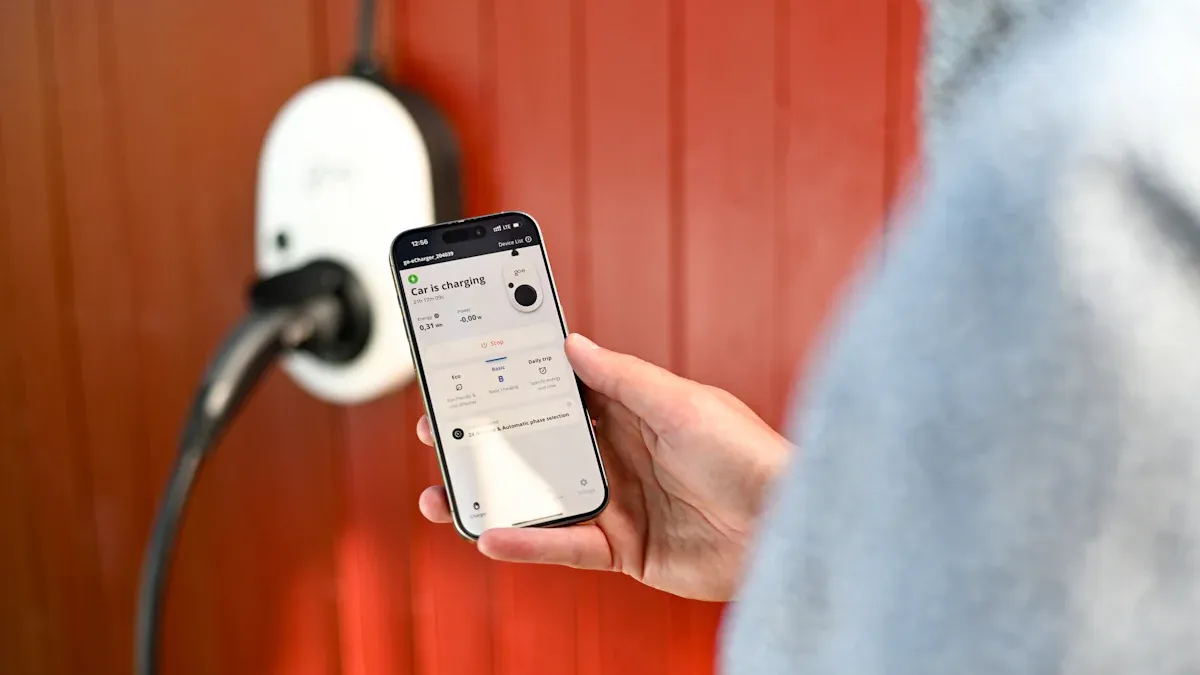
Drivers can estimate their public charging sessions with a simple calculation. While several factors influence the exact duration, a basic formula provides a solid starting point. Understanding how to calculate charging times helps drivers plan their stops more effectively. This knowledge answers the common question: how long does it take to mengisi penuh mobil listrik?
The Basic Formula for Estimating Charging Time
At its core, the calculation for charging time is straightforward. It involves dividing the amount of energy needed by the speed at which it is delivered.
Battery Size (kWh) ÷ Charger Power (kW) = Time (Hours)
This formula gives a theoretical estimate for how long it takes to charge. For example, a 70kWh battery charging on a 7kW charger would theoretically take 10 hours to charge from empty to full.
Battery Capacity to Add (kWh) / Charger Power (kW) = Charging Time (Hours)
Factoring in Charging Efficiency
The basic formula assumes 100% efficiency, which is not achievable in the real world. During any session to charge an electric car, some energy is lost as heat. The vehicle’s battery management system also consumes power. This results in an efficiency loss of about 10-15%.
A More Realistic Calculation: To get a better estimate, drivers should account for this inefficiency. A simple way is to increase the estimated time by about 10%.
- Ideal Time: 5 hours
- Realistic Time: 5 hours * 1.10 = 5.5 hours
Real-World Calculation Example
Let’s apply this knowledge to a practical scenario. This example shows how to estimate the time needed to charge an electric car at a common public station.
Calculating Time for a 60kWh Battery on a 50kW Charger
Imagine a driver with an EV that has a 60kWh battery. They arrive at a 50kW DC rapid charger and want to charge from 0% to 100%.
- Ideal Calculation: 60 kWh ÷ 50 kW = 1.2 hours
- Factoring in Efficiency: 1.2 hours * 1.10 = 1.32 hours, or about 1 hour and 20 minutes.
This calculation provides a good baseline for the total session time.
Adjusting for the 20-80% Charging Curve
As discussed, charging speeds slow significantly after the battery reaches 80% capacity. Most drivers using Pengisi daya cepat DC only charge within this optimal window. Let’s recalculate for a 20-80% charge, which is 60% of the total battery capacity.
- Energi yang Dibutuhkan: 60 kWh * 0.60 = 36 kWh
- Estimated Time: 36 kWh ÷ 50 kW = 0.72 hours, or approximately 43 minutes.
This demonstrates why charging to 80% is much more time-efficient. Technologically advanced EV charging solutions from providers like TPSON are engineered to communicate seamlessly with a vehicle’s BMS, optimizing power delivery throughout this curve for a safe and effective session. This real-world adjustment is key to understanding how long does it take to charge.
Other Factors That Influence How Long It Takes to Charge
Beyond the primary factors of battery size and charger power, several environmental and situational variables can significantly alter how long it takes to charge an electric car. A driver’s awareness of temperature, battery readiness, and station configuration can make a noticeable difference in charging session duration.
Suhu Lingkungan
A battery’s chemical reactions are sensitive to its surrounding temperature. Both extreme cold and heat can negatively impact charging speeds as the vehicle’s Battery Management System (BMS) works to protect the cells.
How Cold Weather Slows Charging Speeds
In cold weather, a battery’s internal resistance increases. This makes it harder for the cells to accept a charge. To prevent damage, the BMS will deliberately limit the charging power until the battery warms up to an optimal temperature. This protective measure can add considerable time to a charging session, especially at the beginning.
Battery Management in Hot Weather
High temperatures also pose a risk to battery health. An EV’s BMS prevents overheating by adjusting the charging rate based on the battery’s internal temperature. In hot climates, it will reduce charging power or even stop the session if temperatures become too extreme. To manage this, vehicles use sophisticated cooling systems.
- Liquid Cooling: The most efficient method, circulating a coolant like glycol around the battery to absorb and transfer heat away.
- Air Cooling: A simpler method that uses fans to blow air across the battery pack.
☀️ Tips Cuaca Panas: Pengemudi dapat membantu kendaraan mereka dengan memarkir di tempat teduh dan menjadwalkan pengisian daya pada bagian hari yang lebih sejuk, seperti pagi-pagi sekali atau sore hari.
Pengkondisian Awal Baterai
Pra-kondisi baterai adalah fitur yang dirancang untuk mengatasi tantangan suhu lingkungan dengan secara aktif mengelola suhu baterai sebelum sesi pengisian daya dimulai.
Apa Itu dan Mengapa Penting
Pra-kondisi secara otomatis memanaskan atau mendinginkan baterai ke kisaran suhu idealnya saat pengemudi sedang dalam perjalanan ke stasiun pengisian. Ini memastikan baterai siap menerima kecepatan pengisian daya maksimum yang mungkin saat tiba, meminimalkan waktu tunggu dan memaksimalkan efisiensi, terutama untuk pengisian cepat DC.
Mengaktifkan Pra-kondisi untuk Pengisian Daya Lebih Cepat
Banyak kendaraan listrik modern menawarkan fitur ini. Misalnya, Hyundai KONA Electric dan model Kia tertentu dapat secara otomatis mengaktifkan pra-kondisi baterai. Proses ini dimulai ketika pengemudi menetapkan titik pengisian daya publik sebagai tujuan dalam sistem navigasi kendaraan, memungkinkan mobil mempersiapkan baterainya selama perjalanan.
Daya Bersama di Stasiun Pengisian
Tidak semua stasiun pengisian daya memberikan daya yang diiklankan kepada setiap kendaraan setiap saat. Beberapa dirancang untuk membagi keluaran totalnya antara beberapa mobil.
Bagaimana Beberapa Stasiun Membagi Daya Antar Mobil
Stasiun pengisian daya tertentu, sering diberi label ‘pengisi daya ganda’, berisi perangkat keras yang melayani dua tempat parkir tetapi memiliki satu kabinet daya. Ketika dua kendaraan terhubung secara bersamaan, stasiun membagi keluaran daya maksimumnya di antara mereka. Ini berarti setiap ev menerima daya yang jauh lebih rendah kecepatan pengisian daya daripada jika mengisi daya sendirian.
Mengidentifikasi dan Menghindari Tempat Parkir Berbagi Daya
Pengemudi dapat mengidentifikasi stasiun pembagi daya dengan mengamati penurunan kecepatan pengisian daya yang tiba-tiba ketika mobil lain terhubung ke tempat parkir yang berdekatan. Beberapa unit diberi label secara eksplisit. Jika memungkinkan, yang terbaik adalah memilih tempat parkir yang tidak berpasangan atau menunggu hingga ada yang kosong. Dampaknya bisa signifikan, seperti yang ditunjukkan di bawah ini.
| Jumlah Kendaraan Terhubung | Keluaran Daya per Kendaraan |
|---|---|
| Satu | 7,4 kW |
| Dua | 3,7 kW |
Solusi pengisian daya EV yang canggih secara teknologi dari penyedia seperti TPSON dirancang untuk mengomunikasikan statusnya dengan jelas, membantu pengemudi membuat keputusan yang tepat.
Terminologi EV Penting untuk Memahami Waktu Pengisian Daya
Menjelajahi dunia kendaraan listrik melibatkan pembelajaran kosakata baru. Memahami beberapa istilah penting sangat penting untuk memprediksi waktu pengisian daya publik dan membuat keputusan yang tepat di stasiun. Konsep-konsep ini menjelaskan bagaimana daya diukur dan disalurkan ke EV.
Kilowatt (kW) vs. Kilowatt-jam (kWh)
Kedua satuan ini adalah pengukuran paling mendasar di dunia EV, tetapi keduanya mewakili hal yang sangat berbeda.
kW: Kecepatan Aliran Energi
Kilowatt (kW) mengukur daya, atau laju di mana energi ditransfer. Ini mewakili kecepatan pengisi daya. Peringkat kW yang lebih tinggi berarti aliran energi yang lebih cepat.
Cara mudah untuk memvisualisasikannya adalah dengan memikirkan kolam renang. Kilowatt (kW) seperti laju air mengalir dari selang ke kolam. Selang yang lebih lebar (kW lebih tinggi) mengisi kolam lebih cepat.
kWh: Jumlah Energi yang Disimpan
Kilowatt-jam (kWh) mengukur kapasitas energi. Ini mewakili jumlah jumlah energi yang dapat ditampung baterai. Ini mirip dengan ukuran tangki bahan bakar pada mobil konvensional. Angka kWh yang lebih besar berarti baterai yang lebih besar dan, biasanya, jarak tempuh yang lebih jauh. Dalam analogi kolam renang, kWh adalah jumlah total air yang dapat ditampung kolam.
Pengisian Daya AC vs. DC
Jenis arus listrik yang diberikan pengisi daya berdampak langsung pada kecepatan dan penerapannya.
AC (Arus Bolak-Balik): Untuk Pengisian Daya Lambat, Onboard
Daya AC adalah listrik standar yang disuplai oleh jaringan ke rumah dan bisnis. Ketika EV menggunakan pengisi daya AC, pengisi daya onboard kendaraan harus mengubah daya ini menjadi DC untuk menyimpannya di baterai. Proses konversi ini membatasi kecepatan pengisian daya, menjadikan pengisian daya AC ideal untuk tinggal lebih lama, seperti semalaman di rumah atau selama hari kerja. Penyedia solusi pengisian daya kendaraan listrik yang canggih secara teknologi seperti TPSON merancang produk yang mengelola konversi ini secara efisien.
DC (Arus Searah): Untuk Pengisian Daya Cepat, Langsung ke Baterai
Pengisi daya cepat DC melakukan konversi AC-ke-DC di dalam stasiun pengisian daya itu sendiri. Ini memungkinkan mereka melewati pengisi daya onboard mobil yang lebih lambat dan memberikan listrik DC berdaya tinggi langsung ke baterai. Metode ini memungkinkan pengisian daya yang jauh lebih cepat, menjadikannya sempurna untuk isi ulang cepat selama perjalanan jauh.
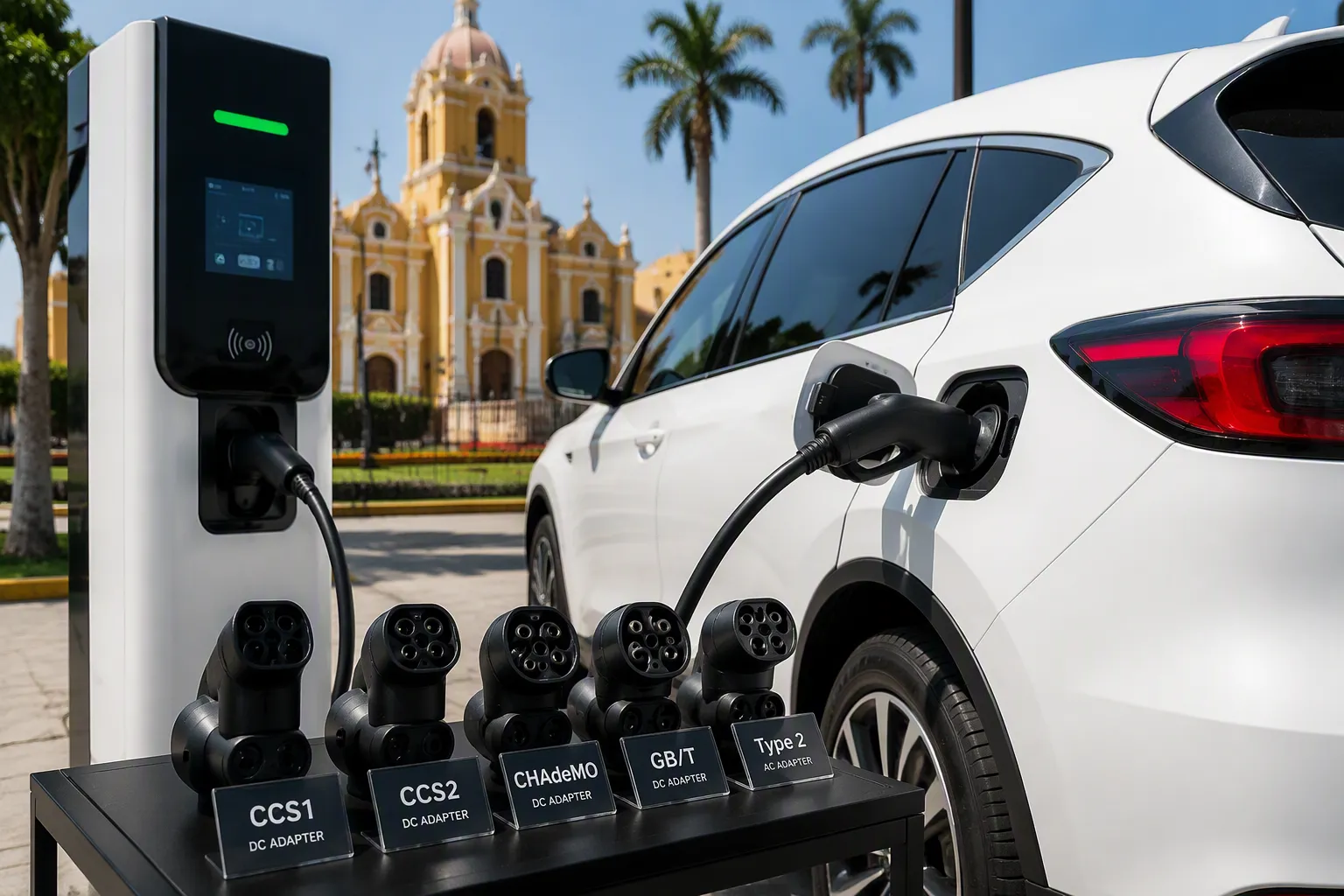
Konektor Pengisian Daya Publik Umum
Steker fisik yang menghubungkan pengisi daya ke mobil disebut konektor. Wilayah dan produsen yang berbeda telah mengadopsi berbagai standar.
CCS (Sistem Pengisian Daya Gabungan): Standar untuk Sebagian Besar EV
CCS adalah standar yang paling luas untuk pengisian cepat DC di seluruh Eropa dan Amerika Utara. Ini menggabungkan konektor AC standar dengan dua pin DC besar di bawahnya, memungkinkan pengisian daya AC dan DC dengan satu port.
NACS (Standar Pengisian Daya Amerika Utara): Digunakan oleh Tesla
Dikembangkan oleh Tesla, konektor NACS adalah desain steker tunggal yang kompak yang menangani pengisian daya AC dan DC. Meskipun secara historis eksklusif untuk Tesla, banyak produsen lain telah mengumumkan rencana untuk mengadopsi standar ini.
CHAdeMO: Digunakan oleh Model Nissan dan Mitsubishi
CHAdeMO merupakan standar awal untuk pengisian cepat DC, terutama digunakan oleh beberapa produsen mobil Asia. Meskipun masih tersedia di banyak stasiun, standar ini semakin jarang ditemukan pada model kendaraan baru.
| Konektor Pengisian | Produsen Utama |
|---|---|
| CCS | BMW, Volkswagen Group, Mercedes-Benz, Audi |
| NACS | Tesla, Ford (direncanakan), General Motors (direncanakan) |
| CHAdeMO | Nissan (dalam transisi), Toyota, Subaru, Mazda |
Jadi, berapa lama waktu yang dibutuhkan untuk mengisi daya mobil listrik? Jawabannya tergantung pada kebutuhan Anda. Pengemudi dapat mengisi daya mobil listrik di stasiun pengisian umum dalam 20 menit atau lebih dari delapan jam. Waktu pengisian akhir untuk setiap kendaraan listrik bergantung pada beberapa faktor kunci.
Poin-Poin Penting:
- Daya pengisi dan kemampuan EV menentukan berapa lama waktu pengisian yang dibutuhkan.
- Pengisi cepat paling ideal untuk perjalanan jarak jauh, menambah jangkauan signifikan dalam waktu kurang dari satu jam.
- Pengisi daya level 2 Pengisi daya Level 2 sangat ideal untuk mengisi penuh mobil listrik dalam beberapa jam di lokasi tujuan.
- Pengemudi dapat meminimalkan waktu tunggu dengan memahami aturan pengisian 80% dan menggunakan solusi pengisian EV canggih dari penyedia seperti TPSON.
PERTANYAAN YANG SERING DIAJUKAN
Dapatkah saya menggunakan pengisi daya umum untuk EV saya?
Pengemudi harus menggunakan pengisi daya dengan konektor yang kompatibel untuk kendaraannya. Sebagian besar EV modern menggunakan standar CCS. Beberapa model menggunakan CHAdeMO atau NACS. Pengemudi harus memeriksa spesifikasi mobil dan label pengisi daya sebelum mencolokkan.
Apakah buruk jika selalu mengisi cepat EV saya?
Mengandalkan pengisian cepat DC secara eksklusif dapat menurunkan kesehatan baterai seiring waktu karena peningkatan suhu. Sebagian besar produsen merekomendasikan kombinasi pengisian AC yang lebih lambat dan pengisian cepat DC sesekali. Praktik ini membantu menjaga kapasitas dan masa pakai baterai dalam jangka panjang.
Mengapa mobil saya mengisi daya lebih lambat dari yang diiklankan?
Beberapa faktor dapat mengurangi kecepatan pengisian. Baterai yang dingin, hari yang panas, atau stasiun yang membagi daya antara dua mobil akan memperlambat sesi pengisian. Mobil juga sengaja memperlambat pengisian setelah mencapai 80% baterai untuk melindungi sel.
Dapatkah saya membiarkan mobil tetap terhubung setelah terisi penuh?
Pengemudi harus memindahkan kendaraannya setelah pengisian selesai. Banyak jaringan pengisian menerapkan biaya menganggur untuk mobil yang tetap terhubung setelah sesi berakhir. Kebijakan ini memastikan pengisi daya tersedia untuk pemilik EV berikutnya.
Bagaimana saya dapat menemukan stasiun pengisian umum?
Pengemudi EV dapat menggunakan aplikasi seluler khusus seperti PlugShare atau Zap-Map. Sistem navigasi bawaan kendaraan sering menunjukkan pengisi daya terdekat. Penyedia solusi pengisian kendaraan listrik yang canggih secara teknologi solusi pengisian kendaraan listrik seperti TPSON merancang produk yang terintegrasi mulus dengan platform jaringan ini.
Apa perbedaan antara pengisi daya 50kW dan 150kW?
Angka kilowatt (kW) menunjukkan kecepatan pengisian daya. tingkat pengiriman daya maksimum. Pengisi daya 150kW dapat mengirimkan energi tiga kali lebih cepat daripada pengisi daya 50kW. Peringkat kW yang lebih tinggi menghasilkan waktu pengisian yang jauh lebih singkat, asalkan kendaraan dapat menerima kecepatan tersebut.