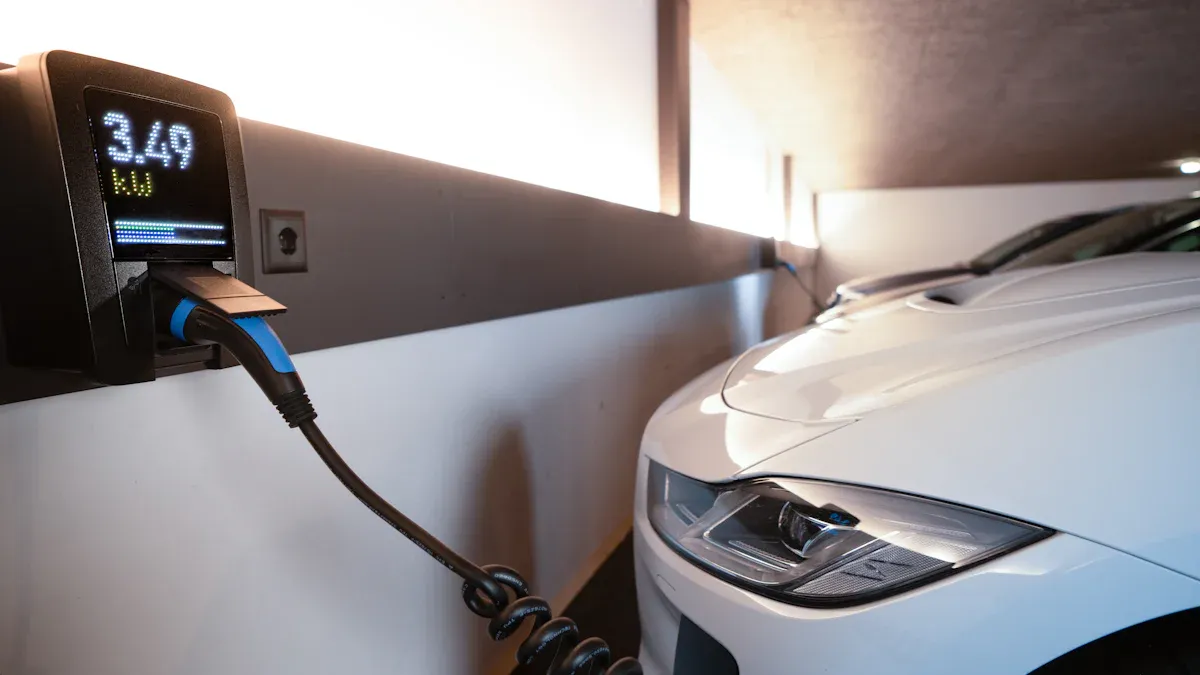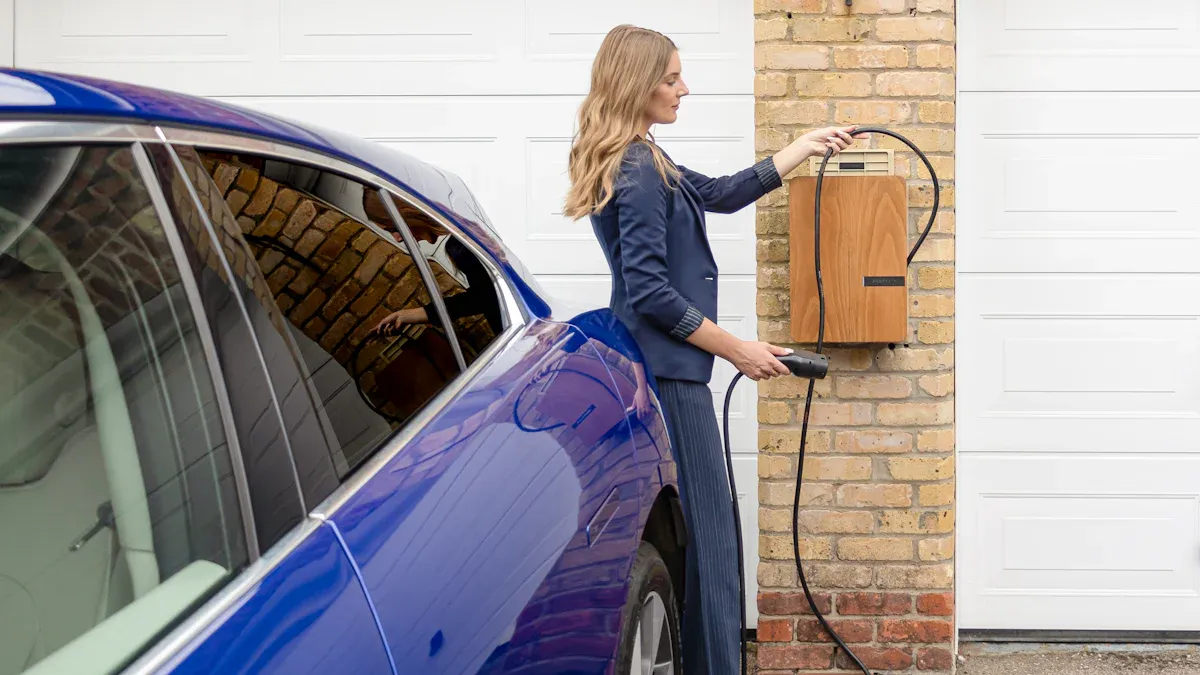
A standard portable EV charger provides a crucial link for any EV. EV charger manufacturers develop these portable EV chargers as flexible EV charging solutions. For drivers in the Netherlands, this EV charger delivers between 2.3 kW and 3.7 kW from a regular home socket. This power translates into a tangible gain of real-world range.
This speed adds approximately 10 to 15 kilometers for every hour an EV is plugged in. While not as fast as dedicated public charging stations, this rate is perfectly fast for overnight EV charging to cover daily public commutes. The public supports the growth of every EV. Public EV adoption is key.
Understanding Portable Charger Speeds: From kW to km/h
The power rating of a charger, measured in kilowatts (kW), directly determines how quickly an EV battery can be replenished. For drivers, this technical number is less important than its real-world impact: the kilometers of range added per hour. This section breaks down what those numbers mean for a typical EV driver in the Netherlands.
What 2.3 kW to 3.7 kW Actually Means for Your Car
A standard portable EV charger offers a slow but steady flow of energy. This charging speed is a function of the electrical outlet’s voltage and the current (amperage) the charger can safely draw. The public needs to understand this basic relationship.
The Simple Charging Calculation
The charging power is calculated by multiplying voltage (V) by amperage (A). In the Netherlands, a standard home socket provides 230V.
- A charger drawing 10A delivers:
230V x 10A = 2300Wor 2.3 kW. - A charger drawing 16A delivers:
230V x 16A = 3680Wor 3.7 kW.
Note on Charging Standards: In Europe, the relevant standard is IEC 61851. It defines household socket charging as ‘Mode 1’. This mode allows charging from a single-phase 250V connection with a maximum current of 16A. This is the technical basis for the charging speeds of portable chargers.
This power flows into the EV battery, minus small efficiency losses. A higher kilowatt rating means a shorter charging time. The public charging infrastructure offers much higher ratings.
Range Added Per Hour for Popular EVs
The actual range an EV gains depends on its efficiency (how many kilometers it can travel per kWh of energy). A more efficient EV will gain more range from the same amount of power. The average charging speed is a key metric.
Here is a practical look at what a 2.3 kW charge provides per hour for popular EV models.
| EV Model | Average Efficiency (km/kWh) | Approx. Range Added Per Hour |
|---|---|---|
| Tesla Model 3 | 6.8 km/kWh | ~15 km |
| Kia Niro EV (65 kWh) | 6.2 km/kWh | ~14 km |
| Volkswagen ID.4 | 5.8 km/kWh | ~13 km |
This table shows that an overnight charge of 8 hours can easily add over 100 km of range, covering most daily commutes. The public can rely on this for daily needs.
How Fast is a Portable Charger Compared to Other Options?
A portable charger is just one of several types of EV chargers available. Its main advantage is convenience, not speed. The Dutch charging infrastructure is robust. The public charging infrastructure provides many faster options. The national charging infrastructure is constantly expanding.
Portable Charger (2.3-3.7 kW)
This is the baseline for EV charging. It is reliable for adding range over long periods, like overnight. A full charge on a 60 kWh battery can take over 24 hours, making it impractical for quick top-ups. The charging time is significant.
Public AC Charger (11-22 kW)
These are the most common chargers found at public charging stations, workplaces, and in home wallbox installations. They offer a much faster charging speed.
- Speed: An 11 kW charger is about 3-4 times faster than a 3.7 kW portable charger.
- Charging Time: A 60 kWh EV battery charges from empty to full in roughly 5 hours and 30 minutes. This makes them ideal for topping up while shopping, working, or parked for a few hours. The public charging network relies heavily on this infrastructure.
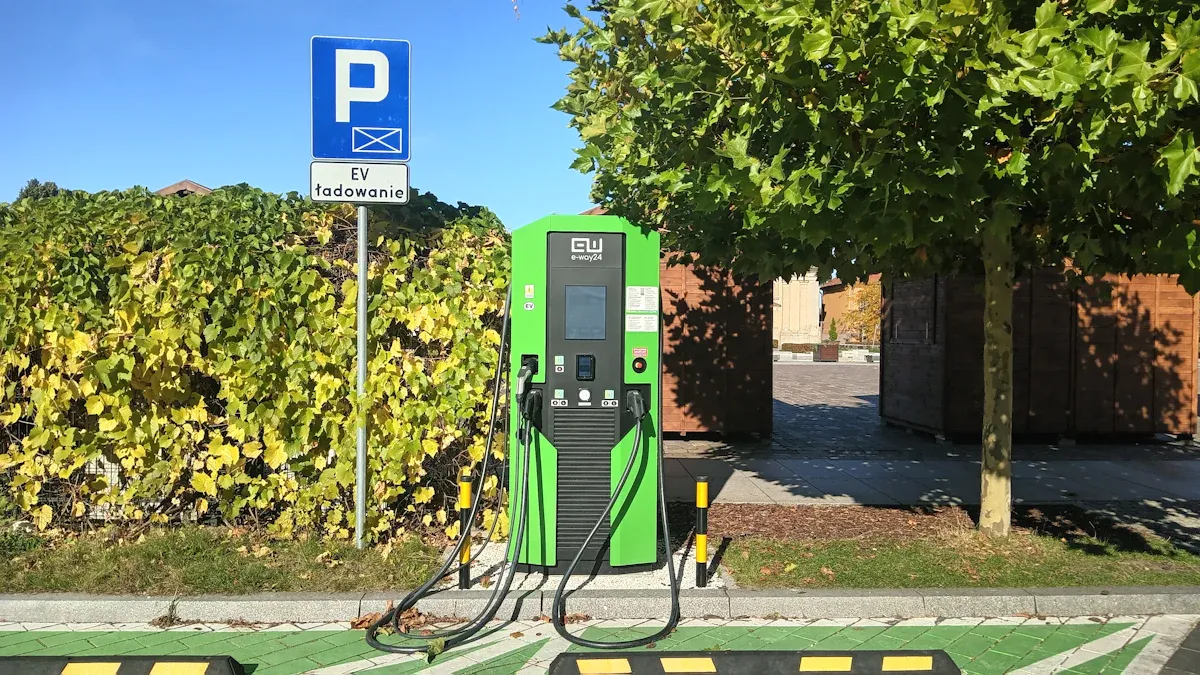
DC Fast Charger (50-350 kW)
DC fast charging represents the pinnacle of EV charging technology. These chargers are found along major highways and at dedicated public charging stations. They are designed for long-distance travel.
- Speed: DC fast charging is exceptionally fast. It bypasses the EV’s onboard charger and delivers direct current straight to the battery.
- Charging Time: A compatible EV can often charge from 20% to 80% in just 20-40 minutes. The charging time is minimal.
- Use Case: DC fast charging is the go-to solution for road trips. It minimizes downtime and makes long journeys in an EV feasible. The public infrastructure for DC fast charging is growing. The public can find these stations easily. The charging infrastructure supports this fast technology. The public charging stations offer this fast service. The charging infrastructure is key. The public charging stations are essential for travel. The charging infrastructure makes EV ownership practical. The public benefits from this advanced infrastructure. The charging time is very short with DC fast charging. The charging time is a major advantage of DC fast charging.
What Determines How Fast Your Portable EV Charger Works?

The advertised speed of a portable EV charger provides a baseline. However, the actual performance an EV driver experiences depends on a chain of three critical factors. The final charging speed is only as fast as the weakest link in this chain. Understanding these elements helps drivers optimize their electric vehicle charging routine and set realistic expectations for charging an electric car at home or on the go.
Factor 1: Your Home’s Electrical System in the Netherlands
The power source is the foundation of charging an electric car. The capabilities of a standard residential electrical system in the Netherlands directly govern the maximum performance of any device plugged into it.
The 230V Schuko Socket Limit
In the Netherlands, the electrical grid supplies power at a standard 230 Volts (V). The common household outlet is the “Schuko” socket. Electrical standards dictate that these residential Schuko sockets are rated for a maximum continuous current of 16 Amperes (A). This physical rating establishes the absolute upper limit for power delivery from a standard wall outlet.
10A vs. 16A Circuits and Your Speed
While the socket itself can handle 16A, the circuit it is connected to in your home’s fuse box (fuse box) may be protected by either a 10A or a 16A breaker. This breaker is the true gatekeeper of your charging performance.
- 10A Circuit: Delivers a maximum of
230V x 10A = 2.3 kW. This is a common setup for general-use circuits in many homes. - 16A Circuit: Delivers a maximum of
230V x 16A = 3.7 kW. This provides a noticeably fast charging experience and is often used for dedicated circuits for high-power appliances.
An EV connected to a 16A circuit will gain range approximately 60% faster than one on a 10A circuit. This difference significantly impacts the time required for charging an electric car overnight.
How to Check Your Circuit’s Capacity Safely
Identifying your circuit’s capacity is a straightforward and important safety check.
Safety First ⚠️: A driver should never attempt to modify electrical wiring without professional qualifications. For any doubts or upgrades, always consult a certified electrician.
To check the rating, locate your home’s main electrical panel (fuse box). Find the breaker switch that corresponds to the socket you intend to use. The amperage rating is printed directly on the switch, typically showing a number like “B10” or “C16”. The number indicates the amperage limit. This simple check ensures you use your charger safely and understand its potential performance.
Factor 2: The Portable EV Charger Itself
The design and features of the portable EV charger play a vital role in both safety and performance. Modern chargers offer more than just a simple power connection; they provide control and efficiency.
Using Adjustable Amperage Settings
Many high-quality portable chargers feature adjustable amperage settings. Technologically advanced electric vehicle charging solution providers like TPSON build this function into their equipment. This allows the user to manually select the current draw, such as 8A, 10A, 13A, or 16A. This feature is crucial for safety, enabling the driver to match the charger’s power consumption to the circuit’s limit, preventing the breaker from tripping. This is essential when charging an electric car at an unfamiliar location.
How Amperage Affects Charging Speed
The selected amperage setting directly controls the charging speed. A lower amperage results in a slower, gentler charge, while a higher amperage delivers a fast charge. The relationship is linear.
| Amperage Setting | Power at 230V | Approx. Range Added/Hour | Use Case |
|---|---|---|---|
| 10A | 2.3 kW | ~10-15 km | Standard overnight charging |
| 16A | 3.7 kW | ~15-22 km | Faster overnight charging |
This adjustability gives the driver control over the charging performance for their EV.
The Impact of Cable Quality
The quality of a charger’s internal components and cable directly affects its efficiency and safety. Inefficient power conversion in a poorly made charger leads to significant energy loss, which escapes as heat. This not only slows down the overall process of charging an electric car but also poses a safety risk. A well-engineered portable EV charger minimizes this energy loss, ensuring a fast and safe performance. This means more of the power from the wall socket goes directly into the EV battery, maximizing the charging speed and ensuring reliable operation. The performance of the EV depends on this efficiency.
Factor 3: Your Electric Vehicle’s On-Board Systems
The final factor in the charging equation is the EV itself. The car’s internal systems actively manage the flow of energy to protect the battery and optimize its lifespan, which directly influences the charging performance.
The Role of the On-Board Charger
When charging an electric car with AC power (from a wall socket or public AC station), the vehicle’s on-board charger (OBC) is responsible for converting that AC power into DC power that the battery can store. Every OBC has a maximum power rating. For single-phase charging, this is often 3.7 kW or 7.4 kW.
Important Note: Your EV will only charge as fast as the slowest component in the chain. If you use a 3.7 kW portable charger on a 16A circuit with an EV that has a 7.4 kW OBC, the charging speed will be limited to 3.7 kW. The performance is capped by the charger.
The Charging Curve: Why Speed Drops After 80%
Charging an electric car is not a linear process. The EV’s Battery Management System (BMS) controls the charging rate to protect the battery’s health. This results in a “charging curve.”
- Bulk Phase (0-80%): The EV accepts power at a consistent, fast rate.
- Absorption Phase (80-100%): The BMS significantly reduces the charging speed. This tapering protects the battery cells from stress and degradation.
This is why charging an electric car from 80% to 100% can take almost as long as charging it from 20% to 80%. This is normal EV behavior and ensures long-term battery performance.
How Cold Weather Affects Electric Vehicle Charging
Low ambient temperatures have a noticeable impact on electric vehicle charging performance. The chemical reactions inside a lithium-ion battery slow down in the cold. To protect the battery, the BMS will limit the charging speed until the battery pack warms up to an optimal temperature. Some EV models will even use a portion of the incoming energy to heat the battery first, meaning the net charge added during the initial phase of charging an electric car in winter can be very slow. This is a key factor for EV drivers in the Netherlands during colder months. The overall performance of the EV is affected by these conditions.
Is a Portable Charger Fast Enough? Scenarios for Dutch Drivers
The speed of a portable EV charger is relative to the driver’s needs. For some situations, it is perfectly fast, while for others, it is impractical. These real-world scenarios help Dutch drivers understand when a portable charger is the right tool for charging an electric car. The public can benefit from understanding these use cases.
Scenario 1: The Daily Commuter
The Need: A 50 km Daily Drive
Many drivers in the Netherlands have a daily commute of around 50 kilometers. This routine requires a reliable and cost-effective method for charging an electric car. The goal is to start each day with enough electric car range, avoiding trips to public charging stations. The public often overestimates daily charging needs.
The Solution: Easy Overnight Charging
An overnight charge is the ideal solution. A portable EV charger makes charging an electric car at home simple. The Netherlands has historically enjoyed low residential electricity prices compared to other EU nations, making home charging an economical choice. An EV can easily replenish the energy used during the day.
A basic mobile charging cord provides six to eight miles of range per hour. To add 50 km (approximately 31 miles) of range to an EV, it would take between 3.875 and 5.16 hours.
This timeframe fits perfectly within an 8-hour overnight window. Charging an electric car this way is both convenient and fast enough for daily life.
Verdict: Perfectly Fast for Daily Use
For daily commuting, a portable charger is a fast and efficient solution. It eliminates the need for frequent visits to public charging stations, ensuring the EV is always ready.
Scenario 2: The Long-Distance Road Trip
The Goal: Adding 300 km of Range
Long journeys in an EV require significant range replenishment. A driver might need to add 300 km to their EV to reach the next destination comfortably. This situation demands a fast charging solution to minimize travel time. The public relies on a network of public charging stations for these trips.
The Reality: Why It’s Too Slow
Using a portable charger for this task is not feasible. The charging time is calculated by dividing the needed energy by the charger’s power. A 3.7 kW charger would take over 14 hours to add the approximately 54 kWh needed for 300 km of range. This lengthy delay makes it an impractical choice for road trips. Charging an electric car on the go must be fast.
Verdict: A Job for Public Fast Chargers
This task is exclusively for DC fast chargers. These powerful units at public charging stations can add 300 km of range in under an hour, making long-distance EV travel efficient. The public infrastructure is designed for this purpose.
Scenario 3: Visiting Friends or Family
The Situation: Needing a Top-Up Away from Home
Drivers often visit locations without dedicated EV charging infrastructure. A weekend stay at a friend’s house or a holiday rental might require charging an electric car to ensure enough range for the return journey. The public may not have access to public charging stations in remote areas.
The Advantage: Charging an Electric Car Anywhere
This scenario highlights the portable EV charger’s greatest strength: flexibility. It turns any standard Schuko socket into a charging point. This convenience is a primary reason many EV owners consider it essential equipment. Users find it invaluable for various situations.
- It allows charging an electric car at holiday homes and Airbnbs.
- It provides a charging option at hotels or campsites.
“Great portable EV charger! Easy to use, charges fast, and perfect for when I’m on the go. Very happy with the purchase!”
Verdict: An Incredibly Convenient Tool
The portable charger is an incredibly convenient and fast tool for opportunistic charging. It provides peace of mind, ensuring an EV driver can always add range wherever they find a standard outlet. Charging an electric car becomes possible anywhere.
Maximizing Your Portable Charging Experience

A portable charger offers incredible flexibility. Drivers can unlock its full potential by following best practices for safety and efficiency. Proper use ensures the longevity of both the charger and the EV, making charging an electric car a seamless part of daily life. The public should be aware of these important guidelines.
Safety Best Practices for Charging an Electric Car
Safety is the top priority when charging an electric car. A few simple precautions can prevent equipment damage and electrical hazards. Every EV owner should understand these fundamental rules.
Why to Avoid Standard Extension Cords
Using a standard household extension cord for charging an electric car is extremely dangerous. These cords are not designed for the high, continuous power draw required by an EV. A survey by Electrical Safety First highlighted significant risks taken by the public.
- Overheating: Many EV owners use domestic extension leads, which can overheat and create a fire risk.
- Electrical Overload: ‘Daisy-chaining’ multiple cords together can overload a socket, leading to potential fire or electric shock.
- Improper Use: Using indoor-rated cords outdoors, especially in wet conditions, dramatically increases danger.
Pro Tip: If an extension is absolutely necessary, drivers must use a heavy-duty cord specifically rated for EV charging and outdoor use.
Checking for Overheating
During the process of charging an electric car, it is normal for the plug and charger unit to become warm. However, excessive heat is a warning sign. Drivers should periodically check the plug at the wall socket. If it feels too hot to touch comfortably, they should stop charging an electric car immediately. This could indicate a poor connection or an overloaded circuit.
Understanding IP Ratings for Weather Protection
Portable chargers come with an Ingress Protection (IP) rating, which indicates their resistance to dust and water. A common rating is IP67. The first digit (6) means it is completely dust-tight. The second digit (7) means it can be submerged in up to one meter of water for 30 minutes. This rating gives an EV driver peace of mind when charging an electric car in the rain or dusty environments.
Optimizing for Battery Health and Efficiency
Smart charging habits can extend the life of an EV battery and reduce running costs. The public can easily adopt these strategies. An EV benefits greatly from optimized charging routines.
The 20-80% Rule for Daily Charging
For daily use, experts recommend keeping the EV battery charge between 20% and 80%. This practice, known as the “20-80 rule,” reduces stress on the lithium-ion battery cells. Consistently charging an electric car to 100% can accelerate battery degradation over time. While this rule is excellent for an active EV, research from Altelium shows that leaving an EV unused for long periods between 70-80% can also cause capacity loss. The key is balance for the specific use case of the EV.
Using Your Car’s Scheduled Charging Feature
Most modern EV models allow drivers to schedule their charging sessions. This feature is perfect for taking advantage of off-peak electricity rates. In the Netherlands, electricity is often cheaper late at night. By setting the EV to begin charging an electric car after 11 PM, a driver can significantly lower their energy bills. This simple setting makes charging an electric car more economical for the public.
When to Use a Portable Charger vs. a Wallbox
A portable charger is the master of convenience, while a wallbox is the champion of speed and smart features.
- Portable Charger: Best for overnight top-ups, visiting friends, or as a backup. It is the ideal tool for opportunistic charging an electric car.
- Wallbox: The preferred primary solution for home charging. It offers faster speeds (typically 7.4 kW or 11 kW) and smart connectivity, which is better for the public grid.
An EV driver with both options has a complete charging toolkit for any situation.
A portable EV charger offers a consistent charging speed, making it an essential tool for EV drivers. While not as fast as public fast chargers, its performance is perfectly fast for overnight charging. This fast solution ensures an EV is ready for daily commutes, a fact the public appreciates. The flexibility to charge an EV anywhere provides peace of mind for every EV owner.
The public sees the EV as a practical choice when an EV can be charged easily. This fast convenience makes the EV a reliable option for the public. An EV is always ready.
FAQ
Can I use a portable charger in the rain?
Yes, if the charger has a high Ingress Protection (IP) rating like IP67. This rating ensures it is protected against dust and water. A driver should always check the product specifications before using the charger for their EV in wet conditions.
Is it safe to leave my EV charging overnight?
Yes, leaving an EV to charge overnight is safe. Modern chargers and every EV have integrated safety systems that prevent overcharging. These systems automatically stop the power flow once the battery reaches its target charge level, ensuring protection.
Will a portable charger work with any EV?
Most portable chargers use the Type 2 connector. This is the standard for every EV in Europe. This wide compatibility makes them suitable for almost any modern electric vehicle. An EV owner should simply confirm their vehicle has a Type 2 port.
Does using a portable charger damage my EV battery?
No, it does not. The slower charging speed from a portable unit is very gentle on an EV battery. The vehicle’s own Battery Management System carefully controls the energy flow, which helps preserve long-term battery health and performance.
Why is my portable charger getting warm?
A charger and plug will naturally become warm during use due to energy transfer. This is normal. However, a driver should stop charging an electric car immediately if the plug becomes too hot to touch. This could signal an overloaded circuit or a faulty outlet.
Can I plug a portable charger into any outlet?
A portable charger is designed for a standard 230V Schuko socket. A driver must ensure the home’s circuit can support the charger’s amperage setting (e.g., 10A or 16A). This simple check prevents tripped breakers and protects the EV.
What is the main benefit of a portable EV charger?
The primary advantage is flexibility. It gives a driver the freedom to add range wherever a standard power outlet is available. This provides crucial peace of mind, especially when visiting locations without dedicated charging infrastructure.