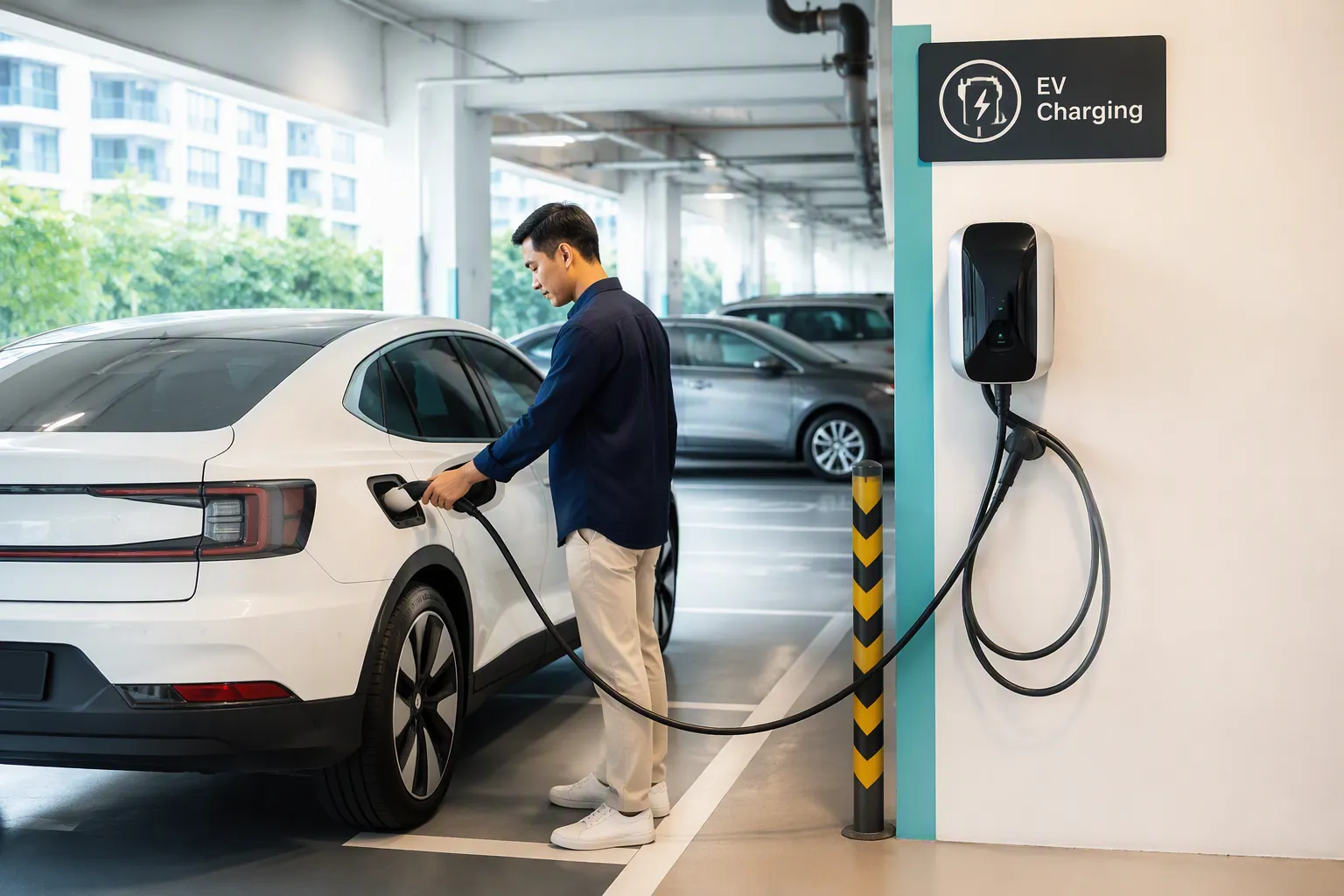

Homeowners searching for the cheapest way to charge an electric vehicle often find that using a Level 1 or Level 2 Chargeur EV during off-peak hours leads to significant savings. Many Fabricants de chargeurs de VE now offer smart and chargeurs ev portables, making home charging more accessible than ever. The difference in annual cost between home and public charging stands out clearly:
| Méthode de chargement | Coût moyen par kWh | Average Cost per Charge (72 kWh) | Coût annuel de recharge (13,489 miles) |
|---|---|---|---|
| Level 2 Home Charging | $0.18 | $12.96 | $693.72 |
| Charge publique de niveau 2 | $0.25 | $18.00 | $963.50 |
| DC Fast Public Charging | $0.53 | $38.16 | $2,144 |
Solutions de recharge pour véhicules électriques at home allow drivers to control costs and maximize convenience.
Cheapest Way to Charge an EV at Home: The Basics
Using Off-Peak Electricity Rates
How Off-Peak Charging Reduces Costs
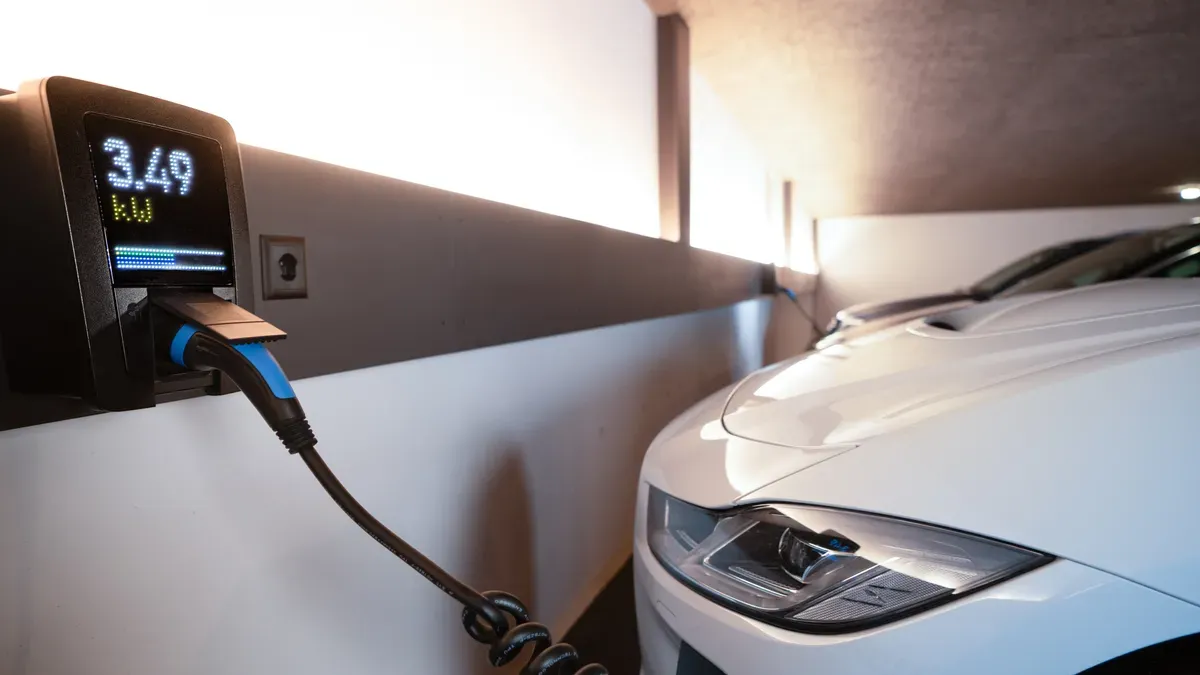
Electricity rates fluctuate throughout the day. Utilities often charge higher prices during peak demand hours and lower prices during off-peak periods, usually overnight. Charging an electric vehicle during off-peak hours allows homeowners to take advantage of these reduced rates. Many utilities offer special plans for EV owners, making it possible to save a significant amount on each charge. Off-peak charging not only lowers the cost per kilowatt-hour but also helps balance the grid, which can lead to more stable long-term pricing.
Conseil : Charging overnight is one of the simplest strategies to reduce your EV charging bill.
Mise en place d'un planning de recharge
Smart chargers and many modern EVs allow users to schedule charging sessions. By setting a charging schedule to start after peak hours, drivers can ensure their vehicle charges when electricity is cheapest. Many smart home energy systems can automate this process, further optimizing savings. Setting up a schedule usually involves using a mobile app or the vehicle’s onboard system. This approach requires minimal effort and delivers consistent savings over time.
- Most utilities provide information about off-peak hours on their websites.
- Smart chargers can automatically adjust charging times based on rate schedules.
- Scheduling charging helps avoid unnecessary costs and maximizes the value of home charging.
Choosing Between Level 1 and Level 2 Chargers
Cost and Efficiency Comparison
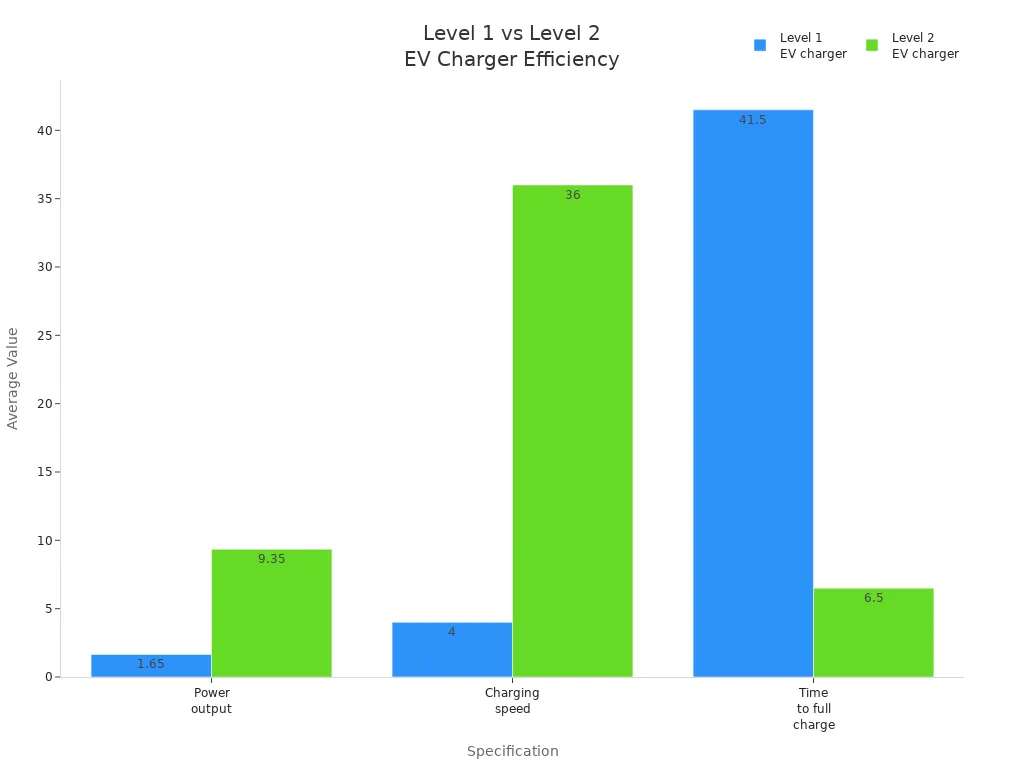
Selecting the right charger is a key factor in finding the cheapest way to charge an EV at home. The main differences between Level 1 and Level 2 chargers involve vitesse de chargement, upfront cost, and installation requirements.
| Spécifications | Chargeur de VE de niveau 1 | Level 2 EV Charger |
|---|---|---|
| Tension (V) | 120V AC | 208-240V AC |
| Puissance (kW) | 1.4-1.9 kW | 3.3-19.2 kW (7.2-11.5 avg) |
| Vitesse de chargement | 3-5 miles/hour | 12-60 miles/hour |
| Time to Full Charge (60 kWh) | 40-43 hours | 5-8 hours |
| Coût de l'équipement | $150-$300 | $300-$2,000 |
| Exigences en matière d'installation | Sortie standard | Installation professionnelle |
Level 1 chargers offer a low-cost entry point and require no professional installation. However, they charge slowly, making them suitable for drivers with short daily commutes. Level 2 chargers cost more upfront and require installation by a licensed electrician, but they deliver much faster charging speeds. For most households, Level 2 chargers provide a better balance of speed and long-term value, especially for those who drive more miles each day.
Considérations relatives à l'installation
Level 1 chargers plug directly into a standard household outlet, making setup simple and inexpensive. Most homes already have the necessary infrastructure. In contrast, Level 2 chargers require a dedicated 240V circuit and professional installation. This process may involve additional costs, such as upgrading the electrical panel or running new wiring. Homeowners should consider their daily driving habits, battery size, and future needs before deciding which charger to install.
Remarque : Investing in a Level 2 charger can make sense for families with multiple EVs or those who need faster charging.
Several factors influence the total cost of charging an EV at home. These include electricity tariffs, battery size, charger type, daily mileage, renewable energy integration, and charging efficiency. Understanding these variables helps drivers make informed decisions and find the cheapest way to keep their EV charged and ready.
| Facteur | Description |
|---|---|
| Electricity Tariffs | Costs vary by tariff type; off-peak rates can lower expenses significantly. |
| Battery Size and Efficiency | Larger batteries increase costs; vehicle efficiency affects energy use per mile. |
| Charging Speed and Charger Type | Higher-rated chargers charge faster but may increase energy costs; choosing the right charger is key. |
| Daily Mileage and Usage Patterns | Driving habits determine charging frequency and costs; understanding this helps estimate expenses. |
| Intégration des énergies renouvelables | Using solar energy can offset costs and reduce reliance on the grid. |
| Efficacité de la charge | Energy loss during charging (5-10%) should be considered in cost calculations. |
Home Charging vs. Public Charging: Cost and Convenience
Détail du Coût de Recharge Domicile
Average Electricity Rates and Real-World Examples
Home charging offers significant savings for most electric vehicle owners. Electricity rates at home typically range from $0.13 to $0.28 per kWh, depending on location and utility provider. Many drivers pay even less by charging during off-peak hours. For example, a 7kW home charger can deliver energy at a cost as low as 7 cents per mile. In contrast, public charging stations often charge much higher rates. The AA reported that off-peak slow charging at home can drop to 33 cents per kWh, while peak rates reach 53 cents per kWh. These differences add up quickly over time.
Calculating Your Per-Mile Cost
Calculating the per-mile cost for home charging involves dividing the total electricity cost by the number of miles driven. For instance, if a driver pays $0.18 per kWh and their EV consumes 30 kWh per 100 miles, the cost per mile is about $0.054. Drivers using rapid public chargers may pay up to 24 cents per mile, while home charging can cost as little as 7 cents per mile. This gap highlights the long-term savings of charging at home.
Public Charging Expenses
Typical Fees and Markups
Public charging stations often include higher fees and markups compared to home charging. Costs can reach $0.70 per kWh at many locations, and motorway rapid chargers sometimes exceed $0.80 per kWh. The following table illustrates the difference:
| Type de chargement | Coût par kWh | Annual Cost (50kW charge, twice a week) |
|---|---|---|
| Chargement à domicile | $0.28 | $2,000 |
| Charge publique | $0.70 | $3,300 |
Drivers using public chargers pay more due to infrastructure costs, maintenance, and convenience fees.
When Public Charging Makes Sense
Public charging makes sense for those who travel long distances or lack access to home charging. Road trips, emergencies, or urban living situations often require public charging. However, frequent use of public stations increases annual charging expenses.
Convenience and Savings at Home
Charging on Your Own Schedule
Home charging provides unmatched convenience. Drivers can plug in their vehicles overnight and wake up to a full battery. They avoid waiting in line or searching for available stations. Charging at home fits seamlessly into daily routines.
Avoiding Extra Fees and Hassles
Home charging eliminates many extra fees associated with public stations. Drivers avoid connection fees, idle charges, and premium rates during peak hours. They also reduce wear and tear on their vehicles by charging at lower speeds. This approach maximizes both savings and convenience for most EV owners.
Cheapest Way to Optimize Home Charging Equipment
Selecting the Right Charger for Your Needs
Level 1 Chargers: Pros and Cons
Level 1 chargers use a standard household outlet and require no special installation. They offer a low-cost entry point for electric vehicle owners. These chargers suit drivers with short daily commutes or those who do not need rapid charging. However, Level 1 chargers provide slow charging speeds, often adding only 3 to 5 miles of range per hour. This limitation can create inconvenience for those with larger batteries or higher daily mileage.
Level 2 Chargers: Speed and Value
Level 2 chargers deliver much faster charging, typically adding 12 to 60 miles of range per hour. They require a dedicated 208-240V circuit and professional installation. For most households, Level 2 chargers offer a better balance of speed and long-term value. TPSON, a technologically advanced electric vehicle charging solution provider, offers Level 2 chargers with smart features that enhance efficiency and user experience. These chargers suit families with multiple EVs or those who need reliable overnight charging.
Smart Chargers and Cost Savings
Features That Lower Your Bill
Smart EV chargers help users save money by enabling la recharge pendant les heures creuses, when electricity rates are lower. Automated scheduling ensures that charging occurs at the most cost-effective times. Over time, this approach leads to significant reductions in electricity bills. When paired with an EV tariff, smart chargers can greatly decrease the costs associated with home charging compared to charging during peak hours.
Integration with Utility Programs
Many smart chargers integrate with utility programs that optimize energy use and further reduce costs. The following table highlights common features found in these programs:
| Fonctionnalité | Description |
|---|---|
| Programmation intelligente | Automatically optimizes charging sessions to take advantage of off-peak rates. |
| Équilibrage de la charge | Prevents high demand charges by managing energy consumption across devices. |
| Integration with Renewable Energy | Coordinates with solar panels and batteries to maximize efficiency and minimize costs. |
| Planification des Appareils Électroménagers | Staggers operation of high-load appliances to avoid exceeding capacity during EV charging. |
| Intégration des Données Météorologiques | Adjusts charging schedules based on expected heating or cooling loads due to weather conditions. |
These features help homeowners find the cheapest way to charge their EVs while supporting grid stability.
Coûts d'installation et incitations
Upfront Expenses Explained
Le installation cost for a home EV charger in the UK typically ranges from £800 to £1,500. This price includes a 7kW wall-mounted smart charger, standard cabling, and installation by a qualified electrician. Costs may vary depending on the complexity of the installation and the distance from the electrical panel.
Tax Credits and Utility Rebates
Plusieurs incentives can help offset installation costs. The Office for Zero Emission Vehicles offers a grant of up to £350 towards installation for eligible renters and flat owners. This grant remains available until 31 March 2026 for those living in flats or rental properties. Some energy providers also offer rebates or annual benefits for participating in demand response programs. These incentives make it easier for homeowners to invest in efficient charging solutions and lower their long-term expenses.
Lowering Electricity Costs for EV Charging
Tarifs à Heures Creuses/Pleines (HP/HC)
Understanding TOU Plans
Time-of-use (TOU) rate plans offer different electricity prices depending on the time of day. Utilities set lower rates during off-peak hours, usually overnight, when demand drops. EV owners can take advantage of these plans by charging their vehicles when electricity is least expensive. Charging a 60kWh battery during off-peak hours can cost around £10.80, while the same charge during peak times may reach £20.40. This difference represents a 50% reduction in charging expenses. Economy 7 tariffs, for example, provide overnight rates between 12p and 18p per kWh, compared to peak rates of 30p to 35p per kWh. Charging during these hours remains the cheapest way to power an electric vehicle at home.
Conseil : Smart charging systems, such as those offered by TPSON, can automate charging schedules to align with off-peak rates, maximizing savings.
How to Enroll and Benefit
Most utility providers allow customers to switch to TOU plans through their online portals or customer service. After enrollment, users can set their EV or smart charger to begin charging after peak hours. Many energy providers supply apps that help manage and optimize charging schedules. By using these tools, drivers can consistently benefit from lower electricity costs and reduce their annual charging expenses.
Utility Incentives and Special Programs
Finding Local Offers
Many energy companies and local councils provide incentives to encourage home EV charging. For example, some utilities offer rebates for purchasing and installing qualified Level 2 charging stations. Participation in demand response programs can also provide annual financial benefits. These programs help balance the grid and reward users for shifting their charging to off-peak periods.
Applying for Discounts and Rebates
Eligibility for grants and rebates often depends on property type and location. The following table outlines common grant opportunities:
| Critères d'éligibilité | Montant de la subvention | Description |
|---|---|---|
| Renters, landlords, businesses | Up to £500 | Covers almost half the cost of installing EV chargers, saving up to £500. |
| Households with on-street parking | Up to £500 | Increased grants simplify access to financial assistance for home charging installations. |
| Schools | Up to £2,000 | Grants available for schools to install charge points, building on previous installations. |
Drivers should check with their local authority or energy provider for the latest offers and application procedures.
Stratégies de recharge intelligentes
Scheduling for Maximum Savings
Smart charging strategies focus on timing and efficiency. Modern EVs and smart chargers allow users to set charging schedules based on the lowest energy rates. Many vehicles enable scheduling through their infotainment systems. This feature ensures charging occurs when electricity costs the least. Load balancing can also optimize charging sessions and prevent costly demand charges, especially in homes with multiple high-energy appliances.
Monitoring and Managing Energy Use
Monitoring energy use helps drivers track and control charging costs. Smart scheduling can reduce charging expenses by 40-60% through access to TOU tariffs. Dynamic pricing can lower annual charging costs by £200-400 for a typical household. Without smart scheduling, annual costs may reach £740, but with smart integration, they can drop to approximately £190, saving up to £550 each year. Switching to an Economy 7 tariff and using smart chargers can lower monthly costs to around £33.33. TPSON’s advanced charging solutions support these strategies, helping drivers achieve the lowest possible charging costs.
Cheapest Way to Use Solar Power for EV Charging
How Solar Panels Reduce Charging Costs
Generating Your Own Electricity
Solar panels allow homeowners to generate electricity directly from sunlight. This energy can be used to charge electric vehicles during the day, reducing or even eliminating the need to purchase electricity from the grid. Many drivers find that charging their EVs with solar power leads to substantial savings over time. The energy produced by solar panels is essentially free after installation, which means every mile driven on solar-charged electricity reduces overall transportation costs.
- Solar panels generate free electricity during daylight hours.
- Charging an EV with solar energy can result in zero cost for charging.
- Homeowners who use solar power for charging reduce their reliance on the grid and lower long-term running costs.
Net Metering and Energy Credits
Net metering programs allow homeowners to sell excess solar energy back to the grid. When solar panels produce more electricity than the home uses, the surplus flows to the utility, earning credits on the homeowner’s bill. These credits can offset the cost of grid electricity used at night or during cloudy days. By participating in net metering, EV owners can maximize the financial benefits of their solar investment and further reduce charging expenses.
Upfront Costs and Payback Analysis
Installation Expenses and ROI
Installing solar panels requires a significant initial investment. The cost includes the panels, inverter, mounting hardware, and professional installation. However, the long-term savings can be substantial. Homeowners who use solar power for EV charging save between 15 and 30 pence per kilowatt-hour compared to grid electricity. The table below compares the upfront costs and long-term savings of solar-powered charging versus traditional grid charging:
| Méthode de chargement | Coûts initiaux | Long-term Savings |
|---|---|---|
| Solar-powered EV Charging | Significant initial investment | 15-30p saved per kWh charged from solar instead of grid |
| Traditional Grid Charging | Ongoing costs | No potential for savings |
Calculer le seuil de rentabilité
The payback period for solar panels used for EV charging typically ranges from 7 to 12 years. This period depends on the size of the system, local electricity rates, and the amount of energy the household consumes. After reaching the break-even point, all additional energy generated by the panels effectively reduces transportation costs to near zero.
Conseil : Homeowners can accelerate their return on investment by maximizing self-consumption of solar energy and participating in net metering programs.
Combining Solar with Off-Peak Charging
Maximizing Savings with Battery Storage
Combining solar panels with a home battery storage system allows homeowners to store excess solar energy generated during the day. They can then use this stored energy to charge their EVs at night, avoiding peak electricity rates. This approach increases energy independence and ensures that more of the vehicle’s charging comes from clean, renewable sources.
- Battery storage enables charging at night with solar energy.
- Homeowners avoid peak rates and further reduce energy bills.
- This setup enhances energy independence and sustainability.
Real-World Examples
Many households have successfully combined solar panels, battery storage, and off-peak charging to achieve the lowest possible EV coûts d'imputation. For example, a family in California installed a 6 kW solar system and a home battery. They now charge their EV almost entirely with solar energy, rarely relying on the grid. Their annual transportation energy costs dropped by over 80%, and they contribute to reduced carbon emissions.
Using solar panels to charge an EV not only saves money but also supports a cleaner, more sustainable future.
Additional Tips for the Cheapest Way to Charge at Home
Reducing Standby Power Loss
Unplugging Chargers When Not in Use
Standby power loss occurs when chargers draw electricity even when not actively charging a vehicle. Many homeowners overlook this hidden cost. Unplugging the charger after each session prevents unnecessary energy consumption. Smart home chargers offer another solution. These devices manage energy use efficiently and minimize standby losses. Users can program smart chargers to disconnect automatically when charging completes. This approach ensures that the charger only draws power when needed.
Conseil : Smart chargers not only reduce standby power loss but also help schedule charging during off-peak hours, further lowering costs.
Choosing Energy-Efficient Equipment
Selecting energy-efficient charging equipment plays a crucial role in minimizing electricity waste. Modern chargers often feature advanced energy management systems. These systems optimize charging sessions and reduce idle consumption. Homeowners should look for chargers with energy-saving certifications or features. Solar EV home chargers provide an additional advantage. They allow users to charge vehicles with energy generated from solar panels, offering a clean and efficient solution. Utilizing solar power for charging reduces dependence on the grid and lowers long-term energy costs.
Key methods to reduce standby power loss:
- Unplug chargers when not in use.
- Use smart home chargers for automated energy management.
- Programmez la charge pendant les heures creuses.
- Consider solar-powered charging solutions.
Maintaining Your EV and Charging Setup
Keeping Equipment in Top Shape
Proper maintenance ensures that charging equipment operates safely and efficiently. Regularly checking the charger and cables for signs of damage or wear helps prevent unexpected failures. Keeping the area around the charger clean and free from debris also supports optimal performance. A well-maintained charger delivers reliable power and extends the lifespan of the equipment.
- Inspect charging cables and connectors for cracks or fraying.
- Remove dust and debris from the charging station area.
- Store cables properly to avoid tangling or damage.
Regular Inspections and Updates
Routine inspections help identify potential issues before they become costly problems. Homeowners should schedule periodic checks of their charging setup. If any damage or malfunction appears, contacting a professional for repairs ensures safety and prevents hazards. Updating charger firmware or software also improves efficiency and adds new features. Proper maintenance extends the life of the charger and supports consistent, cost-effective operation.
Regular maintenance not only protects the investment in charging equipment but also guarantees efficient energy use for years to come.
Common Mistakes That Increase Charging Costs
Charging During Peak Hours
Many electric vehicle owners unknowingly charge their cars during peak electricity demand. Utilities often set higher rates early in the morning and between 4 PM and 7 PM. Charging at these times can raise monthly energy expenses. Drivers who use standard tariffs pay a flat rate, but those on time-of-use plans see a clear difference between peak and off-peak costs. Charging overnight or outside peak hours lowers expenses and helps balance the grid.
- Peak demand occurs early mornings and late afternoons.
- Charging during these periods increases costs.
- Overnight charging reduces monthly EV energy bills.
- Time-of-use plans offer cheaper rates outside peak hours.
Charging outside peak times remains one of the most effective ways to save money on home EV charging.
Missing Out on Incentives
Electric vehicle owners often overlook available incentives. Local councils sometimes provide grant schemes that subsidize the cost of installing EV chargers. These grants can cover installation expenses entirely for eligible homeowners. Many drivers miss out on government grants that offer up to £500 off the installation of a home charger. Homeowners with driveways may not qualify for certain grants, but those living in flats or rental properties often do. Checking eligibility and applying for incentives can reduce upfront costs and improve the return on investment.
- Local councils may offer grants for EV charger installation.
- Some government grants provide up to £500 off installation.
- Homeowners with driveways may be excluded from certain grants.
- Renters and flat owners often qualify for financial assistance.
Regularly reviewing local and national incentive programs ensures drivers maximize savings and avoid unnecessary expenses.
Overlooking Equipment Compatibility
Selecting the wrong charging equipment can lead to higher costs and inconvenience. Not all chargers work with every electric vehicle model. Compatibility issues may cause inefficient charging or require costly upgrades. Drivers should verify that their chosen charger matches their vehicle’s specifications and supports smart features. Investing in compatible equipment prevents wasted energy and avoids future expenses.
- Compatibility checks ensure efficient charging.
- Smart features help optimize charging schedules.
- Upgrading incompatible equipment increases costs.
Choosing the right charger from the start protects the investment and supports long-term savings.
Electric vehicle owners who avoid these common mistakes enjoy lower charging costs and greater convenience. Careful planning and regular reviews of charging habits and available incentives help maximize the benefits of home EV charging.
Drivers seeking the cheapest way to charge an EV at home should use a Level 1 or Level 2 charger during off-peak hours. Smart chargers and time-of-use rates help lower costs even further. Solar panels offer long-term savings for those who want to reduce grid reliance. Applying for incentives and avoiding common mistakes maximizes savings. Home charging delivers both convenience and cost-effectiveness when drivers use the right approach.
FAQ
Combien coûte l'installation d'un chargeur de VE à domicile ?
Installation costs for a home EV charger typically range from $800 to $1,500. Factors include charger type, electrical upgrades, and labor. Incentives or rebates from utilities or government programs can reduce the final expense.
Puis-je utiliser une prise standard pour recharger mon véhicule électrique ?
Yes, Level 1 chargers plug into standard 120V outlets. They charge slowly, adding about 3 to 5 miles of range per hour. This option works best for drivers with short daily commutes or limited charging needs.
Do smart chargers really save money?
Smart chargers help users schedule charging during off-peak hours. This feature lowers electricity costs and maximizes savings. Many smart chargers also integrate with utility programs for additional benefits.
Is solar power enough to fully charge an EV?
Solar panels can generate enough electricity to charge an EV, especially with a properly sized system. Battery storage increases flexibility, allowing homeowners to use solar energy even at night.
What happens if I charge during peak hours by mistake?
Charging during peak hours increases electricity costs. Many utilities charge higher rates at these times. Smart chargers and scheduling features help prevent accidental peak-hour charging.
Are there any maintenance requirements for home EV chargers?
Home EV chargers require minimal maintenance. Owners should inspect cables and connectors regularly, keep the area clean, and update firmware when available. Professional inspections ensure safe and efficient operation.
Can renters install home EV chargers?
Renters can often install home EV chargers with landlord approval. Many incentive programs offer grants or rebates specifically for renters and flat owners. Always check eligibility before purchasing equipment.
Combien de temps faut-il pour recharger un véhicule électrique à domicile ?
Charging time depends on charger type and battery size. Level 1 chargers may take over 24 hours for a full charge. Level 2 chargers usually complete charging in 5 to 8 hours.