Avantages des bornes de recharge pour véhicules électriques pour les entreprises et les commerces
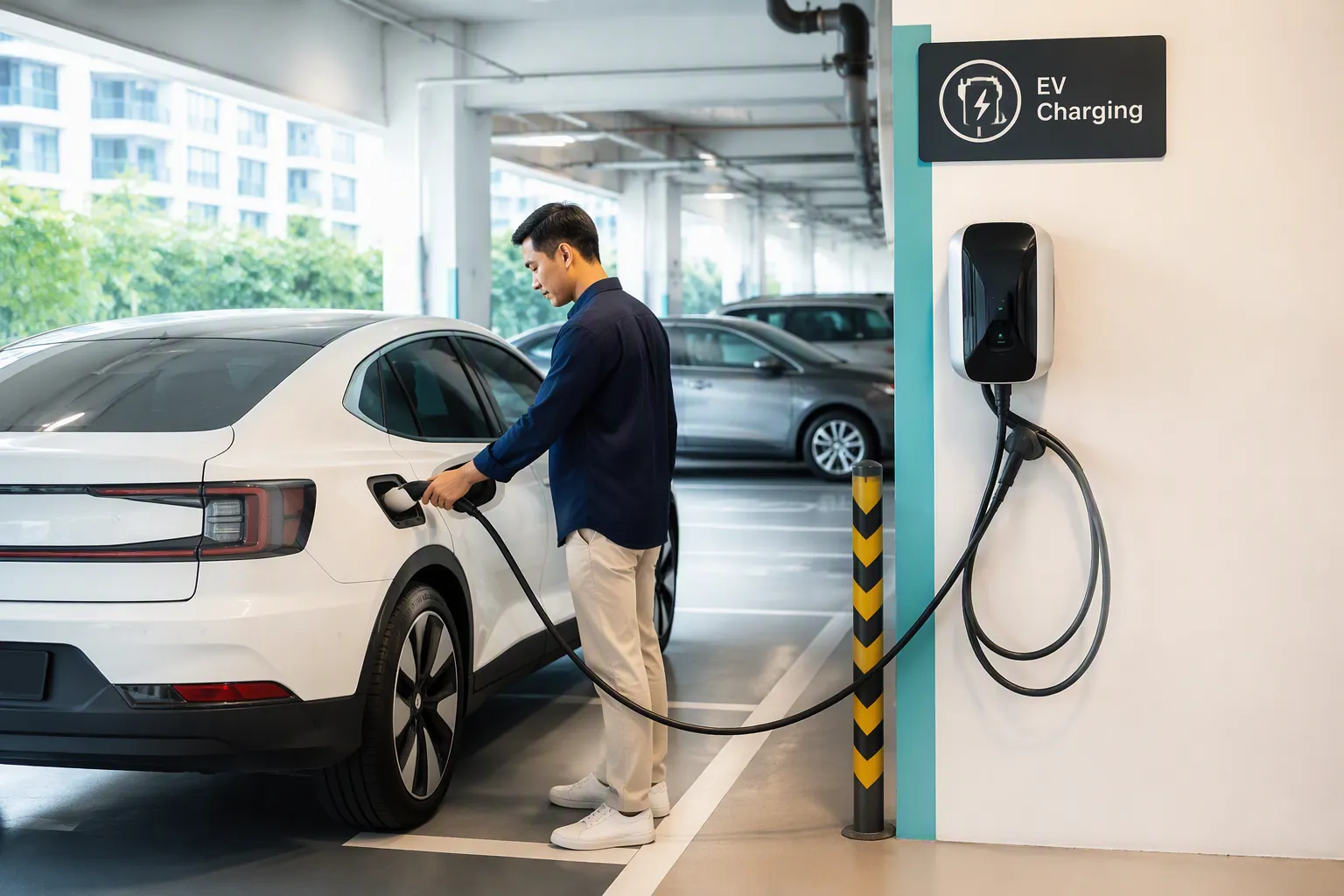
EV charging is no longer just an “extra amenity.” For many commercial and retail sites, it’s becoming a practical way to attract drivers, extend visit time, improve tenant satisfaction, and build a future-ready property. Modern EV charging programs can also be operated as a managed service—combining hardware, software, and support—so that site hosts don’t have to become charging experts.
This guide explains the business value of installing EV charging, what kinds of stations make sense for different property types, and how to plan a deployment that scales. Examples and concepts are supported by the source content provided from ChargePoint, Love’s, TPSON, and market listings from Smart Charge America.
1) Top business benefits of EV charging
A. Attract more drivers and increase repeat visits
EV charging helps you “meet customers where they are”—especially as EV adoption rises. ChargePoint positions itself as an EV charging platform designed to connect with drivers “when they want to charge” and emphasizes a consistent driver experience through its app and roaming partners. For retail and destination properties, this translates into higher foot traffic and stronger loyalty—because drivers will often choose stops where charging is available.
B. Increase dwell time and on-site spending
EV charging naturally creates a “productive wait” window. Love’s EV charging page highlights the strategy clearly: pairing chargers with amenities (food options, clean restrooms, dog parks, Wi?Fi) so drivers can optimize time while charging and “get back on the road quickly.” Retail sites can apply the same principle: charging encourages customers to stay longer, browse more, and spend more while they wait.
C. Create a competitive advantage for leasing and tenant retention
Charging can differentiate your property in leasing decisions. ChargePoint includes a customer quote framing EV charging as a “necessary infrastructure” and a “competitive advantage” for rental units. For commercial real estate and mixed-use properties, this benefit shows up as stronger tenant satisfaction and improved occupancy for EV-friendly sites.
D. Enable new revenue models (paid charging, access control, billing)
Many commercial charging systems support paid access and policy control—useful for retail, hospitality, paid parking, and multi-tenant environments. For example, Smart Charge America’s commercial solutions describe features such as payment processing and access control (e.g., its SCA40 solution). ChargePoint also describes operating and managing charging operations through software and services—supporting pricing policies and access controls as part of a broader platform.
E. Reduce operating friction with proactive monitoring and support
Reliability matters because “broken chargers” damage brand trust fast. ChargePoint emphasizes helping organizations reduce operating costs, increase uptime, and improve efficiency with proactive management tools and support. This is a key benefit for property owners who want EV charging to be a reliable amenity—not an ongoing maintenance headache.
F. Future-proof your site with open standards and flexible hardware choices
Charging hardware should not lock a site into a single future. ChargePoint explicitly positions platform flexibility: operate ChargePoint stations, ChargePoint Ready partner stations, or “any OCPP compliant hardware of your choice.” This matters for long-term properties because it reduces upgrade risk and supports incremental expansion.
2) Best-fit use cases by property type
| Property type | What drivers need | Recommended approach |
|---|---|---|
| Retail / shopping / big-box | Predictable dwell time; easy start/pay | Mix of Level 2 + select DC fast for turnover; clear signage and amenities |
| Commercial real estate / office / workplace | Daytime charging; controlled access; reporting | Networked Level 2 with access control and energy management |
| Apartments / multifamily parking | Reliable overnight charging; fair allocation | Managed Level 2 with load optimization and user controls |
| Travel centers / fueling & convenience | Fast turnaround + amenities | DC fast charging expansion + strong on-site experience (Love’s model) |
| Dealerships & service centers | Quick top-ups; flexible placement | Consider mobile/portable DC for operational flexibility (see TPSON example) |
3) AC vs. DC charging: which should businesses install?
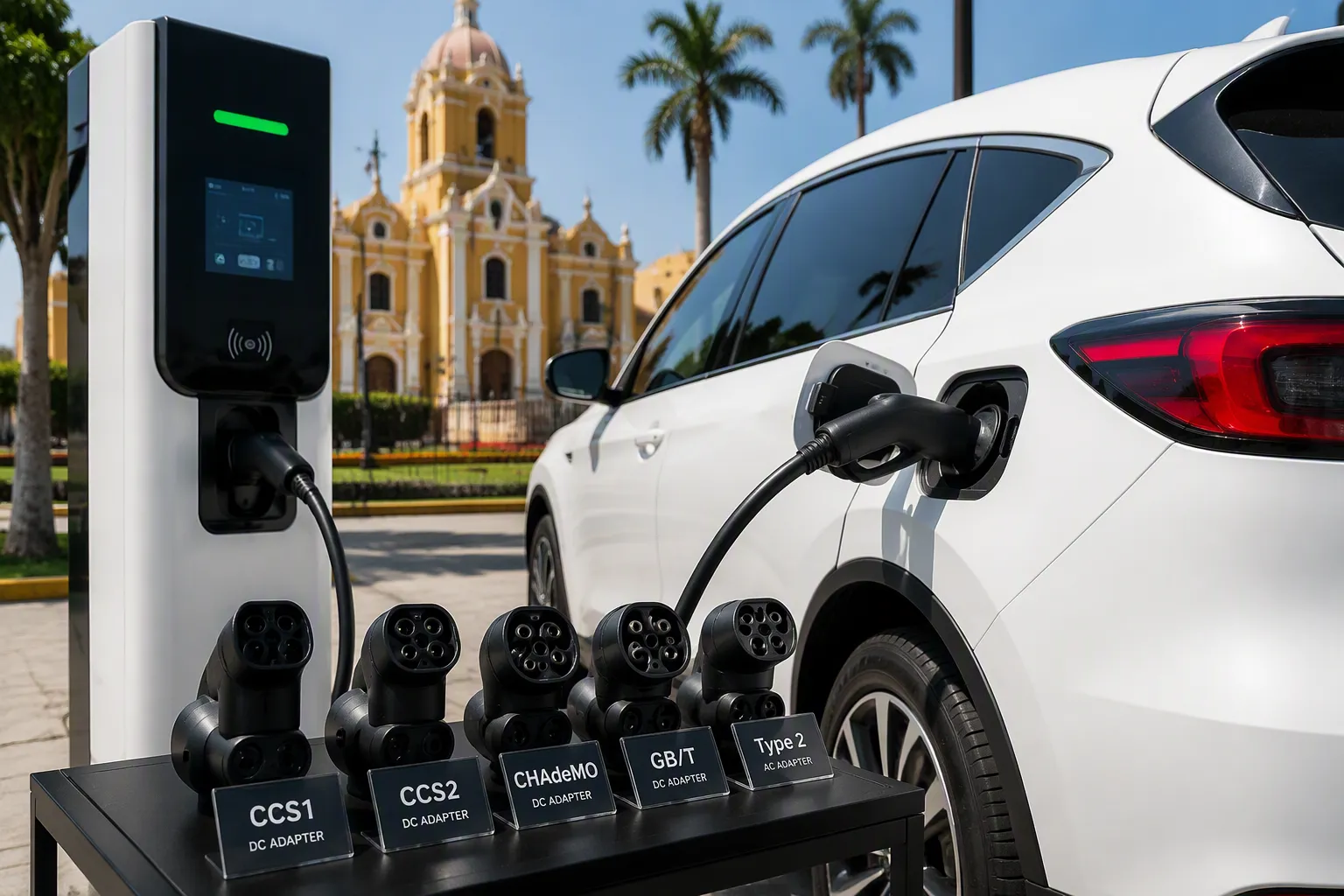
A successful commercial charging plan matches charging speed to customer dwell time and site electrical capability. Love’s describes expanding DC fast chargers (Level 3) to complement an existing AC (Level 2) network—reflecting a common pattern: Level 2 covers longer stays, and DC fast serves quick turnaround needs.
AC EV chargers (Level 2): the “workhorse” for retail + workplace
Level 2 AC stations are typically the most scalable for properties where vehicles park for an hour or more (shopping, dining, movies, offices). TPSON groups its wallbox products under Chargeurs de VE en courant alternatif. In its broader Chargeurs de VE overview, TPSON also highlights AC chargers with Équilibrage dynamique de la charge to protect a home’s electrical system—conceptually similar to commercial energy management goals (avoid costly upgrades by managing demand).
DC fast chargers (Level 3): the throughput tool
DC fast charging matters where you want customers back on the road quickly or you’re supporting fleets and logistics. TPSON’s portable DC solution (TP?DC Compact Series) is positioned for both household and enterprise scenarios and is explicitly designed for emergency roadside assistance, fleet/logistics management, event/temporary locations, and dealerships/service centers. It offers 20kW/30kW/40kW power options, wheel mobility, and optional connectivity (Ethernet / 4G).
If most vehicles will park for hours (workplace, apartments, retail visits), prioritize Niveau 2 AC. If most vehicles will park for minutes (highway retail, travel stops, fast-turnover convenience), add DC fast where your electrical service and ROI support it.
4) Platform approach: software + hardware + services (why it matters)
For most businesses, the biggest “benefit unlock” is not a specific charger model—it’s operating charging as a managed program. ChargePoint emphasizes a unified platform: mix hardware with ChargePoint software, manage and monitor operations with an open platform, and even operate “any OCPP compliant hardware of your choice.” It also highlights driver experience integration (mobile and in-vehicle), and the ability to help reduce operating costs while improving uptime.
This matters for retail properties because the charging experience is part of your brand: discovery, availability, starting a session, payment, and reliability. It also matters for scale: adding ports is easier when your software, reporting, and access policies are already in place.
5) Deployment checklist for business sites
- Define the primary goal: attract retail customers, serve tenants, support fleets, or monetize sessions.
- Match charging level to dwell time: Level 2 for longer stays; add DC fast for quick stops (Love’s model).
- Plan for scale: Choisissez un système qui prend en charge l'expansion sans investissement bloqué (ChargePoint met en avant des solutions flexibles et une évolutivité).
- Déterminez comment vous gérerez l'accès et la tarification : recharge gratuite, réservée aux clients, réservée aux employés, facturation aux locataires ou sessions publiques payantes.
- Confirmez la stratégie de connectivité : Wi-Fi/réseau cellulaire/Ethernet là où nécessaire ; certaines solutions commerciales insistent sur l'indépendance par rapport à Internet sur site.
- Concevez pour l'expérience du conducteur : signalétique, éclairage, gestion des câbles et instructions claires — ainsi que la découverte via application le cas échéant.
- Choisissez un partenaire fiable : privilégiez les fournisseurs/plateformes axés sur le support et les opérations à long terme (ChargePoint met en avant ses services et le support conducteur 24h/24 et 7j/7).
FAQ
La recharge pour VE est-elle réservée aux grands sites ?
Non. ChargePoint indique qu'elle soutient des organisations et des flottes “ de toutes tailles ” en Europe et en Amérique du Nord, et présente des solutions flexibles.
Avons-nous besoin de chargeurs AC et DC ?
Pas toujours. Love’s décrit l'ajout de plus de chargeurs rapides DC pour compléter un réseau existant de niveau 2. Cette approche convient aux sites avec des temps de séjour variés.
Quel est l'avantage de choisir un fabricant axé sur la technologie “ d'énergie intelligente ” ?
TPSON positionne ses produits autour de la sécurité et de la gestion de l'énergie grâce à son algorithme Current Fingerprint, décrivant l'informatique en périphérie et les systèmes électriques intelligents pilotés par l'IA.
- Chargeurs de VE
- Fabricant de bornes de recharge pour véhicules électriques
- Chargeurs de VE en courant alternatif
- Chargeurs DC EV
- ChargePoint (plateforme, logiciels/services, expérience conducteur, flexibilité, échelle)
- Love's EV Charging (réseau de recharge pour haltes routières, mix niveau 2 + niveau 3, services)
- Chargeur DC portable pour VE TPSON (cas d'utilisation, spécifications 20/30/40 kW)
- Smart Charge America (exemples de fonctionnalités commerciales comme contrôle d'accès/paiement/optimisation de charge)
Remarque : Cet article est informatif et de portée mondiale. La conception électrique spécifique au site, les autorisations, l'accessibilité et les exigences de paiement varient selon les régions et doivent être confirmées par des professionnels qualifiés.