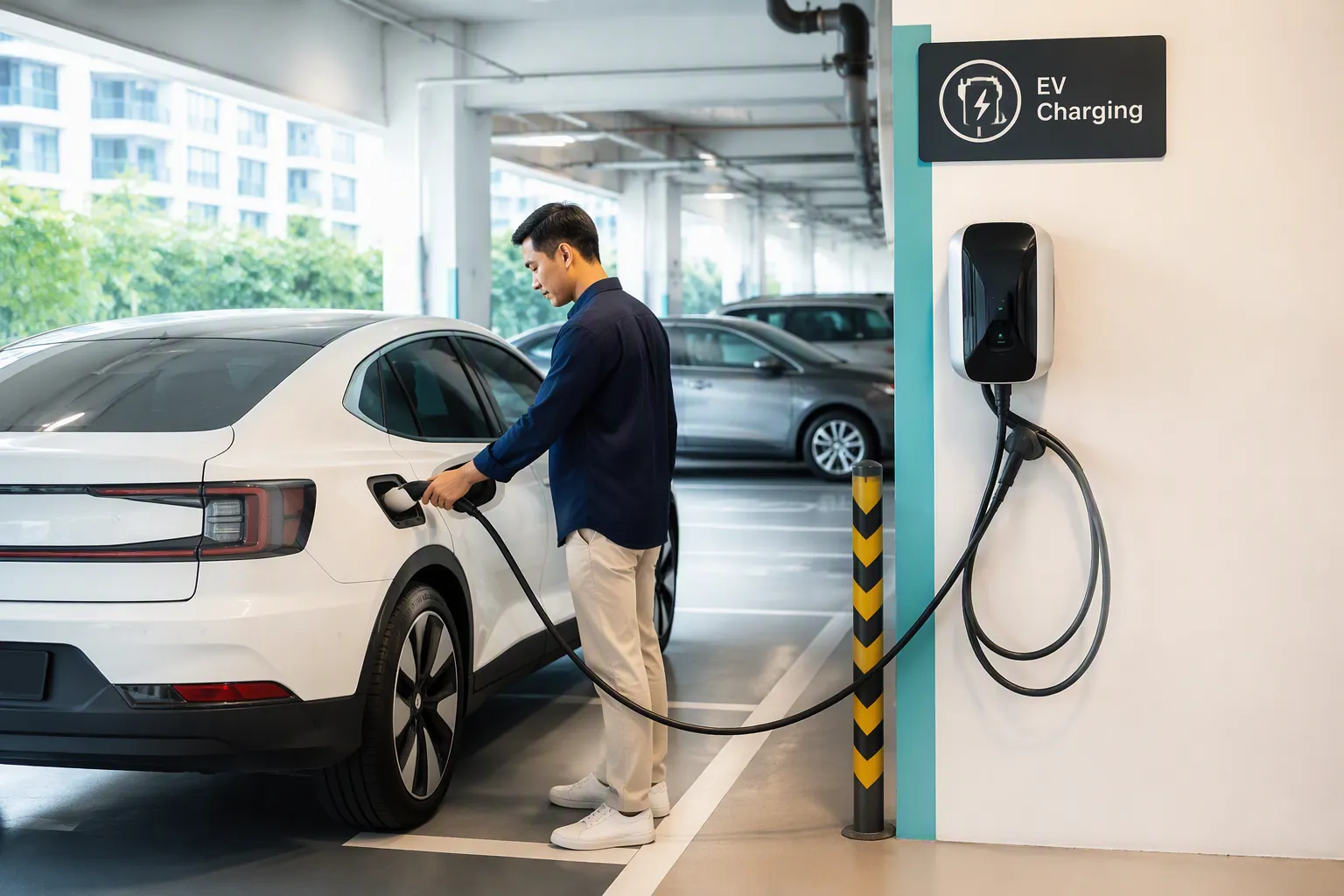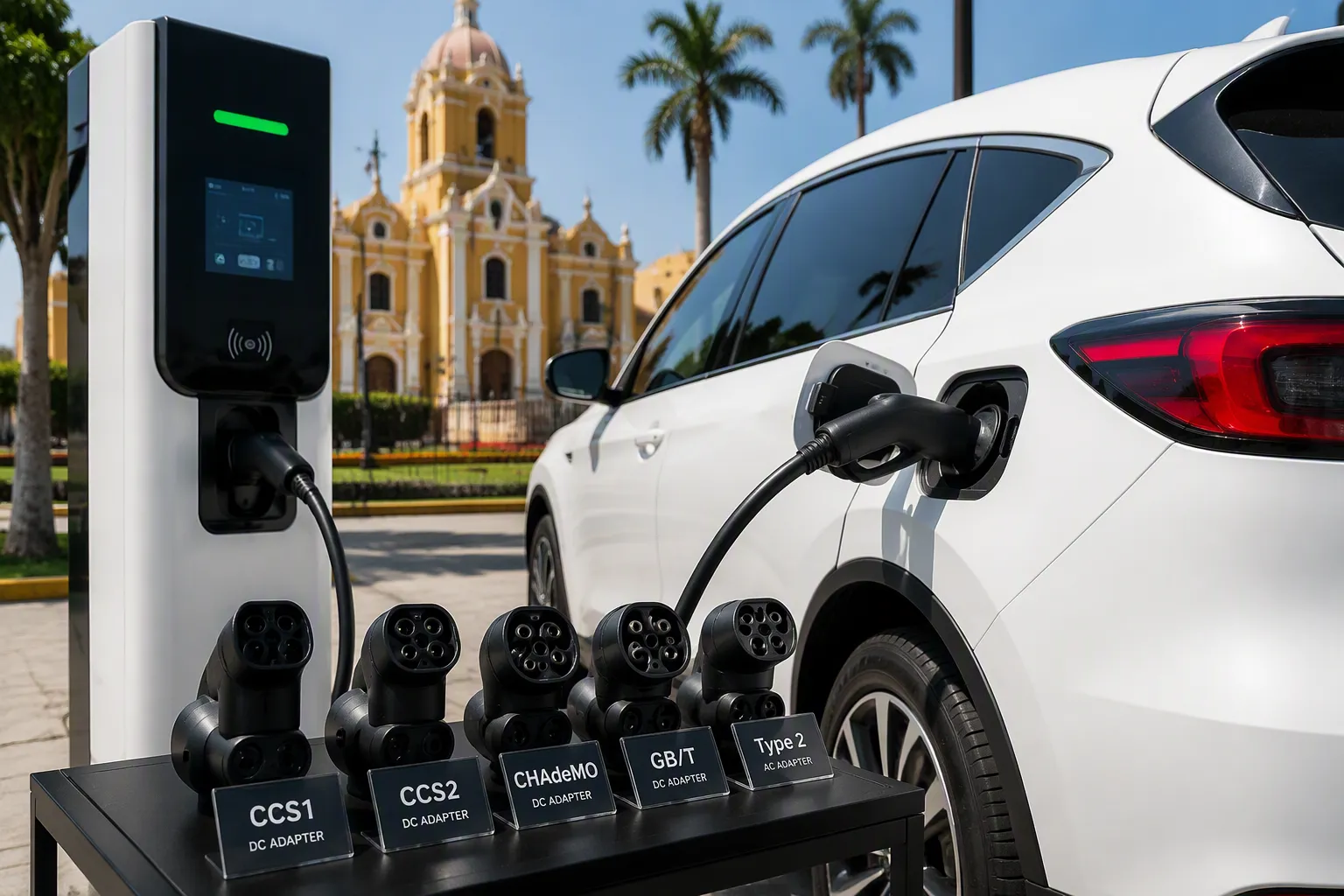

A smart Level 2 Chargeur de VE is a strategic financial investment for future-proofing your home, not just an amenity. It actively reduces costs and significantly enhances property value. Singapore’s market is primed for this shift, ranking in the top three globally for EV readiness in PwC’s survey. This advanced charger provides superior convenience over basic alternatives. For any EV owner, installing an EV charger is a wise decision.
Meeting Market Demand 📈 As EV adoption grows, the demand for diverse Solutions de recharge pour véhicules électriques—from a fixed EV Charger to chargeurs ev portables—is surging. A home equipped with a “EV charger” from leading Fabricants de chargeurs de VE meets the needs of modern buyers.
How Smart Chargers Actively Reduce Your Electricity Bills
A primary financial advantage of a smart Level 2 EV charger is its ability to directly lower household electricity expenses. This is achieved through two core intelligent features: automated off-peak charging and dynamic load balancing. These technologies work together to optimize energy consumption, delivering significant savings and enhanced safety for the homeowner.
Automated Off-Peak Charging
Capitalizing on Lower Electricity Tariffs
Many electricity retailers in Singapore offer time-of-use plans with lower rates during off-peak hours, typically late at night. A smart charger capitalizes on these price differences. It automatically schedules the EV charging session to begin when electricity is cheapest, usually between 11 PM and 7 AM. This simple shift in timing generates substantial long-term savings.
Real-World Savings Example 💰 An EV owner driving 15,000 km annually can save around $180 per year. This saving comes from shifting 2,250 kWh of charging from a peak rate (e.g., 32 cents/kWh) to an off-peak rate (e.g., 24 cents/kWh). The charger automates this process, ensuring the homeowner consistently benefits without any manual effort.
Setting Your Charging Schedule via App
The convenience of automation is managed through a user-friendly smartphone app. The homeowner can easily program their charging preferences one time. They simply set the desired time window for charging to begin and end. The charger then handles the rest, ensuring their EV is ready each morning while minimizing electricity costs. This “set-it-and-forget-it” functionality transforms EV charging from a manual task into a seamless, cost-effective background process.
Équilibrage Intelligent de la Charge
Protecting Your Home’s Electrical System
A home’s electrical circuit has a finite capacity. Running multiple high-power appliances simultaneously with an EV charger can risk an overload. Smart load balancing technology intelligently prevents this. The system continuously monitors the home’s total power consumption in real time. If it detects high usage from other appliances like an air conditioner or an induction cooktop, the charger automatically reduces its charging speed. This dynamic adjustment protects the home’s electrical panel and mitigates common hazards.
This intelligent management prevents issues such as:
- Circuit breaker trips that cause power outages
- Overheated cables that pose a fire risk
- Voltage drops that can affect or damage other appliances
Avoiding Costly Circuit Upgrades
The most significant financial benefit of smart load balancing is its ability to help homeowners avoid expensive electrical work. Without this technology, installing a powerful EV charger might require upgrading the home’s main circuit breaker to handle the increased load. Such an upgrade can be complex and costly. By dynamically managing the power draw, a smart charger ensures the home’s existing electrical infrastructure is never overwhelmed. This allows homeowners to enjoy fast, efficient EV charging without the unexpected expense of a major electrical system upgrade.
The Financial Value of a Future-Proof Property
Installation d'un smart Level 2 EV charger offers financial returns that extend far beyond monthly utility savings. It is a strategic upgrade that directly boosts the capital value of a property. In Singapore’s competitive real estate market, this feature provides a distinct and measurable advantage, making the home more attractive to buyers and protecting the owner from future expenses.
Enhancing Your Home’s Resale Value
Attracting Premium Buyers
An EV-ready property appeals directly to a growing and affluent demographic of electric vehicle owners. These potential buyers are not just looking for a house; they are looking for a home that supports their modern lifestyle. A pre-installed smart charger eliminates a significant post-purchase hassle for them. This convenience is a powerful selling point that can lead to faster sales and higher offers. An equipped property attracts specific buyer profiles:
- Tech-savvy professionals who value modern amenities.
- Environmentally conscious families seeking a sustainable lifestyle.
- Existing EV owners who prioritize move-in readiness.
Positioning Your Property as Modern and Ready
A home with a chargeur intelligent pour VE is immediately perceived as modern, upgraded, and prepared for the future. This feature signals a well-maintained and forward-thinking home, which builds buyer confidence. It is a tangible form of property value enhancement.
A Mark of a Premium Property 🏠 In a market where buyers compare similar listings, a smart charger can be the differentiating factor that elevates a property above its competition. It demonstrates that the owner has invested in quality, long-term infrastructure.
Avoiding Higher Future Costs
Locking in Current Installation Prices
The cost of materials and specialized labor for electrical work tends to increase over time due to inflation and market pressures. By undertaking the installation now, homeowners can lock in today’s prices. Waiting a few years could mean paying significantly more for the exact same service and equipment. This proactive approach is a financially prudent decision that secures a valuable home upgrade at a lower cost.
Staying Ahead of Increasing Demand
Singapore’s push toward electric mobility guarantees that the demand for Chargeur de VE installations will surge. As more people purchase an EV, the pool of qualified Licensed Electrical Workers (LEWs) will be stretched thin. This increased demand will likely lead to longer waiting times and higher service fees. Installing a smart charger today allows a homeowner to bypass this future bottleneck. This ensures their property is equipped and ready, making it a truly future-proof asset for any EV owner.
The Practical Benefits of a Smart Charger
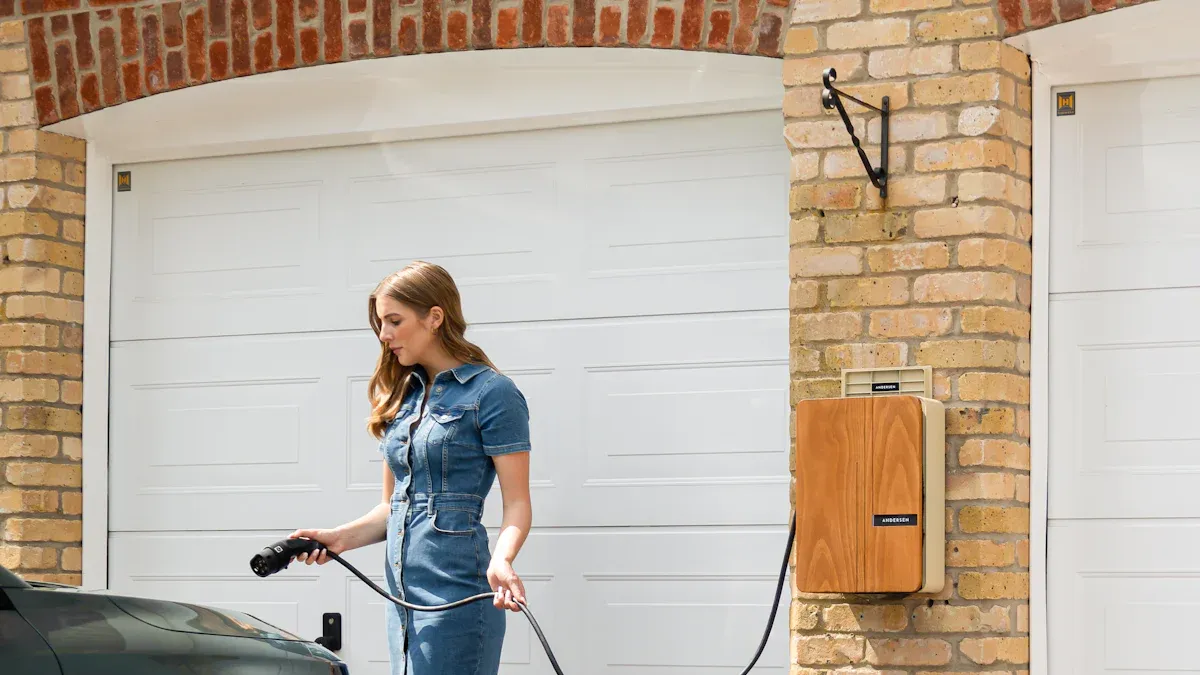
Beyond financial savings, a smart Level 2 EV charger delivers a superior ownership experience through advanced digital controls. It transforms the daily routine of charging an EV from a manual chore into an automated, transparent process. This enhanced functionality provides homeowners with unparalleled convenience and detailed energy insights, putting them in complete control of their vehicle’s power needs.
Ultimate Convenience with Remote Management
The core of a smart charger’s practical appeal lies in its remote management capabilities. This functionality offers seamless convenience, allowing EV owners to manage their charging sessions from anywhere at any time.
Smartphone App Control
Modern smart chargers, like those from technologically advanced providers such as TPSON, are paired with intuitive smartphone applications. These apps serve as a central command hub for the entire charging ecosystem. Homeowners can use the app to:
- Remotely start, stop, or pause a charging session.
- Customize charging schedules to align with their lifestyle and off-peak electricity tariffs.
- Adjust charging speeds to manage power consumption or prioritize battery health.
- Lock the charger pour éviter toute utilisation non autorisée.
This level of control ensures the EV is always ready when needed, without the owner ever having to physically interact with the unit.
Real-Time Charging Status Monitoring
The app also provides complete transparency over the charging process. An EV owner can check the real-time status of their vehicle’s battery, see the current charging speed, and view the estimated time until the charge is complete. This eliminates guesswork and provides peace of mind. The system sends notifications to the user’s phone when charging starts, stops, or is complete, keeping them informed at every stage.
Gaining Clarity with Precise Energy Tracking
A smart charger demystifies the energy consumption of an electric vehicle. It provides clear, actionable data that empowers homeowners to make informed decisions about their energy use and household expenses.
Monitoring Your EV’s Exact Energy Use
Smart chargers precisely measure and record the amount of electricity consumed during each charging session. This data is displayed in the companion app, often with detailed reports showing daily, weekly, and monthly usage. Homeowners can see exactly how much energy their EV uses, helping them understand its impact on their overall consumption. This feature is also useful for categorizing charging sessions for business expense claims.
Accurate Household Budgeting and Analysis
The detailed energy data collected by the charger is invaluable for household budgeting. By tracking the exact cost of each charging session, homeowners can accurately forecast their monthly electricity bills. This clarity removes the financial uncertainty often associated with EV ownership.
Informed Energy Management 💡 When integrated with a home’s smart meter, the charger can provide a holistic view of energy consumption. This allows users to set budget goals and adjust charging habits to stay within them, turning raw data into tangible savings and efficient energy management.
Navigating Installation and Regulations in Singapore
Installing an EV charger in a Singaporean home involves more than just mounting a unit on the wall. Homeowners must navigate a clear set of national standards and procedural requirements. These regulations ensure every installation is safe, reliable, and compliant with the country’s infrastructure goals.
Understanding LTA and TR 25:2022 Standards
The Land Transport Authority (LTA) has established a comprehensive framework to govern EV charging. The cornerstone of this framework is the Technical Reference 25 (TR 25:2022). This document outlines the mandatory technical and safety specifications for all EV charging systems in Singapore.
Key Safety and Technical Requirements
TR 25:2022 provides detailed guidelines that all equipment and installation work must follow. A compliant charger and process will meet several key criteria:
- Sécurité électrique : The system must include protections like a residual current circuit breaker (RCCB) to prevent electric shock.
- Smart Functions: The charger must be capable of remote monitoring and control, aligning with Singapore’s smart grid initiatives.
- Sécurité incendie : The installation must adhere to fire safety codes, ensuring proper ventilation and component selection to mitigate risks.
- L'interopérabilité : The equipment must meet standards that allow it to work with various EV models.
Why Compliance is Non-Negotiable
Adherence to TR 25:2022 is not optional. It is a legal requirement for a safe and approved installation. Non-compliance can lead to significant consequences for the homeowner.
Protecting Your Investment and Safety 🛡️ An unapproved installation can void a home insurance policy in the event of an electrical fire or damage. It also fails to meet legal standards, potentially resulting in orders for removal. Compliance ensures the system is safe for the family, protects the property, and secures the investment.
Le processus d'installation
The process of installing an EV charger is structured to guarantee safety and regulatory approval from start to finish. It requires professional oversight and adherence to a defined sequence of steps.
Finding a Licensed Electrical Worker (LEW)
A homeowner cannot perform this work themselves. The first and most critical step is to engage a Licensed Electrical Worker (LEW). An LEW is an engineer certified by the Energy Market Authority (EMA) to design, install, and certify electrical systems. The LEW is responsible for ensuring the entire project, from planning to commissioning, meets all legal and technical standards.
Typical Timelines and Required Steps
The timeline for installing an EV charger typically spans several weeks. The process involves a few distinct phases:
- Site Assessment: The LEW visits the property to evaluate the existing electrical capacity and determine the best location for the unit.
- Submission and Approval: The LEW submits the installation plans and a formal application to the relevant authorities for approval.
- Physical Installation: Once approved, the LEW or their team carries out the physical work. This includes running cables, mounting the unit, and connecting it to the electrical panel.
- Essais et mise en service : The LEW thoroughly tests the system to confirm it operates safely and correctly before officially commissioning it for use.
The Role of a Smart Level 2 EV Charger in Singapore’s Green Future

Installing a smart Level 2 EV charger does more than benefit the individual homeowner; it aligns the property with Singapore’s ambitious national sustainability goals. This technology plays a direct role in supporting the country’s environmental vision, making it a key component for a greener tomorrow. Homeowners contribute to a larger movement by investing in a sustainable future.
Supporting the Singapore Green Plan 2030
The Singapore Green Plan 2030 is a national roadmap for sustainable development. The widespread adoption of electric vehicles is a critical pillar of this plan, and smart chargers are the infrastructure that makes this transition to electric vehicles feasible at the household level.
Contributing to National Carbon Emission Goals
The transportation sector is a significant source of carbon emissions. The transition to electric vehicles directly addresses this issue. Each EV that replaces a gasoline-powered vehicle helps lower the nation’s carbon footprint. This effort complements other Green Plan targets, such as:
- Greening 80% of buildings by Gross Floor Area by 2030.
- Increasing solar deployment to 2 gigawatt-peak (GWp) by 2030.
- Reducing landfill waste by 30%.
A home EV charger empowers owners to participate in this national effort, creating a more sustainable living environment.
Aligning with the Push for EV Adoption
The government offers various incentives to encourage the transition to electric vehicles. However, a major consideration for potential buyers is charging accessibility. A pre-installed home charger removes this barrier, making the decision to purchase an EV much easier. The availability of reliable home charging supports the government’s incentives and accelerates the overall adoption rate. This increased demand for sustainable transport solutions is met with practical infrastructure, reinforcing the effectiveness of national incentives.
Optimizing Electric Vehicle Charging
A smart charger offers advanced capabilities that go beyond simply powering a vehicle. It intelligently manages energy flow, which is crucial for maintaining a stable and efficient national power grid as EV ownership grows.
Enabling Grid Stability
Without smart management, a surge in EV charging during peak hours could strain the electrical grid. Smart chargers prevent this through automated off-peak scheduling and load balancing. This technology staggers energy demand, ensuring the grid remains stable and reliable for all users. This sustainable approach to energy consumption is vital as more households adopt electric power for their transportation needs.
Future-Ready Technology ⚡ Smart chargers are essential for a sustainable energy ecosystem. They enable a smooth integration of thousands of new electric vehicles onto the grid without requiring massive, costly infrastructure overhauls. The charger helps manage this new electrical load efficiently.
Se préparer à la technologie V2G (Vehicle-to-Grid)
La prochaine frontière de la gestion de l'énergie est la technologie Vehicle-to-Grid (V2G). Le V2G permettra à un véhicule électrique non seulement de tirer de l'énergie du réseau, mais aussi de renvoyer l'énergie stockée vers la maison ou le réseau pendant les heures de pointe. Cela transforme le véhicule en une batterie mobile pouvant contribuer à stabiliser l'approvisionnement énergétique. Les bornes de recharge intelligentes sont le matériel de base nécessaire au V2G, et en installer une aujourd'hui prépare un foyer à ces futures fonctionnalités et incitations.
Analyse Coûts-Avantages : L'investissement en Vaut-il la Peine ?
Un propriétaire envisageant l'installation d'une borne de recharge doit en évaluer les implications financières. La décision va bien au-delà du simple prix d'achat initial. Une analyse coûts-avantages approfondie révèle qu'une chargeur intelligent, bien que plus chère initialement, offre un retour sur investissement supérieur grâce aux économies à long terme et à la valeur ajoutée. Cette analyse aide les propriétaires à prendre une décision financièrement solide pour leur bien immobilier.
Répartition du Coût Initial
Le coût initial d'une solution de recharge domestique se compose de deux éléments principaux : le prix du matériel lui-même et les frais d'installation professionnelle. Comprendre ces coûts est la première étape pour évaluer l'investissement global.
Comparaison des Prix : Borne de Base vs Borne Intelligente
Une borne de niveau 2 basique est l'option la plus abordable, avec des prix démarrant généralement autour de 1 000 $SG. Elle remplit la tâche fondamentale de recharger un véhicule électrique. Une borne intelligente, équipée d'une connectivité Wi-Fi, d'applications de programmation et de technologie d'équilibrage de charge, coûte généralement plus cher. Les prix pour ces modèles avancés démarrent souvent à partir de 1 800 $SG. La majoration d'environ 800 $SG finance les fonctionnalités intelligentes qui génèrent des économies et un confort à long terme.
Frais d'Installation Typiques à Singapour
Les coûts d'installation sont variables et dépendent des spécificités du logement. L'intervention d'un Électricien Agréé (LEW) est obligatoire. Le coût total est influencé par plusieurs facteurs :
- Type de Propriété : L'installation dans une propriété individuelle est souvent plus simple que dans un condominium, qui peut nécessiter des approbations de la copropriété (MCST).
- Complexité du Câblage : La distance entre le tableau électrique et l'emplacement de la borne affecte la quantité de câblage et la main-d'œuvre requise.
- Capacité Électrique Existante : Si le circuit principal de la maison nécessite une mise à niveau, les coûts augmenteront significativement.
Budget pour l'Installation 🛠️.
Calculer le seuil de rentabilité
La vraie valeur financière d'une borne intelligente devient claire lors du calcul de son seuil de rentabilité. C'est le point où les économies cumulées générées par ses fonctionnalités intelligentes égalent la différence de prix initiale par rapport à un modèle basique.
Un Cadre pour Estimer Votre Période de Remboursement
La principale source d'économies est la recharge automatique en heures creuses. En déplaçant la consommation d'énergie vers les heures où les tarifs électriques sont plus bas, un propriétaire réduit régulièrement ses factures mensuelles. La période de remboursement de la majoration pour la borne intelligente peut être estimée par un calcul simple.
Le tableau ci-dessous illustre une analyse de seuil de rentabilité type pour un conducteur de véhicule électrique typique à Singapour.
| Métrique | Valeur |
|---|---|
| Distance Annuelle de Conduite | 15 000 km |
| Consommation Électrique Annuelle | 2 250 kWh |
| Tarif Électrique Heures de Pointe | 32 cents/kWh |
| Tarif Électrique Heures Creuses | 24 cents/kWh |
| Économies Annuelles grâce à la Recharge en Heures Creuses | 180 $SG |
| Économies Mensuelles grâce à la Recharge en Heures Creuses | 15 $SG |
| Prix d'une Borne Basique | 1 000 $SG |
| Prix d'une Borne Intelligente | 1 800 $SG |
| Majoration pour la Borne Intelligente | 800 $SG |
| Seuil de Rentabilité (Années) | ~4,5 Ans |
Sur la base de ce scénario, la majoration de 800 $SG pour les fonctionnalités intelligentes est récupérée en environ 4,5 ans. Passé ce point, les 180 $SG économisés annuellement deviennent un profit net pour le propriétaire.
Prise en Compte des Économies à Long Terme
Le calcul du seuil de rentabilité ne raconte qu'une partie de l'histoire. Les avantages financiers d'une borne intelligente vont bien au-delà des simples économies d'énergie directes. Les propriétaires doivent également considérer ces ajouts de valeur à long terme cruciaux :
- Coûts de Mise à Niveau Évités : L'équilibrage de charge intelligent peut éviter la nécessité d'une coûteuse mise à niveau du circuit principal, une économie potentielle de plusieurs milliers de dollars.
- Augmentation de la Valeur Immobilière : Une maison équipée pour la recharge est plus attractive pour les futurs acheteurs, pouvant conduire à un prix de revente plus élevé et une vente plus rapide.
- Préparation pour l'Avenir : Installer une borne aujourd'hui fixe les prix actuels, protégeant le propriétaire de l'inflation future et de la demande accrue pour les services d'installation.
Lorsque ces facteurs sont pris en compte, l'argument financier en faveur d'une borne intelligente devient extrêmement positif. L'investissement initial n'est pas seulement un coût, mais une amélioration stratégique de la valeur et de l'efficacité du bien immobilier.
L'investissement initial dans une smart Level 2 EV charger est clairement justifié par des économies financières significatives à long terme. Cette amélioration ajoute une valeur mesurable et un attrait commercial, rendant un bien immobilier plus compétitif. La commodité inégalée de cette borne améliore fondamentalement l'expérience quotidienne de possession d'un véhicule électrique. Pour les propriétaires visionnaires, installer une borne de recharge est une étape prudente et nécessaire. Cette action garantit que leur bien est un actif prêt et précieux pour l'avenir.
FAQ
Quelle est la principale différence entre une borne de niveau 1 et de niveau 2 ?
A Chargeur de niveau 1 utilise une prise murale standard et recharge très lentement. Une borne de niveau 2 nécessite une installation professionnelle pour sa puissance de sortie plus élevée. Elle offre des vitesses de recharge bien plus rapides, ce qui en fait le choix pratique pour la plupart des propriétaires de véhicules électriques.
Un propriétaire peut-il installer une borne de recharge dans un parking HDB ?
Non, les propriétaires ne peuvent pas installer de bornes personnelles dans les parkings HDB pour le moment. Le gouvernement déploie des bornes publiques dans les ensembles HDB. L'installation concerne principalement les propriétés individuelles et les condominiums, sous réserve de l'approbation de la MCST.
Combien de temps faut-il pour recharger un véhicule électrique avec un chargeur de niveau 2 ?
Un chargeur de niveau 2 typique recharge complètement un véhicule électrique en 4 à 8 heures. La durée exacte dépend de la capacité de la batterie du véhicule et de la puissance de sortie du chargeur. Cette vitesse rend la recharge nocturne pratique et efficace.
Un chargeur intelligent est-il utile sans un plan d'électricité en heures creuses ?
Oui, un chargeur intelligent reste très bénéfique. Sa fonction d'équilibrage de charge protège le circuit électrique domestique et peut éviter des mises à niveau coûteuses. Le contrôle à distance via une application et le suivi précis de la consommation d'énergie offrent également une commodité significative et des informations précieuses au propriétaire.
Qu'est-ce qu'un travailleur électricien agréé (LEW) ?
Un travailleur électricien agréé (LEW) est un ingénieur certifié par l'Autorité du marché de l'énergie (EMA) de Singapour. Un LEW doit concevoir, soumettre les plans et certifier chaque installation de chargeur de véhicule électrique domestique pour garantir sa conformité à toutes les normes légales et de sécurité.
Le gouvernement propose-t-il des subventions pour l'installation de chargeurs de véhicules électriques à domicile ?
La subvention pour chargeurs communs de véhicules électriques (ECCG) aide à financer l'installation de chargeurs dans les résidences privées non individuelles, comme les copropriétés. Elle ne couvre pas les installations pour les propriétés individuelles (maisons de ville, etc.).
Conseil 💡.
Comment un chargeur intelligent empêche-t-il une utilisation non autorisée ?
Les chargeurs intelligents offrent une sécurité via une application smartphone connectée. Le propriétaire peut verrouiller le chargeur à distance, empêchant toute personne non autorisée de l'utiliser. Cette fonction garantit que le propriétaire a un contrôle total sur sa station de recharge.