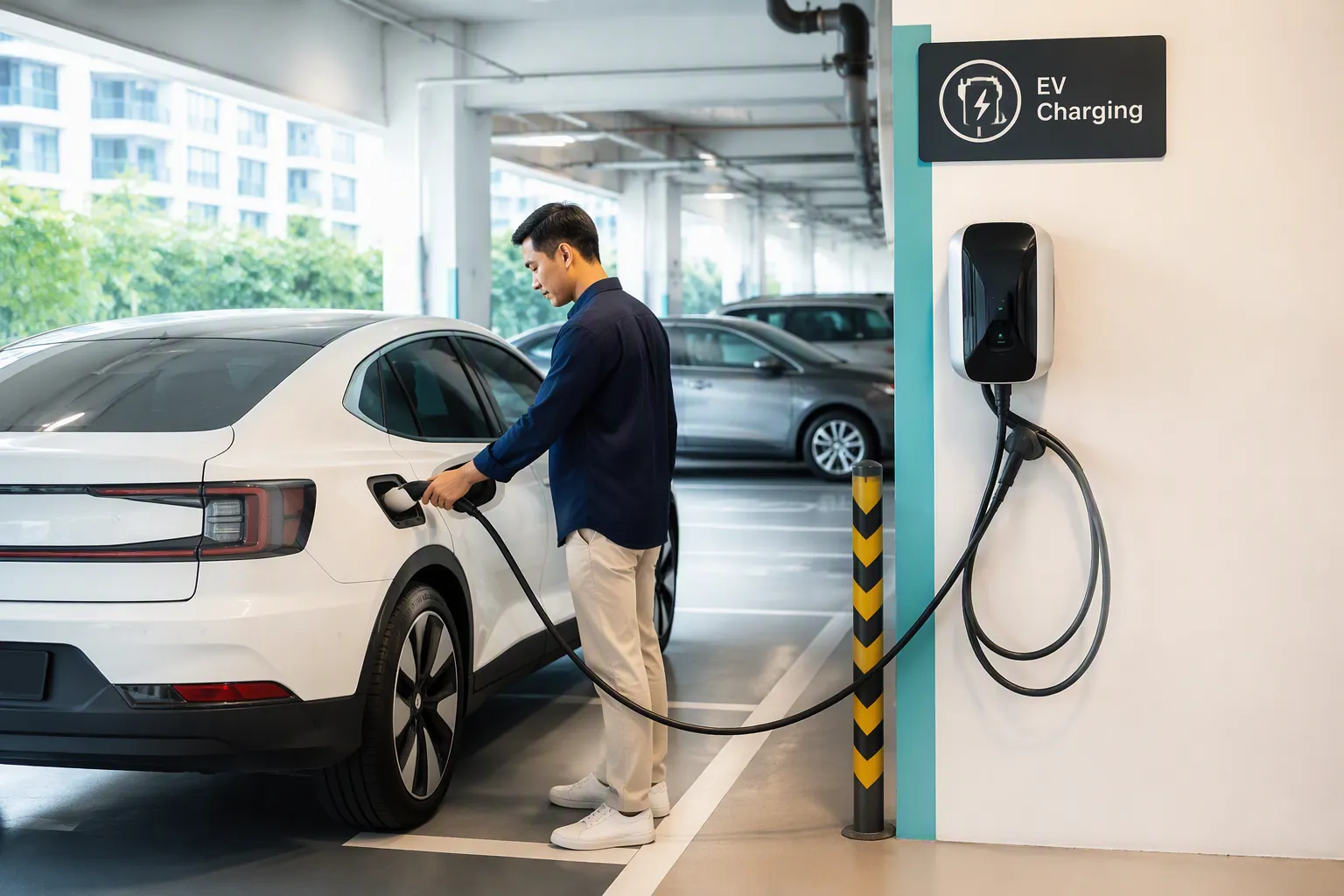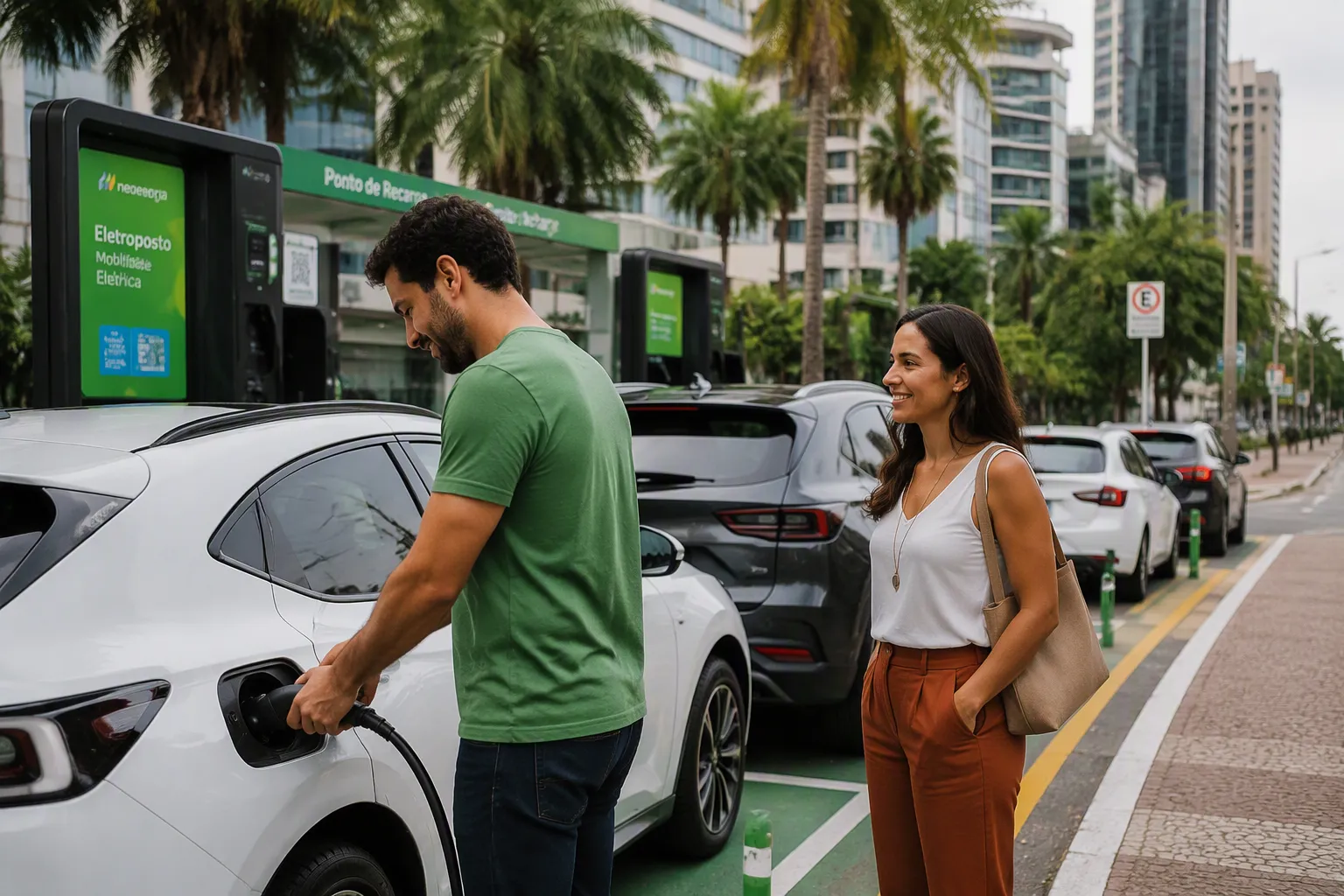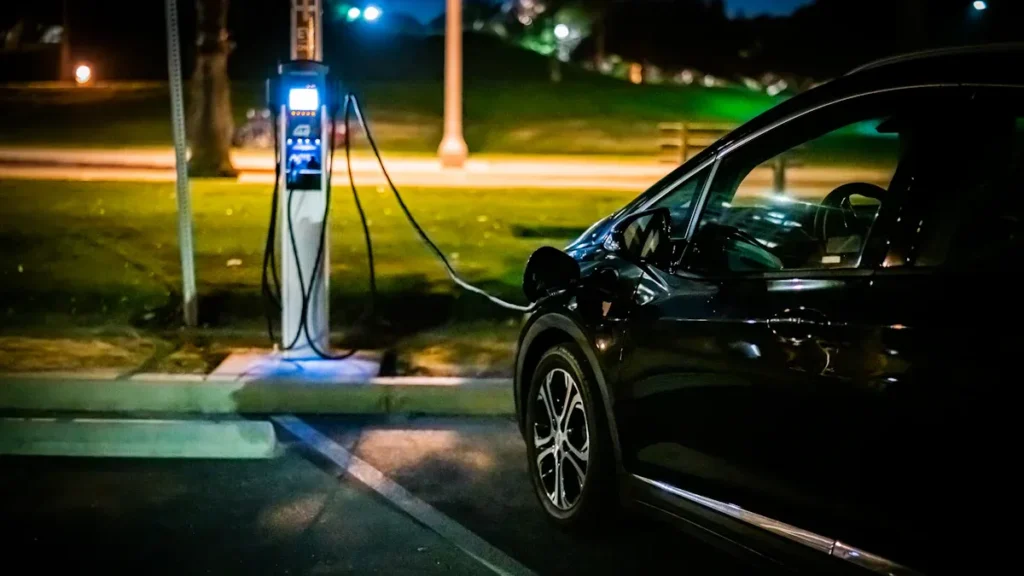

You can find ev chargers near your location with just a few taps on your device. Europe now offers plus de 882 012 points de charge publics, with 16% as DC chargers and 84% as AC chargers.
- These numbers reflect the rapid growth in Fabricants de chargeurs de VE and networks.
- Many drivers rely on apps or navigation systems to spot the nearest Chargeur EV.
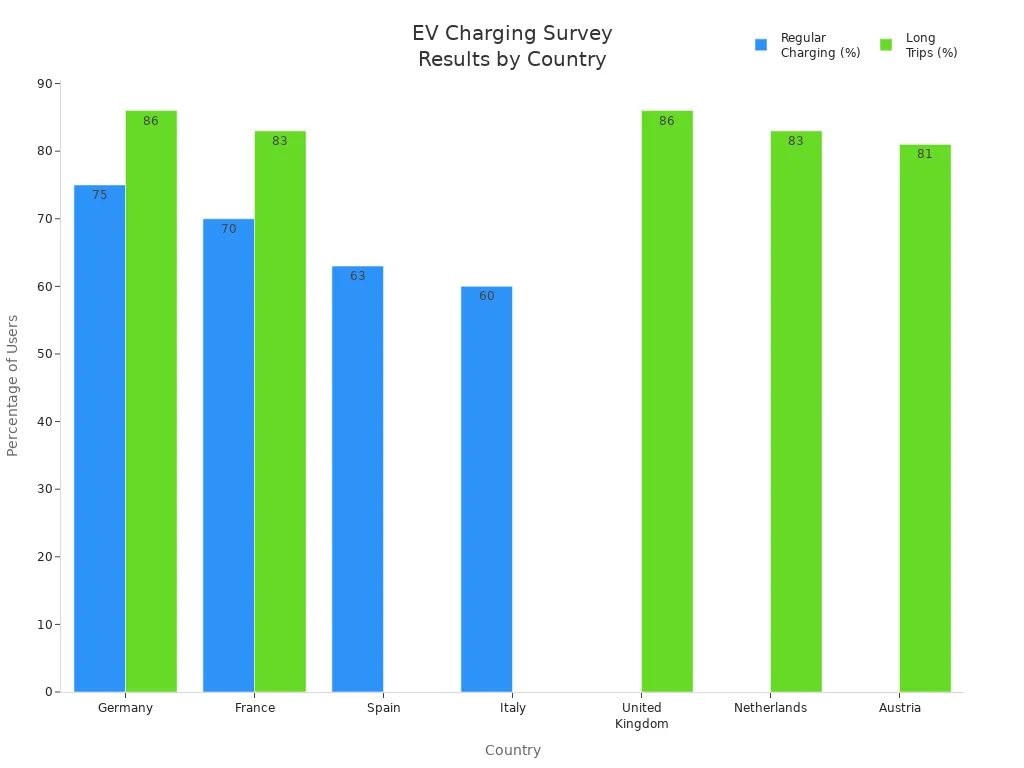
| Pays | Regular Charging (%) | Long Trips (%) | Confidence in Long Trips (%) |
|---|---|---|---|
| Allemagne | 75 | 86 | Nearly 3 out of 4 |
| France | 70 | 83 | Nearly 3 out of 4 |
| Espagne | 63 | N/A | Nearly 3 out of 4 |
| Italie | 60 | N/A | Nearly 3 out of 4 |
| United Kingdom | N/A | 86 | Nearly 3 out of 4 |
| Pays-Bas | N/A | 83 | Nearly 3 out of 4 |
| Austria | N/A | 81 | Nearly 3 out of 4 |
Top Ways to Find EV Chargers and Public Charging Stations

Utiliser les applications de recharge des VE
Popular Apps in Europe (PlugShare, ChargeFinder, Chargemap, Electromaps, easyCharging, Electroverse, FordPass, Zapmap)
You can find ev chargers quickly by using dedicated EV charging apps. These apps help you locate a public charging station with ease, especially when charging around Europe. The European market offers a wide selection of apps, each designed to simplify your search and enhance your charging experience.
- PlugShare
- ChargeFinder
- Carte de charge
- Electromaps
- easyCharging
- Électroverse
- FordPass
- Zapmap
- OVO Charge powered by Bonnet
- ChargePoint
- NEXTCHARGE
Each app connects you to a vast charging network, making it easier to find public charging stations wherever you travel.
How to Use App Features for Real-Time Availability and Navigation
When you open an EV charging app, you gain access to several features that streamline your charging journey. You can view real-time availability, check charger types, and compare charging speeds. Most apps also display cost information, so you know what to expect before you arrive at a public charging station.
- Access to public charging stations
- Information on charger types and numbers
- Charging speed details
- Real-time availability of chargers
- Cost information
You can use navigation features to guide you directly to the charger’s location. Many apps allow you to filter results based on connector type or charging speed, helping you find ev chargers that match your vehicle’s requirements.
Tip: Always check real-time availability before heading to a charging point. This helps you avoid waiting and ensures a smooth charging experience.
Cartes en ligne et outils de navigation
Google Maps for EV Charging Points
Google Maps has become a reliable tool for finding public charging stations. You can search for EV charging points and view detailed information about each location. Google Maps uses AI-powered summaries and user reviews to pinpoint the exact location of chargers, even in complex areas like multilevel parking lots.
| Fonctionnalité | Description |
|---|---|
| Location Accuracy | Google Maps will show AI-powered summaries that describe a charger’s specific location based on user reviews, helping users find exact locations in complex areas like multilevel parking lots. |
| Disponibilité en temps réel | Users will soon see nearby chargers with real-time port availability and charging speed, enhancing the ability to find suitable charging options while on the go. |
| User Reviews | Millions of daily reviews contribute to accurate and up-to-date information about charging stations, prompting users for additional details about their experiences. |
You can rely on Google Maps to provide up-to-date details about charging speed and availability. This makes it easier to plan your charging stops and avoid unnecessary detours.
Built-in Car Navigation Systems for Electric Car Charging
Many electric vehicles come equipped with built-in navigation systems that help you find ev chargers. These systems integrate with the car’s dashboard and display nearby public charging stations. You can select a charging point, view its location, and receive turn-by-turn directions. Some systems also show real-time charger status and estimated charging times, making your journey more efficient.
Note: Always update your car’s navigation software to access the latest charging station data.
Local Charging Networks and Public Charging Station Providers
Regional Charging Providers (Allego, Fastned, EnBW, Ionity)
Europe features a robust charging network with many regional providers. You can find public charging stations operated by companies such as Allego, Fastned, EnBW, and Ionity. These providers maintain hundreds of charging points across major cities and highways, ensuring you have access to reliable charging options.
| Access Option Type | Description |
|---|---|
| Modes de paiement | Many charging points accept contactless debit and credit cards, while others require RFID cards or apps. |
| Charge Point Operators (CPOs) | The network consists of hundreds of CPOs, including familiar names like Fastned, Mer, Allego, Tesla, and Ionity. |
| Planning for Charging Stops | Users are encouraged to research payment methods and bookmark charge points in apps like Zapmap for convenience. |
You can choose a provider based on your preferred payment method and network coverage. Some networks offer ultra-fast charging, while others focus on accessibility and convenience.
Membership Benefits and Access Options
Many charging networks offer membership programs that provide additional benefits. You can sign up for a membership to access discounted rates, priority charging, and exclusive offers. Some networks allow you to use RFID cards for quick access, while others support app-based payments. You can compare membership options to find the best fit for your charging needs.
Tip: Bookmark your favorite charging points in your app or navigation system. This saves time and helps you plan your route efficiently.
Understanding EV Charging Points, Charger Types, and Networks
Fast vs. Slow Electric Car Charging
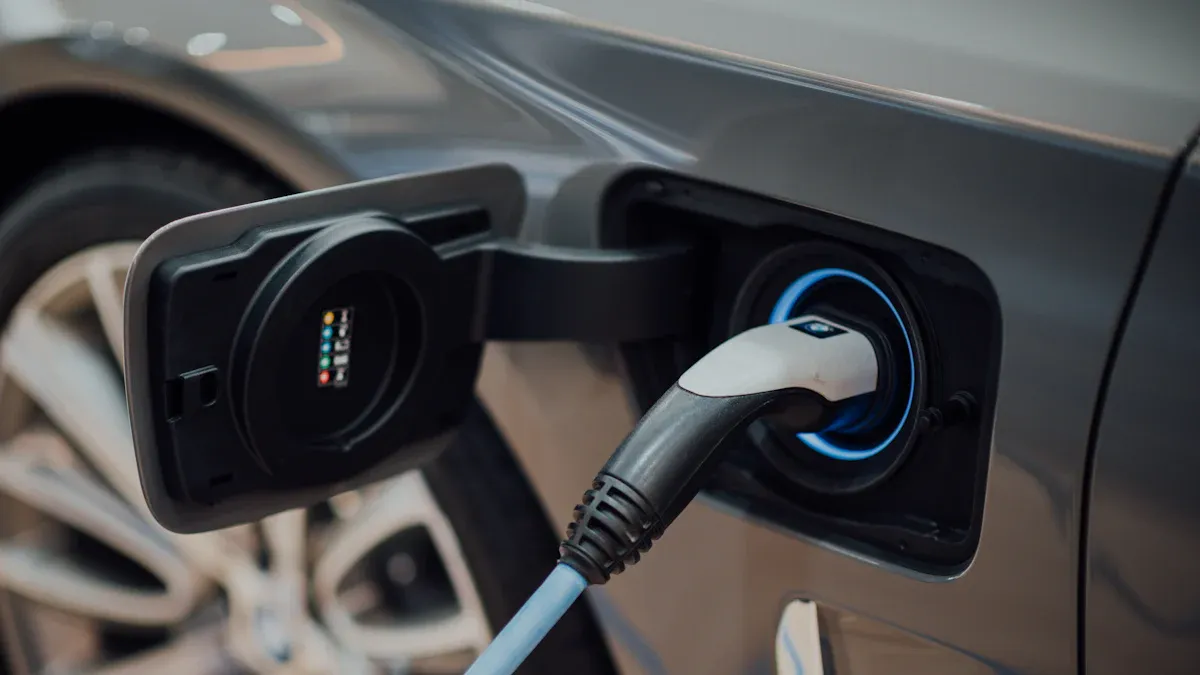
When you search for ev charging points, you will notice two main categories: AC and DC charging. Each type serves a different purpose for your daily driving or long-distance travel.
DC Fast Charging (Ultra-Rapid, Ionity, Tesla Supercharger)
DC fast charging delivers high power directly to your battery. You can find these chargers at highway rest stops and major travel corridors. DC fast chargers can provide up to 300 kW, which means you can charge your battery from 5% to 80% in about 30 minutes. Networks like Ionity and Tesla Supercharger offer ultra-rapid charging, making them ideal for road trips or when you need a quick top-up.
- Fast chargers (DC) significantly reduce waiting times compared to standard AC chargers.
- DC chargers are strategically located for long-distance travel.
- Ultra-fast DC charging points can deliver up to 350 kW or more.
AC Charging Points (Standard, Destination Charging)
AC charging points are more common in city centers, parking garages, and shopping areas. These chargers typically provide up to 22 kW of power. You will use AC chargers for everyday needs, such as overnight charging at home or while you shop. Charging with AC usually takes several hours for a full battery, but it fits well with daily routines.
| Catégorie | Sub-category | Maximum power output |
|---|---|---|
| Category 1 (AC) | Slow AC recharging point, single-phase | P < 7.4 kW |
| Medium-speed AC recharging point, triple-phase | 7.4 kW ≤ P ≤ 22 kW | |
| Fast AC recharging point, triple-phase | P > 22 kW | |
| Category 2 (DC) | Slow DC recharging point | P < 50 kW |
| Fast DC recharging point | 50 kW ≤ P < 150 kW | |
| Level 1 – Ultra-fast DC recharging point | 150 kW ≤ P < 350 kW | |
| Level 2 – Ultra-fast DC recharging point | P ≥ 350 kW |
Tip: Use DC fast chargers for quick stops and AC chargers for longer stays or overnight charging.
Connector Types at Public Charging Stations
You will encounter several connector types at public charging stations. Knowing which connector your vehicle supports helps you plan your charging stops efficiently.
Type 2 and CCS Connectors
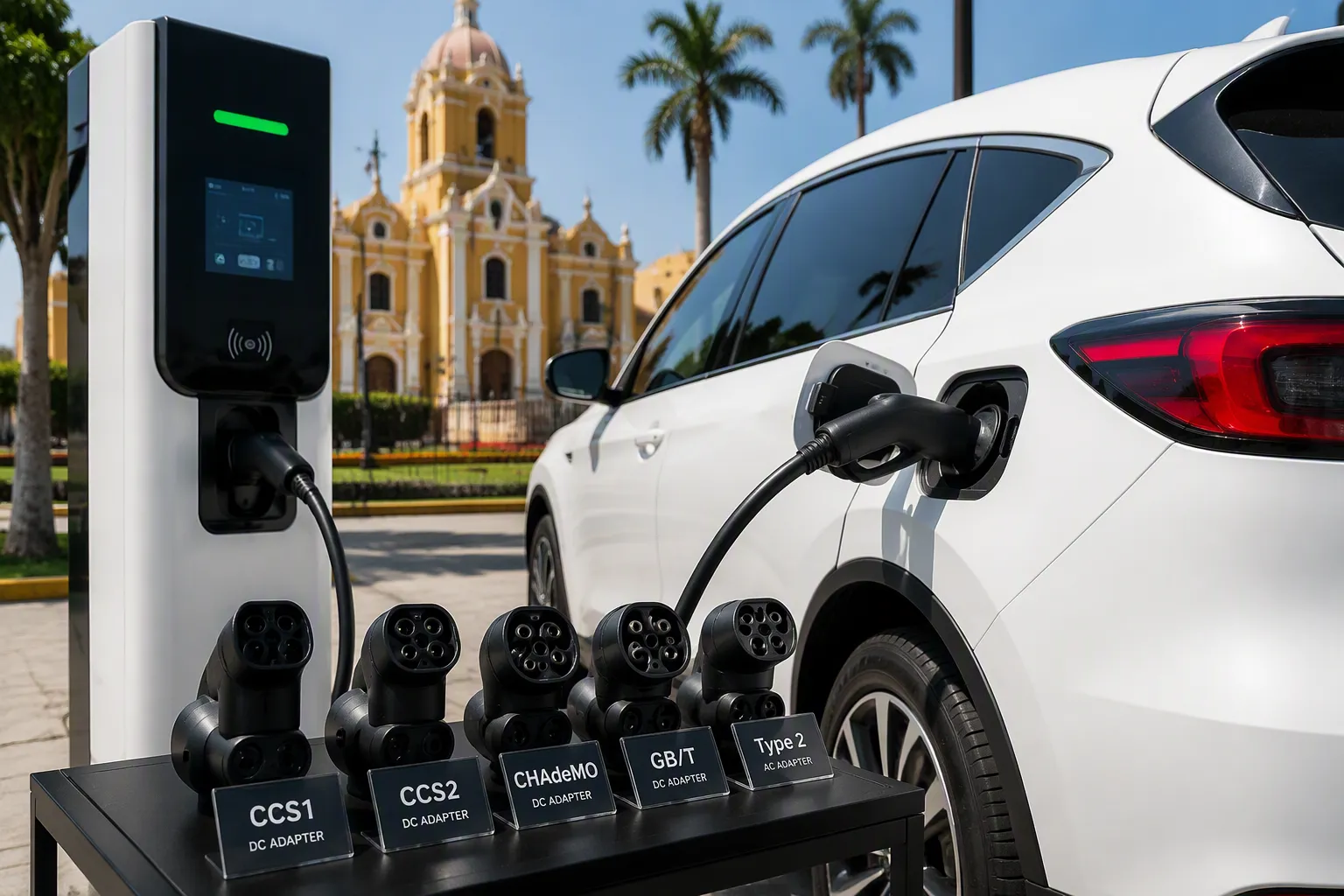
Type 2 connectors are the standard for AC charging in Europe. Most public stations offer Type 2 sockets, which support both slow and fast charging. CCS (Combined Charging System) connectors are widely used for rapid DC charging. Many new electric car chargers support both Type 2 and CCS, giving you flexibility.
- Type 2: Used for fast and slow charging.
- CCS: Utilized for rapid charging alongside CHAdeMO.
CHAdeMO and Other Common Connectors
CHAdeMO connectors are also available at some public stations, mainly for certain Japanese EV models. While less common than CCS, you may still find CHAdeMO at major charging hubs. Always check your vehicle’s compatibility before starting a charging session.
Major EV Charging Networks in Europe
Europe’s charging network has expanded rapidly in recent years. You can now access thousands of charging points across the continent, making EV travel more convenient than ever.
Ionité
Ionity operates a high-speed charging network along major highways. You can use Ionity stations for ultra-fast DC charging, which is perfect for long journeys. Ionity’s network continues to grow, offering more locations each year.
Superchargeur Tesla
Tesla Supercharger stations provide fast charging for Tesla vehicles and, in some locations, other EVs. These stations deliver high power and short charging times. Tesla’s network is known for reliability and coverage along popular travel routes.
Fastned, Allego, EnBW, Shell Recharge
You will also find networks like Fastned, Allego, EnBW, and Shell Recharge throughout Europe. These providers offer a mix of AC and DC charging points. Some hubs, such as the Wilgenveld charging hub in Belgium, feature hundreds of charge points. The bp pulse Gigahub in the United Kingdom also stands out with a large number of chargers.
The growth of public charging points in Europe has been impressive:
| Année | Number of Public Charging Points | Taux de croissance (%) |
|---|---|---|
| 2020 | 210,000 | N/A |
| 2022 | 520,000 | 82 |
| 2024 | 950,000 | 83 |
| 2030 | 2,200,000 | 250 |

You benefit from a charging network that is expanding every year. The deployment of DC fast chargers has surged, with over 135,000 now available in 2024. The average number of public charging points has risen to 193 per 100,000 inhabitants, making it easier for you to find a charger wherever you travel.
Pricing and Payment Options at Public Charging Stations
Understanding how you pay for electric car charging at public stations helps you plan your trips and manage costs. Pricing models and payment methods can differ across Europe, so knowing what to expect ensures a smooth experience.
How Pricing Works for Electric Car Charging
Public EV stations de recharge use several pricing models. These models reflect infrastructure costs, local regulations, and the type of charging network you use.
Per kWh vs. Per Minute Charging Fees
Most charging networks in Europe use energy-based pricing, where you pay for each kilowatt-hour (kWh) you consume. This model offers transparency and fairness, as you only pay for the electricity your vehicle receives. Some operators use per-minute fees, especially for fast chargers, which can encourage you to move your vehicle promptly after charging.
| Pays | Coût par kWh (€) |
|---|---|
| Norvège | 0.20 – 0.30 |
| Suède | 0.25 – 0.35 |
| Allemagne | 0.25 – 0.40 |
| France | 0.30 – 0.50 |
| Espagne | 0.20 – 0.40 |
Charging speed also affects pricing. Fast DC charging and superfast charging often cost more per kWh than standard AC charging.
| Type de station de recharge | Coût par kWh (€) |
|---|---|
| Fast Charging (DC) | 0.25 – 0.50 |
| Superfast Charging | 0.30 – 0.80 |
Flat Fees and Subscription Plans
Some charging networks offer flat-rate subscription plans. You pay a monthly fee and receive a lower per-kWh rate, which can save you money if you charge frequently. Pay-as-you-go options suit occasional users, as you only pay for what you use. On average, a subscription plan can save you about 20% compared to contactless rates.
| Modèle de tarification | Description | Potentiel d'Économies |
|---|---|---|
| Flat-Rate Subscription | Monthly fee for lower per-kWh rate | Pays off with frequent charging |
| Pay-as-You-Go | Ne payez que ce que vous consommez | Idéal pour une charge occasionnelle |
Conseil : Optez pour un abonnement si vous utilisez régulièrement des bornes de recharge publiques. Privilégiez le paiement à l'usage pour une charge occasionnelle de véhicule électrique.
Méthodes de paiement aux bornes de recharge pour VE
Plusieurs moyens de paiement sont disponibles pour votre session de recharge. Les méthodes les plus courantes incluent les applications mobiles, les cartes RFID et les cartes de crédit ou de débit.
Paiements par application et portefeuilles mobiles
Les applications mobiles vous permettent de localiser, démarrer et payer votre session de recharge directement depuis votre téléphone. Ces applications utilisent un chiffrement robuste et une authentification sécurisée, protégeant vos données lors de chaque transaction. De nombreuses applications prennent également en charge les portefeuilles mobiles pour plus de commodité.
| Mesure de sécurité | Paiements par application | Paiements par carte RFID |
|---|---|---|
| Protection des données | Chiffrement robuste | Aucun chiffrement |
| Authentification | Protocoles PKI sécurisés | Authentification simple |
| Risque d'accès non autorisé | Faible | Plus élevé |
Cartes RFID et abonnements aux réseaux
Les cartes de recharge RFID restent populaires pour une authentification et un paiement rapides. De nombreux réseaux de recharge fournissent ces cartes à leurs membres, vous permettant de les présenter et de démarrer la recharge instantanément. Les abonnements offrent souvent des avantages tels que des tarifs réduits ou un accès prioritaire.
Paiements par carte de crédit et de débit
Certaines bornes de recharge rapide acceptent les paiements directs par carte de crédit ou de débit. À partir d'avril 2024, toutes les nouvelles bornes de recharge publiques pour VE de puissance supérieure à 50 kW doivent inclure des terminaux de paiement, rendant les paiements par carte plus largement disponibles.
Remarque : La technologie Plug & Charge émerge, permettant à votre véhicule de s'authentifier et de payer automatiquement aux bornes compatibles.
Vérifier les coûts avant de recharger
Connaître le coût avant de démarrer la recharge vous aide à éviter les mauvaises surprises. De nombreux outils et applications fournissent des informations tarifaires claires.
Outils de comparaison de prix et estimations de coût dans l'application
Vous pouvez comparer les coûts de recharge en saisissant votre type de véhicule, la taille de la batterie et vos habitudes de recharge dans des calculateurs en ligne. Ces outils estiment le coût de votre session et vous permettent d'ajuster les paramètres pour différents scénarios.
- Sélectionnez votre véhicule et la taille de la batterie.
- Choisissez votre méthode de recharge (domicile ou public).
- Saisissez vos habitudes de conduite et vos tarifs d'électricité.
- Consultez le coût estimé de la recharge.
- Ajustez les paramètres pour voir comment les changements affectent vos dépenses.
Tarification transparente sur les applications de recharge
La plupart des applications de recharge affichent les prix en temps réel, y compris les tarifs au kWh, les frais de session et tout coût supplémentaire. Cette transparence vous permet de prendre des décisions éclairées et de choisir le réseau de recharge le mieux adapté à vos besoins.
Consultez toujours l'application ou l'affichage de la borne pour connaître les derniers tarifs avant de commencer à recharger votre véhicule électrique.
À quoi s'attendre lors de la recharge d'un véhicule électrique
Arrivée à la borne de recharge publique
Localiser la borne de recharge et se garer
À votre arrivée à une borne de recharge publique, suivez quelques étapes pour garantir une expérience fluide. Ne vous garez que si vous prévoyez de recharger votre VE. Si la borne est occupée, attendez patiemment votre tour. Utilisez toujours une borne compatible avec les exigences de votre véhicule. Positionnez votre voiture au bon port de recharge et libérez la place rapidement après la recharge. Respectez les limites de temps indiquées pour permettre à d'autres conducteurs d'accéder à la borne.
- Ne vous garez pas sauf si vous rechargez votre VE.
- Si la borne de recharge est occupée, attendez votre tour.
- Utilisez une borne de recharge compatible avec votre VE.
- Se garer sur le port de charge approprié.
- Libérez la place de recharge une fois terminé.
- Respectez la limite de temps.
Conseil : Vous contribuez à maintenir un réseau de recharge équitable et efficace en suivant ces étapes.
Préparation de la recharge
Avant de commencer, consultez les instructions sur l'écran de la borne ou dans l'application. Vérifiez que le type de connecteur correspond à votre VE. Préparez votre méthode de paiement, qu'il s'agisse d'une application, d'une carte RFID ou d'une carte de crédit. Assurez-vous que votre véhicule est éteint et prêt à être rechargé.
Démarrage du processus de recharge aux bornes pour VE
Branchement de votre véhicule à la borne
Branchez votre VE à la borne à l'aide du câble approprié. La plupart des bornes publiques fournissent des instructions claires sur l'écran. Fixez le connecteur au port de recharge de votre véhicule et confirmez la connexion sur l'écran de la borne ou dans l'application.
Lancement de la recharge via l'application, la carte ou le terminal
Vous pouvez démarrer la session de recharge en utilisant votre méthode préférée. De nombreuses bornes acceptent les paiements par application, les cartes RFID ou les transactions directes par carte de crédit. Suivez les instructions sur le terminal ou dans l'application pour commencer la recharge. En cas de problème, consultez les instructions d'aide de la borne ou contactez le support.
| Type de défi | Pourcentage de problèmes |
|---|---|
| Problème matériel | 36% |
| Problème de paiement | 23% |
| Problème de puissance de recharge | 15% |
| Autres problèmes | 25% |
| La borne ne démarre pas après paiement | 19% |
| Paiement échoué | 25% |
| Problèmes de paiement malgré la capacité à payer | 56% |

Remarque : Les problèmes de paiement et les dysfonctionnements matériels sont courants aux bornes de recharge publiques. Vérifiez les messages d'erreur et réessayez si nécessaire.
Surveillance et fin de votre session de recharge
Suivi en temps réel de la progression de la recharge
Modern EVs allow you to monitor charging progress remotely through smartphone apps. You can track the charging status, estimated completion time, and receive notifications. The easyCharging app lets you keep others informed if you expect a delay in returning to your vehicle.
- Monitor charging progress remotely via smartphone apps.
- Use the easyCharging app to update others about your charging status.
Safely Disconnecting and Finishing Up
When charging is complete, you should disconnect the cable safely. Always follow the station’s instructions for ending the session. Familiarize yourself with emergency shutdown procedures, as most stations have emergency stop buttons. Move your EV from the charging bay promptly to keep the network accessible for other drivers.
- Know how to use emergency stop buttons at public charging stations.
- Disconnect the cable and vacate the bay as soon as charging ends.
Tip: Promptly finishing up helps maintain a reliable and efficient charging network for all EV drivers.
Tips for a Smooth EV Charging Experience
Planning Ahead for Public Charging Stations
Checking Availability and Reserving a Spot
You can avoid long waits at public charging stations by planning ahead. Many apps allow you to check real-time availability and even reserve a spot before you arrive. This proactive approach helps you secure a charging point, especially during peak travel times or in busy city centers. By using these tools, you reduce the risk of arriving at a full station and save valuable time.
| Stratégie | Description |
|---|---|
| Planification des itinéraires | Schedule your journey by considering road traffic, station occupancy, and charging network load. |
| Multi-objective Path Planning | Optimize your route for distance, time, and charging fees to enhance efficiency. |
| Earliest Finish Charging Algorithm | Assigns the best charging station to minimize your total charging time. |
Tip: Look for stations with amenities nearby so you can relax or grab a snack while your EV charges.
Mapping Out Charging Stops on Your Route
Mapping out your charging stops ensures a smooth journey. You should identify strategically placed stations along your route and consider the distance between each stop. Some advanced planning methods, like congestion analysis and optimal charger placement, help you avoid busy locations and minimize travel time. By using these strategies, you make your trip more predictable and efficient.
- Plan your route to include reliable charging stations.
- Factor in charging times and station amenities.
- Use apps to monitor station status and adjust your plan if needed.
Troubleshooting Common Issues at EV Charging Points
App or Card Access Problems
If you experience issues with your app or RFID card, try these steps:
- Unplug and replug the connector to reset communication with your EV.
- Remove and reinsert the charging plug until it clicks securely.
- Check your vehicle’s app or dashboard for any scheduled charging delays.
- Ensure your payment method is active and accepted by the charging network.
Note: Blinking lights or error codes on the charger often indicate specific issues. Consult your app or manual for guidance.
Charger Malfunctions and What to Do
When you encounter a malfunctioning charger, you can:
- Inspect the chargepoint for visible damage.
- Move your vehicle to another charger if available.
- Check amperage settings in your app and adjust if charging is slow.
- In extreme cold, relocate your EV to a warmer spot to improve charging speed.
- If you suspect electrical issues, contact a qualified electrician.
Maximizing Charging Efficiency
Choisir le bon chargeur pour vos besoins
Selecting the right charger impacts both speed and cost. Fast DC chargers work best when you need a quick top-up, while slower AC chargers often cost less and suit longer stops. Use apps to compare prices and find the best deals at each location. Some workplaces and public areas offer free or discounted charging, which can help you save money.
- Avoid high-cost stations when time allows.
- Consider a charging card subscription for discounted rates.
Charging During Off-Peak Hours for Savings
Charging during off-peak hours can lower your costs and reduce strain on the network. Many charging stations offer lower rates at night or during periods of low demand. Monitoring your charging efficiency with vehicle telematics or third-party apps helps you track energy use and optimize your habits.
Charging smartly not only saves you money but also supports a more reliable charging network for all EV drivers.
Resources for Finding EV Chargers and Support in Europe
Useful Websites and Maps for Electric Car Charging
Official Charging Maps (Chargemap, PlugShare, Electromaps)
You have access to several reliable online resources that help you find EV charging points across Europe. Official charging maps provide real-time data, making your journey smoother and more predictable.
- Chargemap App: This app allows you to locate charging points in real time. You can check connector availability and plan your route efficiently. The app covers a wide area, so you can travel across Europe with confidence.
- PlugShare: PlugShare offers a comprehensive map of public charging stations. You can filter results by connector type, charging speed, and network. The platform also displays station details and user-contributed updates.
- Electromaps: Electromaps specializes in European infrastructure de recharge. You can search for charging points, view technical details, and access navigation features.
You can also use the Chargemap Pass, which gives you compatibility with over 1,500 networks and access to more than 570,000 charging points. This pass streamlines your charging experience, especially when you travel between countries.
Conseil : Consultez toujours l'application pour des mises à jour en temps réel avant d'arriver à une station de recharge. Cela vous aide à éviter des détours et des temps d'attente inutiles.
Forums communautaires et avis des conducteurs
Vous pouvez bénéficier des connaissances collectives d'autres conducteurs de véhicules électriques en visitant les forums communautaires. Ces plateformes vous permettent de partager des expériences, de poser des questions et de vous informer sur les dernières évolutions de la technologie de recharge. De nombreux forums présentent des discussions sur la fiabilité des réseaux de recharge, la maintenance des stations et les bonnes pratiques pour une charge efficace.
- Les communautés de conducteurs de VE discutent souvent des nouveaux emplacements de recharge et des extensions de réseau.
- Vous pouvez y trouver des conseils de dépannage pour les problèmes de recharge courants.
- Les forums mettent parfois en lumière les mises à jour des applications de recharge et des outils de navigation.
Remarque : Bien que les forums fournissent des informations précieuses, vérifiez toujours les détails techniques auprès de sources officielles ou du constructeur de votre véhicule.
Support et centres d'aide pour les conducteurs de VE
Coordonnées du service client des réseaux de recharge
Lorsque vous avez besoin d'assistance, vous pouvez contacter les équipes du service client de votre réseau de recharge choisi. La plupart des grands réseaux proposent des lignes d'assistance dédiées, des contacts e-mail et des fonctions de chat dans l'application. Ces services vous aident à résoudre les problèmes de paiement, les difficultés techniques ou les questions concernant votre compte.
| Réseau de recharge | Options de soutien | Disponibilité |
|---|---|---|
| Ionité | Téléphone, E-mail, Dans l'application | 24/7 |
| Allego | Téléphone, E-mail | Heures d'ouverture |
| Fastned | Téléphone, E-mail, Chat | 24/7 |
| EnBW | Téléphone, E-mail | Horaires étendus |
Vous devriez garder ces coordonnées à portée de main, surtout lorsque vous voyagez dans des zones non familières.
Assistance d'urgence et dépannage routier
Si vous rencontrez un problème qui vous empêche de poursuivre votre trajet, vous pouvez demander une assistance d'urgence. De nombreux réseaux de recharge s'associent à des prestataires de dépannage routier pour aider les conducteurs de VE. Ces services incluent le remorquage, la recharge sur site ou l'assistance technique pour votre véhicule.
- Les équipes de dépannage peuvent intervenir si vous êtes à court de batterie ou en cas de dysfonctionnement de la recharge.
- Certains prestataires proposent des unités de recharge mobiles pour les urgences.
- Vous pouvez accéder aux numéros d'urgence via votre application de recharge ou le tableau de bord de votre véhicule.
Consultez toujours votre contrat d'assurance VE pour comprendre quels services d'urgence sont inclus.
Vous pouvez trouver rapidement des bornes de recharge pour VE en utilisant des applications fiables, des cartes en ligne et des réseaux locaux. Suivez ces étapes pour une expérience fluide :
- Utilisez des applications pour trouver des bornes de recharge pour VE près de chez vous.
- Vérifiez la disponibilité en temps réel et planifiez vos arrêts de recharge.
- Consultez les options de paiement avant de commencer.
Restez préparé et utilisez ces outils pour rendre chaque trajet en VE efficace et sans stress.
FAQ
Comment trouver la borne de recharge pour VE adaptée à votre voiture ?
Vous devriez consulter le manuel de votre véhicule pour connaître les types de connecteurs compatibles. La plupart des stations européennes proposent des connecteurs de type 2 ou CCS. Utilisez les applications de recharge pour filtrer les stations par type de connecteur et vitesse de charge.
Pouvez-vous utiliser n'importe quelle borne de recharge publique avec votre VE ?
Vous pouvez utiliser la plupart des bornes de recharge publiques si votre véhicule prend en charge le type de connecteur. Certaines stations nécessitent une inscription ou une application spécifique. Vérifiez toujours la compatibilité avant de commencer la recharge.
Que faire si une borne de recharge est hors service ?
Vous devriez signaler le problème via l'application de recharge ou le numéro d'assistance de la station. Déplacez-vous vers une autre borne disponible à proximité. De nombreuses applications affichent les mises à jour d'état en temps réel pour chaque station.
Comment payer la recharge dans les stations publiques ?
Vous pouvez payer via des applications mobiles, des cartes RFID ou des cartes de crédit. Certaines stations prennent en charge les paiements sans contact. Vérifiez toujours les options de paiement avant de commencer votre session.
Avez-vous besoin d'un abonnement pour utiliser un réseau de recharge ?
Vous n'avez pas besoin d'un abonnement pour chaque réseau. De nombreuses stations proposent des options de paiement à l'usage. Les abonnements peuvent offrir des tarifs réduits et des fonctionnalités supplémentaires si vous rechargez fréquemment.
Combien de temps faut-il pour recharger un véhicule électrique ?
Le temps de charge dépend de la puissance de la borne et de la taille de votre batterie. Les chargeurs DC rapides peuvent ajouter une autonomie significative en 30 minutes. Les chargeurs AC standard peuvent nécessiter plusieurs heures pour une charge complète.
Pouvez-vous recharger votre VE par mauvais temps ?
Vous pouvez recharger votre VE en toute sécurité sous la pluie ou la neige. Les bornes de recharge sont conçues pour toutes les conditions météorologiques. Suivez toujours les consignes de sécurité sur site.