EV charger connections present a straightforward process when users know the essentials. Drivers recognize a few main connectors, thanks to the efforts of EV charger manufacturers and industry standards. Electric vehicle charging relies on matching the vehicle’s port to the correct EV Charger. The main connector types include:
- SAE J1772, CCS1, NACS (North America)
- IEC 62196 (Type 2, CCS2) (Europe)
- GB/T (China)
- CHAdeMO (Japan)
Charging at home or on the road becomes stress-free once drivers identify the right connector. Charging stations and vehicles use clear shapes to simplify charging. Reliable charging supports every EV on the market.
The Main Types of EV Charger Connections

Type 1 (J1772) EV Charging Connectors
What is Type 1?
Type 1, also known as the SAE J1772 connector, serves as the standard for many electric vehicles in North America and Japan. This connector features a rounded design with five pins. The SAE J1772 connector supports alternating current (AC) charging up to 7.4 kW, making it ideal for home charging setups. Most drivers encounter this connector when charging at home or at slower public stations.
Tip: The SAE J1772 connector is compatible with almost every non-Tesla EV in North America.
Where is Type 1 used?
Type 1 charging connectors appear most often in North America and Japan. Automakers in these regions equip their electric vehicles with this connector for reliable charging. The J1772 plug dominates the market for home charging and overnight charging.
| Region | Connector Type |
|---|---|
| North America | Type 1 (J1772) |
| Japan | Type 1 (J1772) |
- The J1772 plug is primarily used in North America and Japan.
- Almost every North American electric vehicle or plug-in hybrid uses this plug, except for Tesla.
- Type 1 (SAE J1772) connectors are ideal for slow or overnight charging.
Type 2 (Mennekes) EV Charging Connectors
What is Type 2?
Type 2, also called the Mennekes connector, stands as the standard for EV charging connectors in Europe and many other regions worldwide. This connector uses a seven-pin design with a flattened top, which allows for higher power delivery. Type 2 connectors support AC charging up to 22 kW, making them suitable for both home and public charging stations. Many public chargers in Europe use this connector for fast and efficient charging.
Where is Type 2 used?
Type 2 charging connectors dominate the European market and have become the global standard for many automakers. Drivers find this connector on a wide range of electric vehicles, including popular models such as:
- BMW i3
- BMW i8
- BYD E6
- Tesla Model S
- Renault Zoe
- Volvo V60 (plug-in hybrid)
- VW E-up
- Audi A3 E-tron
- Mercedes S500 (plug-in hybrid)
- VW Golf (plug-in hybrid)
- Porsche Panamera
- Renault Kangoo ZE
Note: Type 2 connectors work for both home and public charging, offering flexibility for drivers across Europe and beyond.
CCS (Combined Charging System) EV Charger Connections
What is CCS?
The Combined Charging System (CCS) represents a major advancement in EV charging connectors. CCS combines the features of Type 1 or Type 2 connectors with two additional pins for direct current (DC) fast charging. This design allows drivers to use the same port for both AC and DC charging, making it highly versatile. CCS connectors enable charging at much higher speeds, supporting more than 500 kW for DC fast charging.
Why is CCS popular?
CCS has gained popularity due to its compatibility and speed. Automakers worldwide have adopted CCS as the preferred standard for new electric vehicles. The ability to handle both AC and DC fast charging through a single port simplifies the charging process for drivers. Public charging networks increasingly offer CCS connectors, ensuring that drivers can access rapid charging on long trips.
| Feature | Type 1 (J1772) | Type 2 (Mennekes) |
|---|---|---|
| Regions | North America, Japan | Europe, Worldwide |
| Power (AC) | Up to 7.4 kW | Up to 22 kW |
| Design | 5 pins, rounded | 7 pins, flattened top |
| Best Use | Home charging | Home and public charging |
| Connector Type | Maximum Charging Power |
|---|---|
| CCS | More than 500 kW |
| CHAdeMO 3.0 | More than 500 kW |
| Tesla (NACS) | Not specified |
Charging with CCS connectors gives drivers access to the fastest public charging speeds available today.
CHAdeMO EV Charging Connectors
What is CHAdeMO?
CHAdeMO stands as one of the earliest DC fast charging connectors for electric vehicles. This connector supports rapid charging by delivering high-voltage direct current directly to the battery. CHAdeMO originated in Japan and quickly expanded to other regions. The connector features a large, round design with multiple pins, engineered for safety and reliability. Many public charging stations use CHAdeMO to provide quick charging for compatible EVs.
CHAdeMO enables charging speeds up to 500 kW, making it suitable for drivers who need fast turnaround times.
The distribution of CHAdeMO charging stations varies by region. The following table shows the number of CHAdeMO charging stations in key markets:
| Country/Region | Number of CHAdeMO Charging Stations |
|---|---|
| Japan | 9,600 |
| Europe | 31,600 |
| North America | 9,400 |
| Other Regions | 7,000 |

Europe leads in the number of CHAdeMO charging stations, followed by Japan and North America. This widespread availability ensures that drivers can access DC fast charging in many locations.
Which cars use CHAdeMO?
Automakers such as Nissan, Mitsubishi, and Kia equip several models with CHAdeMO charging connectors. The Nissan Leaf remains one of the most recognized electric vehicles using CHAdeMO. Mitsubishi Outlander PHEV and Kia Soul EV also rely on this connector for DC fast charging. These vehicles benefit from the extensive CHAdeMO network, especially in regions with high station density.
Drivers who own these models can expect reliable charging performance at public stations equipped with CHAdeMO connectors. The connector’s compatibility with DC fast charging makes it a preferred choice for quick charging sessions.
Tesla Connector EV Charger Connections
What is the Tesla connector?
Tesla developed its own proprietary connector for charging electric vehicles. In North America, Tesla uses the North American Charging Standard (NACS), which supports both AC and DC fast charging. The connector features a compact design and allows for high-speed charging at Tesla Supercharger stations. Tesla’s charging connectors differ from other standards, offering seamless integration with Tesla vehicles.
Tesla charging stations provide both AC and DC fast charging, ensuring that drivers can charge quickly at home or on the road. The connector’s design prioritizes ease of use and safety, with automatic locking and communication features.
Tesla’s charging network remains one of the largest and fastest-growing in North America.
Can non-Tesla cars use Tesla chargers?
Non-Tesla electric vehicles cannot use Tesla charging connectors directly. However, Tesla has begun to open some Supercharger stations to other EVs through adapters and updated software. Drivers with non-Tesla vehicles may use a compatible adapter to connect to Tesla chargers, provided the station supports this feature. Compatibility depends on the region and the specific charging station.
Charging apps and station signage indicate whether non-Tesla vehicles can access Tesla charging connectors. Drivers should verify compatibility before attempting to charge. Adapters must meet safety standards to ensure proper charging performance.
Other EV Charging Connectors
What is a Commando connector?
Commando connectors serve as industrial-grade charging connectors, often used for temporary or portable charging setups. These connectors support higher current ratings, up to 32A, and appear in environments such as campsites, workshops, and event venues. Commando connectors provide robust charging for electric vehicles when dedicated EV charging connectors are unavailable.
The following table compares Commando connectors with 3-pin ‘granny charger’ connectors:
| Feature | Commando Connectors | 3-pin ‘Granny Charger’ Connectors |
|---|---|---|
| Current Rating | Up to 32A | 13A |
| Common Applications | Caravans, Campers | General household devices |
| Compatibility with Sockets | 16A and 32A | 13A |
Commando connectors offer faster charging than standard household sockets. Their rugged design ensures safe operation in demanding environments.
What is a 3-pin or ‘granny charger’ connector?
A 3-pin or ‘granny charger’ connector refers to the standard household plug used for slow charging of electric vehicles. This connector delivers a lower current, typically 13A, and connects directly to a regular wall socket. Drivers use granny chargers for overnight charging at home or when no dedicated EV charging connectors are available.
Granny chargers provide a convenient backup charging solution, but charging times are significantly longer compared to DC fast charging or dedicated EV charging connectors.
Safety remains important when using granny chargers. Drivers should inspect cables and sockets before charging to prevent overheating or damage.
How to Identify Which EV Charger Connections You Need
Check Your Vehicle’s Manual
Finding connector info in your manual
Vehicle manuals provide essential information about charging connectors. Manufacturers include detailed specifications for each electric vehicle model. Owners can locate the connector type, power rating, and compatibility details in the charging section of the manual. The manual often lists the supported charging standards and describes the physical characteristics of the connector.
| Connector Type | Power Rating | Description |
|---|---|---|
| Type 1 | 3 to 7 kW AC single-phase | Mainly found on electric vehicles by Japanese carmakers, gradually disappearing for Type 2. |
| Type 2 | 3 to 43 kW AC three-phase | European standard, fitted on most electric vehicles currently marketed. |
| Chademo | 50 kW DC | Mainly fitted on Japanese cars, connects to rapid charging stations. |
| Combo CCS | over 50 kW DC | European standard, fitted on most vehicles that can access rapid charging. |
Drivers should review the charging section to confirm the connector type and charging capabilities. Manuals also explain whether the vehicle supports AC charging, DC fast charging, or both.
What to look for in the specs
Owners should focus on several key details in the manual:
- Connector type (Type 1, Type 2, CHAdeMO, CCS)
- Maximum charging power (kW)
- Supported charging modes (AC, DC fast charging)
- Pin configuration and safety features
These specifications help drivers select the correct charging station and avoid compatibility issues. Manuals often include diagrams or images of the connector, making identification easier.
Look at the Charging Port
How to spot the connector shape
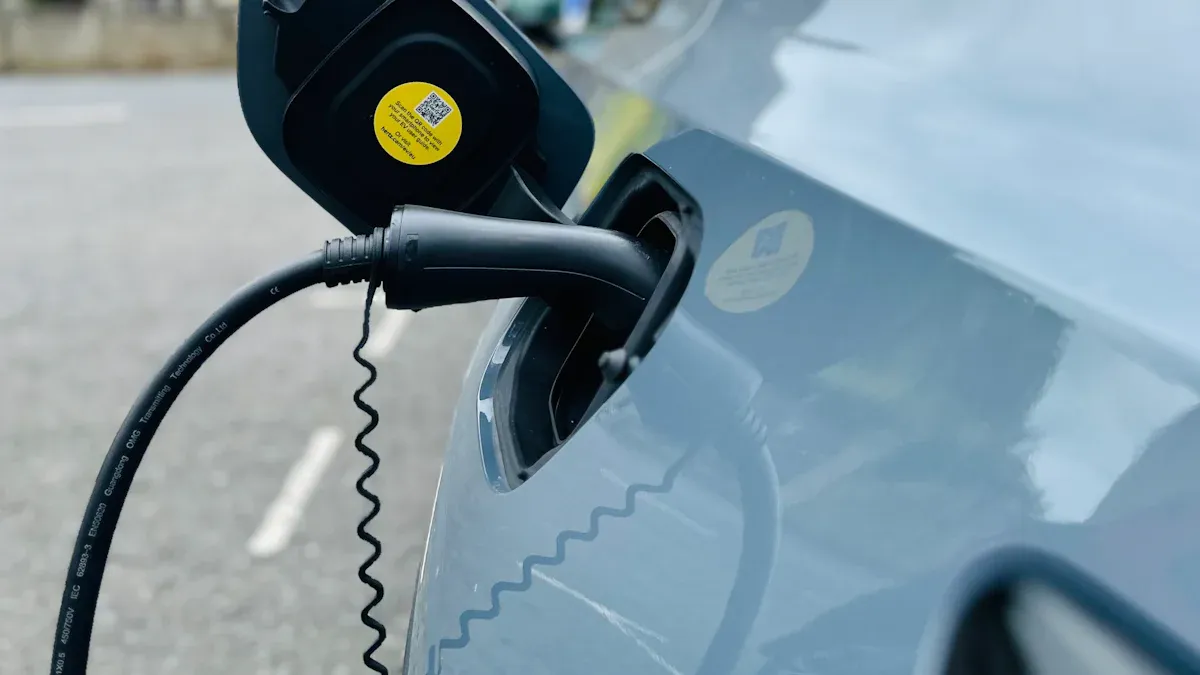
Visual inspection of the charging port provides immediate clues about the connector type. Manufacturers design each port with unique shapes and pin arrangements. For example, Type 2 connectors feature a round shape with a flat bottom and seven distinct pins. Many charging ports have blue casings, indicating AC charging capability. CCS Combo 2 ports include two larger DC pins for faster charging.
| Feature | Description |
|---|---|
| Shape | Round shape with a flat bottom |
| Color | Most have blue casings indicating AC charging |
| Pins | Seven distinct pins on the connector face |
| Additional Features | CCS Combo 2 version includes two larger DC pins for faster charging |
| Safety Features | Spring-loaded clamps that lock automatically when plugged in |
| Rotation Capability | Can rotate fully 180 degrees for easier access in tight spaces |
Drivers should compare the port on their vehicle to images of common connectors. The number of pins, shape, and color help distinguish between AC charging and DC fast charging options.
Matching port to charger
Owners match the charging port on their vehicle to the connector at the charging station. Charging stations display clear labels and diagrams for each connector type. Drivers should verify that the connector fits securely and locks in place. If the port includes extra DC pins, the vehicle supports DC fast charging. Charging apps and station signage provide additional guidance for matching connectors.
Use a Quick Reference Chart for EV Charging Connectors
Popular car models and their connectors
Quick reference charts simplify the process of identifying the correct charging connector. These charts list popular electric vehicle models alongside their standard connectors. The origin of the car and the geographical location influence the connector type. For example, European models typically use Type 2 connectors, while North American vehicles rely on SAE J1772 (Type 1).
- European vehicles: Type 2 connectors
- North American vehicles: SAE J1772 (Type 1)
- Japanese vehicles: CHAdeMO or Type 1 connectors
- Most new models: CCS for DC fast charging
Drivers can use these lists to quickly determine which charging station will work for their vehicle.
Handy chart for fast lookup
A quick reference chart provides a fast way to match vehicles to charging connectors:
| Car Model | Connector Type | Charging Capability |
|---|---|---|
| Nissan Leaf | CHAdeMO | DC fast charging |
| BMW i3 | Type 2 / CCS | AC and DC fast charging |
| Chevrolet Bolt | Type 1 / CCS | AC and DC fast charging |
| Tesla Model 3 | NACS / Type 2 | AC and DC fast charging |
| Renault Zoe | Type 2 | AC charging |
| Kia Soul EV | CHAdeMO | DC fast charging |
Tip: Drivers should consider the origin of their car and their location. These factors determine the standard charging connectors available in their area.
Owners who use quick reference charts avoid confusion at public charging stations. These charts help drivers select the right connector and ensure efficient charging every time.
Ask at the Charging Station
On-site help and signage
Charging stations provide clear guidance for every driver. Staff members at many public locations offer assistance with EV charging procedures. They answer questions about connector compatibility and help users select the correct connectors for their vehicles. Signage at charging stations displays connector types, charging speeds, and instructions for safe operation. Drivers see visual diagrams that match the connector shape to the charging port on their EV. These signs reduce confusion and speed up the charging process.
Charging stations often use color-coded labels to identify connector types. For example, blue labels indicate AC charging, while orange or red labels mark DC fast charging options. Staff members check that connectors fit securely and explain how to start or stop a charging session. Many stations include printed guides or QR codes that link to digital instructions. Drivers benefit from these resources, especially when using a new charging network or unfamiliar connectors.
A table below summarizes the typical information found at public charging stations:
| Information Displayed | Purpose |
|---|---|
| Connector type diagrams | Help drivers match connectors to their EV |
| Charging speed labels | Indicate how fast charging will complete |
| Safety instructions | Ensure proper use of connectors |
| Staff assistance | Provide expert help for charging questions |
Tip: Drivers should always read station signage before connecting their EV to avoid mistakes and ensure safe charging.
Using charging apps for info
Charging apps have become essential tools for EV owners. These apps help users locate compatible charging stations and filter options by connector type. Drivers select filters for CHAdeMO, CCS, Type 2, or Type 1 CCS connectors to find stations that match their vehicle. Charging apps display a map with over 500,000 charge points, allowing users to plan routes and avoid unnecessary detours.
Charging apps also highlight trustworthy and highly-rated stations. Drivers check reviews and ratings to choose reliable charging locations. The apps show cost-effective charging options, helping users manage expenses during long trips. Many apps provide real-time availability, so drivers know which connectors are free or in use.
Key features of charging apps include:
- Filtering charging stations by connector type for easy compatibility.
- Locating highly-rated and trustworthy charging stations.
- Finding cost-effective charging options to save money.
- Viewing a map with extensive charge point coverage and powerful filters.
Charging apps update information frequently, ensuring drivers access the latest data on connector availability and charging speeds. These digital tools simplify the charging experience and reduce stress for every EV owner.
Note: Drivers should download a reputable charging app before traveling. This step ensures access to accurate connector information and helps avoid delays at public charging stations.
Electric Car Charging at Home vs. Public Charging

Home Charging Basics
Common home connector types
Home car charging point installations rely on several standard connectors. The most common options include:
- Type 1 (J1772): Used in North America, supports AC charging up to 7.4 kW.
- Type 2 (Mennekes): Standard in Europe, supports AC charging up to 22 kW.
- Combined Charging System (CCS): Versatile for AC and DC charging up to 350 kW.
- CHAdeMO: Popular in Japan for DC fast charging up to 62.5 kW.
- Tesla Supercharger Connector: Proprietary for Tesla vehicles, supports DC charging up to 250 kW.
These connectors ensure compatibility with most EV models. Owners select the connector that matches their vehicle and charging infrastructure.
Charging speed at home
Electric car charging at home typically uses a Level 2 wallbox. This setup adds over 25-30 miles of range per hour. Charging at home is slower than at public charging stations, especially when compared to fast and ultra-rapid chargers. Most EV owners prefer home charging for its convenience and cost-effectiveness. Charging overnight allows drivers to start each day with a full battery.
Charging at home provides a reliable solution for daily use, but it may take several hours to fully charge an EV.
Public Charging Stations and EV Charger Connections
Types of public chargers
Public charging points offer a range of charging options. The most widely available chargers in urban areas include:
- Level 2 Chargers: Common in public areas, provide enhanced charging times, adding approximately 10 to 60 miles of range per hour.
- Level 3 Chargers (DC Fast Charging): Located in high-traffic areas, offer rapid charging capabilities, providing up to 200 miles of range in just 30 minutes.
Charging station networks deploy these chargers to support drivers on the go. Public charging stations often feature multiple connectors to accommodate different EV models.
How to find the right public charger
Drivers locate suitable charging stations by considering connector compatibility, charging speed, and location. Charging apps help users filter public charging points by connector type and charging point availability. Many stations display clear signage indicating supported connectors and charging speeds. Drivers check for the correct connector before starting a charging session.
Tip: Download an EV charging station finder app to locate nearby stations and compare charging options.
Preparing for Each Scenario
What to bring for home charging
EV owners prepare for home charging by following these steps:
- Get the charging cable, either built into the charger or provided by the manufacturer.
- Plug the car into the charging point.
- Start the charging session, which often begins automatically.
- End the charging session, ensuring the cable unlocks before unplugging.
Charging at home requires minimal equipment. Owners keep their charging cable and connector accessible for daily use.
What to bring for public charging
Charging at public charging stations requires additional preparation:
- Download an EV charging station finder app to locate stations.
- Consider charging priorities, such as speed and cost.
- Arrange payment through an account or membership with a charge point operator.
Drivers bring their charging cable if required and confirm connector compatibility at the charging station. Public charging points may require authentication before starting a charging session.
Charging at home remains the most convenient option for most EV owners. Public charging stations provide quick top-ups during long trips and support a wide range of connectors.
Adapters and Compatibility for EV Charging Connectors
When You Need an Adapter
Common adapter types
Drivers often encounter situations where their EV charging connector does not match the available charging station. In these cases, adapters bridge the gap between different connector standards. The most commonly used adapters include:
- CCS adapters, which support charging speeds up to 350 kW and serve most non-Tesla EVs. These combine the J1772 plug with two additional DC pins.
- CHAdeMO adapters, typically used by older Nissan and Mitsubishi models, offer charging up to 62.5 kW. This standard is being phased out in North America.
- Tesla (NACS) adapters, supporting up to 250 kW, work for both AC and DC charging. Tesla to J1772 adapters allow non-Tesla EVs to use Tesla destination chargers, though not Superchargers.
- J1772 to Tesla adapters, included with Tesla vehicles, enable charging at most public Level 2 stations.
- Tesla to CCS adapters, which let CCS-equipped vehicles charge at compatible Tesla Superchargers.
- CHAdeMO to Tesla adapters, less common, allow slow DC charging on older CHAdeMO networks.
These adapters expand charging options for EV owners, especially when traveling across regions with different connector standards.
How to use adapters safely
Safety remains a top priority when using adapters for EV charging. Drivers should always follow the manufacturer’s guidelines for both the vehicle and the charging station. Before connecting, they must inspect charging cables and connectors for visible damage or wear. Proper cord management prevents trip hazards, and parking in designated EV charging bays ensures access for others.
Tip: Never use damaged charging cables or attempt to charge in extreme weather unless necessary.
Additional safety measures include installing a professionally fitted home charger, using a dedicated fuse board, and adding surge protection. Drivers should avoid unsuitable extension cords, keep hands dry when handling equipment, and remain aware of practical hazards like tripping over cables.
Compatibility Tips for EV Charger Connections
Checking compatibility before charging
Compatibility checks help prevent charging failures and equipment damage. Drivers should confirm that their EV and the charging station use compatible connector standards, such as SAE J1772, CCS, CHAdeMO, or Tesla. Regular software updates for both the EV and the charger maintain compatibility and improve performance. Voltage and amperage specifications must match the vehicle’s requirements. Inspecting connectors for dirt, corrosion, or damage ensures a secure connection.
Avoiding common mistakes
Several issues can disrupt the charging process. The table below highlights frequent compatibility problems:
| Cause Type | Specific Issue | Example |
|---|---|---|
| Protocol Mismatch | ISO 15118 vs DIN 70121 | An older EV using DIN 70121 fails to communicate with a charger using ISO 15118 |
| Software Differences | Firmware incompatibility | A car without updated BMS cannot handshake with a new charger |
| Electrical Limits | Voltage/current mismatch | 800V charger cannot step down enough for a 400V-only car |
| Mechanical Connection | Incomplete insertion or dirt | Connector not seated properly, signaling failure |
| Safety Protections | Grounding or fault detection | Charger lacks proper ground; EV blocks charging |
| Regional Implementation | Vendor-specific details | Same connector, but software layers differ by manufacturer or country |
Drivers can avoid these mistakes by checking compatibility, updating software, and ensuring connectors are clean and undamaged. Careful preparation leads to a smooth and reliable EV charging experience.
Safety and Best Practices for Electric Vehicle Charging
Safe Charging Habits
Inspecting cables and connectors
Electric vehicle owners must prioritize safety by inspecting cables and connectors before every charging session. They check for visible damage, wear, or corrosion on the charging cable and connector. Frayed wires, bent pins, or cracked insulation signal a need for replacement. Regular inspection helps prevent electrical hazards and ensures reliable charging for every EV.
Tip: Owners should always keep charging equipment clean and dry. Moisture or dirt on connectors can interfere with charging and compromise safety features.
Drivers also monitor the battery status and charging equipment performance. They look for warning lights or error messages on the charger display. Routine checks help identify issues early and maintain optimal charging conditions.
- Top up the battery regularly, keeping it between 20% and 80%.
- Limit fast charging sessions to preserve battery health.
- Charge during off-peak hours to reduce grid strain and save money.
- Avoid charging in extreme temperatures; use pre-conditioning if needed.
What to do if something looks wrong
If a driver notices anything unusual during charging, they should stop the session immediately. Signs such as overheating, burning smells, or sparks require prompt attention. Owners disconnect the charger and inspect the equipment for damage. They contact a certified technician for repairs instead of attempting DIY fixes.
Charging stations and home chargers include built-in safety features. These features detect faults, interrupt power, and prevent further damage. Owners rely on these systems to protect their EV and charging equipment.
Note: Never use damaged cables or connectors. Professional inspection ensures continued safety and reliable operation.
Protecting Your Vehicle and Charger
Weather considerations
Charging an EV in the rain remains safe because modern chargers meet waterproofing standards. Manufacturers design chargers to withstand moisture, dust, and temperature fluctuations. Owners enhance safety by keeping hands dry and ensuring connectors remain free from water before use.
Parking the vehicle in shaded or temperature-controlled environments helps avoid charging in hot, direct sunlight. Scheduling charging during cooler periods reduces battery stress and improves efficiency.
| Protective Measure | Description |
|---|---|
| Choose the Right Location for Installation | Select a well-drained area away from water runoffs and flooding-prone spots |
| Use Chargers with Appropriate IP Ratings | Ensure chargers have IP65 or higher for moisture and dust protection |
| Install a Protective Enclosure or Housing | Shield connectors and cables from harsh weather |
| Apply Protective Seals and Covers | Seal cable entry points to prevent water ingress |
| Implement Proper Cable Management | Use drip loops and conduits to prevent water accumulation |
| Regular Maintenance and Inspections | Check for moisture and ensure seals are intact |
| Ensure Professional Installation | Hire certified electricians for proper setup |
| Consider Installing a Weatherproof Shelter | Use a canopy to reduce exposure to rain and snow |
| Avoid DIY Modifications or Repairs | Contact professionals for repairs |
| Invest in Quality Products | Choose reliable brands with industry-standard moisture protection |
Preventing damage
Owners protect their EV and charger by following best practices. Ground protection reduces electric shock risks, while over temperature protection disconnects power if temperatures exceed safe limits. Lightning protection shields the charger from electrical surges, and short circuit protection interrupts power to prevent damage.
- Schedule regular maintenance and inspections for charging equipment.
- Use chargers with advanced safety features to minimize risks.
- Avoid charging in areas prone to flooding or extreme weather.
- Store cables and connectors in weatherproof enclosures when not in use.
Charging safely and protecting equipment ensures long-term reliability for every EV owner.
Common Questions and Quick Solutions for EV Charger Connections
What if the charger doesn’t fit?
Drivers sometimes discover that the connector does not fit their EV at a charging station. This situation often results from mismatched connector types or physical obstructions. They should first check the connector for dirt or debris. Cleaning the port and connector can resolve many connection failures. If the connector still does not fit, drivers must verify that the charging station supports their EV model.
A charging station may display error codes or unusual noises when internal components fail. Power supply problems can also prevent charging. Tripped breakers or grid issues sometimes affect the performance of the charging station. The table below outlines the most common problems encountered when chargers do not fit:
| Problem Type | Description |
|---|---|
| Power Supply Problems | Issues with power supply can arise from tripped breakers or grid problems affecting charger performance. |
| Connection Failures | Problems with cables or connectors, often due to dirt or improper fit, can lead to charging failures. |
| Faulty Components | Internal parts like fuses or circuit boards may wear out, causing unusual noises or error codes. |
Drivers should inspect the connector and port for visible damage. If the issue persists, they can try another charging station or contact support for assistance.
Tip: Always check the connector type before visiting a charging station to avoid compatibility issues.
Can I use any public charger?
Not every charging station works with every EV. Drivers must match the connector type and charging protocol to their vehicle. Most public charging stations offer several connector options, including Type 2, CCS, and CHAdeMO. Tesla charging stations may require an adapter for non-Tesla vehicles. Drivers should consult their vehicle manual or use a charging app to confirm compatibility.
Charging station signage provides clear information about supported connectors. Some charging stations restrict access to specific brands or require membership. Drivers should read instructions at the charging station before starting a session. If the connector fits and the charging station recognizes the EV, charging can begin.
Note: Using the wrong connector or forcing a fit can damage both the EV and the charging station.
What about charging speed differences?
Charging speed varies between home and public charging stations. Level 2 chargers at home typically add 25-30 miles of range per hour. Public charging stations with DC fast chargers can deliver up to 200 miles in 30 minutes. The EV model and battery capacity influence charging speed. Some EVs accept higher power rates, while others limit charging to slower speeds.
Drivers should check the charging station display for estimated charging times. Fast chargers suit long trips and quick top-ups, while slower chargers work best for overnight charging. Charging apps help drivers locate stations with the desired speed. They should avoid frequent use of ultra-fast chargers to preserve battery health.
Charging speed depends on the EV, the charging station, and the connector type. Always select the appropriate charging station for your needs.
How do I know if my car is charging?
Drivers often want immediate confirmation that their EV is charging correctly. Most electric vehicles provide clear indicators on both the dashboard and the charging port. When a driver connects the charger, the vehicle typically displays a charging icon or message on the instrument panel. Some models show the battery percentage increasing in real time. Charging stations also feature indicator lights. A green or blue light usually signals active charging, while a red light may indicate a fault.
Many EVs emit a soft sound or click when charging begins. Owners can check the charging cable for warmth, which suggests current is flowing. Charging apps offer another layer of confirmation. These apps display charging status, estimated completion time, and energy delivered. Some apps send notifications when charging starts or finishes.
A simple checklist helps drivers verify charging status:
- Look for a charging icon or message on the dashboard.
- Check the charging port for indicator lights.
- Listen for sounds or clicks from the EV or charger.
- Monitor the battery percentage for increases.
- Use a charging app to track progress.
Tip: If the EV does not show any charging signs, drivers should inspect the cable and connector for damage or improper fit.
A table below summarizes common charging indicators:
| Indicator Type | What to Look For |
|---|---|
| Dashboard Display | Charging icon or battery status |
| Port Light | Green/blue for charging |
| Sound | Click or hum at start |
| App Notification | Charging started/completed |
What should I do if I’m still confused?
Some drivers may still feel uncertain about EV charging, especially when encountering new equipment or unfamiliar stations. They should start by consulting the vehicle manual. Manufacturers provide detailed instructions and troubleshooting steps for every EV model. Charging station signage offers visual guides and contact information for support.
If confusion persists, drivers can use charging apps to access tutorials and FAQs. Many apps include step-by-step guides for connecting and starting a charging session. Owners may also seek assistance from station staff or helpline numbers displayed at the charging point.
A few practical steps help resolve most charging questions:
- Review the EV manual for connector and charging instructions.
- Read all signage and instructions at the charging station.
- Use charging apps for real-time help and troubleshooting.
- Ask station staff for guidance if available.
- Contact customer support using the phone number on the charger.
Note: Drivers should never force a connector or ignore warning lights. Professional help ensures safe and effective charging for every EV.
A block of code below lists a quick troubleshooting routine:
1. Check dashboard for charging status.
2. Inspect connector and cable.
3. Read station instructions.
4. Use charging app for support.
5. Call helpline if needed.
By following these steps, drivers gain confidence in charging their EV and avoid common mistakes.
EV charger connections present a straightforward process for most drivers. They only need to recognize one or two types to charge their vehicles efficiently. With regular use, ev charger connections become as familiar as plugging in a phone. Drivers who understand ev charger connections can approach both home and public charging with confidence. The right knowledge about ev charger connections ensures a smooth experience every time.
FAQ
What connector does most electric vehicles use?
Most electric vehicles in North America use the SAE J1772 connector for AC charging. European models typically use the Type 2 connector. Newer vehicles often support CCS for fast charging.
Can drivers charge a non-Tesla EV at a Tesla Supercharger?
Some Tesla Superchargers now allow non-Tesla vehicles to charge with a compatible adapter. Availability depends on the region and station. Drivers should check charging apps for access details.
How can someone check if a charging station fits their car?
Drivers can inspect the charging port shape and compare it to station connectors. Charging apps and station signage provide compatibility information. Vehicle manuals list supported connector types.
Is it safe to charge an EV in the rain?
Manufacturers design EV chargers to withstand rain and moisture. Charging remains safe when using equipment with proper waterproof ratings. Drivers should keep connectors dry and avoid standing water.
What should a driver do if charging stops unexpectedly?
Drivers should check the cable and connector for damage. They can review the dashboard for error messages. Restarting the session or contacting station support often resolves the issue.
Do all public charging stations offer fast charging?
Not all public stations provide fast charging. Some offer only Level 2 AC charging. Charging apps display station types and speeds, helping drivers select the right location for their needs.
How long does it take to fully charge an EV at home?
Charging at home with a Level 2 charger usually takes between 6 and 12 hours, depending on battery size and charger power. Overnight charging suits most daily driving needs.
Are adapters always necessary for charging?
Adapters are not always required. Most drivers use the cable provided with their vehicle. Adapters help when traveling across regions with different connector standards or using specific charging networks.