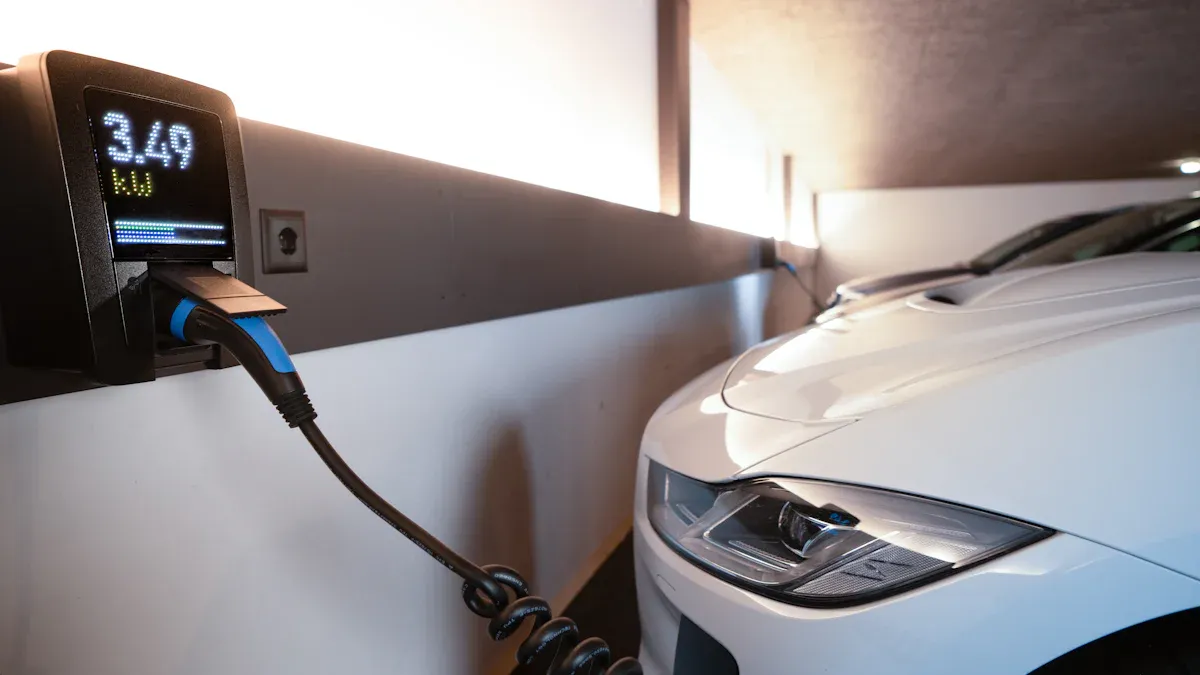
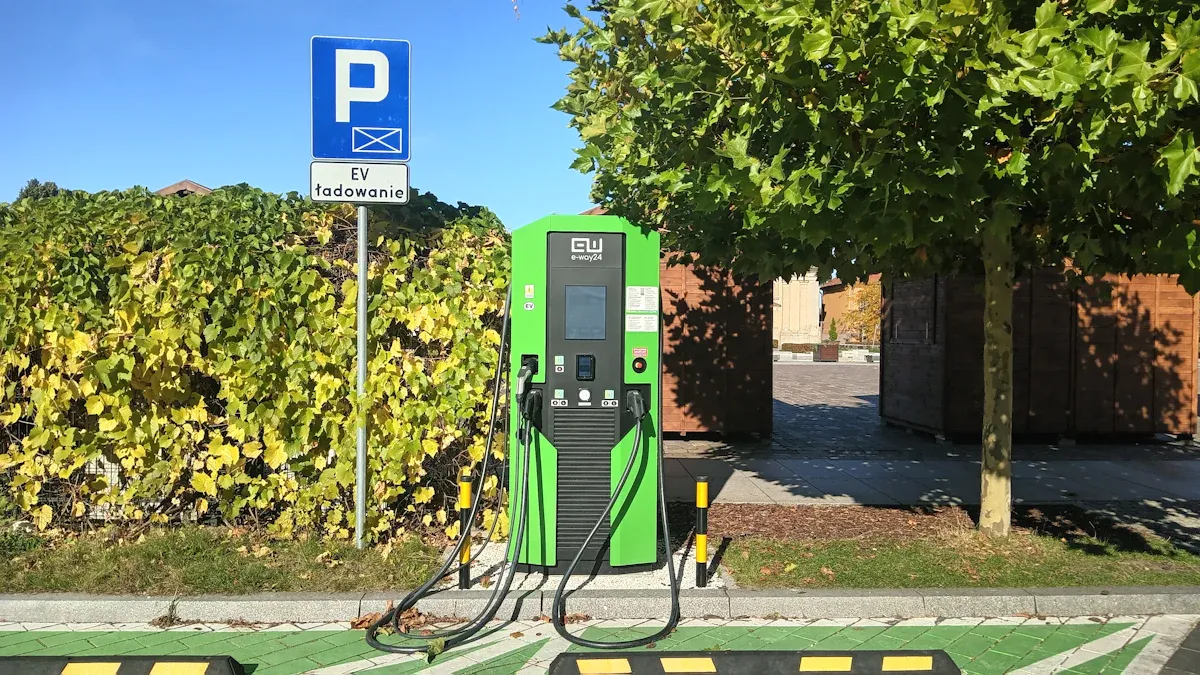
A tourist can confidently plan EV travel across Spain in 2025. Spain’s Level 3 EV charging network makes long-distance trips simple for any electric car. Hersteller von EV-Ladegeräten have expanded this public network with advanced EV-Ladelösungen. An EV driver finds each EV-Ladegerät easily with key apps like Electromaps. This robust EV charging network supports all EV vehicles. The charging experience in Spain is seamless.
For added peace of mind on remote routes, some EV drivers also carry tragbare EV-Ladegeräte.
The 2025 State of Spain’s Level 3 EV Charging Network

Spain’s Level 3 EV charging network has matured into a reliable system for travelers. Understanding its components is key to a successful trip. The public infrastructure provides ample power and coverage for long-distance journeys across Spain. An EV driver can navigate the country with confidence by knowing the types of charging, connectors, and speeds available.
What is Level 3 (DC Fast) Charging?
Level 3 charging uses Direct Current (DC) to power an electric car battery directly. This method bypasses the vehicle’s onboard AC converter. The result is significantly faster charging times compared to other methods. These public stations are the backbone of the fast-charging network.
Why It’s Essential for Tourists
Fast charging is crucial for any tourist. It minimizes downtime, allowing travelers to spend more time sightseeing and less time waiting. A typical Level 3 session can add hundreds of kilometers of range in under an hour. This capability makes cross-country road trips in an EV practical and efficient.
Level 3 vs. Slower Level 2 Charging
Drivers will encounter both Level 2 and Level 3 public charging points. Their differences are significant for trip planning.
| Merkmal | Stufe 3 (DC Schnell) | Stufe 2 (AC) |
|---|---|---|
| Beste Verwendung | Highway travel, quick top-ups | Overnight, workplace, destination charging |
| Geschwindigkeit | 20-60 minutes for ~80% charge | 4-10 hours for a full charge |
| Strom | 50kW – 350kW+ | 7kW - 22kW |
| Standort | Major highways, service stations | Hotels, public car parks, shopping centers |
Connector Types for Electric Vehicles in Spain
Spain uses standardized connectors for its public EV infrastructure. Most modern electric vehicles in Spain are compatible without issue.
CCS (Combined Charging System): The Standard
The Combined Charging System (CCS or “Combo 2”) is the universal standard for DC fast charging in Europe. Nearly every new EV sold in Spain uses this connector. All new public DC stations feature CCS compatibility.
CHAdeMO: For Specific EV Models
The CHAdeMO connector serves older or specific EV models, such as the Nissan Leaf and Mitsubishi Outlander PHEV. While less common than CCS, many charging stations in Spain still offer a CHAdeMO plug to support these vehicles.
Tesla’s NACS and Required Adapters
Tesla vehicles sold in Europe come equipped with a standard CCS port from the factory. Drivers renting a Tesla in Spain will not need an adapter for public charging. The North American Charging Standard (NACS) is not used in the European public network.
Expected Charging Speeds at Public Charging Stations
The power output of stations determines the charging speed. Spain offers a mix of standard and ultra-fast options.
Standard Fast Chargers: 50-150kW
Chargers in the 50kW to 150kW range are the most common type of public fast charger. These stations can typically charge an EV battery from 20% to 80% in about 30 to 60 minutes, depending on the vehicle.
Ultra-Fast Chargers: 150kW and Above
Found along major motorways, ultra-fast and rapid charging stations deliver 150kW to over 350kW of power. These advanced charging points can add 100km of range in as little as 5-10 minutes, making them ideal for quick stops on long drives.
Your Essential Toolkit: Apps and Major Networks
An EV driver’s success in Spain hinges on having the right digital tools. A few key applications and familiarity with the main public charging providers transform the journey from a challenge into a simple, well-managed adventure. These resources are the core of how to locate charging stations and manage charging sessions effectively.
Must-Have Aggregator Apps to Find Stations
Aggregator apps compile data from numerous charging networks into a single, user-friendly interface. An EV driver should download these before arriving in Spain to ensure they have a comprehensive view of all available charging points.
Electromaps: Your All-in-One Map
Electromaps is the most indispensable app for EV travel in Spain. It functions as a master key to the country’s public charging infrastructure, offering a complete map of stations from nearly every provider.
- Comprehensive Coverage: The app provides access to over 240,000 EV chargers across Europe, with dense coverage in Spain.
- Real-Time Status: Drivers can check the instant availability of charging stations, preventing unnecessary stops at occupied or out-of-service units.
- Unified Payment: The Electromaps charging pass is a powerful tool, especially for charging off main roads. It activates over 95% of the public network, simplifying payment across different operators.
PlugShare: Community-Powered Back-Up
PlugShare serves as an excellent secondary app. Its primary strength lies in its active user community. Drivers leave recent check-ins, comments, and photos, providing valuable, on-the-ground intelligence about a station’s condition and accessibility. This user-generated content is a great resource for verifying if a charger is working as expected before arrival.
A Better Routeplanner (ABRP): For Trip Planning
For meticulous planners, A Better Routeplanner (ABRP) is the gold standard. A driver inputs their specific EV model, starting battery percentage, and destination. The app then calculates an optimal route, including necessary charging stops. It considers factors like elevation, vehicle weight, and weather to provide highly accurate predictions for energy consumption and charging time. This is the best tool for understanding how to locate charging stations strategically along a long route.
Key Charging Network Operators in Spain
While aggregator apps show all stations, having an account with one or two major network operators can offer better pricing and a more reliable charging experience. The market for Spain’s level 3 EV charging network is fragmented. The top five operators hold just 27% of the market combined, with no single company exceeding a 9% share. This means a tourist will encounter a variety of brands.
Iberdrola Public Charging
Iberdrola operates one of the most extensive public charging networks in Spain. Its stations are widespread, found in cities, at retail locations like IKEA and Mercadona, and along major highways. The Iberdrola Public Charging app is user-friendly and a solid choice for a primary network account.
Endesa X Way
Endesa X Way is another dominant player in the Spanish EV charging market. They have a strong presence in urban areas and at commercial sites. Their app allows for easy activation and payment, and they are continually expanding their network of electric vehicle charging stations with fast and ultra-fast options.
Repsol Recharge
Leveraging its vast network of traditional fuel stations, Repsol has become a key provider of fast charging on Spain’s motorways. A driver can find Repsol’s high-powered charging points at convenient locations that also offer amenities like shops and cafes, making it a comfortable and reliable option for road trip stops.
Ionity: The Premium Highway Network
Ionity is a joint venture of several major automakers, including TPSON partner brands, focused on providing high-power charging along Europe’s main transport corridors.
Profi-Tipp: Ionity stations are the go-to for ultra-fast charging. They exclusively offer 350kW chargers, making them the quickest option for compatible EV models. While often priced at a premium, they deliver unmatched speed.
Other Important Networks: Zunder and Wenea
Zunder and Wenea are rapidly growing networks that are crucial to the charging landscape. They are aggressively installing ultra-fast charging hubs across the country, often in locations underserved by other providers. Keeping their apps handy provides an EV driver with even more options, ensuring they are never far from a fast charge.
How to Use a Level 3 Charger in Spain: A Step-by-Step Guide
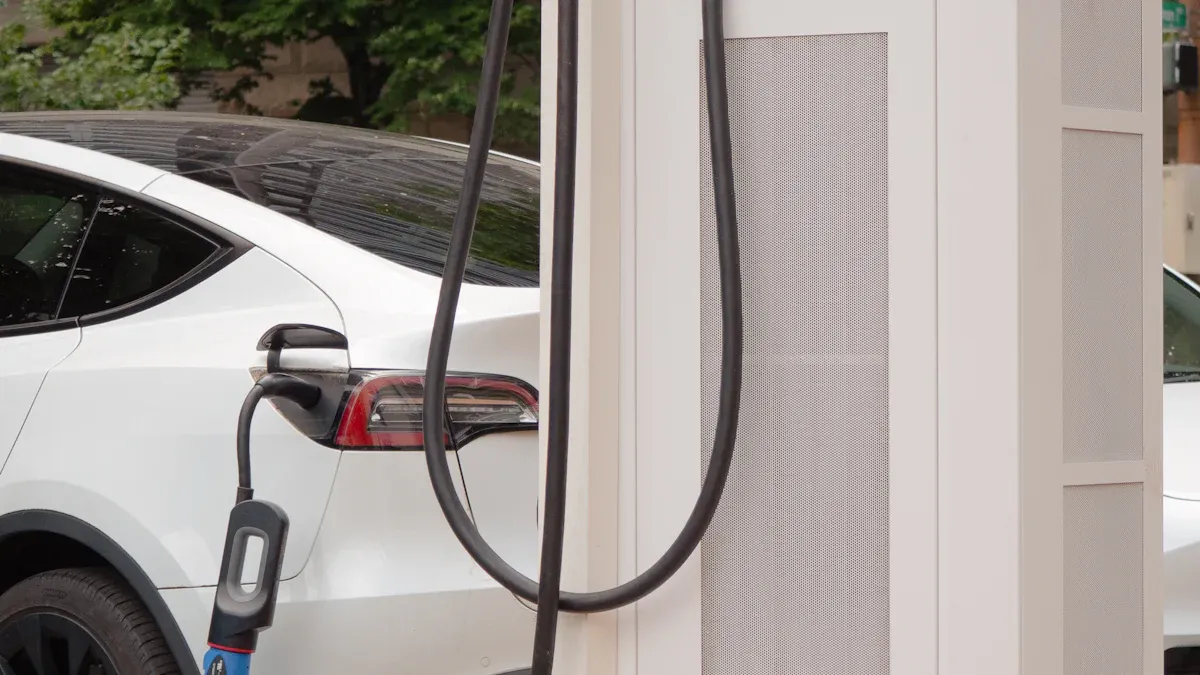
Using a public Level 3 charger is a straightforward process. A tourist can master the steps for charging a car in Spain after just one or two sessions. The procedure is similar across most networks, making the experience consistent and predictable.
Initiating a Charging Session as a Tourist
The first interaction with a public charger sets the tone for the trip. Following a clear sequence ensures a successful start every time.
Step 1: Find and Select Your Station
An EV driver uses an aggregator app like Electromaps to locate nearby charging points. The app’s filters help identify Level 3 DC fast chargers with the correct connector for the EV. A driver should check the station’s real-time status to confirm it is available and operational before navigating to it.
Step 2: Authenticate with an App
Most public charging in Spain is initiated through a mobile app. Once at the station, the driver opens the corresponding network’s app (e.g., Iberdrola, Repsol) or an aggregator app like Electromaps. The process typically involves these actions:
- Select the specific charging station on the app’s map.
- Enter the charger’s unique ID number, which is clearly labeled on the unit.
- Alternatively, scan a QR code on the charger to identify it automatically.
- Follow the in-app prompts to authorize payment and begin the session.
Step 3: Using Contactless Credit Card Payment
A growing number of new public stations now feature ad hoc payment terminals. This development greatly simplifies the process for travelers. A driver can simply tap a contactless credit card or a phone with a digital wallet to pay. This method bypasses the need for a network-specific app, making it the most convenient option when available.
Step 4: Connect the Cable and Start Charging
After authentication, the driver connects the heavy-duty DC cable to the EV’s charging port. The driver must ensure the plug is firmly seated. The charging session will begin automatically, often confirmed by a sound from the vehicle and a change in status on the charger’s screen.
Monitoring and Ending Your Session
Keeping track of the charging progress is simple. Both the network app and the vehicle’s dashboard provide all necessary information.
Using the App to Track Progress
The network app is the primary tool for monitoring a session remotely. An EV driver can step away from the vehicle to grab a coffee and still see key details. The app’s interface typically displays a range of useful information.
- Current Session Overview: Shows the real-time power delivery in kW and the total energy delivered in kWh.
- Auflade-Modus: Confirms the active charging settings.
- Recent Session Overviews: Provides a history of past charges, including costs.
- Scheduled Session Start Time: Some apps allow for scheduling, showing a countdown to the start.
This data empowers the driver to manage their time effectively while the EV is charging.
How to Properly Stop the Charge
Ending a session correctly is crucial, especially at busy public stations. A driver can stop the charging process in one of two ways:
- Via the App: The most common method is to press the “Stop Charging” button within the mobile app.
- On the Charger: Some units have a physical or touchscreen button to end the session.
After the session stops, the driver unplugs the cable from the vehicle and returns it to the charger’s holster. This action makes the charger available for the next user.
Troubleshooting Common Issues at Stations
While the public network is reliable, occasional issues can occur. Knowing how to handle them prevents frustration. The process of charging a car in Spain is usually smooth, but these tips help with exceptions.
What to Do if a Charger Won’t Activate
If a charger fails to start, a driver should first try a simple “reboot” of the process. They can cancel the session in the app, unplug the car, and try again. If the issue persists, they should check the app for user comments indicating a known fault. The final step is to call the support number listed on the charging unit for assistance.
Handling a Payment Failure
A payment failure can happen if a credit card is declined or the app has a glitch. The driver should first ensure their payment information in the app is correct. Trying a different payment method or restarting the app often resolves the problem. If using a contactless terminal, trying a different card is the quickest solution.
When Charging Speed is Slower Than Expected
An EV may not always charge at the station’s maximum advertised speed. Several factors can cause slower charging speeds.
Common Causes for Slow Charging:
- Temperatur der Batterie: An EV battery that is too cold or too hot will charge slower to protect its health.
- State of Charge (SoC): Charging speed naturally decreases as the battery approaches 80-90% full.
- Power Sharing: Some stations split power between two vehicles charging simultaneously.
- Vehicle Limitations: The EV itself may have a maximum charging speed lower than what the station can provide.
If the speed is unusually slow from the start, the driver might consider moving to a different station if one is nearby.
Costs, Payments, and Subscriptions Explained
Understanding the financial side of public EV charging is essential for a budget-friendly trip. The cost of charging a car in Spain varies by network, location, and charging speed. A driver can manage expenses effectively by knowing the pricing structures and payment options.
Understanding the Cost of Fast Charging
Fast charging costs are composed of several elements. Drivers should review the pricing in the app before starting a session to avoid surprises.
Preisgestaltung pro Kilowattstunde (kWh)
The most common pricing model is per kilowatt-hour (kWh) consumed. This is the fairest method, as a driver pays only for the energy the vehicle receives. Prices for public Level 3 charging typically range from €0.45 to €0.80 per kWh, with premium networks like Ionity often at the higher end.
Connection Fees and Session Costs
Some operators add extra fees to the energy cost. A network might charge a small, one-time connection fee to initiate a charging session. Others may implement a per-minute cost in addition to the per-kWh rate. This structure encourages rapid turnover at busy public stations.
Avoiding Idle Fees and Penalties
Operators impose idle fees to prevent drivers from leaving their cars plugged in after the charging session is complete. These penalties can be expensive, often charged per minute.
Profi-Tipp: Always set a notification in the charging app or on your phone for when your session is expected to reach 80%. This helps you return to your vehicle on time and free up the public charger for the next user.
Payment Methods for Tourists
Tourists have several convenient ways to pay for charging. The process of charging a car in Spain has become much simpler with modern payment technology.
Paying via Network-Specific Apps
The primary payment method is through network-specific mobile apps (e.g., Iberdrola, Repsol) or aggregator apps like Electromaps. A driver links a credit card to their account. The app then handles all payments seamlessly when initiating a charging session.
The Rise of Ad Hoc Credit Card Terminals
Newer public charging stations increasingly feature contactless payment terminals. This is the easiest method for travelers. A driver simply taps a credit card or smartphone to pay directly at the unit, with no app or account required.
RFID Cards: Are They Necessary for Tourists?
Physical RFID cards are not necessary for most tourists visiting Spain. While some pan-European services like Muschel aufladen offer broad app-based access, their physical cards are not a primary payment method.
- Other services like Plug Surfing and New Motion have limited coverage within the country.
- Relying on major network apps and ad hoc credit card payments is a more reliable strategy for public charging.
Abonnement vs. Pay-As-You-Go-Modelle
Drivers must choose between paying per session or subscribing to a network plan. The right choice depends on the length and nature of the trip.
When a Subscription Might Save You Money
A monthly subscription might be cost-effective for a long-term stay (e.g., one month or more) with frequent travel. Subscribers often receive a lower per-kWh rate, which can offset the subscription fee if the driver plans on significant public charging.
Why Pay-As-You-Go is Best for Most Tourists
For a typical one- or two-week vacation, the pay-as-you-go model is the most practical and economical option. It offers maximum flexibility without any commitment. A driver pays only for the energy used, which aligns perfectly with the variable needs of a holiday road trip.
Planning Your 2025 Spanish EV Road Trip
Successful long-distance travel and EVs in Spain depend on smart planning. A driver can create a seamless itinerary by understanding popular routes, rental car specifics, and strategies to eliminate range anxiety. This preparation is key for modern tourism.
Mapping Level 3 Chargers on Popular Tourist Routes
Spain’s primary tourist corridors feature dense networks of fast-charging stations, making EV travel straightforward.
The Madrid-Barcelona Corridor
This route is exceptionally well-equipped. Drivers will find numerous ultra-fast charging hubs from major operators directly along the A-2 motorway, ensuring a quick and efficient journey between the country’s two largest cities.
The AP-7 Mediterranean Coastal Route
Travel along the scenic Mediterranean coast is simple. The AP-7 has plentiful charging points, allowing for easy stops while exploring cities from Valencia to the Costa del Sol. This route is ideal for tourism.
Touring Andalusia: Seville, Granada, and Málaga
The main highways connecting Andalusia’s historic cities are lined with reliable charging stations. A driver can confidently tour the region, with top-ups readily available for their electric car.
Northern Spain: The Autovía del Cantábrico Route
Exploring the lush landscapes of Northern Spain via the A-8 is also very feasible. The charging network is robust, supporting travel through the Basque Country, Cantabria, Asturias, and Galicia.
Tips for Renting Electric Vehicles in Spain
Renting an EV requires asking the right questions. These tips for tourists driving EVs in Spain will help avoid surprises.
Questions to Ask Your Rental Agency
A driver should clarify the charging return policy. Most agencies require returning the EV with a specific battery level to avoid fees. Failure to meet the minimum charge can result in significant costs.

Confirming Included Charging Cables and Adapters
A tourist must confirm the rental includes a Type 2 cable for Level 2 AC charging at hotels or destinations. DC fast charging cables are always attached to the stations themselves.
Understanding Your Rental Car’s Maximum Charge Speed
Knowing the vehicle’s top charging speed is crucial. While rental agency fleets vary, specialist companies offer premium electric vehicles like the Tesla Model S or Audi e-tron. A driver should match their vehicle’s capability to the station’s output for efficient charging.
Overcoming “Charger Anxiety” with Smart Planning
“Charger anxiety” is easily managed with a few simple tips. These strategies ensure a stress-free experience with long-distance travel and EVs in Spain.
Always Have a Plan B Charger
A driver should always identify a backup charger near their primary stop. Using an app like Electromaps makes this easy. This simple step provides peace of mind if a station is unexpectedly occupied or out of service.
The “ABC” Rule: Always Be Charging
This is one of the most effective tips for tourists driving EVs in Spain. A driver should take opportunities to top up the battery during natural stops, like lunch or sightseeing. This keeps the EV’s state of charge high and reduces the need for long, dedicated charging sessions.
Leveraging Off-Peak Hours for Cheaper, Faster Charging
Many networks offer lower prices during off-peak hours, typically between 10 pm and 8 am. Planning an overnight charging session at a hotel or a late-night stop at a public station can significantly reduce travel costs. This strategy also means the stations are less likely to be busy.
Etiquette at High-Demand Public Charging Stations
Using public charging stations involves sharing a valuable resource. A driver’s good etiquette ensures a positive experience for everyone. Following a few simple, unwritten rules helps maintain the efficiency and accessibility of the public network, especially at busy highway locations. These tips are essential for a smooth journey.
The Unwritten Rules of Fast Charging
Fast charging is a shared convenience. A few key practices make the process fair and efficient for all EV drivers. These tips help manage traffic flow at popular stations.
The 80% Charging Guideline
A driver should generally unplug their EV after it reaches an 80% state of charge. The final 20% of charging takes significantly longer. A battery is like a glass of water; a person pours quickly at first but slows down near the top to avoid spilling. An EV’s Battery Management System (BMS) does the same to protect the battery.
Why Charging Slows After 80%:
- Die BMS reduces the charging rate to prevent overheating and stress on battery cells.
- Charging generates heat. Slowing the process at higher charge levels helps manage temperature effectively.
- Regularly charging to 100% at a fast charger can accelerate battery degradation over time.
This guideline frees up the charger for the next person much sooner.
Don’t Block a Charger After Your Session Ends
An EV driver must move their vehicle as soon as the charging session is complete. Leaving a fully charged car parked in a charging spot prevents others from using the station. Most operators enforce this rule with steep idle fees. Setting a notification on a charging app is a great way to remember when to return to the car.
Halten Sie den Ladebereich sauber
A driver should leave the charging space as they found it. This means properly returning the heavy charging cable to its holster. It also means not leaving trash behind. A clean and organized area makes the experience better for the next user and helps prevent damage to the equipment at public stations.
Communicating with Other EV Drivers
Clear communication can resolve many potential conflicts at busy public charging stations. Modern apps and old-fashioned courtesy both play a role.
Using App Features to Share Status
Many charging apps offer social features. PlugShare, for example, has a chat function that allows drivers to communicate directly with others at the same location. Electromaps lets users report if a station is occupied or broken, providing real-time updates for the entire community. These tools help manage expectations and coordinate charging times.
Leaving a Note or Contact Info
If a driver must leave their vehicle while it is charging, leaving a note on the dashboard is a helpful gesture. A simple note with a phone number and an estimated time of return allows other drivers to get in touch if they urgently need to use the charger. This small act of courtesy can prevent frustration at busy public stations.
Spain’s level 3 EV charging network makes EV travel enjoyable in 2025. The country’s public charging infrastructure offers thousands of public charging points. An EV driver can ensure successful travel with an electric car by following three key steps.
- Download Electromaps to see all public stations.
- Create an account with a major public provider for easy charging.
- Plan the first charging stop in advance to start the trip with confidence.
This preparation allows any tourist to embrace the freedom of driving an electric car and explore the scenic roads of Spain. The EV charging experience is seamless.
FAQ
Do I need a special adapter to charge an EV in Spain?
A driver renting a modern EV in Spain does not need an adapter. European models, including Teslas, use the standard CCS connector for all public fast charging. The car is ready for the network.
What are the most essential apps for an EV tourist?
A tourist should download two types of apps for a smooth trip. 📲
- Aggregator App: Electromaps provides a complete map of all stations.
- Netzwerk-App: An app from a major provider like Iberdrola or Repsol simplifies payment and offers better rates.
How much does Level 3 fast charging cost in 2025?
The cost varies by network. A driver can expect to pay between €0.45 and €0.80 per kilowatt-hour (kWh). Premium, ultra-fast networks like Ionity are typically at the higher end of this price range. Always check the app for the current rate before charging.
Can I pay for charging with a credit card?
Yes. Many new public charging stations now include contactless payment terminals. This feature allows a driver to simply tap a credit card or smartphone to pay directly at the unit. It is the most convenient method for tourists.
Is an RFID card necessary for a tourist?
No, an RFID card is not necessary for most tourists. The combination of network-specific apps and ad hoc credit card payments covers nearly all charging scenarios. Relying on apps is the most effective strategy for a short trip.
What should a driver do if a charger is broken or occupied?
Smart planning prevents delays. A driver should always identify a backup charging station nearby using an app like Electromaps or PlugShare. This “Plan B” ensures peace of mind if the primary choice is unavailable.
How long does a typical fast-charge session take?
A standard 50-150kW fast charger can take an EV from 20% to 80% battery in about 30-60 minutes. Ultra-fast chargers (150kW+) can accomplish this in 20-30 minutes, depending on the vehicle’s capabilities.