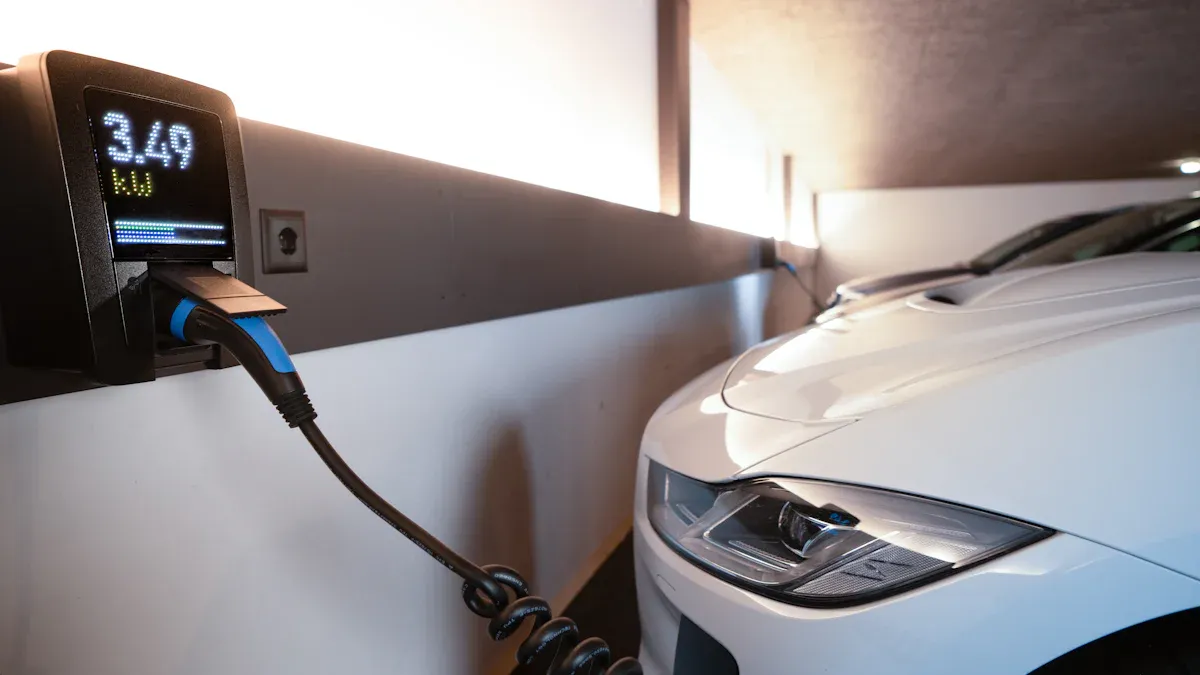
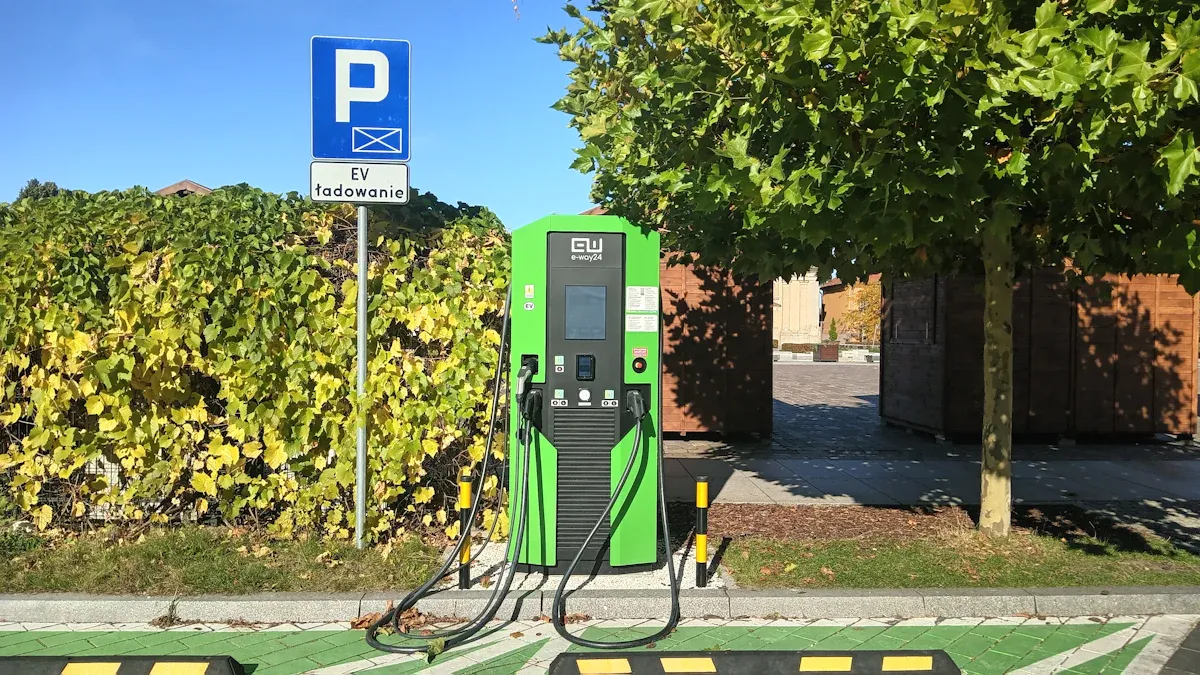
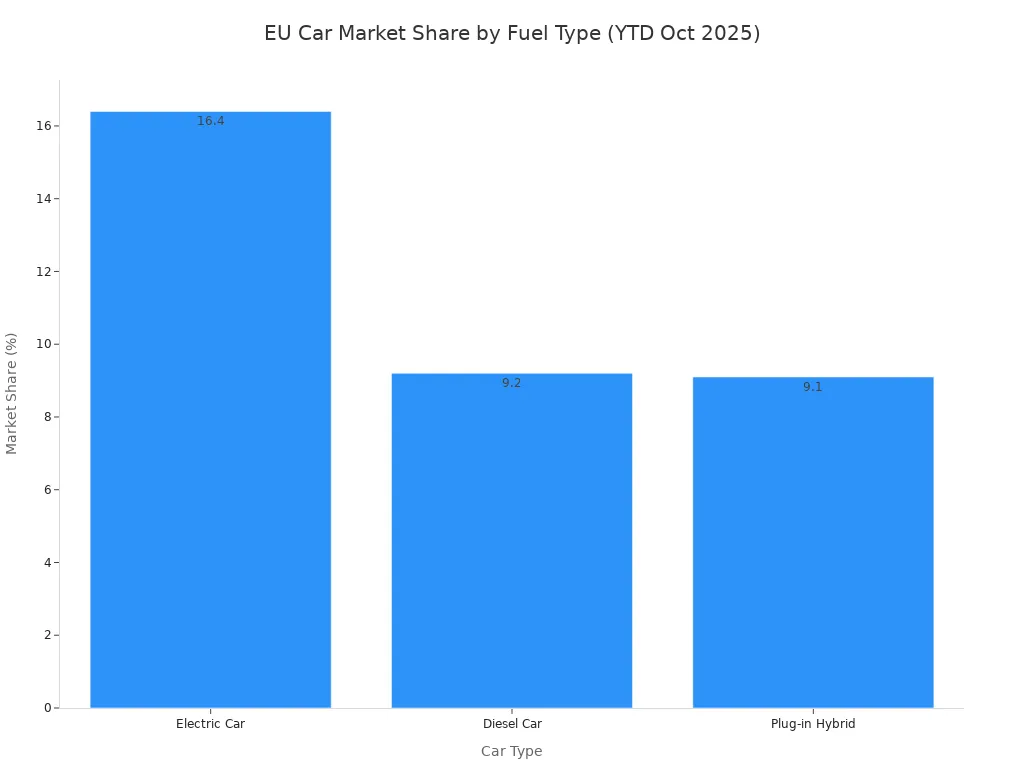
The electric vehicle market in Europe continues its impressive expansion. Electric cars now represent a significant portion of new vehicle registrations, outpacing traditional fuel types. This growth highlights a key question for prospective owners: how long does it take to charge an EV car? The charging time varies widely. To fully charge an electric car with a home EV-Ladegerät typically takes 6-12 hours. Fast EV chargers at public stations can charge an EV to 80% in 20-60 minutes. Hersteller von EV-Ladegeräten like TPSON provide technologically advanced EV-Ladelösungen, from home units to tragbare EV-Ladegeräte, to meet diverse charging times and needs. How fast electric cars charge depends entirely on the equipment used.
| Metrisch | Wert | Period/Comparison |
|---|---|---|
| EU Electric Car Market Share | 16.4% | Year-to-date until end of October 2025 |
| New Fully-Electric Cars Registered (EU) | 1,473,447 | Year-to-date until end of October 2025 |
| Diesel Car Market Share (EU) | 9.2% | Year-to-date |
Understanding the Different EV Charging Levels
To understand how long it takes to charge an electric car, one must first recognize the different charging technologies available. These are categorized into three primary levels, each defined by its power output, hardware, and ideal use case. The charging speed and total time vary significantly across these levels.
Level 1 Aufladen: Die Standard-Steckdose
What It Is
Level 1 charging uses a standard, domestic three-pin wall socket. It requires no special installation. The EV owner simply uses a portable charging cable, often supplied with the vehicle, to connect the car to any available outlet. This makes it the most accessible but also the slowest method to charge an EV.
Speed and Time
Delivering power around 2.3 kW, Level 1 charging is a slow process. It adds approximately 8-10 hours of charging time for every 100 miles of range. A full charge for a typical EV battery can easily take over 24 hours.
Best Use Cases
Due to its slow speed, Level 1 charging is best reserved for emergencies or for plug-in hybrid vehicles with smaller batteries. It can also be a viable option for EV owners who drive very few miles daily and can leave their car plugged in for extended periods, such as overnight and throughout the day.
Level 2 Charging: The Home and Public Standard
What It Is
Level 2 charging is the most common and practical solution for daily EV use. It requires a dedicated, professionally installed charging unit, often called a wallbox. These units operate on a higher-power circuit, similar to what an electric oven uses. Technologically advanced providers like TPSON offer a range of these chargers, from basic models to smart units with advanced features. For residential use, these chargers typically deliver between 7 kW and 11 kW.
Speed and Time
A Level 2 Ladegerät significantly reduces charging time compared to Level 1. It can add 100 miles of range in just 2-5 hours. Most EV owners find that a 7 kW home unit can fully charge an electric car overnight, making it ready for the next day’s commute.
Best Use Cases
This level is ideal for:
- Home Charging: The vast majority of EV charging happens at home overnight.
- Aufladen am Arbeitsplatz: Employees can top up their vehicles during the workday.
- Destination Charging: Found in public parking lots, supermarkets, and hotels, allowing drivers to add significant range while parked for a few hours.
Level 3 Aufladen: DC-Schnellaufladung
What It Is
Level 3, also known as DC Fast Charging, represents the pinnacle of EV charging speed. Unlike Level 1 and 2, which use Alternating Current (AC), Level 3 chargers supply Direct Current (DC) straight to the vehicle’s battery. This bypasses the car’s onboard converter, enabling much faster power delivery. These units are complex and expensive, found at dedicated public charging hubs and along major highways.
Speed and Time
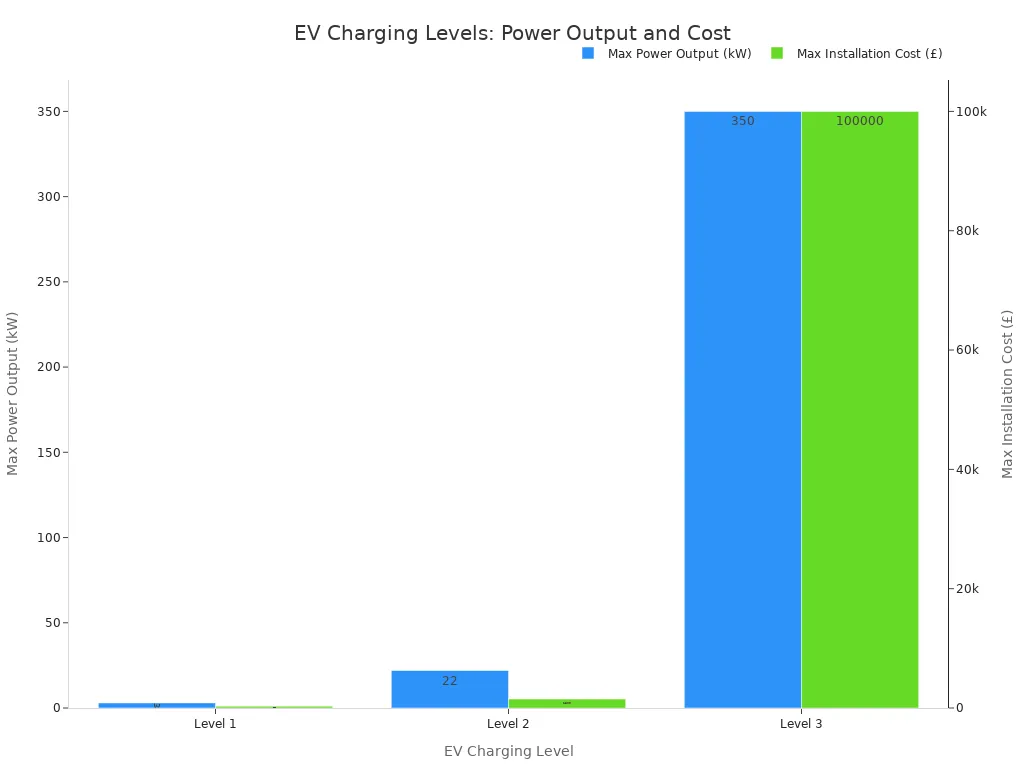
With power outputs ranging from 50 kW to an incredible 350 kW, DC fast chargers can add 100-200 miles of range in as little as 20-40 minutes. Most are designed to charge a battery from 20% to 80% in under an hour.
Best Use Cases
Level 3 chargers are essential for long-distance travel. Prominent European networks like Ionity, Gridserve, and bp pulse operate these stations along highways, enabling drivers to make quick stops on road trips, similar to visiting a traditional gas station.
Anmerkung: The following table provides a technical comparison of the different charging levels, highlighting the vast differences in power, speed, and application.
| Merkmal | Stufe 1 (Langsamer AC) | Stufe 2 (Schnelles AC) | Level 3 (DC Rapid/Ultra-rapid) |
|---|---|---|---|
| Leistung | 2,3-3 kW | 7-22 kW | 50-350 kW |
| Aufladegeschwindigkeit | 8–10 hours for 100 miles | 2-5 Stunden für 100 Meilen | 20–40 minutes for 100–200 miles |
| Stecker Typ | 3-poliger Stecker | Typ 2 | CCS (most common) or CHAdeMO |
| Suitable Locations | Emergency home use | Homes, workplaces, public parking | Motorway services, charging hubs |
How Long Does It Take to Charge an EV Car at Home?
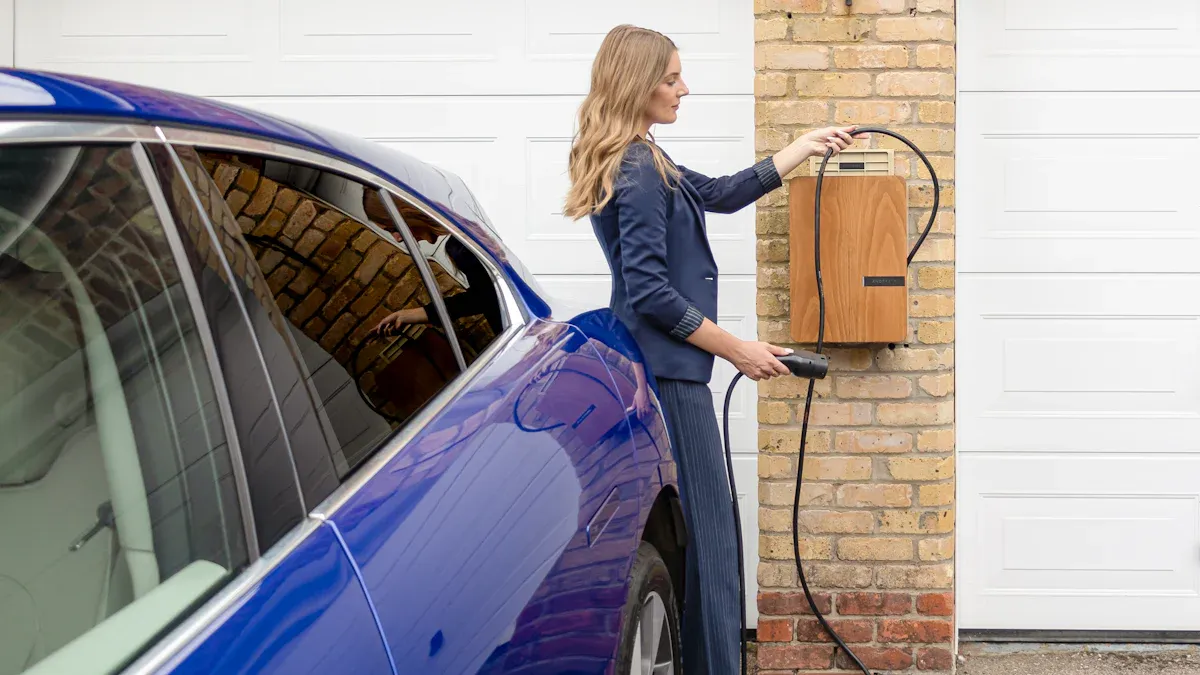
For most electric vehicle owners, charging at home is the primary method for replenishing the battery. The convenience of waking up to a full battery every morning is a major benefit of EV ownership. However, the answer to Wie lange dauert es, ein Elektroauto aufzuladen? at home depends entirely on the type of charger used.
With a Level 2 Home Charger (7kW – 11kW)
A dedicated Level 2 wallbox is the gold standard to charge an electric car at home. These units, offered by advanced providers like TPSON, provide a safe, fast, and efficient charging experience.
Typical Time for a Full Charge
Die charging time for a Level 2 unit is significantly faster than a standard outlet. For an EV with a common 60kWh battery, the empty to full charging time with a 7kW charger is typically just under 8 hours. This means most drivers can easily fully charge an electric car overnight, ensuring it is ready for the next day’s travel. The total time varies with battery size, but the overnight window is usually sufficient for a complete charge.
Miles Added Per Hour
A key metric for understanding charging speed is the range added per hour. A typical 7kW Level 2 Heimladegerät adds approximately 25-30 miles of range for every hour it is plugged in. More powerful 11kW units can increase this to around 40-50 miles per hour, although the car’s onboard charger must support this higher rate.
The Most Popular Home Option
The Level 2 wallbox is the most popular and practical solution for homeowners. The installation cost in the UK typically ranges from £800 bis £1.500. While the government’s Electric Vehicle Homecharge Scheme (EVHS) for individual homeowners has ended, a grant offering up to £350 is still available for tenants and apartment owners with off-street parking. This investment transforms the EV ownership experience, making daily charging effortless and reliable.
With a Level 1 Wall Outlet (1.4kW)
Using a standard domestic wall socket, often called Level 1 charging, is another way to charge an EV car. This method uses a portable cable and requires no special installation, but it comes with significant drawbacks.
Typical Time for a Full Charge
The charging process with a Level 1 cable is extremely slow. A full charge for a modern EV can take 24 hours or even longer. This extended duration makes it impractical for drivers who need their vehicle daily or have depleted their battery significantly. The charging times are simply too long for regular use.
Miles Added Per Hour
The rate of energy transfer from a standard outlet is minimal. An EV owner can expect to add only about 3-5 miles of range for every hour of charging. This slow pace means that even an entire night of charging might not be enough to recover the range used during a typical daily commute.
When to Use Level 1
Relying on a standard wall outlet for daily charging is not recommended due to several disadvantages. Its use should be limited to emergencies or for plug-in hybrids with very small batteries.
Important Considerations for Level 1 Charging:
- Extreme Slowness: The slow charging speed makes it difficult to add meaningful range in a short amount of time.
- Higher Power Loss: Slow charging over long periods can be less efficient, leading to more wasted electricity and potentially higher costs compared to a dedicated Level 2 charger.
- Safety Risks: Using a standard socket for a prolonged, heavy electrical draw can generate heat. This poses a risk of damaging the plug or outlet and is a potential fire hazard, especially if using an extension cord, which is strongly discouraged.
How Long Does It Take to Charge an Electric Car at a Public Station?
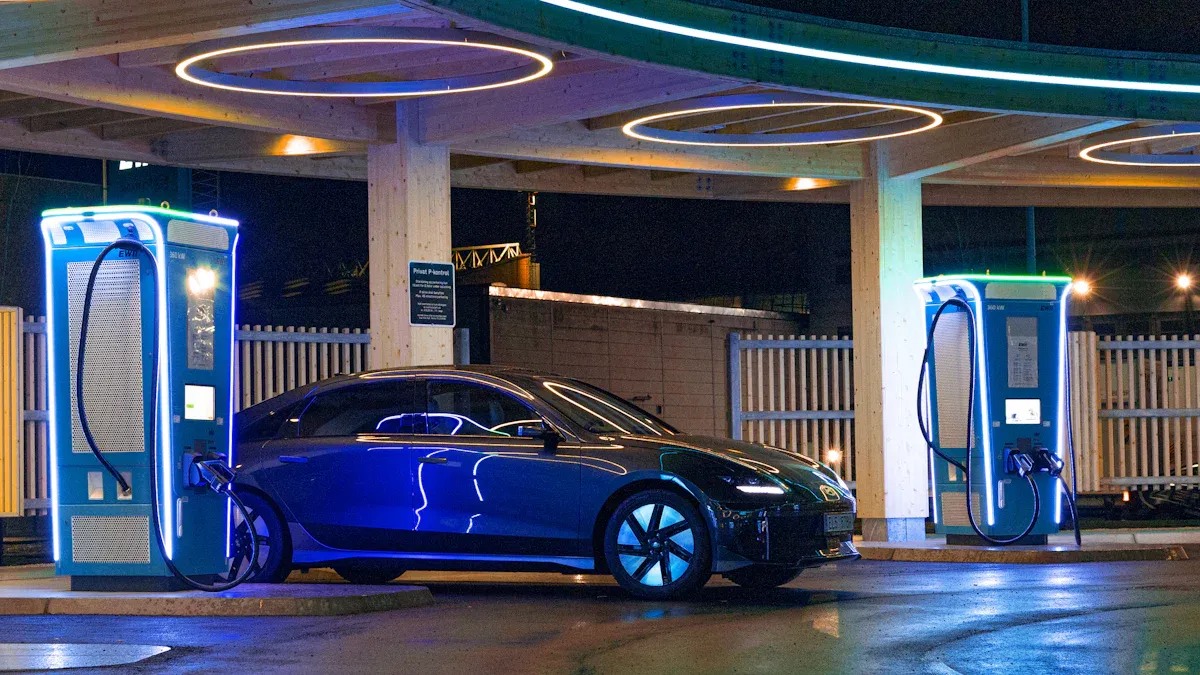
Public charging infrastructure is essential for drivers on long journeys or for those without access to a private charger. The experience to charge an electric car at a charging station varies significantly based on the technology available. Public networks offer two main types of chargers: extremely fast DC chargers for quick top-ups and more common Level 2 chargers for longer stops.
DC Fast and Ultra-Rapid Chargers (50kW to 350kW)
DC fast chargers are the key to making long-distance EV travel practical. These powerful units deliver Direct Current (DC) power, bypassing the car’s slower onboard AC converter. This technology, found in advanced systems from providers like TPSON, enables rapid energy transfer.
Time to Reach 80% Charge
The primary goal of a DC fast charger is speed. Most modern EVs can charge from 20% to 80% in just 20 to 40 minutes using these systems. The charging process intentionally slows down after 80% to protect the battery’s health and longevity. Therefore, the typical charging times are optimized for this 20-80% window, getting drivers back on the road quickly.
Miles Added in a Short Stop
The speed of fast ev chargers translates directly into significant range added in a short amount of time. For example, a brief 15-minute stop at a 150kW ultra rapid ev chargers can add approximately 125 miles of range to a compatible EV. This capability transforms a road trip, turning a charging stop into a quick coffee break rather than a lengthy wait.
Finding and Using Fast Chargers
Drivers can locate rapid ev chargers using dedicated smartphone apps (like Zap-Map or PlugShare) or their vehicle’s built-in navigation system. These öffentliche Ladegeräte are strategically placed along major highways and at dedicated charging hubs. However, this speed and convenience come at a higher cost.
As of July 2025, the average cost for public rapid and ultra-rapid charging is between 76 and 79 cents per kWh. This is a notable increase compared to slower charging options, reflecting the advanced technology and high power output.
Public Level 2 “Destination” Chargers (7kW to 22kW)
Public Level 2 chargers use the same AC technology as home wallboxes. While they cannot match the speed of DC chargers, they are far more common and offer a convenient way to add range while parked for an extended period.
Typical Charging Duration
The charging time at a public Level 2 unit depends on its power output (typically 7kW to 22kW) and the vehicle’s onboard charger. A driver can generally expect to add 25-70 miles of range per hour. This means a two-hour stop for shopping or a meal can add a substantial amount of range to the battery.
Where You’ll Find Them
These chargers are often called “destination chargers” because they are located where people plan to spend time. This allows drivers to charge an ev car as part of their daily routine. Common locations include:
- Supermarkets and retail centers
- Hotels and airports
- Workplace office complexes
- Public parking lots and entertainment venues
- Motorway service areas, often alongside faster DC options
Ideal for Destination Charging
The purpose of a destination charger is to eliminate waiting. Drivers plug in their vehicle and go about their business, whether it’s working, shopping, or watching a movie. When they return hours later, their car has gained significant range. This model answers the question of Wie lange dauert es, ein Elektroauto aufzuladen? by integrating the process into everyday activities, making the time spent virtually unnoticeable.
Key Factors That Determine Your EV Charging Time
Answering the question “Wie lange dauert es, ein Elektroauto aufzuladen?” requires understanding several key variables. The total charging time is not a single number; it is a dynamic result influenced by the battery, the charger, and the car itself. These factors that affect charging speed work together to determine how quickly a driver can add range and get back on the road.
Batteriegröße (kWh)
The size of an electric vehicle’s battery, measured in kilowatt-hours (kWh), is one of the most significant factors influencing charging duration. A battery’s kWh rating is like the size of a fuel tank—a larger tank takes longer to fill.
How a Bigger Battery Affects Time
A larger battery holds more energy, which provides a longer driving range. However, it also requires more time to charge. For example, charging an 80kWh battery will take roughly twice as long as charging a 40kWh battery with the same charger. The total time needed is directly proportional to the amount of energy the battery needs to replenish.
Common EV Battery Sizes
EV battery sizes vary widely across different models, catering to diverse needs and budgets.
- Smaller Batteries (30-50 kWh): Often found in city cars and older models, offering around 150-200 miles of range.
- Medium Batteries (50-75 kWh): The most common size, balancing range and cost. These are typical in family hatchbacks and compact SUVs, providing 200-300 miles of range.
- Large Batteries (75-100+ kWh): Found in premium, long-range vehicles, capable of traveling over 300 miles on a single charge.
Charger Power Output (kW)
The power output of the charger, measured in kilowatts (kW), dictates the rate at which energy flows into the vehicle’s battery. A higher kW rating means a faster charging speed.
The Difference Between AC and DC
Chargers deliver power in two forms: Alternating Current (AC) and Direct Current (DC).
- AC Charging (Level 1 & 2): This is the power from the grid. The car’s onboard charger must convert it to DC to store it in the battery, a process that limits the speed.
- DC Charging (Level 3): These powerful chargers convert the power before it reaches the car, sending DC power directly to the battery. This bypasses the car’s internal limits, enabling much faster charging.
Matching Charger to Your Needs
The charger’s power directly impacts how long it takes to charge an electric car. Higher power results in shorter charging times, provided the vehicle can accept that power level. Technologically advanced providers like TPSON offer a range of solutions to meet different needs, from efficient home units to portable chargers.
| Art der Aufladung | Leistung (kW) | Typical Charging Time (hours) |
|---|---|---|
| Slow AC | Up to 2.3 kW | 8-12+ hours |
| Fast AC | 7-22 kW | 3-8 hours |
| Rapid/Ultra-Rapid DC | 50-350+ kW | Under 1 hour (for 80% charge) |
Die maximale Ladeleistung Ihres Fahrzeugs
A powerful charger is only effective if the vehicle can accept the energy at that rate. Every EV has a maximum charging rate for both AC and DC power, which acts as a bottleneck.
Onboard Charger Limits (AC)
For AC charging at home or at public destination chargers, the vehicle’s onboard charger determines the maximum speed. Most modern EVs have an 11 kW onboard charger. This means even if you plug into a 22 kW public charger, a car like the Tesla Model 3 will only charge at its maximum rate of 11 kW.
Max DC Fast Charging Speed
When using a DC fast charger, the vehicle’s battery management system dictates the maximum power it can safely handle. This speed can range from 50 kW for older models to over 250 kW for high-end EVs. Plugging a car with a 100 kW max rate into a 350 kW ultra-rapid charger will not damage it; the car will simply draw power at its own 100 kW limit.
Current State of Charge (SoC)
The battery’s current charge level, or State of Charge (SoC), is one of the most important factors that affect charging speed. A nearly empty battery accepts power much faster than a nearly full one. This principle is central to efficient charging strategies.
The 20-80% Fast-Charging Window
For DC fast charging, the most efficient period is the 20-80% window. Drivers will experience the vehicle’s peak charging speed within this range. Staying within this window offers two key advantages:
- Saves Time: Charging the first 60% of the battery is significantly faster than charging the final 20%.
- Protects Battery Health: Repeatedly charging to 100% at a fast charger can put extra strain on the battery cells over the long term.
Adhering to this 80% limit gets drivers back on the road quickly during long journeys.
Why Charging Slows Near 100%
Die charging speed decreases significantly after reaching an 80% state of charge. This slowdown is an intentional safety measure. As the battery fills, its internal resistance increases, which generates more heat. To safeguard the battery cells from damage and extend their lifespan, the vehicle’s battery management system automatically reduces the power it draws from the charger.
While all EVs must taper their power, the rate varies. Older models often experience a severe slowdown. Newer vehicles with advanced liquid cooling can maintain higher power levels for longer before the charging rate drops to protect the final 20% of the battery.
Weather and Battery Temperature
An electric vehicle’s battery operates best within a specific temperature range, similar to the human body. Extreme temperatures, especially cold, can have a major impact on charging performance.
How Cold Weather Impacts Charging
Cold weather dramatically affects the time it takes to charge an EV. Low temperatures slow the electrochemical reactions inside the battery cells. The battery management system detects this and limits the charging speed to prevent potential damage. A driver plugging into a fast charger on a cold day without preparation may find the charging session takes much longer than expected.
Battery Preconditioning Explained
Many modern EVs offer a feature called battery preconditioning to solve this problem. When a driver navigates to a DC fast charger, the car can automatically use a small amount of energy to warm the battery to its optimal temperature. This intelligent function ensures the battery is ready to accept the fastest possible charge upon arrival. Drivers can typically activate this feature through the vehicle’s navigation system, guaranteeing maximum efficiency even in winter. This is a hallmark of the advanced systems found in today’s EVs, supported by sophisticated charging solutions from providers like TPSON.
How to Calculate Your Charging Time
Understanding the variables that influence charging speed helps drivers estimate their sessions. While many factors are at play, a simple formula provides a solid baseline to calculate charging times. This knowledge empowers EV owners to plan their home charging schedules and road trip stops more effectively.
The Basic Formula: Battery Size / Charger Power
At its core, the calculation for charging an EV is straightforward. A driver can get a rough estimate by dividing the battery’s capacity by the charger’s power output. This gives a theoretical duration for a full charge from empty.
Battery Size (kWh) / Charger Power (kW) = Time
The basic formula looks like this:
Battery Size (in kWh) / Charger Power (in kW) = Charging Time (in hours)
Anmerkung: This formula provides an approximation, not an exact figure. The actual charging process is not perfectly efficient. Energy is lost as heat due to internal resistance. The charging speed also slows considerably as the battery approaches 80% capacity. For a more realistic estimate, experts recommend adding 10% to 20% to the calculated result.
Example: Home Charging a 64kWh EV
Most EV owners use a Level 2 wallbox for daily charging. These units, including advanced systems from providers like TPSON, offer a reliable overnight charging solution. Let’s consider a common scenario with a popular mid-sized EV.
64kWh Battery / 7.4kW Charger = ~8.6 Hours
A vehicle with a 64kWh battery connected to a 7.4kW home charger would theoretically take about 8.6 hours to charge from empty to full. Real-world data supports this. For instance, a Kia Niro EV with a similar battery takes approximately 9 hours and 25 minutes to charge from 10% to 100% on a 7.2kW unit. This aligns with the formula plus the expected 10-20% for efficiency losses.
Example: DC Fast Charging a 77kWh EV
DC fast charging is different because drivers rarely charge to 100%. The goal is to get back on the road quickly. Therefore, the focus shifts from a full charge to reaching the 80% mark.
Estimating a 20-80% Charge Session
The charging time for a DC fast charger is not linear. The formula is less useful here because cars charge at their peak speed only within the 20-80% window. For a vehicle with a 77kWh battery, like a Volkswagen ID.4, the objective is to add 60% of its capacity. Instead of a calculation, drivers rely on manufacturer estimates. A 77kWh VW ID.4 can add over 200 miles of range, or charge from 20% to 80%, in just 30 minutes when using a compatible 125kW or 135kW DC fast charger. This quick turnaround time is standard for modern long-range EVs.
Using Your Car’s App or Display
While manual calculations provide a good baseline, modern electric vehicles remove the guesswork entirely. Drivers have access to sophisticated tools that offer precise, dynamic charging information. Both the in-car infotainment screen and dedicated smartphone apps provide real-time data, making it easy to monitor and manage the charging process.
How Your EV Gives Real-Time Estimates
An EV’s onboard computer is constantly analyzing multiple data points to predict charging duration. When a driver plugs into a charger, the car communicates with the unit to determine its maximum power output. The vehicle’s battery management system then assesses the battery’s current state of charge, its temperature, and the ambient weather conditions. It uses this information to calculate a highly accurate estimate for reaching a target charge level, such as 80% or 100%. This estimated completion time is displayed prominently on the dashboard screen and the mobile app.
This estimate is not static. The system continuously updates the calculation. If the battery warms up and can accept a faster charge, the estimated time will decrease. Conversely, if the charging station reduces its power output, the estimate will adjust accordingly. This dynamic feedback gives drivers a reliable understanding of their stop.
Companion smartphone apps, such as those for Tesla or Chevrolet models, extend this functionality. They offer a comprehensive suite of remote management tools. Drivers can use these apps to:
- View the real-time charging status and current battery range.
- Starten oder beenden Sie einen Ladevorgang aus der Ferne.
- Receive notifications when charging is complete or has been interrupted.
- Set a charging schedule to take advantage of off-peak electricity rates.
- Adjust the maximum charge limit to preserve long-term battery health.
- Review a history of past charging sessions.
Profi-Tipp: Many EV navigation systems can automatically precondition the battery when a driver sets a DC fast charger as the destination. This ensures the vehicle arrives with its battery at the optimal temperature, ready to accept the fastest possible charge and minimize waiting. This seamless integration between the car and advanced charging solutions, like those from TPSON, defines the modern EV experience.
Comparing Charging Times for Popular EV Models
Theoretical numbers are helpful, but real-world examples provide a clearer picture of EV charging. The charging times for popular models vary based on their battery technology and engineering. Examining these differences helps prospective owners set realistic expectations.
Tesla Model 3 / Model Y
Tesla vehicles benefit from the brand’s extensive and proprietary Supercharger network, which is a significant advantage for long-distance travel.
At a Supercharger
Tesla’s V3 Superchargers deliver power up to 250kW. This high output allows a Tesla Model Y Long Range to charge its battery from 10% to 80% in less than 30 minutes. This rapid speed makes road trip stops quick and efficient, minimizing downtime.
On a Level 2 Charger
For daily charging at home, a Level 2 Ladegerät is the standard. A Tesla Model 3 or Model Y connected to a 7.4kW wallbox, like those from advanced providers such as TPSON, will typically charge from empty to full in about 10-12 hours. This overnight schedule ensures the vehicle is ready with a full battery each morning.
Ford Mustang Mach-E
The Ford Mustang Mach-E is a popular electric SUV known for its performance and range. Its charging capabilities are competitive in the current market.
At a DC Fast Charger
When using a public DC-Schnellladegerät, the Mustang Mach-E can replenish its battery quickly. The Extended Range model demonstrates impressive performance at a 150kW station.
- It charges from 10% to 80% in approximately 36 minutes.
- This quick turnaround time makes it a practical choice for drivers undertaking long journeys.
On a Level 2 Charger
At home, a Ford Mustang Mach-E with the Extended Range battery (91kWh) requires about 14 hours to charge from 0% to 100% using a 7kW Level 2 charger. Most owners top up the battery nightly rather than performing a full charge, making this overnight duration more than sufficient for daily needs.
Chevrolet Bolt EV/EUV
The Chevrolet Bolt EV and EUV are valued for their accessibility and practical range, making them excellent options for city driving and daily commutes.
At a DC Fast Charger
The Bolt’s DC fast charging speed is more modest compared to premium models. Its maximum charge rate is around 55kW. This affects how long a driver will spend at a public station.
| Auto-Modell | DC Fast Charging Time (10-80%) |
|---|---|
| Chevrolet Bolt EV | ~30–60 min |
This range means a charging stop can take up to an hour to reach the 80% mark, requiring more planning for long-distance travel.
On a Level 2 Charger
Using a Level 2 home charger is the most common method for Bolt owners. A 7.2kW unit can fully charge the Bolt EV’s 65kWh battery in approximately 9.5 hours. This fits perfectly within an overnight charging window, making it convenient for daily use.
Tips to Optimize How You Charge an EV
Smart charging habits help drivers save time, reduce costs, and protect their vehicle’s battery. Understanding how to charge an electric car efficiently makes the ownership experience smoother and more rewarding. Adopting a few key strategies can significantly improve charging outcomes.
The 80% Rule for DC Fast Charging
Save Time and Protect Battery Health
When using a public DC fast charger, a driver’s goal is to get back on the road quickly. The most effective strategy is to stop charging once the battery reaches an 80% state of charge. The charging speed slows dramatically beyond this point as the vehicle’s battery management system works to protect the cells. Adhering to the 80% rule offers several key benefits for long-term battery health.
- Reduces Stress and Wear: Regularly charging to 100% at high speeds puts more stress on lithium-ion battery cells, which can shorten their lifespan.
- Manages Heat: The final 20% of a charge generates significant heat. Stopping at 80% keeps the battery cooler, improving safety and efficiency.
- Prevents Degradation: Limiting fast charges to 80% helps preserve the battery’s overall capacity and performance over many years.
Precondition Your Battery in Winter
Get Faster Speeds in Cold Weather
Cold temperatures can significantly reduce an EV’s charging speed. A cold battery cannot accept power at its maximum rate. To solve this, many modern EVs feature a “preconditioning” function. When a driver sets a DC fast charger as a destination in the car’s navigation, the vehicle automatically begins to warm its battery. This ensures the battery is at the optimal temperature upon arrival, allowing it to accept the fastest possible charge. This simple step can save a considerable amount of time at the charging station during colder months.
Charge During Off-Peak Hours
Save Money on Electricity
The most significant way to reduce running costs is to charge an EV car during off-peak hours. Many electricity suppliers offer special EV tariffs with extremely low overnight rates. By scheduling charging sessions using a vehicle’s app or a smart charger from a provider like TPSON, drivers can cut their energy bills dramatically.
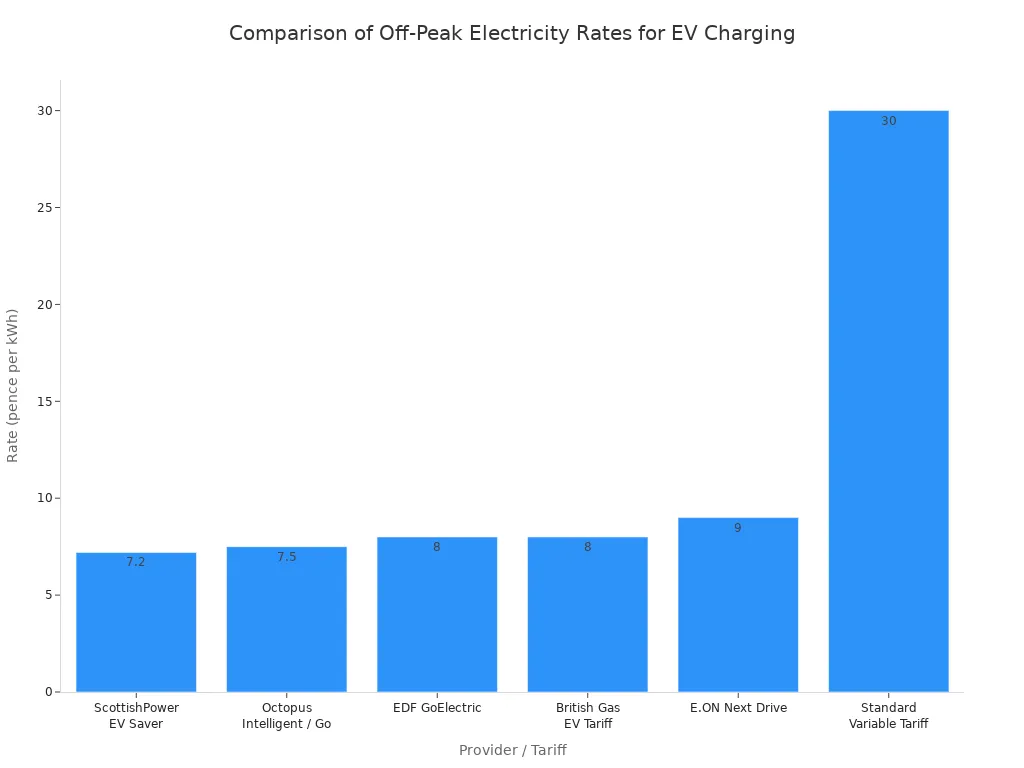
Charging a 60kWh battery on a standard tariff can cost around £18. The same charge on an off-peak EV tariff could cost under £5. This translates to annual savings of £300–£600 for a typical driver.
Profi-Tipp: Check with your energy provider about their EV-specific tariffs. These plans often provide the cheapest electricity between midnight and 5 am.
| Provider / Tariff | Off-Peak Window | Off-Peak Unit Rate (approx) |
|---|---|---|
| Octopus Intelligent / Go | 6 hours (smart scheduled) | ~7.5p per kWh |
| EDF GoElectric | Midnight–7am + second discounted slot | ~8p per kWh |
| E.ON Next Drive | Midnight–7am | ~9p per kWh |
| British Gas EV Tariff | Midnight–5am | ~8p per kWh |
| ScottishPower EV Saver | Midnight–5am | ~7.2p per kWh |
| Standard Variable Tariff | None (flat rate) | ~30p per kWh |
Understand Your Car’s Charging Curve
An electric vehicle does not charge at a constant speed. The rate of power delivery changes throughout the session, following a pattern known as the “charging curve.” This curve is a graph that shows the charging speed (in kW) relative to the battery’s state of charge (SoC). Recognizing this concept is crucial for any EV owner who wants to optimize their charging stops, especially at DC fast chargers. A vehicle’s battery management system dictates this curve to protect the battery’s health and longevity.
Know When Your Car Charges Fastest
The charging curve reveals the specific window when a vehicle accepts power most rapidly. This peak charging period is not at the beginning or the end of a session. Instead, it typically occurs when the battery is between 20% and 80% full. Understanding this helps drivers plan more efficient road trips.
A typical DC fast-charging session follows three distinct phases:
- Ramp-up: When first plugged in, the car and charger communicate. The charging speed gradually increases as the system confirms it is safe to deliver high power.
- Plateau: This is the fastest part of the session. The vehicle maintains its maximum possible charging speed for a sustained period. For many modern EVs, this peak performance happens when the battery is less than 80% full.
- Tapering: As the battery approaches 80% SoC, its internal resistance increases. To prevent overheating and cell damage, the battery management system instructs the charger to reduce the power. This tapering becomes progressively steeper as the battery gets closer to 100%.
An EV owner can find their specific model’s charging curve through online reviews or data-tracking apps. Knowing this information allows them to predict exactly how long a quick top-up will take. For example, they might learn that charging from 20% to 70% is much faster than charging from 70% to 90%.
This knowledge empowers drivers to make smarter decisions. Instead of waiting a long time for the last 20%, a driver on a long journey might unplug at 80% and drive to the next charger. This strategy often results in a shorter total travel time. Advanced charging solutions, like those from providers such as TPSON, are designed to work seamlessly with a vehicle’s battery management system, ensuring the car follows its optimal charging curve safely and efficiently.
Die Antwort auf Wie lange dauert es, ein Elektroauto aufzuladen? depends on the situation. For daily use, drivers charge an electric car at home overnight, a process taking 6-12 hours. Long journeys require fast ev chargers oder rapid ev chargers zu charge an electric car at a charging station to 80% in under an hour. The final time always hinges on battery size, charger power, and the car’s own limits. Ultimately, efficient Aufladen zu Hause and on the road defines the modern experience to charge an ev car, with varied charging times for every need.
FAQ
What is the fastest way to charge an electric car?
The fastest method is DC fast charging, also known as Level 3. These powerful public stations can charge a compatible EV battery from 20% to 80% in as little as 20-40 minutes, making them ideal for long-distance travel.
Can I use a regular wall socket to charge my EV?
Yes, a driver can use a standard domestic socket (Level 1 charging). However, this method is extremely slow. It can take over 24 hours for a full charge. It is best reserved for emergencies or for plug-in hybrids with small batteries.
Why does my EV charge slower after 80%?
EVs intentionally slow the charging speed after 80% to protect the battery. This process, called tapering, reduces heat and stress on the battery cells. It helps preserve the battery’s long-term health and overall lifespan.
Does cold weather make charging take longer?
Yes, cold temperatures significantly increase charging times. A cold battery cannot accept power at its maximum rate. Many modern EVs have a preconditioning feature that warms the battery before a fast charge to ensure optimal speed.
Is it cheaper to charge an EV at home?
Charging at home is almost always cheaper than using public chargers, especially DC fast chargers. Drivers can further reduce costs by using special overnight electricity tariffs with lower rates, which cuts down on the expense to run an EV.
Welches ist das beste Ladegerät für den Heimgebrauch?
A Level 2 wallbox is the best solution for home charging. These units, including advanced systems from providers like TPSON, offer a safe and efficient way to fully charge an EV overnight in approximately 6-12 hours.
How do I find public EV charging stations?
Drivers can locate public chargers using dedicated smartphone apps like Zap-Map or PlugShare. Additionally, most modern electric vehicles include built-in navigation systems that can find nearby stations and even route a driver to them.