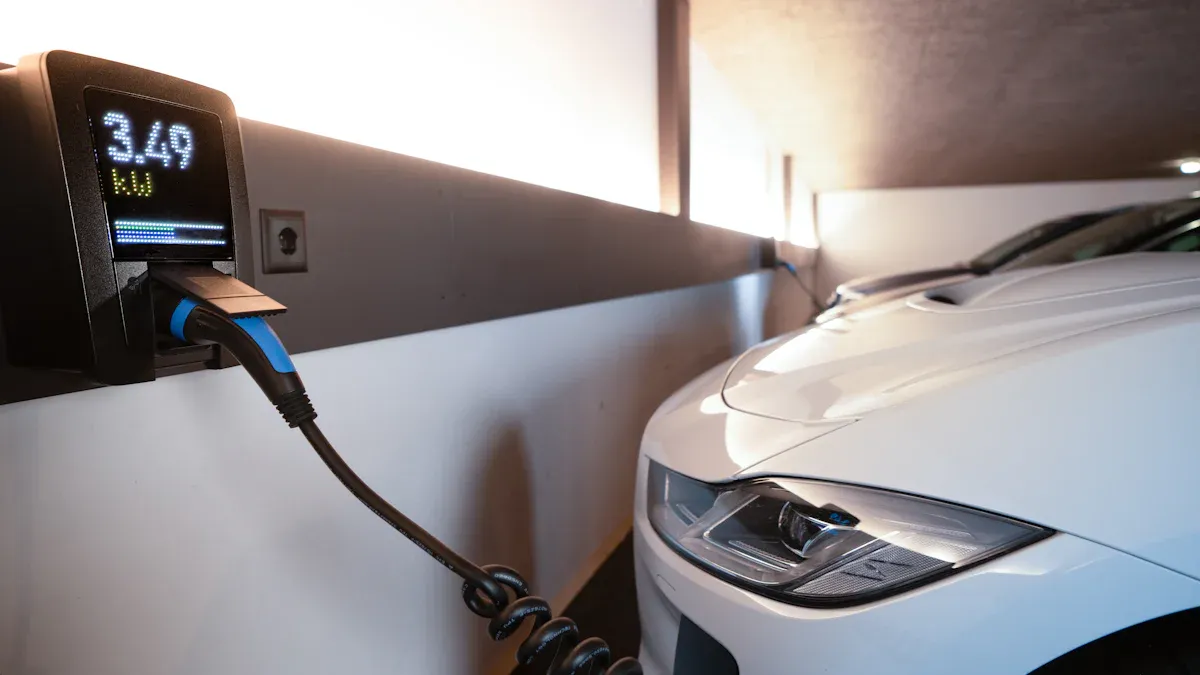
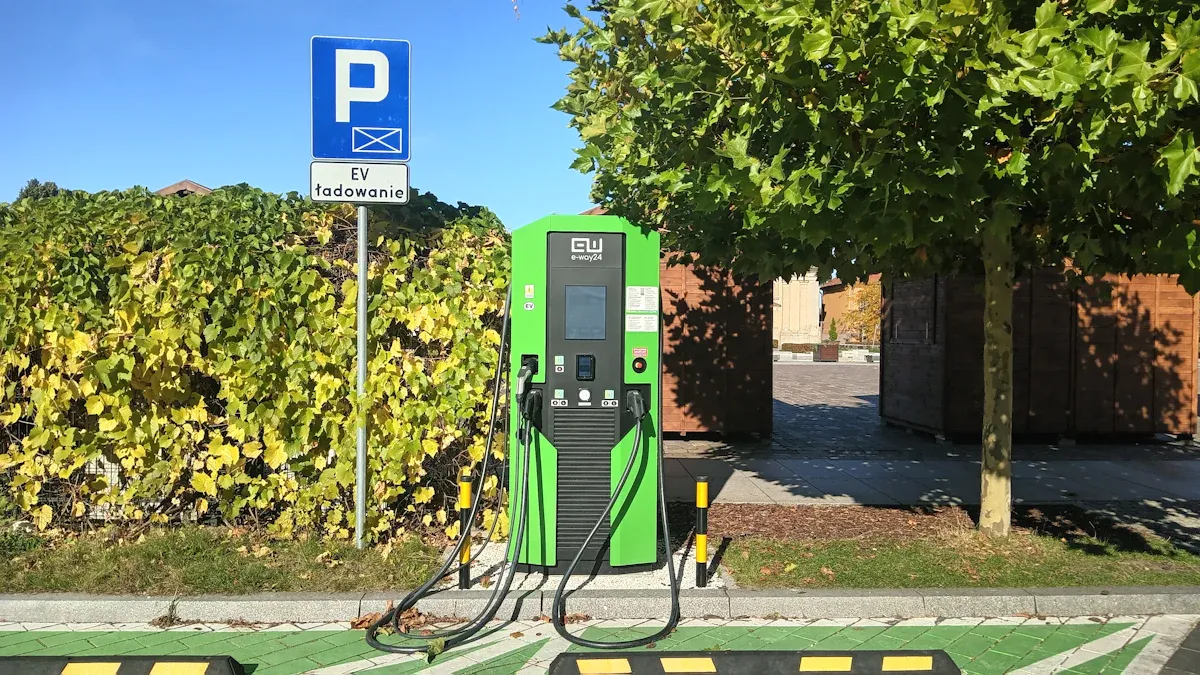
The typical cost to install an EV charger for a standard 7kW home unit usually falls between $1,000 and $1,500. Government grants can significantly lower these installation expenses for eligible renters and apartment owners. A dedicated home EV-Ladegerät is the preferred choice for 81% of electric vehicle owners in the UK. The final cost to install EV charger is influenced by the specific EV-Ladegerät model selected. Leading Hersteller von EV-Ladegeräten such as TPSON, a provider of technologically advanced electric vehicle charging solutions, offer dedicated EV-Ladelösungen that boast greater reliability compared to tragbare EV-Ladegeräte.
Grant Alert: The EV Chargepoint Grant for renters and apartment owners has been confirmed until March 31, 2026. This can reduce your final price to as low as $550.
What is the Total EV Charger Installation Cost in the UK?
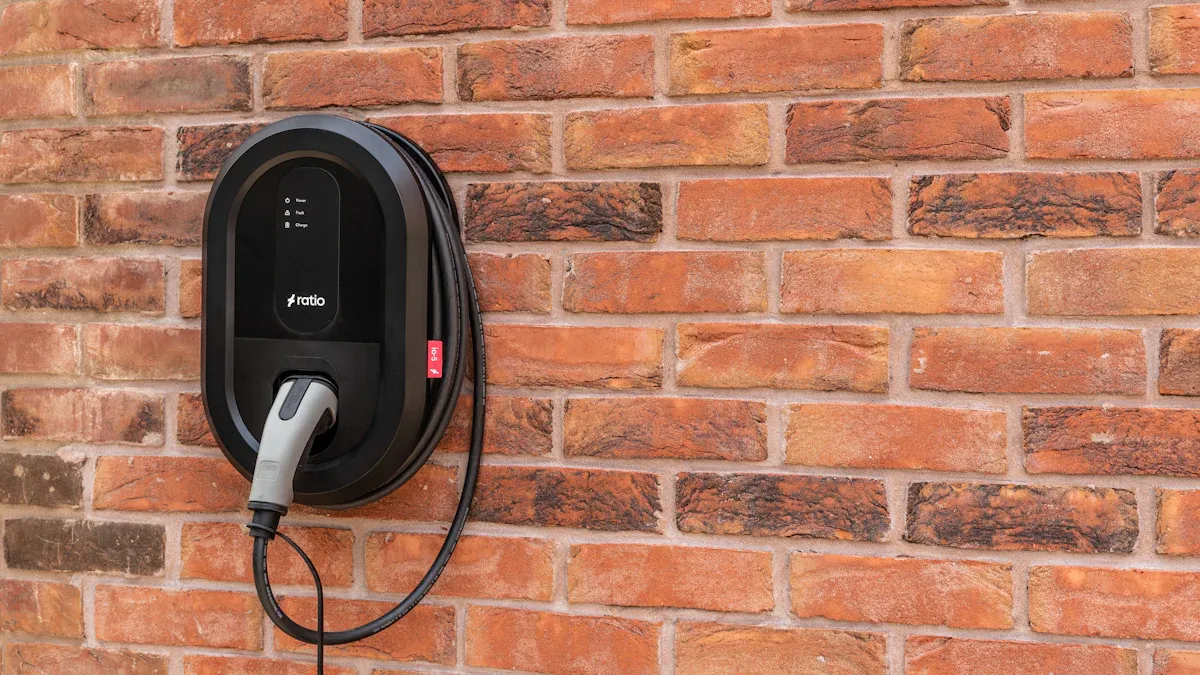
Understanding the total cost requires looking beyond the price of the charger itself. The final figure combines the hardware, professional labor, and safety certifications. This section breaks down each component to provide a clear picture of the investment.
The Average Cost for a Standard 7kW Installation
Price Range: $1,000 – $1,500
For a typical UK home with a straightforward setup, the all-inclusive price for a 7kW charger installation lands between £800 and £1,200. This figure represents the most common scenario for homeowners. The average home charger installation costs can fluctuate based on the specific unit chosen and the installer’s rates.
What This Price Typically Includes
This price bracket generally covers the complete service from start to finish. It includes the charging unit itself, the labor for a standard installation, all necessary electrical components like cabling and safety devices, and the final testing and certification.
A Detailed EV Charger Installation Cost Breakdown
The total price is primarily split into two key areas: the cost of the physical charging unit and the fees for the professional installation service.
Kosten des Ladegeräts
The price of the home charger unit can vary significantly based on its features, brand, and capabilities. Chargers are often grouped into tiers:
| Tier | Beispielhafte Modelle | Typical Unit Cost |
|---|---|---|
| Budget | OHME ePod, Project EV EVA-07S | $375 – $625 |
| Mid-Range | myenergi Zappi, Andersen A2 | $800 – $1,200 |
| Prämie | Hypervolt Home 3 Pro | $650 – $750 |

Technologically advanced providers like TPSON offer robust electric vehicle charging solutions that often provide enhanced reliability and smart features. The choice of unit is a major factor in the final ev charger installation cost.
Standard Installation Labor Fees
Labor and associated materials typically account for $500 to $750 of the total bill. These installation costs can differ based on geographic location. Installers in London and the South East often charge more than those in Northern England or Scotland.
Regionale Preisunterschiede 🗺️ Your zip code influences the final installation cost. Labor rates vary across the country, with major cities generally being more expensive.
Region Cost Relative to National Average National Average ~$1,400 London & South East 10–15% above Northern England 5–10% below Scotland & Wales Similar to or slightly below Remote & Rural Areas May attract $60–$190 surcharge
What Does a ‘Standard Installation’ Package Cover?
The term ‘standard installation’ has a specific meaning in the industry. It assumes that the property’s existing electrical system is up to date and the charger’s location is easily accessible. A standard package almost always includes the following key services.
Mounting the Charger Unit
An installer will securely fix the charging unit to a suitable permanent structure. This is typically an exterior brick or plaster wall of the house, often near where the car is parked.
Cable Run (Up to 10 Meters)
The package includes running a specialized, high-power cable from the breaker box (fuse box) to the charger’s location. A standard installation covers up to 10 meters of cable, which is clipped neatly to the surface of the wall.
Connection to the Consumer Unit
The electrician will connect the charger to a dedicated circuit in the breaker box. This requires a spare “way” in the box. The process involves installing necessary safety devices, such as a Miniature Circuit Breaker (MCB) and a Residual Current Device (RCD), to protect the circuit.
Safety Testing and Certification (EICR)
After installation, the electrician performs comprehensive safety tests. This ensures the home ev charger installation is compliant with UK wiring regulations (BS 7671). The homeowner receives an Electrical Installation Condition Report (EICR) as proof of safety. The installer also handles notifying the local Distribution Network Operator (DNO) about the new high-load device. This final step is critical for the overall cost to install ev charger and guarantees the home charger is safe for your electric vehicle. These combined installation costs form the complete price.
Factors That Influence Your Final Installation Price

The standard £800-£1,200 price provides a good baseline. However, several variables can shift the final ev charger installation cost. The specific charger, the condition of a home’s electrical system, and the complexity of the job all play significant roles.
Charger Type and Features
The charger unit itself is a major component of the total price. Different power ratings and features come with different price tags.
3kW Slow Chargers
These are the most basic chargers, adding about 10-15 miles of range per hour. While the units are cheaper, their slow charging speed makes them less popular for a primary home charger.
7kW Fast Chargers (The Standard Choice)
A 7kW charger is the most common choice for UK homes. It provides around 25-30 miles of range per hour, fully charging most electric vehicle models overnight. This power level offers the best balance of speed and cost for single-phase domestic properties.
22kW Three-Phase Chargers
These units offer the fastest charging speeds, adding up to 75 miles of range per hour. However, they require a three-phase electrical supply, which is rare in UK homes. Upgrading a property’s supply can add thousands of pounds to the installation costs.
| Ladegerät Typ | Equipment Cost (Supply Only) | Full Installation Package |
|---|---|---|
| 3kW | $300-$625 | $875-$1,125 |
| 7kW | $550-$1,000 | £800-£1,200 |
| 22kW | $875-$1,500 | $1,500-$2,750+ |
Intelligente vs. nicht-smarte Ladegeräte
Smart chargers connect to the internet. This allows users to schedule charging for off-peak hours, track energy usage, and benefit from cheaper electricity tariffs. Technologically advanced providers like TPSON offer robust smart charging solutions. Non-smart chargers lack these features and are becoming less common.
Gefesselte vs. ungefesselte Ladegeräte
A tethered charger has a permanently attached cable. An untethered charger has a socket, requiring the user to plug in their own cable. Tethered units offer convenience, while untethered units provide a cleaner look and more flexibility if a user changes cars.
Your Home’s Electrical System
The condition of a home’s existing wiring can significantly impact the final cost to install ev charger.
Needing a Consumer Unit (Fuse Box) Upgrade
Older breaker boxs may not have the capacity or modern safety features required for an EV charger. An upgrade can cost between $500 and $1,000, adding a substantial amount to the overall installation costs.
Requirement for an Earthed Charging Spike (PEN Fault Device)
Modern safety regulations often require protection against a rare electrical fault known as a PEN fault. Many new chargers have this protection built-in. If a charger does not, the installer must fit an external device, such as an earthing spike, which can add $125-$250 to the bill.
Komplexität der Installation
A ‘non-standard’ installation involves extra work that increases labor and material fees.
Cable Runs Longer Than 10 Meters
Standard installation costs typically cover up to 10 meters of cabling. Longer runs require more materials and labor, adding approximately $12-$25 per extra meter.
Profi-Tipp 💡
Locating the charger as close as possible to the breaker box is the easiest way to keep installation costs down and avoid extra cabling fees.
Groundworks and Trenching for Detached Garages
Running a cable to a separate garage often requires digging a trench for an armored cable. These excavation increase costs due to the labor for digging and the higher price of specialized underground cabling.
Upgrading Your Home to a Three-Phase Supply
As mentioned, this is a major and expensive undertaking necessary for 22kW chargers. The cost can range from $3,750 to over $18,750, depending on the property’s location and the local grid infrastructure.
Regional and Installer-Specific Price Variations
The final invoice for an EV charger installation is not just about the hardware or the complexity of the job. Where a homeowner lives and who they hire for the installation create significant price differences. Understanding these variables is key to managing the budget.
Cost Differences Between London and Other UK Regions
A property’s zip code directly impacts the installation price. Labor rates and operational costs for businesses vary widely across the United Kingdom. Installers based in London and the South East consistently charge more for their services.
Geographic Pricing at a Glance 📍
Homeowners in major metropolitan areas, particularly London, can expect to pay a premium. This surcharge covers higher wages, congestion charges, and general business expenses. In contrast, prices tend to be lower in other parts of the country. An installation in Northern England or Scotland could be 5-15% cheaper than the same job in the capital. Remote or rural properties may also incur a small surcharge to cover an installer’s extended travel time.
Pricing from Major Energy Suppliers vs. Local Electricians
Homeowners have two primary options for finding an installer: large national energy suppliers or smaller, independent electricians. Each path offers distinct advantages and disadvantages that influence the overall cost and experience.
Major energy companies often provide all-in-one packages. These bundles can include the charger, installation, and a special EV energy tariff. This approach offers convenience and the backing of a well-known brand. However, this convenience can come at a higher price due to the company’s larger overheads.
Local, certified electricians frequently offer more competitive pricing. They have lower operational costs and provide a more direct, personal service. Homeowners must, however, perform their own due diligence to confirm the electrician holds the necessary OZEV and electrical safety certifications. Both types of installers can fit a wide range of units. Technologically advanced electric vehicle charging solution providers like TPSON make their products available through diverse networks of certified installers, ensuring homeowners can access quality hardware regardless of who they hire.
A direct comparison helps clarify the choice:
| Installer Type | Potential Pros | Potential Cons |
|---|---|---|
| Major Energy Supplier | One-stop-shop convenience, bundled tariff deals, recognized brand. | Higher overall cost, may use subcontractors, less flexible scheduling. |
| Local Electrician | More competitive pricing, direct communication, personalized service. | Requires homeowner to verify credentials, may not offer tariff bundles. |
Ultimately, obtaining quotes from both types of installers is the most effective strategy for securing the best value.
How to Reduce the Cost to Install an EV Charger
The initial investment for a home charging point can be significant. However, several strategies and schemes exist to lower the financial barrier. Homeowners can substantially reduce their upfront expenses by leveraging government grants, employer benefits, and making informed purchasing decisions.
Government Grants and Schemes
The UK government offers financial incentives to encourage the adoption of electric vehicles. These grants directly reduce the final bill for eligible individuals and support the wider charging infrastructure.
Der Zuschuss für EV-Ladestationen für Wohnungen und Vermieter
This grant is a primary tool for reducing installation costs. It provides funding of up to $440 towards the purchase and installation of a home charger. To qualify, an applicant must meet specific criteria.
Eligibility Checklist ✅ An applicant must satisfy several conditions related to their property, parking, and vehicle.
- Property Status: The applicant must live in a rented property or own a flat.
- Parking: The property must have a designated, private off-street parking space. The applicant needs the legal right to use this space.
- Vehicle: The applicant must own, lease for at least six months, or have a company electric vehicle. The vehicle must be on the government’s approved list.
- Previous Claims: An applicant cannot have previously claimed this grant or its predecessors (like the EVHS).
The grant is applied for by the OZEV-approved installer on the customer’s behalf.
The EV Infrastructure Grant for Landlords
Landlords can also receive support for installing charging infrastructure. This grant helps property owners cover the costs of wiring and hardware for multiple parking spaces. While the tenant does not apply directly, a property owner’s use of this grant can make it cheaper and easier to get a charger installed in a rented building.
Local Council Incentives and Schemes
Local authorities play a crucial role in expanding the UK’s charging network. They can access several central government funds to install public chargepoints.
- On-Street Residential Chargepoint Scheme (ORCS): This fund helps councils install chargers for residents who lack private off-street parking.
- Local EV Infrastructure (LEVI) Fund: This newer fund supports local authorities in developing large-scale, long-term public charging projects.
- Arbeitsplatzabgabensystem (WCS): Local authorities, like other employers, can use the WCS to install chargers for their staff and fleet vehicles.
These schemes primarily build public infrastructure but are vital for drivers who cannot install a private home charger.
Using Salary Sacrifice Schemes
An increasingly popular method for funding an Elektroauto-Ladegerät is through an employer’s pre-tax deduction plan. This arrangement can lead to significant savings.
How It Works with Your Employer
A pre-tax deduction plan allows an employee to pay for a product or service from their gross salary, before income tax and payroll taxes are deducted. The employer purchases the charger and installation package, and the employee repays the cost through monthly payroll deductions.
Potential Savings on Your Electric Car Charger
The primary benefit of this method is tax efficiency. By paying from gross earnings, an employee reduces their taxable income. This can result in savings of up to 40% on the total hardware and installation package, depending on the employee’s income tax bracket. It is an effective way to lower the overall installation costs.
Die Wahl des richtigen Ladegeräts für Ihre Bedürfnisse
A significant portion of the total cost comes from the charger unit itself. Selecting a charger that matches a user’s actual needs, rather than one with unnecessary features, is a simple way to manage the budget.
Why a 7kW Charger is Usually Sufficient
For most UK homes with a single-phase electricity supply, a 7kW charger offers the perfect balance of speed and cost. It is more than twice as fast as a 3kW unit, making overnight charging practical for nearly any electric vehicle.
| Ladegerät Typ | Charging Time for 40kWh Battery |
|---|---|
| 3kW (Slow Charger) | 10-12 hours |
| 7kW (Fast Charger) | 5-6 Stunden |
This speed ensures a car is fully charged and ready each morning without the high expense and complex installation of a 22kW three-phase system.
Avoiding Overspending on Unnecessary Features
While advanced features are useful, not every driver needs them. A homeowner can avoid overspending by carefully considering their requirements. For instance, if a user’s energy tariff does not have cheaper off-peak hours, a basic smart charger may be sufficient. Technologically advanced providers like TPSON offer a range of robust charging solutions, allowing customers to select a model with the right balance of smart functionality and price to fit their lifestyle and budget.
Optimizing Your Installation Location
A homeowner’s choice of where to place the charger has a direct impact on the final bill. Strategic placement can minimize labor time and material needs. This keeps the overall installation costs within the standard range.
Installing Near Your Consumer Unit to Reduce Cable Costs
The distance between the breaker box (fuse box) and the charger is a primary cost driver. A standard installation package includes a fixed length of cable, usually 10 meters. Any distance beyond this requires more materials and labor. Installers price specialized high-power wiring at approximately $1.25–$2.50 per meter. Placing a charger 20 meters away from the breaker box would therefore add an extra £20-£40 to the bill for the cable alone.
Cost-Saving Tip 💡
A homeowner can significantly control expenses by selecting a parking spot close to the breaker box. This simple decision is often the most effective way to prevent extra cabling fees and ensure the project stays on budget.
Choosing a Location with Easy Wall Access
The physical mounting surface for the home charger also affects the installation’s complexity. Installers can work most efficiently when they have a clear, flat, and solid surface.
- Ideal Surfaces: A standard brick or solid block wall is the easiest and quickest surface for mounting.
- Challenging Surfaces: Walls made of timber frame with plasterboard, uneven stone, or those requiring the cable to pass through multiple interior walls can increase labor time.
Obstructions between the breaker box and the charger location, such as concrete patios or established garden beds, present further challenges. An installer may need to perform minor excavation or find alternative routes for the cable. Choosing an accessible location with a straightforward wall structure helps ensure a smooth and cost-effective installation process.
Choosing the Right Installer for Your Electric Car Charger
An installer’s qualifications directly affect the safety and legality of a home charging setup. Selecting the right professional is a critical step. This decision ensures the installation is compliant, safe, and cost-effective.
Why You Must Use a Certified Installer
Installing an electric car charger is not a DIY project. It is a complex electrical task that requires specialized knowledge. Using an unqualified person can die Produktgarantie nichtig machen and create significant safety risks.
OZEV (Office for Zero Emission Vehicles) Approval
Installers approved by OZEV (now part of the Department for Transport) are certified to fit chargepoints under government grant schemes. This approval demonstrates they meet high standards of competence and quality. While the primary grant is now for renters and flat owners, OZEV certification remains a key indicator of a reputable and skilled installer.
Electrical Safety Regulations
EV charger installations are classified as ‘notifiable work’ under UK Building Regulations. This means they must comply with strict safety standards and be reported to the local building control authority.
Safety First: Key Regulations ⚠️ Certified installers must adhere to several critical safety protocols to ensure a safe installation.
- BS 7671: This is the UK standard for electrical wiring. Installers must demonstrate competency with the latest version.
- Smart Charge Point Regulations: Since June 2022, all new home chargers must be ‘smart’. They need features like pre-set charging schedules and enhanced security.
- Zertifizierung: After installation, the electrician provides an Electrical Installation Condition Report (EICR). This document is crucial for insurance claims and property sales.
Failure to use a certified professional can lead to fines and invalidates home insurance if an incident occurs.
How to Get and Compare Quotes
Securing the best price requires research and comparing offers from different installers. Homeowners should gather multiple quotes to make an informed decision.
Finding Approved Installers in Your Area
Several resources help homeowners locate certified professionals. The official GOV.UK website features a search tool where users can enter their zip code to find a list of OZEV-approved installers nearby. Other services, like Smart Home Charge, also provide directories of local engineers across the UK. Some manufacturers, such as Indra, now use their own in-house installation teams, requiring customers to contact them directly.
What to Look for in a Quote
A comprehensive installation quote should be fully itemized. This transparency allows homeowners to see exactly what they are paying for. A detailed quote will break down costs for:
- Hardware: The specific charger model and any mounting plates.
- Arbeit: Fees for the survey, installation, testing, and certification.
- Materials: The cost of cabling, safety devices (RCBOs), and isolator switches.
- Potential Extras: Charges for longer cable runs, excavation, or breaker box upgrades.
A clear installation quote prevents unexpected costs on the installation day.
Why You Should Get at Least Three Quotes
Obtaining at least three quotes is a fundamental step in securing a fair price. This practice allows a homeowner to compare not just the final price but also the scope of work, the hardware offered, and the installer’s professionalism. Comparing each installation quote helps identify the best value and ensures the chosen installer understands the specific requirements of the property.
Understanding Ongoing Costs After Installation
While the initial installation costs are a one-time investment, the true financial benefit of a home charger unfolds over years of use. The day-to-day expense of powering an electric vehicle is significantly lower than refueling a gasoline car, especially when using a dedicated home charging setup.
How Much Does It Cost to Charge Your Car at Home?
The cost to charge depends entirely on a homeowner’s electricity tariff. Calculating this expense provides a clear picture of the savings.
Calculating Your Cost per Mile
A driver can easily determine their running costs. The formula is simple: multiply the vehicle’s battery size (in kWh) by the electricity rate (in pence per kWh), then divide by the car’s range in miles. This reveals the cost per mile for an electric vehicle.
Comparing Standard vs. EV-Specific Tariffs
A standard variable tariff charges a flat rate for electricity, often around 30p per kWh, regardless of the time of day. In contrast, EV-specific tariffs offer significantly cheaper rates during off-peak hours. For example, the ScottishPower EV Saver tariff provides a rate of 7.2p per kWh between midnight and 5am. This difference dramatically reduces charging expenses.
| Tarif Typ | Off-Peak Unit Rate (approx) | Day / Peak Unit Rate (approx) |
|---|---|---|
| Standard Variable Tariff | ~30p per kWh | ~30p per kWh |
| Octopus Intelligent / Go | ~7.5p per kWh | ~30p per kWh |
| EDF GoElectric | ~8p per kWh | ~33p per kWh |
| E.ON Next Drive | ~9p per kWh | ~32p per kWh |
| British Gas EV Tariff | ~8p per kWh | ~32p per kWh |
| ScottishPower EV Saver | ~7.2p per kWh | ~31p per kWh |
How Smart Chargers and EV Tariffs Lower Your Bills
A smart charger is the key to unlocking the lowest running costs. These devices communicate with the grid and the energy supplier to optimize charging sessions.
Scheduling Charging for Off-Peak Hours
Smart chargers, including robust models from technologically advanced providers like TPSON, allow users to schedule charging automatically. The user simply plugs in their car and sets a “ready by” time in an app. The charger then waits for the cheap off-peak window to begin charging. This simple process can save a driver up to $700 annually compared to charging on a standard tariff.

Using Agile Tariffs to Maximize Savings
For ultimate savings, some drivers use agile tariffs like Agile Octopus. These dynamic tariffs have prices that change every 30 minutes based on wholesale energy costs.
Plunge Pricing Power ⚡
When renewable generation is high, agile tariffs can experience “Plunge Pricing,” where electricity costs drop significantly, sometimes even below zero. A smart charger can automatically take advantage of these events, making it possible to charge a car for free or even get paid to do so.
Are There Maintenance and Servicing Costs?
Modern EV chargers are designed to be low-maintenance devices. However, owners should be aware of a few long-term considerations.
Annual Safety Checks and Recommendations
An electric car charger does not require mandatory annual servicing. However, some electricians recommend a periodic safety inspection every few years to ensure all connections remain secure and the unit is functioning correctly.
Software Updates for Smart Chargers
Smart chargers receive regular over-the-air (OTA) software updates from the manufacturer. These updates are free and automatically add new features, improve performance, and apply security patches.
Understanding Your Warranty and Repair Policy
Most reputable manufacturers provide a comprehensive warranty. For example, many brands offer a standard 3-year warranty covering both parts and labor for a registered home charger. This protects the owner from defects or malfunctions. It is crucial to use a certified installer, as using an unapproved party can void this warranty.
The typical cost to install ev charger for a standard 7kW unit is £800-£1,200. Grants can reduce this price for eligible renters and flat owners. A home charger offers substantial long-term savings for any electric vehicle compared to gasoline and public charging. An electric car charger is a valuable investment.
Final Checklist for the Best Price ✅
- Confirm grant eligibility.
- Choose a charger that fits your needs.
- Select an installation spot near your breaker box.
- Get at least three quotes from certified installers.
FAQ
How long does an EV charger installation take?
A standard installation typically requires two to four hours for a certified electrician to complete. More complex jobs involving excavation or breaker box upgrades will take longer. The installer provides a time estimate before starting work.
Kann ich ein E-Ladegerät selbst installieren?
No. Homeowners must not install an EV charger themselves. This is a notifiable electrical task requiring a certified professional. A DIY installation is unsafe, illegal, and voids the product warranty and home insurance.
Do I need permission to install a charger?
Homeowners usually do not need planning permission for a charger installation. Renters and flat owners, however, must obtain written permission from their property owner or property management company before any work can begin.
What is the difference between a 7kW and 22kW charger?
A 7kW charger is the standard for UK homes, adding about 25-30 miles of range per hour. A 22kW charger is much faster but requires a rare and expensive three-phase electrical supply not found in most domestic properties.
Will an EV charger increase my home’s value?
A professionally installed home charger can make a property more appealing to potential buyers. It is a desirable feature for the growing number of EV drivers, potentially adding to the home’s market value and appeal.
How do I choose the right charger brand?
Homeowners should select a charger with a good warranty and the right smart features for their needs. Technologically advanced providers like TPSON offer robust charging solutions with proven reliability and user-friendly apps for managing charging sessions.