Finding the right tools to locate EV charging stations ensures a seamless and stress-free electric car charging experience. In 2025, a wide range of apps, websites, and navigation systems provide fast, accurate solutions to pinpoint charging locations. These platforms offer real-time data, route planning, and compatibility checks, helping drivers find available chargers quickly and efficiently.
The European EV charging market has experienced rapid growth, with public stations comprising the majority of market share. A major consortium plans to install over 1,400 new charging points across 13 countries, expanding accessibility for drivers.
Zu den wichtigsten Entwicklungen gehören:
- Public charging ports in Europe reached 1 million in 2024, a 35% increase from the previous year
- Charging access remains a primary concern for drivers, making reliable tools essential
- Leading manufacturers continue to expand infrastructure, offering more options than ever
Leading EV Charging Apps in Europe
Leading EV Charging Apps in Europe
Several top-rated apps provide comprehensive coverage and user-friendly features for locating chargers across Europe.
PlugShare
PlugShare offers access to one of the largest global databases of charging stations. Users can filter results, plan trips, and make payments directly through the app. The platform’s community-driven approach provides real-time reviews and insights from other drivers, making it one of the highest-rated apps in Europe.
Chargemap
Chargemap provides access to over 600,000 charging points across Europe through a unified RFID pass. The app features detailed user reviews and route planning capabilities, simplifying charging for travelers across multiple networks.
ChargeFinder
ChargeFinder specializes in real-time charger availability and location information. Users can search for fast chargers, filter by connector type, and view current status updates to avoid unnecessary detours.
Electromaps
Electromaps covers a broad range of European charging networks, allowing users to locate chargers, check compatibility, and manage payments. The platform supports both public and private charging points, offering flexibility for various travel needs.
easyCharging
easyCharging focuses on simplicity with quick search functionality for nearby chargers. Users can filter by speed or connector type through an intuitive interface ideal for new EV drivers.
Zapmap
Zapmap provides comprehensive coverage of the UK’s public charging infrastructure with real-time availability data. The platform collaborates with government entities, covering 95% of UK charge points with live status updates.
Market Comparison
PlugShare and Chargemap lead the market in user ratings and downloads, offering extensive databases and real-time insights essential for European EV drivers.
Here’s a comparison of key features among the top apps:
| App Name | Wesentliche Merkmale |
|---|---|
| PlugShare | Customizable filters, pay with PlugShare, trip planner |
| Chargemap | User support, customizable search, route planning, Apple CarPlay integration |
| ChargePoint | Extensive network, NFC for payments, detailed session insights, live updates |
| ChargeHub | Home charger assistance, customizable filters, educational resources |
| NEXTCHARGE | In-app payment, RFID capabilities, itinerary planning, user comments |
| Chargeway | Community engagement, color-coded navigation, real-time availability, comprehensive vehicle info |
Here’s a comparison of the coverage of major EV charging apps in Europe:

Official Public Charging Station Network Websites
Official network websites provide direct access to real-time data and support for public charging. These platforms often offer the most accurate information about charger status and availability.
Ionität
Ionity operates a high-speed charging network across major European highways. Their platform enables route planning with real-time charger availability, supporting long-distance travel with fast charging options.
Tesla Supercharger Map
Tesla’s Supercharger Map provides location information for Tesla-exclusive charging stations. The system displays charger status and supports trip planning, maintaining focus on speed and reliability for Tesla vehicles.
Elektroverse
Electroverse consolidates multiple charging networks into a single platform, allowing users to search for chargers, view pricing, and manage payments across different countries.
FordPass
FordPass connects Ford EV drivers to an extensive public charging network. The platform enables charger location, session initiation, and charging progress monitoring, with integration to in-car navigation systems.
Navigation Systems and In-Car Solutions for Public Chargers
Modern navigation systems incorporate EV charging station search and route optimization features, helping drivers locate chargers along their journey.
Google Maps Integration
Google Maps allows users to search for “EV charging stations” to view nearby options, including charger types, availability status, and estimated charging times. The platform provides turn-by-turn directions to selected stations.
Built-in EV Navigation Systems
Many electric vehicles include integrated navigation systems with charging station data. These systems automatically plan charging stops, verify charger compatibility, and provide low-battery alerts with real-time updates.
TomTom EV Routing
TomTom’s EV routing solutions offer advanced trip planning based on vehicle range and charger availability. The system suggests optimal charging stops and provides information about nearby amenities.
Here’s a quick overview of navigation systems with integrated EV charging features:
| Navigation System | Eigenschaften |
|---|---|
| Google Maps | Search for “EV charging stations” to find nearby chargers. |
| Waze | Similar to Google Maps, allows searching for “EV charging stations”. |
| ChargeHub | Provides availability information and allows users to activate and pay for chargers in-app. |
| EVgo App | Users can reserve a charging spot to ensure availability upon arrival. |
| Ein besserer Routenplaner | Helps plan trips and recommends charging stops based on vehicle parameters and preferences. |
Profi-Tipp:
For optimal results, built-in navigation systems or Google Maps provide the most reliable real-time updates and route optimization, helping drivers avoid range anxiety while ensuring charger availability throughout their journey.
Step-by-Step Guide to Locating Nearby Public Charging Stations
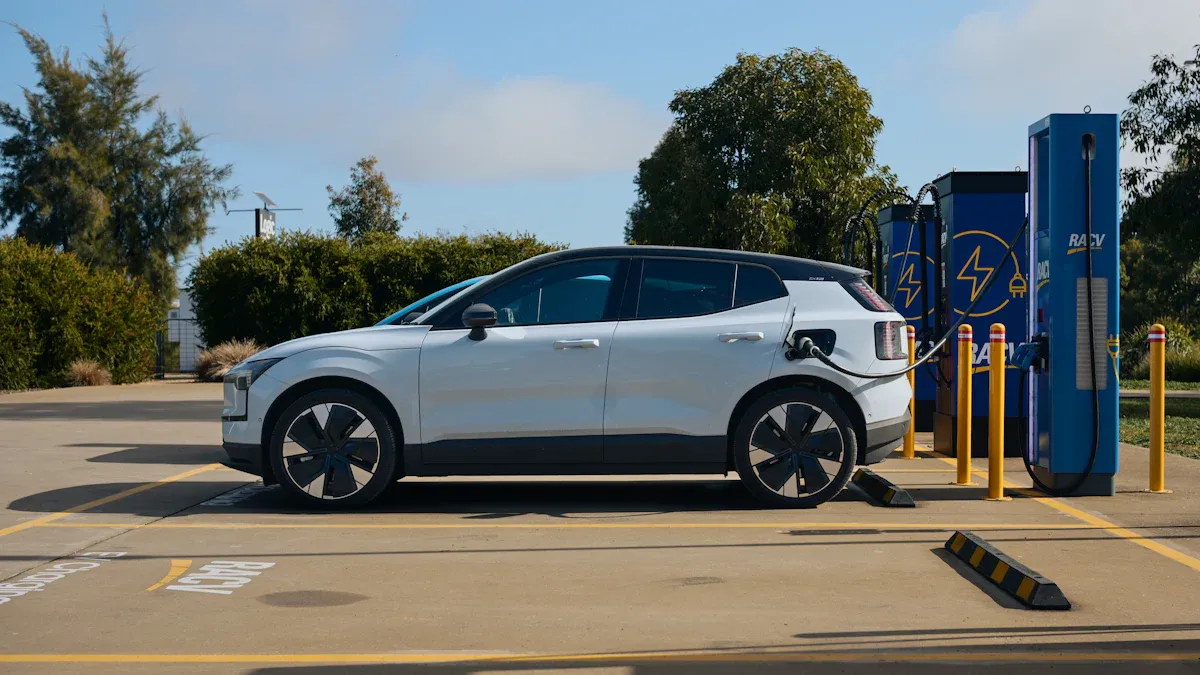
Setting Up Your Preferred App to Find EV Chargers
Account Creation
Creating an account within a charging app unlocks essential features for efficient EV charging. The registration process typically requires email verification and password setup, enabling access to payment integration, trip planning, and community feedback. Registered users can save preferred locations and receive personalized notifications about charger availability and promotional offers.
Key benefits of account creation include:
| Schritt | Beschreibung |
|---|---|
| Real-Time Station Discovery | Find nearby charging stations with live updates on availability and operational status. |
| Payments & Wallet Integration | Enable seamless payments across different networks for a smoother electric car charging experience. |
| Real User Ratings & Community Feedback | Access insights from other drivers to make informed decisions about public charging stations. |
Location Permissions
Enabling location permissions allows charging apps to display the closest available charging stations. This functionality is essential for accurate, real-time station discovery. Users should review privacy policies and consent forms, particularly when traveling internationally, as regulations vary by jurisdiction.
Searching for Public EV Charging Points
Using Map View
Map view functionality displays available chargers with their types and real-time status. Platforms like Zapmap and Chargemap incorporate smart route planners and filtering options to simplify location searches.
Routenplanung
Entering a destination activates route planning features that automatically incorporate charging stops based on battery level and vehicle range. This integration helps prevent range anxiety by ensuring access to charging points throughout journeys.
Filtering Results
Charger Type (AC, DC, Fast, Ultra-Fast)
Advanced filtering options enable users to match chargers to specific vehicle requirements:
| App Name | Eigenschaften |
|---|---|
| Zapmap | UK-wide map, filter for charging points, smart route planner. |
| Chargemap | Filter by plug type, power output, and free stations. |
| bp puls app | Search by charger power, connector type, and availability. |
| Motorhaube | Filters for fast charging stations and networks. |
Availability and Real-Time Status
Real-time status updates prevent unnecessary detours to unavailable chargers. Zapmap provides live availability for over 75% of UK chargers, while platforms like Tap Electric offer real-time cost calculations and 24/7 support.
User Ratings and Reviews
User-generated feedback significantly influences charging station selection, with positive experiences encouraging EV adoption and negative reviews deterring usage. Research indicates a positive correlation between reliable charging infrastructure and EV adoption rates.
| Art des Nachweises | Beschreibung |
|---|---|
| Benutzererfahrung | Positive user experiences at charging stations encourage EV adoption. |
| Negative Reviews | Negative reviews deter potential users from choosing certain charging stations. |
| Correlation | Studies show a positive correlation between charging infrastructure and EV adoption rates. |
Comparing Public Charger Options for Speed and Convenience
Understanding Public Charger Types
Level 2 vs. Level 3 Chargers
Public charging stations offer different levels of charging speed to accommodate various needs. Level 2 chargers provide moderate charging speeds suitable for extended parking situations, while Level 3 DC fast chargers deliver rapid charging for long-distance travel.
| Ladegerät Typ | Charging Speed (Range) | Angemessenheit |
|---|---|---|
| Stufe 1 | 3-12 km (2–8 miles) per hour | Emergencies or areas without dedicated chargers |
| Stufe 2 | 19-128 km (12-80 miles) per hour | Daily charging at home, work, or public locations |
| Stufe 3 | 160–400 km (100–250 miles) in under an hour | Long journeys or rapid top-ups |
Connector Compatibility
Connector standards vary by region and affect charging accessibility. Type 1 connectors are primarily used in North America with up to 7.4 kW capacity, while Type 2 connectors dominate the European market with up to 22 kW capacity. Compatibility issues can occasionally arise even with matching connector types due to communication protocol differences.
Evaluating Charging Speed and Time
kW Ratings Explained
Charging speed is determined by power output, measured in kilowatts (kW). Higher kW ratings translate to faster charging times, with Level 2 chargers typically delivering 3-19 kW and Level 3 DC fast chargers ranging from 50-350 kW.
| Ladegerät Typ | Leistung | Reichweite pro Stunde |
|---|---|---|
| Stufe 2 | 3 kW to 19 kW | 29-45 km/h |
| Stufe 3 | 50 kW bis 350 kW | Up to 32 km/min |
Estimated Charging Times
Actual charging times vary significantly by vehicle model and battery condition. Level 2 charging typically requires several hours for a full charge, while Level 3 chargers can replenish most EV batteries to 80% capacity in 20-40 minutes, with a full charge typically taking 60-90 minutes. Selecting the appropriate charger type based on time constraints and travel needs ensures optimal charging efficiency.
Assessing Location Amenities at Public Charging Points
Parking Availability
Adequate parking facilities significantly influence the charging experience. Stations with dedicated EV parking spaces minimize waiting times and provide convenient access to charging equipment, ensuring a smoother process for drivers.
Nearby Facilities
Die availability of amenities such as restrooms, dining options, and retail stores enhances the appeal of charging locations. These facilities enable drivers to utilize charging time productively and comfortably, contributing to higher user satisfaction levels. The combination of charging speed, amenities, and pricing collectively shapes the overall charging experience.
Pricing, Payment, and Subscriptions for Public Charging Stations
Understanding payment structures for public EV charging helps users manage costs effectively. The European market in 2025 features increasingly transparent pricing, diverse payment options, and valuable subscription benefits.
Understanding Charging Cost Structures
Per kWh vs. Per Minute Pricing
Multiple pricing models exist across public charging networks, each affecting total costs differently. The most common approaches include energy-based pricing (per kWh), time-based charging (per minute/hour), flat-rate subscriptions, and hybrid models that combine these elements.
| Preismodell | Beschreibung |
|---|---|
| Per kWh Pricing | Charges based on the amount of electricity consumed, measured in kilowatt-hours (kWh). |
| Time-Based Pricing | Charges based on the duration of the charging session, typically per minute or hour. |
| Flat Rate Subscription | A fixed fee for access to charging services, regardless of usage, similar to a gym membership. |
| Hybrid Pricing | A combination of time-based and energy-based pricing models. |
A charging session bill typically includes several components:
- Energy price: Based on the electricity consumed (measured in kWh)
- Time-based price: Reflects the duration of connection to the charger
- Session fee: A fixed charge per charging session
- Additional fees: May include roaming charges or penalties for overstaying
Idle Fees and Surcharges
Idle fees apply when vehicles remain connected after charging completes, with rates typically ranging from $0.40 to $1.00 per minute depending on the operator. These fees encourage timely vehicle movement to maintain charger availability for other users.
Payment Methods Accepted at Public EV Charging Points
Credit Card
Most public charging stations now accept credit and debit cards. As of April 2024, new high-power chargers (above 50 kW) must include payment terminals, making it easier for you to pay without special accounts.
Mobile Payment
Mobile payment options let you use your smartphone to start and pay for charging. You can manage sessions in real time and receive instant updates. Mobile payments use robust encryption, which keeps your transactions secure.
RFID-Karten
RFID cards offer a simple tap-to-charge experience. You only need to hold your card near the reader to begin charging. However, RFID cards can be less secure than mobile payments, as they lack advanced encryption.
| Merkmal | RFID-Karten | Mobile Payment Options |
|---|---|---|
| Bequemlichkeit | Simple tap to charge | Manage via smartphone, real-time updates |
| Sicherheit | Vulnerable to card spoofing | Robust encryption, secure communication |
| User Interaction | Minimal technology interaction | Requires smartphone app familiarity |
Subscription and Membership Options for Public Chargers
Network Membership Benefits
Enrolling in a charging network provides access to exclusive advantages. Members typically receive discounted charging rates, priority access during peak hours, and sometimes complimentary monthly charging sessions. Additional benefits often include real-time station availability updates, remote session initiation, and invitations to special EV community events.
| Nutzen Sie | Beschreibung |
|---|---|
| Discounted Charging Rates | Save up to 30% compared to guest rates. |
| Priority Access | Skip the queue during busy hours. |
| Free Charging Sessions | Some plans include free monthly charges. |
| App-Integration | Real-time station availability & remote start. |
| Exclusive Member Events | EV expos, test drives, networking opportunities. |
| Convenience & Accessibility | Access thousands of charging stations nationwide. |
| Kosteneinsparungen | No surprise fees with fixed membership pricing. |
| Zukunftssicher | Memberships become more valuable as EV adoption grows. |
Roaming-Vereinbarungen
Roaming agreements between charging networks significantly expand access to public chargers. These partnerships enable users to utilize a single app or RFID card across thousands of stations from different providers. This integration reduces network fragmentation and simplifies trip planning, creating a consistent charging experience with comprehensive station visibility regardless of location.
Planning Your Trip and Ensuring Charger Compatibility
Route Planning with Public Charging Stops
Multi-Stop Trip Planning
Effective journey planning involves identifying charging locations along your route before departure. Navigation systems and dedicated charging apps provide real-time information about station availability, connector types, and pricing. When creating an itinerary, always allocate additional time for charging sessions and identify backup options within 10-15 miles of your estimated range limit.
Key planning strategies include:
- Researching charging points before traveling
- Utilizing apps with real-time status updates
- Identifying backup charging locations
- Allocating extra time for charging sessions
Avoiding Range Anxiety
Range anxiety during long journeys can be minimized through careful planning. Route planners that display real-time charger locations and availability help build confidence. Selecting fast chargers for quicker stops and identifying backup charging locations before battery levels become critical provides additional security.
Ensuring Charger Compatibility
Vehicle Connector Types
Before visiting a public charging station, verify your vehicle’s connector type. Most EVs in the UK utilize Type 2 or CCS connectors, with specific information available in the vehicle’s manual. Confirming compatibility in advance prevents wasted time at incompatible charging stations.
App-Based Compatibility Checks
Charging applications simplify compatibility verification. Once familiar with your vehicle’s connector type, these platforms can filter station results to show only compatible options. This ensures drivers always locate suitable charging points.
A straightforward two-step process includes:
- Confirming the vehicle’s connector type via the owner’s manual
- Utilizing app filters to display compatible stations
Note: EVs can charge at any station matching their connector type or compatible with their charging cable.
Backup Plans for Busy or Offline Public Charging Stations
Alternative Locations
Always identify secondary charging options before traveling. Using an app’s map view to locate and save nearby stations as favorites ensures continuity even when primary chargers are occupied or non-operational.
Emergency Support
Most charging networks provide integrated customer support through their applications. These services assist with access or payment issues, with some offering dedicated roadside assistance for EV-specific problems. Preparing these resources in advance enhances journey safety and confidence.
Maintain a list of backup charging stations and emergency contacts in your vehicle or mobile device.
Troubleshooting Common Issues at Public Charging Stations
When you drive an EV, you may encounter challenges at charging stations. Knowing how to respond helps you stay on schedule and avoid unnecessary stress. This section guides you through common issues and practical solutions.
What to Do If a Public Charger Is Unavailable
Reporting Problems
When encountering offline or malfunctioning equipment, promptly use the application’s “Report a Problem” feature to notify network operators. Detailed reporting accelerates resolution times and improves system reliability for all users.
Documenting error messages with photographs can significantly assist support teams in diagnosing issues.
Finding Alternatives Quickly
When encountering an unavailable charger, promptly access your charging application to locate nearby alternatives. Most platforms display real-time availability, enabling immediate selection of backup options. Maintaining a saved list of alternative stations within your application ensures preparedness for busy or non-operational locations.
Handling Payment or Access Issues at Public Charging Points
Contacting Support
For payment or access difficulties, immediately contact the support number displayed at the station. Most networks provide 24/7 assistance. Be prepared to provide specific details including station identification and payment method to facilitate remote troubleshooting or alternative payment guidance.
Using Multiple Apps
Registering with multiple charging applications increases successful charging probability. If one platform encounters issues, switching to an alternative application supporting the same station provides valuable flexibility and minimizes disruption during travel.
Safety Considerations at Public Chargers
Security Tips
Prioritize safety by selecting well-lit charging locations and maintaining awareness of your surroundings. Secure vehicles during charging sessions and avoid visible storage of valuables. Utilize secure payment methods like authenticated mobile applications to protect financial data.
Nighttime Charging Advice
Exercise additional caution during evening hours by choosing stations in busy, well-monitored areas. When possible, schedule charging during daylight hours or with companions. Personal safety should always take precedence over charging convenience.
Efficient EV charging relies on utilizing dedicated applications, navigation systems, and network websites. For optimal results:
- Download recommended applications for simplified charging
- Join charging networks for membership benefits
- Verify real-time availability and compatibility
- Maintain backup charging options for stress-free travel
Proactive planning with multiple contingency options ensures a smooth and reliable charging experience.
FAQ
How do you find EV charging stations across Europe during your journey?
Dedicated apps and pan-European charging networks provide access to station locations across the continent. These platforms show real-time availability, compatible connector types, and charging speeds, delivering country-specific updates that enable efficient and well-organized travel throughout Europe.
What should you know about charging in France?
France’s charging infrastructure provides extensive coverage, with particular density in urban areas. The network features numerous public stations equipped with Type 2 connectors. Real-time application updates display station status and payment options, enabling reliable journey planning with widespread access to fast charging.
Is charging in Germany different from other parts of Europe?
Germany’s charging infrastructure features advanced technology with extensive high-speed charger deployment. The network shows strong adoption of CCS connectors, and pan-European charging platforms provide seamless access. Real-time status updates and diverse payment options ensure smooth travel throughout the country.
How do you handle charging in Spain during your journey?
Spain’s charging network is experiencing significant growth, particularly along major highways and within urban centers. Applications enable users to locate public stations and verify compatibility, while integrated payment systems and live availability information simplify the charging process for travelers.
What options exist for charging in Italy while traveling?
Italy’s charging infrastructure provides coverage in major urban centers and popular tourist destinations. Route planning tools help locate compatible chargers, while the expanding network and integration with pan-European charging platforms support convenient travel throughout the country.
Can you charge your EV in Ireland during a journey across Europe?
Ireland’s charging network provides reliable coverage, particularly in Dublin and Cork. Applications display real-time status and connector compatibility, while integration with pan-European charging networks ensures uninterrupted travel throughout the region.
How do pan-european car-charging networks improve your journey?
Pan-European charging networks enable access to thousands of public stations across multiple countries using a single application or membership card. These integrated systems support seamless payments and provide live status updates, creating a simple and efficient charging experience for journeys throughout Europe.
What should you consider when planning a journey through Europe with an EV?
Proactive research into charging infrastructure, connector types, and station availability is essential for European travel. Utilizing applications to plan charging stops in countries like France, Germany, Spain, Italy, and Ireland, while establishing backup options and monitoring real-time updates, facilitates a smoother journey.
Verifying station compatibility before departure helps prevent delays and ensures a consistent charging experience across Europe.