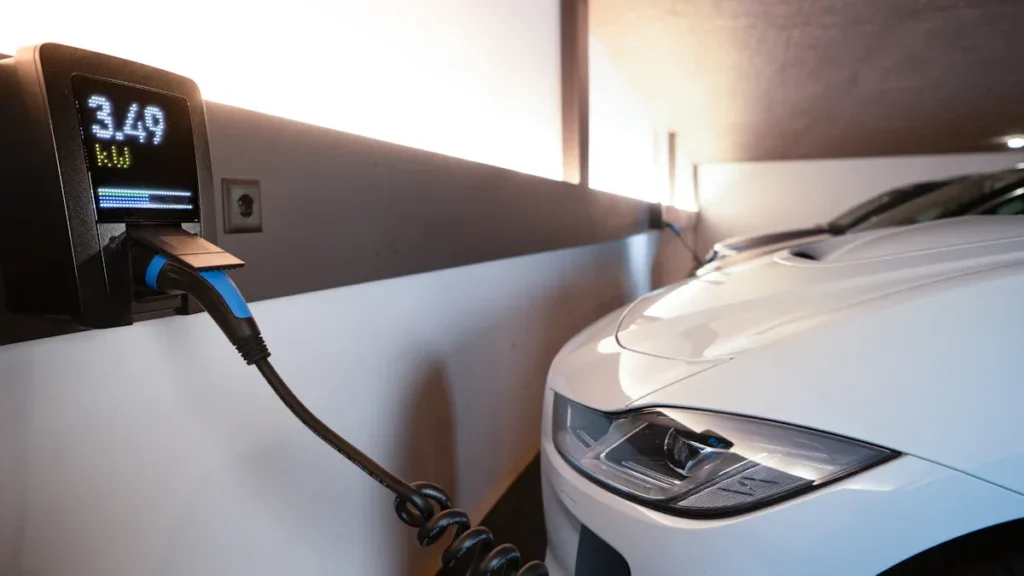
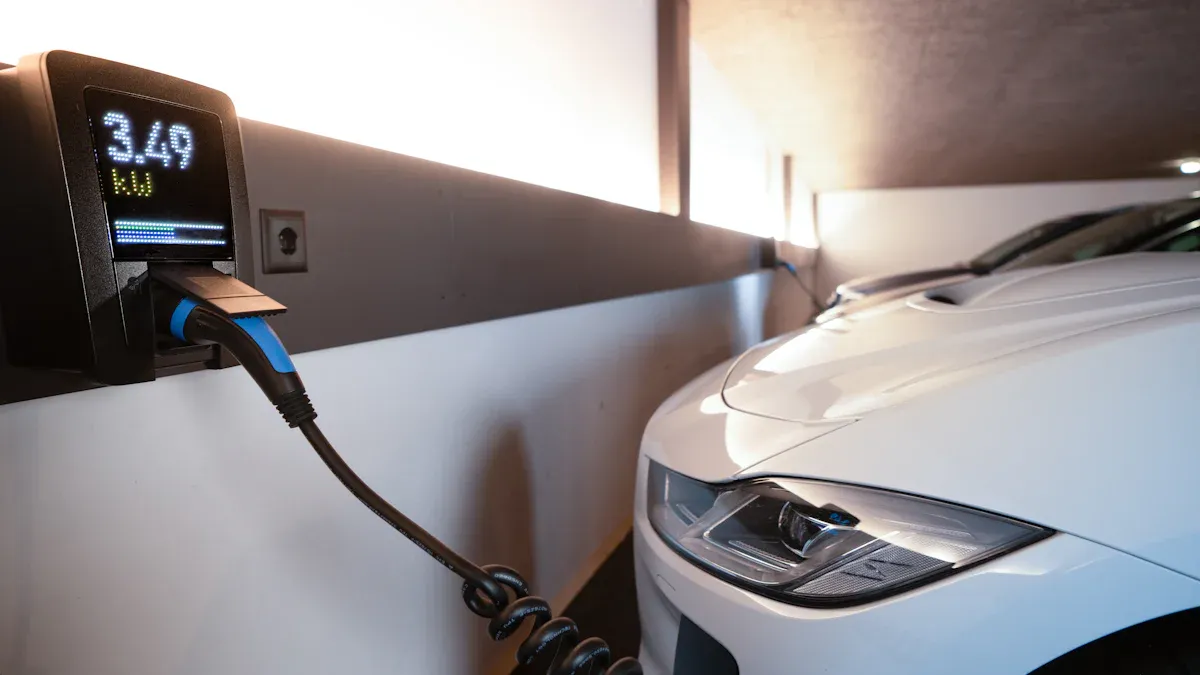
Das Laden eines Elektroautos zu Hause bietet Fahrern erhebliche Kostenvorteile. Bei einer typischen Jahresfahrleistung von 10.000 Meilen sinken die jährlichen Kosten auf £672 verglichen mit 1.612,58 £ für Benzin, was zu Einsparungen von fast 941 £ führt. Zu den Schlüsselfaktoren gehören Haushaltsstromtarife, Fahrzeugeffizienz und regionale Preisunterschiede. Ein EV-Ladegerät von führenden Hersteller von EV-Ladegeräten gepaart mit intelligentem EV-Ladelösungen kann die Einsparungen maximieren. Viele Fahrer profitieren auch von tragbare ev-ladegeräte, die mehr Flexibilität für Reisen und Notfälle bieten.
- Kosten pro Meile für Benzinautos: 17 Pence
- Kosten pro Meile für Elektroautos: 5 Pence
- Fahrer sparen mit Elektrofahrzeugen etwa 70 % pro Meile.
Praxisnaher Kostenvergleich für das Laden eines Elektroautos
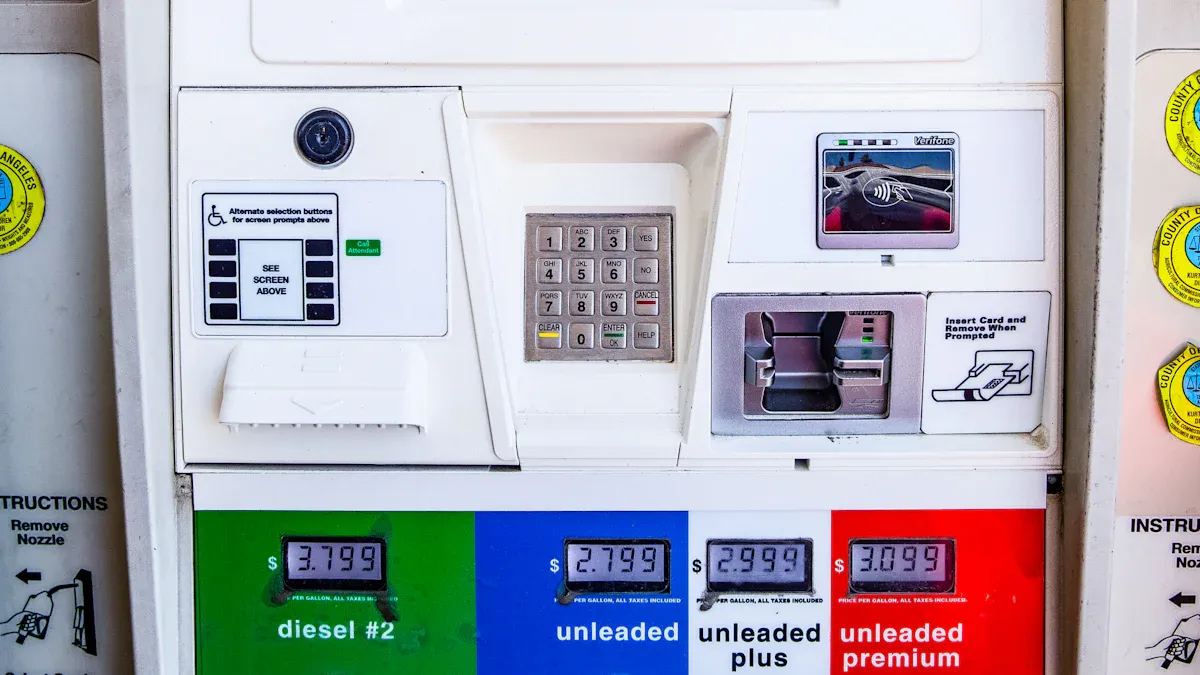
Kosten für das Laden zu Hause vs. Benzinkosten
Kosten pro Meile für Elektroautos
Elektrofahrzeuge bieten einen erheblichen Vorteil bei den Kosten pro Meile , wenn sie zu Hause geladen werden. Die meisten Fahrer zahlen zwischen 2 und 4 Pence pro Meile für Strom. Diese Rate bleibt in vielen Regionen aufgrund der Stabilität der Haushaltsstrompreise konstant. Die folgende Tabelle zeigt die typischen Kosten pro Meile für Elektro- und Benzinfahrzeuge:
| Fahrzeugtyp | Kosten pro Meile |
|---|---|
| Elektro (Laden zu Hause) | 2-4 Pence |
| Benzin/Diesel | 12-15 Pence |
Die Strompreise bleiben in der Regel das ganze Jahr über stabil. Diese Stabilität ermöglicht es Fahrern, ihre Transportkosten genauer zu budgetieren.
Kosten pro Meile für Benzinautos
Benzinfahrzeuge kosten pro Meile deutlich mehr. Die meisten Fahrer zahlen zwischen 12 und 15 Pence pro Meile für Kraftstoff. Die Benzinpreise schwanken häufig, was es schwierig macht, monatliche oder jährliche Ausgaben vorherzusagen. Die Volatilität der Benzinpreise führt oft zu unerwarteten Anstiegen der Betriebskosten.
Anmerkung: Aufladen eines Elektroautos zu Hause ist oft günstiger als Benzin, und spezielle EV-Tarife können die Kosten weiter senken.
Beispielrechnung für 1.000 Meilen
Kostenaufschlüsselung für das Laden zu Hause
Ein typisches Elektrofahrzeug verbraucht etwa 6 Pence Strom pro Meile, wenn es zu Hause geladen wird. Für 1.000 Meilen betragen die Gesamtkosten 60 £. Einige Fahrer mit Zugang zu Niedertarifen zahlen möglicherweise noch weniger. Die Kosten bleiben aufgrund der Stabilität der Stromtarife vorhersehbar.
Kostenaufschlüsselung für Benzin
Ein Benzinautofahrer zahlt etwa 14 Pence pro Meile. Für 1.000 Meilen erreichen die Gesamtkosten 140 £. Dieser Betrag kann schnell steigen, wenn die Benzinpreise steigen. Der Kostenunterschied wird über längere Strecken deutlicher.
| Fahrzeugtyp | Kosten pro 100 Meilen | Kosten pro Meile | Jährliche Kosten (10.000 Meilen) |
|---|---|---|---|
| Elektrofahrzeug | £3.75 | 6 Pence | £568 |
| Benzinfahrzeug | £14 | 14 Pence | £1,209 |
- Ein Elektrofahrzeug kostet 3,75 £ für jede 100 Meilen, während ein Benzinfahrzeug für die gleiche Strecke 14 £ kostet.
- Über 10.000 Meilen werden die Einsparungen erheblich.
Jährliche Einsparungen durch das Laden eines Elektroautos zu Hause
Durchschnittliche Einsparungen für typische Fahrer
Die meisten Fahrer, die von Benzin auf Elektrofahrzeuge umsteigen, sparen jedes Jahr Hunderte von Pfund. Die durchschnittlichen jährlichen Einsparungen für EV-Besitzer erreichen 630 £, während einige Benzinfahrer bis zu 1.432 £ mehr pro Jahr ausgeben. EV-Niedertarife können diese Einsparungen auf bis zu 1.240 £ pro Jahr erhöhen.
| Szenario | Jährliche Einsparungen (£) |
|---|---|
| Durchschnittliche Einsparungen für EV-Besitzer | 630 |
| Durchschnittliche Einsparungen für Benzinfahrer | 1,432 |
| EV-Fahrer mit hoher Fahrleistung | 1,154 |
| Einsparungen durch EV-Niedertarife | Bis zu 1.240 |
| Einsparungen bei hoher Fahrleistung mit Niedertarif | Bis zu 1.780 |

Szenarien mit hoher Fahrleistung
Fahrer, die jedes Jahr lange Strecken zurücklegen, sehen noch größere Vorteile. EV-Fahrer mit hoher Fahrleistung können bis zu 1.154 £ pro Jahr sparen. Diejenigen, die Niedertarife nutzen, können bis zu 1.780 £ pro Jahr sparen. Diese Einsparungen zeigen die finanziellen Vorteile des Ladens eines Elektroautos zu Hause, insbesondere für Vielfahrer.
Tipp: Das Laden zu Hause bietet im Vergleich zu Benzin vorhersehbarere und niedrigere Kosten, insbesondere für Fahrer mit hoher Fahrleistung.
Aufschlüsselung der Zahlen für das Laden eines Elektroautos
Kosten pro kWh für das Laden zu Hause
Durchschnittliche Haushaltsstromtarife
Die Stromtarife spielen eine entscheidende Rolle bei der Bestimmung der Kosten für das Laden zu Hause. In den Vereinigten Staaten erreichte der durchschnittliche Haushaltsstromtarif im Jahr 2023 16,00 Cent pro Kilowattstunde (kWh). Dieser Wert ist von 12,65 Cent pro kWh im Jahr 2015 gestiegen, was einen stetigen Anstieg der Energiekosten im Laufe der Jahre widerspiegelt. Die folgende Tabelle zeigt die durchschnittlichen Kosten pro kWh für verschiedene Kundentypen:
| Kunde Typ | Durchschnittliche Kosten (¢/kWh) |
|---|---|
| Wohnen | 16.00 |
| Kommerziell | 12.59 |
| Industrie | 8.04 |
| Transport | 12.77 |
| Alle Sektoren | 12.68 |

Regionale Variationen
Die Stromtarife können je nach Standort erheblich variieren. Mehrere Faktoren beeinflussen diese Unterschiede:
- Regionale Stromtarife variieren erheblich, was die Kosten für das Laden eines Elektrofahrzeugs zu Hause beeinflusst.
- Höhere lokale Tarife können zu erhöhten Ladekosten führen.
- Das Laden außerhalb der Stoßzeiten kann die Kosten aufgrund niedrigerer Nachttarife reduzieren.
Durchschnittliche Meilen pro kWh für Elektroautos
Beliebte Elektroauto-Modelle im Vergleich
Die Effizienz variiert bei Elektrofahrzeugen. Die folgende Tabelle vergleicht die Meilen pro kWh von beliebten Modellen erzielten Werte:
| Elektroauto-Modell | Meilen pro kWh |
|---|---|
| Tesla Model 3, Standard Range Plus | 4.56 |
| Fiat 500e | 4.54 |
| Tesla Model 3, Long Range | 4.54 |
| Hyundai Ioniq Electric | 4.19 |
| BMW i3 | 4.16 |
| Mini Electric | 4.10 |
| Seat Mii electric | 4.10 |
| Volkswagen e-up! | 4.07 |
| Smart EQ fortwo | 4.05 |
| Hyundai Kona Electric (39 kWh) | 3.99 |

Auswirkungen des Fahrstils
Fahrgewohnheiten können die Effizienz beeinflussen:
- Starkes Beschleunigen kann die Effizienz von Elektrofahrzeugen erheblich verringern.
- Scharfes Bremsen wirkt sich negativ auf den Energieverbrauch aus.
- Eine konstante Geschwindigkeit beizubehalten kann die Effizienz verbessern.
- Die Verwendung des Tempomats auf Autobahnen hilft, Energie zu sparen.
- Beschleunigen Sie gleichmäßig, um weniger Energie zu verbrauchen.
- Vermeiden Sie plötzliche Stopps, um Batterieleistung zu sparen.
Kosten pro Gallone für Benzin
Kosten für das Tanken eines Benziners
Auch die Benzinpreise beeinflussen den Kostenvergleich. Die durchschnittlichen nationalen Kosten pro Gallone Benzin in den Vereinigten Staaten liegen bei ungefähr 3,17 $. Einige Bundesstaaten wie Mississippi und Tennessee bieten niedrigere Preise, um die 2,70 $ pro Gallone.
Lokale Preisunterschiede
Lokale Marktbedingungen, Steuern und das Angebot können erhebliche Preisunterschiede verursachen. Fahrer in städtischen Gebieten oder Bundesstaaten mit höheren Steuern können mehr für Benzin zahlen als solche in ländlichen Regionen.
Das Verständnis dieser Zahlen hilft Fahrern, fundierte Entscheidungen darüber zu treffen, ob sie ein Elektroauto zu Hause laden oder auf Benzin setzen.
Durchschnittliche Meilen pro Gallone für Benzinautos
Häufige Benzinauto-Modelle
Benzinautos bleiben für viele Fahrer beliebt. Hersteller entwerfen eine Vielzahl von Modellen, jeweils mit unterschiedlichen Kraftstoffeffizienzwerten. Kompaktwagen, Mittelklasse-Limousinen und SUVs weisen alle unterschiedliche Meilen pro Gallone (MPG) auf. Zum Beispiel erreicht der Toyota Corolla, eine bekannte Kompaktlimousine, im kombinierten Stadt- und Autobahnbetrieb durchschnittlich etwa 32 MPG. Der Honda Civic, eine weitere beliebte Wahl, liefert ungefähr 34 MPG. Mittelklasse-Limousinen wie der Toyota Camry und Honda Accord erreichen etwa 30 MPG. Größere Fahrzeuge wie der Ford Explorer oder Chevrolet Tahoe liegen oft unter 22 MPG.
Die folgende Tabelle zeigt die durchschnittlichen MPG-Werte für mehrere gängige Benzinauto-Modelle:
| Modell | Stadt MPG | Autobahn MPG | Kombinierte MPG |
|---|---|---|---|
| Toyota Corolla | 30 | 38 | 32 |
| Honda Civic | 31 | 40 | 34 |
| Toyota Camry | 28 | 39 | 30 |
| Ford Explorer | 20 | 27 | 23 |
| Chevrolet Tahoe | 15 | 20 | 17 |
Kleinere Autos bieten in der Regel eine bessere Kraftstoffeffizienz. Fahrer, die Kompakt- oder Kleinwagenmodelle wählen, geben oft weniger für Benzin pro Jahr aus. Größere SUVs und Lastwagen verbrauchen mehr Kraftstoff, was die Betriebskosten erhöht.
Stadt- vs. Autobahnfahrten
Die Fahrbedingungen spielen eine große Rolle bei der Bestimmung der durchschnittlichen MPG eines Benzinautos. Stadtfahrten führen oft zu einer geringeren Kraftstoffeffizienz. Häufige Stopps, Starts und Leerlauf an Ampeln lassen Motoren härter arbeiten und mehr Kraftstoff verbrennen. Verkehrsstaus und häufige Gangwechsel tragen ebenfalls zu einem höheren Kraftstoffverbrauch bei. Im Gegensatz dazu ermöglichen Autobahnfahrten konstante Geschwindigkeiten und weniger Stopps. Diese Gleichmäßigkeit hilft Motoren, effizienter zu arbeiten, was zu höheren MPG führt.
Zu den wichtigsten Faktoren, die die Kraftstoffeffizienz in verschiedenen Fahrumgebungen beeinflussen, gehören:
- Stadtfahrten führen in der Regel zu niedrigeren MPG aufgrund von Stop-and-Go-Verkehr.
- Autobahnfahrten verbessern die MPG aufgrund konstanter Geschwindigkeiten.
- Verkehrsstaus erhöhen den Kraftstoffverbrauch.
- Häufige Gangwechsel im Stadtverkehr verringern die Effizienz.
- Kleinere Stadtautos schneiden in städtischen Umgebungen oft besser ab als größere Fahrzeuge.
- Fahrstil, Fahrzeuggewicht und Straßenbedingungen beeinflussen ebenfalls die MPG.
Ein Fahrer, der die meiste Zeit im Stadtverkehr verbringt, kann im Vergleich zu jemandem, der hauptsächlich auf Autobahnen fährt, deutlich niedrigere MPG feststellen. Die Wahl des richtigen Fahrzeugs für die primäre Fahrumgebung kann helfen, Kraftstoffeinsparungen zu maximieren. Beispielsweise eignet sich ein Kompaktwagen für Stadtfahrten, während eine Mittelklasse-Limousine oder ein Crossover für lange Autobahnpendelfahrten besser geeignet sein kann.
Tipp: Die Überwachung der Fahrgewohnheiten und die Aufrechterhaltung des richtigen Reifendrucks können die Kraftstoffeffizienz eines Benzinautos weiter verbessern.
Faktoren, die die Kosten für das Laden eines Elektroautos zu Hause beeinflussen
Heim-Energietarife
Standard vs. Off-Peak Rates
Home energy tariffs play a crucial role in determining the cost of charging an electric car. Many energy suppliers offer special EV tariffs that provide lower electricity rates during off-peak hours. These off-peak periods, usually at night, allow drivers to charge their vehicles at a fraction of the standard rate. For example, charging at an off-peak rate can cost as little as £2.31, while charging during peak hours may rise to £5.35. The table below highlights the difference:
| Methode der Aufladung | Kosten |
|---|---|
| Tarifname | £2.31 |
| Peak Rate | £5.35 |
| Gesamtkosten | £7.66 |
Drivers who take advantage of off-peak rates can see significant savings over time.
Time-of-Use Plans
Time-of-use tariffs further enhance savings by offering reduced rates during specific periods, such as overnight or weekends. By scheduling charging sessions during these times, owners can lower their electricity bills and often use cleaner energy. This approach benefits both the environment and the wallet.
Charging Habits for Electric Cars
Overnight Charging Benefits
Charging overnight remains the most economical option for many drivers. Suppliers typically offer reduced rates from midnight to 7 am, when electricity demand is low. Regular overnight charging not only saves money but also helps maintain the battery within an optimal range, reducing the risk of deep discharges. Many owners schedule their charging to coincide with these off-peak hours, leading to consistent savings.
- Charging at night takes advantage of lower rates.
- Overnight charging supports battery health.
- Scheduled charging maximizes cost efficiency.
Smart Charging Technology
Smart charging technology provides additional savings and convenience. For those on dynamic tariffs, smart chargers can automate charging to occur when rates are lowest, potentially saving up to £1,152 per year. This technology suits frequent home chargers and integrates seamlessly with advanced solutions from providers like TPSON. However, drivers on flat-rate tariffs or those who charge infrequently may see less financial benefit.
Home Charging Equipment for Electric Cars
Level 1 vs. Level 2 Ladegeräte
The choice of home charging equipment affects both upfront and ongoing costs. Level 1 chargers offer a lower initial investment but charge more slowly. Level 2 chargers, while more expensive, provide faster charging and greater convenience. The table below compares the costs:
| Ladegerät Typ | Cost Range (£) | Installation Cost (£) |
|---|---|---|
| Stufe 1 | 300 – 1,000 | 300 – 600 |
| Stufe 2 | 500 – 1,500 | 300 – 1,500 |
Installationskosten und Anreize
Installation costs vary based on charger type and home electrical setup. Some regions offer incentives or rebates to offset these expenses, making advanced charging solutions more accessible. TPSON, as a technologically advanced electric vehicle charging solution provider, offers a range of products to suit different needs and budgets.
Tip: Choosing the right combination of tariff, charging habit, and equipment can maximize savings when charging an electric car at home.
Public Charging vs. Home Charging an Electric Car
Kostenunterschiede
Fast Charging Premiums
Electric vehicle owners often notice a significant price gap between home charging and public fast charging. Home charging remains the most affordable option for most drivers. The following table compares the annual costs for different charging methods:
| Methode der Aufladung | Jährliche Kosten |
|---|---|
| Home (EV tariff 8p/kWh) | ~£240 |
| Home (standard 24p/kWh) | ~£720 |
| Public fast (40p/kWh) | ~£1,200 |
| Public rapid (70p/kWh) | ~£2,100 |
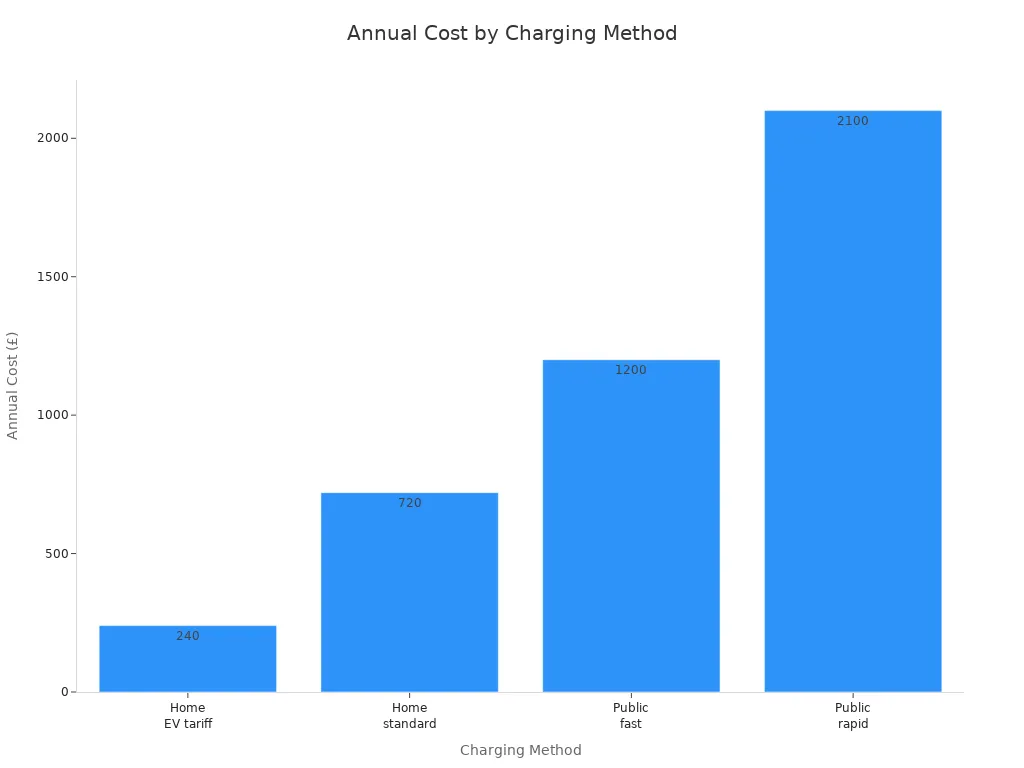
Drivers who rely on public rapid chargers pay almost ten times more per year than those who use off-peak home tariffs. Public fast charging stations add convenience but come with a premium price. These higher costs reflect the infrastructure investment and speed of charging.
Abonnement-Pläne
Some public charging networks offer subscription plans. These plans can reduce the per-session cost for frequent users. However, even with a subscription, the Kosten pro Meile usually exceeds home charging rates. Drivers should compare the total monthly or annual cost of these plans with their expected usage. For those who charge only occasionally in public, pay-as-you-go options may prove more economical.
The table below highlights the cost per mile for different charging methods:
| Methode der Aufladung | Kosten pro Meile |
|---|---|
| Aufladen zu Hause | 3.2p – 9p |
| Public Rapid Charging | Öffentlich Schnell-/Ultra-Schnell |
| Public Slow Charging | 55p |
Heimkosten delivers the lowest cost per mile. Public charging, especially rapid charging, increases the cost of operating an electric vehicle.
When Public Charging Makes Sense
Road Trips and Travel
Public charging becomes essential during long-distance travel. Drivers who embark on road trips or travel for work often need quick top-ups away from home. Rapid charging stations along highways provide fast energy replenishment, reducing downtime. Although these sessions cost more, they offer unmatched convenience for those covering hundreds of miles in a day.
Urban Apartment Living
Many city dwellers lack access to private driveways or garages. For these drivers, public charging stations serve as the primary source of energy. Public charging also benefits those who live in apartment complexes without dedicated charging infrastructure. In some cases, public charging becomes cost-effective when home electricity rates spike during peak hours.
- Public charging is necessary for those without home charging access.
- It is ideal for quick top-ups on long journeys.
- It can be cost-effective when home rates are high.
Note: Drivers should evaluate their charging needs and local infrastructure before choosing between home and public charging. Home charging remains the most cost-effective solution for most, but public charging offers flexibility for unique situations.
Financial and Environmental Benefits of Charging an Electric Car at Home

Langfristige Einsparungen
Maintenance Cost Differences
Electric vehicles offer substantial savings in maintenance over their lifespan. They do not require oil changes, and their braking systems last longer due to regenerative braking. Owners experience fewer trips to the mechanic, which leads to lower repair costs. The following table compares the total cost of ownership for two popular models:
| Fahrzeugtyp | Total Cost of Ownership (GBP) |
|---|---|
| Nissan Leaf | 26,939.6 |
| Honda Civic | 27,201.0 |
Electric vehicles tend to be more cost-effective over longer ownership periods. Lower maintenance costs and fewer mechanical issues contribute to these savings.
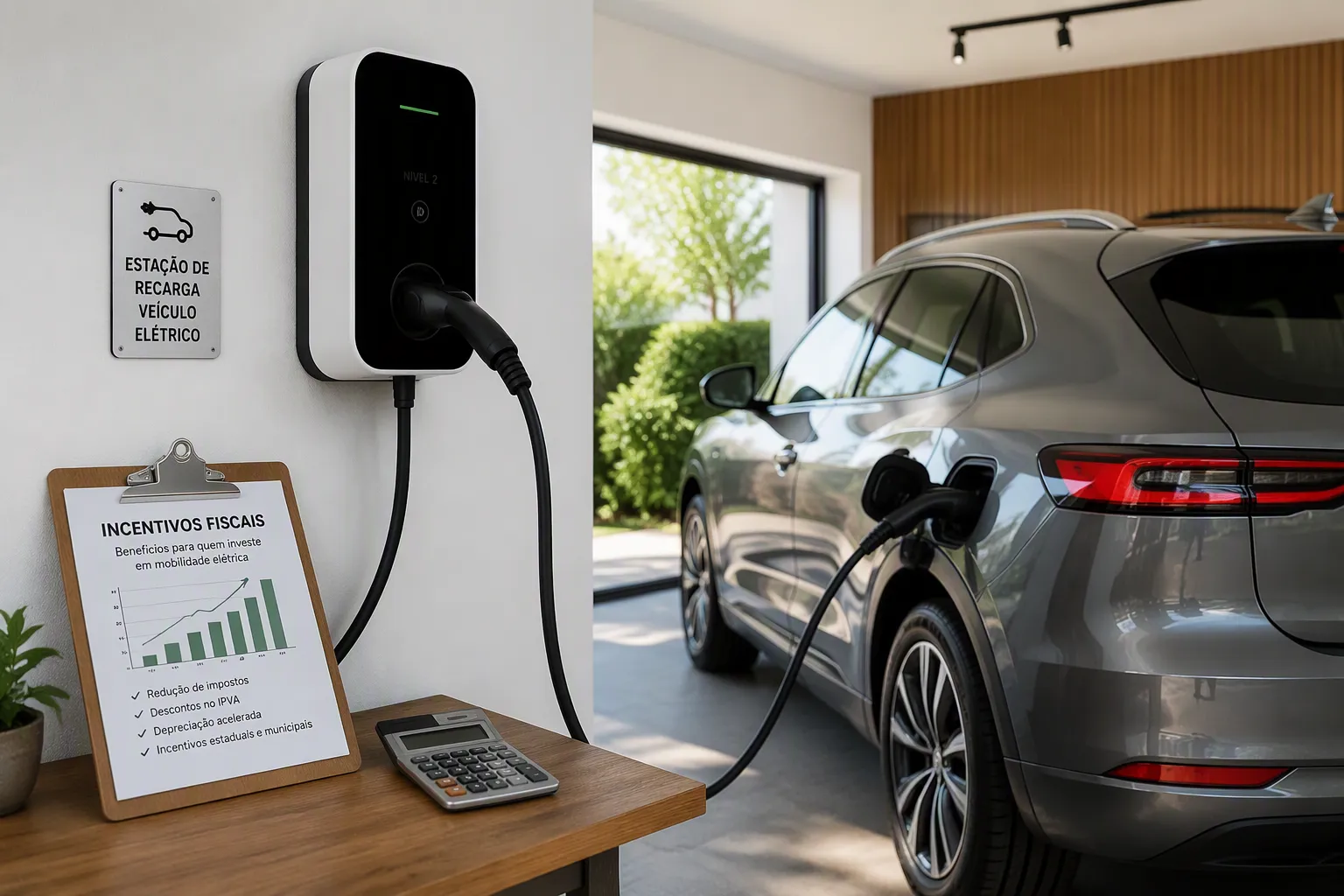
Steuervergünstigungen und Rabatte
Government incentives play a significant role in reducing the overall cost of electric vehicles. Many buyers benefit from grants and tax reductions, which lower the initial purchase price. The table below highlights available credits:
| Art der Steuergutschrift | Beschreibung | Eligibility Deadline |
|---|---|---|
| Elektroladeguthaben | Bundessteuergutschrift für zu Hause installierte EV-Ladestationen | Vor dem 1. Januar 2033 |
| Energieeigentumsgutschrift | Gutschrift für privates Energieeigentum, erhöht auf 30% | Vor dem 1. Januar 2033 |
Einige Regionen, wie Colorado, bieten einen Steuergutschrift von 4.000 £ für den Kauf von leichten Elektrofahrzeugen. Diese Anreize, kombiniert mit niedrigeren Betriebskosten, machen Elektrofahrzeuge zu einer attraktiven Option für kostenbewusste Fahrer.
Elektroautos werden oft mit staatlichen Anreizen angeboten, die den anfänglichen Kaufpreis erheblich senken können, wie Zuschüsse und Steuernachlässe, was zu langfristigen Gesamteinsparungen beiträgt.
Auswirkungen auf die Umwelt
Emissionsvergleich
Das Laden eines Elektroautos zu Hause bringt erhebliche Umweltvorteile. Elektrofahrzeuge produzieren keine Auspuffemissionen, was den Ausstoß von Treibhausgasen reduziert. In Regionen mit sauberer Energie erzeugen Elektrofahrzeuge bis zu 70% weniger Emissionen über die Lebensdauer als Benziner. Selbst in Gebieten mit kohlelastiger Stromerzeugung schneiden Elektrofahrzeuge aufgrund der Effizienz von Kraftwerken besser ab als Benzinfahrzeuge.
| Fahrzeugtyp | CO2-Emissionen (Gramm/km) | Jährliche CO2-Einsparungen (Gramm) |
|---|---|---|
| Benzinautos | 165 | K.A. |
| Dieselautos | 170 | K.A. |
| Elektrofahrzeuge | 50 | 1,500,000 |
Das Fahren eines Elektroautos ist besser für das Klima als herkömmliche Benziner in 95% der Welt. Die durchschnittlichen Lebenszyklusemissionen von Elektroautos sind in Ländern mit saubereren Energiequellen bis zu 70% niedriger als bei Benzinautos.
Optionen für erneuerbare Energien
Hausbesitzer können ihren CO2-Fußabdruck weiter verringern, indem sie erneuerbare Energiequellen zum Laden nutzen. Die Integration von Vehicle-to-Home-Laden ermöglicht eine erhebliche Reduzierung der Emissionen. Das Laden zu Hause mit erneuerbarer Energie, wie Solarpanelen, ermöglicht eine vollständig grüne Energienutzung. Dieser Ansatz verringert nicht nur die Abhängigkeit von fossilen Brennstoffen, sondern verbessert auch die lokale Luftqualität und hilft beim Kampf gegen den Klimawandel.
- Das Laden zu Hause macht Fahrten zu öffentlichen Ladestationen überflüssig und reduziert so weiter die CO2-Emissionen.
- Die Nutzung von Vehicle-to-Home-Laden reduziert den CO2-Fußabdruck, indem die Abhängigkeit von konventionellen Energiequellen verringert wird.
- TPSON bietet technologisch fortschrittliche Lösungen, die die Integration erneuerbarer Energien für das Laden zu Hause unterstützen.
Das Laden eines Elektroautos zu Hause mit erneuerbarer Energie maximiert sowohl finanzielle als auch ökologische Vorteile für Fahrer.
Das Laden eines Elektroautos zu Hause bietet Fahrern im Vergleich zu Benzin erhebliche Kosteneinsparungen. Vielfahrer profitieren finanziell am meisten. Das Laden zu Hause bietet zudem unübertroffenen Komfort und unterstützt eine sauberere Umwelt. Energietarife und intelligente Ladegewohnheiten können diese Einsparungen weiter erhöhen. Für die meisten Fahrer stellt der Umstieg auf ein Elektrofahrzeug und das Laden zu Hause eine kluge finanzielle Entscheidung dar.
FAQ
Wie lange dauert es, ein Elektroauto zu Hause aufzuladen?
Die Ladezeiten hängen vom Ladertyp und der Batteriegröße ab. Level-2-Lader laden die meisten Elektrofahrzeuge typischerweise über Nacht, in der Regel innerhalb von 6 bis 10 Stunden.
Kann das Laden eines Elektroautos zu Hause das Stromnetz überlasten?
Die meisten Haushalte können mit fachgerechter Installation Level-2-Lader unterstützen. Lizenzierte Elektriker prüfen das System vor der Installation, um Sicherheit und Konformität zu gewährleisten.
Ist die Installation einer dedizierten Heimladestation notwendig?
Eine dedizierte Heimladestation erhöht Ladegeschwindigkeit und Komfort. Während normale Steckdosen funktionieren, laden sie langsam. Die meisten Fahrer bevorzugen einen dedizierten Lader für den täglichen Gebrauch.
Erhöhen Elektroautos die Stromrechnung zu Hause erheblich?
Elektroautos erhöhen den Stromverbrauch, aber die Kosten pro Kilometer bleiben viel niedriger als bei Benzin. Niedertarifzeiten und intelligentes Laden können die Auswirkungen auf die monatliche Rechnung weiter reduzieren.
Gibt es staatliche Anreize für die Installation von Heim-EV-Ladestationen?
Viele Regionen bieten Steuergutschriften oder Rückerstattungen für die Installation von Heimladestationen an. Berechtigung und Höhe variieren. Fahrer sollten lokale Programme auf aktuelle Anreize prüfen.
Welche Wartungsarbeiten sind bei einem Ladegerät für Haushaltsgeräte erforderlich?
Heim-EV-Ladestationen benötigen minimal Wartung. Besitzer sollten Kabel und Anschlüsse regelmäßig auf Verschleiß oder Beschädigung überprüfen. Professionelle Wartung gewährleistet langfristige Zuverlässigkeit.
Können Solarpaneele das Heim-EV-Laden mit Strom versorgen?
Solarpaneele können saubere Energie für das Laden zu Hause liefern. Viele Hausbesitzer kombinieren Solaranlagen mit EV-Ladestationen, um Kosten und Umweltauswirkungen zu reduzieren.