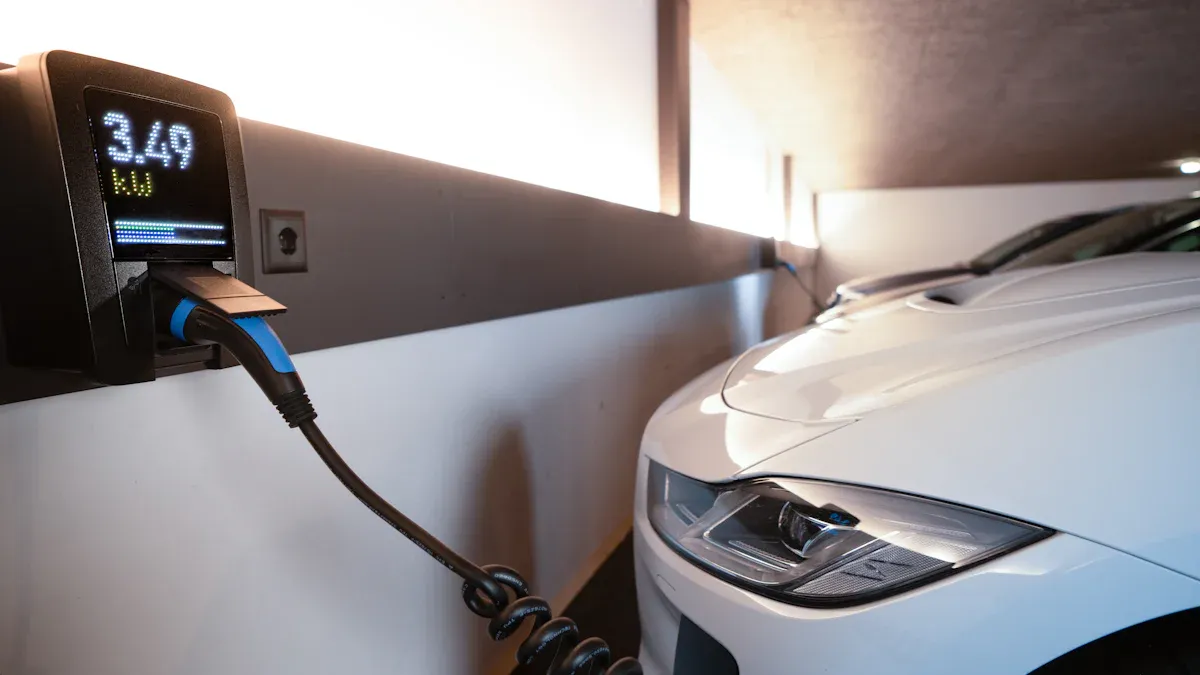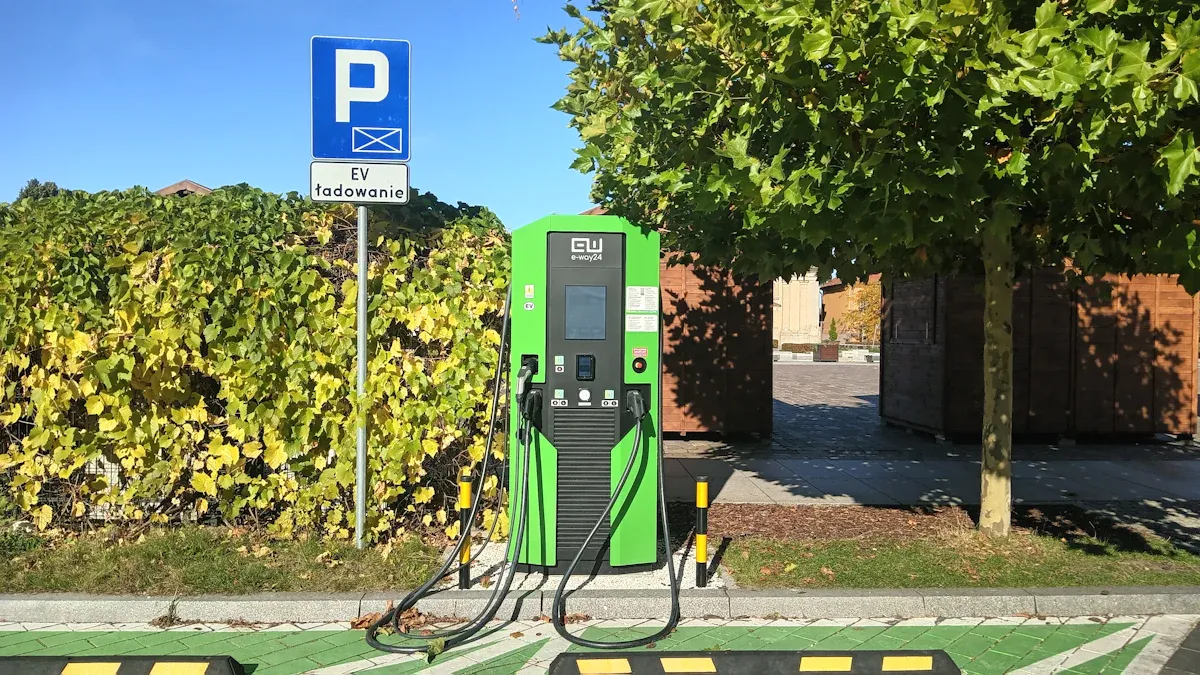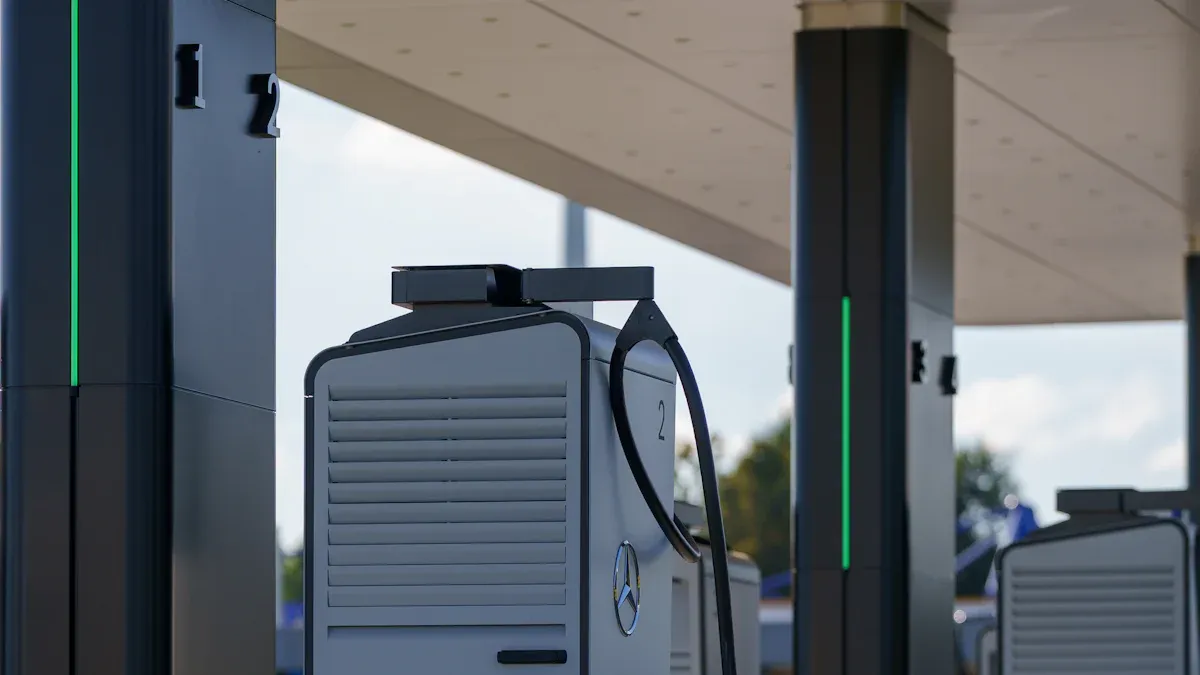
A dc electric vehicle charger delivers unmatched speed and efficiency for today’s drivers. Unlike traditional AC charging, DC fast charging can power an EV from 10% to 80% in as little as 10–20 minutes. This rapid turnaround transforms daily routines and makes long trips more practical. The table below highlights the charging speed difference:
| Charging Type | Power Output (kW) | Charging Time (10%-80%) |
|---|---|---|
| DC Charging | 50 to over 300 | 10–20 minutes |
| AC Charging | Varies | Significantly longer |
EV charger manufacturers recognize this shift, offering ultra rapid charge points that reduce wait times and enhance convenience.
DC Electric Vehicle Charger: What Sets It Apart
How DC Charging Works
Direct Current Power Delivery
A dc electric vehicle charger supplies direct current (DC) power straight to the battery. This method bypasses the vehicle’s on-board AC-DC converter, which often limits charging speed and efficiency. By delivering DC power directly, the charger enables much faster energy transfer. Studies show that DC fast charging achieves efficiency rates above 90%, with some systems reaching 93% at ambient temperatures. This high efficiency means less energy is lost during charging, which benefits both the environment and the driver’s wallet.
Tip: Direct current power delivery minimizes conversion losses, making the charging process more effective for electric vehicles.
Key Differences from AC Charging
DC charging differs from AC charging in several important ways. The conversion from alternating current (AC) to direct current (DC) occurs outside the vehicle, at the charging station. This allows for larger, more powerful converters that can deliver higher charging speeds. In contrast, AC chargers rely on the vehicle’s internal converter, which is limited by space and capacity. The table below highlights the main technological differences:
| Feature | AC Chargers | DC Chargers |
|---|---|---|
| Location of AC-DC Conversion | Inside the electric vehicle (EV) | Outside the EV at the charging station |
| Converter Size Restriction | Limited by the size inside the car | Larger, allowing for more capacity |
| Charging Speed | Limited by converter capacity | Dependent on the strength of the DC pile |
| Practical Installation at Home | Advisable for EV owners | Impractical due to bulkiness |
| Cost | Lower installation and usage costs | Higher installation and usage costs |
| Compatibility with EVs | Compatible with any EV with the right connector type | Requires interaction with the EV for power settings |
| Charging Curve | Slows towards 100%, but can still keep charging battery till its full | Slows significantly after 80%, impractical to continue charging |
DC charging stations, especially ultra rapid dc charge points, offer significant advantages in speed and efficiency. The process slows after reaching 80% battery capacity, making it ideal for quick top-ups rather than full charges.
Types of DC Electric Vehicle Chargers
Power Levels and Ultra Rapid DC Charge Points
Manufacturers offer several types of dc electric vehicle charger, each with different power levels. Rapid DC chargers typically provide 50 kW of power, charging a vehicle to 80% in 20 minutes to 1 hour. Ultra-rapid DC chargers deliver 100 kW or more, reducing charging time to just 20–30 minutes for an 80% charge. Charging speed depends on the vehicle’s maximum acceptance rate, so some models may charge faster than others.
| Charger Type | Power Output (kW) | Charging Speed (80% charge) |
|---|---|---|
| Rapid DC Charger | 50 | 20 minutes to 1 hour |
| Ultra-Rapid DC Charger | 100 or more | 20-30 minutes |
- Rapid DC chargers can charge an EV to 80% in 20 minutes to 1 hour.
- Ultra-rapid DC chargers can charge an EV to 80% in 20-30 minutes.
- Charging times depend on the vehicle’s maximum acceptance rate.
Ultra rapid dc charge points are especially valuable for drivers who need quick charging during long trips or busy days.
Connector Standards and Compatibility
Connector standards play a crucial role in the compatibility of chargers with different electric vehicles. The most common types of DC connectors include Combined Charging System (CCS), CHAdeMO, and Tesla Supercharger. Each connector type supports different power ranges, as shown below:
| Connector Type | Power Supply Range |
|---|---|
| Combined Charging System | Below 40 kW |
| CHAdeMO (Charge de Move) | 40-60 kW |
| Tesla Supercharger | Above 60 kW |
Drivers must ensure that the charging station matches their vehicle’s connector type. Most modern stations support multiple standards, making it easier for users to find compatible options.
Speed and Efficiency of DC Charging

Fast Charging Times for Electric Vehicles
Real-World Charging Examples
DC charging stands out for its remarkable speed, making it a preferred choice for drivers who value time and convenience. Most electric vehicles can reach up to 80% charge in just 30 minutes to 1 hour, depending on the battery capacity and the power output of the charging station. This rapid process contrasts sharply with the several hours required by traditional AC chargers.
- Charging times depend on the make and model of the vehicle.
- The power output of the charging station directly affects how quickly the battery charges.
- For example, a car with a maximum DC charging rate of 235kW can charge from 10% to 80% in about 16 minutes using an ultra-fast charging station.
- The Nissan LEAF, with a maximum DC charging rate of 46kW, takes approximately 43 minutes to reach 80% on a 50kW DC charger.
- Environmental factors, such as colder temperatures, can increase charging times.
| Vehicle Model | Max DC Charging Rate | 10%-80% Charge Time | Charger Power Used |
|---|---|---|---|
| High-end EV | 235 kW | ~16 minutes | Ultra-fast DC |
| Nissan LEAF | 46 kW | ~43 minutes | 50 kW DC |
Note: Charging times vary significantly based on the vehicle’s acceptance rate and the charger’s power output.
Impact on Daily Driving
The speed of DC charging transforms daily routines for electric vehicle owners. Quick top-ups during errands or lunch breaks become possible, reducing the need for long charging sessions at home. Drivers can confidently plan longer journeys, knowing that a short stop at a dc electric vehicle charger will provide enough range to continue their trip. This convenience supports the growing adoption of electric vehicles, especially for those who do not have access to home charging.
Efficiency Benefits for Your Vehicle
Reduced Charging Losses
DC charging offers higher efficiency compared to AC charging. By bypassing the vehicle’s onboard charger, DC chargers deliver power directly to the battery, minimizing energy losses during the conversion process. This direct-to-battery approach results in faster charging and less wasted energy.
| Charger Type | Charging Time to 80% |
|---|---|
| DC Charger | 30 minutes |
| AC Charger | Several hours |
- DC chargers bypass the vehicle’s onboard charger.
- They provide higher direct-to-battery charging efficiency.
This efficiency not only saves time but also reduces overall energy consumption, which benefits both drivers and the environment.
Battery Health Considerations
While DC charging delivers impressive speed, manufacturers design modern electric vehicles to manage battery health during rapid charging. Most systems slow the charging rate as the battery approaches 80% capacity, protecting the battery from excessive heat and wear. This intelligent charging curve helps maintain long-term battery performance and reliability.
Tip: For optimal battery health, drivers should use DC charging for quick top-ups and rely on slower AC charging for full charges when possible.
DC charging infrastructure continues to expand, with tens of thousands of stations now available across Europe and the United States. This growth ensures that more drivers can experience the benefits of fast, efficient charging without compromising the longevity of their vehicle’s battery.
Ultra Rapid DC Charge Points: Where to Find Them
Public Charging Networks for Electric Vehicles
Highway and Urban Locations
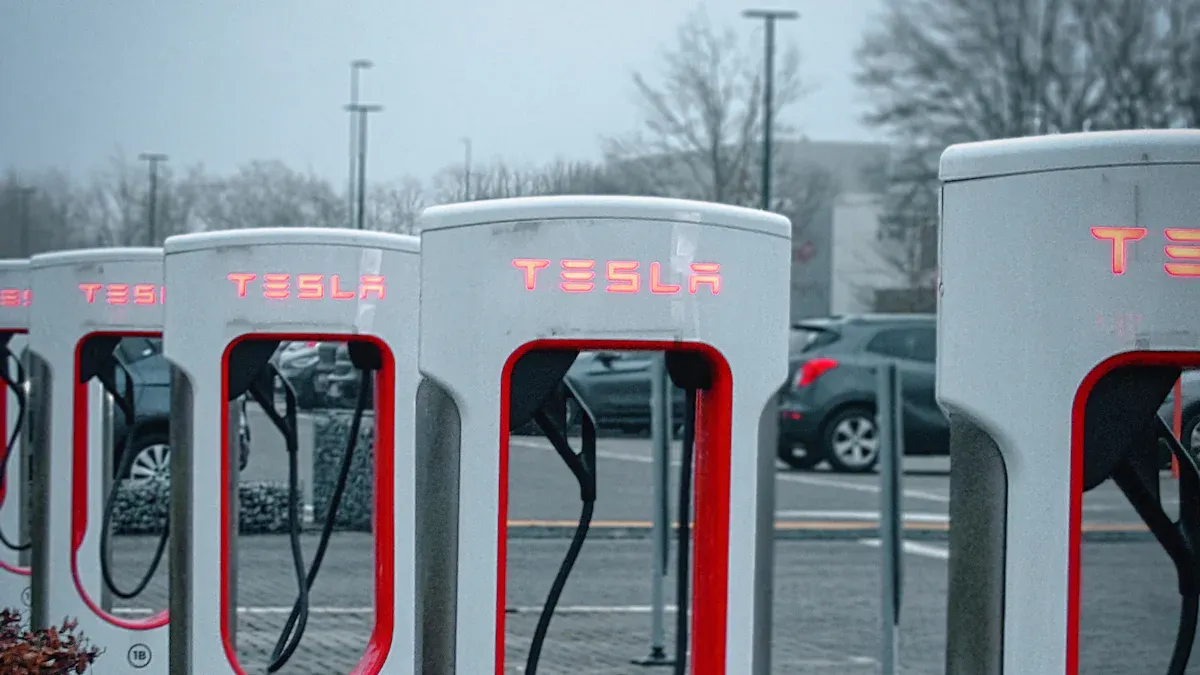
Ultra rapid dc charge points have become a vital part of modern charging infrastructure. Many networks now place these high-speed chargers along major highways and in busy urban centers. Drivers can quickly charge their vehicle during long trips or while navigating city traffic. Charging stations near highway exits allow for convenient stops, reducing travel time and minimizing range anxiety. Urban locations often feature rapid dc charge points in parking garages or public lots, making it easy for drivers to top up their battery while running errands.
🚗 Tip: Plan routes using charging network apps to locate the nearest ultra rapid dc charge points along highways and in city centers.
Shopping Centers and Workplaces
Retailers and employers recognize the value of providing charging options for customers and staff. Many shopping centers now include charging stations in their parking areas. These chargers let drivers recharge their vehicle while shopping or dining. Workplaces also invest in charging infrastructure to support employees who drive electric vehicles. This approach encourages sustainable commuting and helps businesses meet environmental goals.
Home and Business DC Charging Solutions
Practicality of Home DC Chargers
A dc electric vehicle charger at home offers unmatched convenience, but several factors affect its practicality. Home DC chargers require professional installation and specialized electrical upgrades. Equipment and installation costs for a home charger are significantly higher than for public options. However, home charging remains more affordable per kWh, making it attractive for frequent users. Homeowners should consider their daily driving needs, available space, and long-term plans before investing in a home charger.
- Home DC chargers have significantly higher installation and equipment costs compared to public DC chargers.
- Public DC chargers are designed for quick top-ups, making them more convenient for short-term use.
- Home charging is generally more affordable, with costs per kWh being lower than public charging options.
Commercial and Fleet Installations
Businesses and fleet operators increasingly adopt dc charging solutions to maximize uptime and efficiency. Installing charging stations at commercial sites requires careful planning. Companies should:
- Build a long-term plan by considering future demand and expansion potential.
- Evaluate the number, type, and layout of charging stations for optimal placement.
- Understand installation requirements, as professional installation is necessary and varies by model.
- Tailor the customer experience to ensure convenience and ease of use for drivers.
- Build visibility with clear signage and branding for easy identification.
- Develop a revenue strategy by exploring income from charging fees and additional services.
A well-designed charging infrastructure supports business growth and enhances the experience for electric vehicle drivers.
DC vs. AC Charging for Your Vehicle
Charging Speed and Use Cases
When to Choose DC Charging
DC charging stands out for its remarkable speed, making it the preferred option for drivers who need to minimize downtime. With power outputs ranging from 50 kW to 350 kW, DC chargers can deliver an 80% charge in about 30 minutes. This ultra-fast charging capability proves essential for long-distance travel, fleet operators, and commercial vehicles with large battery capacities. Rapid dc charge points at highway rest stops and public stations allow drivers to quickly top up and continue their journeys without significant delays.
🚗 Tip: DC charging is ideal for situations where time is critical, such as road trips or when managing a fleet that requires quick turnaround.
When AC Charging Makes Sense
AC charging offers a cost-effective solution for daily use. It works best in locations where vehicles can remain plugged in for extended periods, such as overnight at home or during work hours at the office. AC chargers typically provide slower to moderate charging speeds, ranging from 3.7 kW to 22 kW. This approach suits drivers who do not require immediate charging and can plan their charging sessions around their daily routines.
| Charging Type | Best Suited Scenarios | Advantages |
|---|---|---|
| AC Charging | Home, workplace, off-grid stations | Cost-effective, longer charging times |
| DC Charging | Public stations, highways, commercial | Fast charging, ideal for quick top-ups |
Efficiency and Power Delivery Differences
Direct Battery Charging
DC charging delivers power directly to the battery, bypassing the vehicle’s onboard converter. This direct approach increases efficiency, with rates between 90% and 95%. In contrast, AC charging requires conversion within the vehicle, resulting in slightly lower efficiency, typically between 85% and 90%. The table below highlights these differences:
| Charging Type | Efficiency | Power Delivery | Notes |
|---|---|---|---|
| AC Charging | 85-90% | Slower | Requires conversion to DC |
| DC Charging | 90-95% | Faster | Direct delivery to battery |
Effects on Vehicle Performance
Ultra-fast charging provides unmatched convenience, but drivers must consider its impact on battery health. Frequent use of high-speed DC charging can generate heat and stress battery cells, potentially accelerating degradation over time. AC charging, while slower, is gentler on the battery and supports long-term performance. Many experts recommend using DC charging for quick top-ups and relying on AC charging for regular, full charges to balance convenience with battery longevity.
- DC fast charging is suitable for rapid journeys and high-traffic scenarios.
- AC charging promotes battery health and is best for routine, overnight charging.
⚡ Note: Optimizing charging practices helps maintain vehicle performance and extends battery life.
Key Features of Modern DC Electric Vehicle Chargers
User-Friendly Technology and Smart Features
Plug-and-Play Operation
Modern DC electric vehicle chargers prioritize ease of use. Plug-and-play operation allows drivers to connect their vehicle and begin charging without complicated steps. A user-friendly interface displays clear instructions and real-time charging status, making the process accessible for all users. Many chargers now offer dual output options, enabling two vehicles to charge simultaneously. This flexibility supports busy charging stations and reduces wait times.
| Feature | Description |
|---|---|
| Dual Output Options | Provides flexibility for charging multiple vehicles simultaneously. |
| User-Friendly Interface | Simplifies the operation and monitoring of the charging process for all users. |
| Enhanced Cybersecurity | Protects users and operators from potential threats, ensuring safe data and transaction handling. |
A user-friendly interface and plug-and-play design help drivers of all experience levels operate chargers with confidence.
Mobile App Integration
Smart features enhance the charging experience for electric vehicle owners. Mobile app integration allows users to start or stop charging sessions remotely and monitor progress in real time. Over-the-air updates keep chargers current with the latest software improvements, while real-time monitoring provides insights into energy usage. Dynamic load balancing prevents circuit overloads by adjusting power output based on demand. Load shifting enables charging during off-peak hours, reducing costs for users. Integration with renewable energy sources further optimizes energy consumption.
- Smart charging stations communicate with smartphones for remote control.
- Enhanced connectivity delivers real-time energy usage insights.
- Over-the-air updates improve charger functionality over time.
- Dynamic load balancing and load shifting support efficient energy management.
- Integration with renewable energy reduces environmental impact.
Safety, Reliability, and Support
Built-In Protections
Safety remains a top priority in modern DC charging. Manufacturers equip chargers with advanced protection features to ensure reliable operation. DC power contactors interrupt the charging process if a fault occurs. Permanently installed DC charging cables guarantee a secure connection. Compliance with current safety standards provides peace of mind for users and operators.
- DC power contactors interrupt charging during faults.
- Permanently installed DC charging cables ensure safe operation.
- Compliance with standards maximizes safety in the charging infrastructure.
| Feature | Description |
|---|---|
| Fuse Installation | Protects the charging process from overcurrents. |
| Integrated Liquid Cooling | Necessary from 250-300 kW to avoid overheating due to high current flow. |
| Leakage Sensor | Monitors for leaking coolant and ensures safe operation by regulating cooling capacity. |
| Direct Sensor Communication | Increases system reliability and enables safe fast charging at high currents. |
- Ergonomic, robust, and durable designs simplify maintenance.
- Fixed installation of the DC charging cable is mandatory for safety.
Warranty and Maintenance
Support and warranty options vary among leading manufacturers. GO EV Charger offers a standard two-year warranty, with the option to extend coverage for specific projects. NovaCHARGE provides up to four years of warranty and advanced support, including AI-driven proactive maintenance monitoring. These options ensure that users receive reliable service and prompt assistance when needed.
| Manufacturer | Warranty Duration | Support Options |
|---|---|---|
| GO EV Charger | 2 years | Standard warranty, extendable based on project requirements |
| NovaCHARGE | Up to 4 years | Advanced support with AI-driven proactive maintenance |
Reliable support and comprehensive warranties help drivers and businesses maintain uninterrupted charging operations.
Who Benefits Most from DC Charging
Long-Distance Electric Vehicle Drivers
Road Trips and Quick Top-Ups
Drivers who travel long distances benefit significantly from dc charging. Fast chargers replenish electric vehicle batteries much quicker than traditional AC chargers, making them ideal for extended journeys. On a road trip, a driver can receive a substantial charge in as little as 30 minutes, which enhances the overall travel experience. The compatibility of dc charging with high-capacity batteries allows for rapid charging without sacrificing range or performance.
- DC fast chargers provide a significant charge in about 30 minutes.
- They reduce downtime, enabling drivers to cover more miles with fewer stops.
- Rapid charging improves the range of an electric vehicle, supporting longer travel on a single charge.
🚗 Quick top-ups during rest stops make long-distance travel more practical and enjoyable.
Fleet and Commercial Vehicle Operators
Maximizing Uptime and Efficiency
Fleet operators who manage buses, vans, or trucks find that dc charging infrastructure streamlines logistics and boosts productivity. Rapid charging minimizes vehicle downtime, allowing businesses to keep their vehicles on the road and maintain schedules.
The following table highlights the impact of dc fast charging on medium-duty trucks:
| Charging Type | Power Output (kW) | Charging Time (Medium-Duty Truck) |
|---|---|---|
| DC Fast Charging (DCFC) | 15-350 | 16 minutes to 6 hours |
| Level 2 Charging | N/A | N/A |
- Reduces vehicle downtime
- Enhances operational efficiency
- Allows for quick and efficient vehicle charging
Fleet managers rely on dc charging to maximize uptime and meet demanding operational requirements.
Everyday Electric Vehicle Owners
Saving Time and Reducing Range Anxiety
Everyday drivers experience notable advantages from dc charging. Fast charging speeds offered by CCS dc chargers provide a substantial boost compared to traditional AC chargers.
The table below summarizes key benefits:
| Advantage | Description |
|---|---|
| Fast Charging Speeds | CCS DC chargers deliver much faster charging than AC chargers. |
| Reduced Waiting Time | Shorter charging times make on-the-go charging convenient. |
| Ideal for Long-Distance Travel | Minimizes downtime, allowing drivers to recharge quickly and continue their journey. |
The expansion of fast-charging networks plays a crucial role in alleviating range anxiety. Ultra-fast chargers can deliver up to 100 miles of range in about 10 minutes, which is comparable to refueling a gasoline vehicle.
- Fast-charging stations are becoming more prevalent, reducing recharging time and enhancing convenience.
- The increase in ultra-fast charging stations improves the availability of charging options.
- Faster charging times make long-distance travel more feasible and reduce range anxiety.
⚡ The convenience of rapid charging encourages more drivers to choose electric vehicles for daily use and travel.
What to Look for in a DC Electric Vehicle Charger
Power Output and Vehicle Compatibility
Matching Charger to Your Electric Vehicle
Selecting the right DC electric vehicle charger requires careful consideration of several technical factors. Power output plays a critical role in determining charging speed. For example, a charger with 100 kW can add between 130 km and 480 km of range in just 15 minutes, depending on the vehicle. At 50 kW, one hour of charging can provide approximately 278 km of range. However, not all electric vehicles can utilize the maximum power output due to differences in battery capacity and charging technology.
Compatibility between the charger and the vehicle’s connector type is essential. Different models use various DC charging ports, such as CHAdeMO or CCS. Ensuring the correct connector type allows for effective communication and safe charging. The following table summarizes key factors to consider:
| Factor | Description |
|---|---|
| Charging Power | The power output of the charger, which affects charging speed. |
| Connector Types | Compatibility with vehicle charging ports (e.g., CHAdeMO, CCS). |
| Installation Requirements | Considerations for where and how the charger will be installed. |
| Safety Features | Essential safety mechanisms to protect users and vehicles during charging. |
| Battery Information | Understanding the vehicle’s battery specifications for optimal charging. |
| Price | The cost of the charger and its features. |
| Brand | Reputation of the manufacturer for reliability and support. |
- Different EV models have various DC charging ports.
- Ensuring the right connector type is crucial for effective communication with the vehicle.
When evaluating options, buyers should consider the total cost of ownership, including installation, maintenance, and operational expenses. This approach can lead to long-term savings compared to traditional fueling methods.
When selecting chargers, it is crucial to choose those from reputable manufacturers recognized for their reliability and durability. Charging equipment must withstand exposure to various weather conditions.
Network Access and Payment Options
Memberships, Apps, and Payment Methods
Modern DC charging stations offer a variety of network access and payment options. As of April 2024, regulations require payment terminals on all new infrastructures above 50 kW, improving accessibility for users. Drivers can use mobile apps to locate stations and make payments, contactless bank cards for direct transactions, and Plug & Charge technology for automatic billing. The table below outlines common payment methods:
| Payment Method | Description |
|---|---|
| Plug & Charge | Automatic authentication and billing when connecting to a charging station. |
| Contactless Payment | RFID cards, tokens, and smartphone apps for easy access. |
| Multi-network Charging Cards | Access to multiple charging networks with one card. |
| Subscription Services | Various tariffs, including kWh-based pricing, with or without a subscription. |
- Mobile apps for locating chargers and making payments.
- Contactless bank cards for direct payment at some stations.
- Plug & Charge technology for automatic billing.
These options simplify the charging process and enhance convenience for electric vehicle owners.
Future-Proofing Your DC Charging Experience
Upgradable Features and Scalability
Scalability and upgradable features add significant long-term value to DC electric vehicle chargers. Commercial chargers are designed to scale with business needs, allowing easy expansion of charging infrastructure as demand increases. Buyers should look for models that support software updates and hardware upgrades. This flexibility ensures compatibility with future vehicle technologies and evolving charging standards.
A full range of ac & dc chargers provides adaptability for both residential and commercial installations. Investing in scalable solutions helps businesses and individuals meet future requirements without costly replacements.
DC electric vehicle chargers provide unmatched speed, efficiency, and convenience. Ultra rapid DC charge points help drivers save time and make electric vehicle ownership more practical.
- Drivers experience faster charging and less waiting.
- Businesses benefit from improved fleet uptime.
Considering DC charging allows every electric vehicle owner to enjoy a smoother, more efficient driving experience.
FAQ
What is a DC electric vehicle charger?
A DC electric vehicle charger supplies direct current to an EV battery. It bypasses the onboard converter, allowing faster charging compared to AC chargers. Most public fast-charging stations use DC technology for rapid energy transfer.
How long does DC charging take?
Charging time depends on the charger’s power output and the vehicle’s battery capacity. Most DC chargers can deliver an 80% charge in 20 to 40 minutes. Ultra rapid chargers may reduce this time to under 20 minutes.
Where can drivers find DC charging stations?
Drivers can locate DC charging stations at highway rest stops, urban centers, shopping malls, and workplaces. Many charging network apps provide real-time maps and availability information for public DC charge points.
Is DC charging safe for electric vehicle batteries?
Manufacturers design modern EVs to manage battery health during DC charging. Charging slows after 80% to prevent overheating. Regular use of DC charging for quick top-ups does not harm battery life when used as recommended.
What connector types do DC chargers use?
DC chargers commonly use CCS, CHAdeMO, or Tesla Supercharger connectors. Compatibility depends on the vehicle model. Most public stations support multiple connector types to accommodate different EVs.
Can homeowners install DC chargers?
Homeowners may install DC chargers, but installation requires professional electrical upgrades and higher costs. Most residential users prefer AC chargers for overnight charging due to practicality and affordability.
How does DC charging affect daily driving?
DC charging enables quick top-ups, reducing waiting time and supporting longer trips. Drivers experience less range anxiety and greater flexibility in planning journeys. The dc charging range varies by vehicle and charger power.
What payment options are available at DC charging stations?
Drivers can pay using contactless cards, mobile apps, or Plug & Charge technology. Some networks offer subscription plans or multi-network charging cards for added convenience.