Public electric vehicle charging networks in 2025 are fast-growing. Most public EV chargers require payment. Free charging points remain rare, representing only 2% of the UK’s public charging infrastructure—about 1,837 out of over 82,000 devices. Globally, the number of charging points has doubled to more than 5 million, with Europe surpassing 1 million and India rapidly expanding. EV Charger manufacturers continue to innovate, making electric car charging more accessible. Drivers can now enjoy a wider range of options and greater reliability at public charging locations.
Only 2% of public electric vehicle chargers in the UK are free.
Global public EV chargers now exceed 5 million.
Europe’s charging infrastructure reached over 1 million points.
Public Electric Vehicle Chargers: Fees and Access
Free vs. Paid Electric Car Charging
Where to Find Free Public Charging Points
Free public charging points can be found in select locations, but these remain limited. Supermarkets, workplaces, and some shopping centers offer complimentary charging as a customer incentive. These points typically provide slower charging speeds, making them suitable for topping up during errands or work hours. Free charging points rarely support rapid charging, so drivers should not rely on them for long-distance travel or quick turnaround times.
نصيحة: Plan ahead if you want to use free charging. These points are often occupied and may not always be available.
Why Most Public Chargers Charge a Fee
معظم public electric vehicle chargers require payment due to the costs associated with installation, maintenance, and energy supply. Paid charging stations dominate the public charging landscape, offering higher reliability and accessibility. Operators invest in faster charging technology and robust infrastructure, which ensures consistent service. Paid stations may offer fast charging options, making them essential for road trips.
Free charging points are limited and often slower.
Paid charging stations provide greater reliability and faster charging speeds.
Paid options can be found at most public locations, including highways and urban centers.
Factors Influencing Charging Costs
Location-Based Pricing at Charging Points
Charging costs vary significantly depending on location. Urban areas often have higher rates due to increased operating expenses, while rural locations may offer more competitive pricing. Regional differences in electricity rates and local regulations also impact price. Providers set prices based on demand, infrastructure investment, and government policies.
العامل | الوصف |
|---|---|
الموقع | Urban areas may have higher rates; rural areas may offer lower prices. |
الاختلافات الإقليمية | Costs change based on local electricity rates and regulations. |
سرعة الشحن | Faster charging options cost more than slower alternatives. |
EV Model Differences | Vehicle’s efficiency affects energy use. |
Charging Network Strategies | Providers use different pricing models. |
Legislative Factors | Incentives and policies can reduce or increase costs. |
Time-Based and Energy-Based Fees Explained
There are two main fee structures at public charging points: time-based and energy-based pricing. Time-based fees charge based on how long a vehicle is connected to the charger, while energy-based fees bill by the amount of electricity delivered (measured in kWh). Some operators combine both models, adding connection or transaction fees.
Chosen operator
Geographic location
Billing method used
نوع الشحن | التكلفة لكل كيلووات/ساعة | الوصف |
|---|---|---|
AC Stations (22 kWh) | Basic offering in urban areas, ideal for long stops. | |
تيار مستمر سريع (50 كيلوواط/ساعة) | €0.40 – €0.55 | Good balance of speed and cost, suitable for intercity trips. |
فائق السرعة (150-350 كيلوواط/ساعة) | €0.50 – €0.79 | High-speed charging, providing significant range in a short time. |
Average costs for rapid charging range from 60p to 85p per kWh.
Prices fluctuate based on energy market conditions.
Rates may increase during peak hours.
How Charging Fees Are Displayed
On-Screen Information at Electric Vehicle Charging Points
Charging points display clear and transparent pricing information. Regulations require operators to display the maximum price per kWh, including all fixed fees such as connection and transaction charges. The display shows the cost in pence or pounds per kWh, ensuring users know the total price before starting a charging session.
Method of Display | الوصف |
|---|---|
Maximum Price Display | Shows the highest price per kWh on the charge point or a separate device. |
Fixed Fees Inclusion | Includes all connection and transaction fees in the displayed price. |
Subscription Pricing | Displays subscription rates, allowances, and extra charges in p/kWh. |
Chargers must display the maximum price per kWh.
Operators maintain accurate data about charging points.
Users can access up-to-date information about costs and availability.
Mobile App and Notification Updates
Mobile apps and notifications provide real-time updates on charging fees and point status. Drivers can view reference data, including location, connector type, payment methods, and pricing. Apps also show whether a charging point is operational or out of order. For example, the ChargePoint software platform allows users to see various pricing structures, ensuring users remain informed about costs before and during charging sessions.
ملاحظة: By November 24, 2023, all public charging points must display total charging costs. New public electric vehicle chargers over 8 kW require contactless payment options by November 24, 2024.
How Electric Vehicle Charging Points Operate
Finding Public Electric Vehicle Chargers
Using Charging Apps and Maps
Digital tools can help drivers locate public electric vehicle chargers quickly. Charging apps and maps provide real-time updates, user reviews, and compatibility filters. These platforms help locate the nearest public charging point and check its status before arrival. Some of the most popular apps in 2025 include:
اسم التطبيق | الميزات الرئيسية | Link |
|---|---|---|
بلج شير (PlugShare) | Extensive database, real-time updates, community reviews, compatibility filters | |
تشارج بوينت | Comprehensive listings, route planning, detailed station info | |
Large network of Level 3 fast chargers, user-friendly locator tools |
American EV owners also benefit from resources like the DOE’s Alternative Fueling Stations Map, Google Maps, and Waze. These platforms let users search for “EV charging stations” and view nearby options. The U.S. Department of Energy database includes nearly 60,000 EV charging station data points, with most being public. User-generated content platforms filter out stations under repair or with access restrictions, providing more accurate site information.
Navigation Systems for Electric Car Charging
Modern navigation systems can integrate charging networks directly into route planning. Simply enter a destination, and the system suggests electric vehicle charging points along the journey. Real-time availability, connector types, and estimated charging times are all readily available. This technology helps to avoid delays and ensures drivers can reach their destinations without running low on battery.
Accessing and Starting a Charging Session
Memberships, Networks, and Guest Access
Drivers can access public electric vehicle chargers through memberships, charging networks, or as a guest. Many charging networks offer RFID charging cards or mobile apps for easy authentication. Some networks support EV roaming services, allowing you to use a single card or app across multiple providers. Guest access is available at most public charging points, often through contactless payment or QR codes.
الوصف | |
|---|---|
الدفع بدون تلامس | Use debit or credit cards at the charge point. |
RFID Charging Cards | Fast authentication, often limited to specific charging networks. |
Mobile Apps | Locate stations and pay, sometimes requiring multiple apps. |
رموز الاستجابة السريعة | Scan to access payment pages for charging. |
التوصيل والشحن | Automatic authentication and charging when a vehicle is connected. |
EV Roaming Services | Access multiple networks with a single authentication method. |
Authentication and Starting A Charge
Charging sessions can be initiated by following a few simple steps:
Connect the vehicle to the electric vehicle charge point using the correct cable.
Authenticate the session with an RFID card, mobile app, or contactless payment.
Monitor the charging status on the station’s screen, the mobile app, or the car’s dashboard.
End the session through the app, RFID card, or payment method when charging is complete.
A few stations may not have a charging cable, so drivers, especially in Europe, may need to bring their own. Charging networks often display instructions on the screen to guide users through the process.
Ending and Securing Your Charging Session
Safely Disconnecting from Charging Points
Once complete, a level 1 or 2 charging session can be ended by disconnecting the cable and confirming the session has stopped. Always check the station’s display or the app to ensure charging has finished. For level 3 fast charging, drivers should end the charging session from the station display or the mobile app before attempting to remove the cable.
Ensuring Data and Vehicle Security
Drivers can protect their vehicles and personal data by using well-lit, busy locations for charging. Monitor charging progress remotely and report any damaged or suspicious equipment. Charging networks use encrypted authentication methods to safeguard personal information. Secure payment options and robust network protocols at electric vehicle charging points all help safeguard data.
Tip: Always verify that the charging session has ended before leaving the station. This step prevents unnecessary fees and ensures your vehicle is ready for travel.
Types of Public Electric Vehicle Chargers in 2025

Rapid Electric Car Charging Points
Charging Speeds and Typical Locations
Rapid charging points can be found at major highways, urban centers, and busy public places. These chargers deliver between 25 kW and 99 kW of power, allowing an EV battery to reach 80% charge in less than an hour. Ultra-rapid chargers, which exceed 100 kW, can provide a substantial range boost in about 20 minutes. The table below compares the main charger types by speed and efficiency:
نوع الشاحن | تصنيف الطاقة | Time to 80% Charge | المدى في الساعة |
|---|---|---|---|
شاحن سريع | 25-99 kW | < 1 hour | > 120 miles |
شاحن فائق السرعة | 100 kW+ | ~ 20 minutes | غير متاح |
شاحن سريع | < 25 kW | 2-4 ساعات | 20-25 miles |
Rapid and ultra-rapid charging sessions have become more popular, with user adoption rising from 29% in 2022 to 45% in 2023. These solutions are raising user confidence, especially when quick charging sessions are needed during travel.
Vehicle Compatibility with Rapid Chargers
Most new electric vehicles support rapid charging. However, some do not, so it is important to check the vehicle’s specification before attempting to use fast charging. Some older models may not accept higher power rates, which can limit charging speed. Manufacturers continue to improve compatibility, making rapid charging accessible for a wider range of vehicles.
Tip: Always confirm your vehicle’s maximum charging rate to avoid unnecessary wait times at a rapid charging point.
Fast Electric Vehicle Charging Points
Use Cases and Charging Times
Some drivers rely on fast charging points for daily commutes, shopping trips, and workplace charging. Fast chargers typically deliver less than 25 kW, requiring two to four hours to reach 80% battery. These electric vehicle charging points suit locations where people park for extended periods, such as supermarkets or office lots. Fast charging plays a crucial role in supporting long-distance travel, bridging the gap between slow and rapid charging options. DC fast charging stations along busy routes can add 100 to 200+ miles of range in just 30 minutes, helping drivers continue their journeys with minimal delay.
Cost Comparison with Other Chargers
Fast charging points offer a balance between speed and cost. Users pay less per session compared to rapid chargers, but must spend more time at the station. Fast chargers are becoming more prevalent due to technological advancements and increased demand for quicker charging times. Public place charging stations dominate the market, driven by urban demand and government support. China, Europe, and North America lead in infrastructure expansion, making fast charging widely available.
Slow Public Electric Vehicle Chargers
When to Use Slow Charging Points
Slow charging points work best when a vehicle is parked for several hours or overnight. These chargers work well for homeowners, workplace users, and urban dwellers who need a steady, cost-effective charge. Slow charging supports battery health and grid compatibility, making it a practical choice for routine use.
Pros and Cons of Slow Charging
The table below outlines the advantages and disadvantages of slow charging points:
المزايا | العيوب |
|---|---|
الفعالية من حيث التكلفة | سرعة الشحن |
Battery Health | Limited Range Addition |
Grid Compatibility |
Slow charging means lower costs and improved battery longevity, but with the tradeoff of longer charging times and limited range increases. Slow charging points suit daily needs but may not meet urgent travel requirements.
Payment Methods and Costs at Electric Vehicle Charging Points
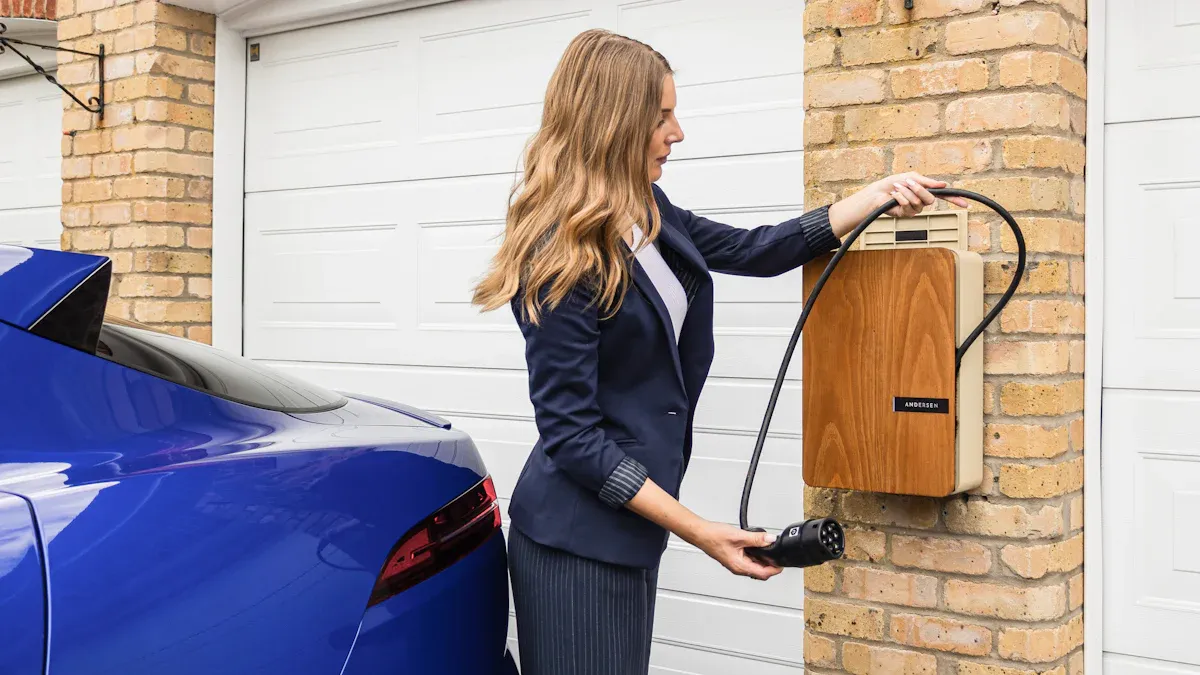
Paying for Public Electric Car Charging
Credit, Debit, and Contactless Payments
معظم public electric vehicle chargers in 2025 offer seamless payment experiences. الدفع بالبطاقات اللاتلامسية have become the standard, allowing users to tap your bank card and start charging instantly. This method is user-friendly and meets regulatory requirements, especially for new chargers above 8 kW in the UK. Payment terminals are available at stations with 50 kW or more, ensuring accessibility for all drivers. Immediate payments are always possible, so drivers do not need a subscription to access electric car charging.
طريقة الدفع | الوصف |
|---|---|
Contactless Card Payments | Tap your card for instant charging access. |
Mobile Apps and Digital Wallets | Pay via Apple Pay or similar platforms for convenience. |
بطاقات التعريف بالترددات اللاسلكية | Use for subscription models and instant authentication. |
In-Car Payment Systems | Authorize payments directly from your vehicle’s dashboard. |
Tip: Always check for contactless payment options before starting your charging session.
Mobile Apps and Subscription Plans
Mobile apps and digital wallets can also be used at most charging stations. These platforms let drivers locate chargers, monitor charging status, and complete payments with a few taps. Subscription plans offer fixed rates and exclusive benefits, making frequent charging more affordable. RFID cards linked to user accounts provide instant authentication and payment. In-car payment systems in newer vehicles streamline the process, letting users authorize and pay for charging directly from the car dashboard.
Understanding the Cost Structure
Per kWh vs. Per Minute Pricing Models
Drivers may encounter several pricing models when calculating the cost to charge an electric car. The most common are per kWh and per minute. Per kWh pricing charges for the energy delivered, which ensures fairness across different vehicle models. Time-based pricing bills by the duration of the charging session. Hybrid models combine both, optimizing station usage and preventing charger blocking. Off-peak pricing encourages EV owners to charge during non-peak hours for lower rates, while premium pricing applies to fast and ultra-fast charging services.
نموذج التسعير | الوصف |
|---|---|
Time-based | Charges for the duration of your charging session. |
Energy-based | Charges for the electricity used, measured in kWh. |
Fixed-rate | Subscription plans with set prices. |
Hybrid pricing | Combines time and energy charges. |
Off-peak pricing | Lower rates during non-peak hours. |
Premium pricing | Higher rates for rapid and ultra-rapid charging. |
Remember to review the displayed rates before starting a session to understand the cost to charge an electric car.
Idle Fees and Penalties at Charging Points
Idle fees and penalties play a key role in managing station availability. If someone leaves a vehicle connected after charging is complete, they may incur additional fees. Data from Electrify America shows that idle fees have reduced average station dwell time by 15% since 2024. Chargefox highlights that these fees encourage drivers to vacate charging stations promptly, reducing congestion and wait times for other drivers.
Note: Always end your charging session and move your vehicle when charging is finished to avoid unnecessary costs.
Discounts, Incentives, and Loyalty Programs
Utility Partnerships and Special Offers
Utility partnerships and special offers both help to make charging more accessible. Public-private partnerships accelerate infrastructure development by sharing financial and technical resources. Utilities collaborate with local governments and businesses to install charging stations in convenient locations. Time-of-use pricing incentivizes charging during off-peak hours, helping save on the cost to charge an electric car. Joint advocacy between utilities and charging providers leads to favorable policies and streamlined processes, reducing costs and promoting electric car charging adoption.
Benefits for Frequent Electric Car Charging
Loyalty programs reward users for frequent charging, off-peak usage, and eco-friendly choices. Drivers can earn discounts, points, free charging minutes, or gifts. For example, Sainsbury’s national loyalty scheme lets drivers collect Nectar points for charging, providing tangible rewards and encouraging repeat visits. Discounts for charging during off-peak hours and using renewable energy sources, such as solar or wind, further reduce the cost to charge an electric car. When purchasing an eligible new EV priced under £37,000, owners can receive automatic discounts ranging from £1,500 to £3,750.
Tip: Take advantage of loyalty programs and special offers to maximize savings and enhance your charging experience.
New Technologies in Public Electric Vehicle Charging
Contactless and Automated Electric Car Charging
Plug-and-Charge Technology in 2025
You now experience seamless charging with plug-and-charge technology. This universal framework allows a vehicle to authenticate and process payments automatically when connected to a compatible station. This eliminates the need to swipe cards or use multiple apps. Plug-and-charge works across different vehicles and networks, making public charging more convenient and secure. As a result, drivers can save time and reduce the risk of payment errors.
Wireless Charging Pads at Public Points
Wireless charging pads are transforming the way we power electric vehicles. Drivers can simply park over a pad, and the system transfers energy through induction. The contactless inductive charging market continues to expand, driven by the demand for efficient and user-friendly solutions. Automated robotic charging systems also play a role, connecting chargers to vehicles without manual intervention. These advancements promise faster and more accessible charging, especially in busy urban areas.
ملاحظة: إن miniaturization of devices and the rise of IoT have increased the need for wireless power solutions in electric mobility.
الشحن الذكي وإدارة الطاقة
Dynamic Pricing and Load Balancing
تقنيات الشحن الذكي use advanced algorithms to monitor and control each charging session. Dynamic load management (DLM) continuously balances the electrical load, preventing grid overload and optimizing charging power. Real-time communication between vehicle, charging station, and the grid ensures efficient energy use.
Smart charging employs data analytics to optimize schedules.
DLM adjusts charging capacity based on real-time grid conditions.
These systems support grid stability and reduce unnecessary peaks.
التكامل مع مصادر الطاقة المتجددة
Cities are installing solar-powered charging stations to align with ecological goals. Vehicles can now be charged using renewable energy, reducing carbon footprints. Integration with renewable sources supports sustainability and helps cities meet environmental targets. As global expenditure on charging infrastructure rises, there will be more stations powered by solar and wind energy.
Technology Type | الوصف |
|---|---|
Innovations that enhance user experience, including dynamic load management and mobile app integration. | |
تكامل الطاقة المتجددة | Cities are installing solar-powered charging stations to align with ecological goals. |
Universal Plug & Charge | A framework enabling seamless charging and payment processing across different vehicles and stations. |
Enhanced User Experience at Charging Points
Real-Time Availability and Status Updates
User can enjoy real-time updates on charging point availability and status through mobile apps and station displays. These updates help plan routes and avoid wait times. Over 64% of U.S. citizens now live within two miles of a public charging station, making accessibility a key feature of modern charging networks.
In-App Support and Troubleshooting
In-app support provides instant assistance if there are any issues during charging. Troubleshooting guides, customer service, and session notifications are all available on mobile apps. Integration of AI and smart control systems further enhances efficiency and user experience, ensuring drivers have the necessary support at every step.
What to Expect When Using Public Electric Vehicle Chargers
Typical Charging Times at Different Charging Points
Rapid vs. Fast vs. Slow Charging Explained
Public electric vehicle chargers come in a range of charging speeds. Ultra-rapid chargers deliver up to 350 kW, allowing a vehicle to reach 80% battery in just 20 minutes. Rapid chargers, with 50 kW output, typically take about 40 minutes for the same result. Fast chargers operate at 22 kW and require around three hours. Ultra-rapid DC chargers, offering 100 kW or more, can finish the job in 20 to 30 minutes. Tesla Superchargers vary by model but often provide quick turnaround.
نوع الشحن | ناتج الطاقة | Charging Time to 80% from Empty |
|---|---|---|
فائق السرعة | 350 كيلوواط | 20 دقيقة |
سريع | 50 كيلو واط | 40 minutes |
سريع | 22 كيلو وات | 3 hours |
Ultra-rapid DC | 100 kW+ | 20-30 دقيقة |
شواحن تسلا الفائقة | Up to 150 kW | Varies by model |
Different chargers suit different schedules and battery needs. Rapid and ultra-rapid chargers suit long trips, while fast chargers work well for daily routines.
العوامل المؤثرة في سرعة الشحن
Charging speed depends on several factors. A vehicle’s battery capacity and maximum charging rate play a major role. Ambient temperature and battery condition also influence how quickly a car can charge. Some stations adjust output during peak demand to balance the grid. The fastest results come when a battery is warm and nearly empty.
Tip: For optimal charging, arrive with a low battery and use rapid or ultra-rapid chargers during off-peak hours.
Etiquette and Best Practices for Electric Car Charging
Sharing Public Charging Points
Public EV charging access is shared with other drivers. It is courteous to move a vehicle away from a charger once a session is complete to allow others access. It is also polite to offer information about remaining charge time to other drivers who are waiting. Unplugging another vehicle without permission should be avoided. Some car models even have alarms to deter this.
Park only in designated charging spaces.
Monitor charging session to prevent overstaying.
Communicate politely with fellow EV users.
Avoiding Idle Fees and Maximizing Access
Idle fees apply when a vehicle is left connected after charging ends. These fees encourage drivers to vacate the space promptly. This maximizes access for everyone by ending sessions as soon as charging completes. Mobile phone reminders or app notifications can also help to track progress.
Quick turnover at charging stations helps reduce wait times and supports a positive charging experience for all.
السلامة والأمن في نقاط الشحن العامة
Protecting Your Vehicle and Personal Data
Drivers can protect their vehicles and personal data by using well-lit, busy locations for charging. Secure payment methods can help protect personal and financial information. Charging networks use encrypted authentication methods to safeguard personal information. Vehicles should remain locked with valuables kept out of sight.
Emergency Support and Assistance
If there are any issues during charging, most stations offer emergency support. Help buttons or contact numbers are usually visible on the charger display. Mobile apps provide troubleshooting guides and direct links to customer service. In case of equipment malfunction, report the problem immediately to ensure safety.
Tip: Familiarize yourself with emergency procedures at each charging location before starting your session.
Practical Tips for Electric Car Charging in Public
Planning Your Route and Charging Stops
Using Route Planning Tools for EVs
The travel experience can be improved by using route planning tools designed for electric vehicles. These tools help identify charging stations along a planned route and estimate the time needed for each stop. Many navigation apps now include real-time data on charger availability and speed. Once a destination is entered, the app suggests optimal charging points based on battery level and vehicle range. This approach reduces stress and helps avoid unnecessary detours.
Tip: Always check the charger type and compatibility before you start your journey.
Backup Options for Charging Points
It is best to be prepared for unexpected situations by considering backup options.. Sometimes, a preferred charging station may be busy or out of service. In these cases, there may be alternative stations nearby or along the route. Many apps allow users to filter stations by connector type and charging speed.
Backup Strategy | المزايا |
|---|---|
Save multiple stations | Ensures flexibility |
Check real-time status | Avoids unavailable chargers |
Carry charging cable | Expands access to more points |
تعظيم كفاءة الشحن إلى أقصى حد ممكن
Battery Management and Timing Your Charge
Battery life can be maximized by managing charging sessions carefully. Charging when a battery is warm and at a lower state of charge increases efficiency. Avoid frequent full charges, which can reduce battery health over time. Many vehicles offer scheduling features that start charging during off-peak hours. This strategy saves money and supports grid stability.
Tips for Faster and Cheaper Charging
Optimize the charging experience by following a few practical tips:
Use fast chargers for quick top-ups during long trips.
Charge during off-peak hours to benefit from lower rates.
Monitor battery level and avoid deep discharges.
Select stations with dynamic pricing for cost savings.
Note: Charging at slower stations may cost less, but plan for longer stops.
Troubleshooting Common Issues at Charging Points
ماذا تفعل إذا كان الشاحن غير متوفر
Sometimes, chargers may be unavailable. If this happens, mobile apps can help find alternatives. The station operator can also be contacted for updates on repair status. Keeping a portable charging cable increases options at less-equipped stations. Avoid delays by planning for these scenarios in advance.
Getting Help and Support on the Road
When problems arise, most charging stations have resources for timely assistance. Most apps provide direct links to customer support and troubleshooting guides. Emergency contact information can usually be found on the charger display. If assistance is required, follow the instructions provided and report any issues to the operator. This approach ensures a safe and reliable electric car charging experience.
Most chargers require payment, but there are free options at select locations.
Charging speeds and costs vary by station type and location.
Smart technology and real-time updates makes the experience more convenient and efficient.
نصيحة: Plan your route with charging apps and always check station status before you travel.
Final Tips for Smooth Charging |
|---|
Use loyalty programs |
Avoid idle fees |
Secure your vehicle and data |
You maximize convenience and savings by staying informed and prepared.
الأسئلة الشائعة
How do you find available public EV chargers near your location?
Use charging apps or your vehicle’s navigation system. These tools show real-time availability, connector types, and charging speeds. You can filter results by compatibility and location.
Can you pay for charging without a subscription?
Most public chargers accept contactless cards, mobile wallets, or QR codes. Subscriptions are not usually required. Simply tap or scan to start a charging session.
What should you do if a charging station is out of order?
The charging network’s app can show alternatives. Report the issue to the operator using the app or the contact number on the charger.
Are public EV chargers safe to use at night?
Just like anything else, safety depends on the surrounding location. To maximize safety, you can find well-lit, busy locations with security cameras, but make sure to lock your vehicle and stay aware of your surroundings.
كم من الوقت يستغرق شحن سيارتك الكهربائية في محطة عامة؟
Charging time depends on the charger type and your vehicle’s battery. Ultra-rapid chargers take about 20 minutes for 80%. Fast chargers need up to three hours. Slow chargers require several hours.
Do you need to bring your own charging cable?
Check the station details before arrival. Some public chargers provide cables, especially rapid and fast types. Slow chargers in certain areas may require you to bring your own cable.
What happens if you leave your car plugged in after charging finishes?
Some stations charge idle fees. Charging networks charge extra for vehicles that remain connected after charging ends. Cars should be moved promptly to avoid penalties and help other drivers.
Tip: Set a reminder on your phone to unplug and move your vehicle when charging completes.