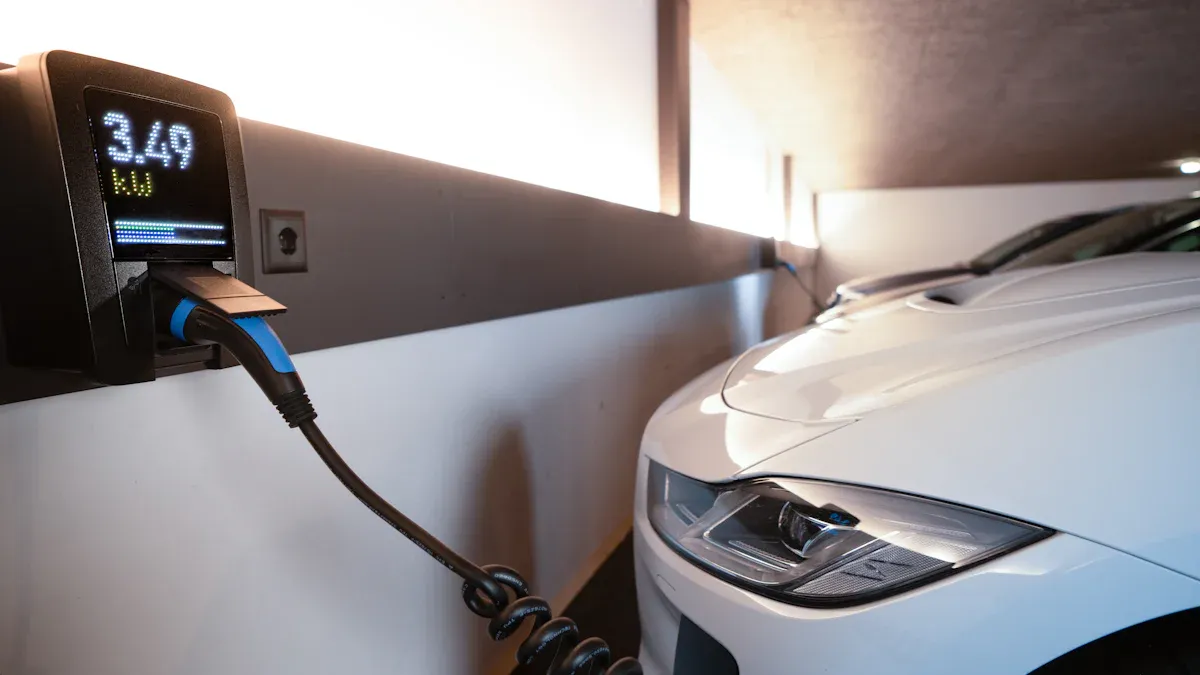
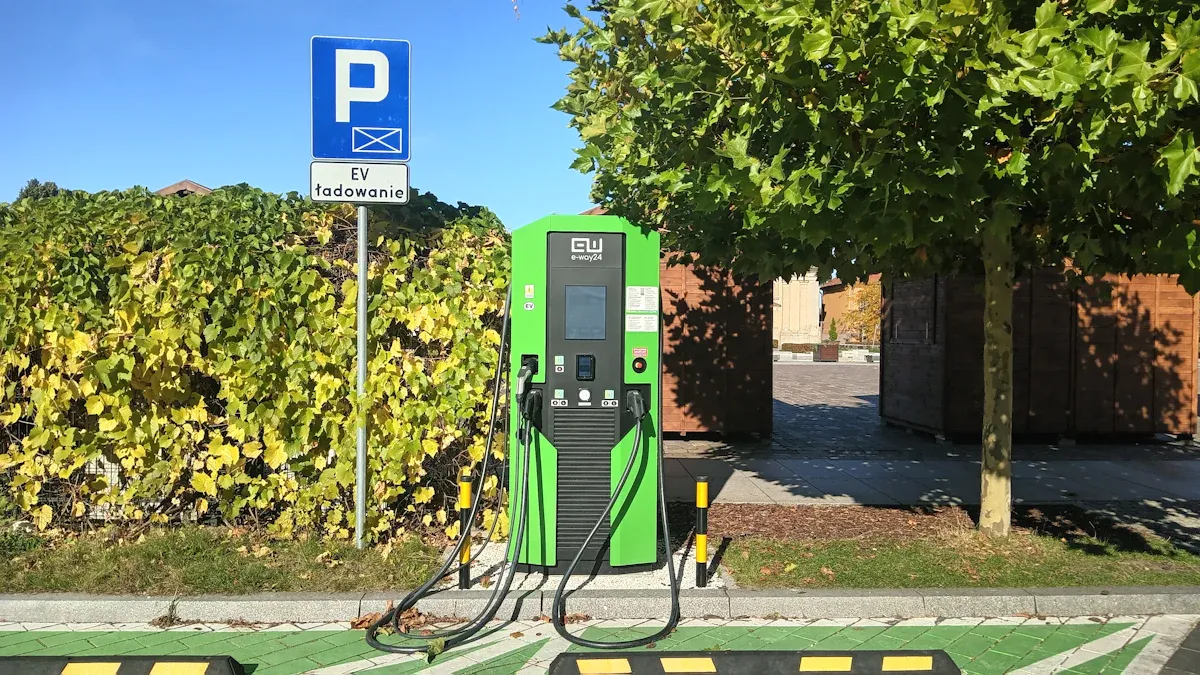
The estimated level 2 شاحن ev installation cost for an electric car in France during 2025 ranges from €1,200 to €2,500. This price for a home charging station typically includes the EV Charger unit, professional installation, and a required certificate of conformity. The final cost for a homeowner depends on several key variables. Choices among الشركات المصنعة لشاحن السيارة الكهربائية and specific features influence the equipment price. Permanent حلول شحن السيارات الكهربائية provide significantly more power than basic شواحن السيارات الكهربائية المحمولة. A home’s existing electrical system and available government subsidies will ultimately determine the net expense.
The All-Inclusive Cost Range in 2025
Understanding the final price requires separating installations into two categories: standard and complex. Most modern homes will fall into the standard category. Older properties or those with unique layouts often require a complex installation. An installer determines the correct category during the initial site visit.
Standard Installation Cost
A standard installation is the most common scenario for homeowners. It assumes the home’s electrical system is modern and the charger will be located near the main electrical panel. This straightforward setup keeps labor time and material needs to a minimum.
What a Standard Quote Includes
A typical quote for a standard installation bundles all essential components into one price. Homeowners can expect the following items to be covered:
- The Level 2 Charger Unit: The physical charger unit itself.
- Labor and Travel: The time and travel expenses for the certified electrician.
- Dedicated Electrical Circuit: Installation of a new, protected circuit from the electrical panel to the charger location.
- الكابلات: Up to 10-15 meters of electrical cable.
- Certificate of Conformity: The official document certifying the installation meets French safety standards.
- الاختبار والتشغيل التجريبي: Final checks to ensure the charger operates correctly and safely.
What a Standard Quote Excludes
A standard quote does not cover major electrical work or extensive site modifications. These services are considered add-ons:
- Full electrical panel replacement or upgrade.
- Cable runs longer than 15 meters.
- Trenching, drilling through thick concrete, or complex wall-fishing for cables.
- Any necessary civil engineering or masonry work.
Complex Installation Cost
A complex installation addresses challenges that go beyond the standard scope. Certain factors can significantly raise the overall level 2 ev charger installation cost due to the need for more labor, materials, and specialized work.
Scenarios Requiring a Complex Quote
An installer will provide a complex quote if the property presents specific obstacles. These situations demand a custom solution.
Common Complex Scenarios: 📝
- Outdated Electrical Panel: The main panel lacks space for a new circuit or cannot handle the additional load.
- Detached Garage: The charger location is in a separate building, requiring underground trenching for the power cable.
- Long Distances: The parking spot is more than 15 meters away from the electrical panel.
- Apartment Buildings: Navigating co-ownership rules and shared electrical systems often adds complexity.
Expected Price Range for Complex Jobs
For complex installations, homeowners should budget between €2,500 and €4,500 or more. The final cost depends entirely on the specific work required. For example, a full electrical panel replacement alone can add €1,000 to €2,000 to the project.
Understanding the Level 2 EV Charger Installation Cost Breakdown
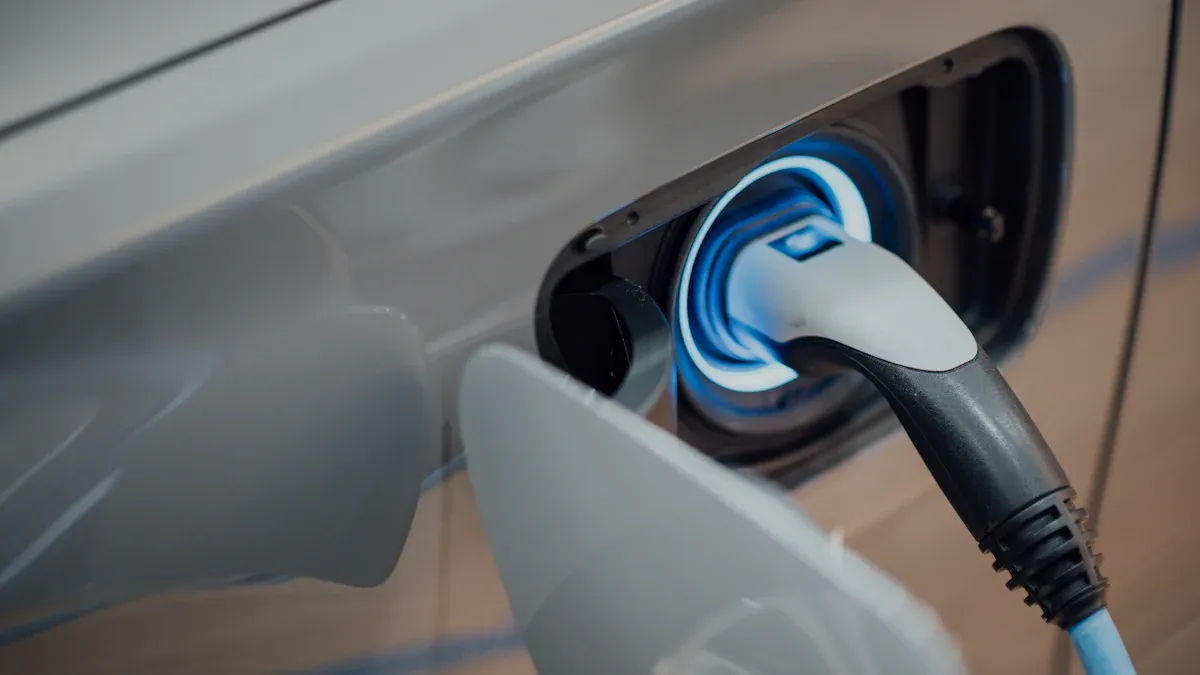
The total price for an تركيب شاحن السيارة الكهربائية is a sum of two primary components: the hardware (the charger unit) and the specialized labor required for a safe, compliant setup. A detailed breakdown helps homeowners understand where their money goes and what factors influence the final invoice.
Cost of the Charger Unit (Borne de Recharge)
The price of the home charging station itself is the first major variable. The market offers a wide range of units, with prices typically falling between €600 and €1,500. This variation depends heavily on the charger’s power output and its integrated features.
Price by Power Output (7.4 kW vs. 11 kW)
In France, residential chargers primarily come in two power levels. The choice between them depends on the home’s electrical supply.
- 7.4 kW Chargers: These operate on a standard single-phase (single-phase) electrical connection, which is the most common type in French homes. They are an excellent and sufficient choice for overnight charging for most electric vehicles.
- 11 kW Chargers: These require a three-phase (three-phase) connection. While less common in older homes, many newer properties have it. These chargers provide faster charging speeds but are generally more expensive.
| الميزة | شاحن 7.4 كيلوواط | 11 kW Charger |
|---|---|---|
| مزود الطاقة | Single-Phase (Monophasé) | Three-Phase (Triphasé) |
| الاستخدام النموذجي | Most single-family homes | Newer homes, faster charging needs |
| سرعة الشحن | ~40 km of range per hour | ~60 km of range per hour |
| Estimated Price | €600 – €1,200 | €800 – €1,500 |
Price by Feature Set
Beyond raw power, a charger’s “smart” capabilities and build quality significantly affect its price. Basic units simply charge the car, while advanced models offer greater control and efficiency. Technologically advanced electric vehicle charging solution providers like TPSON often specialize in units with these enhanced features.
Key Features That Influence Price: 💡
- Connectivity (Wi-Fi/Bluetooth): Allows the charger to connect to a smartphone app for remote monitoring, starting/stopping sessions, and tracking energy usage.
- Smart Charging: Includes features like scheduled charging to take advantage of off-peak electricity rates (أسعار الكهرباء خارج أوقات الذروة) and dynamic load balancing to prevent overloading the home’s electrical circuit.
- Attached vs. Unattached Cable: Units with a permanently attached cable offer convenience, while those with just a socket (requiring the car’s own cable) can be slightly cheaper and offer a cleaner look.
- Build Quality (IP/IK Ratings): A higher IP rating (for water and dust proofing) and IK rating (for impact resistance) means the charger is more durable, especially for outdoor installations.
Cost of Professional Installation Labor
The labor portion is a significant part of the overall level 2 ev charger installation cost. In France, regulations mandate that any charger with a power output greater than 3.7 kW must be installed by a specially certified professional. This ensures safety, compliance, and eligibility for government aid.
IRVE-Certified Electrician Rates
An electrician must hold an IRVE (Infrastructure de Recharge pour Véhicules Électriques) certification to legally install a home EV charger. This certification proves they have the specific training to handle the high-power demands and safety protocols of EV charging equipment.
For a standard installation, homeowners can expect the labor cost from an IRVE electrician to range from €600 to €1,000. This price covers:
- A site assessment to plan the installation.
- Installation of a dedicated circuit with appropriate protection (circuit breaker and differential switch) in the electrical panel.
- Running the cable from the panel to the charger location.
- Mounting and connecting the charger unit.
- Final testing and commissioning.
The Certificate of Conformity (Certificat de Conformité)
After the installation is complete, the IRVE electrician must provide a certificate of conformity. This document, often issued by an organization like the CONSUEL (اللجنة الوطنية لأمن مستخدمي الكهرباء), certifies that the new installation complies with all French electrical safety standards (specifically the NF C 15-100 standard). This certificate is mandatory and essential for insurance purposes. The cost for this document is typically bundled into the total labor price provided in the installer’s quote.
Key Factors That Increase Installation Costs
While a standard quote covers the basics, several factors can significantly increase the final level 2 ev charger تكلفة التركيب. These issues typically relate to the home’s existing electrical infrastructure and the physical location of the charger. An installer identifies these complexities during the initial site visit.
ترقيات اللوحات الكهربائية
The electrical panel is the heart of a home’s electrical system. It must have both the physical space and the power capacity to support a new, high-draw EV charger circuit.
Adding a Dedicated Circuit
Every EV charger requires its own dedicated circuit for safety and performance. A standard installation includes this. However, complications arise if the main electrical panel is already full. An electrician cannot simply add another breaker if there is no empty slot. In this case, the installer may need to consolidate existing circuits or install a smaller sub-panel, adding labor time and material costs to the project.
Full Panel Replacement
A full panel replacement is one of the most significant cost drivers. An electrician may recommend a full replacement for several reasons:
- The panel is outdated and does not meet current French safety standards (NF C 15-100).
- The panel’s total amperage is too low to handle the home’s existing load plus the new EV charger.
- The existing wiring is old, unsafe, or incompatible with modern circuit breakers.
⚡️ Major Expense Alert: A full
لوحة كهربائيةreplacement is a substantial job. Homeowners should anticipate an additional €1,000 to €2,000 for this upgrade alone, depending on the panel’s size and complexity.
Complex Wiring and Site Work
The distance and path the electrical cable must travel from the panel to the charger’s location directly impact labor and material needs. Anything beyond a simple, short run through an attached garage wall can increase the price.
Long-Distance Cable Runs
Standard quotes typically cover a cable run of up to 15 meters. If the parking spot is farther from the electrical panel, installation costs will rise. The reasons for the increased cost include:
- The higher price of the additional, heavy-gauge copper cable.
- The extra labor time required to run and secure the cable.
- The potential need for more robust conduit and mounting hardware.
Trenching for Outdoor Installations
Installing a charger in a location not attached to the house, such as a detached garage or an outdoor parking space, requires significant site work. Electricians must dig a trench to bury the armored electrical cable in a conduit. This process is labor-intensive and adds considerable expense for excavation, laying the conduit, backfilling the trench, and potentially repairing any disrupted landscaping like a lawn or driveway.
Installation Costs by Property Type
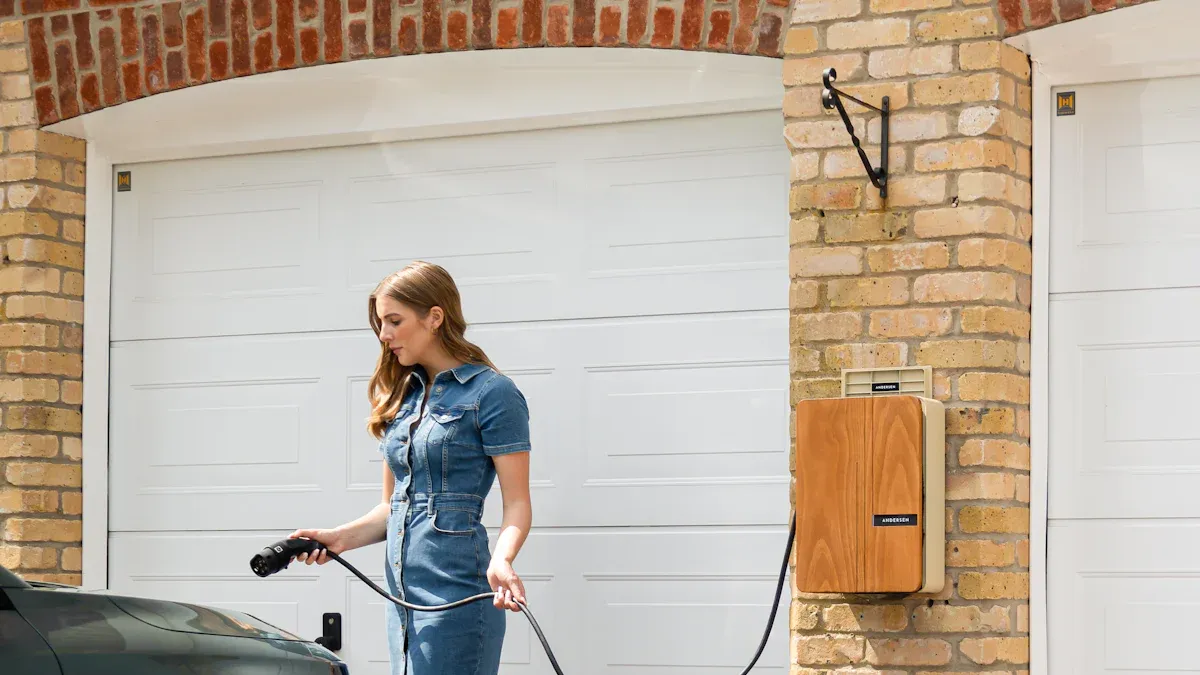
The type of property where the charger is installed is one of the most significant variables affecting the final price. A detached house offers a much different installation environment than an apartment in a shared building.
Single-Family Home
Installations in single-family homes are typically the most straightforward and cost-effective. The process is simpler because the homeowner has full control over the property and its electrical system.
Typical Scenario and Costs
The ideal scenario involves a home with an attached garage where the electrical panel is located. In this case, the electrician can easily run a short, dedicated circuit to the charger’s location. This setup usually falls within the standard installation cost range of €1,200 to €2,500. The project requires minimal disruption and can often be completed in just a few hours. This represents the baseline cost for a private EV charger installation.
Apartment in a Co-ownership
Installing a charger in an apartment building, or co-ownership, presents unique legal and logistical challenges. These factors almost always lead to higher costs and a longer project timeline compared to a single-family home.
The “Droit à la Prise”
French law provides a powerful tool for residents called the right to a plug, or “right to a plug.” This law gives both owners and tenants the right to install an EV charger in their designated parking space at their own expense. However, a specific legal procedure must be followed.
Legal Steps for the “Droit à la Prise“ ⚖️
- Inform the Manager: The resident must send a registered letter with acknowledgment of receipt to the condominium manager (condominium manager), detailing the planned installation.
- Wait for a Response: The manager has three months to respond or to bring the matter before a general assembly. Silence after this period is considered consent.
- Limited Refusal: The co-ownership can only refuse the request for a serious and legitimate reason, such as a pre-existing plan to install a collective charging solution or if the building’s electrical system cannot technically support it.
Potential for Higher Costs
Costs in a co-ownership are higher due to several factors. The electrical panel for an individual apartment is often far from the parking garage, requiring very long and expensive cable runs through common areas. An IRVE-certified installer must carefully plan a route that complies with building codes. Furthermore, a separate metering solution may be necessary to ensure the resident is billed correctly for the electricity their home charging station consumes. These logistical hurdles and administrative requirements can push the total project cost well above the standard range.
How to Reduce Your Final Cost with Subsidies
The French government actively encourages the adoption of electric vehicles by offering significant الحوافز المالية. These subsidies can dramatically reduce the net level 2 ev charger installation cost for homeowners. Understanding and leveraging these programs is a critical step in budgeting for a home charging station. The two primary financial aids available are a direct tax credit and a reduced Value-Added Tax (VAT) rate.
The Main Tax Credit
The most direct subsidy for homeowners is a tax credit for the purchase and installation of an EV charger. This credit directly reduces a person’s income tax liability, providing a substantial post-installation rebate.
2025 Subsidy Amount
For installations completed in 2025, the government offers a significant tax credit to ease the financial burden on homeowners. This aid makes the transition to electric mobility more accessible.
💰 The 2025 Tax Credit: The subsidy is a fixed amount of €500 per charging system. This credit can cover up to 75% of the total project cost, including both the charger unit and the installation labor.
This means if the total cost is €1,500, the homeowner receives a €500 credit, making the final net cost €1,000. If the total cost is €600, the credit is capped at 75% (€450).
شروط الأهلية
Homeowners must meet specific criteria to qualify for this tax credit. The rules ensure the aid targets residential installations and promotes safe, professional work.
- Tax Domicile: The applicant must be a tax resident of France.
- نوع العقار: The installation must be at the applicant’s primary or secondary residence. Landlords can also claim this credit for a rental property.
- Professional Installation: أن IRVE-certified electrician must perform the installation. Do-it-yourself installations are not eligible for the tax credit.
- Invoice: The homeowner must have a single, detailed invoice that clearly separates the cost of the equipment from the cost of the labor.
The Reduced 5.5% VAT Rate
In France, most goods and services are subject to a standard VAT (TVA) rate of 20%. However, the government provides a reduced VAT rate of 5.5% for the installation of a home charging station by a professional. This reduction is a key government aid that provides an immediate, upfront discount on the total project cost.
How to Qualify
Qualifying for the reduced 5.5% VAT rate is straightforward but has strict requirements. The primary condition is that the charger and installation must be purchased together from the same certified company.
- The property must be a residential dwelling completed more than two years ago.
- The reduced VAT rate applies to both the supply of the charger unit and the installation labor.
- Crucially, eligibility is contingent upon using an IRVE-certified installer for the entire project.
If a homeowner buys the charger from a retailer and hires an electrician separately, the 20% VAT rate will apply to the charger purchase. Only the installation labor might qualify for a reduced rate, diminishing the overall savings.
Calculating Your Savings
The 14.5% difference between the standard and reduced VAT rates translates into significant savings. A simple calculation demonstrates the financial benefit.
| مكون التكلفة | With Standard 20% VAT | With Reduced 5.5% VAT |
|---|---|---|
| Charger + Installation (Pre-Tax) | €1,500.00 | €1,500.00 |
| VAT Amount | €300.00 (20%) | €82.50 (5.5%) |
| Total Invoice Price | €1,800.00 | €1,582.50 |
| Immediate Savings | €217.50 |
This example shows that simply by ensuring the project qualifies for the reduced VAT, a homeowner saves over €200 instantly on a typical installation.
Additional Aid: The Advenir Program
Beyond direct aid to individuals, the French government supports building-wide charging solutions through the Advenir program. This initiative specifically targets collective residential buildings, encouraging co-ownerships to invest in shared EV charging infrastructure. The program is managed by Avere-France and aims to accelerate the deployment of charging points in apartment complexes, which often present complex installation challenges. It complements the individual tax credit by providing a pathway for large-scale, future-proofed projects.
Subsidy for Collective Residential Buildings
The Advenir program provides substantial financial support directly to the entity managing the installation, such as the condominium manager (condominium manager). This approach incentivizes building managers to propose and implement comprehensive charging solutions that benefit all residents, rather than relying on a patchwork of individual installations. The program is designed to overcome the high upfront costs associated with upgrading electrical systems in shared parking areas.
Who is Eligible for Advenir?
Eligibility for the Advenir program centers on the collective nature of the project. The primary applicants are typically condominium managers (condominium managers), social housing organizations, or property developers. The program is not designed for individual residents to apply directly. Instead, a resident in a co-ownership would lobby their condominium manager to pursue an Advenir-funded project for the entire building. The installation must be carried out by an Advenir-certified professional to qualify for the subsidy.
Subsidy Amount and Impact
The Advenir program offers significant financial relief, making large-scale projects much more feasible for co-ownerships. The subsidy covers a percentage of the pre-tax supply and installation costs, with specific caps depending on the type of solution implemented.
🏢 Advenir Subsidy Details for Co-ownerships: The program covers 50% of the project cost before tax, with the following maximum amounts:
- Individual Solution: حتى €600 per charging point when connected to the building’s common electrical services.
- Shared Solution: حتى €1,660 for a shared-use charger in a parking area.
- Collective Infrastructure: حتى €8,000 for the core electrical upgrades needed to service up to 100 parking spaces.
This tiered structure allows a co-ownership to choose the solution that best fits its needs and budget. Furthermore, the program offers an additional bonus of €360 if the charging system includes intelligent energy management features. This incentive encourages the adoption of smart technology that can balance the electrical load and optimize energy consumption for the entire building.
Getting Accurate Quotes and Choosing an Installer
اختيار qualified professional is a critical final step in the installation process. The right installer ensures a safe, compliant, and cost-effective project. Homeowners should approach this decision with diligence, starting with gathering comprehensive quotes.
Why Multiple Quotes Are Essential
Obtaining at least three quotes from different IRVE-certified installers is a non-negotiable part of the process. A single quote provides no context for price or service quality. Multiple offers empower the homeowner to make an informed financial decision.
Comparing Prices and Services
Prices for an identical installation can vary significantly between professionals. Homeowners should compare each quote carefully to understand what is included. Key comparison points are:
- The specific charger model being offered.
- The total length of cabling included in the base price.
- The scope of labor and any exclusions.
- Warranty details for both the hardware and the workmanship.
This comparison helps identify the best overall value, not just the lowest price. One quote might seem cheaper but exclude essential components that another includes.
Verifying IRVE Certification
The IRVE (Infrastructure de Recharge pour Véhicules Électriques) certification is mandatory in France for any installation over 3.7 kW. This certification is the homeowner’s guarantee of safety, compliance, and eligibility for government subsidies.
⚠️ Crucial Verification Step: Homeowners must ask each potential installer for proof of their IRVE certification. A legitimate professional will readily provide their certification number. An installer without this qualification cannot legally perform the work or provide the necessary certificate of conformity.
What to Look for in a Quote
A professional quote is more than just a final number. It is a detailed document that outlines the entire scope of the project. Homeowners should look for transparency and clarity.
Itemized Cost Breakdown
A trustworthy quote provides a clear, itemized breakdown of all costs. This transparency allows homeowners to see exactly what they are paying for. A vague, lump-sum price can hide inflated costs. A proper quote should detail individual line items.
| البند | الوصف | Estimated Cost |
|---|---|---|
| Charger Unit | Model Name (e.g., TPSON 7.4 kW) | €850 |
| العمالة | Installation & Commissioning | €700 |
| Materials | Cable, conduit, circuit breaker | €250 |
| التصديق | Certificate of Conformity Fee | €150 |
| Subtotal | €1,950 |
Mention of Subsidies
📄 An expert installer is knowledgeable about available government aid. A comprehensive quote or accompanying proposal should mention the applicable subsidies. It should clearly state that the project is eligible for the reduced 5.5% VAT (TVA) rate. The installer should also be able to provide the necessary invoice structure for the homeowner to claim the €500 tax credit (tax credit). This demonstrates the installer’s professionalism and commitment to helping their client maximize savings.
The level 2 ev charger installation cost for a standard project in 2025 ranges from €1,200 to €2,500. After applying the €500 tax credit, the final net expense for a home charging station will be between €700 and €2,000 for most homeowners.
الوجبات السريعة الرئيسية: 🔑 The most critical step is to obtain multiple, detailed quotes from different IRVE-certified installers. This action ensures the best price for a specific situation. Bundling the charger and installation also qualifies the project for the reduced 5.5% VAT rate, maximizing savings.
الأسئلة الشائعة
هل يمكن لصاحب المنزل تركيب شاحن كهربائي بنفسه؟
🚫 No. French law requires a certified professional for any charger installation above 3.7 kW. A homeowner must hire an IRVE-certified electrician. This ensures safety and eligibility for government subsidies. DIY installations are not compliant or eligible for financial aid.
كم من الوقت يستغرق التركيب القياسي؟
⏳ A standard installation is typically a quick process. An IRVE electrician can usually complete the entire job in three to five hours. This includes setting up the circuit, mounting the unit, and performing final tests to ensure proper function.
What is the difference between a Level 1 and Level 2 charger?
A Level 1 charger uses a standard household outlet and is very slow. A Level 2 charger is a dedicated محطة الشحن providing much faster charging speeds. Level 2 chargers are the standard for home installations in France.
Does a homeowner need permission for an installation?
Homeowners in a single-family house do not need special permission for an installation. Residents in an apartment building (co-ownership) must follow the right to a plug procedure. They must formally notify the condominium manager before proceeding with the project.
Is the €500 tax credit available for tenants?
Yes, tenants can also benefit from the government tax credit. The credit applies to installations at a person’s primary residence. A tenant must follow the correct legal procedure and use an IRVE-certified installer to qualify for the financial aid.
What does IRVE certification mean?
⚡️ IRVE (البنية التحتية لإعادة الشحن للمركبات الكهربائية) is a mandatory French certification. It proves an electrician has specialized training for installing EV charging equipment safely. This certification is a prerequisite for any legal installation and for accessing government subsidies.