Choosing the right method for charging an electric vehicle requires careful consideration of speed, cost, and convenience. Level 3 charging delivers much faster results than level 2, but it comes with higher costs and less availability. The table below highlights the difference in power output and charging time:
| نوع الشاحن | ناتج الطاقة (كيلوواط) | Charging Time (for average EV) |
|---|---|---|
| المستوى 2 | 7 – 22 | ~8 hours (full charge) |
| المستوى 3 | 50 – 350+ | 20 – 30 minutes (10% to 80%) |
الشركات المصنعة لشاحن السيارة الكهربائية now offer a wide range of حلول شحن السيارات الكهربائية, بما في ذلك شواحن السيارات الكهربائية المحمولة for added flexibility. Each option serves different needs, so drivers should review what fits their routine before making a decision.
What is Level 2 Charging for Charging an Electric Vehicle?
How Level 2 Charging Works
Level 2 charging uses a 240-volt power supply to deliver energy to an electric vehicle much faster than a standard household outlet. This method relies on alternating current (AC) and requires a dedicated charging station. Most drivers choose level 2 charging for daily use because it balances speed and convenience.
Charging speed explained
Level 2 charging stations typically output between 3.7 kW and 22 kW. For residential use, the most common output falls between 7 kW and 11 kW. These charging speeds allow most electric vehicles to gain a full charge overnight or during a workday. Drivers can expect to add 20 to 40 miles of range per hour, depending on the vehicle and charger.
Where you find level 2 chargers
Level 2 chargers appear in many locations. Home garages, office parking lots, shopping centers, and public parking facilities often feature these stations. Companies like TPSON provide technologically advanced solutions that support both residential and commercial installations. This widespread availability makes level 2 charging a practical choice for most drivers.
Cost of Level 2 Charging
Home installation costs
Installing a level 2 charging station at home usually requires professional electrical work. The installation cost ranges from $800 to $1,500, depending on the complexity of the setup and the distance from the electrical panel. Many drivers see this as a one-time investment that increases convenience and property value.
Public charging costs
Public level 2 charging stations often charge higher rates per kilowatt-hour compared to home charging. The table below compares typical costs:
| نوع الشحن | التكلفة لكل كيلووات/ساعة |
|---|---|
| الشحن المنزلي | £0.14–£0.18 |
| الشحن العام | £0.45–£0.59 |
Drivers should consider these differences when planning regular charging routines.
Compatibility and Convenience
Which vehicles use level 2
Most modern electric vehicles support level 2 charging. This includes compact cars, sedans, SUVs, and even some plug-in hybrids. Manufacturers design their vehicles to accept the standard connectors used by level 2 stations.
Everyday use scenarios
Level 2 charging fits well into daily life. Drivers can plug in their vehicles overnight at home or during the workday at the office. Shopping centers and public parking lots also offer convenient options for topping up. The balance of charging speeds and accessibility makes level 2 charging ideal for routine commutes and regular use.
What is Level 3 Charging for Charging an Electric Vehicle?

كيفية عمل شحن المستوى 3
Level 3 charging, also known as dc fast charging, uses direct current to deliver high power output to electric vehicles. This technology enables rapid energy transfer, allowing drivers to recharge their batteries much faster than with level 2 charging. Charge point speeds for level 3 charging typically range from 50 kW to over 350 kW. Most stations can replenish 10% to 80% of a battery’s capacity in 20 to 30 minutes. This speed makes level 3 charging ideal for drivers who need to get back on the road quickly.
Charging speed explained
Level 3 charging stations provide a significant boost in charging speed compared to lower levels. Drivers often experience a full charge in less than an hour, depending on the vehicle’s battery size and the station’s power output. High-powered stations can add hundreds of miles of range in a short period, making them essential for long-distance travel.
Where you find level 3 chargers
Level 3 charging stations appear most frequently in urban areas, along major highways, and at commercial hubs. The following table shows the distribution of charging devices:
| نوع المنطقة | Percentage of Charging Devices |
|---|---|
| Urban Setting | 84.6% |
| Urban Major Conurbation | 47.8% |
| Rural Village and Dispersed | 7.7% |
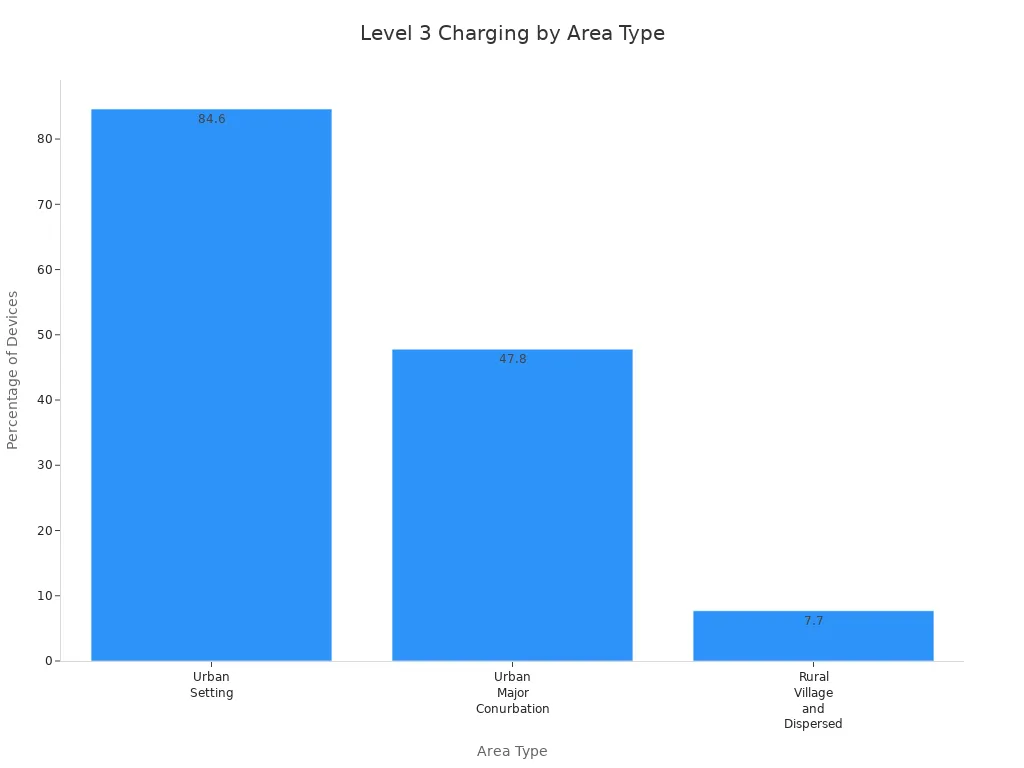
Urban areas continue to see the highest concentration of level 3 charging stations. Rural locations offer fewer options, though recent increases show growth in both settings.
Cost of Level 3 Charging
Charging session costs
Charging at a level 3 station usually costs more than level 2 charging. Drivers pay a premium for the speed and convenience. Pricing often depends on the station’s location, the power output, and the provider’s fee structure. Most public stations charge per kilowatt-hour or per minute, with rates ranging from $0.40 to $0.70 per kWh.
Installation and infrastructure
Installing a level 3 charging station requires robust infrastructure. Site owners must ensure their electrical systems can handle the high power demand. Key requirements include:
- Electrical capacity must support the load of a level 3 charger.
- Older buildings may need upgraded electrical panels.
- Coordination with the Distribution Network Operator (DNO) is often necessary for new connections or electrical upgrades.
These requirements make installation more complex and expensive than for level 2 chargers.
Compatibility and Convenience
Which vehicles use level 3
Most modern electric vehicles, especially those designed for long-range travel, support level 3 charging. Manufacturers equip their vehicles with compatible connectors and battery systems. Some older models and plug-in hybrids may not accept dc fast charging.
Limitations and access
Level 3 charging offers rapid energy transfer, but not all vehicles can use it. Access remains limited in rural areas, and installation costs restrict expansion. Drivers must check their vehicle’s compatibility and plan routes based on available stations.
Key Differences Between Level 2 and Level 3 Charging
مقارنة السرعة
Typical charging times
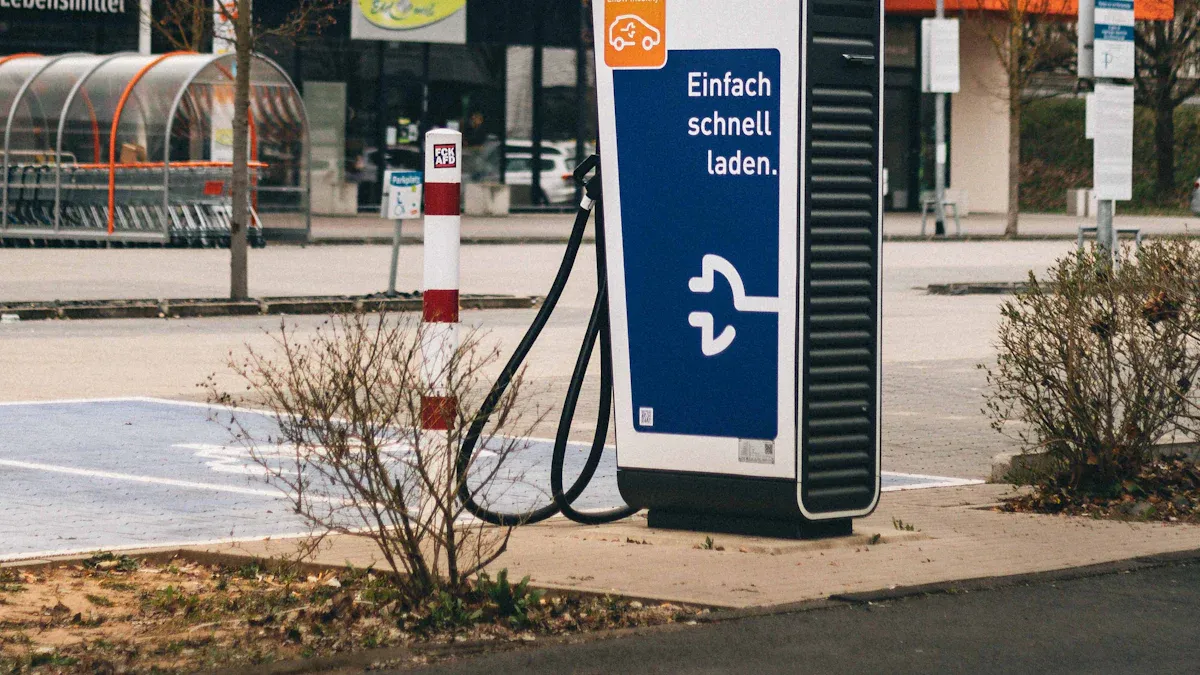
Charging speed remains one of the most significant differences between level 2 and level 3 charging. Level 2 charging stations use a 240-volt supply and typically require 6 to 10 hours to fully charge an electric vehicle. This makes them suitable for overnight charging or situations where the vehicle remains parked for extended periods. Level 3 charging, often referred to as fast charging, operates at 480 volts or higher and can replenish a battery to 80% in just 20 to 45 minutes. Drivers who need to maximize their range quickly benefit from fast charging technology.
| طريقة الشحن | الفولتية | Range per Charge | وقت الشحن الكامل |
|---|---|---|---|
| المستوى 2 | 240V | 15 – 35 miles | 6 – 10 hours |
| المستوى 3 | 480V+ | 100 – 250+ miles | 20 – 45 mins (to 80%) |
Impact on daily routines
Level 2 charging fits seamlessly into daily routines. Drivers often plug in their vehicles at home overnight or during work hours. This approach supports regular commutes and errands without requiring frequent stops. Level 3 charging, or fast charging, transforms travel for those who need rapid energy replenishment. Drivers can add between 3 to 20 miles of range per minute, which translates to 180 to 1200 miles per hour. This capability proves essential for road trips, busy schedules, and situations where time is limited.
Fast charging stations enable drivers to minimize downtime and maximize productivity, especially during long journeys.
مقارنة التكلفة
Upfront and ongoing costs
The financial investment for charging infrastructure varies greatly between the two levels. Level 2 charging stations typically cost between $1,000 and $2,500 per unit. Installation remains straightforward and affordable for most homeowners and businesses. Level 3 charging stations, which support fast charging, require a much larger investment. Equipment costs range from $10,000 to $40,000 per unit, reflecting the advanced technology and higher power requirements.
Annual maintenance contracts for both types of stations usually fall between £150 and £400 per charging point. These contracts cover software updates, technical support, and preventive maintenance visits. While ongoing costs remain similar, the initial investment for fast charging infrastructure is significantly higher.
Value for money
Level 2 charging offers excellent value for money for routine use. Drivers benefit from lower installation costs and affordable electricity rates, especially when charging at home. Fast charging provides unmatched speed and convenience, but the higher upfront costs and premium rates at public stations may not suit every budget. Businesses and fleet operators often invest in fast charging to support high-volume usage and reduce vehicle downtime.
التوافق
Vehicle requirements
Most electric vehicles on the market today support level 2 charging. Manufacturers equip their vehicles with the necessary hardware to connect to standard level 2 stations. Fast charging compatibility depends on the vehicle’s battery system and onboard electronics. Many newer models, especially those designed for long-range travel, accept fast charging. Some older vehicles and plug-in hybrids may not support this technology.
Charging connector types
Connector types differ between the two charging levels. Level 2 stations use the J1772 connector, which fits most electric vehicles in North America. Level 3 stations, designed for fast charging, employ connectors such as CCS and CHAdeMO. These connectors support higher voltages and faster energy transfer.
| مستوى الشحن | الفولتية | وقت الشحن | نوع الموصل |
|---|---|---|---|
| المستوى 2 | 240 فولت/208 فولت | 4-6 ساعات | J1772 |
| المستوى 3 | 480V DC | ~20-40 minutes | نظام التحكم في الكربون، CHAdeMO |
Drivers should verify their vehicle’s compatibility with fast charging connectors before planning long-distance travel.
الملاءمة
Availability of chargers
Electric vehicle drivers often prioritize convenience when choosing a charging solution. Level 2 charging stations appear in many public spaces, making them accessible for daily use. Major cities feature these stations in shopping centers, office buildings, and parking garages. Drivers find it easy to locate a level 2 charger during routine activities.
Level 3 charging stations, designed for rapid charging, remain less common in urban environments. Most installations occur along highways and major travel routes. These stations support quick energy replenishment for long-distance journeys but may not serve drivers in city centers as frequently.
- Level 2 charging stations are increasingly found in urban areas, such as shopping centers and office buildings.
- Level 3 charging stations are less common and primarily located along highways for quick charging needs.
- This indicates that Level 2 stations are more accessible in major cities compared to Level 3 stations.
Drivers who rely on rapid charging must plan their routes carefully. Limited availability of level 3 chargers in some regions can create challenges for those who need fast energy top-ups.
Ease of use
Charging station design influences user experience. Level 2 chargers offer straightforward operation. Most stations use a standard connector, and drivers simply plug in their vehicle and begin charging. Payment systems at public stations often accept contactless cards or mobile apps, streamlining the process.
Level 3 chargers, built for rapid charging, deliver much faster energy transfer. However, these stations may require additional steps. Some vehicles need specific connectors, such as CCS or CHAdeMO, and not all models support rapid charging technology. Drivers must verify compatibility before using a level 3 charger.
The following table compares common challenges users face with each charging level:
| مستوى الشحن | السرعة | التكلفة | إمكانية الوصول |
|---|---|---|---|
| المستوى 2 | Slower (4 times faster than Level 1) | معتدل | Common in public spaces |
| المستوى 3 | Rapid (significantly faster than Level 2) | أعلى | Found on motorways and accessible locations |
- Charging speed is significantly slower with Level 2 compared to Level 3.
- Level 3 chargers are more expensive due to higher operational costs.
- Accessibility issues arise as not all areas have sufficient Level 3 charging stations.
Level 2 charging suits everyday use, offering simplicity and broad compatibility. Level 3 charging excels in rapid charging scenarios, but drivers must navigate higher costs and limited station locations. Those who value convenience often choose level 2 charging for routine needs, while rapid charging remains essential for long trips and urgent situations.
Tip: Drivers should check their vehicle’s charging compatibility and local station availability before planning a journey that relies on rapid charging.
When to Choose Level 2 Charging for Charging an Electric Vehicle
Best for Home Use
Overnight charging
محطات الشحن من المستوى 2 offer a practical solution for residential settings. Homeowners install these chargers in garages or driveways, allowing vehicles to recharge overnight. Drivers wake up each morning with a full battery, ready for daily activities. The process requires minimal effort and fits seamlessly into established routines.
Routine commutes
Level 2 charging supports regular travel patterns. Most electric vehicles gain enough range during a single charging session to cover daily commutes, errands, and school runs. Drivers avoid frequent stops at public stations, saving time and reducing stress. This approach suits individuals who park their vehicles for extended periods at home or work.
الوفورات في التكاليف
Lower electricity rates
Charging at home with a level 2 station provides significant financial benefits. Electricity rates for residential charging remain lower than those at public stations. The following table illustrates the annual cost difference:
| نوع الشحن | Annual Cost Estimate | Savings Compared to Petrol/Diesel |
|---|---|---|
| Home Charging (Level 2) | £300 – £500 | £900 – £1,200 |
| Public Charging (Level 3) | Likely more expensive than gasoline | غير متاح |
Drivers who rely on home charging save hundreds of pounds each year compared to gasoline or diesel vehicles. Public level 3 charging often costs more than traditional fuel, making home charging the economical choice.
Reduced wear on battery
Level 2 charging generates less heat during operation. Lower heat levels help preserve battery integrity and extend lifespan. Drivers who use level 2 charging regularly experience fewer battery-related issues over time. This method reduces the risk of accelerated degradation, which can occur with frequent fast charging.
اعتبارات صحة البطارية
Slower charging benefits
Slower charging rates minimize stress on battery cells. Level 2 charging produces less heat, which supports long-term battery health. The table below compares the impact of different charging methods:
| طريقة الشحن | Heat Generation | التأثير على صحة البطارية |
|---|---|---|
| المستوى 2 | منخفضة | Preserves longevity |
| المستوى 3 | عالية | Accelerates degradation |
Drivers who prioritize battery care choose level 2 charging for routine use. Fast charging remains suitable for emergencies or long trips, but regular use can lead to performance issues.
Tip: Use Level 2 charging most of the time to minimize heat stress on the battery. Reserve Level 3 charging for emergencies or long journeys.
Long-term battery care
Continuous use of DC fast charging can lead to significant battery performance issues and reduced durability over time. Level 2 charging supports consistent battery health, helping owners avoid costly repairs and replacements. Drivers who adopt this strategy maximize the value and reliability of their electric vehicles.
When to Choose Level 3 Charging for Charging an Electric Vehicle
Ideal for Road Trips
Fast charging on the go
الشحن من المستوى 3 stations deliver rapid energy replenishment, making them essential for drivers who travel long distances. He can stop at a fast charger, plug in, and gain hundreds of miles of range in less than an hour. This capability transforms the road trip experience, allowing travelers to cover more ground without lengthy breaks.
نصيحة: Drivers planning cross-country journeys should map out Level 3 charging locations along their route for maximum convenience.
Reducing travel time
الشحن السريع reduces downtime during extended travel. She spends less time waiting for her vehicle to charge and more time on the road. Level 3 stations often appear near major highways, rest stops, and service centers. These locations support efficient travel, especially for those who need to reach their destination quickly.
| مستوى الشحن | وقت الشحن النموذجي | تمت إضافة النطاق |
|---|---|---|
| المستوى 2 | 6–10 hours | 150–250 miles |
| المستوى 3 | 20–45 minutes | 100–250+ miles |
Time Constraints
التعبئة السريعة
Busy schedules demand flexibility. Level 3 charging provides quick top-ups for drivers who need to recharge during short stops. He can add significant range in just 15–30 minutes, making it possible to continue his journey without major delays. This feature proves valuable for professionals, delivery drivers, and anyone with tight timelines.
Emergency charging needs
Unexpected situations sometimes require immediate charging. She may forget to plug in overnight or encounter a low battery warning during a busy day. Level 3 stations offer a solution for emergencies, enabling drivers to restore enough range to reach their next destination or charging point.
تنبيه: In emergencies, Level 3 charging can prevent stranded situations and ensure safe travel.
توافق المركبة
Which cars support level 3
Not every electric vehicle supports Level 3 charging. Most modern EVs, especially those designed for long-range travel, include fast charging capability. He should check his vehicle’s specifications to confirm compatibility. Manufacturers such as Tesla, Hyundai, Kia, Ford, and Volkswagen equip their latest models with Level 3 connectors.
| الشركة المصنعة | Model Examples | Level 3 Support |
|---|---|---|
| تيسلا | Model 3, Model Y | ✅ |
| هيونداي | IONIQ 5, Kona EV | ✅ |
| نيسان | Leaf (newer models) | ✅ |
| شفروليه | Bolt EUV | ✅ |
| تويوتا | Prius Prime | ❌ |
Upgrading for fast charging
Some older vehicles lack fast charging hardware. He may consider upgrading to a newer model if frequent road trips or time-sensitive travel become part of his routine. Upgrading ensures access to Level 3 charging and supports faster, more flexible journeys.
ملاحظة: Before purchasing an EV, drivers should evaluate their travel needs and confirm Level 3 compatibility for future convenience.
Quick Comparison Table: Level 2 vs Level 3 Charging an Electric Vehicle
Level 2 vs Level 3 at a Glance
Choosing between level 2 and level 3 charging stations often depends on a driver’s priorities. يلخص الجدول التالي the most important differences:
| الميزة | شاحن المستوى 2 | شاحن المستوى 3 |
|---|---|---|
| السرعة | 10 to 30 miles per hour | 80% charge in 20-30 minutes |
| التكلفة | Lower installation costs | Higher installation costs |
| التوافق | Broad compatibility with most EVs | Limited to newer EV models and public stations |
السرعة
محطات الشحن من المستوى 2 deliver a steady rate of 10 to 30 miles of range per hour. This speed works well for overnight charging at home or during a full workday at the office. Level 3 charging stations, on the other hand, can boost a battery to 80% in just 20 to 30 minutes. Drivers who need to get back on the road quickly often prefer level 3 charging stations for their rapid performance.
Note: Level 3 charging stations provide a significant advantage for long trips or urgent situations, but level 2 charging stations remain the best fit for daily routines.
التكلفة
Cost plays a major role in the decision-making process. Level 2 charging stations require a lower upfront investment for both equipment and installation. Many homeowners find these charging stations affordable and easy to maintain. Level 3 charging stations involve higher installation costs and greater infrastructure demands. Businesses and public locations that install level 3 charging stations often pass these costs on to users through higher charging fees.
- محطات الشحن من المستوى 2: Lower purchase and installation costs, ideal for home use.
- Level 3 charging stations: Higher costs, typically found at commercial charging stations or along highways.
التوافق
Most electric vehicles on the market today can use level 2 charging stations. This broad compatibility makes level 2 charging stations a practical choice for a wide range of drivers. Level 3 charging stations, however, work only with newer EV models equipped with fast-charging technology. Some older vehicles and plug-in hybrids cannot use level 3 charging stations, so drivers must check their vehicle’s specifications before relying on these charging stations.
الملاءمة
Convenience often comes down to the availability and location of charging stations. Level 2 charging stations appear in residential areas, workplaces, shopping centers, and public parking lots. Their widespread presence allows drivers to charge their vehicles during routine activities. Level 3 charging stations, while growing in number, remain concentrated along highways and in urban centers. Drivers planning long journeys benefit from mapping out level 3 charging stations in advance.
| مستوى الشحن | User Satisfaction Rating |
|---|---|
| المستوى 2 | 614 |
| المستوى 3 | 664 |
User satisfaction ratings show that both types of charging stations receive positive feedback, with level 3 charging stations scoring slightly higher. This difference likely reflects the value drivers place on speed and convenience during travel.
Tip: For most daily needs, level 2 charging stations offer the best mix of cost, compatibility, and convenience. Level 3 charging stations shine when time is limited or travel distances are long.
Level 3 charging suits drivers who value speed and frequent travel. Level 2 charging offers cost savings and convenience for home use. He or she should review driving habits, budget, and vehicle compatibility before making a decision.
Tip: Each charging option serves a unique purpose. Drivers who understand their needs will maximize the benefits of electric vehicle ownership.
| نوع الشحن | الأفضل لـ | Key Benefit |
|---|---|---|
| المستوى 2 | Home, daily use | Cost-effective |
| المستوى 3 | Travel, emergencies | الشحن السريع |
الأسئلة الشائعة
What is the main difference between Level 2 and Level 3 charging?
Level 2 charging uses alternating current and charges slower. Level 3 charging uses direct current and charges much faster. Level 3 stations cost more and require special infrastructure.
Can every electric vehicle use Level 3 charging?
Not every electric vehicle supports Level 3 charging. Most newer models accept fast charging. Older vehicles and some plug-in hybrids may lack the necessary hardware.
Is Level 3 charging bad for battery health?
Frequent Level 3 charging can accelerate battery degradation. He or she should use Level 2 charging for daily routines and reserve Level 3 charging for emergencies or long trips.
How much does it cost to install a Level 2 charger at home?
Homeowners typically pay between $800 and $1,500 for Level 2 charger installation. The final price depends on the electrical setup and distance from the panel.
Where can drivers find Level 3 charging stations?
Drivers locate Level 3 charging stations along highways, in urban centers, and at commercial hubs. Mapping apps and EV charging networks provide station locations.
Does Level 2 charging work for long road trips?
Level 2 charging suits daily use and overnight charging. For long road trips, Level 3 charging offers faster energy replenishment and reduces travel time.
What connector types do Level 3 chargers use?
Level 3 chargers use CCS and CHAdeMO connectors. He or she must check the vehicle’s compatibility before using a fast charger.
Are Level 3 charging stations more expensive to use?
Level 3 charging stations charge higher rates per kilowatt-hour. Drivers pay a premium for speed and convenience compared to Level 2 charging.