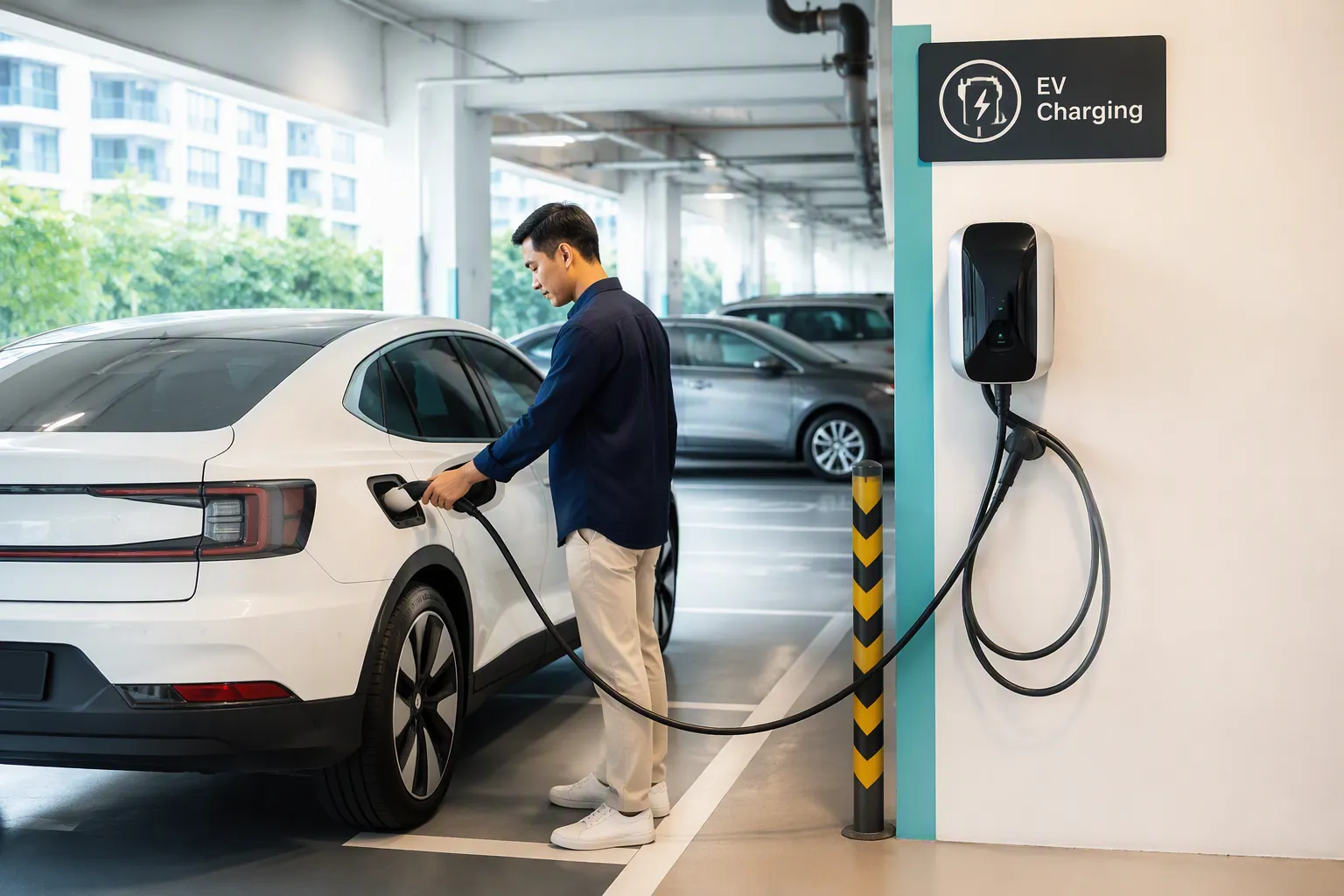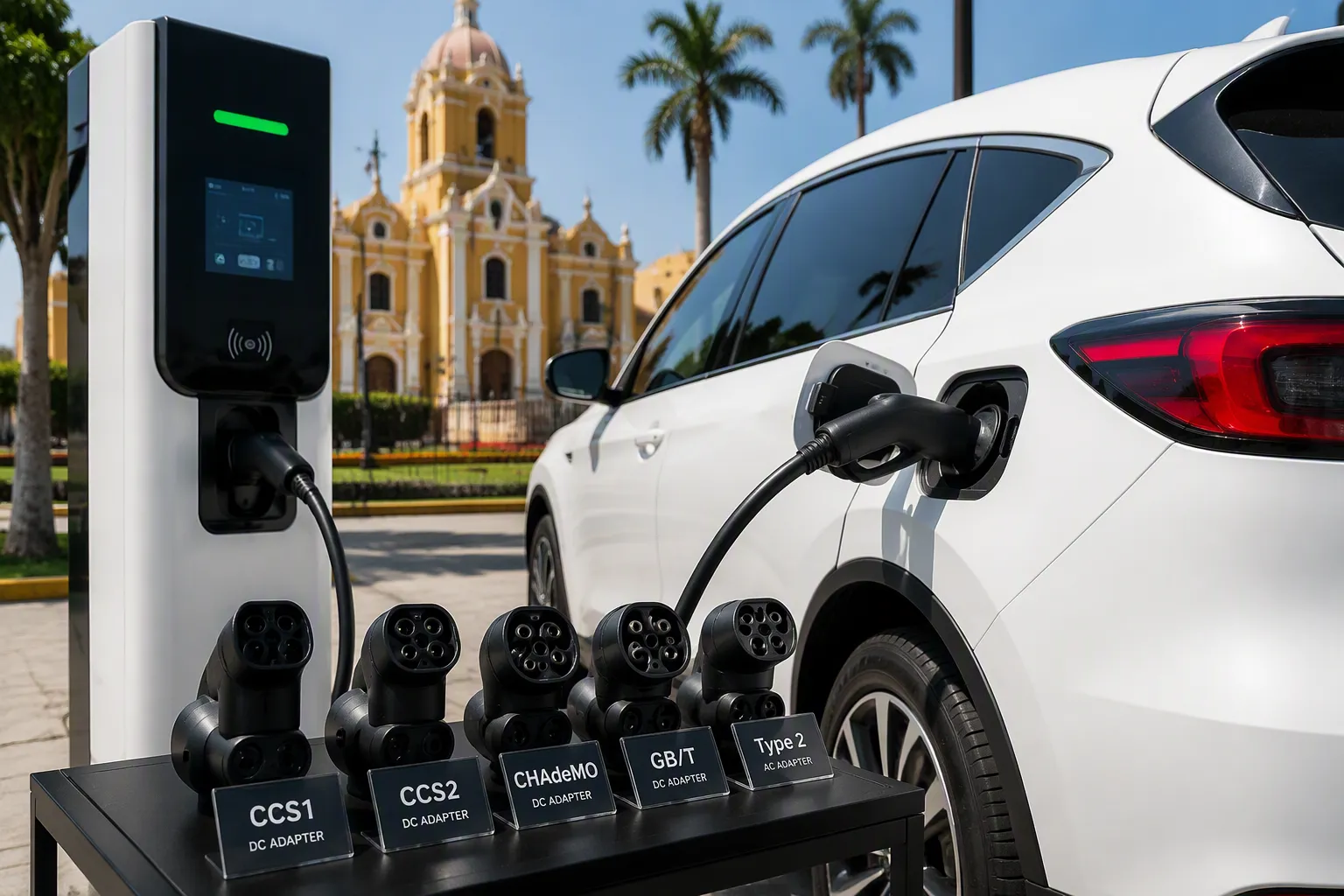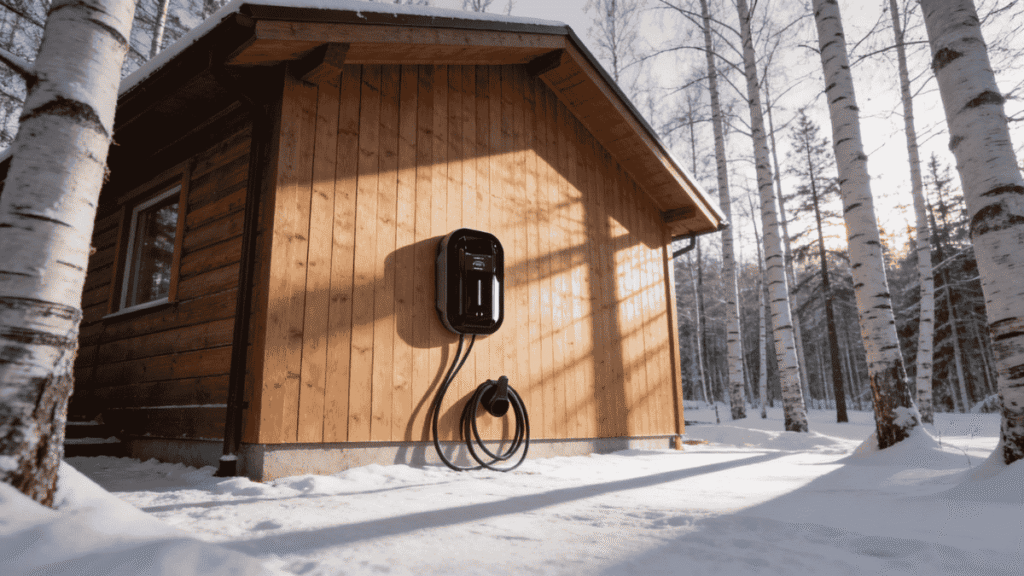
A 24 amp EV charger may not get as much attention as 40A, 48A, or 80A models, but that does not make it unimportant. In fact, a 24A charger can be the most practical option for many homes, apartments, mixed-use properties, and light-duty fleet situations where slower charging is perfectly acceptable. If a vehicle is parked for long periods, daily mileage is moderate, and electrical capacity is limited, choosing a lower-amperage charger can reduce installation costs while still delivering dependable overnight charging.
This article explains how a 24 amp charger works, how it compares with other Level 2 charging options, and where it makes the most sense. It also draws on the supplied source material from TPSON, ChargePoint, Love’s, Smart Charge America, Emporia, and Car and Driver to position 24A charging within the broader EV infrastructure market.
- What Is a 24A EV Charger?
- How Fast Is 24A Charging?
- Why “A Bit Slower” Can Sometimes Be the Smarter Choice
- Best Use Cases for a 24A Charger
- Real Differences Between 24A vs. 32A, 40A, and 48A
- Benefits of 24A for a Home Electrical System
- What It Means for Apartments, Shared Parking, and Commercial Sites
- How 24A Relates to Smart Load Management
- When You Shouldn’t Choose 24A
- TPSON’s Product Approach and Where 24A Fits
- Frequently Asked Questions
- الخاتمة
A 24 amp EV charger is an AC charging device with a maximum output current of 24 amps, typically classified as Level 2 AC charging. In a typical North American 240V home environment, its theoretical power is about:
This means 24A charging is significantly faster than Level 1 charging from a standard household outlet, but lower than common higher-power Level 2 chargers such as 32A, 40A, and 48A. Car and Driver’s conversions in its home EV charger testing guidance support this: 24A is about 5.8 kW, 32A is about 7.7 kW, and 40A is about 9.6 kW.
So, 24A isn’t “ultra-fast charging,” but it is still standard high-voltage residential AC charging—and in many real-world scenarios, it’s already more than sufficient.
Many users see 24A and worry it won’t be fast enough. But whether it’s enough depends on how much energy your vehicle needs to replace each day—not just the peak number.
Based on an output of about 5.8 kW:
- About 23.2 kWh added in 4 hours
- About 46.4 kWh added in 8 hours
- About 58 kWh added in 10 hours
Even after accounting for charging losses and tapering near the end, 24A is still enough for many commuters to recharge overnight. Car and Driver emphasizes that the core value of home Level 2 charging is “charging while the vehicle is parked,” not chasing the short-window speed of public DC fast charging.
If your daily commute consumption is only around 10–20 kWh, a 24A charger is often completely sufficient.
| الحالي | الطاقة التقريبية عند 240 فولت | Positioning | الاستخدام النموذجي |
|---|---|---|---|
| 16A | 3.8 كيلوواط | Slower Level 2 | Low-mileage commutes, limited electrical capacity |
| 24A | 5.8 kW | Low-to-mid power Level 2 | Homes, long parking durations, shared parking |
| 32A | 7.7 كيلوواط | Mainstream Level 2 | Most home scenarios |
| 40A | 9.6 كيلوواط | Faster home charging | Medium-to-high mileage households |
| 48A | 11.5 كيلوواط | Premium residential Level 2 | Future-proofing, hardwired installs |
EV charging doesn’t always need higher and higher amperage. For many people, lower-current charging offers several practical advantages:
- Less strain on the electrical distribution system
- Easier to fit older homes or smaller service capacities
- Lower wiring, breaker, and labor costs
- Better suited for long-parking scenarios, without paying extra just for “speed”
- Easier to share total site power across multiple chargers
Car and Driver clearly points out in its home charging recommendations that a 40A or 50A circuit is enough for overnight charging in most homes, and if capacity is limited, load management can help avoid expensive upgrades. Following that logic, 24A can be a gentler, more economical solution in certain scenarios.
If your daily driving is mostly city commuting, school runs, errands, and short trips, the amount of energy you need to replenish each day is often modest. As long as the car is parked for a few hours each night, a 24A charger is usually enough to restore the range you need for the next day.
Many homes don’t have enough headroom to jump straight to 40A, 48A, or higher. If you upgrade the electrical panel or service just to chase higher amperage, costs can rise quickly. In that case, 24A is a meaningful middle ground: much faster than 120V trickle charging, but not so demanding that installation costs become uneconomical.
In multi-unit buildings, the goal is often not to make one car charge as fast as possible, but to serve more parking spaces within limited total capacity. Lower-amperage charging ports can increase deployment density and pair better with dynamic load management.
Employees parking for 8+ hours, hotel guests staying overnight, and long-dwell parking at attractions or mixed-use complexes are all classic “slower is fine” scenarios. In these environments, 24A charging is not only sufficient, it can also reduce electrical distribution cost per port.
If your home already has a higher-power primary charger, the second one doesn’t necessarily need to be high power as well. A 24A charger as an auxiliary spot—or for the secondary vehicle—can sometimes use available electrical capacity more efficiently.
Where peak demand must be controlled, upgrades must be avoided, or energy management strategies are central, a 24A charger is well suited to be part of the overall solution.
The most common question is: will 24A be too slow? The real answer depends on whether you actually need faster charging—not on whether 24A looks smaller on paper.
Compared with mainstream options:
- Versus 32A, 24A provides about 1.9 kW less output
- Versus 40A, 24A provides about 3.8 kW less output
- Versus 48A, 24A provides about 5.7 kW less output
But these differences matter most when the charging window is short. If the vehicle is parked all night—or even all day—the practical disadvantage of 24A becomes much smaller.
Car and Driver tested multiple home EVSE options spanning 24A and 32A up to 48A and 50A, and emphasized that buyers should consider more than maximum output—such as home circuit capability, the vehicle’s onboard charger limit, and installation method. The same logic applies to choosing 24A.
| المستوى | الإيجابيات | السلبيات | الأفضل لـ |
|---|---|---|---|
| 24A | Lower installation load, more budget-friendly, ideal for long parking durations | Slower for short-window top-ups | Low-mileage homes, apartments, shared parking |
| 32A | Well balanced, more mainstream | Can still be challenging for some capacity-limited sites | Most homes |
| 40A | Faster overnight charging, mature market | Higher circuit and installation requirements | Medium-to-high mileage users |
| 48A | Premium residential Level 2 speed | Typically hardwired, higher cost | Users seeking faster charging or future-proofing |
The biggest real-world advantage of choosing a lower-current charger is that it’s easier on a home’s electrical system. Car and Driver notes in its installation guidance that home circuits must account for whole-home loads such as air conditioning, ovens, and dryers. EV charging may require continuous current anywhere from 24A to 80A, so homeowners should evaluate main service capacity and whether adding a new circuit is feasible.
Key benefits of 24A include:
- Easier to deploy without upgrading the overall service
- Easier to coexist with other major appliances
- More friendly for older homes or garage retrofits
- Better for multiple chargers and shared/rotational charging
If a user doesn’t actually need 40A or 48A output, 24A can deliver a lower total cost “good enough” solution.
In commercial and semi-public environments, lower-current charging does not mean lower value. Many sites truly need “more ports, controllable output, and reasonable cost,” not the fastest possible charging at every single port.
ChargePoint emphasizes on its website that the core of a modern EV charging platform is the combination of software, services, hardware, and open compatibility—not just the power rating of a single unit. Its approach to apartments, retail, workplaces, fleets, and commercial real estate is fundamentally about matching charging capability to the scenario.
Smart Charge America’s commercial product list reflects the same thinking. For example:
- ChargePoint CPF50 can be configured from 16A to 50A, emphasizing energy management and panel sharing
- LiteOn 32A emphasizes local load management and OCPP compatibility
- Wallbox Pulsar Plus supports multi-charger power sharing
These examples show that in multi-parking environments, 24A—or similar lower-current settings—can help operators serve more vehicles without increasing total site capacity.
A 24A charger is already easier to deploy than higher-current options, but its value increases further when combined with smart load management.
TPSON emphasizes on its شواحن السيارات الكهربائية page that its AC charging products include Dynamic Load Balancing to protect the home electrical system. TPSON also lists Dynamic Load Balancing, Dynamic Temperature Control, and Real-Time Diagnostics & Alerts as part of its core advantages on its homepage.
The Emporia Pro’s market positioning is also representative. Car and Driver’s testing notes that the Emporia Pro includes home energy monitoring hardware that can adjust EV charging output in real time to avoid exceeding what the home can safely support. In other words, with intelligent current control, 24A can be a default cap—or an actual operating level after dynamic allocation.
For projects with multiple devices, multiple parking spaces, or limited electrical capacity, this approach is often smarter than simply upgrading to higher amperage.
Public long-distance travel networks typically require faster DC charging. Love’s EV charging page shows that its network is adding more Level 3 DC fast chargers alongside existing Level 2 infrastructure to meet different vehicles and travel needs. This suggests that for highway corridor refueling, 24A-class AC charging is usually not the first choice.
But that doesn’t mean 24A has no public value. It’s better suited for:
- Overnight hotel parking
- All-day office parking
- Residential community shared parking
- Long-dwell destinations such as attractions, hospitals, and campuses
In short, 24A creates value where people stay longer—not where they need to leave quickly.
While 24A is a great fit for many scenarios, it isn’t universal. If the following apply, a higher-power option may be a better match:
- You drive high daily mileage and need to add a lot of energy in a short time
- Your vehicle has a large battery and your parking/charging window is short
- Fleet operations, rideshare, or high-turnover commercial vehicles require faster turnaround
- You explicitly want stronger future-proofing
In these cases, 32A, 40A, 48A, or even higher AC charging levels may be more appropriate. For higher-frequency, time-sensitive operational scenarios, it’s worth further considering شواحن التيار المستمر للمركبات الكهربائية.
For example, TPSON’s portable DC series offers 20 kW, 30 kW, and 40 kW options for emergency rescue, logistics dispatch, event support, and dealer service scenarios. These products don’t compete with 24A AC chargers—they address entirely different operational needs.
Based on TPSON’s public materials, this شركة مصنعة لشواحن المركبات الكهربائية, founded in 2015, builds solutions around its Current Fingerprint Algorithm, edge computing, AI-driven electrical systems, and EV charging equipment, with an emphasis on:
- Safety protection
- التوافق العالي
- Energy-efficiency optimization
- موازنة التحميل الديناميكية
- Real-time diagnostics and alerts
تساعد فلسفة المنتج هذه في شرح قيمة الشحن بـ 24 أمبير. لأن 24 أمبير ليس الخيار “الأكثر عدوانية” من حيث المواصفات، فإن قيمته الحقيقية تكمن فيما إذا كان النظام الشامل أكثر أمانًا وكفاءة وسهولة في النشر.
ضمن فئة شواحن التيار المتردد الكهربائية ، تقدم TPSON تشكيلة التيار المتردد من TW-10 إلى TW-40. على صفحة شواحن السيارات الكهربائية الأوسع، يتم تحديد مواقع التيار المتردد والتيار المستمر والملحقات وموازنة الحمل الديناميكي بوضوح كنظام بيئي متكامل. بالنسبة لسيناريوهات الطاقة المنخفضة مثل 24 أمبير، فإن عقلية الحل الشامل هذه أهم من أي رقم طاقة منفرد.
يمكنك تقييم الملاءمة بسرعة من خلال أربعة أسئلة:
- كم كيلوواط/ساعة تحتاج حقًا إلى تجديده كل يوم؟
- ما هي المدة التي تكون فيها المركبة متوقفة عادةً في كل جلسة؟
- هل طاقتك الكهربائية المنزلية أو العقارية محدودة؟
- هل تهتم أكثر بنشر أقل تكلفة، أم بأعلى إنتاج ذروة؟
إذا كانت إجاباتك تميل نحو “استخدام طاقة يومي منخفض، وقت وقوف طويل، سعة محدودة، وحساسية للتكلفة”، فإن 24 أمبير قد يكون في الواقع الخيار الأذكى.
نعم — خاصة للأسر ذات مسافات التنقل اليومية المنخفضة وفترات الوقوف الليلي الطويلة. إنه أسرع بكثير من الشحن من المستوى 1، بينما يضع متطلبات أقل على النظام الكهربائي المنزلي مقارنة بالمستويات الأعلى مثل 32 أمبير و40 أمبير و48 أمبير.
ذلك يعتمد على استخدامك. إذا كنت تقوم بتجديد طاقة التنقل المعتادة بين عشية وضحاها، فإن 24 أمبير غالبًا ما يكون أكثر من كافٍ. إذا كنت بحاجة إلى إضافة كمية كبيرة من الطاقة خلال نافذة زمنية قصيرة، فقد لا يكون 24 أمبير مناسبًا.
من حيث الطاقة، نعم: 24 أمبير حوالي 5.8 كيلوواط بينما 40 أمبير حوالي 9.6 كيلوواط. ولكن من حيث النتيجة، إذا كانت المركبة متوقفة طوال الليل، فقد لا يترجم الفرق إلى فائدة تناسبية أكبر من حيث الراحة.
إلى حد كبير. في مواقف السيارات المشتركة، غالبًا ما يكون المفتاح هو “المزيد من المنافذ والمزيد من توزيع الطاقة الإجمالي المستقر”، وليس أسرع سرعة لمركبة واحدة. التيار المنخفض يدعم النشر على نطاق واسع وإدارة الحمل.
شاحن المركبات الكهربائية 24 أمبير ليس “شاحنًا منخفض الجودة” — إنه خيار عملي للغاية. إنه مناسب جدًا للمستخدمين والسيناريوهات التي لا تحتاج إلى أقصى سرعة شحن ممكنة، ولكنها تحتاج إلى حل مستقر واقتصادي وسهل النشر. للأسر التي تتنقل، والعقارات السكنية، ومواقف السيارات المشتركة، والشحن في الوجهات، والبيئات التجارية الخفيفة، غالبًا ما يحقق 24 أمبير توازنًا أفضل بين التكلفة والتجربة.
حل شحن المركبات الكهربائية المعقول حقًا لا يتعلق بالسعي الأعمى لتيار أعلى. إنه يتعلق بمطابقة مستوى الطاقة، ومدة الوقوف، وقدرة المركبة، وقيود النظام الكهربائي. الأمان، والتوافق، وموازنة الحمل الديناميكي، والتشخيص الذكي التي تؤكد عليها TPSON تعكس أيضًا تحول الصناعة من “مقارنة الأرقام” إلى “مقارنة قدرة النظام”.”
إذا كانت مركبتك لديها الكثير من وقت الوقوف وتهتم أكثر بكفاءة النشر والتكلفة الإجمالية، فمن المحتمل جدًا أن 24 أمبير ليس تنازلاً — بل قد يكون الإجابة الأكثر منطقية.