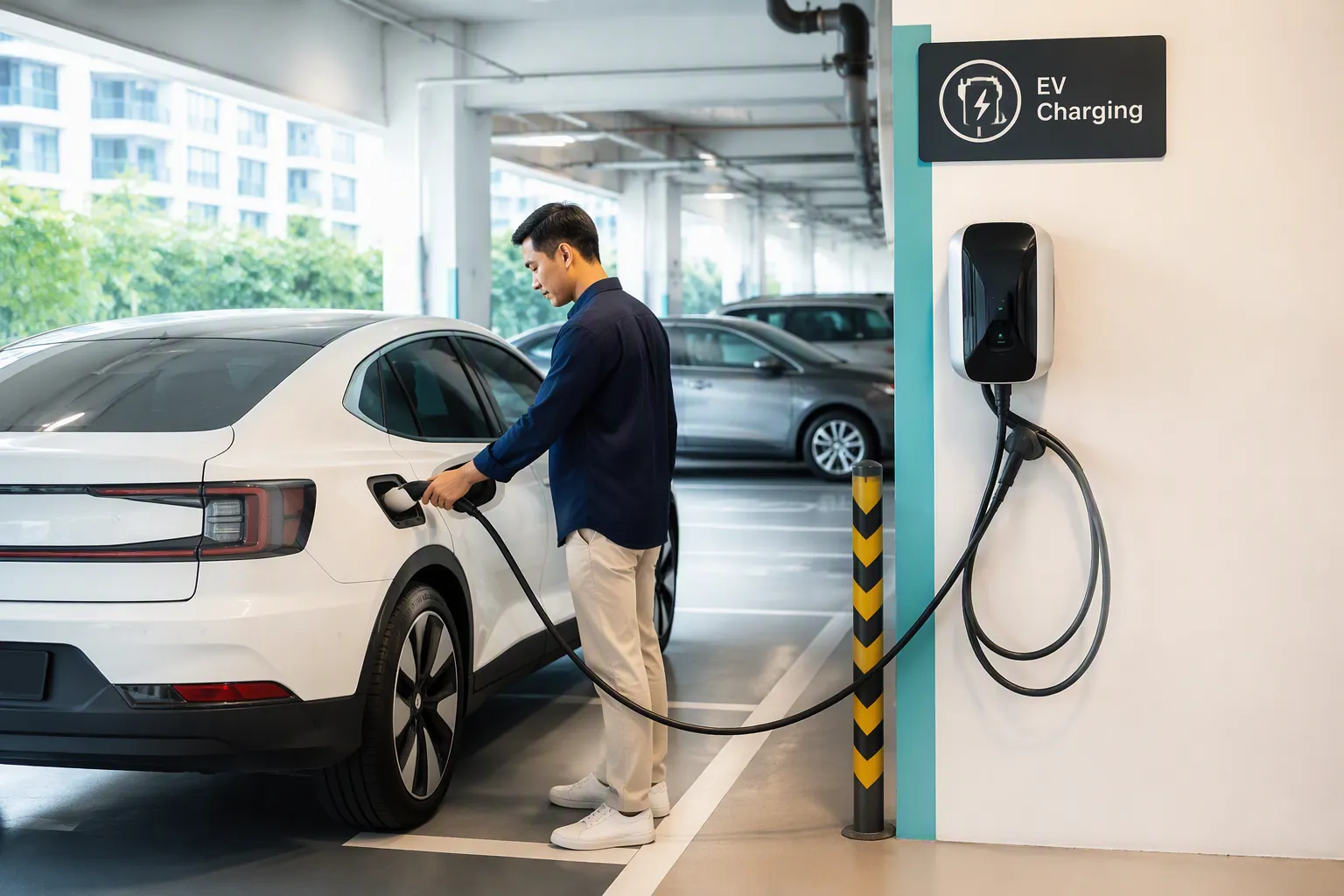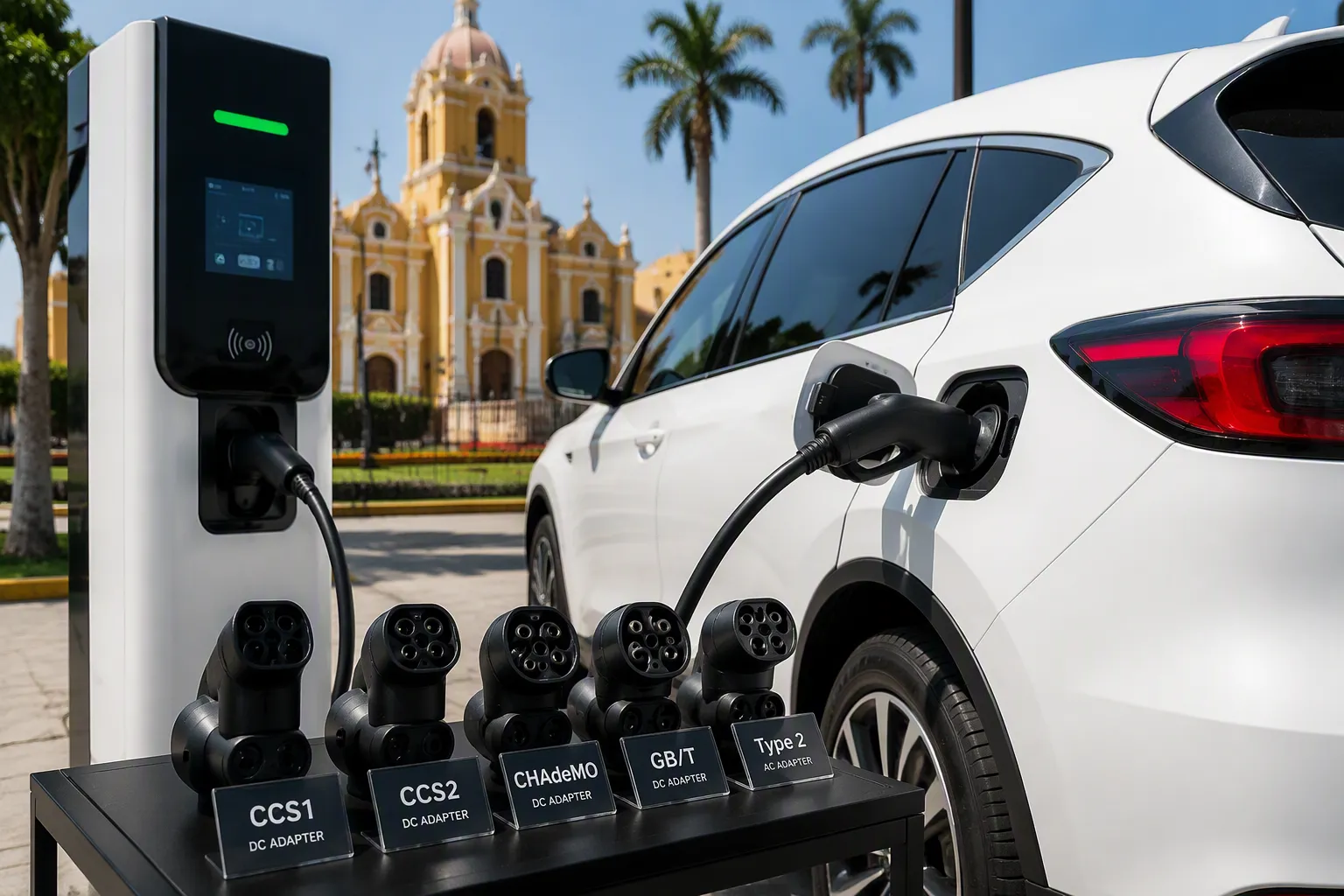

Electric vehicle adoption in Colombia shows steady growth. High costs and limited awareness of حلول شحن السيارات الكهربائية, however, slow this trend. New owners must decide on their charging equipment. الشركات المصنعة لشاحن السيارة الكهربائية, like the technologically advanced provider TPSON, offer many options. Choices range from simple شواحن السيارات الكهربائية المحمولة to a sophisticated smart charging box. For many, a smart شاحن السيارة الكهربائية represents a worthwhile investment. The final choice balances budget, personal charging habits, and a desire for future-ready technology.
What Exactly is a ‘Smart’ Charging Box?
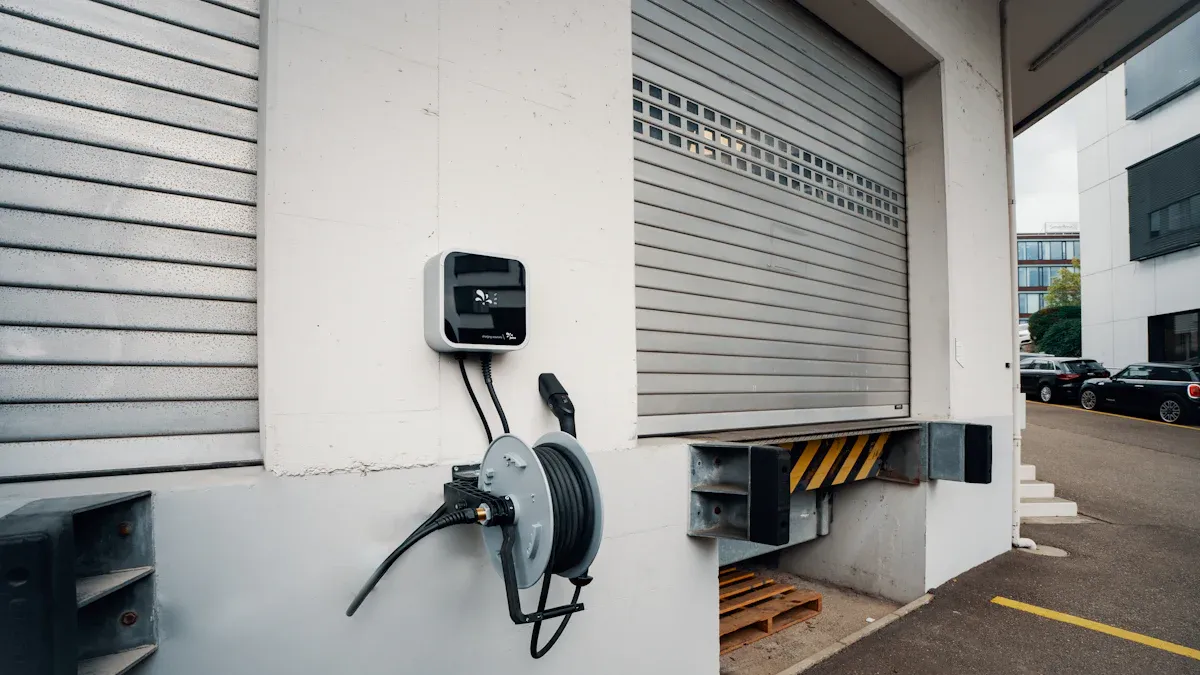
Before weighing the pros and cons, it is crucial to understand what separates a smart charging box from a standard, or “dumb,” charger. The difference lies in connectivity and intelligence. A standard charger simply delivers electricity, much like a wall socket. A smart charger, however, includes a data connection that unlocks a host of القدرات المتقدمة.
Smart vs. ‘Dumb’ Chargers: The Key Differences
Connectivity and App Control
The most significant distinction is communication. A smart charger connects to your home’s Wi-Fi or Bluetooth network. This connection enables remote control through a smartphone app. Users can start, stop, and monitor charging sessions from anywhere. A standard charger lacks this feature, operating only when a vehicle is physically plugged in.
الجدولة والأتمتة
Smart chargers empower users to automate their charging routines. An owner can schedule charging to begin during specific hours, such as late at night. This feature is a core component of managing energy costs. Standard chargers do not offer scheduling; they begin delivering power the moment they are connected.
خرج الطاقة وسرعة الشحن
Both smart and standard chargers are available in various power levels (e.g., 7kW, 22kW), which determine the maximum charging speed. However, a smart charger provides granular control over the energy output. It can adjust the power flow based on household demand or user settings, which helps protect the vehicle’s battery.
معايير السلامة والاعتماد
All reputable chargers sold in Colombia must meet strict safety certifications. Advanced providers like TPSON ensure their products comply with international standards. Smart chargers add another layer of safety with features like موازنة التحميل الديناميكية, which actively prevents overloading a home’s electrical circuit.
How Smart Charging Technology Works
The “smart” functionality relies on a seamless flow of information between the charger, the vehicle, and the user.
The Role of Wi-Fi and Bluetooth
Wireless connectivity is the backbone of a smart charger. Wi-Fi connects the device to the internet, allowing it to communicate with a cloud-based platform and the user’s smartphone app. This enables remote commands and data reporting.
Communication with Your EV
When an EV is connected, the charger and vehicle begin a digital handshake. The system authenticates the vehicle and authorizes the session. Throughout the process, the charger sends real-time data, including the battery status and energy consumption, to a central management system. This constant data exchange ensures a reliable and efficient transfer of energy to the car’s battery.
تحديثات البرامج عبر الهواء (OTA)
An internet-connected charger can receive software updates directly from the manufacturer. These OTA updates can introduce new features, improve battery charging algorithms, and enhance security, ensuring the device remains effective and up-to-date.
Data Collection and Reporting
A smart charger meticulously tracks every charging session. It records the amount of energy consumed, the duration of the charge, and the associated costs. This data is presented in easy-to-read reports within the app, giving users clear insight into their EV’s energy usage.
The Pros: Why a Smart Charger is a Great Idea in Colombia
While a standard charger gets the job done, a smart charger elevates the entire EV ownership experience. It transforms a simple power transfer into an intelligent, optimized, and cost-effective process. For Colombian EV owners, the benefits often extend beyond simple convenience, touching on financial savings, home safety, and future readiness.
Pro 1: Unlock Potential Savings on Your Electricity Bill
One of the most compelling reasons to invest in a smart charger is its ability to lower household expenses. This device gives owners precise control over when and how they use electricity, directly impacting their monthly bills and maximizing their return on investment.
Understanding Time-of-Use (TOU) Tariffs in Colombia
Some Colombian utility companies offer Time-of-Use (TOU) or variable-rate tariffs. These plans charge different prices for electricity depending on the time of day. Energy is typically most expensive during peak hours (late afternoon and early evening) and cheapest during off-peak hours (late at night). A smart charger is the key to unlocking these savings.
How Smart Scheduling Maximizes Savings
Smart scheduling is the core feature for cost reduction. An owner can use a smartphone app to program the charger to operate only during off-peak hours. The vehicle is plugged in when the owner gets home, but the charger waits until the فترات أسعار الكهرباء الأرخص begin. This simple automation ensures the car’s battery is full by morning at the lowest possible cost, generating significant savings over time.
Real-World Savings Examples
Consider a household on a variable-rate plan. Charging an EV during peak hours could double the cost compared to charging overnight. A smart charger automates this process, ensuring the owner always benefits from the lowest rate without any manual effort. Over a year, these accumulated savings can be substantial, helping to offset the initial cost of the charger itself.
ملاحظة: The total savings depend on your utility’s specific tariff structure and your driving habits. However, consistent off-peak charging always results in a lower energy bill compared to unmanaged charging.
Monitoring Your Energy Consumption in Real Time
Knowledge is power. A smart charger provides detailed reports on every charging session. Owners can see exactly how much energy their vehicle consumed and what it cost. This data helps them understand their EV’s impact on their total household energy usage and identify further opportunities for savings.
Pro 2: Enhance Safety and Protect Your Home’s Electrical System
Beyond cost, safety is a paramount concern. Advanced chargers from providers like TPSON incorporate intelligent features designed to protect not only the vehicle but also the home’s entire electrical infrastructure.
ما هي موازنة التحميل الديناميكية؟
موازنة التحميل الديناميكية is a crucial safety feature. A smart charger with this function constantly monitors the total electricity being used in a home. If it detects that the household’s energy consumption is nearing its maximum capacity (for example, when the oven, air conditioning, and shower are all running), it automatically reduces the charging power to the EV. This mechanism ensures safe and efficient charging while actively preventing electrical overloads.
Preventing Circuit Overloads in Colombian Homes
Many Colombian homes, especially older ones, were not built to handle the high, sustained load of an EV charger plus other major appliances. A standard charger running at full power could easily trip a circuit breaker or, in worse cases, cause damage. Dynamic load balancing automatically adjusts the charging power according to the household’s electricity capacity, making it a vital feature for avoiding these dangerous overloads.
Protecting Your EV’s Battery Health
A healthy battery is essential for a long-lasting EV. Smart chargers contribute to battery longevity. They can manage the charging speed, avoiding consistently fast charging that can degrade the battery over time. By optimizing the flow of energy, the charger helps maintain the battery’s capacity and overall health for years to come.
Contributing to Local Grid Stability
When many EVs in a neighborhood charge simultaneously during peak hours, it can strain the local electricity grid. Smart charging helps distribute this demand. By shifting charging to off-peak times, users help balance the load on the grid, contributing to a more stable and reliable energy supply for the entire community.
Pro 3: Gain Unmatched Convenience and Remote Control
The “smart” in smart charger truly shines when it comes to user convenience. The ability to manage charging from anywhere offers a level of freedom and control that standard chargers cannot match.
The Power of a Smartphone App
The smartphone app is the command center for your smart charging box. From a single interface, users can access all the device’s features. This integration of hardware and software is what makes the experience so seamless. Key benefits include:
- Remote Operation: Start or stop a charge from your office or a restaurant.
- المراقبة في الوقت الحقيقي: Check the charging progress and current battery level.
- Session History: Review past energy usage and costs.
- Access Management: Grant charging permissions to others.
Start, Stop, and Monitor from Anywhere
Imagine you forgot to plug in your car, but a family member did it for you. You can initiate the charging session from your phone. Or, if you need to leave unexpectedly, you can stop the session remotely to ensure the car is ready. This level of control provides immense peace of mind.
Checking Charge Status Without Going to the Garage
There is no need to walk out to the garage to see if the car is finished charging. A quick glance at the app shows the current battery percentage and the estimated time until the battery is full. It is a small convenience that owners quickly come to appreciate in their daily routine.
Sharing Access with Family or Guests
A smart charger allows the primary owner to grant temporary or permanent charging access to others. If a family member or a guest needs to charge their EV, you can authorize their session through the app without sharing your main account details. This feature is perfect for multi-EV households or for extending hospitality to visiting friends.
Pro 4: Future-Proof Your EV Setup
An investment in a smart charging box is not just about present benefits. It is a strategic decision that prepares an EV owner for the future of energy management. The technology landscape is evolving rapidly. A smart charger ensures a home’s EV setup remains relevant, compatible, and capable of leveraging next-generation innovations.
الاستعداد لتكنولوجيا توصيل المركبات إلى الشبكة (V2G)
The concept of an EV is expanding beyond transportation. Soon, vehicles will become active participants in the energy ecosystem. Smart chargers are the gateway to this future. New technology allows power to flow from the EV, meaning the energy stored in the vehicle’s battery can power a home when needed. This capability is known as Vehicle-to-Grid (V2G) or Vehicle-to-Home (V2H). Technologically advanced providers like TPSON design their chargers to be ready for these advancements.
- Modern smart chargers receive over-the-air (OTA) firmware updates, allowing manufacturers to add new features without hardware changes.
- V2G technology enables an EV battery to supply electricity back to the grid, helping to stabilize it during peak demand.
- V2H functionality allows the car’s battery to act as a generator, powering a home during an outage or when grid energy prices are high.
- A smart charger with these capabilities transforms from a simple power device into an intelligent energy hub, optimizing costs and enabling participation in future energy programs.
Integration with Solar Panels and Home Batteries
Many Colombian households are exploring solar energy to reduce costs and environmental impact. A smart charger is the perfect companion for a home solar installation. It intelligently manages the flow of energy between the solar panels, the home, and the EV. The charger can be programmed to direct surplus solar power directly to the vehicle’s battery. This process ensures that every kilowatt of self-generated energy is used efficiently.
The EV effectively becomes a mobile energy storage unit. It captures free energy from the sun during the day. The owner can then use that stored energy to drive or, with V2H, power the home at night. This synergy between solar panels and a smart charger maximizes self-sufficiency.
This integration turns the car’s battery into a dynamic part of the home’s energy storage strategy. It complements stationary home batteries and reduces reliance on the grid, especially when solar production is high.
Staying Ahead of Evolving Energy Regulations
Energy markets and regulations are constantly changing. As more EVs connect to the grid, utility companies in Colombia may introduce new programs like demand response. These programs could offer financial incentives to owners who allow the utility to briefly pause or reduce their charging speed during periods of extreme grid stress. A standard charger cannot participate in such programs. A smart charger, with its connectivity and ability to receive OTA updates, can easily adapt to new rules and standards, ensuring the owner remains compliant and can take advantage of future incentives.
Compatibility with Future EV Models
The electric vehicle market is innovating at a breathtaking pace. New models with different battery chemistries, charging protocols, and software are released every year. A smart charger is designed for this dynamic environment. Manufacturers regularly push software updates to their chargers. These updates ensure compatibility with the latest vehicles, guaranteeing that the charger can communicate effectively with any new EV an owner might purchase. This adaptability protects the initial investment and ensures the charger remains a useful, effective tool for any future electric car, truck, or SUV.
The Cons: Why You Might Skip the Smart Charger in Colombia
While smart chargers offer impressive features, they are not the default best choice for every EV owner in Colombia. A number of practical and financial considerations might lead a buyer to choose a simpler, more traditional charging solution. The higher price, local utility structures, and the simple fact that a standard charger is often sufficient are all valid reasons to pause before making the investment.
Con 1: The Significantly Higher Upfront Cost
The most immediate barrier for many potential buyers is the price tag. A smart charging box represents a larger financial commitment compared to its standard counterpart, and this initial expense requires careful consideration.
Comparing Prices: Smart vs. Standard Chargers
There is a clear price difference between smart and standard chargers. The advanced technology, including Wi-Fi connectivity, processors, and sophisticated software, adds to the manufacturing cost. This premium can be significant, sometimes making a smart charger double the price of a basic model with the same power output.
Factoring in Professional Installation Costs
Both smart and standard chargers require professional installation by a qualified electrician to ensure safety and compliance. This installation cost is a fixed expense regardless of the charger type. However, when added to the higher purchase price of a smart model, it elevates the total upfront investment considerably. This makes the initial financial hurdle even higher for budget-conscious buyers.
Is the Premium Justified for Your Budget?
Every buyer must weigh the advanced features against their personal budget. The convenience of remote control and detailed energy tracking is appealing. Yet, if the primary goal is simply to charge the vehicle safely and effectively, the extra cost for smart features may not be justifiable. The decision comes down to a personal calculation of value versus cost.
حساب العائد على الاستثمار (ROI) الخاص بك
Proponents of smart chargers often highlight the long-term savings on energy bills. Calculating this return on investment (ROI) is essential. However, the potential for savings depends entirely on the ability to leverage cheaper electricity rates. If those rates are not available, the payback period for the higher initial cost could be very long or even nonexistent.
Con 2: The Reality of Colombian Electricity Tariffs
The primary financial benefit of a smart charger—scheduling charges for cheaper off-peak hours—is not a universal advantage in Colombia. The structure of the country’s electricity billing system can render this key feature ineffective for many households.
Limited Availability of Variable Rates by Utility
Time-of-Use (TOU) or variable-rate electricity plans are not standard across all utility providers in Colombia. Many regions and providers operate on a flat-rate system, where the cost per kilowatt-hour (kWh) remains the same 24 hours a day. In this scenario, scheduling a charge for 2:00 AM provides no financial benefit over charging at 7:00 PM.
نصيحة: Before purchasing any charger, check your monthly electricity bill or contact your utility provider (e.g., EPM, Enel-Codensa, Celsia) directly. Ask them explicitly if they offer variable or Time-of-Use tariffs for residential customers.
How to Check Your Utility Provider’s Tariff Structure
Understanding your billing is simple. Your electricity bill (فاتورة الكهرباء) details the rate structure. Look for terms like المعدل بالساعة (hourly rate) or different prices for peak (peak) and off-peak (off-peak) periods. If your bill only shows a single التكلفة لكل كيلووات/ساعة, you are likely on a flat-rate plan.
How the ‘Estrato’ System Impacts Flat-Rate Billing
Colombia’s socioeconomic stratification system, known as ‘socioeconomic strata’, heavily influences utility costs. This system often reinforces flat-rate billing structures. Properties are classified from 1 (lowest income) to 6 (highest income), which determines subsidies or surcharges on the base energy cost.
| Estrato | Socioeconomic Level | Electricity Billing Impact |
|---|---|---|
| 1 | Low-low | Receives subsidies |
| 2 | منخفضة | Receives subsidies |
| 3 | Medium-low | Receives subsidies |
| 4 | متوسط | Pays full cost |
| 5 | Medium-high | Pays surcharges to subsidize lower socioeconomic strata |
| 6 | عالية | Pays surcharges to subsidize lower socioeconomic strata |
This system focuses on social equity rather than demand management. As a result, the final price per kWh is often a fixed amount adjusted for the estrato, not for the time of day the energy is consumed.
When a Smart Charger’s Main Feature is Ineffective
The conclusion is straightforward. If your household is on a flat-rate electricity plan, the primary cost-saving feature of a smart charger is completely nullified. You cannot save money by shifting your energy consumption to off-peak hours if those hours do not exist in your billing structure. The investment in smart scheduling capabilities would yield no financial return.
Con 3: A Standard ‘Dumb’ Charger Is Often Good Enough
For many EV owners, the core need is simple: to replenish the car’s battery safely and reliably. A standard, or “dumb,” charger accomplishes this task perfectly well, offering a straightforward solution without the complexity of smart technology.
بساطة “التوصيل والشحن”
A standard charger offers unmatched simplicity. There are no apps to download, no Wi-Fi passwords to enter, and no software updates to manage. The user experience is direct: you plug the cable into the car, and it begins charging. For individuals who prefer technology that just works without configuration, this “plug and charge” approach is ideal.
When Your EV Already Has Built-in Charging Controls
Many modern electric vehicles come equipped with their own onboard charging schedulers. Owners can use the car’s infotainment system or its companion smartphone app to set charging start and stop times. If your vehicle already has this capability, it makes the scheduling feature of a smart charger redundant. You can achieve the same result—timed charging—without the extra expense of a smart wallbox.
If Your Daily Commute is Short and Consistent
Consider your driving habits. An owner with a short, predictable daily commute may not need sophisticated charging management. They can simply plug in their car upon returning home, and it will easily be fully charged by the next morning, even at a lower power level. The need for remote monitoring or complex scheduling is minimal in this common scenario.
Meeting Basic Safety and Charging Needs
It is a misconception that standard chargers are unsafe. Reputable “dumb” chargers from quality providers are built to meet the same rigorous international safety standards as their smart counterparts. They include essential safety protections like overcurrent and overheating prevention. They deliver a consistent and safe flow of energy to the vehicle, fulfilling the fundamental requirement of EV charging without added frills.
Con 4: The Hassle of Technical Complexity and Connectivity
The advanced features of a smart charger depend on a chain of technology working perfectly. This reliance on software and connectivity introduces potential points of failure that do not exist with a standard charger. For some owners, managing this technology can feel more like a hassle than a benefit.
The Need for a Stable Wi-Fi Signal in Your Garage
A smart charger’s intelligence is powered by its internet connection. Without a strong, stable Wi-Fi signal, it effectively becomes a “dumb” charger with a higher price tag. Many Colombian homes have garages or parking spaces located far from the main internet router. Concrete walls and floors often block or weaken the signal, making a reliable connection difficult to achieve.
Signal Check! 📶
Before buying a smart charger, an owner should take their smartphone to the exact spot where the charger will be installed. They must check if a strong and consistent Wi-Fi signal is available. If the signal is weak or nonexistent, they will need to invest in a Wi-Fi extender or a mesh network system, adding another layer of cost and technical setup.
Dealing with App Glitches and Updates
Smart chargers operate using complex software, both on the device itself (firmware) and on the owner’s smartphone (the app). Like any software, it can be prone to occasional issues. An owner might encounter problems that disrupt the user experience.
- The smartphone app could freeze or crash.
- A firmware update might fail to install correctly.
- The charger could lose its connection to the server, making remote control impossible.
Technologically advanced providers like TPSON regularly release over-the-air (OTA) updates to improve performance and fix bugs. However, the process of updating and troubleshooting can be a source of frustration for users who simply want their charger to work without intervention.
Potential Setup and Configuration Challenges
The initial setup of a smart charger goes beyond the physical electrical installation. The owner must configure the software, a process that can be challenging for those unfamiliar with smart home devices. This digital setup typically involves several steps that a standard charger does not require.
| المهمة | Standard ‘Dumb’ Charger | الشاحن الذكي |
|---|---|---|
| Physical Install | Electrician wires the unit. | Electrician wires the unit. |
| First Use | Plug in the car. | Download an app. |
| التكوين | None. | Create an account. |
| الاتصال | None. | Connect charger to home Wi-Fi. |
| الجدولة | Not available. | Program charging times in the app. |
This multi-step process of pairing the device, creating an account, and navigating settings menus can be a significant hurdle for some individuals.
Is It Too Complicated for a Non-Techy User?
The answer depends on the individual’s comfort level with modern technology. A person who enjoys customizing settings on their phone and managing smart home gadgets will likely find the setup straightforward. However, for an EV owner who prefers simplicity and avoids troubleshooting electronics, a smart charger can introduce unnecessary complexity. The prospect of dealing with Wi-Fi issues, app updates, and configuration menus may outweigh the benefits of remote control and scheduling, making a simple “plug and charge” device a much more attractive option.
Managing Your Home’s Energy with a Smart Charger
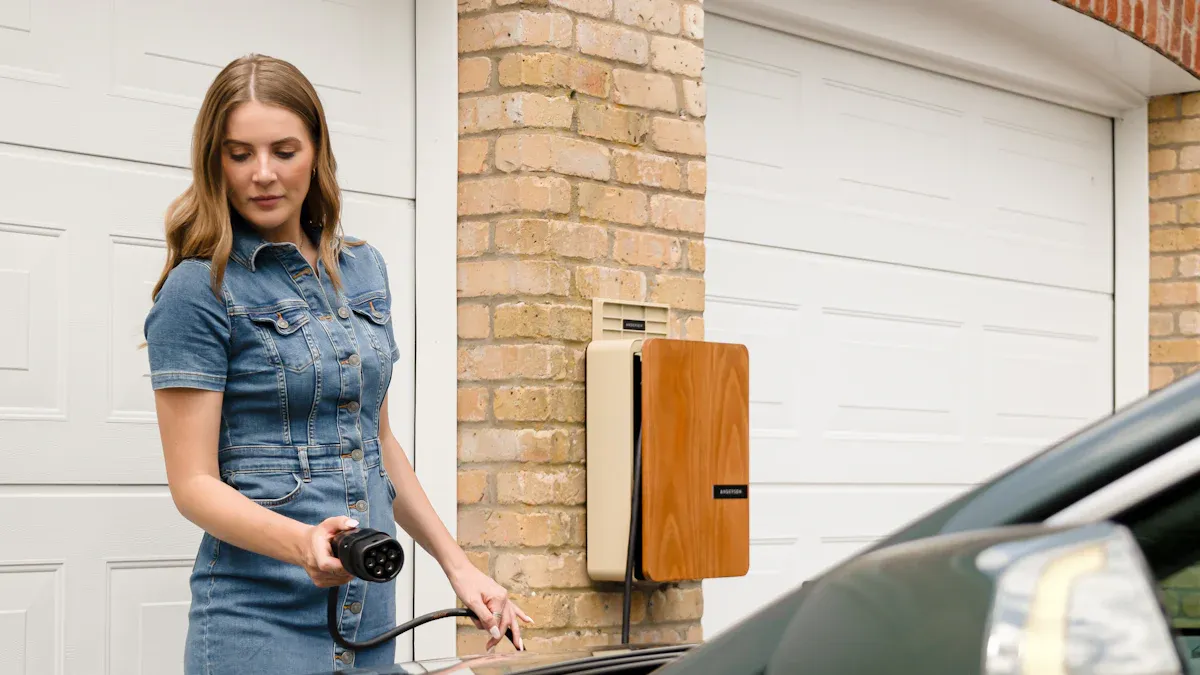
شاحن ذكي transforms from a simple vehicle accessory into a central tool for home energy management. It offers owners sophisticated control over their electricity consumption, integrating the vehicle into the household’s ecosystem. This capability is especially valuable for optimizing costs and ensuring electrical safety.
The Importance of Load Management in Colombia
Proper load management is critical for any home with an electric vehicle. A smart charger provides the necessary intelligence to handle this task automatically.
تقييم القدرة الكهربائية لمنزلك
An EV owner must first understand their home’s electrical limits. A smart charger with موازنة التحميل الديناميكية monitors the total household energy use. It automatically adjusts the power flowing to the car’s battery. This prevents circuit overloads, a vital safety measure in homes not originally designed for high, sustained power draws.
Avoiding Peak Demand Charges
Some utility tariffs in Colombia include peak demand charges, which penalize high, simultaneous energy consumption. A smart charger helps manage the maximum power draw. It can limit the charging rate during peak times, helping homeowners avoid these costly fees and control their overall energy expenses.
Smart Chargers and Grid Support
Smart chargers contribute to the stability of the local electrical grid. By scheduling charging for off-peak hours, users help distribute the electrical load more evenly. This collective action reduces strain on community infrastructure, promoting a more reliable energy supply for everyone.
Integrating with Other Smart Home Devices
The true power of a smart charger is realized when it connects with other intelligent devices. Technologically advanced providers like TPSON design their chargers to be key components of a connected home.
Connecting to Solar Panel Systems
A smart charger seamlessly integrates with a home solar installation. It can intelligently direct surplus solar energy to the vehicle’s battery. This process ensures that every kilowatt of self-generated solar power is used efficiently. The EV’s battery effectively becomes a mobile power bank, storing free energy from the sun for later use. This synergy maximizes the value of a solar investment.
Working with Home Battery Storage
For homes with stationary energy storage, a smart charger adds another layer of optimization. The system can prioritize where to send excess solar power. It might first charge the home battery and then direct remaining energy to the car’s battery. This integrated approach ensures maximum self-sufficiency and resilience.
Voice Control via Alexa or Google Assistant
Modern smart chargers offer integration with popular voice assistants. An owner can use simple voice commands to manage their charging sessions.
- “Alexa, start charging my car.”
- “Hey Google, what is my car’s battery level?”
This hands-free control adds a significant layer of convenience to the daily routine, making the smart charger a true part of the modern smart home.
The Verdict: Making the Right Choice for You
The decision between a smart and a standard charger depends entirely on an owner’s specific circumstances. There is no single correct answer. An owner must evaluate their budget, utility plan, and technological comfort to make an informed choice that aligns with their needs.
You SHOULD Get a Smart Charger If…
A smart charger is an excellent investment for certain EV owners. These individuals will unlock the full potential of the technology.
You Have Access to Off-Peak Electricity Rates
An owner with a variable-rate utility plan can significantly reduce charging costs. Smart scheduling allows the charger to automatically draw energy when it is cheapest. This feature directly lowers the household energy bill.
You Are a Tech-Enthusiast Who Loves Control
A person who enjoys data and remote management will appreciate a smart charger. The companion app provides detailed reports on energy consumption, costs, and battery status. It offers complete control over the charging process from anywhere.
Your Home Has High or Complex Electrical Loads
Safety is a key benefit for homes with limited electrical capacity. Dynamic load balancing protects the circuit by adjusting the power sent to the car’s battery. This prevents overloads when other large appliances are running.
You Plan to Integrate Solar or V2G in the Future
A smart charger future-proofs a home’s energy ecosystem. It is essential for anyone planning a solar installation.
- The charger can direct surplus solar power to the vehicle’s battery.
- This turns the car into a form of mobile energy storage.
- The stored solar energy can then power the vehicle or the home.
Technologically advanced providers like TPSON design their chargers to be ready for these integrations, ensuring compatibility with future solar and battery systems.
You Can SKIP the Smart Charger If…
A standard charger is often the more practical and economical choice. Many owners will find its simplicity perfectly meets their requirements.
You Are on a Tight Budget
The higher upfront cost of a smart charger is a major factor. If the budget is limited, a standard charger provides the same core function—charging the vehicle’s battery—for a lower price.
Your Utility Bill is a Flat Rate
The primary cost-saving feature of a smart charger is ineffective without Time-of-Use rates. If an owner pays a flat rate for electricity, scheduling a charge for a different time provides no financial benefit.
You Prefer Simplicity and Fewer Gadgets
Some owners prefer a straightforward “plug and charge” experience. A standard charger avoids the need for apps, Wi-Fi configuration, and software updates. It offers reliable charging without any technical complexity.
Your EV’s Built-in Scheduler Meets Your Needs
Many modern EVs have their own scheduling features. An owner can use the car’s system to control charging times. This makes the scheduling function of a smart charger redundant, allowing the owner to save money on the wallbox.
A smart charging box is a beneficial but not essential tool for every EV owner in Colombia. The best choice is a personal calculation. An owner must weigh the potential for significant التوفير on الطاقة التكلفة against the higher initial investment. Managing the الطاقة for the car’s battery is key. The right investment can lower the التكلفة of الطاقة for the battery, yielding long-term التوفير. هذا الطاقة management ensures the battery is full at the lowest التكلفة. إن التوفير on الطاقة for the battery can be substantial.
Final Checklist for Your Decision: An owner should evaluate their specific situation to make the smartest choice.
- What is your utility provider’s rate structure?
- What is your home’s electrical capacity?
- What is your budget for the charger and التركيب?
- How comfortable are you with smart technology?
الأسئلة الشائعة
Is professional installation required for all chargers?
نعم qualified electrician must install any Level 2 wallbox charger, whether smart or standard. This ensures the installation meets local electrical codes and operates safely. Proper installation is crucial for protecting the home’s electrical system and the vehicle.
What happens if my smart charger loses its Wi-Fi connection?
A smart charger requires Wi-Fi for its advanced features like remote control and scheduling. Without a connection, it reverts to a “dumb” mode. The device will still charge the vehicle safely when plugged in but loses its smart functionality until the connection is restored.
Are standard ‘dumb’ chargers less safe than smart ones?
No. Reputable standard chargers meet the same rigorous international safety certifications as smart models. They provide essential protections against overcurrent and overheating. Smart chargers simply add an extra layer of safety with features like dynamic load balancing for complex electrical systems.
How do I know if my home can handle a 22kW charger?
Most Colombian homes support a 7kW charger without major upgrades. A 22kW charger requires a three-phase electrical supply, which is uncommon in residential properties. An electrician must assess the home’s electrical panel and wiring to determine its maximum capacity before installation.
Can I use my EV’s built-in scheduler with a standard charger?
Yes. If an electric vehicle has its own scheduling function, an owner can use it with a standard charger. The car’s system will control when charging begins and ends. This combination provides cost-saving benefits without the extra expense of a smart wallbox.
كيف تُجهز الشواحن الذكية المنزل للمستقبل؟
تقوم شركات متقدمة تقنيًا مثل TPSON بتصميم الشواحن بما يتناسب مع اتجاهات الطاقة المستقبلية. حيث يمكن لشواحنها الذكية استقبال تحديثات لاسلكية. وهذا يُهيئ النظام لتقنية المركبة إلى الشبكة (V2G) والاندماج السلس مع أنظمة الألواح الشمسية المستقبلية أو أنظمة تخزين بطاريات المنزل.