Commercial EV Charging Solutions: Transforming Your Business Property
Commercial EV charging is no longer a “nice-to-have.” It’s a practical infrastructure upgrade that can increase property competitiveness, improve fleet readiness, and create a modern driver experience. This guide explains how to plan, deploy, and operate a commercial EV charging program—globally— with a focus on site readiness, charger selection (AC vs. DC), software, safety, and long-term scalability.
Looking for vendor-neutral categories first? Explore EV Chargers, AC EV Chargers, and DC EV Chargers. Learn about an EV Chargers manufacturer background and R&D approach.
1) Why commercial EV charging transforms property value
Commercial EV charging can upgrade a property in three ways: (1) driver attraction (more visits, longer dwell time, repeat usage), (2) operational readiness (fleet charging, employee charging, service-center workflow), and (3) future-proof infrastructure that aligns with electrification trends.
ChargePoint frames this shift as an “EV charging platform of choice,” combining hardware, software, and services designed to support organizations and fleets across Europe and North America. They emphasize flexible solutions (mix hardware with software), open operations (including OCPP-compliant hardware), and a consistent driver experience via mobile and in-vehicle integrations. These are commercial-grade priorities: chargers are not just electrical equipment—they are an ongoing service with uptime expectations.
For retail and travel-stop environments, Love’s highlights the business reality: EV charging is part of making drivers “road trip ready,” supported by amenities (food, restrooms, dog parks, WiFi) that improve customer satisfaction while vehicles charge.
2) Core commercial use cases (and what they require)
| Use case | Typical dwell time | Best-fit charger type | Operational focus |
|---|---|---|---|
| Workplace (employee charging) | 4–10 hours | Primarily AC (Level 2) | Access control, fair sharing, reporting |
| Apartments / condos | Overnight | AC with load management | Billing, power allocation, tenant management |
| Retail / destinations | 30–120 minutes | Mix: AC + DC | Conversion, signage, uptime |
| Fleet depots / logistics | Scheduled windows | AC (overnight) + DC (turnaround) | Load optimization, uptime, dispatch readiness |
| Travel stops / highway corridors | 15–45 minutes | Primarily DC fast (Level 3) | Throughput, amenities, always-on operations |
Love’s provides a clear example of the travel-stop model: an established EV network with 100+ chargers across 36 locations in 14 states, and additional fast-charging locations being added through 2026—built close to highways with efficient entry/exit and supported by 24/7 staffing and amenities.
3) AC vs. DC charging: picking the right mix
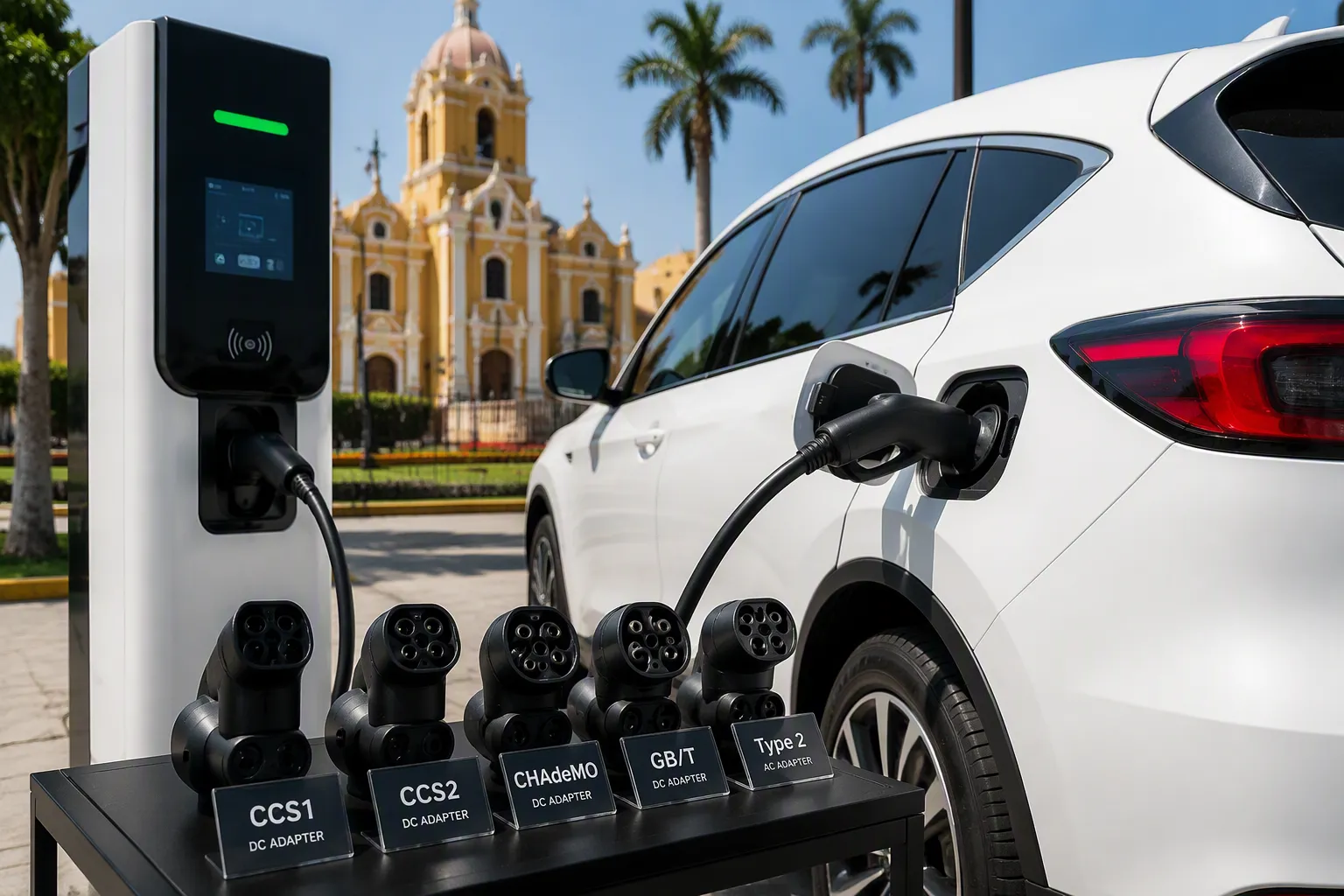
Commercial properties should choose charger types based on how long vehicles typically stay parked—not on “fastest possible” specs. TPSON’s EV Chargers overview summarizes the planning logic well: use versatile AC chargers (including Dynamic Load Balancing to protect electrical systems) and compact DC fast chargers for commercial and emergency applications, with robust connectivity and global-standard connectors.
AC EV Chargers (Level 2): the backbone for long dwell
AC is ideal when cars sit for hours—workplaces, hotels, campuses, multi-unit dwellings, and long-stay parking. It’s also usually the most economical way to scale port counts because the power per stall is lower.
On TPSON’s AC EV Chargers category page, the line-up includes TW-10, TW-20, TW-30, and TW-40 Dual Gun Wallbox EV Charger—signaling common commercial needs like multiple power tiers and dual-gun configurations.
DC EV Chargers (fast charging): throughput and operational flexibility
DC fast charging makes sense when dwell time is short, or when vehicles must return to service quickly (travel corridors, service centers, fleet turnaround, roadside support).
TPSON’s portable DC product page describes the TP-DC Compact Series integrating 20kW, 30kW, and 40kW intelligent charging modules, designed for small-to-medium passenger vehicles and commercial logistics vehicles, suitable for household and enterprise scenarios—especially where mobility matters. It lists an all-in-one design with wheel mobility, a 7-inch touch screen, optional Ethernet/4G, default 5m cable, AC380V input, DC50–1000V output range, and extensive protection functions.
Love’s shows the network perspective: they are adding more DC fast chargers (Level 3) to complement their existing AC (Level 2) network—because different drivers and vehicles have different stop durations and charging needs.
4) Site readiness: power, space, and installation reality
Most commercial EV charging problems are not “charger problems.” They are site design problems: insufficient electrical capacity, unrealistic expectations about trenching or conduit, or poor stall placement and traffic flow.
Power planning: scale ports without overbuilding
A practical site plan balances number of ports (availability) against power per port (speed). Smart Charge America’s catalog illustrates how the commercial market spans everything from Level 2 to high-power DC fast charging (e.g., Ford Pro AC stations, Ford Pro DC stations), emphasizing that the right choice depends on use case and site constraints.
Installation footprint, routing, and user experience
- Traffic flow: design entry/exit and turning paths so vehicles can access stalls without blocking ICE vehicles or delivery lanes.
- Cable reach: place chargers where the cable reaches typical charge-port locations without stretching across walkways.
- Lighting & visibility: charging areas should feel safe at night; clear signage reduces support calls.
- Amenities: Love’s approach demonstrates how restrooms, food, and WiFi improve the overall charging experience.
Commercial tip: If your goal is “more drivers,” prioritize uptime and easy-to-find stalls over maximum kW. If your goal is “faster turnaround,” prioritize DC capacity and grid coordination. Many successful sites deploy both.
5) Software & operations: turning chargers into a service
For commercial deployments, the “charger” is only one component. You need operating software for at least: monitoring, access control, pricing, reporting, and support workflows.
Open operations and interoperability
ChargePoint emphasizes operating ChargePoint stations, partner “ChargePoint Ready” stations, or any OCPP-compliant hardware, using an open software platform to set up, manage, and monitor operations. For site owners, this matters because it influences vendor flexibility, integration with existing property systems, and long-term upgrade paths.
Remote control without dependence on on-site internet (a different model)
Smart Charge America lists the SCA40 – Powered by Xeal as a commercial Level 2 solution positioned for apartments, condos, retail, and fleets, highlighting payment processing and access control while requiring no cellular or WiFi connectivity, plus “dynamic load optimization” to install more chargers without expensive electrical upgrades. This illustrates an alternative operating approach for properties with challenging IT environments.
Driver experience and discovery
ChargePoint highlights a driver experience network and app-based charging (find, start, pay), plus integrations such as Apple CarPlay, Android Auto, and in-dash infotainment options. Love’s similarly promotes its Love’s Connect app for station finding, route planning, and location amenities. In commercial settings, discovery and usability can be as important as raw electrical output.
6) Safety & reliability: designing for uptime
Reliability is where commercial EV charging succeeds or fails. Downtime quickly becomes reputational damage and lost revenue, especially at retail and travel stops.
Product-level protections (example: portable DC)
TPSON’s TP-DC Compact Series lists a broad set of electric protections, including charging gun temperature detection, over/under-voltage protection, overload protection, short-circuit protection, ground fault protection, over-temperature protection, over-current protection, under-voltage lockout, and lightning protection, among others—plus MTBF listed at 100,000 hours. These are the kinds of “design for uptime” signals commercial buyers should look for when selecting DC equipment for operational use.
System-level safety and diagnostics (example: TPSON approach)
On its home page, TPSON describes its mission to deliver safer, cleaner, and more efficient electricity and highlights capabilities including Current Fingerprint Algorithm, Advanced Safety Protection, Dynamic Load Balancing, Dynamic Temperature Control, and Real-Time Diagnostics & Alerts. For commercial sites, these system-level functions support proactive maintenance and risk reduction.
7) Business models: free charging, paid charging, and access control
Commercial EV charging can be positioned as a perk, a revenue stream, or a cost-recovery utility. The “right” model depends on your tenant mix, customer dwell time, and operating costs.
| Model | Best for | Key requirements | Risks |
|---|---|---|---|
| Free charging | Workplace perks, retail conversion | Access rules; session limits; load control | Overuse; congestion; unclear ROI |
| Cost recovery | Multi-unit dwellings, campuses | Metering; billing; reporting | Admin burden; disputes if rules unclear |
| Revenue generation | Travel corridors, public retail | Payments; pricing policy; high uptime | Uptime risk; support needs; demand charges |
Smart Charge America’s SCA40 listing provides one concrete revenue-share example: it states 75% of billed charging revenue to the site host and 25% to Xeal for payment processing/management, paired with access control, reporting, and dynamic load optimization. Whether you choose revenue share or operate directly, clarity on “who runs what” is part of commercial readiness.
8) A practical rollout plan (from pilot to scale)
The most resilient commercial programs roll out in phases. This approach reduces risk, captures real utilization data, and prevents overbuilding.
- Define success metrics: drivers served/day, fleet readiness, tenant satisfaction, incremental revenue, dwell-time conversion.
- Choose a charger mix: AC for long dwell; DC where turnaround/throughput is required. Use TPSON’s portfolio framing as a guide: AC with Dynamic Load Balancing for electrical protection, and DC for commercial/emergency applications.
- Complete site readiness: electrical capacity, routing/conduit plan, traffic flow, ADA/accessibility considerations, signage, lighting.
- Select an operating model: decide on pricing, access control (RFID/app), and support procedures. ChargePoint emphasizes unified platforms and driver experience; Love’s emphasizes the travel-stop experience and availability.
- Pilot deployment: start with a small number of ports, validate load behavior and driver behavior, collect data.
- Scale with learnings: expand ports, increase power where it truly improves outcomes, and keep uptime as a primary KPI.
Where TPSON may fit: If you want a portfolio that includes AC solutions plus compact DC options—and a focus on safety monitoring and energy management— start with TPSON’s home overview and then navigate to EV Chargers.
FAQ
Do commercial sites need both AC and DC charging?
Not always. Sites with long dwell times (workplace, apartments) can succeed with AC alone. Sites with short dwell times (highway, convenience retail) often need DC. Love’s explicitly describes adding more DC fast chargers to complement its AC network, illustrating how mixed portfolios serve varied driver needs.
What’s the strongest reason to invest in a “platform,” not just hardware?
Commercial charging requires monitoring, uptime management, support, and an intuitive driver experience. ChargePoint highlights unified software + services, the ability to operate OCPP-compliant hardware, and driver-facing discovery/payment via app and in-vehicle integrations.
When does portable DC make sense in commercial environments?
When charging needs move (depots, events, emergency roadside assistance, dealerships/service centers). TPSON’s TP?DC Compact Series is positioned around mobility (all-in-one design with wheel mobility) and flexible 20/30/40kW modules, with listed applicable scenes including roadside assistance, fleet/logistics management, events/temporary locations, and dealerships/service centers.
References
- TPSON company overview and milestones: https://tpsonpower.com/about/
- TPSON EV charger portfolio summary (AC with Dynamic Load Balancing; DC for commercial/emergency): https://tpsonpower.com/ev-chargers/
- TPSON AC charger category (TW-10 / TW-20 / TW-30 / TW-40 dual gun): https://tpsonpower.com/ac-ev-chargers/
- TPSON portable DC charger specs, features, and applicable scenes (TP-DC 20/30/40kW): https://tpsonpower.com/portable-dc-ev-charger/
- TPSON home page (safety monitoring, Dynamic Load Balancing, diagnostics): https://tpsonpower.com/
- ChargePoint platform framing (software, services, OCPP operations, driver experience): https://www.chargepoint.com/
- Love’s EV charging network and travel-stop model (Level 2 + Level 3, amenities, 24/7 operations): https://www.loves.com/ev-charging
- Smart Charge America product catalog examples (commercial and home EVSE, access control/payment models, DC options): https://smartchargeamerica.com/electric-car-chargers/