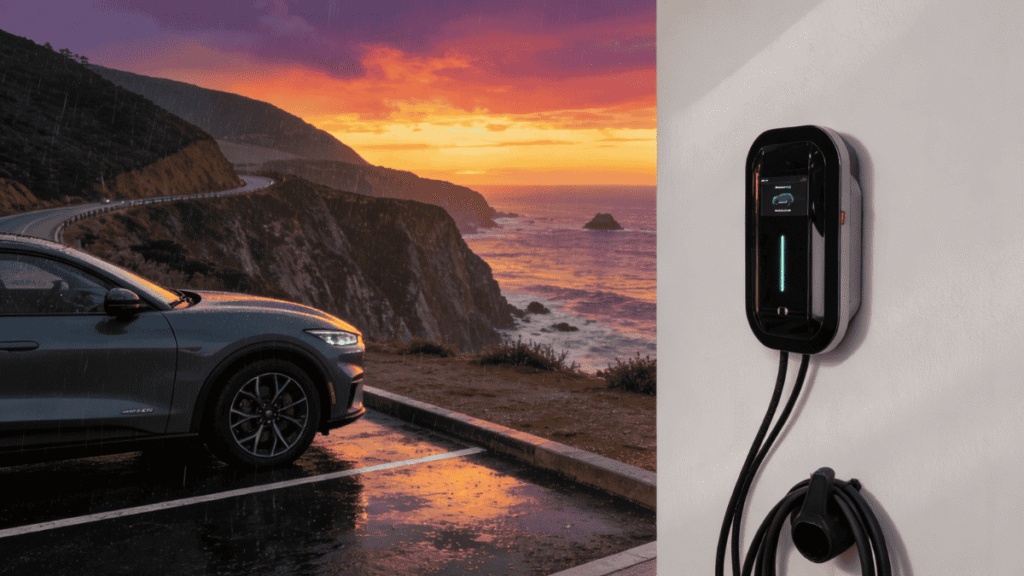
Can I Install a Fast EV Charger at Home? Costs and Limitations
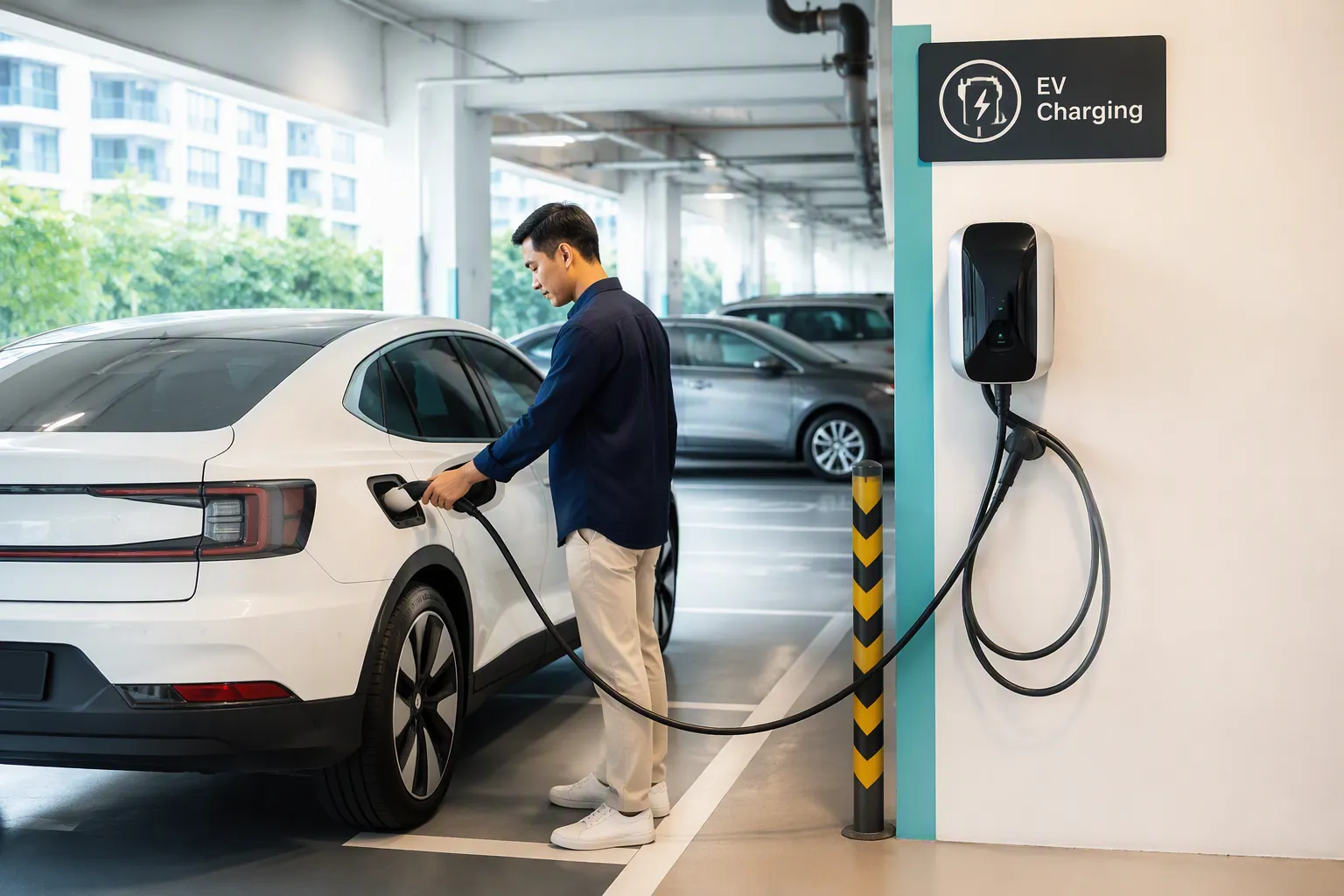
Yes—but “fast” needs to be defined. For most households, the practical “fast home charger” is a Level 2 AC EVSE (often around 7–12 kW). True “fast charging” in the public sense is usually DC fast charging (Level 3), which Car and Driver notes is generally illogical for home use due to high cost and the nature of high-voltage DC infrastructure. That said, there are niche cases where lower-power DC equipment is used in residential-adjacent or mixed residential/enterprise settings—especially when the use case looks more like operations (fleet, service, emergency support) than daily home charging.
This guide is global: it covers how home charging differs from public DC fast charging, what typically drives installation costs, and what realistic limitations you should plan around before buying hardware.
- Most homes: Install a Level 2 AC EV charger with smart scheduling; consider Dynamic Load Balancing to avoid panel upgrades.
- “True fast charging” (DC): Usually belongs in public or commercial contexts; high power levels (50–350 kW) are typically not realistic at home.
- Niche exception: Compact DC chargers in the 20–40 kW range exist (e.g., mobile/emergency/fleet use), but they may require industrial-style input power and careful siting.
1) What “fast” means at home: AC Level 2 vs DC fast charging
Car and Driver breaks home charging into three levels:
- Level 1 (120V AC): about 1 kW; can take days for a full charge.
- Level 2 (240V AC): commonly ~6–19 kW; can charge overnight for many EVs.
- Level 3 / DC fast charging: typically 50–350 kW; public infrastructure; “illogical for home use” due to cost.
In everyday language, many homeowners call a 9.6–11.5 kW Level 2 unit a “fast home charger,” because it’s dramatically quicker than a wall outlet. But it’s still AC charging, and your vehicle’s onboard charger ultimately determines how much AC power it can accept.
2) Can you install DC fast charging at home?
In most cases, no—at least not in a way that’s financially rational. Car and Driver emphasizes that DC fast chargers can cost hundreds of thousands of dollars to install and are not something you’d put in a typical home.
However, not all DC chargers are 150–350 kW highway units. TPSON’s Portable DC EV Charger (TP-DC Compact Series) is positioned as a compact, mobile DC solution with 20 kW, 30 kW, and 40 kW configurations, aimed at small-to-medium passenger vehicles and logistics vehicles, for household and enterprise scenarios.
TPSON’s TP-DC Compact Series lists an input voltage of AC380V ±10%. In many residential settings—especially where only single-phase service is available— this requirement may be a non-starter or may imply significant electrical work. So while “DC at home” is possible in some contexts, it is not equivalent to installing a typical Level 2 wallbox.
3) Home installation costs: what you pay for (and why it varies)
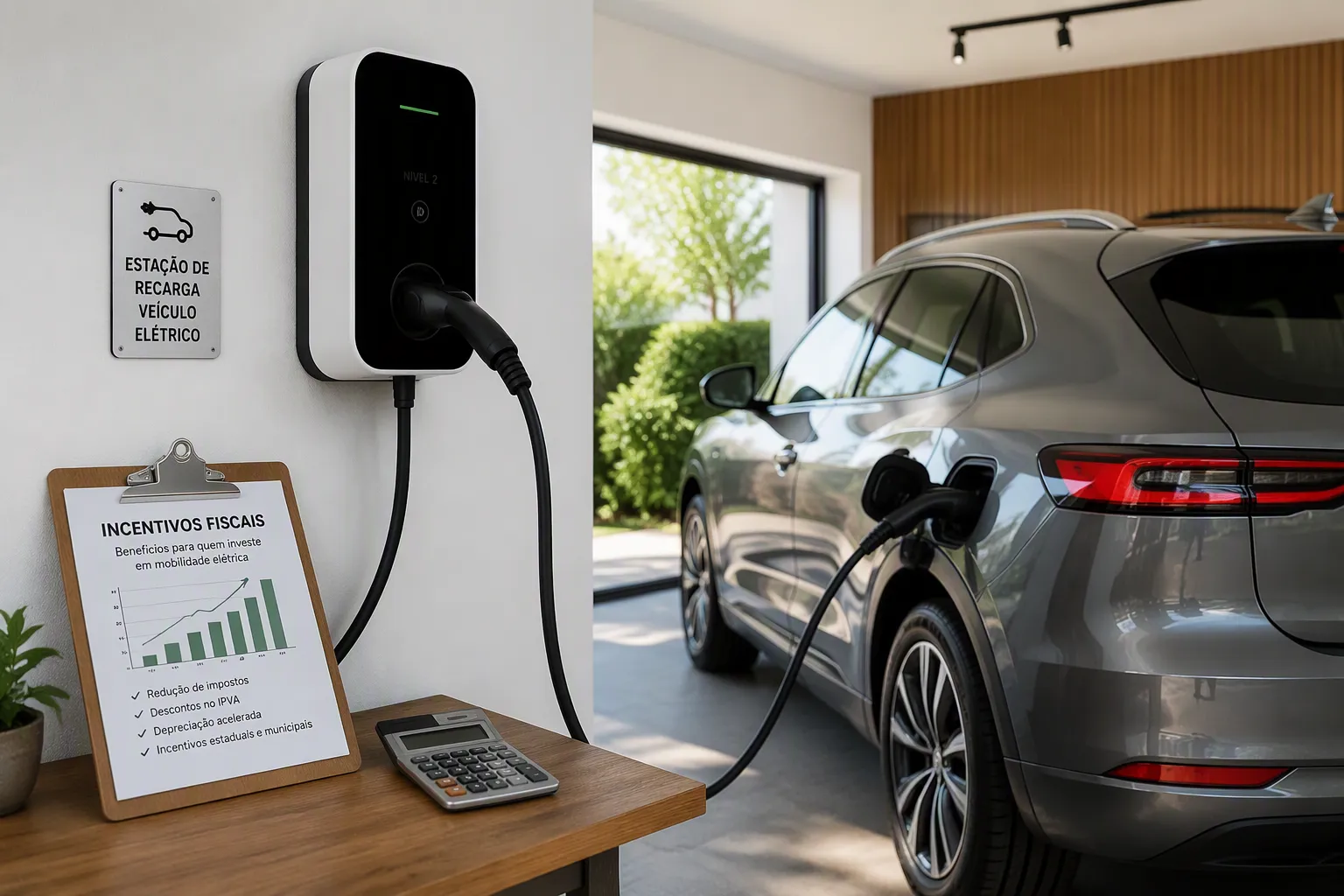
Hardware is only part of the cost. Car and Driver reports typical up-front EVSE pricing of about $400–$700 and explains that installation cost depends heavily on whether your home has spare electrical capacity.
Common cost drivers
- Electrical headroom: If sufficient, a new line may cost a few hundred dollars; if not, a service/panel upgrade can be a few thousand.
- Distance: Longer conduit runs (panel → garage/driveway) increase labor and material.
- Install method: Plug-in outlet vs hardwire (and related code requirements).
- Outdoor mounting: Requires appropriate enclosure and outdoor-rated feed line and outlet enclosure (if plug-in).
4) The biggest limitation: your home’s electrical capacity (and the 80% rule)
EV charging is a continuous load. Car and Driver notes that charging equipment can only operate continuously at about 80% of the circuit’s rating. For example:
| Circuit breaker | Max continuous EV draw (approx.) | Typical Level 2 power @ 240V |
|---|---|---|
| 40A | 32A | ≈7.7 kW |
| 50A | 40A | ≈9.6 kW |
| 60A | 48A | ≈11.5 kW |
Car and Driver recommends a modest 40A or 50A circuit as a practical middle ground to charge most EVs overnight while controlling cost. A licensed electrician should verify your panel capacity and peak household load.
5) Plug-in vs hardwired: performance and code realities
Emporia’s product guidance is a clear example of the plug vs hardwire tradeoff:
- NEMA plug: easier and portable, but it “limits your charge rate to 40A.”
- Hardwire: more permanent, but can charge up to 48A; recommended to use a licensed electrician.
GFCI nuisance trips (a common “why did my charger stop?” issue)
Emporia warns that since its EV chargers have built-in GFCI protection, installing them on a circuit that also has a GFCI breaker (often required for certain outlet installs) can cause false/unwarranted nuisance tripping. Read this as a readiness constraint: the “best” charger choice can still be unreliable if the protection strategy is mismatched.
6) Smart features that can reduce home limitations (instead of upgrading the panel)
If your main limitation is electrical capacity, you’re not limited to “upgrade or give up.” Load management can dynamically reduce charging power when the home’s total draw rises. Car and Driver highlights this with Emporia’s load management approach (monitoring the home and adjusting output).
TPSON similarly frames its product lineup as intelligent solutions with Dynamic Load Balancing that “protect your home’s electrical system,” within its EV Chargers range, including its AC EV Chargers.
7) If you want “fast,” consider the real alternative: public DC networks
A practical strategy is to use Level 2 at home for daily charging and rely on DC fast charging on road trips. Love’s describes building a travel-stop EV charging network and explicitly states it is adding more DC fast chargers (Level 3) to complement its AC charging (Level 2) network—because different scenarios call for different speeds.
ChargePoint presents itself as an EV charging “platform” (software + services + stations) and emphasizes supporting Level 2 AC and Level 3 DC solutions for businesses and fleets, as well as driver experience via app integration—another reminder that DC fast charging is typically an infrastructure/network play rather than a typical household appliance.
8) Should you buy a “fast home charger” now or wait?
If your goal is faster-than-wall-outlet charging, Level 2 is mature and worth doing now—especially with smart scheduling and the option to add load management. Car and Driver’s testing shows strong modern options at mainstream pricing and reinforces that home charging is substantially cheaper than DC fast charging (about one-third the cost, on average).
- Confirm your EV’s maximum AC Level 2 acceptance (onboard charger limit).
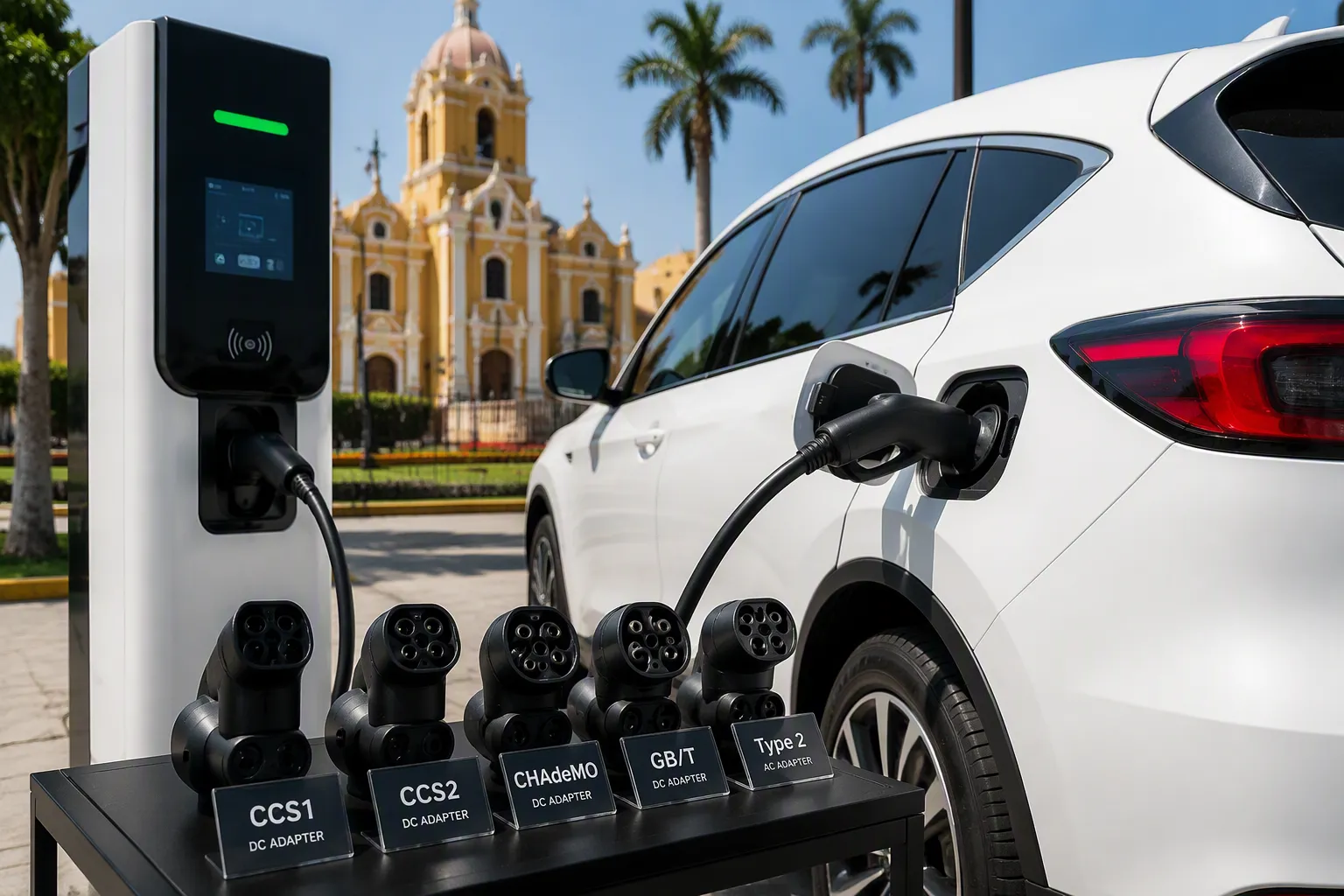
- Confirm connector type needs (region + vehicle).
- Choose your target circuit (common: 40A/50A/60A breaker; remember the ~80% continuous rule).
- Decide plug-in vs hardwire based on output and code/GFCI realities.
- Measure distance from panel to charger location (major labor driver).
- If capacity is tight, prioritize Dynamic Load Balancing or load management.
TPSON context: manufacturer + product categories
If you’re evaluating brands at a portfolio level, TPSON positions itself as a smart energy solutions company founded in 2015 in Hangzhou, building AI-driven electrical systems and vehicle chargers using its Current Fingerprint Algorithm and edge computing. Its product approach spans home and enterprise use cases, from AC wallboxes to mobile DC equipment.
| Topic | Where to explore |
|---|---|
| EV Chargers | https://tpsonpower.com/ev-chargers/ |
| EV Chargers manufacturer | https://tpsonpower.com/about/ |
| AC EV Chargers | https://tpsonpower.com/ac-ev-chargers/ |
| DC EV Chargers | https://tpsonpower.com/portable-dc-ev-charger/ |
References (from the provided URL content)
- Car and Driver — Tested: Best Home EV Chargers for 2026 (charging levels, costs, circuit sizing, and why DC fast charging is typically not for homes): https://www.caranddriver.com/shopping-advice/a39917614/best-home-ev-chargers-tested/
- Emporia — Emporia Classic Level 2 EV Charger (plug vs hardwire; 40A vs 48A; GFCI nuisance tripping; required breakers): https://shop.emporiaenergy.com/products/emporia-ev-charger
- TPSON — About (founded 2015; Current Fingerprint Algorithm; team and milestones): https://tpsonpower.com/about/
- TPSON — EV Chargers category (AC with Dynamic Load Balancing; DC fast for commercial/emergency use): https://tpsonpower.com/ev-chargers/
- TPSON — Portable DC EV Charger (TP-DC 20/30/40kW; AC380V input; use cases and protections): https://tpsonpower.com/portable-dc-ev-charger/
- Love’s — EV Charging (Level 2 + Level 3 network approach; expansion through 2026): https://www.loves.com/ev-charging
- ChargePoint — EVSE platform overview (software + services + stations; Level 2 and DC fast solutions focus): https://www.chargepoint.com/
- Smart Charge America — EV chargers catalog examples (home and commercial products; typical Level 2 outputs; install positioning): https://smartchargeamerica.com/electric-car-chargers/
- TPSON — AC EV Chargers category listing: https://tpsonpower.com/ac-ev-chargers/
- TPSON — Home page (Current Fingerprint Algorithm; safety; Dynamic Load Balancing; scale claims): https://tpsonpower.com/
Disclaimer: This is general information based on the provided page content. Electrical work should be planned and performed according to local code and verified by a licensed electrician.