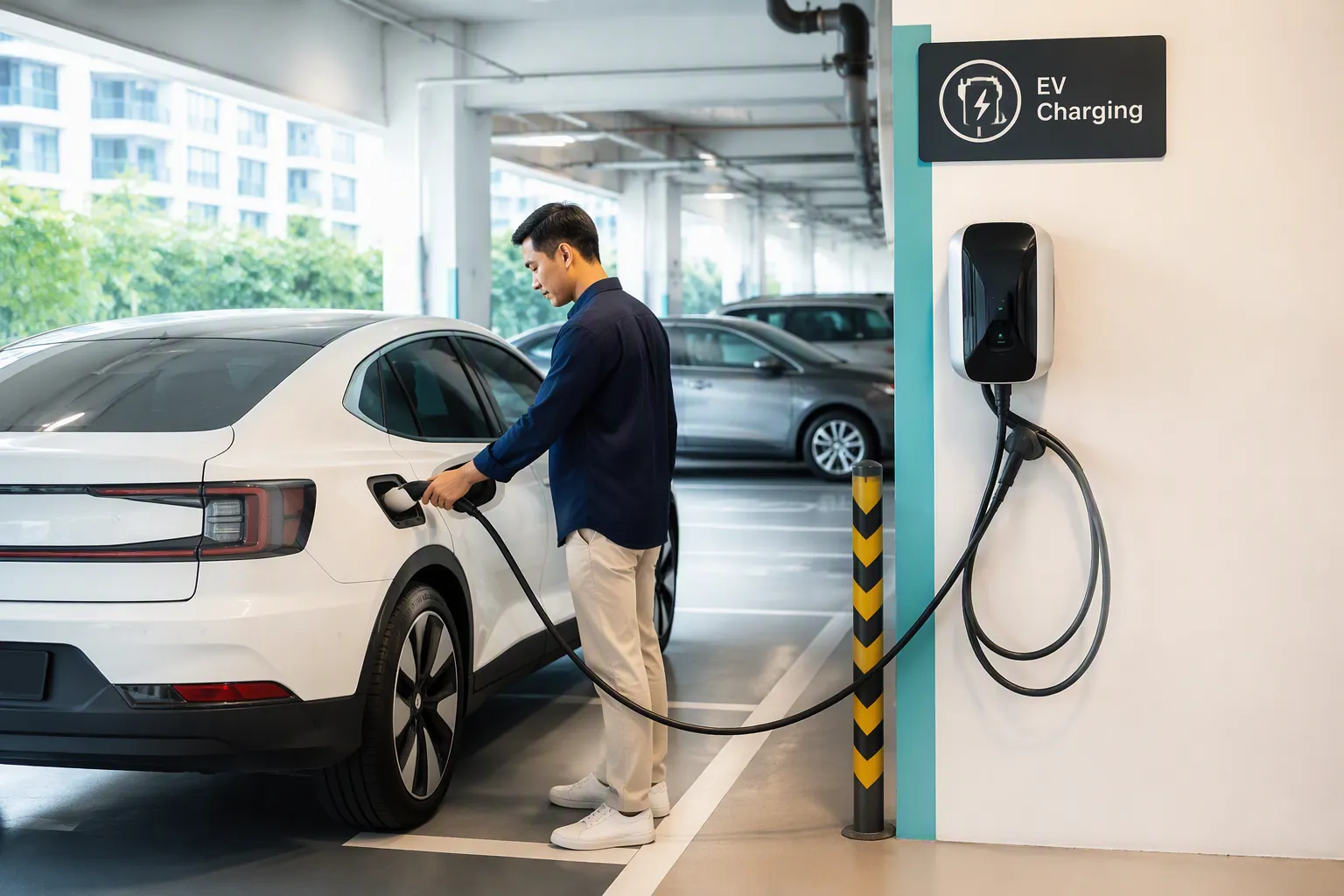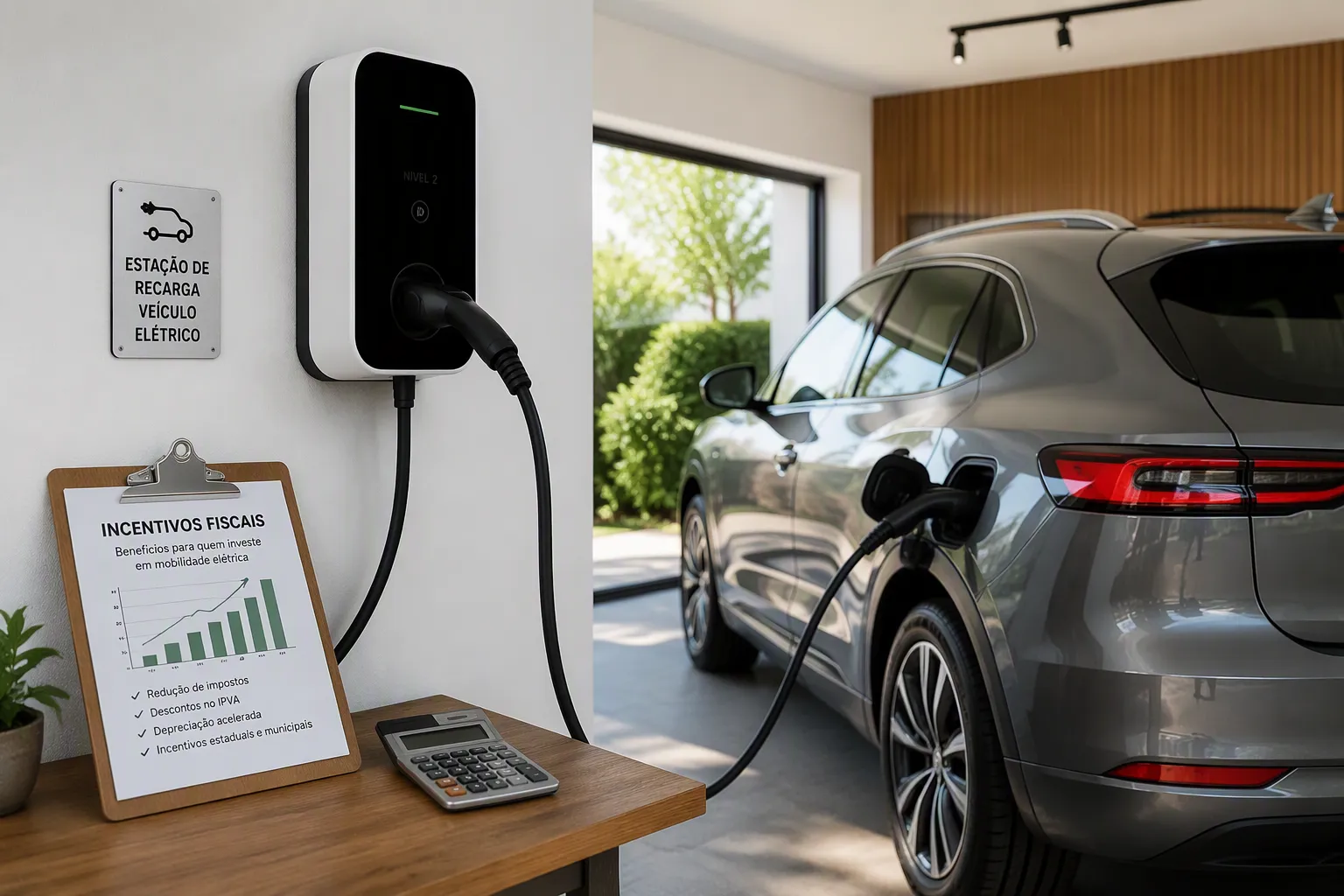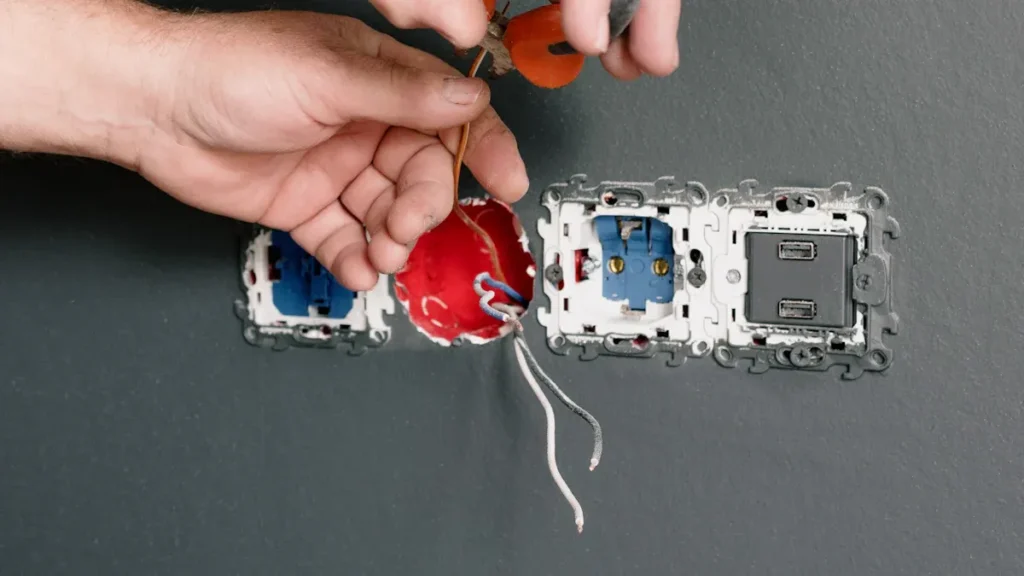

Most electric vehicle owners prefer charging at home. A recent study shows 83% of them use a Level 2 EV Charger, with the majority opting for a wall-mounted unit. The total cost for a home installation is a key consideration for new owners.
The all-in cost for an ev charging point installation typically ranges from $800 to $2,500.
This final price combines the home charger unit and professional installation labor. A home’s existing electricity setup, the specific electric car charger chosen, and installation complexity ultimately determine the final cost. Many EV charger manufacturers, like the technologically advanced TPSON, offer various charger models to fit different needs and budgets.
Cost Breakdown: Where Does Your Money Go?
The total expense for a home EV charger setup splits into two main categories: the hardware itself and the professional labor for installation. Understanding each part helps homeowners budget effectively.
Part 1: The EV Charger Unit Cost
The physical home charger unit is the first component of the total cost. This is the device that mounts to your wall and delivers power to your electric vehicle.
Level 2 Charger Price Range: $300 – $800+
A typical Level 2 home charger unit generally has a price between $300 and $800. Some premium models with advanced features can exceed this range. This cost is solely for the hardware; installation is a separate expense.
Factors Affecting Unit Price
Several key elements determine the final price of a charger. These include:
- Brand Reputation: Established brands may have a higher cost than newer entrants.
- Power Output (Amperage): Higher-amperage chargers that deliver power faster often cost more.
- Smart Features: Wi-Fi connectivity and app integration add to the price tag.
- Build Quality & Durability: Chargers with robust, weatherproof casings (higher NEMA ratings) are typically more expensive.
Smart vs. “Dumb” Chargers
Chargers fall into two main types: “smart” and “dumb.” A “dumb” charger performs one function: it charges your car. It is a simple, effective, and lower-cost option.
A “smart” charger connects to your home Wi-Fi. This allows for a range of advanced capabilities. Technologically advanced providers like TPSON offer smart chargers that enhance the home charging experience. These features often justify the higher initial cost for many owners.
| Feature | “Dumb” Charger | Smart Charger |
|---|---|---|
| Basic Charging | ✅ | ✅ |
| Wi-Fi Connectivity | ❌ | ✅ |
| Remote Start/Stop | ❌ | ✅ |
| Scheduled Charging | ❌ | ✅ |
| Electricity Usage Tracking | ❌ | ✅ |
Part 2: The Professional Installation Cost
The second major component of the cost is the professional installation. This work ensures the charger operates safely and efficiently within your home’s electrical system.
Standard Installation Price Range: $500 – $1,500+
For a straightforward installation, homeowners can expect to pay between $500 and $1,500. This cost covers the electrician’s labor, basic materials like wiring and a new circuit breaker, and the permit filing. The final installation cost can be higher if the home requires significant electrical work.
What a “Standard” Installation Includes
A professional service provider typically bundles several key tasks into a standard installation package. The process ensures your new charger is a perfect fit for your home and charging needs.
A high-level overview of the service includes:
- Supply of an ideal product suited to your needs.
- A comprehensive design and quotation service.
- Professional installation of the unit.
A more detailed look at the process reveals several critical steps an electrician will perform:
- An initial site survey to assess your home’s current electricity load capacity.
- Provision of a detailed quotation for the complete job.
- Supply and installation of the approved charger and any necessary accessories.
- Completion of all electrical work, including routing the cable and making final connections.
- Rigorous commissioning tests and the issuance of an electrical safety certificate.
Why You Must Hire a Licensed Electrician
Attempting a DIY installation is extremely dangerous and can have serious consequences. Hiring a qualified and licensed electrician for your ev charging point installation is non-negotiable.
Safety & Compliance First! ⚠️ An electric car charger is a high-power appliance. Incorrect installation poses a significant risk of electrical fire, damage to your vehicle’s battery, and can void your homeowner’s insurance. Always use a professional.
Hiring a professional ensures:
- Safety: The installation meets all national and local electrical codes.
- Warranty Protection: Most charger manufacturers require professional installation to validate the product warranty.
- Proper Function: The electrician will install the correct circuit breaker and wiring to handle the charger’s power demands safely.
A Deeper Dive into Charger Unit Costs
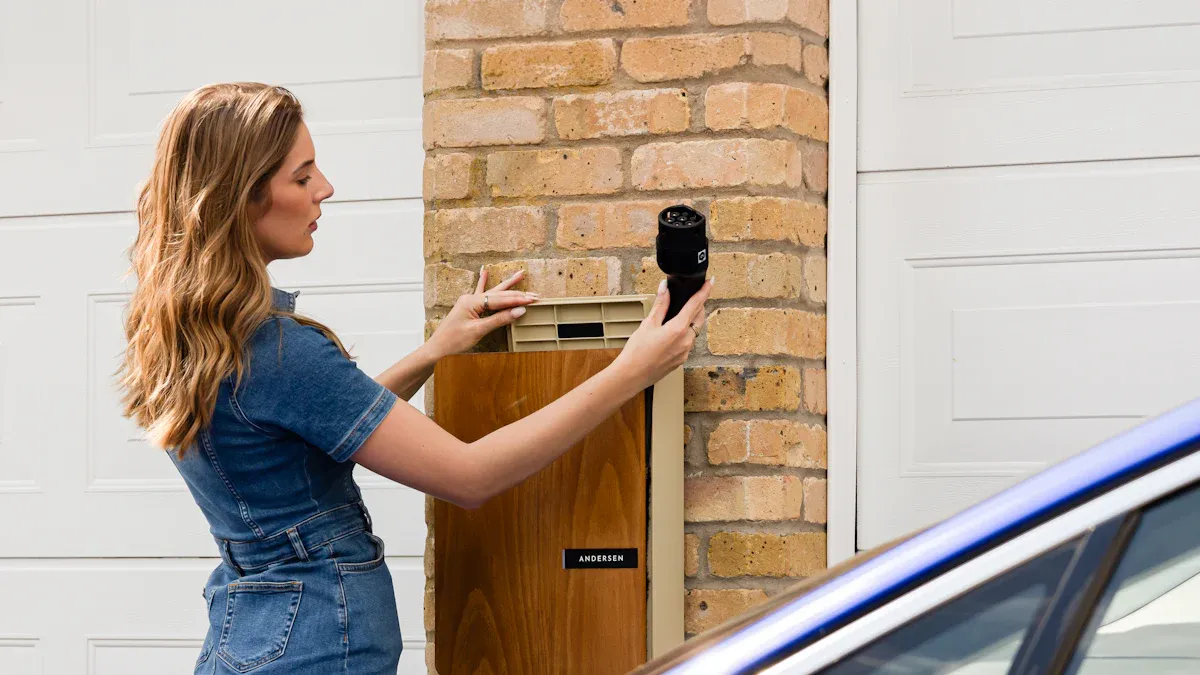
The price of the charger unit itself is a significant part of the overall budget. Understanding the different types of chargers and the features that affect their price helps homeowners make an informed decision. The final cost of the hardware depends on its power, features, and build quality.
Understanding Charger Power Levels
Charger levels define the speed at which an electric vehicle receives power. For home use, the choice is primarily between Level 1 and Level 2.
Level 1 Charging (120V)
Level 1 charging uses a standard 120-volt wall outlet, the same kind used for other home appliances. This method is the slowest, typically adding only 8 to 12 miles of range per hour of charging. It requires no special installation but is often insufficient for daily driving needs.
Level 2 Charging (240V)
Level 2 is the most common and practical solution for home charging. This type of charger uses a 240-volt circuit, similar to an electric dryer. A Level 2 home charger provides an average of 32 miles of driving range per hour, making it easy to get a full charge overnight. This efficiency makes it the standard for most EV owners.
DC Fast Charging (Commercial Only)
DC Fast Charging offers the quickest charging speeds, but these systems are extremely high-powered and expensive. They are not available for residential installation and are found exclusively at public charging stations along highways and in commercial areas.
Key Features That Influence Charger Price
The price of a Level 2 home charger can vary significantly based on its capabilities and construction.
Power Output (Amperage)
A charger’s power output, measured in amps, determines how quickly it can deliver electricity to the car’s battery. Chargers with higher amperage (e.g., 48A or 50A) charge faster than lower amperage models (e.g., 32A) but often have a higher unit cost.
Smart Features and Connectivity
“Smart” chargers connect to your home Wi-Fi, unlocking features like remote operation, scheduled charging to take advantage of lower electricity rates, and usage tracking via a smartphone app. Technologically advanced providers like TPSON offer smart chargers that provide this enhanced control and data. These features add to the charger’s price tag.
Cable Length and Management
The length of the charging cable affects convenience and cost. Longer cables (20-25 feet) offer more flexibility for parking but increase the price. Some models also include built-in cable management systems, which adds to the overall cost.
Durability and NEMA Rating
A charger’s durability is indicated by its NEMA rating, which classifies its resistance to environmental factors like dust and water. A charger with a higher rating (e.g., NEMA 4) is suitable for outdoor installation in harsh weather but will be more expensive than an indoor-only unit (e.g., NEMA 3R).
Popular Charger Brands and Price Points
Several reputable brands offer a range of chargers to fit different needs and budgets. The final selection often comes down to a balance of features, power, and cost.
Tesla Universal Wall Connector
This charger is compatible with both Tesla and non-Tesla vehicles, offering a versatile solution for households with different electric car brands.
ChargePoint Home Flex
Known for its powerful smart features, the Home Flex allows for flexible amperage settings up to 50A. It provides robust app control, scheduling, and integration with voice assistants.
Enel X Way JuiceBox
The Enel X Way JuiceBox is another popular smart charger. It is known for its smart charging capabilities and durable design. This unit is typically priced at $699.00.
Grizzl-E Smart
The Grizzl-E charger is praised for its rugged, durable build, making it a great choice for outdoor or garage environments. Compared to a feature-rich unit like the ChargePoint Home Flex, the Grizzl-E focuses more on simplicity and durability over advanced smart controls.
Key Factors That Increase the Cost of Installing an Electric Car Charger
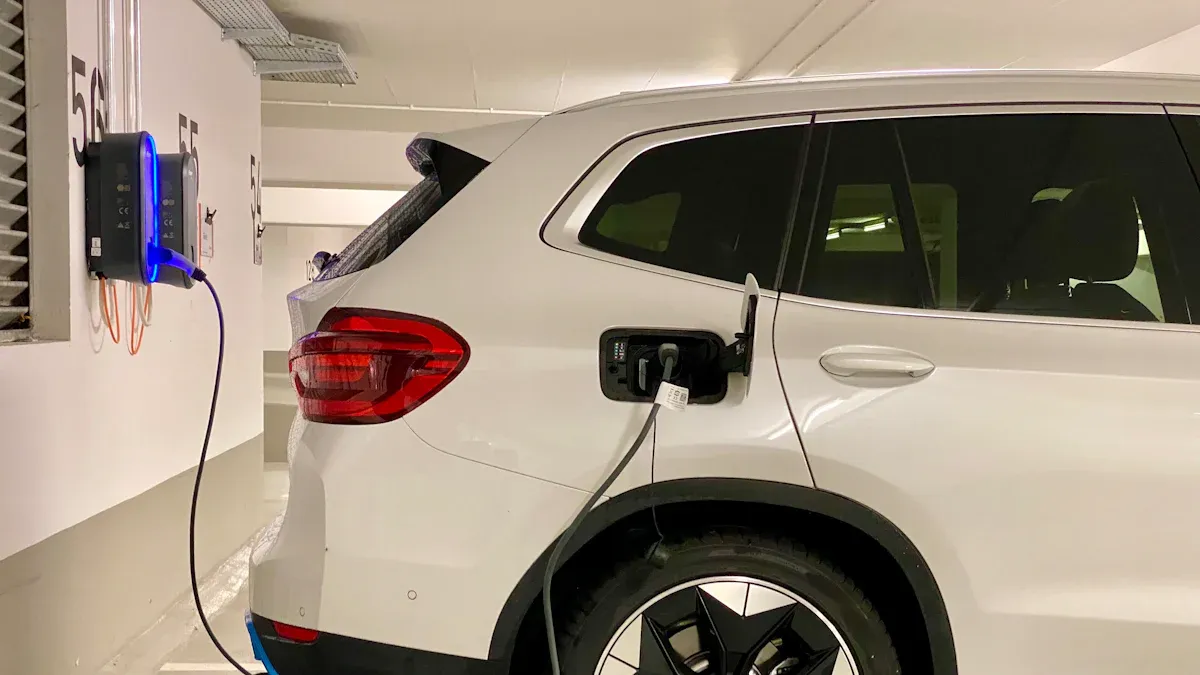
While a standard installation has a predictable price, several factors related to a home’s specific infrastructure can significantly increase the final cost. The overall cost of installing an electric car charger is heavily influenced by the condition of your existing electrical system and the complexity of the installation itself. Understanding these variables helps homeowners budget more accurately.
Your Electrical Panel: The Biggest Cost Variable
The electrical panel, or breaker box, is the command center for your home’s electricity. Its capacity and configuration are the most significant factors determining the final price of your ev charging point installation. An electric vehicle charger is a high-power device that places a continuous demand on your system.
Scenario 1: No Available Breaker Space
An electrician needs to add a new, dedicated 240-volt circuit breaker to the panel for the home charger. If the panel is physically full with no open slots, the electrician cannot add the required breaker. This is a common issue in older or smaller homes. The most common solution is to install a subpanel.
Scenario 2: Insufficient Panel Capacity
Beyond physical space, the panel must have enough electrical capacity to handle the new load. Most modern homes have 200-amp service, which is usually sufficient. However, many older homes have 100-amp or even 60-amp service.
Load Calculation is Key ⚡ An electrician will perform a “load calculation” to determine if your panel can safely support the new charger alongside your existing appliances. A 100-amp supply is often the maximum for a single-phase home, and adding a 40-amp or 50-amp charger could easily overload the system.
Cost of a Subpanel Installation
A subpanel is a smaller, secondary electrical panel that is fed from the main panel. It creates new slots for circuit breakers. This is an effective solution when the main panel is full but has enough overall capacity.
- Typical Cost: $500 – $1,000+
- Benefit: A subpanel is significantly less expensive than a full panel upgrade.
Cost of a Full Panel Upgrade
If the load calculation shows that your home’s electricity demand will exceed the panel’s total capacity, a full upgrade is necessary. This involves replacing your existing 100-amp panel with a new 200-amp panel. This is a major project that dramatically increases the cost of installing an electric car charger. Upgrading to a 200-amp supply can be an expensive and complex job.
Installation Complexity and Location
The physical path the wiring must take from the panel to the charger location directly impacts labor costs. A simple, direct route is always the most affordable.
Distance from Panel to Charger
The farther the charger is from the electrical panel, the more materials (heavy-gauge copper wire) and labor are required. An installation where the charger is on the other side of the same wall as the panel will be much cheaper than one where the wiring must cross the entire length of the home.
Attached vs. Detached Garage Installation
Installing a charger in a detached garage presents additional challenges. The electrician must run the electrical line from the house to the separate structure. This often requires digging a trench to bury armored conduit, which adds significant labor and material cost to the project.
Running Wires Through Finished Walls
Running wiring through finished interior walls is more labor-intensive than running it along the surface of an unfinished garage wall. This process involves:
- Cutting into drywall to fish wires.
- Navigating around existing studs, plumbing, and insulation.
- Repairing the drywall after the installation is complete.
Potential “Hidden” Costs to Budget For
Beyond the main installation tasks, several other potential expenses can arise. Homeowners should budget for these possibilities to avoid surprises.
Trenching for Underground Wiring
If wiring must be run underground to a detached garage or an outdoor pedestal charger, trenching is required. This manual or mechanical digging adds hundreds or even thousands of dollars to the installation cost, depending on the distance and ground material.
Drywall Repair and Painting
If the installation requires cutting into finished walls or ceilings, the electrician’s job typically ends once the wires are run. The homeowner is then responsible for hiring a separate contractor to patch the drywall and repaint the area, adding another layer of cost.
Hardwired vs. NEMA Outlet Installation
Homeowners can choose between having the home charger “hardwired” directly to the circuit or installing a 240-volt NEMA 14-50 outlet to plug the charger into. While a plug offers flexibility, it can influence the total cost. The price difference is due to the complexity and components involved in each type of installation. Technologically advanced providers like TPSON offer charging solutions compatible with both installation methods.
| Installation Type | Average Cost Range |
|---|---|
| Hardwired EV Charger | $800 – $1,200 |
| NEMA 14-50 Outlet | $300 – $500 |
A hardwired electric car charger installation often requires more extensive electrical work and labor-intensive wiring. In contrast, a NEMA 14-50 outlet installation is generally simpler, leading to a lower overall cost for the electrical work. However, hardwiring can allow for higher power delivery for certain charger models, enabling faster charging speeds for your electric vehicle.
The Role of Permits in Your EV Charging Point Installation
Navigating the world of permits and inspections can seem daunting, but it is a crucial step in the installation process. A permit is not just bureaucratic red tape; it is a fundamental safety measure for your home and family. It ensures that all electrical work is performed correctly and meets legal standards.
Why Permits and Inspections Are Necessary
Skipping the permit process to save a few dollars is a risky gamble. The potential consequences far outweigh the initial savings. Permits trigger official inspections, which provide essential oversight for high-power electrical projects.
Ensuring Safety and Code Compliance
The primary purpose of an electrical permit is to guarantee safety. An ev charging point installation must adhere to strict safety codes to prevent electrical fires and equipment damage. An inspection verifies that the work complies with all relevant standards. Key safety benchmarks include:
- The National Electrical Code (NEC), which sets the foundation for safe electrical design and installation.
- Underwriters Laboratories (UL) certifications, which confirm the charger itself has been tested for safety.
- Guidelines from the National Fire Protection Association (NFPA), which certifies installers on critical safety topics.
Compliance ensures the new electrical system can handle the demands of charging an EV without issue.
Validating Your Homeowner’s Insurance
A proper permit and a passed inspection serve as official proof that the installation was done correctly. This documentation is vital for your homeowner’s insurance policy. Many insurance providers can deny claims related to damage caused by unpermitted electrical work.
An insurer is very likely to refuse cover if the homeowner is not actually qualified to do the work they want to do. For example, if they want to rewire the house and they aren’t a qualified electrician, a normal home insurance policy probably isn’t going to want to cover that type of risk. Fixes or maintenance on… electrics should always be carried out by certified experts, or you will face a big bill should it all go wrong.
The Permitting Process and Typical Fees
The permitting process is straightforward when handled by a professional. It involves an application, the installation, and a final inspection.
Who Is Responsible for the Permit?
Your licensed electrician is responsible for handling the entire permitting process. They know the local requirements, will fill out the necessary paperwork, and will schedule the inspection. This service is typically included in their overall quote.
The Post-Installation Inspection
After the installation is complete, a local building inspector will visit your home to review the work. The inspector will verify that every aspect of the job meets code. This process typically includes:
- System Testing: The inspector confirms the charger receives the correct voltage and that all safety mechanisms, like the circuit breaker, function properly.
- Wiring Verification: They check that the wire gauge is appropriate for the amperage and that all connections are secure.
- Grounding Check: The inspector ensures the system is properly grounded to prevent electrical shock.
- Final Certification: Upon successful inspection, the project is certified as complete and compliant.
Typical Permit Cost: $50 – $500
The cost for an electrical permit varies by municipality but generally falls between $50 and $500. This fee is paid to the local building department and is a necessary part of the project’s total budget.
How to Save Money on Your Electric Car Charger Installation
The initial cost of an electric car charger installation can be managed effectively with strategic planning and research. Homeowners have several avenues to reduce expenses, from government incentives to smart consumer choices.
Taking Advantage of Rebates and Tax Credits
Financial incentives can significantly lower the net cost of purchasing and installing a home charger. These programs exist at the federal, state, and local levels.
Federal Tax Credit: 30% of the Cost, Up to $1,000
The Alternative Fuel Vehicle Refueling Property Credit offers a substantial tax benefit. Homeowners may be eligible for a credit of 30% of the total cost, capped at $1,000. Key eligibility requirements include:
- The charging station must be installed at the owner’s main home.
- The home must be located within an eligible low-income or non-urban census tract.
- The credit also applies to bidirectional charging equipment, which allows an electric vehicle to power the home.
State and City Rebate Programs
Many states offer their own rebate programs to encourage EV adoption. For example, California has committed significant funding for new charging stations, with half designated for low-income areas. Similarly, New York has a large program aimed at expanding its charging infrastructure. Homeowners should research their specific state and city government websites for available funds.
Local Utility Company Incentives
Utility companies are key partners in making home charging more affordable. Many providers offer rebates or discounts that lower the setup cost. They also promote Time-of-Use (TOU) electricity rates, which reduce the price of charging during off-peak hours. For instance, Indiana Michigan Power provides a $500 incentive for wiring and offers an overnight charging rate that is 33% lower than standard electricity prices.
The Importance of Getting Multiple Quotes
Securing several estimates is a critical step in managing the installation budget. This process provides transparency and ensures a fair price.
Why You Should Always Get Three Quotes
Labor rates and project assessments can vary widely between electricians. Obtaining at least three detailed quotes gives a homeowner a clear benchmark for the project’s market value. It highlights any outliers that are either too high or suspiciously low.
How to Compare Electrician Quotes
A proper comparison goes beyond the final price. Homeowners should analyze each quote for the scope of work, the quality of materials specified (like the wire gauge and breaker brand), and the warranty offered on labor.
Vetting Your Electrician’s Credentials
Hiring a qualified professional is essential for a safe and compliant installation. An electrician should possess:
- Industry-Recognized Certifications: Proof of qualification to work with high-voltage systems.
- Specialist EV Charger Training: Experience with the unique demands of EV charger projects.
- Full Insurance: Public liability and service indemnity coverage to protect the home and vehicle.
Making Smart Choices to Lower the Initial Cost
Simple decisions about the charger and its placement can have a big impact on the final bill.
Choosing a Charger Location Close to the Panel
The distance between the electrical panel and the charger directly affects labor and material costs. Placing the charger on the same wall as the panel, or as close as possible, is the most cost-effective option.
Opting for a Lower Amperage Charger if Sufficient
Not every driver needs the fastest charger available. A 32-amp or 40-amp charger is often sufficient for overnight charging and typically costs less than a 48-amp or 50-amp model.
Planning for Future Needs
Thinking ahead can prevent future expenses. Even when selecting a lower-power charger, homeowners might consider having the electrician install wiring that can support a more powerful unit later. Technologically advanced providers like TPSON offer a range of solutions to fit both current needs and future plans.
A standard ev charging point installation typically ranges from $800 to $2,500. The final cost for a home charger installation depends on the home’s electricity setup and the charger location. This electric car charger provides efficient charging for an electric vehicle. Technologically advanced providers like TPSON offer various home charger models. The most accurate way to determine the price for a home charging installation is to get quotes from qualified electricians.
FAQ
Can I install an EV charger myself?
Homeowners should never attempt a DIY installation. A licensed electrician must perform the work to ensure safety, code compliance, and warranty protection. Incorrect installation poses serious fire and electrical risks.
How long does a typical installation take?
A standard installation usually requires two to six hours. More complex projects, such as those needing a panel upgrade or trenching, may extend the timeline to one or two full days.
What is the difference between a hardwired and a plug-in charger?
A hardwired charger connects directly into the home’s wiring. A plug-in model uses a high-voltage outlet. Hardwiring often allows for faster charging speeds, while a plug provides portability for the charging unit.
Do I need a “smart” charger?
A smart charger provides valuable features like remote control and scheduled charging. Technologically advanced providers like TPSON offer smart solutions that help manage energy use. It is a beneficial upgrade for many owners.
Will an EV charger increase my property value?
A professionally installed home charger can increase a property’s appeal to buyers. It is a modern amenity that adds convenience and value, making the home more attractive on the market.
What happens if my electrical panel is full?
An electrician can add a subpanel if the main panel is full. This secondary panel creates the necessary space for the new charger circuit. It is a cost-effective solution for many homes.
Is a permit always required for installation?
Yes, most municipalities mandate a permit for EV charger installations. The permit process triggers a safety inspection to verify code compliance. The electrician manages all the necessary paperwork and scheduling.