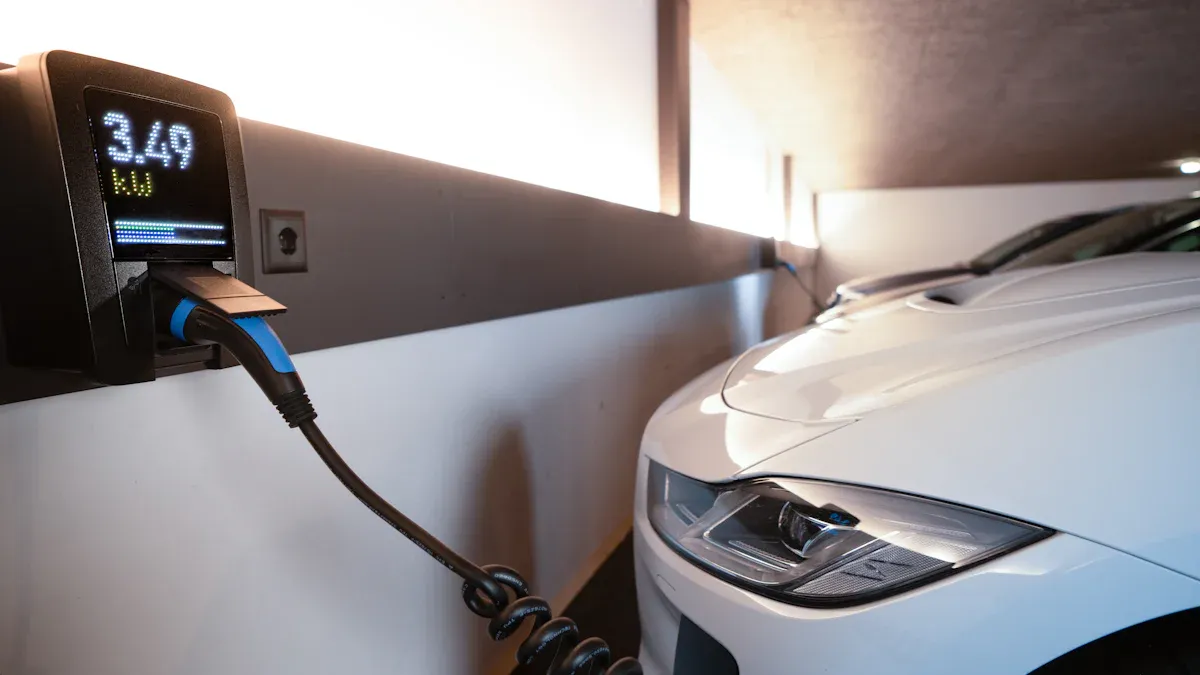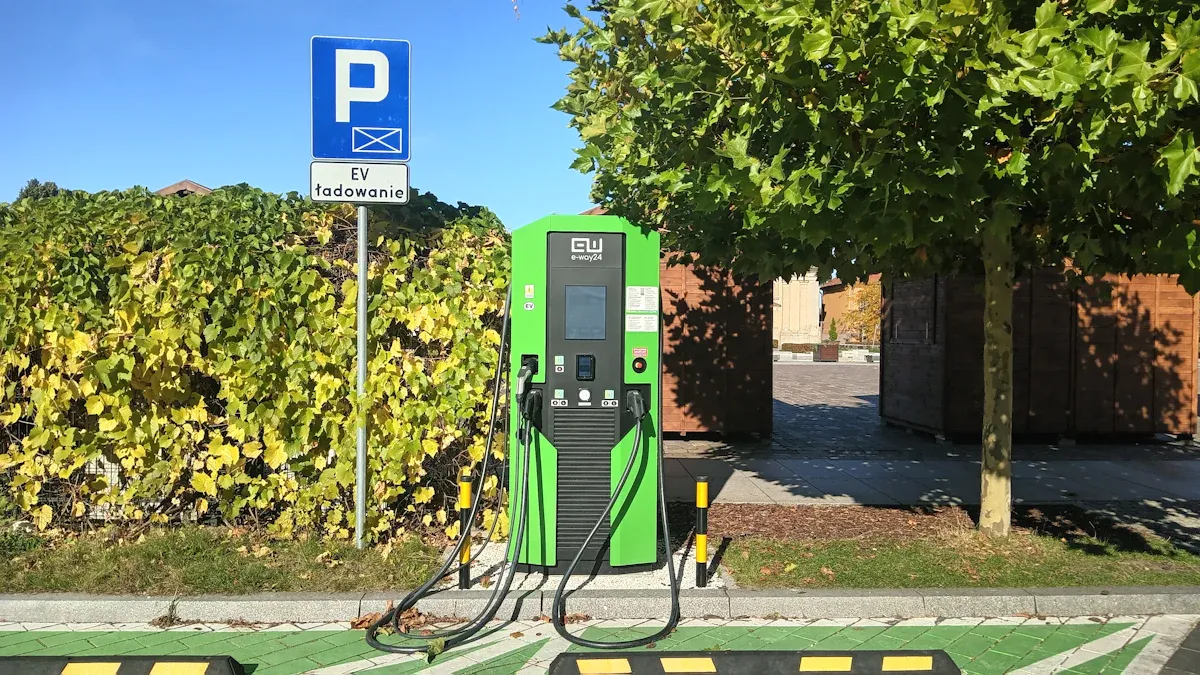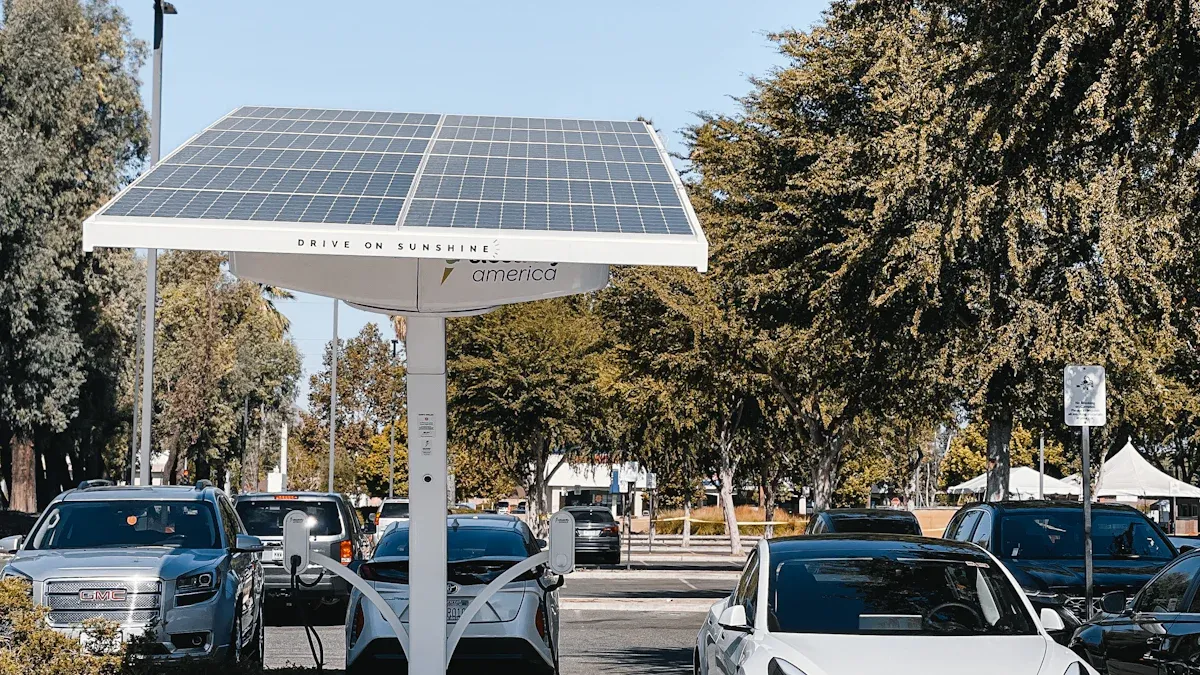
A positive return on investment for commercial charging stations is an achievable goal for a UK business. A typical payback period in the UK is 3-6 years. The roi of ev charging is supported by a market projected to hit $20.3 billion, creating a strong environment for profitability.
This guide provides UK businesses the formula and real ROI data for a realistic ROI outlook, ensuring strong financial returns.
The final ROI depends on costs, revenue, and the choice of EV Charger for your charging needs. Options range from portable ev chargers to advanced EV charging solutions from leading EV charger manufacturers like TPSON. Strategic charging planning is essential for securing positive returns from your charging investment.
Decoding Your Initial Investment: Upfront Costs

A business must first understand the total capital outlay to calculate an accurate ROI. This initial investment extends beyond the charger hardware. It includes installation, groundwork, and essential software systems that enable a commercial charging operation.
Hardware Costs: Choosing Your Chargers
The primary hardware expense is the charging unit itself. The choice between AC and DC chargers depends on the intended use case, such as dwell time and customer needs. Technologically advanced providers like TPSON offer a range of solutions to meet these diverse requirements.
| Charger Type | Power Output | Typical Hardware Cost (per unit) | Best For |
|---|---|---|---|
| Level 2 AC Charger | 7-22kW | $1,000 – $3,500 | Workplaces, retail, hospitality (longer stays) |
| DC Fast Charger | 50kW+ | $15,000 – $30,000+ | Service stations, fleet depots (rapid turnaround) |
Level 2 AC Chargers (7-22kW)
AC chargers are the most common type for commercial destinations. They offer a cost-effective solution for locations where drivers park for an hour or more, making them ideal for offices, shopping centers, and hotels.
DC Fast Chargers (50kW+)
DC fast chargers provide rapid charging, significantly reducing vehicle downtime. Their higher cost is justified in high-turnover locations where speed is a primary service, such as dedicated charging hubs or locations near major highways.
Installation and Groundwork Expenses
Installation costs often rival or exceed hardware costs. These expenses are highly site-specific.
Site Survey and Assessment
A professional survey is the first step. It identifies the optimal charger locations, assesses electrical capacity, and outlines the necessary groundwork. This planning phase prevents costly surprises during installation.
Electrical Infrastructure Upgrades
Many sites require electrical upgrades to support the new load. The distance from the power supply to the charger location directly impacts cabling and labor costs. Common upgrades include:
- Electrical Panel Upgrade: $440–$500
- Disconnect Switch Installation: $100–$200
- New Substation: Required for multiple DC fast chargers, representing a significant investment.
Civil Works and Bay Marking
Preparing the ground is a major cost factor. Civil works involve trenching for underground cables, which can cost around $30 per meter. The project also requires resurfacing, installing protective bollards, and clearly marking the EV charging bays.
Software and Network Fees
Modern charging stations operate on sophisticated software platforms.
Charging Management Software (CMS)
A CMS is the brain of the operation. It allows a business to set pricing, monitor usage, and manage access. Initial setup or licensing fees for this software contribute to the upfront cost.
Payment Processing Systems
To collect revenue, a station needs a payment system. This involves integrating hardware (like contactless card readers) and software that securely processes transactions, which comes with initial integration fees.
Professional and Ancillary Costs
Beyond the physical assets, a business must budget for professional services and administrative tasks. These ancillary costs are crucial for a compliant and successful installation. They ensure the project navigates regulatory hurdles and stays on schedule, protecting the overall investment. Failing to account for these expenses can lead to unexpected budget overruns and significant project delays.
Planning Permissions and Utility Company Approval
Navigating the UK’s regulatory landscape is a critical upfront activity. Most commercial EV charging installations require formal approvals before any work can begin.
- Planning Permission: A business may need to apply to its local council for planning permission. This process depends on the scale of the project, the location, and whether the installation falls under “permitted development” rights. The application involves submitting detailed plans and can incur fees ranging from a few hundred to several thousand pounds.
- Utility Company Approval: Every new EV charger installation must be reported to the regional Distribution Network Operator (utility company). The utility company is the company responsible for the local electricity grid. For larger projects, the utility company must conduct an impact assessment to ensure the grid can handle the additional load. This approval process is mandatory and can influence the project timeline and infrastructure requirements.
Pro Tip: A business should engage its utility company at the earliest possible stage. Early communication helps identify potential grid capacity issues and avoids costly delays later in the project.
Project Management Fees
For multi-charger installations, effective project management is essential. A dedicated project manager oversees the entire process from conception to commissioning. This role prevents the burden of coordination from falling on internal staff who may lack the specific expertise.
A project manager’s responsibilities typically include liaising with suppliers, managing contractors, securing permits, and ensuring the project adheres to budget and timeline constraints. While this adds a fee to the initial investment, often calculated as a percentage of the total project cost, it provides immense value. It mitigates risk and ensures a smooth, efficient rollout. Technologically advanced providers like TPSON often offer comprehensive project management services, providing a single point of contact and leveraging their experience to deliver a turnkey EV charging solution. This integrated approach simplifies the process for the business owner.
Factoring in Ongoing Operational Expenditures (OpEx)
A business must look beyond the initial purchase to understand the full financial picture. Ongoing operational expenditures (OpEx) are the recurring costs required to keep the EV charging stations running efficiently and profitably. These costs directly influence the net profit and the overall timeline for achieving a positive ROI. Accurately forecasting OpEx is a non-negotiable step in building a sustainable business case.
Electricity Costs and Tariffs
Electricity is the most significant operational cost. The price a business pays for energy will directly impact the profitability of its charging service.
Standard vs. Time-of-Use Tariffs
UK businesses can choose from different electricity rates. A fixed-rate tariff locks in a unit price for a set period, offering predictable costs for easier budgeting. A variable-rate tariff fluctuates with the market, which can be beneficial if wholesale prices fall. The rate also depends on consumption, with larger businesses typically paying less per kWh.
2025 Projected UK Commercial Electricity Rates (cents/kWh)
| Business Size | Annual Consumption (kWh) | Average Unit Rate (cents/kWh) |
|---|---|---|
| Micro Business | 0 – 5,000 | 29.6 |
| Small Business | 5,000 – 15,000 | 26.9 |
| Medium Business | 15,000 – 25,000 | 26.3 |
| Large Business | 25,000+ | 25.0 |
Impact of Demand Charges
Demand charges, often called ‘demand charges’ in the UK, are a critical cost factor, especially for high-power DC fast chargers. These fees relate to the grid capacity reserved for the site. Operators have seen these charges increase dramatically, sometimes by more than tenfold. This fixed overhead is a primary reason why public rapid charging prices remain high, as operators must cover these substantial grid connection costs regardless of usage.
Maintenance and Servicing Contracts
Ensuring charger uptime is essential for revenue generation and customer satisfaction. A maintenance contract protects the hardware investment and minimizes downtime.
Proactive vs. Reactive Maintenance
A proactive maintenance plan involves scheduled annual check-ups to prevent faults before they occur. This approach is superior to reactive maintenance, which only addresses problems after a charger has failed, leading to lost revenue and a poor user experience.
Annual Service Level Agreements (SLAs)
Businesses typically purchase an annual SLA from their installer or a specialist provider. These contracts cover remote diagnostics, software updates, and on-site service calls. Costs vary based on the number of chargers and the required response time.
Note: SLAs cover routine service and diagnostics. The cost of replacement parts or repairs outside of the manufacturer’s warranty may be billed separately.
Software Subscriptions and Network Fees
Commercial EV charging stations run on a software platform that requires ongoing subscription payments. These fees are the digital backbone of the operation.
Monthly CMS Platform Fees
A Charging Management Software (CMS) platform carries a monthly or annual fee. This software allows the operator to set pricing, monitor real-time usage, generate reports, and control user access.
Transaction and Roaming Fees
Each time a driver pays for a session, a small percentage or flat fee is taken to process the payment. Additionally, if the chargers are open to roaming (allowing drivers from other networks to use them), the network will charge a fee for facilitating that access.
Insurance and Administrative Overheads
Beyond direct operational costs like electricity and software, a business must account for the essential, yet often overlooked, expenses of insurance and administration. These overheads are fundamental to protecting the organization from liability and ensuring the smooth day-to-day running of the charging service. Factoring them into the OpEx calculation provides a more complete and realistic financial forecast, preventing unexpected drains on profitability.
Public Liability Insurance
Operating publicly accessible equipment introduces new risks. Public liability insurance is a non-negotiable operational expense for any commercial EV charging provider. This coverage protects the business against claims of injury or property damage from third parties, such as customers or members of the public.
Potential incidents could include:
- A customer tripping over a charging cable.
- Damage to a vehicle during the charging process.
- An electrical fault causing harm or damage.
A business must review its existing policy or acquire a new one to ensure it specifically covers the operation of EV charging equipment. The cost of this insurance is a small price for mitigating potentially significant financial and reputational damage. An insurer will calculate the premium based on the number of chargers, their location, and the level of public access.
Staff Time and Management
The management of EV charging stations requires human oversight. This administrative time represents a real operational cost, whether it involves dedicating existing staff or hiring new personnel. The time commitment can be substantial, impacting overall profitability if not managed efficiently.
Key administrative tasks include:
- Customer Support: Assisting drivers who encounter issues with starting a charge or processing a payment.
- Financial Reconciliation: Monitoring transactions, managing revenue, and generating financial reports.
- System Monitoring: Regularly checking the status of chargers through the CMS to ensure they are online and operational.
- Pricing Adjustments: Implementing changes to rates based on energy costs or demand.
Organizations can significantly reduce this administrative burden. Technologically advanced providers like TPSON offer comprehensive management platforms that automate many of these functions. An intuitive dashboard simplifies monitoring, while robust software minimizes the need for manual intervention, freeing up valuable staff time to focus on core business activities. This efficiency directly translates into lower administrative overheads and a stronger ROI.
Building Your Revenue Streams for a UK EV Charging Station Business
A successful EV charging station business depends on creating diverse and reliable revenue streams. While direct user payments are the primary source of income, UK businesses can also leverage government incentives and indirect benefits to maximize profitability. A well-planned strategy combines these elements to ensure strong returns and a profitable charging business. These business opportunities in 2025 are significant for companies ready to invest.
Direct Charging Revenue
Direct revenue comes from drivers paying to use the charging stations. The pricing strategy directly impacts the EV charging station profit margin and overall profit.
Per kWh Pricing Models
The most common model is charging drivers per kilowatt-hour (kWh) of energy consumed. This transparent method is fair to the user and allows the business to set a price that covers electricity costs and generates a healthy margin. The price can vary significantly based on charger speed.
Average UK Public Charging Prices (2024)
| Charging Type | Price per kWh (USD) |
|---|---|
| Public Level 2 (AC) | £0.30 – £0.40 |
| DC Fast Charging | £0.45 – £0.85 |
This pricing structure ensures that the charging revenue scales directly with usage.
Session-Based or Flat-Fee Pricing
An alternative model involves charging a flat fee per session or for a set period (e.g., per hour). This can be simpler for users and is effective in locations like hotels or parking lots where dwell times are predictable. However, it may be less profitable for vehicles with smaller batteries that charge quickly.
Overstay and Idle Fees
To maximize charger availability, a charging station business can implement overstay or idle fees. These fees charge drivers for occupying a bay after their vehicle has finished charging. This encourages turnover, serves more customers, and creates an additional source of revenue.
Leveraging UK Government Grants and Tax Incentives
The UK government offers significant financial support to reduce the upfront cost of a workplace EV charger installation, which accelerates the path to profit.
The Workplace Charging Scheme (WCS)
The Workplace Charging Scheme is a voucher-based grant that helps with the costs of a workplace EV charger installation.
- It provides up to 75% of the purchase and installation costs.
- The support is capped at $350 per socket.
- A business can claim for up to 40 sockets across all its sites.
This popular scheme is confirmed until March 31, 2025, making it a crucial incentive for UK businesses. The Workplace Charging Scheme significantly lowers the initial investment barrier. Utilizing the Workplace Charging Scheme is a key step in building a strong business case. The Workplace Charging Scheme makes a workplace EV charger installation more financially viable.
EV Infrastructure Grant for Staff and Fleets
For businesses that own or manage residential properties with shared parking lots, the EV Infrastructure Grant offers further support. It provides funding for the foundational work needed to install multiple chargepoints, covering cabling and posts for future expansion. This grant helps future-proof properties for the growing demand for EV charging.
Capital Allowances and Tax Deductions
Businesses can claim a 100% First-Year Allowance (FYA) on the cost of new and unused EV charging equipment. This tax relief, available until March 2025, allows a company to deduct the full cost from its pre-tax profits in the year of purchase. This directly reduces the corporate tax bill, improving cash flow and overall profitability.
Indirect Revenue and Value Generation
Beyond direct payments, charging stations offer substantial indirect revenue generation opportunities that enhance the core business.
Increased Customer Footfall and Dwell Time
Retail and hospitality venues see significant benefits from installing chargers. Case studies show that EV drivers spend money locally while their car is charging. For example, the Battlefield 1403 farm shop saw takeaway sales increase in line with charger use. This increased customer traffic and longer customer dwell times translate directly into additional revenue.
Attracting and Retaining EV-Driving Talent
Offering EV charging is a powerful tool for employee recruitment and retention. Research shows that 71% of workers prefer companies with strong environmental initiatives. With an average 18% improvement in staff retention for companies offering charging, the investment can pay for itself by reducing recruitment costs. It demonstrates a commitment to sustainability that is highly valued by top talent.
On-Site Advertising and Partnerships
The charging stations themselves can become a platform for revenue generation. A charging station business can sell advertising space on the charger screens or surrounding areas. It can also form partnerships with local businesses to offer drivers discounts, creating a symbiotic relationship that drives traffic for both parties and enhances the customer experience. This makes EV charging stations profitable through multiple avenues.
The ROI Formula: A Step-by-Step Calculation for Your Business
Translating an EV charging installation into a measurable financial success requires a clear, data-driven approach. A business can demystify the roi of ev charging by following a straightforward, four-step formula. This calculation provides a precise picture of profitability. It moves the project from a conceptual idea to a concrete financial projection. The process involves tallying all costs, projecting income, and using these figures to determine the final return on investment and payback timeline.
Step 1: Calculate Total Investment Cost
Sum of All Upfront Costs and First-Year OpEx
The first step is to establish the Total Investment Cost. This figure is the foundation of the entire ROI calculation. It must be comprehensive to ensure accuracy. The calculation should sum all capital expenditures (CapEx) and the first year of operational expenditures (OpEx).
- Upfront Costs (CapEx): This includes hardware, installation, groundwork, software setup, and professional fees. For a typical UK installation of four 22kW AC chargers, the hardware might cost between $4,000 and $12,000 total. Professional installation could add another $4,000 to $6,000. This brings the initial outlay for hardware and installation to a range of $8,000 to $18,000 before considering grid upgrades or extensive civil works.
- First-Year OpEx: This includes projected electricity costs, maintenance contracts, software subscriptions, insurance, and administrative overheads for the first 12 months of operation.
Formula:
Total Investment Cost = (Total Upfront Costs) + (First-Year Operational Costs)
Step 2: Project Annual Gross Profit
Total Annual Revenue Minus Annual OpEx
The next step is to calculate the annual gross profit. This figure represents the money the charging stations generate after covering their direct running costs. It is a key indicator of the installation’s financial health. A higher gross profit accelerates the journey to overall profitability.
To find this value, a company must first project its total annual revenue from all sources. This includes direct charging fees, overstay penalties, and any indirect income from advertising. Next, it subtracts the total annual operational expenditures (OpEx) calculated in the previous step. The resulting number is the annual gross profit. This profit is the core driver of the investment’s returns.
Formula:
Annual Gross Profit = (Total Annual Revenue) - (Total Annual OpEx)
Step 3: Calculate the ROI Percentage
(Annual Gross Profit ÷ Total Investment Cost) × 100
With the total investment and annual gross profit defined, calculating the return on investment becomes simple. The ROI percentage shows the annual profit as a proportion of the initial cost. This metric allows for a clear comparison against other potential investments. A higher ROI signifies a more efficient and lucrative charging venture.
The calculation follows a clear, universally accepted formula:
- Determine Annual Gross Profit: Subtract total annual operational costs from the total annual revenue.
- Divide by Total Investment: Take the annual gross profit and divide it by the total investment cost calculated in Step 1.
- Convert to a Percentage: Multiply the result by 100 to get the final ROI percentage.
Formula:
ROI (%) = (Annual Gross Profit ÷ Total Investment Cost) × 100
This percentage provides a standardized measure of the investment’s performance. It answers the critical question: “For every pound invested, what is the annual return?” A strong ROI is the ultimate goal of any commercial charging project.
Step 4: Determine the Payback Period
Total Investment Cost ÷ Annual Gross Profit
The payback period is the final piece of the puzzle. It reveals how quickly a business will recoup its initial investment. This metric is often the most compelling figure for stakeholders. It translates the ROI percentage into a tangible timeline, answering the question, “How long until this investment pays for itself?”
The calculation is direct. A company divides the Total Investment Cost (from Step 1) by the Annual Gross Profit (from Step 2). The result is the number of years it will take to break even. A shorter payback period signifies a more attractive investment with faster returns.
Formula:
Payback Period (in Years) = Total Investment Cost ÷ Annual Gross Profit
Modern analysis tools can provide immediate feedback on the financial benefits of an installation. A customized ROI report will typically include:
- The projected payback period in years.
- Detailed annual revenue and profit forecasts.
- An overview of the total financial impact on the business.
This analysis, based on specific circumstances, ensures the projections are both accurate and relevant.
A Practical UK Example for 2025
Scenario: A Retail Park with Four 22kW Chargers
Let’s apply this formula to a realistic scenario. A mid-sized UK retail park decides to install four 22kW AC chargers to attract EV drivers, increase customer dwell time, and create a new revenue stream. The chargers will be available to the public.
Calculating the Investment
The business must first calculate its total investment cost for the first year.
1. Upfront Costs (CapEx):
- Hardware: 4 x 22kW AC chargers @ £1,800 each = $7,200
- Installation: Civil works, cabling, and labor = $6,000
- Software & Setup: CMS integration and payment hardware = $1,500
- Ancillary Costs: utility company application and project management = $1,300
- Subtotal (CapEx): $16,000
2. Government Grant Deduction:
- The business applies for the Workplace Charging Scheme (WCS).
- Grant Value: 4 sockets x £350/socket = $1,400
- Net Upfront Cost: $16,000 – $1,400 = $14,600
3. First-Year Operational Costs (OpEx):
- Maintenance: SLA for 4 chargers @ £250/charger/year = $1,000
- Software: CMS subscription @ £20/charger/month = $960
- Insurance & Admin: Estimated annual cost = $500
- Electricity: (Calculated in next step)
- Total OpEx (excluding electricity): $2,460
Projecting the Revenue
Next, the retail park projects its annual revenue and calculates its electricity costs. The utilization rate is the most critical factor for profitability. A charger with only one or two sessions per day may struggle to break even, but consistent usage drives significant profit.
Assumptions:
- Each charger is used for 4 sessions per day.
- The average charging session delivers 20 kWh of energy.
- The park operates 350 days a year.
Pricing:
- Driver Price: $0.45 per kWh (a competitive rate for 22kW AC charging).
- Business Electricity Cost: $0.26 per kWh (medium business tariff).
Calculations:
- Energy Dispensed Annually: 4 chargers x 4 sessions/day x 20 kWh/session x 350 days = 112,000 kWh
- Total Annual Revenue: 112,000 kWh x £0.45/kWh = $50,400
- Total Annual Electricity Cost: 112,000 kWh x £0.26/kWh = $29,120
This projection provides the real roi data needed for the final calculation. The business also anticipates indirect revenue from increased customer traffic, as EV drivers are likely to spend money in the retail units while their vehicle is charging. For example, the Vineyard Hotel group saw over £4,300 in annual revenue from just two chargers, not including the additional spending from those customers.
Final ROI and Payback Calculation
Now, the business can assemble all the figures to determine the final roi of ev charging.
1. Calculate Total Investment Cost (Year 1):
Net Upfront Cost + Total Annual OpEx$14,600 + ($2,460 [service] + $29,120 [electricity]) = $46,180- Total Investment Cost = $46,180
2. Calculate Annual Gross Profit:
Total Annual Revenue - Total Annual OpEx$50,400 - ($2,460 + $29,120) = $18,820- Annual Gross Profit = $18,820
3. Calculate the ROI Percentage:
(Annual Gross Profit ÷ Total Investment Cost) × 100($18,820 ÷ $46,180) × 100 = 40.75%- Annual ROI = 40.8%
4. Determine the Payback Period:
Net Upfront Cost ÷ Annual Gross Profit$14,600 ÷ $18,820 = 0.77 years- Payback Period ≈ 9.3 months
Conclusion of Example: In this scenario, the retail park achieves an impressive annual ROI of 40.8%. The initial hardware and installation investment is paid back in under 10 months. After this point, the charging stations generate nearly $19,000 in pure profit annually, demonstrating a highly successful and lucrative venture. Technologically advanced providers like TPSON can help businesses model these scenarios accurately, ensuring a clear path to profit.
Key Variables That Influence the ROI of EV Charging
The final roi of ev charging depends on several critical variables. A business must analyze these factors to build an accurate financial model. Strategic decisions regarding location, hardware, and access models will directly shape profitability and the speed of return. Understanding these elements is key to maximizing the investment’s success.
Location, Location, Electrification
The physical placement of chargers is arguably the most important factor influencing their financial performance. A well-chosen site drives high utilization and revenue.
High-Traffic Retail vs. Private Office Car Parks
A public charger at a high-traffic retail park will generate more direct revenue than a private charger in an office car park. Retail locations attract a constant flow of EV drivers who need a top-up while they shop. In contrast, office chargers primarily serve as an employee perk. While they add value by attracting talent, their direct revenue potential is lower due to a limited user base.
Proximity to Major Transport Routes
Placing charging stations near highways or major A-roads captures the en-route charging market. Drivers on long journeys require rapid charging and are willing to pay a premium for speed and convenience. This type of location can command higher prices and achieve strong utilization, boosting the overall roi.
Charger Type and Power Output
The choice of hardware creates a direct trade-off between initial cost and potential revenue. Technologically advanced providers like TPSON offer a spectrum of solutions to fit different business models.
Fast Chargers: Higher Cost, Higher Revenue Potential
DC fast chargers deliver rapid charging but come with a significant price tag.
- Installation costs can range from $30,000 to over $100,000 per unit.
- They demand immense power (50kW to 350kW), often requiring expensive grid upgrades.
- Their ability to charge vehicles quickly justifies higher pricing, making them ideal for high-turnover sites that need to serve many customers daily.
AC Chargers: Lower Cost, Ideal for Longer Dwell Times
AC chargers present a more economical entry point into the charging market.
- These units are more affordable to purchase and install.
- They draw less power (typically 16-32 amps), making them easier to integrate into existing electrical systems.
- Their slower charging speed is perfectly suited for destinations where drivers park for several hours, such as workplaces, hotels, and shopping centers.
Charger Utilization Rate
The frequency of use, or utilization rate, is the engine of profitability. An idle charger generates no income. Maximizing this rate is essential for a strong financial return.
Public Access vs. Private Use
Opening chargers to the public significantly increases the potential user base compared to a private, fleet-only model. Public access ensures the chargers are available to any EV driver, maximizing opportunities for charging sessions throughout the day. This approach leads to higher and more consistent income streams.
Weekday vs. Weekend Demand Patterns
A business must consider its typical traffic patterns. An office park will see peak charging demand during weekday work hours. A shopping center or leisure destination, however, may experience its highest usage during evenings and weekends. Understanding these patterns helps in setting dynamic pricing and forecasting revenue more accurately.
The UK Regulatory Landscape in 2025
Navigating the regulatory environment is a fundamental part of planning a commercial EV charging installation. The government has established clear rules to standardize the industry, protect consumers, and ensure grid stability. Compliance is not just a legal requirement; it directly impacts operational strategy, customer trust, and, ultimately, the return on investment. A business must understand these regulations to build a sustainable and profitable charging service.
The Public Charge Point Regulations 2023 Requirements
The uk government introduced The Public Charge Point Regulations in 2023 to create a more reliable and user-friendly public charging network. These rules mandate specific standards for any business offering charging to the public. Adherence builds consumer confidence and encourages wider EV adoption, which benefits all network operators. Key requirements include:
| Policy Area | Requirements for Businesses |
|---|---|
| Pricing Transparency | Operators must clearly display the total price in cents/kWh on the charger or a nearby device before a session starts. |
| Contactless Payment | New public chargers (8kW+) and existing rapid chargers (50kW+) must offer contactless payment options. |
| 99% Reliability | Rapid charging networks must maintain an average of 99% reliability and report this data annually. |
| Helpline | A free, 24/7 staffed helpline must be available and clearly advertised at all public charge points. |
| Open Data | Operators must make key data, like location and availability, publicly accessible using the Open Charge Point Interface (OCPI). |
| Roaming | Businesses must allow drivers to pay via at least one third-party roaming provider, increasing accessibility. |
Smart Charging Regulations for Grid Stability
Beyond customer-facing rules, Smart Charging Regulations are in place to protect the national uk grid. These rules apply to all new private and public charge points sold for use in the country. They are designed to manage electricity demand and prevent network overloads.
Smart charging regulations require that charge points have intelligent capabilities. These include:
- Defaulting to off-peak charging schedules to avoid high-demand periods.
- The ability to receive and respond to signals to temporarily delay or slow a charging session.
- Implementing a randomized delay at the start of a session to prevent simultaneous power draws.
For a business, this is a significant advantage. Smart charging functionality allows an operator to automatically schedule charging for times when electricity is cheapest. This drastically lowers the primary operational cost and boosts the profit margin on every charging session. Technologically advanced providers like TPSON integrate these smart features directly into their hardware and software, ensuring automatic compliance and cost optimization from day one.
Strategies to Maximize Your Return on Investment
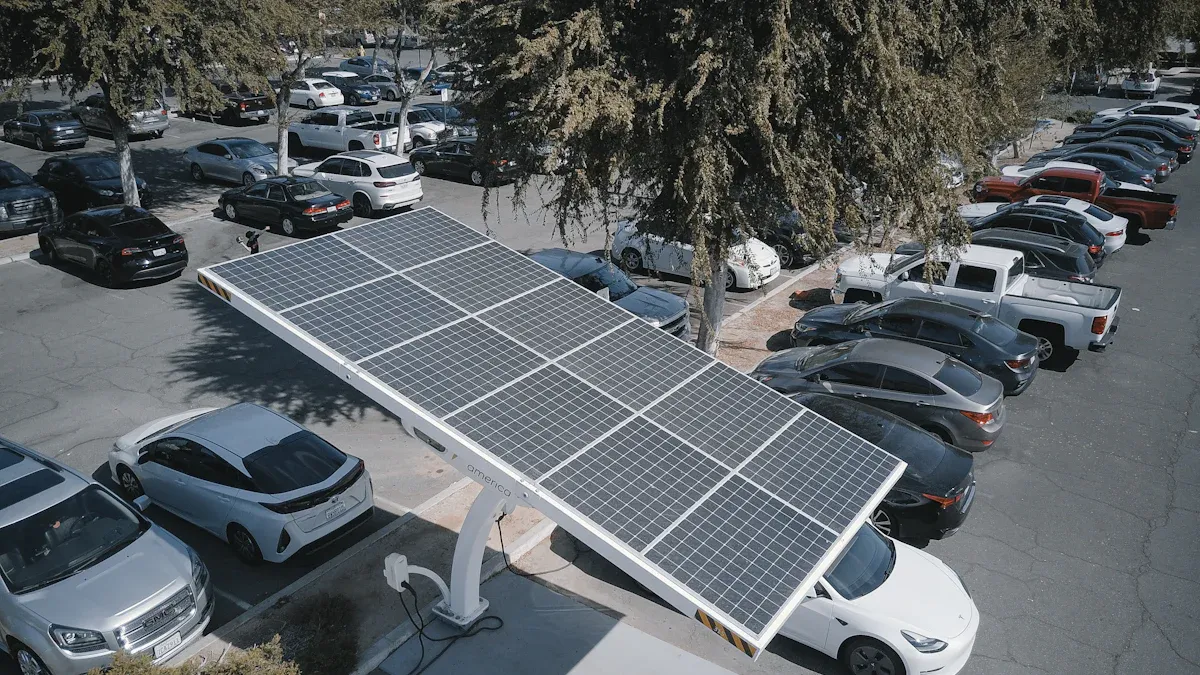
A business can actively implement several strategies to shorten its payback period and boost its long-term return on investment. A proactive approach to pricing, visibility, and service integration transforms a charging station from a simple utility into a powerful profit center. These tactics focus on increasing utilization and enhancing customer value.
Implement Smart Pricing Strategies
Flexible pricing allows an operator to adapt to market conditions and user behavior. Modern Charging Management Software (CMS) makes these strategies easy to implement.
Dynamic Pricing for Peak and Off-Peak Hours
An operator can set different prices for electricity based on the time of day. Higher rates can apply during peak demand periods, such as the evening rush hour. Lower rates can attract drivers during quieter, off-peak hours. This approach helps manage grid load and maximizes revenue from each charging session.
Tiered Pricing for Different User Groups
A tiered model creates different price points for specific audiences. For example, a company could offer a discounted charging rate for employees while charging a standard public rate for visitors. Another option is to set premium pricing for faster DC chargers and a lower rate for slower AC units.
Optimize Charger Accessibility and Visibility
Drivers cannot use chargers they cannot find. Making stations visible both digitally and physically is essential for attracting customers.
Listing Chargers on Public Maps like Zapmap
Most EV drivers in the UK use apps like Zapmap to locate their next charge. A business must ensure its stations are listed on these platforms with accurate information. This includes details on location, charger type, speed, price, and real-time availability. Visibility on these maps is the primary way to attract transient customers.
Clear Signage and Wayfinding
Once a driver arrives on-site, clear signage is crucial. Directional signs from the property entrance should guide drivers to the charging bays. The bays themselves should be clearly marked and well-lit. Good wayfinding removes frustration and creates a positive user experience.
Integrate with Other Business Services
Connecting the charging service to core business operations creates powerful synergies. This strategy encourages customer loyalty and increases spending across the board.
Loyalty Programs and Charging Discounts
Integrating EV charging with existing loyalty programs is a proven tactic. For instance, Sainsbury’s allows customers to collect loyalty points when using its Smart Charge network. This encourages EV drivers to shop at their stores over competitors. It builds loyalty and links the charging experience directly to the primary business offering.
Bundling Charging with Products or Services
A company can bundle charging with other products to enhance value. A hotel might offer a “charge and stay” package with a discount. A café could provide a free coffee to customers who spend a certain amount on charging. These bundles increase overall customer spend and improve the attractiveness of the site. Technologically advanced providers like TPSON offer platforms that can facilitate these complex integrations.
Future-Proof Your Installation
Investing in EV charging infrastructure is a long-term commitment. A business must plan beyond the initial installation to ensure its investment remains valuable and profitable as the market evolves. Future-proofing protects against technological obsolescence and positions the business to capitalize on future growth. This strategic foresight is essential for maximizing long-term returns.
Scalable Infrastructure for Future Expansion
The demand for EV charging will only increase. A smart installation prepares for this growth from day one. Planning for scalability involves thinking about the site’s ultimate capacity, not just its immediate needs. This approach minimizes future disruption and cost.
Key considerations for scalable design include:
- Installing excess ducting: Laying extra underground conduits during the initial groundwork is far cheaper than re-excavating later. This prepares the site for additional chargers with minimal future cost.
- Sizing electrical systems for growth: A business should consult its utility company about future power requirements. Installing a larger electrical panel or substation upfront can prevent costly upgrades down the line.
- Choosing modular hardware: Selecting flexible hardware allows for easier expansion and maintenance, extending the investment’s lifespan and reducing long-term operating expenses.
By anticipating future demand, a business can phase its expansion efficiently. This strategic installation ensures that scaling up is a simple, cost-effective process rather than a complete overhaul.
Choosing Hardware with Open Charge Point Protocol (OCPP) Compliance
Hardware selection is critical for long-term flexibility. A business should avoid proprietary systems that create vendor lock-in. The key to this freedom is the Open Charge Point Protocol (OCPP).
OCPP is a universal application protocol that allows EV chargers and charging management software (CMS) from different vendors to communicate with each other. Choosing OCPP-compliant hardware offers significant advantages. It gives a business the freedom to switch its CMS provider at any time without having to replace its expensive charger hardware. This flexibility ensures the business can always access the best software features and pricing on the market. Technologically advanced providers like TPSON offer OCPP-compliant hardware, giving businesses full control over their network. This empowers operators to adapt their strategy, optimize costs, and integrate with new technologies as they emerge, securing the investment’s value for years to come.
A workplace ev charger installation is a sound investment for UK businesses, offering a clear path to profit and profitability. The roi of ev charging promises a strong return on investment and financial returns. This ev charging station business helps UK businesses meet corporate sustainability goals and environmental initiatives, boosting the ev charging station profit margin. The business opportunities in 2025 make a profitable charging business a reality, ensuring ev charging stations profitable. This charging venture offers a strong margin, profit, and positive returns.
A business must conduct a site assessment for a realistic roi outlook. This step is crucial for any charging station business to maximize its ev charging station profit margin, profit, and overall margin. A workplace ev charger installation makes ev charging stations profitable. This charging offers great profit. The UK market supports this charging.
FAQ
What is a realistic payback period for commercial EV chargers in the UK?
A UK business can typically expect a payback period of 3 to 6 years. High utilization and smart pricing can shorten this timeline significantly. A detailed ROI calculation provides the most accurate forecast for a specific site.
How much does a commercial EV charger installation cost?
Costs vary widely based on the site and charger type.
- AC Charger: Installation may start from $2,000 per unit.
- DC Fast Charger: This is a larger investment, often exceeding $30,000.
A professional site survey is essential for an accurate quote. It covers hardware, groundwork, and any necessary grid upgrades.
What UK government grants are available for businesses?
The Workplace Charging Scheme (WCS) is the primary grant. It offers up to $350 per socket for up to 40 sockets. Businesses can also claim 100% first-year capital allowances, providing significant tax relief on the equipment cost.
Do I need special software to manage my chargers?
Yes, a Charging Management Software (CMS) is essential for commercial operation. It allows a business to set prices, monitor usage, and process payments. Technologically advanced providers like TPSON integrate this software for seamless control over the charging network.
How do I attract drivers to my charging stations?
Visibility is key to maximizing utilization. A business must list its chargers on public maps like Zapmap. Clear on-site signage and well-marked bays also help drivers find and use the stations easily, which directly increases revenue.
What is OCPP and why is it important for my investment?
OCPP is the Open Charge Point Protocol. Choosing OCPP-compliant hardware is crucial for future-proofing. It gives a business the freedom to switch software providers at any time without replacing its expensive chargers, protecting the long-term value of the investment.