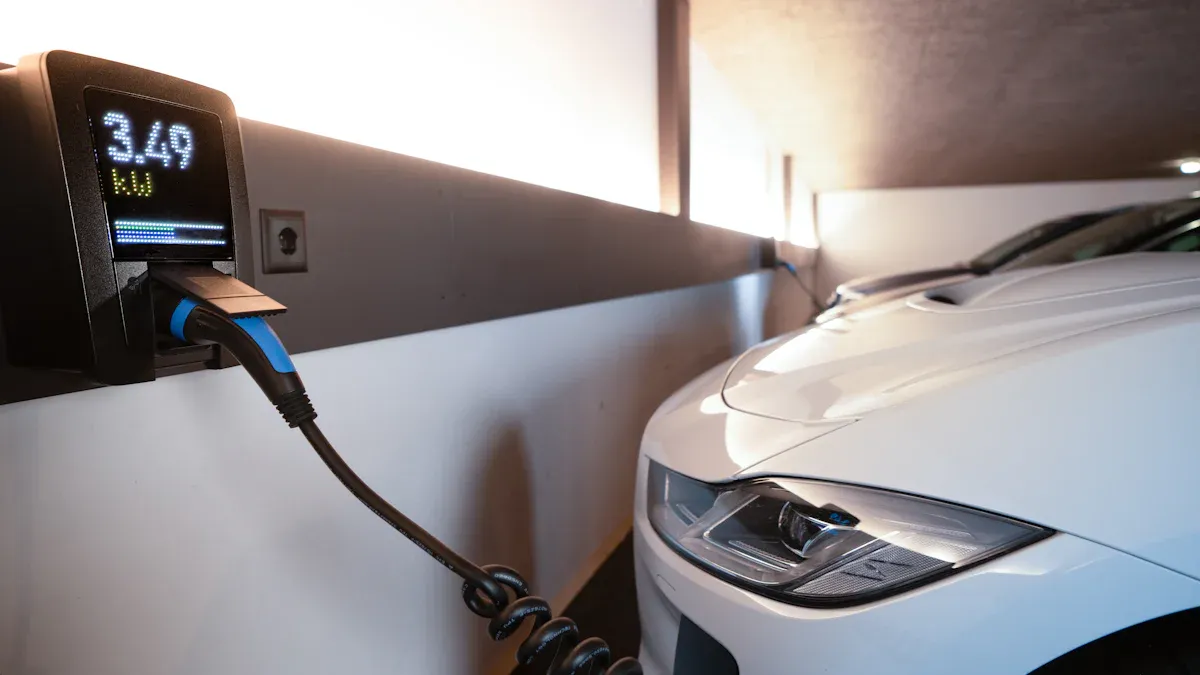
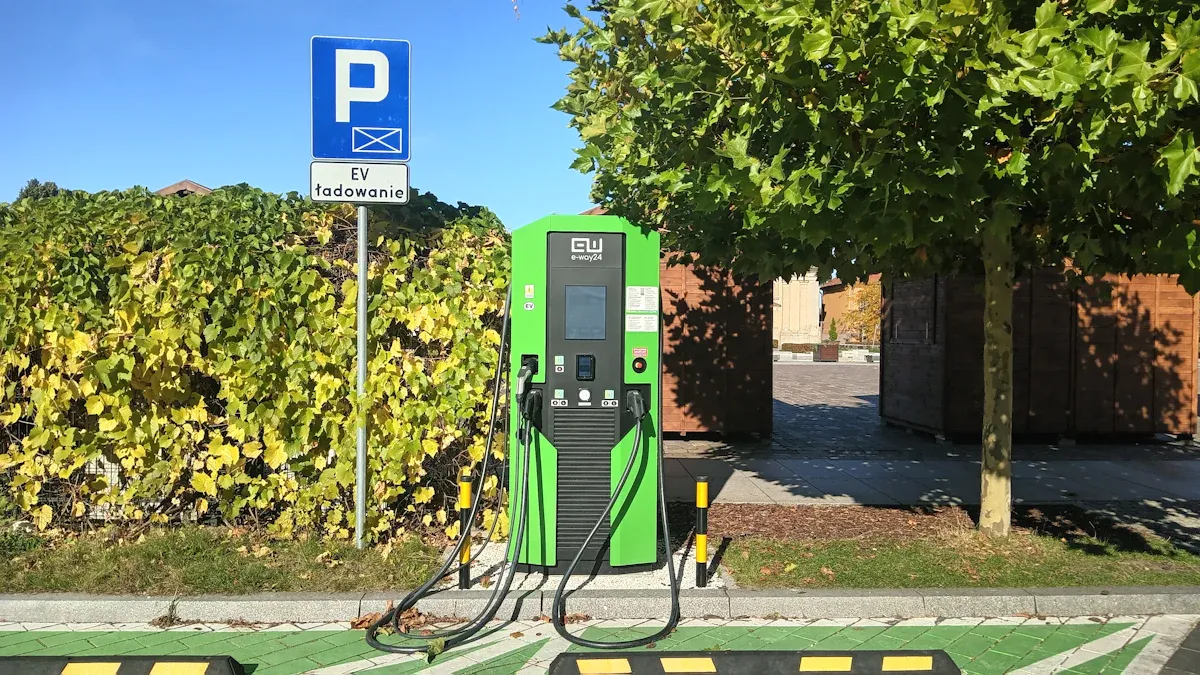
The shift to EV technology signals a revolution for Argentine businesses. Gas stations can evolve beyond selling alternative fuel sources. A smart electric vehicle infrastructure strategy is crucial for this transition. This strategy transforms them into modern mobility hubs. Adopting commercial EV charging creates new revenue and builds a robust EV charging ecosystem. EV charger manufacturers like TPSON provide advanced EV charging solutions, from a powerful EV Charger to portable EV chargers. This evolution secures long-term relevance for any EV business, making electric vehicle charging a core service for the future.
Creating New Revenue Streams Beyond the Pump

The transition to electric mobility offers gas stations a powerful opportunity to diversify their income. A forward-thinking business strategy moves beyond fuel sales. It builds a profitable ecosystem around the needs of the modern EV driver. This involves monetizing the charge itself and capitalizing on the extended time customers spend on-site.
Direct Monetization from Electric Vehicle Charging
The most direct new revenue stream comes from selling electricity. A flexible and clear pricing structure is essential for attracting and retaining customers. Station owners can design a multi-layered approach to maximize profitability from their new charging facilities.
Designing Your Pricing Models
A successful pricing strategy balances profitability with customer appeal. Station owners have several models to consider, each suiting different business goals and customer types.
- Pay-Per-Use: This is the simplest model. Businesses can charge drivers per kilowatt-hour (kWh) of energy consumed, per minute of charging time, or a flat fee per session.
- Subscriptions: A membership model offers recurring revenue. Frequent users can pay a monthly fee for discounted charging rates, creating a loyal customer base.
Dynamic pricing is an advanced strategy that adjusts rates based on demand or the time of day. Offering lower prices during off-peak hours can incentivize charging when grid demand is low, reducing operational costs. To ensure charger availability, businesses can also implement overstay fees.
Note: An overstay fee, such as $0.75/min after a 60-minute session, encourages drivers to move their vehicle once their EV is charged. This simple rule maximizes the availability of public EV charging points for the next user.
Capitalizing on Different Charging Speeds
The type of charger installed directly impacts pricing and customer experience. Stations can offer a mix of charging speeds to serve different needs.
| Fleet Plan | Fast (per kWh) | Rapid (per kWh) | Ultra-Rapid (per kWh) | Monthly Fee |
|---|---|---|---|---|
| EV Fleet 5 | $0.59 | $0.61 | $0.73 | $20 |
| EV Fleet 10 | $0.59 | $0.61 | $0.73 | $40 |
- Level 2 Chargers: These are ideal for customers who plan to stay longer. The slower charging speed increases dwell time, making them perfect for locations with restaurants or extensive retail offerings.
- DC Fast Chargers: These powerful units, like those from advanced providers such as TPSON, deliver a significant charge in under an hour. They command higher prices and appeal to drivers needing a quick top-up, including commercial fleets and travelers on major highways.
Integrating Argentinian Payment Systems
Seamless payment is crucial for a positive customer experience. Integrating familiar and trusted payment methods is non-negotiable. Beyond traditional credit and debit cards, charging stations must support local digital wallets.
Mercado Pago, for example, is ubiquitous in Argentina. Allowing customers to pay by scanning a QR code with their smartphone simplifies the transaction. This integration reduces friction and makes the electric vehicle charging process as easy as buying a coffee.
Profiting from Increased Customer Dwell Time
Unlike a five-minute fuel stop, charging an EV takes time—anywhere from 20 minutes to over an hour. This extended “dwell time” is a golden opportunity for gas stations to generate significant ancillary revenue. Workplaces and retail hubs are already using commercial ev charging to boost customer engagement and sales.
Expanding Convenience Store Offerings
With customers waiting, the traditional convenience store can transform into a primary profit center. Station owners should think beyond basic snacks and drinks. Upgrading the retail experience can dramatically increase sales. Consider adding:
- High-quality brewed coffee and espresso drinks.
- Fresh, locally sourced food options like sandwiches and pastries.
- A wider selection of travel necessities and automotive accessories.
- Comfortable seating areas with charging ports for personal devices.
Supermarkets have found that even slower chargers can be beneficial. They encourage longer shopping trips, leading to increased sales of groceries and other goods.
Adding Premium Services and Lounges
To attract and retain high-value customers, stations can introduce premium amenities. A clean, comfortable, and secure lounge provides a significant upgrade over waiting in a car. These spaces can offer:
- Complimentary high-speed Wi-Fi.
- Clean restrooms.
- Workstations for business travelers.
- Vending machines with premium snacks and beverages.
Access to these lounges can be offered as a paid amenity or as a complimentary perk for customers using the fastest chargers or subscribing to a premium membership plan. This enhances the overall electric vehicle charging experience.
Introducing Automated Amenities
Automation can provide valuable services with minimal staffing requirements. Modern, automated amenities can generate passive income 24/7. Station owners could install self-service options such as:
- High-tech car wash systems.
- Automated tire inflation and vacuum stations.
- Package delivery lockers for companies like Mercado Libre.
These additions make the station a multi-purpose stop, increasing its value to every EV driver and maximizing revenue per square meter.
Analyzing the Costs vs. ROI of Commercial EV Charging
Transitioning to an electric vehicle charging provider requires a significant capital outlay. Business owners must conduct a thorough analysis of the costs against the potential returns. A smart financial strategy ensures the investment is both sustainable and profitable, paving the way for long-term success in the evolving mobility market.
Understanding the Upfront Investment
The initial investment extends beyond the charging hardware itself. A comprehensive budget must account for installation, site modifications, software, and ongoing operational fees. Each component is critical for building a reliable and user-friendly charging network.
Hardware Costs: Level 2 vs. DC Fast Charging
The largest single expense is the charging hardware. The choice between Level 2 AC chargers and DC Fast Chargers depends on the station’s location, target customer, and business goals.
- Level 2 AC Chargers: These units are less expensive to purchase and install. They provide a slower charge, making them suitable for locations where customers will spend more time, such as service centers or stations with restaurants. They are an excellent entry point for businesses testing the EV market.
- DC Fast Chargers (DCFC): These chargers represent a much larger investment. However, they offer rapid charging speeds that attract high-value customers, including long-distance travelers and commercial fleets. Advanced providers like TPSON offer powerful and reliable DCFC solutions that can deliver a substantial charge in under 30 minutes, justifying premium pricing.
Pro Tip: A hybrid approach often works best. Installing a mix of Level 2 and DC fast chargers allows a station to serve different EV driver needs and optimize hardware spending.
Installation and Site Preparation Expenses
Installation costs can sometimes equal or exceed the price of the hardware. Station owners must budget for several key activities:
- Site Assessment: An electrical engineer must evaluate the property’s power capacity.
- Electrical Upgrades: This may involve installing new transformers, switchgear, and conduits to handle the high-power demands of DC fast chargers.
- Civil Works: Costs include trenching for electrical lines, pouring concrete pads for the chargers, and painting parking spaces.
- Permitting: Securing the necessary permits from local municipalities in Argentina adds to the project timeline and cost.
Software, Networking, and Maintenance Fees
Modern chargers are smart, connected devices. They require a robust software platform to operate effectively. This introduces recurring costs that are essential for smooth operation.
| Software & Service | Description | Typical Cost Model |
|---|---|---|
| CSMS | A Charging Station Management System allows remote monitoring, price setting, and usage analytics. | Monthly fee per charger |
| Networking | A reliable internet connection (cellular or Wi-Fi) is needed for payment processing and software updates. | Monthly data plan fee |
| Maintenance | A service plan covers routine inspections, repairs, and software updates to ensure uptime. | Annual contract or per-incident fee |
This ongoing operational investment is crucial for maintaining customer satisfaction and maximizing the lifespan of the charging equipment.
Projecting Your Return on Investment
A successful commercial ev charging project delivers returns from multiple sources. The return on investment (ROI) comes from direct charging revenue, increased ancillary sales, and the long-term appreciation of the property itself.
Forecasting Direct Charging Revenue
The most direct return comes from selling electricity. Businesses can build a financial model to project this income stream. The calculation is straightforward:
Revenue = (Number of Charging Sessions) x (Average Energy per Session in kWh) x (Price per kWh)
Station owners should analyze traffic patterns, local EV adoption rates, and competitor pricing to create realistic forecasts. Offering subscription plans can create a predictable, recurring revenue base.
Estimating Growth in Ancillary Sales
Increased customer dwell time directly translates to higher sales of non-fuel items. While an internal combustion engine vehicle driver spends about five minutes on-site, an EV driver may spend 30 minutes or more. This captive audience is more likely to:
- Purchase coffee, food, and other convenience items.
- Use premium services like a car wash or lounge.
- Browse and buy higher-margin retail products.
Businesses can estimate this uplift by tracking the average transaction value of EV drivers compared to traditional customers. This ancillary revenue is often the most profitable component of an electric vehicle charging operation.
Calculating Long-Term Property Value Increase
Installing EV infrastructure is a forward-looking investment that enhances a property’s intrinsic value. A station equipped with modern chargers becomes a vital piece of mobility infrastructure. This modernization makes the property:
- More attractive to potential buyers or tenants in the future.
- Resilient against the decline of fossil fuel sales.
- A key node in Argentina’s growing network for electric mobility.
This increase in property value is a significant, though less immediate, part of the overall return on investment. It secures the business’s relevance for decades to come.
Transforming Your Service Center for the Electric Era

The rise of electric vehicles requires service centers to evolve fundamentally. The focus must shift from traditional mechanical repairs to sophisticated electrical diagnostics and maintenance. This transformation involves introducing new services tailored to EV technology and investing heavily in workforce training to ensure safety and expertise.
Shifting from Mechanical to Electrical Services
Service centers can create new, profitable service lines by adapting to the unique needs of an electric vehicle. While an ev has fewer moving parts than a gasoline car, it presents new maintenance requirements that service centers can capitalize on.
New Service Offerings for EVs
An EV service menu looks very different from a traditional one. Technicians will spend less time on oil changes and more time on electrical systems. Key new service offerings include:
- Brake System Maintenance: EVs use regenerative braking, which reduces wear on brake pads and discs, but regular inspections are still essential for safety.
- Tire and Suspension Checks: The heavy battery pack in an ev increases stress on tires and suspension components, requiring more frequent checks and specialized alignment services.
- Cooling System Service: Technicians must maintain the liquid cooling systems that regulate the temperature of the battery and power electronics.
- Charging Port Inspection: A routine check of charging cables and connections for damage is a critical part of any EV service.
Battery Diagnostics and Software Updates
The battery is the heart of an electric vehicle. Service centers must invest in diagnostic tools to perform battery health checks, which can become a valuable, high-margin service. Additionally, EVs rely on complex software to manage everything from performance to charging. Offering over-the-air (OTA) and in-shop software updates keeps vehicles running efficiently and provides another consistent revenue stream.
Specialized Tire and Alignment Services
The instant torque and increased weight of electric vehicles lead to faster and different patterns of tire wear. Service centers can profit by offering specialized services. This includes stocking EV-specific tires designed for higher loads and lower rolling resistance. Performing precise wheel alignments tailored to EV weight distribution not only improves vehicle safety but also becomes a necessary and recurring service.
Retraining Your Technical Workforce
A service center’s greatest asset is its technicians. Transitioning to the electric era requires a strategic investment in retraining to handle high-voltage systems safely and effectively. This ensures the business can service advanced vehicles from manufacturers whose chargers, like those from TPSON, are part of the growing infrastructure.
EV Technician Certification Programs
General mechanical knowledge is no longer sufficient. Technicians need formal training and certification.
Programs like the Electric Vehicle Fundamentals (EVF) certification provide essential knowledge of battery technology, power electronics, and high-voltage systems. Service centers should encourage and sponsor their staff to obtain these credentials to build a qualified team.
High-Voltage Safety Training Protocols
Working with EV batteries and powertrains carries significant risk. Implementing strict safety protocols is non-negotiable. All technicians must complete high-voltage safety training. This education covers procedures for de-energizing vehicles, using insulated tools, and wearing appropriate personal protective equipment (PPE) to prevent electrical shock.
Developing Software and Diagnostic Skills
Modern technicians must be as comfortable with a laptop as they are with a wrench. Training should focus on developing software and digital diagnostic skills. This includes learning to use manufacturer-specific diagnostic software, interpreting data from the vehicle’s onboard computer, and troubleshooting complex electronic control units. This skill set is crucial for accurately and efficiently servicing the modern ev.
Overcoming Infrastructure Challenges in Argentina
Deploying a robust electric vehicle infrastructure in Argentina presents unique challenges. Station owners must navigate physical site limitations and address demands on the electrical grid. A smart strategy is essential for a successful and safe installation. This planning ensures long-term operational success and profitability.
Integrating Chargers into Your Station’s Layout
Properly integrating chargers into an existing station is more than just an installation task. It requires careful planning to ensure safety, accessibility, and compliance. A well-designed layout optimizes the customer experience and protects the investment.
Strategic Charger Placement for Safety
Protecting expensive charging equipment is a top priority. A station’s design must shield chargers from accidental vehicle impacts and potential vandalism. Businesses can implement several physical safeguards to enhance charging network reliability.
- EV Charging Point Protection Bollards: These sturdy posts create a physical barrier around the charging unit.
- EV Charging Posts: Specially designed posts can house the charger itself, elevating it from ground-level threats.
- EV Charging Protection Guards: Steel guards or barriers offer another layer of defense against collisions.
These measures protect the hardware. They also ensure the station can provide uninterrupted service to every ev driver.
Ensuring Accessibility and Traffic Flow
A successful layout guarantees easy access for all drivers and maintains smooth traffic flow. Station owners should evaluate the entire site to determine the best placement for chargers. The design must provide enough space for vehicles to park and maneuver, even during peak hours. Clear signage and intuitive parking layouts guide drivers to the public charging points, preventing congestion and improving the user experience.
Complying with Local Buenos Aires Regulations
Adherence to local regulations is non-negotiable. In cities like Buenos Aires, station owners must secure the correct permits for any civil and electrical work. An effective electric vehicle infrastructure strategy includes consulting with municipal authorities early in the process. This ensures the installation meets all local building codes, accessibility laws, and electrical standards, avoiding costly delays and fines.
Addressing Argentina’s Electrical Grid Demands
DC fast chargers, like those from advanced providers such as TPSON, consume a significant amount of power. This demand requires a thorough assessment of a site’s connection to the local electrical grid. Proper planning prevents overloads and ensures a stable power supply.
Conducting a Site Power Capacity Assessment
Before purchasing any hardware, an electrical engineer must conduct a full site power assessment. This evaluation determines if the existing electrical service can handle the added load of multiple ev chargers. The assessment identifies the maximum power capacity and pinpoints any immediate limitations.
This initial step is the most critical part of the technical planning process. It forms the basis for all subsequent decisions regarding grid upgrades and on-site energy solutions.
Planning for Necessary Grid Upgrades
Many sites will require electrical upgrades to support fast charging. This process may involve installing new transformers, switchgear, or high-capacity cabling. Station owners must coordinate with local utility companies in Argentina to plan and execute these upgrades. This collaboration is key to establishing a consistent and powerful connection for the ev charging equipment.
Using Solar and Battery Storage Solutions
Station owners can enhance their energy independence and promote sustainability. Installing solar panels and on-site battery storage systems offers a powerful solution. These systems can store energy during off-peak hours or from solar generation. The station can then use this stored power during peak charging times. This strategy reduces strain on the grid, lowers electricity costs, and provides a reliable backup, positioning the station as a provider of modern alternative fuel sources.
Gaining a Strategic Edge in a Nascent Market
In Argentina’s emerging electric vehicle market, proactive station owners can gain a significant competitive advantage. A forward-thinking strategy positions a business not just as a participant but as a leader. Early action secures market share and builds a foundation for long-term growth.
The Advantages of Early Adoption
Moving quickly allows businesses to define the market on their own terms. Early adopters capture value that later entrants will find difficult to replicate. This proactive approach builds brand equity and customer loyalty from the ground up.
Building a Future-Proof Brand Image
Installing EV chargers sends a powerful message. It showcases a brand as modern, innovative, and committed to sustainability. This forward-looking image resonates with customers and partners alike. It demonstrates that the business is prepared for the future of mobility, building trust and enhancing its reputation in the community.
Attracting a New, Tech-Savvy Customer Base
Offering EV charging directly attracts a valuable new demographic. EV drivers are often early adopters of technology with higher disposable incomes. A CACI survey found that 55% of consumers would choose a location specifically because it offers charging. Businesses can appeal to this group by:
- Demonstrating a commitment to new technology.
- Providing convenient digital payment options.
- Aligning with the values of environmentally conscious consumers.
This new customer base for an ev is loyal and actively seeks out businesses that support their lifestyle.
Securing a First-Mover Advantage
Early entry into the EV charging market provides a distinct and defensible edge. Businesses that act now can secure prime locations and establish themselves as the go-to charging hubs in their area. For example, IMO Car Wash gained a first-mover advantage by strategically placing chargers, which allowed them to secure power capacity and increase site footfall. This initial move solidifies a station’s role in the local electric vehicle infrastructure.
Leveraging Government and Industry Support
Station owners do not have to navigate this transition alone. A smart electric vehicle infrastructure strategy involves leveraging support from government programs and forming strategic industry partnerships. This collaborative approach can reduce costs and accelerate deployment.
Utilizing Proposed Tax Incentives
The Argentine government is exploring incentives to promote electric mobility. These programs can significantly lower the financial barrier to entry. Station owners should stay informed about proposed tax credits or deductions for purchasing and installing charging equipment. Aligning an investment strategy with these incentives can maximize return on investment and support government sustainability targets.
Partnering with Energy Companies and Utilities
Energy companies are actively seeking partners to expand their charging networks. These collaborations can take many forms, from utilities helping with grid upgrades to energy firms funding the entire installation. Businesses can offer their sites to companies looking to build, operate, and maintain public charging networks, often powered by renewable electricity.
Collaborating with EV Manufacturers
Partnerships with EV manufacturers and technology providers create powerful synergies. A service center can become an authorized service provider for a specific brand. Collaborations between hardware specialists, like the technologically advanced provider TPSON, and service pioneers accelerate the deployment of reliable charging for every ev. This type of partnership ensures that the installed technology is robust and ready for large-scale fleet and public use.
Becoming a Key Node in Argentina’s Mobility Network
Gas stations can transform from isolated fuel stops into essential nodes within Argentina’s national mobility network. An effective electric vehicle infrastructure strategy positions a business as a vital link for travelers and commerce. This evolution builds a robust ev charging ecosystem that supports the country’s transition to electric transport.
Enabling Long-Distance Electric Vehicle Charging
Strategically placed chargers eliminate range anxiety and unlock long-distance travel for ev drivers. This makes stations indispensable for cross-country journeys.
Servicing Major Routes like Ruta 9 and 40
Stations located along critical highways like Ruta 9 and Ruta 40 become crucial refueling points. Installing DC fast chargers allows travelers to cover vast distances with minimal downtime. These locations serve as reliable links between major provinces, making electric travel a practical reality.
Connecting Cities and Tourist Destinations
Charging infrastructure connects urban centers and popular tourist spots. A station with public charging facilities near places like Bariloche or Mendoza encourages EV tourism. It provides the confidence drivers need to explore the country’s natural beauty without worrying about their next charge.
Supporting Commercial and Logistics Fleets
Businesses can capture a valuable B2B market by supporting commercial fleets. Logistics companies transitioning to a zero-emission fleet require dependable and fast electric vehicle charging. Stations equipped with powerful hardware from providers like TPSON can offer dedicated charging services, becoming essential partners for modern logistics operations.
Using Data to Drive Business Growth
Modern EV chargers are powerful data collection tools. Businesses can analyze this information to refine operations, enhance customer experience, and drive profitability. A data-driven strategy is key to maximizing the return on investment.
Analyzing Charger Usage Patterns
Charger data provides deep insights into customer behavior. Station owners can use this information to make smarter operational decisions.
- Real-time monitoring tracks charger uptime and energy consumption.
- Predictive analytics help forecast demand patterns for efficient maintenance scheduling.
- Actionable reports identify peak hours and popular charger types.
Optimizing Pricing and Service Offerings
Data enables dynamic and intelligent pricing models. Businesses can adjust their offerings based on real-time conditions to maximize revenue and charger utilization.
By analyzing usage, a station can implement dynamic pricing that lowers costs during off-peak hours. It can also create tiered service offerings, such as premium rates for ultra-fast charging, to cater to different customer needs.
Informing Future Expansion Strategy
Usage data is a roadmap for future growth. It reveals where demand for public charging is highest, guiding expansion decisions. For example, some fuel retail brands use specialized data services to identify optimal locations for new ev charging facilities. This analytical approach ensures that new investments are placed in areas with the greatest potential for success.
Embracing commercial ev charging is a vital strategy for Argentine businesses. This revolution transforms stations into modern EV mobility hubs, ensuring long-term relevance. A smart electric vehicle infrastructure strategy creates new revenue from electric vehicle charging. Station owners who act now gain a significant competitive advantage.
Begin planning your investment in commercial ev charging and the supporting electric vehicle infrastructure today to secure your business’s role in the future of mobility.
FAQ
What is the main difference between Level 2 and DC fast chargers?
Level 2 AC chargers provide a slower charge, ideal for longer stays. DC fast chargers deliver rapid power, serving travelers and commercial fleets needing a quick top-up. A station can install both to meet diverse customer needs and maximize its service offerings.
How much power does a DC fast charger need?
DC fast chargers have significant power requirements. A professional site assessment is essential to determine if a station’s existing electrical connection can support the load. Many sites will need grid upgrades in coordination with the local utility company to ensure stable operation.
Can businesses make money from more than just charging fees?
Yes. The most significant profit often comes from ancillary sales. While an EV charges, drivers spend more time on-site. This increases sales of coffee, food, and other convenience items. It also creates opportunities for premium services like car washes or lounge access.
Do technicians need special training to service EVs?
Absolutely. Technicians require specialized training to handle high-voltage systems safely. Certification programs cover battery diagnostics, software updates, and safety protocols. This investment in retraining is crucial for any service center transitioning to support electric vehicles and their advanced systems.
How do businesses choose the right charger for their station?
The choice depends on location, target customers, and budget. Stations on major highways benefit from DC fast chargers. Locations with restaurants or retail may use Level 2 chargers to encourage longer visits. Technologically advanced providers like TPSON offer a range of solutions to fit any strategy.
What is a Charging Station Management System (CSMS)?
A CSMS is the software platform that operates the charging station. It allows owners to remotely monitor charger status, set pricing, process payments, and analyze usage data. This system is essential for managing a modern, efficient, and profitable public charging network.