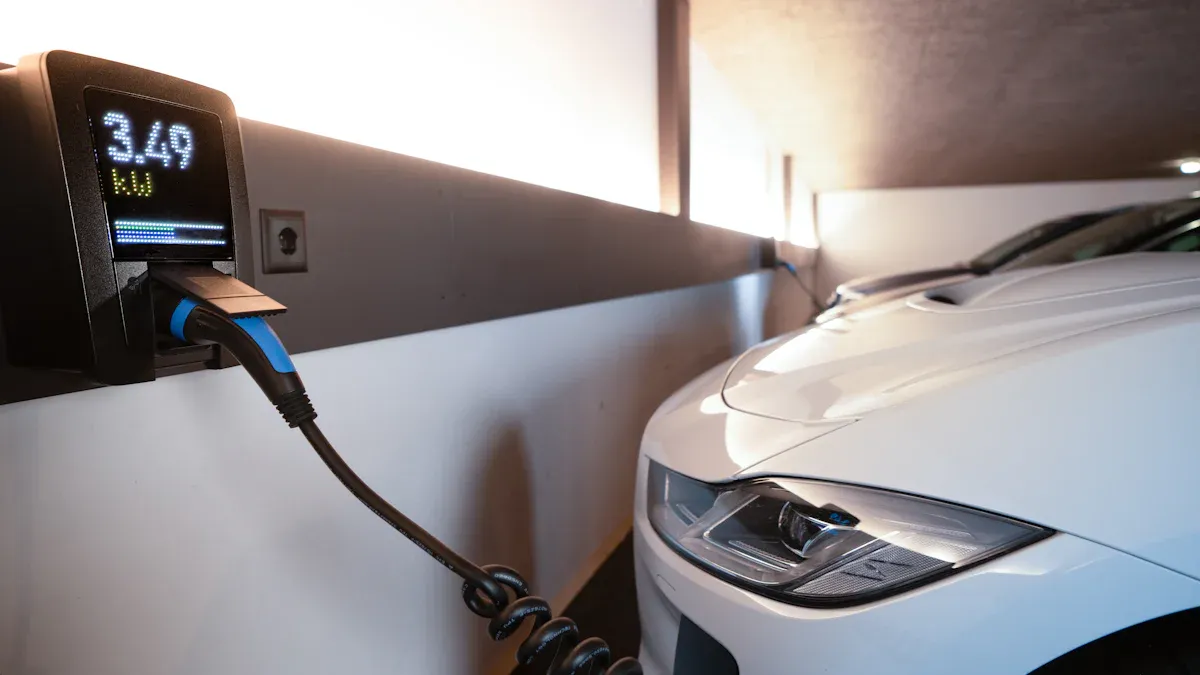
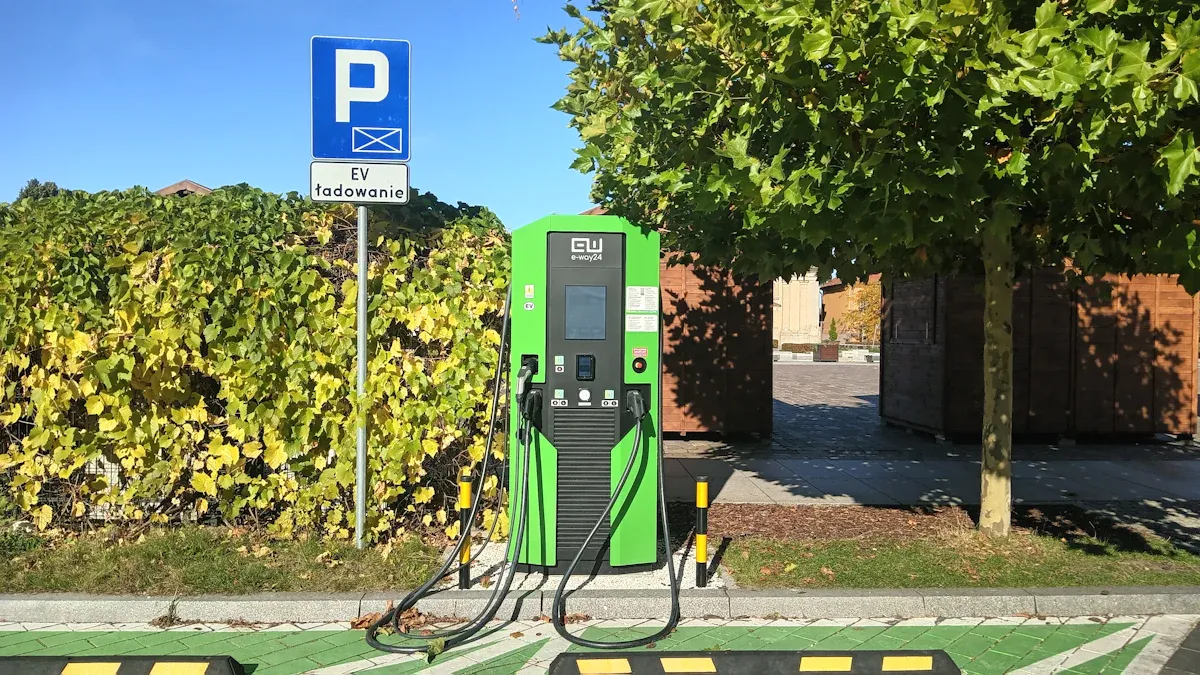
An electric vehicle owner can expect to pay between 5,100 and 6,500 Argentine Pesos (ARS) monthly for EV Charging in Argentina. This estimate is based on projected 2025 rates for an average electric vehicle driving 40 kilometers daily. The final cost of using an شاحن السيارة الكهربائية depends on three key factors. These factors are a user’s specific electricity tariff, their daily mileage, and the electric vehicle’s energy efficiency. Calculating these costs is crucial for owners, especially when considering the various الشركات المصنعة لشاحن السيارة الكهربائية and their offerings. The costs for electric vehicle charging vary greatly, and understanding these expenses helps manage them effectively, whether you’re looking for comprehensive حلول شحن السيارات الكهربائية or even شواحن السيارات الكهربائية المحمولة.
Understanding the Costs of EV Charging in Argentina
An electric vehicle owner must first understand their utility bill to accurately calculate charging costs. The total expense for شحن السيارات الكهربائية is more than just the price per kilowatt-hour. It involves fixed charges, variable rates, and government taxes. Furthermore, Argentina’s subsidy system directly impacts the final cost of charging an electric vehicle.
Key Components of Your Electricity Bill
An electricity bill in Argentina consists of several parts. Each part contributes to the total monthly costs. Understanding these components is the first step toward managing electric vehicle charging expenses.
Fixed Charge (Fixed Charge)
إن Fixed Charge is a set monthly fee. Every customer pays this amount regardless of their energy consumption. This charge covers the administrative and maintenance costs of the electricity grid. It ensures the provider can maintain a reliable service infrastructure for all users, including those charging an electric vehicle.
Variable Charge (Variable Charge)
إن Variable Charge is the most important component for electric vehicle owners. This charge depends directly on the amount of electricity consumed, measured in kilowatt-hours (kWh). The cost per kWh is the primary driver of your monthly electric vehicle charging costs. More charging means a higher variable charge.
Taxes and Levies
Several taxes and levies increase the final electricity cost. The most significant is the national Value Added Tax, known as Value Added Tax (IVA). Electricity services in Argentina are subject to an increased IVA rate of 27%. This tax applies to both the fixed and variable charges, substantially raising the overall costs of electric vehicle charging.
Argentina’s Energy Subsidy Segmentation
The Argentine government uses a subsidy system called Energy Segmentation. This system categorizes residential users into three tiers based on income. Each tier has a different level of government support, which dramatically affects the cost of charging an electric vehicle.
ملاحظة: Your assigned tier is crucial. It determines the rate you pay per kWh and is the single biggest factor influencing your monthly EV charging in Argentina expenses.
N1 – Higher Income (No Subsidy)
Users in the N1 category are considered high-income households. They do not receive any government subsidies for their electricity consumption. As a result, they pay the full market rate for energy. This makes electric vehicle charging most expensive for this group.
N2 – Lower Income (Full Subsidy)
The N2 category includes lower-income households. These users receive the largest government subsidy, resulting in a significantly lower cost per kWh. For an N2 user, the monthly costs for charging an electric vehicle will be the lowest among the three tiers.
N3 – Middle Income (Partial Subsidy)
N3 users represent middle-income households. They receive a partial subsidy. This group pays a subsidized rate for a specific block of monthly energy consumption. Any usage beyond that pre-defined limit is billed at the full, unsubsidized N1 rate. This structure requires careful energy management to keep charging costs low.
Step 1: Find Your 2025 Residential Electricity Rate
An owner must determine their specific electricity rate to calculate the monthly costs of electric vehicle charging. This rate is directly tied to the household’s assigned subsidy category. Identifying this category is the most critical step in forecasting expenses for an electric vehicle.
How to Identify Your Tariff Category
Most utility providers clearly display the tariff category on their monthly bills. An electric vehicle owner can find their N1, N2, or N3 classification by examining their statement from providers like Edenor or Edesur. This information reveals the price per kWh for all energy consumption, including charging.
Locating Your Category on an Edenor Bill
An Edenor customer can find their subsidy level on the front page of their bill. The document usually contains a section labeled “Supply Data” (Supply Data). Within this section, a line item called “Segmentation” will display the assigned category: N1, N2, or N3.
Locating Your Category on an Edesur Bill
An Edesur customer will find similar information on their bill. They should look for a box with customer details, often titled “Your Meter Information” (Your Meter Information). The subsidy category is typically listed here, making it easy to identify the correct rate for calculating charging costs.
Using Your Provider’s Online Portal
Most energy providers offer online portals or mobile apps. Customers can log into their accounts to view detailed billing information. The user’s subsidy category is almost always displayed prominently on the account dashboard or within the latest bill summary. This is often the fastest way to confirm the tariff.
Projected 2025 Electricity Rates (ARS per kWh)
The cost per kWh varies significantly based on the subsidy tier. The following table shows the projected rates for 2025. An electric vehicle owner can use these figures to estimate their future electric vehicle charging expenses. These projections are essential for budgeting the monthly cost of owning an electric vehicle.
| Subsidy Category | نوع المستخدم | Projected Rate (ARS per kWh) |
|---|---|---|
| N1 | الدخل المرتفع | ARS 90.50 |
| N2 | Lower Income | ARS 25.20 |
| N3 | Middle Income | ARS 35.80 (up to 400 kWh) |
Projected Rate for N1 Users
N1 users pay the full, unsubsidized rate. Their projected cost for 2025 is approximately ARS 90.50 per kWh. This makes their electric vehicle charging costs the highest among all residential users.
Projected Rate for N2 Users
N2 users benefit from a full subsidy. Their projected rate is around ARS 25.20 per kWh. This low rate makes ev charging in argentina significantly more affordable for these households.
Projected Rate for N3 Users
N3 users have a blended rate structure. They pay a subsidized rate of approximately ARS 35.80 per kWh for their first 400 kWh of monthly consumption. Any usage beyond this limit, including additional charging, is billed at the full N1 rate.
The Impact of Time-of-Use (TOU) Rates
Some regions and providers in Argentina offer Time-of-Use (TOU) rates. These plans present a strategic opportunity for electric vehicle owners to reduce charging costs. A TOU plan divides the day into different periods, each with a unique electricity price.
Defining Peak, Shoulder, and Off-Peak Hours
TOU plans typically include three main time blocks:
- Peak Hours: These are times of high electricity demand, usually in the late afternoon and evening. Electricity is most expensive during this period.
- Shoulder Hours: These are transitional periods between peak and off-peak times. The rates are moderate.
- Off-Peak Hours: These are times of low electricity demand, typically late at night and in the early morning. Electricity is cheapest during this period.
Strategic Off-Peak Electric Vehicle Charging
An electric vehicle owner with a TOU plan can significantly lower their expenses. The best strategy involves scheduling the charging session to occur during off-peak hours.
نصيحة محترف: Program your electric vehicle or شاحن ذكي to begin charging after 10:00 PM. This simple action ensures the vehicle draws power when the cost per kWh is at its lowest, directly reducing your monthly bill.
Step 2: Calculate Your Electric Vehicle’s Daily Energy Needs
After identifying the electricity rate, the next step is to determine how much energy an electric vehicle consumes daily. This figure depends on the vehicle’s specific efficiency rating, the distance it travels each day, and the energy lost during the charging process itself. Calculating these daily energy needs is fundamental to projecting monthly electric vehicle charging costs.
Determine Your Vehicle’s Efficiency (kWh/100km)
A vehicle’s efficiency rating is the cornerstone for all cost calculations. This metric quantifies how much electrical energy the electric vehicle uses to travel a set distance.
What is kWh/100km?
The term kWh/100km stands for kilowatt-hours per 100 kilometers. It is the standard unit for measuring an electric vehicle’s energy consumption. A lower number indicates better efficiency, meaning the electric vehicle requires less energy to cover the same distance, which translates to lower charging costs.
Efficiency of Popular EVs in Argentina
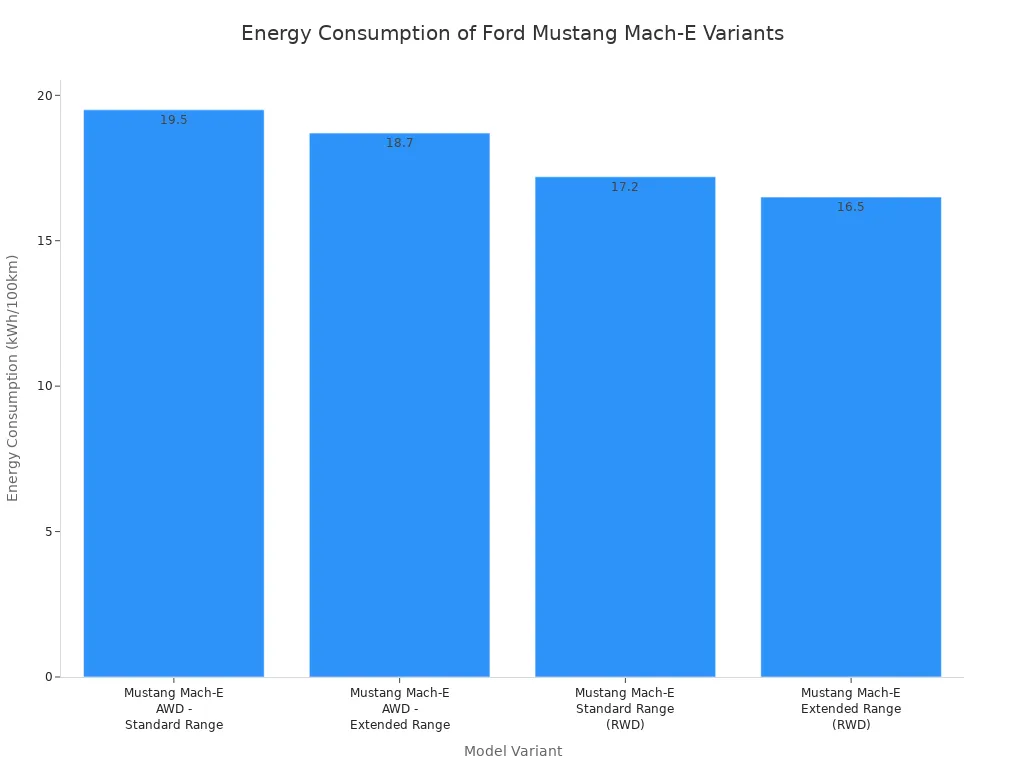
Different electric vehicle models have varying efficiency ratings. Factors like vehicle weight, aerodynamics, and motor technology influence this number. The efficiency of a popular model like the Ford Mustang Mach-E can differ based on its specific configuration.
| Model Variant | Combined Energy Consumption (kWh/100km) |
|---|---|
| Mustang Mach-E AWD – Standard Range | 19.5 |
| Mustang Mach-E AWD – Extended Range | 18.7 |
| Mustang Mach-E Standard Range (RWD) | 17.2 |
| Mustang Mach-E Extended Range (RWD) | 16.5 |
Finding Your Car’s Official Rating
An owner can find their electric vehicle’s official efficiency rating in the owner’s manual or on the manufacturer’s official website. This figure provides a reliable baseline for calculating the cost of electric vehicle charging.
Calculate Daily Energy Use from Your Mileage
With the efficiency rating known, the next step is to calculate the energy needed for the daily commute. This calculation connects the vehicle’s consumption rate to real-world driving habits.
The Daily Consumption Formula
The formula to find daily energy use is straightforward. An owner can use this simple equation to estimate consumption before accounting for charging losses.
Daily kWh = (Daily Kilometers Driven / 100) * Vehicle's kWh/100km Rating
Example: A Daily 50km Commute
Consider an electric vehicle with an efficiency of 17.2 kWh/100km that travels 50 km daily.
- Daily kWh = (50 km / 100) * 17.2
- Daily kWh = 0.5 * 17.2 = 8.6 kWh
This electric vehicle consumes 8.6 kWh from its battery each day.
How to Track Your Actual Mileage
Accurate mileage tracking is essential for precise cost calculations. While manual logs are an option, modern apps provide a more efficient solution. For instance, some applications offer:
- Automated trip administration to record mileage effortlessly.
- The ability to differentiate between work and private trips.
- User-friendly mobile interfaces for easy management.
Factor in Level 1 Charging Inefficiency
The final step in calculating daily energy needs is to account for energy loss during the charging process. No charging method is 100% efficient; some energy is always lost.
Why Level 1 Charging Loses Energy
Level 1 charging systems exhibit lower efficiency compared to higher-level options. This inefficiency stems from prolonged charging durations, which lead to increased energy dissipation as heat in the charger, cable, and the vehicle’s onboard systems.
The 15% Inefficiency Rule of Thumb
A widely accepted rule of thumb for Level 1 electric vehicle charging is to assume a 15% energy loss. This means for every 100 kWh pulled from the wall outlet, only about 85 kWh makes it into the vehicle’s battery. This factor is crucial for an accurate cost assessment of ev charging in argentina.
The Adjusted Daily Draw Formula
To find the total energy pulled from the outlet, an owner must adjust the daily consumption figure to include this inefficiency. This final number reflects the actual amount of electricity that will appear on the utility bill for electric vehicle charging.
Adjusted Daily Draw (kWh) = Daily kWh Consumption * 1.15
Step 3: Calculate Your Final Monthly Charging Costs
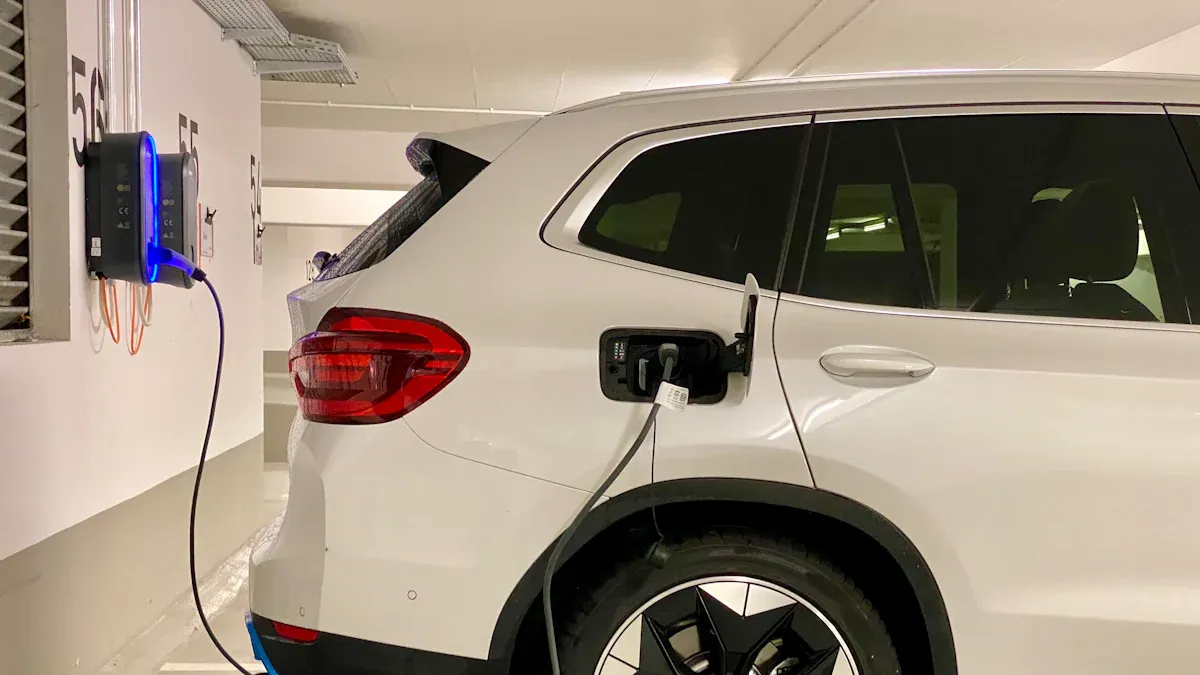
An electric vehicle owner can now combine all the variables to determine the final monthly expense. This last step brings together the electricity rate, vehicle efficiency, daily mileage, and charging inefficiency. The result is a reliable estimate of the monthly electric vehicle charging costs. These calculations provide a clear financial picture for budgeting purposes.
The Complete Monthly Cost Formula
This section provides the master formula for calculating the total monthly cost of شحن السيارات الكهربائية. It synthesizes the data from the previous steps into one final calculation.
Bringing All Variables Together
The calculation requires three key pieces of information:
- Adjusted Daily Draw (kWh): The total energy pulled from the wall outlet each day, including the 15% inefficiency factor for Level 1 charging.
- Electricity Rate (ARS per kWh): The specific cost per kWh based on the user’s N1, N2, or N3 subsidy category.
- Billing Cycle: The number of days in a typical month, which is assumed to be 30 for this calculation.
Formula: Total Daily kWh * Rate * 30 Days
The formula provides a clear path to the final monthly cost. An electric vehicle owner can use this equation for a precise estimate.
Monthly Cost (ARS) = Adjusted Daily Draw (kWh) * Your ARS/kWh Rate * 30
Scenario 1: Low-Mileage City Driver
This scenario examines the charging costs for a typical city driver with a short daily commute. This profile helps illustrate the expenses for a highly efficient electric vehicle under a subsidized rate.
Profile: Renault Kwid E-Tech, 25km/day
- Vehicle: Renault Kwid E-Tech (Efficiency: 13.9 kWh/100km)
- Daily Mileage: 25 km
- Charging Type: Level 1 (15% inefficiency)
Rate Used: N3 – Middle Income
The driver is in the N3 category. They pay the subsidized rate of ARS 35.80 per kWh, assuming their total household consumption stays below the 400 kWh monthly threshold.
Step-by-Step Cost Breakdown
The calculation reveals the low monthly costs associated with this profile.
- Calculate Daily Energy Use:
(25 km / 100) * 13.9 kWh/100km = 3.48 kWh
- Adjust for Charging Inefficiency:
3.48 kWh * 1.15 = 4.00 kWh(This is the total energy drawn from the outlet daily for charging)
- Calculate Daily Charging Cost:
4.00 kWh * ARS 35.80/kWh = ARS 143.20
- Calculate Final Monthly Cost:
ARS 143.20 * 30 days = **ARS 4,296**
This low-mileage electric vehicle driver can expect their monthly charging costs to be approximately ARS 4,296.
Scenario 2: Average Commuter
This scenario represents an average commuter. The driver travels a moderate distance daily and belongs to the highest electricity rate tier. This example highlights how a higher rate significantly impacts total electric vehicle charging costs.
Profile: Nissan Leaf, 45km/day
- Vehicle: Nissan Leaf (Efficiency: 17.0 kWh/100km)
- Daily Mileage: 45 km
- Charging Type: Level 1 (15% inefficiency)
ملاحظة: The Nissan Leaf is a popular electric vehicle. The Acenta model variant has an official efficiency rating of approximately 17.0 kWh/100km, which is used for this calculation.
Rate Used: N1 – Higher Income
This electric vehicle owner is in the N1 category. They pay the full, unsubsidized rate of ARS 90.50 per kWh for all their energy consumption, including charging.
Step-by-Step Cost Breakdown
The breakdown demonstrates the higher costs for an N1 user.
- Calculate Daily Energy Use:
(45 km / 100) * 17.0 kWh/100km = 7.65 kWh
- Adjust for Charging Inefficiency:
7.65 kWh * 1.15 = 8.80 kWh(This is the total energy drawn from the outlet daily for charging)
- Calculate Daily Charging Cost:
8.80 kWh * ARS 90.50/kWh = ARS 796.40
- Calculate Final Monthly Cost:
ARS 796.40 * 30 days = **ARS 23,892**
The average commuter in the N1 tier faces significantly higher electric vehicle charging costs, with a monthly total of approximately ARS 23,892. This shows the profound effect of the subsidy category on the final cost of charging an electric vehicle.
Scenario 3: High-Mileage User with Off-Peak Charging
This final scenario analyzes the expenses for a high-mileage electric vehicle owner. This user leverages a Time-of-Use (TOU) rate plan to minimize their electric vehicle charging costs. This example demonstrates how strategic charging can create significant savings, even for a driver in the highest rate tier. The analysis shows how planning reduces the overall cost of ownership for an electric vehicle.
Profile: Ford Mustang Mach-E, 70km/day
- Vehicle: Ford Mustang Mach-E (AWD Extended Range)
- Daily Mileage: 70 km
- Charging Type: Level 1 (15% inefficiency)
The Ford Mustang Mach-E is a powerful electric vehicle with several variants. Its energy consumption can range from 16.5 kWh/100km for the most efficient model to 19.5 kWh/100km. This calculation uses the AWD Extended Range model’s efficiency rating of 18.7 kWh/100km.
Rate Used: N1 with Off-Peak TOU Rate
This driver belongs to the N1 category but has a Time-of-Use (TOU) electricity plan. Instead of paying the flat N1 rate of ARS 90.50/kWh, they perform all electric vehicle charging during off-peak hours. This smart charging strategy allows them to access a lower rate.
TOU Rate Assumption: For this example, we will use a projected off-peak rate of ARS 65.00 per kWh. This rate offers a substantial discount compared to the standard N1 tariff.
Step-by-Step Cost Breakdown
The following breakdown calculates the monthly electric vehicle charging costs for this high-mileage electric vehicle. The calculation highlights the financial benefit of off-peak charging.
Calculate Daily Energy Use: First, determine the energy the electric vehicle consumes from its battery each day.
(70 km / 100) * 18.7 kWh/100km = 13.09 kWh
Adjust for Charging Inefficiency: Next, account for the 15% energy loss from Level 1 charging to find the total energy drawn from the wall.
13.09 kWh * 1.15 = 15.05 kWh
Calculate Daily Charging Cost: Now, calculate the daily expense using the discounted off-peak TOU rate.
15.05 kWh * ARS 65.00/kWh = ARS 978.25
Calculate Final Monthly Cost: Finally, multiply the daily figure by 30 to find the total monthly electric vehicle charging costs.
ARS 978.25 * 30 days = **ARS 29,347.50**
This high-mileage user can expect monthly charging costs of approximately ARS 29,348. By using an off-peak charging schedule, the owner achieves considerable savings. If this same electric vehicle owner performed their charging at the standard N1 rate (ARS 90.50/kWh), their monthly costs would have been ARS 40,860. Strategic charging saves them over ARS 11,500 per month.
Optimizing Your Monthly Electric Vehicle Charging Expenses
An electric vehicle owner can significantly reduce their monthly expenses by adopting smart habits and understanding external influences. Beyond simply calculating costs, active management of the charging process unlocks substantial savings and improves battery longevity. These strategies are key to lowering the overall costs of electric vehicle ownership.
Smart Charging Habits for Lower Costs
Simple adjustments to daily routines can lead to lower electric vehicle charging bills and a healthier battery. These habits require minimal effort but offer maximum financial and performance benefits for an electric vehicle.
The “Charge to 80%” Rule for Battery Health
Most electric vehicle manufacturers advise owners to maintain their battery’s charge level between 20% and 80%. Regularly charging to 100% places extra stress on the battery cells, والتي يمكن أن accelerate degradation over time. Adhering to the 80% limit for daily charging helps preserve the battery’s long-term health and capacity.
Using Your Vehicle’s Scheduled Charging Feature
An electric vehicle owner can use their car’s built-in scheduling feature or a smart charger to control when charging begins. This is especially useful for those on Time-of-Use (TOU) plans.
- Schedule all electric vehicle charging sessions to occur during off-peak hours, typically between 10 PM and 8 AM.
- Align the charging schedule with the 20% to 80% battery level for optimal efficiency.
- Track daily mileage to charge the electric vehicle only when necessary, further reducing costs.
Preconditioning Your Cabin While Plugged In
Preconditioning allows a driver to heat or cool the electric vehicle’s cabin to a comfortable temperature before unplugging. This process draws power directly from the wall outlet instead of the battery. The electric vehicle then uses less energy to maintain the cabin temperature while driving, preserving its range.
Impact of External Factors on Charging
Environmental conditions directly affect an electric vehicle’s performance and charging efficiency. Understanding these factors helps owners manage their expectations and energy consumption.
How Cold Weather Affects Battery Efficiency
Extreme cold is a major factor in battery performance. When temperatures approach freezing, an electric vehicle can lose 10% to 30% of its range.
Cold temperatures slow the chemical reactions inside the battery and increase its internal resistance. This makes the battery less efficient at delivering power and accepting a charge, impacting both range and charging speed.
How Hot Weather Impacts Charging Speed
High ambient temperatures can also affect electric vehicle charging. The vehicle’s battery management system may slow the charging speed to prevent the battery from overheating. This protective measure ensures safety and longevity but can extend charging times.
Comparing Level 1 vs. Level 2 Charging Costs
While this guide focuses on Level 1, comparing it to Level 2 charging is important for long-term planning. The choice between them impacts both convenience and overall costs.
Level 2 Charging Efficiency Gains
Level 2 charging systems are more efficient than Level 1. They lose less energy as heat during the charging process, meaning more of the electricity pulled from the outlet makes it into the battery. This efficiency gain can lead to modest but consistent savings on electric vehicle charging costs over time.
Factoring in Installation Costs
Upgrading to a Level 2 system requires professional installation. This one-time installation expense is a key consideration when evaluating the total costs. Technologically advanced solutions from providers like TPSON offer reliable and efficient Level 2 charging options.
When an Upgrade to Level 2 Makes Sense
An upgrade to Level 2 is logical for owners with long daily commutes or those who need a faster turnaround. The convenience of quicker charging and improved efficiency often justifies the initial investment for a high-mileage electric vehicle user.
An electric vehicle owner can determine their precise monthly charging expenses. They can use a simple formula to calculate their specific costs for charging.
Final Formula:
( (Daily km / 100) * Car's kWh/100km * 1.15 ) * Your ARS/kWh Rate * 30
As demonstrated, the monthly expense for Level 1 charging an electric vehicle in 2025 can range from 5,100 ARS to over 12,000 ARS. An owner can accurately budget for their electric vehicle charging by following these steps. This knowledge identifies key opportunities for charging savings for their electric vehicle.
الأسئلة الشائعة
What is the biggest factor affecting my EV charging cost?
An owner’s assigned energy subsidy category (N1, N2, or N3) is the single most significant factor. It directly determines the price per kWh. A user in the N1 tier will pay much more for charging than a user in the N2 or N3 tiers.
Is Level 1 charging always the cheapest option?
الشحن من المستوى 1 avoids installation costs, making it cheapest upfront. However, it is less efficient than Level 2 charging. A high-mileage driver might find Level 2 more cost-effective over time due to lower energy waste during each charging session.
How much energy does Level 1 charging actually waste?
Level 1 charging systems are about 85% efficient. This means an owner loses approximately 15% of the energy drawn from the outlet. The cost calculations in this guide account for this inefficiency to provide an accurate estimate of total expenses.
Can I lower my charging costs if I am in the N1 tier?
Yes. An N1 user can significantly reduce costs by switching to a Time-of-Use (TOU) plan. Scheduling all vehicle charging to occur during off-peak hours allows access to a much lower electricity rate, creating substantial monthly savings.
Does weather really change my charging expenses?
Yes, extreme temperatures impact battery efficiency. Cold weather reduces a vehicle’s range, requiring more frequent charging. Hot weather can slow the charging speed to protect the battery. Both scenarios can indirectly increase overall energy consumption and costs.
Why should an owner not always perform charging to 100%?
Routinely charging to 100% can accelerate battery degradation. Most manufacturers recommend maintaining a charge between 20% and 80% for daily use. This practice preserves the battery’s long-term health and capacity, protecting the owner’s investment.