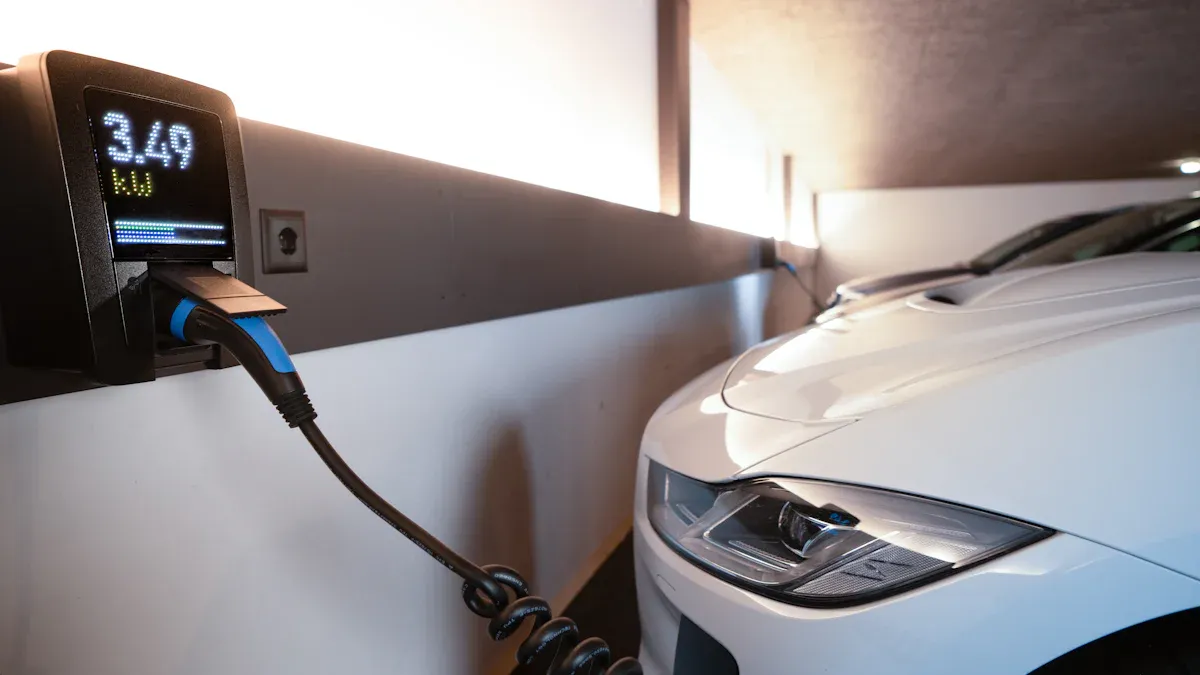
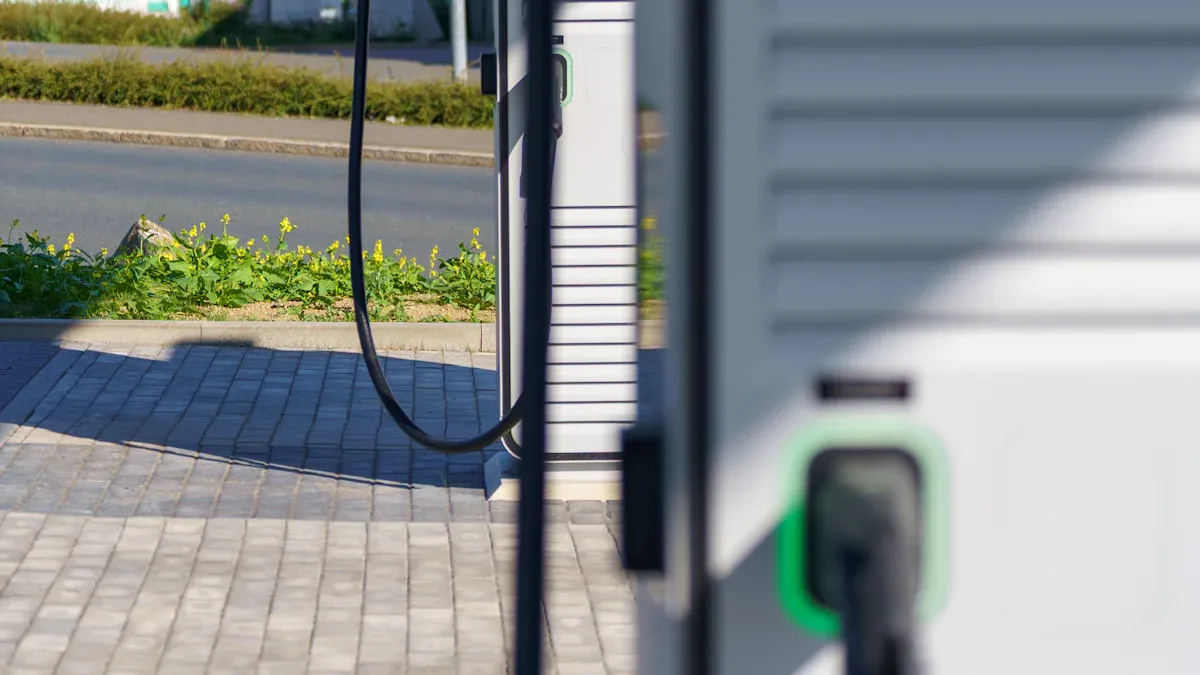
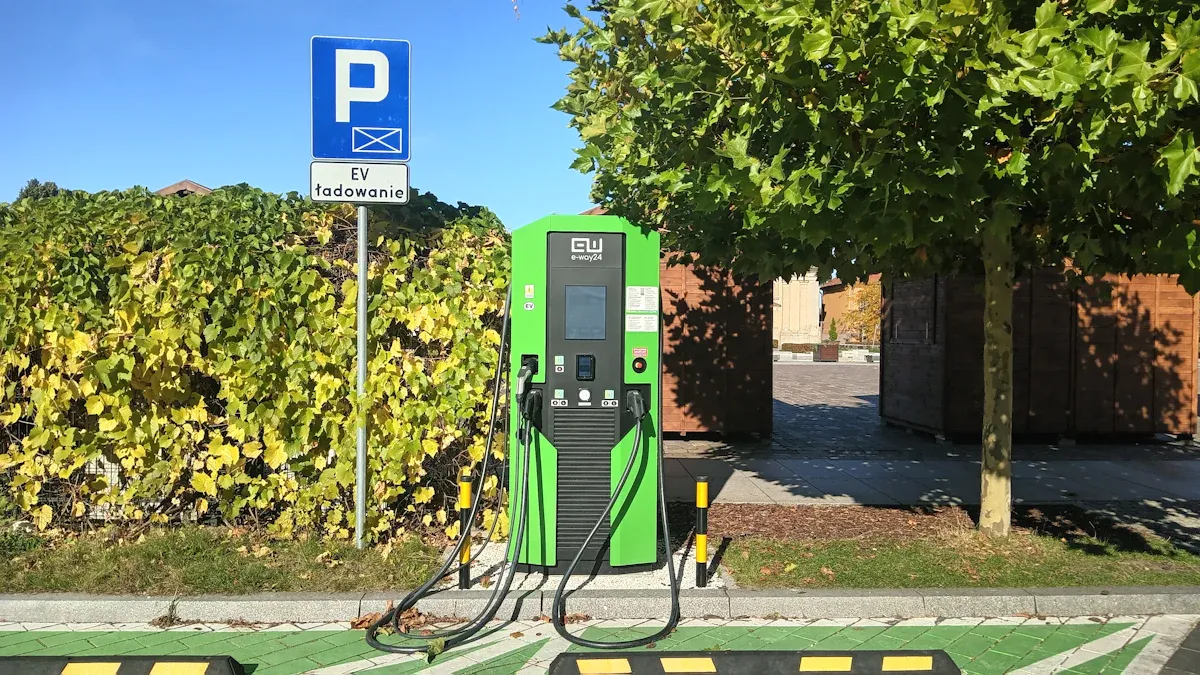
Free EV charging is a practical benefit for electric vehicle owners. Drivers can find free EV charging points at common destinations like supermarkets, hotels, and public lots. Most of these free chargers are Level 2, providing convenient top-up charging during daily activities. The availability of free EV chargers is set to rise, as the global public EV charging network is projected to grow significantly. This expansion is supported by technologically advanced الشركات المصنعة لشاحن السيارة الكهربائية like TPSON.
ملاحظة: Users should always verify rules before charging. Many free charging points have restrictions, such as time limits or customer-only policies.
Your Digital Toolkit to Find Free EV Charging Points
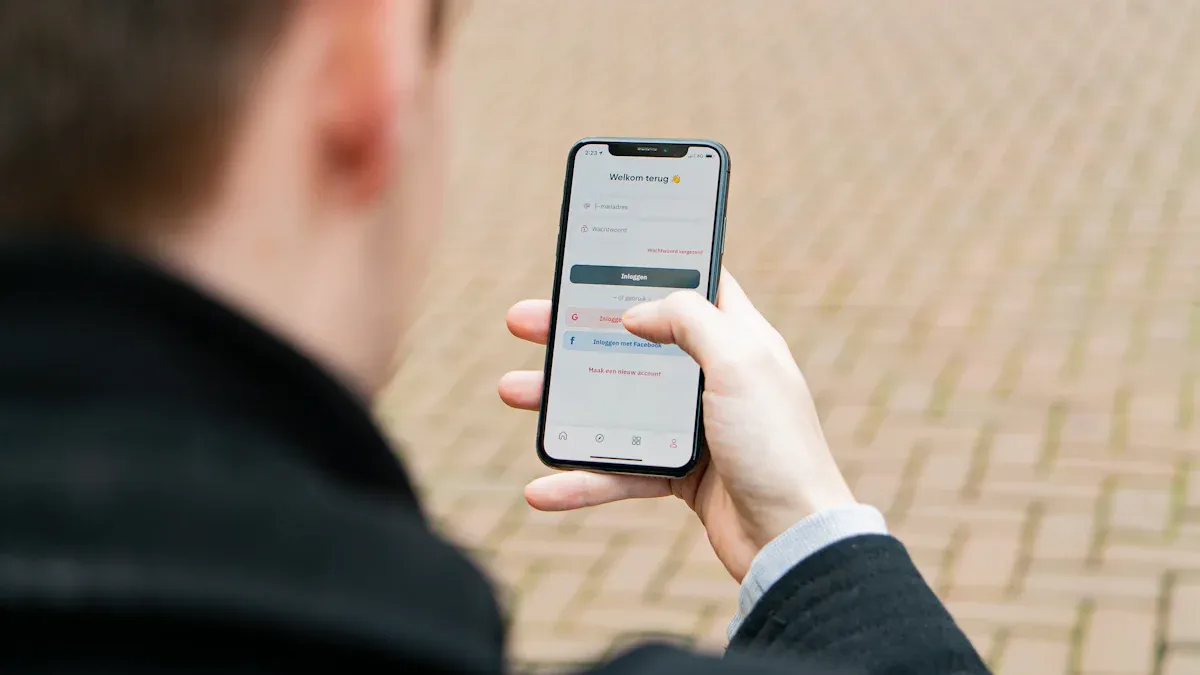
Drivers can leverage a suite of digital tools to locate free EV charging. Smartphone apps and in-car systems are the most effective resources. They provide real-time data on charger availability, location, and cost. Mastering these tools transforms the search for free charging from a game of chance into a predictable part of an EV owner’s routine.
Top Apps for Locating Free EV Chargers
Dedicated mobile applications are essential for any EV driver. These platforms aggregate data from thousands of charging networks and user reports. They offer powerful filters to narrow down options, making it simple to find free EV charging points.
Using PlugShare’s “Free” Filter
PlugShare is a comprehensive, crowd-sourced app. It allows users to find free ev charging points with a simple filter. After opening the app, drivers can adjust the filters to show only stations with no cost.
نصيحة محترف: Always check recent user comments and photos on PlugShare. Fellow EV drivers often leave valuable notes about whether a charger is working, if there are time limits, or if it is reserved for customers.
Finding Stations with ChargePoint
ChargePoint operates one of the largest charging networks. While many of its stations are pay-per-use, the network includes numerous free chargers sponsored by businesses. The ChargePoint app helps users locate these opportunities.
- Open the app and view the map.
- Use the filter option to set the “Cost” to “Free”.
- The map will update to display only the free charging stations in the area.
Exploring with Zap-Map
Zap-Map is another powerful tool, particularly popular for its detailed map and active user community. It allows drivers to filter for free chargers and plan routes that incorporate these stops. The app provides detailed information on connector types, power ratings, and network providers for each charging location.
Other Useful Apps and Websites
Beyond the major players, several other platforms can assist in the hunt for free charging. Apps like A Better Routeplanner (ABRP) help with trip planning and can factor in free charging stops. Some utility company websites also list public chargers they sponsor, which are often free to use.
Leveraging In-Car Navigation and Brand Apps
Modern EV models come equipped with sophisticated navigation systems. These systems and their companion smartphone apps often integrate charging station data directly, providing a seamless experience for drivers.
Tesla’s Destination Charging Network
Tesla offers two distinct charging networks. The Supercharger network is for fast, paid charging during long trips. The Destination Charging network, however, is a great source of free EV charging. These are Level 2 chargers located at hotels, restaurants, and shopping centers. The following table highlights the key differences:
| الميزة | شاحن تسلا فائق الشحن | Tesla Destination Charging |
|---|---|---|
| التكلفة | Pay-per-use, billed to a Tesla account. | Often free for customers of the establishment. |
| إمكانية الوصول | Located along major travel routes. | Found at hotels, restaurants, and shopping centers. |
| سرعة الشحن | High-speed DC charging (up to 250 kW). | AC charging (typically 7-22 kW). |
| Target Use | Quick top-ups during long-distance travel. | Convenient charging while parked for longer periods. |
| Availability for Non-Tesla EVs | Increasingly available to non-Tesla EVs. | Generally exclusive to Tesla vehicles. |
FordPass and MyChevrolet Features
Automakers like Ford and Chevrolet provide apps that help their customers manage their EV. The FordPass and myChevrolet apps allow drivers to find charging stations, including free options. These apps can show real-time availability and let users start and pay for charging sessions at partner networks, simplifying the entire process.
Google Maps and Apple Maps Capabilities
Mainstream navigation apps are also improving their EV features. Users can search for “EV charging” in Google Maps or Apple Maps to see nearby chargers. While they lack the dedicated “free” filter of specialized apps, users can tap on individual station icons to view details, which often include pricing information. This integration reflects the industry’s rapid evolution, where technologically advanced electric vehicle charging solution providers like TPSON are developing smarter, more connected hardware. These advancements make finding all types of chargers, including free EV chargers, easier than ever.
Where Are Free EV Charging Points Commonly Located?
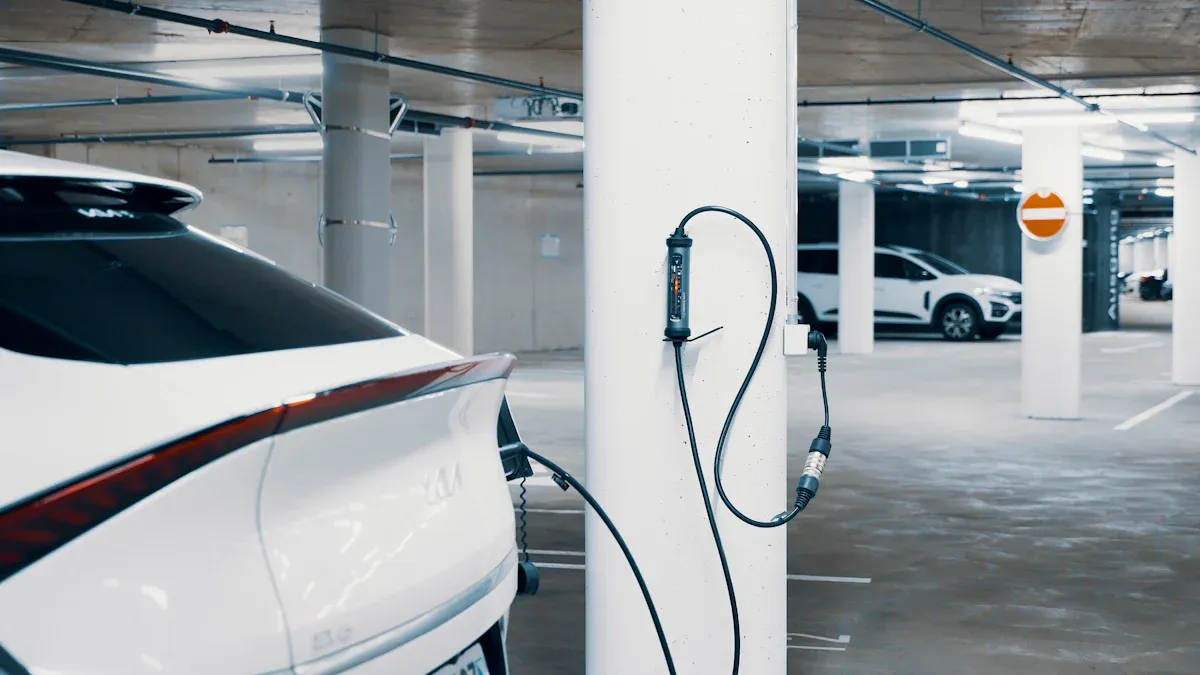
Knowing the common locations for free EV charging points transforms an EV owner’s strategy from hopeful searching to confident planning. Businesses and public entities increasingly offer this perk to attract customers, support sustainability goals, and provide a valuable community service. These free chargers are most often found where drivers plan to park for an hour or more, making them a perfect fit for daily routines.
Retail and Shopping Destinations
Retail locations are prime spots for free EV charging. The model is simple: businesses offer free power to attract customers and encourage them to spend more time and money in their stores. This symbiotic relationship benefits both the driver and the retailer.
Supermarket Free Charging Policies
Supermarkets are leaders in providing free charging points. A prime example of this is the expansion of free EV charging in the UK. Major chains have partnered with charging network providers to install thousands of units. This initiative makes EV ownership more attractive and convenient.
“We’re now well on our way to achieving our ambition of installing more than 2,400 EV charging bays across 600 Tesco stores,” said Jason Tarry, Tesco CEO UK and ROI. “Providing customers with charging points offers them a sustainable choice and giving them the opportunity to charge their car for free while they shop is another little help to make their lives easier.”
This approach allows drivers to top up their vehicle’s battery at no cost while doing their weekly grocery shopping. The rollout of free EV charging in the UK at supermarkets demonstrates a successful model for integrating charging into everyday errands.
Malls and Large Retail Parks
Shopping malls and large retail parks are natural hubs for public EV charging. Their large parking areas and the extended time customers spend there make them ideal locations. Many mall operators install free Level 2 chargers as an amenity to enhance the shopping experience and draw in EV owners from a wider area.
Charging at Big-Box Stores like IKEA
Large-format retailers like IKEA often feature free EV charging points in their car parks. These businesses recognize that EV drivers are a growing demographic. Offering a free charge encourages longer visits, giving customers ample time to browse, shop, and eat at the in-store restaurant without worrying about their battery level.
Hospitality and Leisure Venues
The hospitality industry uses free EV charging as a powerful tool to attract guests and diners. A free charge can be the deciding factor for a driver choosing one establishment over another.
Hotel and Motel Guest Charging
Many hotel chains now provide complimentary charging for guests. This amenity is especially valuable for travelers on long road trips who need to recharge their vehicles overnight. While some brands offer it universally, policies can vary by location.
- Some international hotel chains offer free charging for both diners and overnight guests, often in partnership with specific car brands.
- Other hotel groups provide guests with a mix of free Level 2 and even faster Level 3 chargers.
- For certain brands, the cost of charging varies, with it sometimes being included as a free perk for guests at premium locations.
Restaurants and Cafes with EV Perks
Independent and chain restaurants are also joining the trend. Offering free EV charging points can attract patrons who might stay for a full meal, increasing revenue for the business. These chargers are typically reserved for customers, ensuring the benefit is for those supporting the establishment. Venues that commonly provide this perk include:
- Cafes
- المطاعم
- Pubs
الصالات الرياضية ومراكز اللياقة البدنية
Gyms and fitness centers are another logical place for free chargers. Members typically spend an hour or more at the facility, which is a perfect window for a meaningful top-up charge. This free perk adds value to a gym membership and supports the healthy, sustainable lifestyle many EV drivers embrace.
Public, Civic, and Workplace Locations
Municipalities, educational institutions, and employers are key players in expanding the network of free public charging. These common locations for free EV charging points are often funded by grants or as part of public sustainability initiatives.
City and Municipal Parking Lots
Forward-thinking cities and towns install free EV chargers in public parking lots and garages to encourage EV adoption. While the electricity is often free, drivers may still need to pay for parking. These initiatives make city centers more accessible for EV drivers. Some municipalities provide a clear breakdown of their free charging options.
| Garage Location Type | Charger Types Available | Charging Cost | Typical Time Limit | ملاحظة مهمة |
|---|---|---|---|---|
| City Center Garage A | Universal & Brand-Specific | مجاناً | 3 hours | Parking fees apply at the standard garage rate. |
| Waterfront Garage B | Universal & Brand-Specific | مجاناً | 3 hours | Parking fees apply at the standard garage rate. |
| Historic District Garage C | Universal & Brand-Specific | مجاناً | 3 hours | Parking fees apply at the standard garage rate. |

المكتبات والمراكز المجتمعية
Civic buildings are emerging as reliable spots for free EV charging points. These locations are excellent because they are publicly accessible and often have chargers that are less busy than those at retail centers.
Drivers can find these free chargers by area using apps like PlugShare, where they are listed under public or government properties.
برامج الشحن في مكان العمل
Workplace charging is one of the most convenient free charging options available. Many companies offer free charging as a perk to attract and retain talent, as well as to meet corporate sustainability targets. This allows employees to charge their EV throughout the workday, ensuring they always leave with a full battery. The growth of such programs is supported by technologically advanced electric vehicle charging solution providers like TPSON, which develop smart charging systems for commercial use.
University and College Campuses
Universities are small cities in themselves and are increasingly adding EV infrastructure. They often provide a mix of charging solutions for different groups on campus. Some institutions offer free charging specifically for resident students, while others provide it as a free benefit for faculty and staff. These programs often have rules, such as time limits, to ensure the chargers are available to as many people as possible, making them supplemental rather than primary charging sources. These common locations for free EV charging points support campus-wide green initiatives.
What to Expect from Free EV Charging
While the prospect of free fuel is exciting, EV drivers should understand the nature of these charging opportunities. Most free EV charging points offer a specific type of charging and come with rules. Knowing what to expect helps drivers maximize the benefits and avoid potential frustrations.
Understanding Charger Speeds and Types
The speed of a charger determines how much range an EV gains per hour. The technology behind free chargers is typically geared toward convenience over speed.
The Common Level 2 (AC) Charger
The vast majority of free EV charging points use Level 2 (AC) chargers. These units are perfect for “graze charging,” where an EV gains a useful amount of range while parked for an hour or more. The power output is ideal for topping up a battery during activities like shopping, dining, or working. A standard Level 2 charger adds a practical amount of range per hour of charging.
| تصنيف الطاقة | Approx. Miles Added Per Hour |
|---|---|
| 6.6 كيلوواط | 20–25 miles |
This rate makes Level 2 chargers a cost-effective solution for businesses to offer as a free perk.
The Rarity of Free DC Fast Chargers
Finding free rapid chargers (DC fast chargers) is extremely rare. These high-powered units are expensive to install and operate, making it financially unfeasible for most businesses to offer their use for free. Their primary purpose is for rapid charging on long journeys, a service that networks almost always monetize.
Navigating Common Restrictions and “Hidden” Costs
Free charging is seldom a complete free-for-all. Drivers must be aware of common rules and potential costs associated with using these free chargers.
Customer-Only Requirements
Many businesses offer free EV charging exclusively for their patrons. This is a common policy at supermarkets, hotels, and restaurants. The chargers are an incentive for customers, so non-patrons may be prohibited from using them.
Time Limits and Potential Idle Fees
To ensure fair access for all EV drivers, most free charging stations impose time limits.
Free public EV charging sessions typically have a maximum time limit, often between one and two hours. This policy helps increase charger availability for more vehicles.
Staying beyond the allotted time or leaving a fully charged EV plugged in can result in idle fees. Some networks charge a per-minute fee to discourage this practice.
- تيسلا charges idle fees when a station is busy to encourage drivers to move their vehicles.
- نبض ضغط الدم may apply an overstay fee at certain rapid chargers if a car occupies the bay for more than 90 minutes.
رسوم وقوف السيارات مقابل رسوم وقوف السيارات
It is crucial to distinguish between charging fees and parking fees. A station may offer free electricity, but if it is located in a paid parking garage or lot, standard parking rates will still apply. Always check for parking signage to avoid an unexpected ticket.
Needing a Specific App or RFID Card
Accessing a free charging session often requires a specific network’s mobile app or an RFID card. Even if the session cost is zero, drivers may need to create an account and authorize the charging through the network’s platform. Technologically advanced electric vehicle charging solution providers like TPSON develop smart chargers that seamlessly integrate with these network management systems.
A Strategic Guide to Using Free Chargers
Maximizing the benefits of free EV charging requires more than just finding a station; it requires a strategy. By integrating these opportunities into daily life and following community etiquette, drivers can significantly lower their running costs and contribute to a positive charging experience for everyone.
Integrating Free Charging Into Your Routine
A proactive approach transforms free charging from a lucky find into a reliable resource. EV owners can build routines around the availability of free power.
“Graze” Charging While Running Errands
“Graze” charging is the practice of topping up an EV’s battery during short stops. A 60-minute shopping trip can add 20-25 miles of range at a typical free Level 2 charger. This habit of opportunistic charging keeps the battery consistently topped up, reducing the need for longer, paid charging sessions.
Planning Road Trips Around Free Overnight Stops
For long-distance travel, planning stops at hotels that offer free overnight charging is a game-changer. Drivers can start each day with a full battery at no extra cost. This approach requires some research using hotel booking sites and charging apps but pays off in significant savings and convenience.
Optimizing Your Commute
Employees with access to workplace charging can enjoy one of the most effective free EV charging perks. This allows them to perform a full charge during the workday. It ensures their vehicles are always ready for the evening commute or any other errands, making the daily drive completely cost-free from a fuel perspective.
Proper Etiquette for Public Free Charging Points
Free public chargers are a shared community resource. Proper etiquette ensures these stations remain accessible and functional for all EV drivers.
Don’t Overstay Your Welcome
The most important rule is to move your vehicle once it has finished charging. Many free charging points have posted time limits to encourage turnover.
Adhere to any posted time limits. If none are posted, a good rule of thumb is to move your car within 30 minutes of the charging session ending to free up the station for the next person.
حافظ على نظافة منطقة الشحن
Common courtesy goes a long way in maintaining a pleasant charging environment. Drivers should always:
- Park neatly within the designated bay to avoid blocking other chargers or traffic.
- Keep noise levels, such as music, at a reasonable volume.
- Avoid leaving any trash behind.
- Neatly wind up and return the charging cable to its holder after use.
Report Faulty or Broken Units
A non-functional charger is a frustration for everyone. When drivers encounter a broken unit, they should report it. This simple action helps the entire EV community. Apps like PlugShare have comment sections where users can post real-time status updates, alerting others to issues with specific free EV charging points. Reporting the problem directly to the network operator is also crucial for getting the unit repaired. Reliable hardware from technologically advanced electric vehicle charging solution providers like TPSON is essential, and user feedback helps maintain the integrity of the public charging network.
Leave Reviews on Charging Apps
Contributing to crowd-sourced apps helps other drivers make informed decisions. Leaving a quick review about your experience at free EV charging points—whether the charger worked, if there were hidden fees, or if the spot was easy to find—provides valuable, real-time information. This collective knowledge makes the search for free power more efficient for the entire EV community.
Finding free EV charging is a practical strategy for EV drivers to lower running costs. Drivers can find free EV charging points using essential apps that verify the status of free chargers. Integrating these free top-ups into daily routines makes EV ownership more sustainable and economical. The expansion of free EV charging points is supported by technologically advanced electric vehicle charging solution providers like TPSON.
Remember: Always check for rules like time limits or customer-only policies before starting a charging session to ensure a smooth, free experience.
الأسئلة الشائعة
How can drivers find free EV charging stations?
Drivers can locate free EV charging points using dedicated mobile apps like PlugShare or Zap-Map. These apps feature filters that display only no-cost charging stations. In-car navigation systems and automaker apps also help identify these locations.
Are free EV chargers always completely free?
While the electricity is free, drivers should watch for other costs. Some stations are in paid parking garages, requiring payment for parking. Networks may also charge idle fees if a vehicle remains plugged in after its session ends.
What charging speed should drivers expect from free chargers?
Most free charging points are Level 2 (AC) chargers. They add approximately 20-25 miles of range per hour. This speed is ideal for topping up a vehicle’s battery while the driver shops, dines, or works.
Can any electric vehicle use a free charger?
Compatibility depends on the charger’s connector type. Most public chargers use a universal connector. However, some locations, like Tesla’s Destination Charging network, may have chargers exclusive to a specific brand. Drivers should always check the station details in their app.
لماذا تقدم الشركات شحن السيارات الكهربائية مجاناً؟
Businesses provide free charging as a customer perk. It attracts EV owners, encourages longer visits, and promotes a sustainable image. This amenity can be a deciding factor for a customer choosing one establishment over another.
What is proper etiquette for using a free charger?
Drivers should follow proper etiquette at shared charging points.
- Adhere to any posted time limits.
- Move the vehicle once charging is complete.
- Keep the area clean and return the cable to its holder.
- Report any broken units to the network operator.